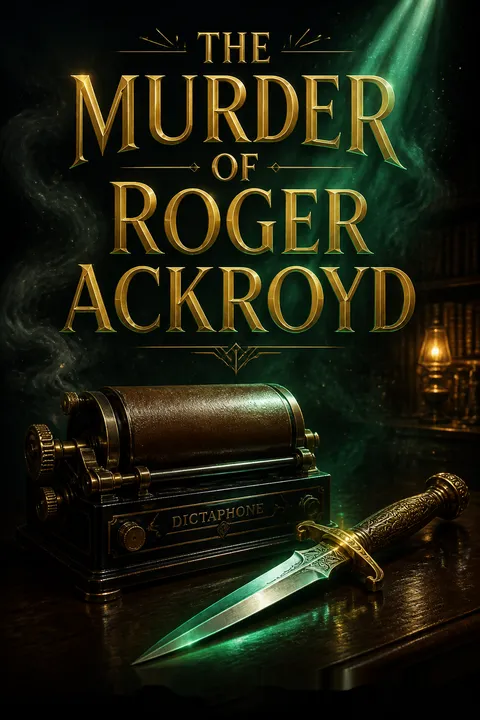

Resumen de la trama
La muerte inesperada
El doctor James Sheppard es requerido en el escenario de la muerte de la señora Ferrars, que parece ser un suicidio por sobredosis. Su hermana, Caroline, está convencida de que la señora Ferrars envenenó a su esposo un año antes. El pueblo de King's Abbot es un hervidero de rumores, y el doctor Sheppard intuye que aún quedan muchas revelaciones por venir. La muerte de la señora Ferrars desencadena una serie de acontecimientos que conducirán a la resolución de un misterio mucho mayor.
Secretos y sospechas
Roger Ackroyd, un hombre adinerado de King's Abbot, es hallado sin vida en su despacho. El doctor Sheppard, que había estado con él poco antes, descubre el cadáver. El arma del crimen es una daga y la habitación se encontraba cerrada por dentro. Las sospechas recaen sobre Ralph Paton, el hijastro de Ackroyd, que se encuentra en paradero desconocido. El pueblo se llena de especulaciones y el doctor Sheppard se ve arrastrado a la investigación liderada por el famoso detective Hércules Poirot, quien se ha retirado a vivir a la localidad.
El misterioso desconocido
Un misterioso desconocido fue visto cerca de Fernly Park la noche del crimen. Poirot y el doctor Sheppard investigan el caso y descubren pistas que sugieren que este hombre podría estar relacionado con el asesinato. La identidad y las intenciones del sospechoso siguen siendo una incógnita, lo que añade complejidad al caso. El método deductivo de Poirot empieza a revelar inconsistencias en las coartadas de quienes se encontraban en Fernly Park la noche del crimen.
El testigo invisible
Flora Ackroyd, la sobrina de Roger, confiesa haber robado dinero de la habitación de su tío por temor a que la descubrieran tras su muerte. Su confesión pone en duda su declaración anterior, en la que afirmaba haber visto a su tío con vida a una hora determinada. La investigación de Poirot revela que todos en la casa tienen algo que ocultar, y comienza a reconstruir el rompecabezas centrándose en la cronología de los hechos y en el comportamiento de cada sospechoso.
La verdad oculta
Poirot descubre que Ralph Paton está casado en secreto con Ursula Bourne, una de las doncellas de Fernly Park. Esta revelación complica el caso, ya que proporciona tanto un móvil para Ralph como una explicación para su desaparición. Las indagaciones de Poirot demuestran que el asesinato fue planeado minuciosamente y que el culpable utilizó un dictáfono para fabricar una coartada falsa. La atención al detalle del detective y su profundo conocimiento de la naturaleza humana lo acercan cada vez más a la verdad.
La revelación final
Poirot convoca a todos los sospechosos en su casa y les anuncia que conoce la identidad del asesino. Explica cómo se cometió el crimen, detallando el uso del dictáfono y la coartada falsa. Las deducciones de Poirot señalan directamente al doctor Sheppard como el asesino, quien se valió de sus conocimientos médicos y de su posición social para manipular la situación. La revelación conmociona a todos, pues el doctor Sheppard era considerado un amigo de confianza y un confidente.
La última confesión
El doctor Sheppard confiesa el asesinato de Roger Ackroyd, motivado por el temor a ser descubierto por chantajear a la señora Ferrars. Detalla cómo cometió el crimen y cómo manipuló las pruebas. Poirot le ofrece una salida para proteger a su hermana del escándalo. El doctor Sheppard decide acabar con su vida, dejando tras de sí un manuscrito donde relata los hechos y plasma su confesión. El caso queda cerrado, pero el impacto de la verdad perdura en el pueblo.
Analysis
"El asesinato de Roger Ackroyd", de Agatha Christie, es una obra maestra que explora el engaño, los móviles del crimen y la complejidad de las relaciones humanas. La novela desafía la percepción del lector sobre la verdad y la confianza, ya que cada personaje oculta secretos que entorpecen la investigación. El método deductivo y la agudeza psicológica de Poirot desvelan las distintas capas de falsedad, desenmascarando finalmente al doctor Sheppard como el asesino. El uso innovador de la estructura narrativa, donde el propio asesino ejerce de narrador, subvierte las convenciones de la novela policíaca tradicional y ofrece un giro final tan sorprendente como memorable. La obra de Christie pone de manifiesto el peligro de las suposiciones y la importancia de analizar cada pequeño detalle, consolidándose como un clásico imperecedero del género de misterio.
Resumen de reseñas
El asesinato de Roger Ackroyd es ampliamente considerado una de las mejores obras de Agatha Christie, gracias a un giro final impactante que sorprende a la mayoría de los lectores. La novela sigue a Hércules Poirot mientras investiga el asesinato de Roger Ackroyd en un pequeño pueblo inglés. Los lectores elogian la magistral trama de Christie, su hábil distracción y la complejidad de sus personajes. Muchos la consideran una lectura obligada para los amantes del misterio, debido a su ingeniosa estructura narrativa y su inesperada resolución. La perdurable popularidad del libro y el aplauso de la crítica han consolidado su estatus como un clásico del género policial.
También leyeron

Characters
Dr. James Sheppard
El doctor Sheppard es el narrador de la historia y se presenta a sí mismo como un personaje observador y de fiar. Se involucra profundamente en la investigación ayudando a Poirot. Sin embargo, su actitud serena oculta un oscuro secreto, ya que al final se revela que él es el asesino, impulsado por el miedo a ser descubierto y por la desesperación financiera.
Hercule Poirot
Poirot es un detective retirado que vive en King's Abbot. Su agudo intelecto y su comprensión de la naturaleza humana le permiten desentrañar la compleja red de mentiras que rodea el asesinato de Ackroyd. El enfoque metódico de Poirot y su atención al detalle lo conducen hasta la verdad, desenmascarando al doctor Sheppard como el asesino.
Roger Ackroyd
Ackroyd es un hombre próspero y de carácter controlador. Su asesinato da inicio a la investigación. Las relaciones de Ackroyd con quienes lo rodean, incluyendo a su sobrina Flora y a su hijastro Ralph, eran tensas, lo que proporciona múltiples móviles para el crimen.
Ralph Paton
Ralph es el hijastro de Ackroyd y el principal sospechoso debido a su desaparición. Está casado en secreto con Ursula Bourne, lo que complica su situación. Los problemas financieros de Ralph y su tensa relación con Ackroyd ofrecen un móvil claro, aunque finalmente resulta ser inocente del asesinato.
Ursula Bourne
Ursula está casada en secreto con Ralph Paton. Su trabajo como doncella en Fernly Park le permite observar de cerca la dinámica de la casa. Su matrimonio secreto y su vínculo con Ralph la convierten en una figura clave para la investigación.
Flora Ackroyd
Flora es la sobrina de Ackroyd y está comprometida con Ralph Paton. Su confesión de haber robado dinero a su tío complica las pesquisas. La lealtad de Flora hacia Ralph y su deseo de independencia guían sus acciones a lo largo de la historia.
Caroline Sheppard
Caroline es la hermana del doctor Sheppard, conocida por su curiosidad y su afición a los chismes. Aporta valiosas observaciones e intuiciones que ayudan a Poirot en su investigación. Su intuición y su atención a los detalles la convierten, sin saberlo, en una aliada fundamental para resolver el caso.
Parker
Parker es el mayordomo de Fernly Park, y sus acciones y observaciones resultan cruciales para la investigación. Su conocimiento de la casa y de sus habitantes aporta información de gran valor, a pesar de que inicialmente se le sospecha de chantaje.
Miss Russell
La señorita Russell es el ama de llaves de Fernly Park y posee un pasado misterioso. Su relación con Charles Kent, uno de los sospechosos del caso, añade complejidad a la investigación. Sus secretos se van revelando poco a poco, contribuyendo al desarrollo del misterio.
Geoffrey Raymond
Raymond es el secretario de Ackroyd, encargado de gestionar sus asuntos personales. Sus dificultades económicas y su cercanía con Ackroyd lo convierten en sospechoso. La lealtad y la honestidad de Raymond se ponen a prueba a medida que avanza la investigación.
Major Hector Blunt
El mayor Blunt es un amigo de Ackroyd, conocido por su laconismo y su carácter directo. Su estancia en Fernly Park y sus observaciones ofrecen claves fundamentales sobre los acontecimientos que rodearon el crimen. El amor no correspondido de Blunt hacia Flora aporta una mayor profundidad a su personaje.
Plot Devices
The Locked Room
El asesinato de Roger Ackroyd ocurre en una habitación cerrada por dentro, lo que plantea un enigma que Poirot debe resolver. Este recurso de la habitación cerrada intensifica la intriga y desafía al detective a descubrir cómo y quién cometió el crimen.
The Dictaphone
El uso de un dictáfono para simular una coartada falsa es un elemento central de la trama. Permite al asesino manipular la cronología de los hechos, despistando a los investigadores. El descubrimiento por parte de Poirot del papel que jugó el dictáfono marca un punto de inflexión en la resolución del caso.
The Telephone Call
La misteriosa llamada telefónica recibida por el doctor Sheppard es un recurso clave en la trama que genera confusión y distracción. Sirve para consolidar la coartada del asesino y complica la investigación, obligando a Poirot a desentrañar su verdadero propósito.
The Missing Money
El robo de dinero en la habitación de Ackroyd ofrece un motivo para que varios personajes mientan y oculten sus actos. Esto añade nuevas ramificaciones a la investigación, ya que Poirot debe determinar quién se llevó el dinero y por qué razón.
The Secret Marriage
El matrimonio secreto entre Ralph Paton y Ursula Bourne es un recurso argumental decisivo, ya que proporciona tanto un móvil para el asesinato como un motivo para la huida de Ralph. Complica las relaciones entre los personajes y dota de mayor profundidad al misterio.
Preguntas frecuentes
Synopsis & Basic Details
What is The Murder of Roger Ackroyd about?
- Wealthy man murdered: Roger Ackroyd is found murdered in his study, setting off an investigation in the quiet village of King's Abbot.
- Secrets and relationships: The story explores the complex relationships and hidden secrets of the villagers, particularly those closest to Ackroyd.
- Unlikely narrator: Dr. James Sheppard, the village doctor, narrates the events as he assists detective Hercule Poirot in solving the crime.
- Twists and turns: The investigation uncovers blackmail, secret marriages, and financial troubles, leading to a shocking revelation about the murderer's identity.
Why should I read The Murder of Roger Ackroyd?
- Classic mystery: It's a quintessential Agatha Christie novel, showcasing her mastery of plot twists and character development.
- Unreliable narrator: The story employs an unreliable narrator, adding a unique layer of suspense and deception that challenges the reader.
- Psychological depth: The novel delves into the psychology of the characters, exploring their motivations and hidden desires.
- Surprising ending: The shocking and unexpected resolution is considered one of the most ingenious in detective fiction.
What is the background of The Murder of Roger Ackroyd?
- Post-WWI England: The novel reflects the social dynamics of post-World War I England, with its class distinctions and changing social norms.
- Small village life: The setting of King's Abbot, a typical English village, highlights the close-knit community and the prevalence of gossip.
- Emerging detective fiction: The novel is a product of the Golden Age of Detective Fiction, a period marked by intricate plots and amateur sleuths.
- Social commentary: The story subtly critiques the societal expectations and hidden hypocrisies within the seemingly peaceful village setting.
What are the most memorable quotes in The Murder of Roger Ackroyd?
- "The truth, however ugly in itself, is always curious and beautiful to the seeker after it.": This quote encapsulates Poirot's unwavering dedication to uncovering the truth, regardless of the consequences.
- "I always come back to it.": This recurring phrase highlights the importance of the telephone call as a central clue in the investigation, emphasizing Poirot's methodical approach.
- "Everyone concerned in them has something to hide.": This quote reflects the pervasive atmosphere of secrecy and deception that permeates the novel, suggesting that appearances can be deceiving.
What writing style, narrative choices, and literary techniques does Agatha Christie use?
- First-person narration: The story is told from Dr. Sheppard's perspective, creating a sense of intimacy and immediacy while also concealing crucial information.
- Red herrings: Christie masterfully employs red herrings to mislead the reader, presenting numerous suspects with plausible motives.
- Foreshadowing: Subtle hints and clues are scattered throughout the narrative, foreshadowing the eventual revelation of the murderer's identity.
- Limited perspective: The reader's knowledge is restricted to what Dr. Sheppard chooses to reveal, creating a sense of suspense and uncertainty.
Hidden Details & Subtle Connections
What are some minor details that add significant meaning?
- The silver table: The silver table in the drawing-room, where the murder weapon is kept, symbolizes the hidden dangers and secrets lurking beneath the surface of polite society.
- The summer-house: The summer-house serves as a meeting place for clandestine encounters, highlighting the themes of deception and hidden relationships.
- The goose quill: The goose quill found in the summer-house is a subtle clue that points to Charles Kent's drug use and connection to Miss Russell.
- The locked door: The locked study door symbolizes the barriers to truth and the deliberate attempts to conceal the murderer's actions.
What are some subtle foreshadowing and callbacks?
- Caroline's suspicions: Caroline's early suspicions about Mrs. Ferrars foreshadow the later revelation of her involvement in her husband's death.
- Drug-taking conversation: Miss Russell's conversation with Dr. Sheppard about drug-taking foreshadows Charles Kent's addiction and his connection to her.
- The will discussion: The discussion about Ackroyd's will foreshadows the financial motives that drive some of the characters' actions.
- The chair position: The seemingly insignificant detail of the chair's position in the study becomes a crucial clue in Poirot's reconstruction of the crime.
What are some unexpected character connections?
- Ursula Bourne and Ralph Paton: The secret marriage between Ursula Bourne and Ralph Paton reveals a hidden connection that complicates the investigation.
- Charles Kent and Miss Russell: The relationship between Charles Kent and Miss Russell, as mother and son, adds a layer of complexity to the housekeeper's character.
- Mrs. Folliott and Ursula Bourne: The connection between Mrs. Folliott and Ursula Bourne as sisters reveals a shared family history and social standing.
Who are the most significant supporting characters?
- Caroline Sheppard: Caroline's gossiping nature and keen observations provide valuable insights and clues that aid Poirot's investigation.
- Parker: Parker's role as the butler gives him access to information and opportunities that make him a key suspect and witness.
- Miss Russell: Miss Russell's mysterious past and connection to Charles Kent add intrigue and complexity to the story.
- Geoffrey Raymond: Geoffrey Raymond's position as Ackroyd's secretary makes him privy to financial details and personal matters, making him a significant player in the investigation.
Psychological, Emotional, & Relational Analysis
What are some unspoken motivations of the characters?
- Dr. Sheppard's desire for recognition: Dr. Sheppard's eagerness to assist Poirot and document the case suggests a desire for recognition and validation.
- Flora Ackroyd's longing for independence: Flora's engagement to Ralph and later to Hector Blunt reveals her desire for financial security and freedom from her controlling mother.
- Hector Blunt's unrequited love: Hector Blunt's stoic demeanor hides his deep affection for Flora, influencing his actions and decisions.
- Mrs. Ackroyd's social climbing: Mrs. Ackroyd's constant concern with social status and financial security reveals her ambition and desire for upward mobility.
What psychological complexities do the characters exhibit?
- Dr. Sheppard's duplicity: Dr. Sheppard's ability to maintain a facade of trustworthiness while concealing his guilt highlights the complexities of human nature.
- Ralph Paton's weakness: Ralph Paton's inability to make decisive choices and his tendency to succumb to temptation reveal his inherent weakness.
- Ursula Bourne's strength: Ursula Bourne's determination to protect her husband and her willingness to sacrifice her own reputation demonstrate her inner strength.
- Miss Russell's stoicism: Miss Russell's stoic demeanor and guarded nature conceal her past and her deep concern for her son.
What are the major emotional turning points?
- Dr. Sheppard's decision to murder Ackroyd: Dr. Sheppard's decision to murder Ackroyd marks a turning point in his character, transforming him from a trusted doctor into a cold-blooded killer.
- Flora's confession: Flora's confession to stealing the money is an emotional turning point, revealing her vulnerability and her desire for honesty.
- Ursula's revelation of her marriage: Ursula's revelation of her marriage to Ralph Paton exposes the hidden relationships and secrets that complicate the investigation.
- Blunt's declaration of love: Blunt's declaration of love for Flora is an emotional turning point, revealing his true feelings and his willingness to protect her.
How do relationship dynamics evolve?
- Dr. Sheppard and Poirot: The relationship between Dr. Sheppard and Poirot evolves from a seemingly collaborative partnership to a tense confrontation, culminating in the revelation of Dr. Sheppard's guilt.
- Flora and Ralph: The relationship between Flora and Ralph shifts from a business arrangement to a friendship based on shared vulnerability and understanding.
- Flora and Hector: The relationship between Flora and Hector evolves from a casual acquaintance to a genuine connection based on mutual respect and affection.
- Ursula and Ralph: The relationship between Ursula and Ralph is tested by secrets, financial troubles, and the pressures of the investigation, ultimately revealing the strength of their bond.
Interpretation & Debate
Which parts of the story remain ambiguous or open-ended?
- The extent of Parker's involvement: The extent of Parker's involvement in the blackmail scheme remains somewhat ambiguous, leaving room for speculation about his true motives.
- The future of Flora and Hector: The future of Flora and Hector's relationship is left open-ended, allowing readers to imagine their life together.
- The impact on King's Abbot: The long-term impact of the Ackroyd murder on the village of King's Abbot and its inhabitants is not fully explored, leaving room for interpretation.
What are some debatable, controversial scenes or moments in The Murder of Roger Ackroyd?
- Dr. Sheppard's narration: Dr. Sheppard's narration is a constant source of debate, as readers question his reliability and interpret his actions.
- Poirot's methods: Poirot's methods, particularly his manipulation of suspects and his withholding of information, are often debated for their ethical implications.
- The ending's morality: The ending, in which Poirot allows Dr. Sheppard to take his own life, raises questions about justice and morality.
The Murder of Roger Ackroyd Ending Explained: How It Ends & What It Means
- Dr. Sheppard's confession: Dr. Sheppard's confession reveals his motive for killing Ackroyd: to protect himself from exposure as a blackmailer.
- Poirot's moral dilemma: Poirot faces a moral dilemma in deciding whether to turn Dr. Sheppard over to the police or allow him to take his own life.
- Protecting Caroline: Poirot ultimately chooses to protect Caroline from the scandal and grief that would result from her brother's public trial.
- Justice and consequences: The ending raises questions about the nature of justice and the consequences of one's actions, leaving the reader to ponder the complexities of morality.
Hercule Poirot Serie








Sobre el autor
Descargar PDF
Descargar EPUB
.epub digital book format is ideal for reading ebooks on phones, tablets, and e-readers.








































