
Plot Summary
Seaside Gathering Unveiled
The story opens with a leisurely gathering at Crow's Nest, Sir Charles Cartwright's stylish cliff-top home in Loomouth. Guests include luminaries from the theatre world as well as local residents, setting a tone of subtle undercurrents beneath surface civility. Hercule Poirot, the renowned Belgian detective, joins as an outsider among friends. Old acquaintances, new faces, and quiet gossip fill the air, as personal histories and hidden motivations brush up against conviviality. The sharp-witted Mr. Satterthwaite, observer and art lover, quietly scans the dynamics—he sees, as does the reader, that no one is ever fully what they seem. This stage, with its blend of artists, aristocrats, and gentlefolk, is set for an unexpected confrontation with mortality.
The Fatal Cocktail Toast
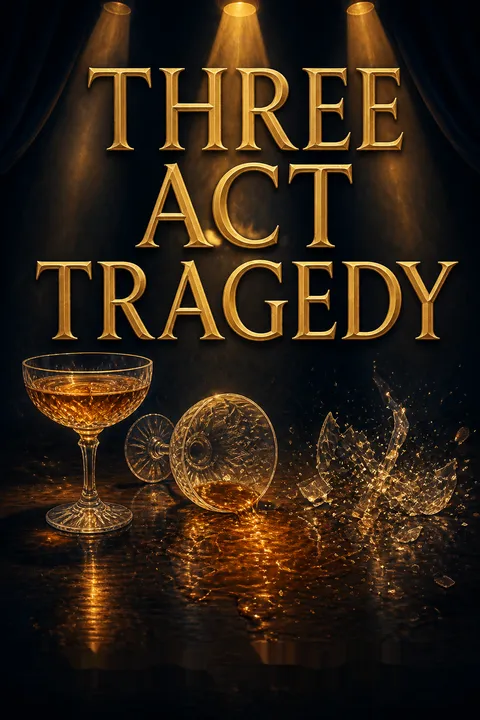
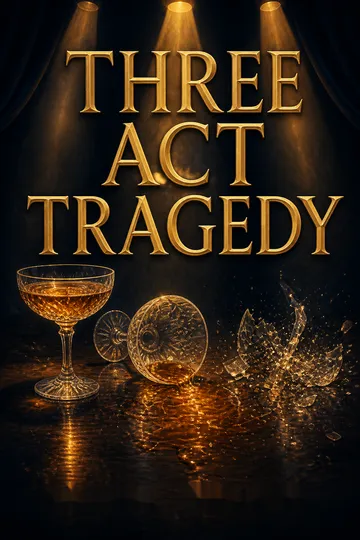
During a sophisticated evening at Crow's Nest, the tranquil mood is shattered. Amid sparkling conversation and cocktails, Stephen Babbington, an unassuming country clergyman, takes a sip of his drink and collapses, dying instantly. The tragedy shocks the gathering, especially as there is no apparent reason for his sudden demise. Dr. Bartholomew Strange, a famed physician among the guests, finds no obvious cause. Poirot is asked for his opinion but finds no evidence of foul play; the cocktails are tested, showing nothing but gin and vermouth. Still, a vague sense of wrongness pervades. Some, especially Egg Lytton Gore and Sir Charles, cannot quite believe in natural causes, while others dismiss the incident. The seeds of doubt and suspicion are quietly sown.
Suspicions Rise Among Friends
The days after Babbington's death weigh heavily on everyone, particularly Sir Charles and Egg, both haunted by nagging suspicions. Sir Charles suppresses his unease, fearing disparagement for conjuring melodrama out of tragedy. Egg is less willing to ignore her instincts; she presses Mr. Satterthwaite and others to consider the "damned oddness" of the vicar's death. Meanwhile, Poirot, usually swift in his deductions, remains uncharacteristically undecided. A quiet unease spreads; the possibility of poison, suicide, or murder is debated, but consensus is elusive. Personal affections and romantic tensions among the younger guests—Egg's admiration for Sir Charles and rivalry with Oliver Manders—shade the charged atmosphere with longing and confusion. Beneath the surface, hidden emotional fractures deepen.
A Second Sudden Death
Sir Charles, trying to distance himself from unsettling memories, retires to the Riviera. There, news arrives of another shock: Dr. Bartholomew Strange has died, in bizarrely similar circumstances, while entertaining many of the same guests at his Yorkshire estate. Like Babbington, he collapsed after consuming an innocuous drink, and autopsy reveals nicotine poisoning. Poirot's skepticism gives way to alarm; this cannot be coincidence. Egg's urgent letter draws Sir Charles and Satterthwaite back to England. As investigators converge, the possibility of a deliberate link between the two matched murders grows. The urgency increases—someone among the circulating guests is seemingly orchestrating death with chilling calculation.
Baffled Investigators Convene
Sir Charles, Satterthwaite, and Poirot consult with local authority Colonel Johnson. The police pin their hopes on John Ellis, the new butler who vanished the night of Strange's murder. Yet, Ellis's flight does not explain the first death, nor does it feel plausible to several keen minds. Attention turns to long lists of house guests—many present at both fatal gatherings—including the stylish Dacres, the enigmatic playwright Miss Wills, witty Angela Sutcliffe, and the Lytton Gores. The suggestion takes root: someone engineered the guest lists with a purpose. Old relationships, hinted rivalries, and overlapping circles cloud the search for motive and means. Poirot's counsel: patience, critical thought, and careful scrutiny of psychology and circumstance.
Web of Guests Analyzed
The investigators methodically dissect the backgrounds, secrets, and interrelations of all present at both tragedies. They pursue leads in Yorkshire and Loomouth, question servants and peers, and probe the possible link between Babbington's life as a clergyman and Strange's as a doctor. The Dacres' financial woes and marital strain are examined. The playwright Miss Wills's probing curiosity and near-invisibility make her a person of interest. Egg investigates Mrs. Dacres under the guise of a customer; Satterthwaite interviews Angela Sutcliffe, learning about old affairs and her honest perspective. The question persists: what secret connects the two very different victims to the same circle of guests?
The Butler's Vanishing Act
Attention fixes on Ellis, the missing butler from the second murder. A search of his abandoned room with Poirot's guidance uncovers draft blackmail letters—Ellis had seen something incriminating and tried, unsuccessfully, to sell silence for cash. The mounting evidence points away from Ellis as the murderer and toward a calculating guest who exploited Ellis's vulnerability. The possibility of further, uncounted victims—Ellis, perhaps Miss Wills, whose disappearance now troubles Sir Charles—adds new urgency. Poirot insists: these deaths are not accidents, nor the work of a deranged outsider, but the calculated acts of someone trusted and embedded within the group.
Shadows of Past Secrets
As the group investigates Babbington's long years as vicar in Gilling, they seek for enemies or scandals in his past. A visit to Mrs. Babbington, and later to Miss Milray's mother, yields only tender recollections of a gentle family man. Yet Poirot, observing Egg's romance with Sir Charles, begins to wonder about unexplored motives involving marriage and past entanglements. Romantic tensions simmer—Egg's youthful passion for Sir Charles battles with lingering attentions from Oliver Manders. Meanwhile, hidden psychological wounds in several characters are revealed through conversations: jealousy, secrecy, class insecurity, and desperate ambition all bubble beneath the surface.
Threads of Love and Jealousy
As personal relationships come further into focus, emotional stakes heighten. Sir Charles, learning Egg loves him, finds happiness only clouded by the persistent mystery. Egg's maneuverings, her jealousy of Angela Sutcliffe, and Miss Milray's secret devotion to Sir Charles add complexity. Meanwhile, Oliver Manders's insecurity and frustration over Egg's affections drive his erratic behavior. Poirot's shrewd observations pick out hidden tensions in every conversation. Romantic love, hero worship, and wounded pride all jostle against suspicion—a rich mix that both blinds and reveals, propelling the investigation forward even as it deepens the shadows around the killer's identity.
The Actress and the Dramatist
Angela Sutcliffe and Miss Wills both come under scrutiny for intelligence, subtlety, and ambiguous connections to victim and suspects. Miss Wills's prodigious powers of observation—she alone notices a fake birthmark on Ellis' wrist—and her post-tragedy disappearance raise red flags for both Poirot and Sir Charles. Interviews and careful questioning untangle the possibility that her knowledge, rather than guilt, made her a target. Sutcliffe's frankness about past affairs, her self-assuredness, and Egg's jealousy further stir the emotional pot. No evidence links either woman directly to the murders, but the paths of witness, suspicion, and gendered societal roles entwine in the hunt for truth.
A Trap for the Killer
Poirot organizes a gathering of all principal suspects under the guise of a friendly sherry party. There, he dramatically simulates another poisoning—with Sir Charles feigning collapse, mimicking the previous deaths. As the others react in horror, Poirot expertly swaps glasses, demonstrating how, in the actual murders, the real poisoned drink could be unobtrusively replaced in all the confusion. The demonstration proves the method, but leaves the "who" unresolved. Poirot's sharp gaze, however, lingers on the reactions—especially one person's look of utter surprise. He warns the real murderer may soon strike again, as silence and guilt ferment in the aftermath.
Poirot's Dramatic Revelation
Poirot finally gathers the main players and reconstructs, card by card, the cunning architecture of the crimes. The murderer, he reveals, was never on the suspects' list—he was, in both tragedies, an insider and an actor in more ways than one: Sir Charles Cartwright himself. Using his professional skills, Cartwright disguised himself as the butler Ellis to orchestrate Dr. Strange's murder and rehearsed his method by killing Babbington in Cornwall, ensuring the poison would target "anyone but" Miss Lytton Gore, himself, or Strange. Cartwright's motive: his secret first marriage to a woman institutionalized for mental illness, which prevented him from marrying Egg. Strange, an old friend who knew the truth, was the specific target; Babbington's death was the rehearsal, Mrs. de Rushbridger's a clever decoy to mislead the investigation. Poirot's immaculate reasoning, coupled with clues of manner, opportunity, and psychology, force the murderer to break—tragedy and betrayal at last laid bare.
Aftermath and Emotional Reckoning
With Cartwright exposed and his world destroyed, Egg Lytton Gore confronts heartbreak and disillusionment—her hero revealed as a killer willing to poison innocent lives for personal happiness. Mr. Satterthwaite, ever empathetic, supports her in grief; Oliver Manders, whose love for Egg remains steadfast, emerges as a source of comfort and potential new beginnings. Poirot reflects on the moral ironies: how talent, genius, or charm mask cold calculation, and how the pursuit of love or success warps the soul. In the end, justice and truth reassert themselves, but at significant emotional cost to all involved. Life resumes, but innocence is lost.
Analysis
Three Act Tragedyexplores the interplay of performance, reality, and the masks people wear—literally and emotionally. Through the motif of theatre, Christie dissects how individuals stage-manage their public appearances, often hiding desperate personal struggles. The story's solution deconstructs the classic country house mystery, showing how genius and criminality can arise from exactly the same need to control fate and audience. Beneath the superficial charm of Sir Charles is a portrait of narcissism weaponized by frustrated desire; his willingness to murder friends for love reveals the corrupting power of unexamined ambition. The method—a "dress rehearsal" murder before the true crime—comments on the dangers of detachment and the temptation to treat real lives as mere props. Christie's psychological insight is acute: hero worship, jealousy, loneliness, and social pressure combine to drive both victims and perpetrators. The novel offers no easy solace—justice is done, but at great cost to innocence, love, and trust. It is a warning about the dangers of living life as performance, the oppressive weight of secrets, and the necessity of critical self-knowledge. Ultimately, Three Act Tragedy is less about the cleverness of the crime than the tragedy of human frailty within the illusions we create for ourselves and one another.
Review Summary
Three Act Tragedy receives mixed reviews, with some praising its clever plot and surprising ending, while others find it disappointing due to Poirot's limited presence. Many readers appreciate Christie's skillful misdirection and character development, though some find the pacing slow. The theatrical structure and recurring characters are noted as interesting elements. Overall, it's considered an enjoyable mystery, albeit not Christie's best work. Some readers found the solution predictable, while others were pleasantly surprised by the twist ending.
Characters
Sir Charles Cartwright
Sir Charles is both charismatic leading man and tormented soul—his entire life a sequence of shifting roles. Renowned as a retired actor, he is drawn back to drama's center when murder strikes among his friends. Obsessed with youth and romance, he becomes fixated on Egg Lytton Gore, whose vitality awakens a desire for a fresh start denied him by a secret first marriage to a woman in an asylum. Cartwright's psychological complexity—narcissism, insecurity, and a desperate need for adoration—drives him to test the boundaries of fate. His ego and resourcefulness allow him to orchestrate intricate crimes, believing love and genius set him above morality. Ultimately, his performance unravels, revealing the emptiness within.
Hercule Poirot
Poirot is famous for his fastidious appearance, eccentric mannerisms, and unmatched powers of deduction. In this case, he is initially slow to suspect foul play, but his humility allows him to reexamine facts as events unfold. Poirot's psychological acumen is his greatest tool; he reads every nuance of gesture, conversation, and silence. Both underestimated and slightly resented by the English gentry, he uses social invisibility to his advantage. Poirot's empathy enables him to recognize the pain and ambition that drive others, seeing through surface respectability to guilt and motive beneath. He orchestrates the denouement with theatrical flair, but his sense of justice and compassion leaves him with little enjoyment in victory.
Mr. Satterthwaite
Mr. Satterthwaite is a wealthy art lover and socialite with a keen interest in human behaviors—an outsider who moves within elite circles without truly belonging. Sensitive, perceptive, and emotionally attuned, he serves as both narrator and audience: he sees connections others miss, especially in matters of love, jealousy, and ambition. He forms alliances with Poirot and Egg, aiding in the investigations not through deduction but profound understanding of character. Satterthwaite is a witness to human foibles and suffering, more than agent of fate; his wisdom and gentle gravitas offer a counterpoint to the more impulsive or self-involved personalities around him.
Egg (Hermione) Lytton Gore
Egg is intelligent, lively, and emotionally transparent—embodying both youthful optimism and the pain of growing up. Her affections for Sir Charles flare into hero worship, while her rivalry with Oliver Manders reflects deeper insecurities about place and self-worth. Egg participates actively in the amateur investigation, eager to matter and to change the course of destiny. Her emotional arc mirrors the story's: innocence encountered by betrayal, romantic fantasy crushed by reality. By the end, Egg's heart is scarred, but her resilience hints at a new, harder wisdom. She is the soul of the novel—both its most honest victim and survivor.
Oliver Manders
Handsome and sensitive, Oliver suffers from feelings of inferiority rooted in illegitimacy and social rejection. His relationship with Egg is marked by both competing affections and unspoken devotion. He feigns boredom and cynicism to mask vulnerability, often making provocative statements that alienate potential allies. His impulsive actions—including an inexplicable car accident to secure a house-party invitation—arouse suspicion. But Oliver matures through loss and emotional upheaval, proving capable of real loyalty and care. His journey is one from adolescent bravado toward responsible manhood, and he stands as a mirror to the main theme: the pain and promise of growing up in a compromised world.
Miss Milray
Miss Milray is Sir Charles's hyper-competent, plain-faced secretary—unflinching in her professional standards and impersonal manner. Underneath, however, lies a deep devotion (even unrequited love) for her employer and a sharp, logical mind. She becomes a crucial, if subtle, player: her knowledge of Charles's chemical experiments and her discreet actions signal both a conscience and a longing for recognition. Torn between loyalty to Charles and horror at his crimes, she tries to destroy evidence once she suspects his guilt. Her psychological portrait is one of stoic suffering in service, with a brief glimpse of quiet heartbreak.
Dr. Bartholomew Strange
Harley Street's leading nerve specialist, Strange is genial, successful, and the only guest with the potential (through medical training and moral authority) to expose the murderer's secrets. His relationship with Sir Charles stretches back to university days; their camaraderie is tinged with mutual respect and mutual secrets. Strange's keen mind leads him to suspect a link between past and present deaths, and he attempts to assemble the same guests for a second "test." His murder proves the killer's resolve and sets the stage for the final confrontation—his death sacrifices friendship for a final, fruitless reach at truth.
Angela Sutcliffe
An admired stage star and Charles's former lover, Angela is characterized by ironic wit, subtle emotional strength, and a worldly wisdom that both attracts and repels. Her presence in both settings suggests continuity and change; she is at once a relic of the Edwardian past and an example for Egg's future. Angela's ambiguous history with Charles and her role as possible rival to Egg make her notable, but her practical, caring responses—especially amid crisis—demonstrate resilience rather than malice. She is the embodiment of theatrical self-possession and strategic vulnerability.
Cynthia Dacres
As Ambrosine's glamorous dressmaker, Cynthia moves with ease in smart society. Yet, beneath her polished exterior, she faces financial ruin, a crumbling marriage, and whispers about affairs. Her emotional armor—acidity, self-assurance, and appetite for sensation—hides insecurity and exhaustion. Both her own and her husband's foibles are potential motives for intrigue and scapegoating. She bristles at suspicion yet savors notoriety, navigating the gendered suspicions of her era with careful calculation. Cynthia is a modern woman whose troubles signify broader changes and anxieties in British society and class.
Miss (Muriel) Wills
An awkward, underappreciated playwright, Miss Wills is physically unremarkable, socially awkward, but inwardly sharp and relentless. Her near-invisibility allows her to eavesdrop, notice details (the fake birthmark, for example), and intuit connections others miss. Wills's intelligence threatens the killer: her silence is her greatest danger; her vanishing after Poirot's demonstration indicates the mortal risks of knowing too much. In a world that dismisses her, she finds purpose in relentless, nearly antagonistic observation. She is a reminder of the unseen power of the marginalized.
Plot Devices
Dual murder in two acts spanning same guest list
Christie's structure is a three-act tragedy in miniature; two mirrored deaths at elegant social gatherings—each involving the same guests—underscore the mystery's almost "staged" quality. This duality is compounded by the narrative's theatrical motif: Sir Charles the actor literally changes roles, while Poirot, Satterthwaite, and Egg all play distinct investigative parts. The vanished butler, secret letters, and fake clues (including the invented "Mrs. de Rushbridger") serve as red herrings and structural misdirections, keeping the reader uncertain until late revelations. Poison in a drink—a classic Christie device—is here used less for forensic surprise than as a psychological smokescreen.
Misdirection and psychological foreshadowing
Christie masterfully delays the solution by layering misdirection: the butler's disappearance, the vanishing playwright, false clues about inheritance and jealousy, and the idea of multiple unrelated motives. The method of murder—quick, substitution-based poisoning—never fully explains the "why," postponing satisfaction until Poirot reconstructs the sequence as a literal play. The killer's psychological makeup, built up through narrative foreshadowing (Sir Charles's obsession with roles, hero worship, and romantic longing), ultimately provides the missing key. Christie's use of multiple narrators mirrors the multiplicity of dramatic parts, drawing the reader into both the story's surface and its undermining.
Thematic repetition and comedic inversion
The story uses repetition (two apparently inexplicable deaths, hosted by two different "masters") to build suspense. The idea of a "dress rehearsal" for murder—preceding the real target—gives the plot its darkly comic edge, while the final sherry party dramatizes Poirot's conviction that life, like theatre, is subject to sleight-of-hand. The "house of cards" metaphor, from Poirot's actual card-tower-building, underlines the delicacy and interconnectedness of personalities, motives, and mistakes, as well as the precipice on which truth teeters. The conclusion, in which personal happiness is sacrificed to the "tragedy" of justice, closes the circle.
Hercule Poirot Series













About the Author
Other books by Agatha Christie

Download PDF
Download EPUB
.epub digital book format is ideal for reading ebooks on phones, tablets, and e-readers.








































