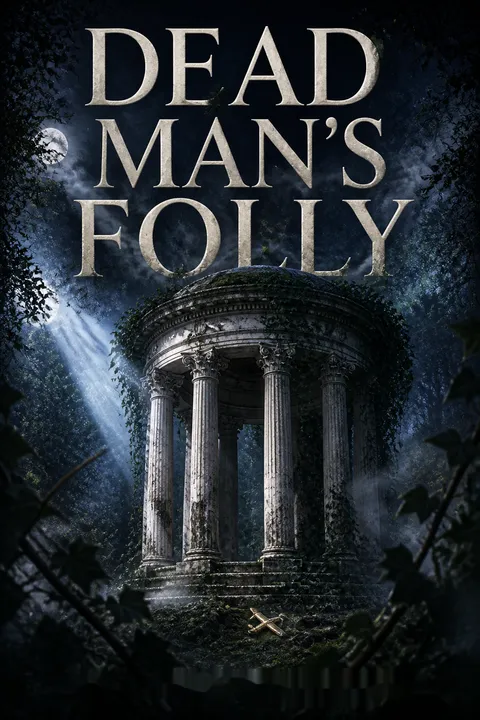

Plot Summary
The Summons to Devon
When Mrs. Ariadne Oliver, an eccentric crime novelist, telephones Hercule Poirot for urgent help in Devon, he is intrigued by her elusive explanation and her disquieted intuition. Despite little detail and his own secretary's skepticism, Poirot's curiosity overpowers any reluctance. He makes haste to catch the train to Nasse House, uncertain of what awaits. Upon arrival, the idyllic English countryside and the grandeur of Nasse set the stage, but beneath the pleasant surface lingers Mrs. Oliver's anxious sense that "something is wrong" with her latest assignment: orchestrating a "Murder Hunt" for a village fête. Poirot senses the opening moves of a puzzle—one woven of secrets, personalities, and perhaps something darker masked by innocent amusement.
Local Color, Subtle Shadows
Mrs. Oliver shares more details as Poirot tours Nasse: Sir George Stubbs, the wealthy new owner; his beautiful yet simple wife, Hattie; a mix of staff and neighbors forming a self-contained community. Fêtes and youthful transients from the Youth Hostel nearby mix cosmopolitanism with tradition. Already, Mrs. Oliver's unease infects Poirot; suggestions and decisions about the Murder Hunt, seemingly trivial, have been subtly manipulated. Poirot notes the dynamic—a cast of varied characters, each drawing or repelling attention, yet all locked in the rhythms of rural and social routine. It is within these unremarkable moments, Poirot senses, that someone quietly steers fate toward calamity.
Faces at Nasse House
At Nasse House, Poirot meets Sir George, bluff and hearty but sharply observant; Lady Hattie, otherworldly and childlike; organiser Mrs. Masterton, and shrewd secretary Miss Brewis. The architect Michael Weyman, sharp and opinionated, embodies local friction, while former estate owner Mrs. Folliat, genteel but faded, presides with grace. The younger generation—Alec and Sally Legge—add to the circle. Etiquette overlays simmering personal dynamics: jealousy, frustration, and hidden longing. Poirot wonders at subtle looks, unfinished gestures, and absences. What seems a pleasant gathering for a day's amusement bristles, unseen, with suppressed drives and potentially lethal secrets.
Detectives and Doubts
Mrs. Oliver's "woman's intuition" finds a receptive ear in Poirot, who trusts such vague alarms, knowing they often shadow real clues not yet conscious. He listens to her impressions: manipulation by unknown hands, the impression that something or someone dangerous is exploiting the artificiality of the Murder Hunt. Poirot listens—for words, for what is left unsaid. As preparations for the fête continue, he observes the patterns of routine: Lady Hattie's listlessness, local gossip about the strange new "Lady" at the estate, and small frictions among staff. Poirot senses that someone, perhaps playing a role, is waiting for the curtain to rise on something more menacing than stage-managed murder.
Fête Preparations and Unease
On the day of the fête, anxious excitement hums. Sir George hosts with forced cheer as Lady Hattie seems even more abstracted, distracted by a letter announcing her cousin Etienne's coming visit—news that visibly alarms her. Poirot notices moments of shrewd awareness in Hattie, lost under her vacant mask. Mrs. Oliver manages last-minute details as contestants prepare for the Murder Hunt; children gather for fancy dress, villagers for tea. Quietly, Poirot notes absences—people not where they should be, conversations that skirt shadowy topics. The day's festive surface is fragile, ready to be shattered. Poirot's growing perception: in this tight social maze, a planner's hand works with chilling calculation.
The Game Turns Grim
As the fête reaches its apex, roles blur—especially for Marlene Tucker, a local Girl Guide assigned to play the "corpse" in the Murder Hunt. But as Poirot and Mrs. Oliver conduct a routine check, they discover her truly dead—strangled by the very cord she was to use in pantomime. Pandemonium stirs beneath the surface; the police arrive, quietly seal the scene, and Poirot realizes the boundaries between fiction and reality have been breached. Now, what began as staged entertainment has become a complex whodunit of chilling authenticity. More disturbing still: Lady Hattie, meant to judge the children's contest, is nowhere to be found.
The Body in the Boathouse
The investigation shifts rapidly. Inspector Bland takes charge, piecing together timelines and motives. The girl's family offers little insight—Marlene was plain, friendless, ordinary. Suspicions whirl: Did a party guest, local, or foreigner exploit the Murder Hunt? Focus sharpens: Only those "in the know" about the game—residents, trusted helpers—could have so smoothly approached Marlene. Poirot observes everyone's reactions—shock, fear, calculation. Lady Hattie remains missing, with theories ranging from frightened escape to a second victim. Poirot's subtle logic tightens: this is a crime staged to look senseless, but every choice—the victim, the timing, the distractions—has a cold underlying design.
The Vanishing Wife
As the fête's excitement fades into unease, Lady Hattie's absence overshadows all. The police search the grounds, question staff, scan buses and ferries; rumors fly of Hattie's flight, suicide, or abduction. Suspicions fall in turn upon relatives, strangers, and even the unhappy household staff. Yet for Poirot, the key question is motive. Why would a supposedly guileless, childlike woman seek refuge or vanish, unless she felt threatened? Poirot listens, probes, and catalogues—missing hats, cryptic exchanges, overlooked gestures. To find Hattie, Poirot must separate appearance from reality and see who benefits from her silence—or her death.
Suspects and Red Herrings
Inspector Bland questions each key player: Sir George, whose bluff distress may mask calculation; Miss Brewis, who bristles with jealousy and resentment; Michael Weyman, whose artistic temperament hides unpredictable moods; Alec and Sally Legge, whose marriage strains under private tensions; Mrs. Folliat, who knows and guards Nasse's history. Myriad motives emerge—romantic jealousies, property, social envy, ambition. Poirot weighs testimony, finds contradictions in everyone's alibis, traces feints and manipulations. That the crime is hidden within a "game" designed to mimic murder is uncomfortably close to a joke by a ruthless mind. Yet what seems complicated, Poirot suspects, is disarmingly direct.
Hidden Truths, Quiet Motives
The investigation reveals strange incongruities: the scenario of the Murder Hunt was altered repeatedly by "harmless" suggestions; "Lady Hattie" was both present and absent at crucial moments. Poirot's investigation into household dynamics reveals subtle patterns: stolen moments in the Folly; Village children who snoop, tell tales, or listen to old family secrets; gifts and hush-money passing unnoticed. Poirot finds a telling charm, a dropped gold airplane, in the Folly. He senses that relationships and powerful familial ties—some forged in love, others in shared guilt—lie at the heart of the matter. Beneath the show is a personal web both ancient and dangerous.
Poirot's Jigsaw Unearths Patterns
Back in London, Poirot reviews the case as a jigsaw—odd details are pieces demanding correct placement: the gold charm, strange remarks, the false tension around Lady Hattie's intelligence, Marlene's purchases with unexplained money, and a visitor's sudden wealth. Poirot returns to Devon, questions locals, hears of a related accidental death (Merdell, Marlene's grandfather)—and realizes the "accident" is in fact the last defensive murder of someone who knew too much. Poirot deciphers trajectories between shifting identities, long-held secrets, and the calculated use of social roles to mask lies. The puzzle nears completion; the pattern is now lethal and clear.
Secrets in the Folly
Poirot uncovers a lethal family secret: Mrs. Folliat's son, presumed dead in the war, returned in disguise as Sir George, changing his name and, with the help of a criminal wife, orchestrated a marriage to Hattie, inherited her wealth, and secured his hold on Nasse. But the real Hattie—docile, trusting, naive—was swiftly murdered and hidden beneath concrete, memorialized by the new "Folly." Marlene, having overheard evidence and hints from her aged grandfather, was bribed to silence, then killed when her presence became a threat. The "Lady Stubbs" seen after the fête was only the criminal first wife in disguise. Poirot has pieced together the web of identity, motive, and opportunity that shielded evil beneath respectability.
The Past Emerges
Poirot reveals the truth to Mrs. Folliat in a harrowing confrontation. The weight of the past is unbearable: her loyalty to a son she knew was "ruthless and without conscience," her collusion in his new identity, and her silence in the wake of Hattie's death. Realizing that her love and pride shielded a murderer, Mrs. Folliat must confront the ruin of all she cherished in Nasse—its peace destroyed by the secret she kept. With the murderers fled or dead, the dead unearthed, and the survivors forever haunted, the legacy of the Folliat name is shown as both the motive for all and its undoing.
Poirot Confronts the Heart
Poirot concludes the case with a visit to Alec Legge, urging him to salvage his fracturing marriage by honesty—a reflection on the corrosive effect of secrecy on all relationships within the story. Poirot marks the persistence and cost of guilt: Mrs. Folliat's complicity, Sir George's descent into monstrosity, and the endurance of the innocent. The thread of ambition, love, and fear runs through every action. The crimes were as much the result of longing for the past as schemes for the future. Even Poirot, usually unsparing, is moved to gentleness—knowing justice sometimes delivers only sorrow.
Folly Unveiled
With the truth at last revealed, Nasse's peace is only an illusion. The Folly—meant to beautify the estate—remains a monument to the crime, its base the grave of Hattie. Poirot's case has exposed the dangers of nostalgia and secrecy. For Mrs. Folliat and the village, Nasse will never be the same: hospitality turned to horror, and the old certainties undone. Poirot departs, having brought truth to light but knowing that justice can never be truly complete: some wounds never close, and the heart of the matter—love, loss, loyalty—remains as complicated as ever.
Analysis
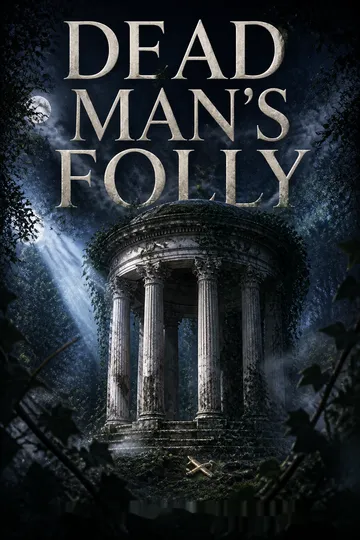
Dead Man's Folly stands as a masterwork of both puzzle and psychological depth, blending Agatha Christie's trademark misdirection with acute social observation. On the surface, it is a classic country house murder, showcasing the perils of inherited privilege, the extinction of old lineages, and the corrosive tensions between appearance and reality. Yet beneath the veneer, Christie interrogates the dangers of nostalgia, insularity, and the failure to face uncomfortable truths. The use of the "Murder Hunt" as the setting for real crime is a biting commentary on the proximity of horror to everyday life—and on the ways in which ritual, tradition, and entertainments can become protective screens for evil. Lady Hattie's fate is a powerful indictment of how innocence, gentleness, and dependence are vulnerable, not just to predators, but also to those who love unwisely. The solution's revelation—that the killer is not a stranger but the venerated master of the house, shielded by social status and maternal love—underscores the perils of misplaced loyalty, the psychological costs of secrets, and the necessity (and pain) of bringing the truth to light. In the end, Nasse House's beautiful façade cannot survive the demolition of its moral foundations—making Dead Man's Folly a haunting exploration not just of murder, but of the tragedies hidden at the heart of community and legacy.
Review Summary
Dead Man's Folly receives generally positive reviews, averaging 3.82/5. Readers appreciate Christie's trademark cleverness, praising her skillful placement of clues in plain sight and the engaging premise of a staged murder hunt becoming reality. The character of Ariadne Oliver, widely seen as Christie's humorous alter ego, is a particular highlight. Some criticisms include a rushed ending, limited engagement with clues, and Poirot's reduced role. The Devon setting, based on Christie's own Greenway estate, receives warm mentions. Most readers admit they couldn't identify the murderer, testament to Christie's masterful misdirection.
Characters
Hercule Poirot
Poirot is both an outsider and the story's emotional center: his Belgian precision, methodical reasoning, and wry empathy give him access to the deepest currents beneath Nasse's genteel surface. Intellectually acute, he trusts intuition as much as fact, listening for what is unsaid and reading patterns others miss. Poirot's psychological insight enables him to see through the elaborate games, roles, and self-deceptions each character employs—especially where social status and familial loyalty blur moral judgment. He is both a fixer and an observer of suffering, ultimately moved as much by compassion for the vulnerable as by his passion for truth.
Ariadne Oliver
Mrs. Oliver embodies the creative chaos at the heart of all mysteries. Her instincts are sharp, but her methods unchecked—she mixes wild imagination with keen observation, offering Poirot clues more potent than she realizes. Her "intuition" often uncovers the atmosphere of menace long before she understands its shape. Psychologically, she is both vulnerable to self-doubt and tireless in pursuit. Through her, Christie offers a self-aware narrative voice, probing the unpredictability of both fiction and life, the muddle of attempts to order disorder. Her presence sparks Poirot's genius, making her vital to the investigation's progress.
Sir George Stubbs (James Folliat)
Outwardly the hearty, affable master of Nasse, Sir George is a manufactured persona—behind his bluster is the cunning, ruthless survivor James Folliat. His transformation from disgraced son to country squire is both self-preservation and ambition. He is deeply manipulative, hiding behind bluster even while orchestrating Hattie's murder with cold calculation. His marriage is engineered for control and wealth; his moral vacuum is masked by the traditions of English respectability. Psychologically, he is a study in the dangers of inherited pride and the monstrous possibilities born from clinging to power at any cost.
Lady Hattie Stubbs
Hattie is both a symbol and a casualty—the delicate, slow-witted heiress, vulnerable to exploitation and domination. Her extreme suggestibility makes her an easy pawn in any scheme. Psychologically, she is the purest victim: affectionate, unguarded, and lost amid the adult ambitions surrounding her. Hattie's silence and disappearance become the mystery's center: her absence haunts the living, and ultimately her fate—killed and substituted by her husband and his criminal wife—embodies the tragic destiny of innocence in a world ruled by guile.
Mrs. Amy Folliat
Mrs. Folliat is dignified, gracious, and self-sacrificing: her fierce protection of her family shades into complicity when she conceals her surviving son's crime. Psychologically, she is torn between love and conscience—a pride in her lineage matched only by the pain of its extinction. Her emotional journey is at the core of the story's tragedy: a woman who, to preserve memory and home, closes her eyes to horror, only to be consumed by shame and loss. In her, Christie explores the cost of loyalty and the devastation of facing the evil nurtured by good intentions.
Miss Amanda Brewis
Miss Brewis is the classic underappreciated woman of competence, quietly bitter at being eclipsed by Hattie's beauty and passivity. Her devotion to Sir George fuels jealous suspicion and emotional blind spots. Convinced of Hattie's uselessness and wrongness for Nasse, Miss Brewis experiences emotional aridity: her efficiency masks yearning. She is the archetype of the "invisible woman," fostering a private narrative of betrayal and injustice. Though not guilty of murder, her psychological portrait as both helper and critic captures the corrosive effects of envy and unrequited devotion.
Michael Weyman
An architect with artistic drive and social dissatisfaction, Weyman is critical of the "nouveau riche" presence at Nasse. Unimpressed by wealth, he values beauty, authenticity, and merit; frustration at compromises and misplacement of the estate's architectural "Folly" mirrors his own sense of social displacement. His frank opinions make him both suspect and witness. Psychologically, his bitterness is softened by flashes of humor and a certain honesty; beneath his sarcasm is a genuine yearning for meaning and recognition.
Alec and Sally Legge
Alec—intelligent, moody, politically involved—feels trapped by global angst and personal insecurity, driving a wedge into his marriage with Sally, whose warmth and intelligence are shadowed by dissatisfaction. Their internal drama is both personal and emblematic—the modern couple overwhelmed by outside stress and inner miscommunication, each seeking solace elsewhere. Sally's flirtations and Alec's secrecy provide motives for jealousy and suspicion; ultimately, the resolution of their subplot—since they are victims, not perpetrators—offers a counterpoint of hope, highlighting the destructiveness of secrets and the possibility of redemption.
Marlene Tucker
Marlene, an unremarkable village girl, is the linchpin of the plot: her role as "victim" in the Murder Hunt is made real because of her accidental knowledge. A compulsive snoop and braggart, she holds small-town power by trading in secrets she only half understands. Psychologically, her marginality—plain, ignored, eager for attention—leads her into the path of danger. Her death signals the reach of evil into the world of the innocent and the consequences of paying attention to what should remain hidden.
Etienne De Sousa
De Sousa is suave, continental, and ambiguous—a genuine cousin to Hattie, appearing just in time to trigger the fatal events. His presence is the catalyst for exposing the imposture of "Lady Hattie". Though he is neither lover nor killer, his arrival pushes the perpetrators into action. Psychologically, he is self-sufficient, slightly vain, and detached—a reminder of complicated, overlapping family histories and the way the past can re-emerge to dissolve the present's fragile arrangements.
Plot Devices
Game Within a Game
The "Murder Hunt" fête is the story's central plot device—a fiction within the fiction, where guests hunt for staged clues and a fake corpse. Christie exploits this meta-mystery to brilliant effect: the party's contrived murder allows the real killer(s) to slip unnoticed through the crowd, exploit confusion, and arrange Marlene's death to mimic play. The device enables layers of deception, misplaced motives, and provides a structure made for misdirection—both for the characters and the reader. The contrast between play and horror, innocence and calculation, underscores the novel's exploration of the dangers lurking beneath seemingly harmless tradition.
Performance and Substitution
The story's primary twist revolves around the doubling of Lady Hattie—a criminal woman masquerades as her, allowing the real Hattie's murder and the subsequent disposal of her body beneath the estate's newly built Folly. This physical and social substitution is both literal and thematic: identities are masks, and fate is determined by who wears which face at which time. The device accentuates themes of trust, vulnerability, and the psychological costs of all social roles. Performance allows the killer to evade suspicion, yet also traps them: their success depends on fooling even those closest to the victim.
Misdirection and Red Herrings
Christie expertly deploys misleading motives, contradictory alibis, and ambiguous testimony. Every character has something to hide; every event can be read several ways. The appearance of exotic foreigners (the Youth Hostel's guests), the arrival of De Sousa, and the focus on deranged outsiders all turn attention away from the true killer(s). This technique plays on parochial fears and the dangers of assuming the unfamiliar is always responsible for evil, while the mundane and familiar conceal the worst.
Layered Clues, Psychological Foreshadowing
Small clues—a gold charm, Marlene's unexplained possessions, Mrs. Oliver's "intuitions," Hattie's flashes of lucidity, old Merdell's half-mad ramblings—are laid early and often, gaining significance only when Poirot (and the reader) reconsiders them in light of new revelations. Scenes of emotional conflict, household tension, and social exclusion seed the ground for later insights. Christie's foreshadowing is psychological as much as factual: she prepares the solution through patterns of behavior, not just evidence.
Social Structure as Narrative Cage
Nasse House and its grounds, with their hierarchy, traditions, and underlying fractures, are as much plot devices as backdrop. The importance placed on "always having Folliats at Nasse," on roles (mistress, servant, squire), and on appearances sustains both the central deception and the story's emotional stakes. The house's history, its secrets (literal and metaphorical), and the construction of the Folly as both ornament and tomb encircle the crime in a web of inevitability. Christie's narrative structure itself echoes this social cage—keeping suspects close, secrets closer, and the doors metaphorically locked until Poirot reveals the truth.
Hercule Poirot Series














About the Author
Other books by Agatha Christie


Download PDF
Download EPUB
.epub digital book format is ideal for reading ebooks on phones, tablets, and e-readers.








































