
Plot Summary
Holiday by the Seaside
Retired detective Hercule Poirot and his loyal companion Captain Hastings arrive at the Majestic Hotel in St Loo, seeking a relaxing seaside holiday. Poirot claims he has truly retired, enjoying his peace while teasing Hastings with mock-serious discussions about the artistic quality of English life. Their tranquil setting is sunlit and idyllic, but beneath the surface lies tension: Poirot's keen attention never quite rests. After a gentle debate about the lure of English towns, a chance meeting with the spirited and unconventional Nick Buckley draws them, unknowingly, into the heart of a mystery that challenges Poirot's greatest skills—and puts both lives and reputations at stake.
A Bullet in the Sun
While conversing on a terrace amid the lush hotel gardens, Nick Buckley—owner of nearby End House—chats with the detectives. Suddenly, a bullet pierces her hat, narrowly missing her head. The near-fatal "accident" initially seems accidental, but Poirot's discovery of the spent bullet—and the precise hole it left in Nick's hat—shakes them both. Poirot's sense of professional duty reignites: his promise of retirement is forgotten in the face of attempted murder. This unexpected brush with death, hidden so brazenly among the gentleness of summer, sets Poirot's razor-sharp mind whirring. The bullet is both warning and invitation, and with it, Poirot is drawn fully back into the game.
Shadows Over End House
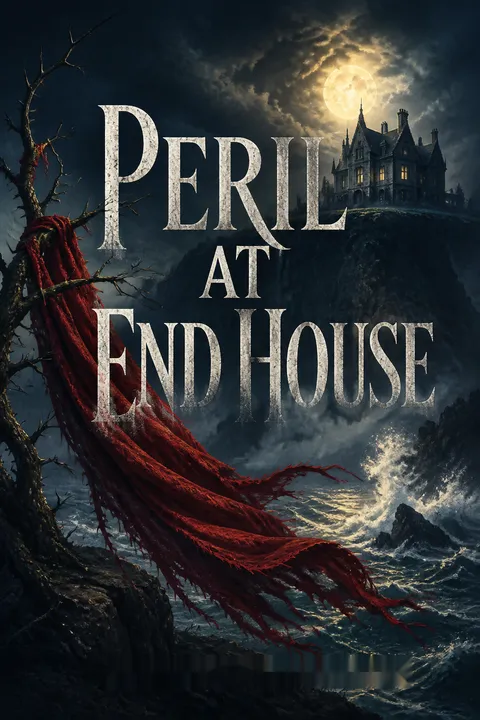
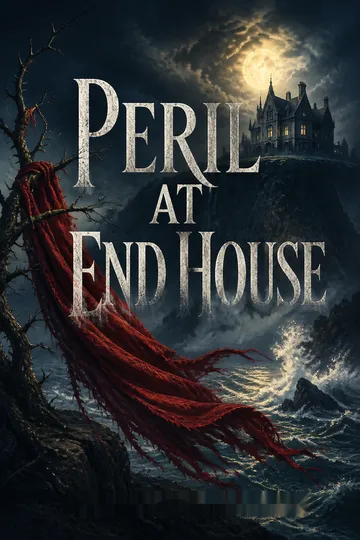
Poirot and Hastings visit End House, a crumbling, ancient estate perched above the sea. Inside, Nick Buckley presides over a household of peculiar rhythms and modern chaos, surrounded by loyal friends and mysterious tenants. Poirot uncovers a pattern of previous "accidents"—a falling picture, rolling boulder, faulty car brakes. Each event spared Nick's life, but now seem like deliberate attempts to kill her. As Poirot questions Nick, her lively banter gives way to flashes of anxiety and detachment. The elegance of the house cannot mask a history shadowed by financial trouble, old family rumors, and an unmistakable sense of danger lurking close to home.
Four Escapes from Death
Poirot insists on hearing every detail from Nick about her recent escapes: first, a heavy picture nearly crushes her as she sleeps; next, a boulder narrowly misses her on a seaside path; then, her car's brakes fail under suspicious circumstances; finally, the bullet through her hat. Each "accident" was plausible alone, but together they form a grim pattern. Nick remains sarcastic and almost flippant—more amused than afraid—which puzzles Poirot and alarms Hastings. Poirot, convinced of an intelligent and determined would-be murderer, vows to set a protective watch over Nick, even as she lightly mocks the notion and her friends remain oblivious to the true peril.
The Charms of Nick Buckley
Nick is a magnetic figure among her friends and houseguests: the melancholy Frederica Rice, the wealthy and enigmatic Jim Lazarus, and the old friend and suitor Commander Challenger. Poirot examines these companions closely, detecting tensions and secret yearnings beneath the surface. Nick is financially precarious, burdened by End House's debts and surrounded by people with murky motives and complicated feelings for her. Poirot's interrogation reveals Nick's flair for invention, and a possible tendency to lie—yet she is profoundly lonely, grasping to the pleasures of youth and defiance. The interplay of affection, envy, and rivalry among Nick and her circle provides both motive and opportunity for murder.
Gathering of Suspects
Poirot and Hastings expand their investigation, making inquiries about Nick's household staff, the Australian couple occupying End House's lodge, and her local relatives, especially her cousin and legal executor, Charles Vyse. Each figure is examined for motive, opportunity, and temperament. Secrets and discrepancies emerge: Mrs Rice's remarks cast doubt on Nick's reliability; Vyse appears bland but curiously cold; the Crofts are overly friendly but leave Poirot suspicious. Poirot's legendary "little grey cells" are put to work constructing a matrix of possibility, with each character's actions, movements, and intentions scrutinized in the hope of preventing murder—before it succeeds.
Mysterious Accidents Revealed
Poirot, delving deeper, reconstructs the timeline of accidents and cross-checks alibis. Freddy Rice's sojourn in Tavistock proves to be a lie: she was nearby all along. Hastings grows uneasy as Frederica's fatigue and Lazarus's evasions mount. Nick's cousin Vyse, supposed to be in his office, cannot account for his whereabouts during the crucial moment a bullet was fired. The "accidents" are clearly orchestrated, but by whom—and for what end? Poirot's list of suspects grows, and the accumulating web of lies and evasions casts suspicion over all. The mood darkens as Poirot senses the killer's escalating urgency and cunning.
A Fatal Mistake
Poirot makes the critical protective move: he arranges for Nick's cousin, Maggie Buckley, to visit and stay with her—hoping this added presence will deter further attempts. The household, hosting a fireworks party, is in high spirits despite Poirot's warnings. As festivities unfold, a tragic case of mistaken identity occurs: Nick's cousin Maggie, wearing Nick's distinctive red shawl, is shot and killed in the dark garden. The killer, aiming for Nick, has, through a fatal error, destroyed the wrong life. Poirot is wracked with guilt, resolving anew to protect Nick and finally unmask the cunning murderer.
Maggie's Tragic End
The household reels: a young woman is dead, and Nick, the true target, is overcome with grief and guilt. Poirot and Hastings, alongside local police, begin relentless questioning, reviewing every detail and motive anew. Drastic protective measures are implemented—Nick is moved to a nursing home under heavy guard. The seriousness of the crime now cannot be ignored. Poirot's theorizing shifts: he considers not just who profits from Nick's death, but who miscalculated so gravely that an innocent was killed. The emotional resonance of Maggie's tragedy propels the case towards its emotional core and the unveiling of motive.
Investigation and Motives
Poirot systematically reviews every suspect's opportunity and possible profit, from familial inheritance to jealousy and passion. He uncovers a secret engagement between Nick and the famous missing aviator Michael Seton, and intuits the existence of a new, powerful motive: immense inherited wealth. Nick's will, previously dismissed as insignificant, emerges as a potential linchpin. Poirot senses a ruthlessness and ingenuity in the killer: public attempts, daring risks, psychological manipulation. Freddy Rice's addiction, Challenger's intensity, Vyse's cold detachment—all are dissected as Poirot matches psychological insight with forensic method.
The Missing Will
The investigator's search for Nick's will grows urgent. The will, witnessed by Ellen and her husband and supposedly mailed to Vyse, cannot be found. Croft claims he posted it; Vyse swears it never arrived. Suspicion falls on the Crofts—a couple who, despite outward geniality, might be practiced liars and forgers. Poirot discerns their greater interest in Nick's fate than seems justified. As Nick's safety remains paramount, the missing will—potentially worth a fortune after Michael Seton's wealth is revealed—takes on deadly significance, and Poirot redoubles his scrutiny of every claimant, every testimony, searching for manipulation and betrayal.
The Secret Engagement
In a tender interview, Poirot persuades Nick to reveal her secret love and engagement to Michael Seton, the reputedly lost aviator. Nick's fear, despondency, and recent erratic behavior are illuminated: her grief and suspense as Michael's fate remains unknown, and the hope of vast inheritance. With this information, Poirot recognizes the deeper stakes: if Michael Seton made her his heiress, a massive fortune may pass to Nick—or, should she die, to another. The revelation makes all earlier attempts on Nick's life far more comprehensible, and the race to unmask the killer becomes a race against time and greed.
The Money Motive
Poirot travels to London to confirm details with Seton's solicitor. His suspicions are confirmed: Michael Seton did indeed leave his fortune to "Magdala Buckley." Suddenly, every attempt on Nick's life carries the monumental weight of one of England's largest estates. Poirot narrows his suspect list: Mrs Rice, who benefits under Nick's will; cousin Vyse, who profits as next-of-kin if Nick dies intestate; and other subtle possibilities. A second murder attempt—poisoned chocolates delivered to Nick—confirms the killer's boldness. Poirot is struck anew by the killer's resourcefulness, and acknowledges his own vulnerability for underestimating the case.
Dangerous Chocolates
Despite medical seclusion, Nick is almost killed by a box of poisoned chocolates. The box is cunningly addressed with a forged card "from Hercule Poirot." The delivery mechanism—substituting a poisoned box for a legitimate one—shows knowledge of hospital routines, close observation, and a shocking ability to deceive. Suspicion swings between Freddy Rice, who was asked by "Nick" (on the telephone) to arrange chocolates, and Lazarus, who delivered them, as well as the possible involvement of someone masquerading as Nick or exploiting inside information. Poirot's sense of urgency and desperation grows alongside Nick's peril.
Deception and Revelations
Poirot reaches an impasse; all straightforward solutions seem too crude for the cunning so far displayed. He revisits every earlier detail: discrepancies in alibis and stories, the curious behavior of the Crofts and Ellen, the missing will, and above all, Maggie's untimely arrival. Poirot's breakthrough comes from an offhand letter of Maggie's, revealing she was summoned a day sooner than planned. Suddenly, Poirot realizes Nick's narrative is not merely unreliable, but fundamentally inverted. He reverses every assumption and prepares a grand confrontation at End House—nature's stage for unmasking both fraud and truth.
The Ghost at End House
Poirot orchestrates a macabre reunion at End House, summoning every suspect under the pretense of a will-reading. Unexpectedly, a new will emerges, granting the fortune to the Crofts, but it's quickly revealed as a forgery. In a calculated coup de théâtre, Poirot arranges for Nick, supposedly dead, to appear as a "ghost," exposing the lies, fears, and greed within the group. The tension peaks as a shot is fired—Frederica injured—and the mysterious "J." is finally revealed: Frederica's estranged, addict husband, whose madness and blackmailing had destabilized the entire household. The performance, sleight of hand, and criminal psychological insight culminate in Poirot's ultimate confrontation.
All Truths Unmasked
In a series of withering explanations, Poirot demonstrates that Nick herself was the architect of the entire plot. Nick invented the threats to her own life, sowed confusion, and exploited circumstantial evidence to play the victim. She murdered Maggie—for Maggie, not Nick, was Michael Seton's true fiancée and heir. Nick's motive was to claim Seton's fortune by assuming her cousin's place, killing her, and staging her own victimhood. All accidents and attempts, including the poisoning, were calculated to remove suspicion and cement her story. The legal fate of the will and the pawned relationships are finally made plain.
Aftermath and Mercy
Wounds heal through slow compassion. Poirot reviews the aftermath, showing mercy to lesser offenders (the Crofts, lesser forgers), and lending support to the human wreckage left by Nick's crimes. Frederica, despite her own past and injuries, is supported by Lazarus, and even her despised, blackmailing husband is met with a modicum of pity in his death. Poirot's own humility—his regret for not seeing the true nature of the criminal sooner—shadows the brilliance of his deduction. In the ruined beauty of End House, truth has replaced fantasy, and each surviving character must find their own meaning in the wake of horror.
Analysis
Agatha Christie's Peril at End House is a study in misdirection and the perils of perception. At its core, the novel is about how we interpret vulnerability, innocence, and threat—and how these categories can be inverted to devastating effect. By placing a woman not simply as the victim, but as the architect of her own peril, Christie interrogates the genre's conventions and the reader's own sympathies. Greed, inheritance, and identity intertwine: the postwar world is one in which fortunes change instantly—a single will, misaddressed, can trigger tragedy. The novel's clever use of red herrings, unreliable narration, and multiple plot reversals models the dangers inherent in surface judgments, both legal and personal. In the final analysis, Peril at End House insists that evil is subtle, often hiding in plain sight, under a mask of charm and victimhood. The lesson, as Poirot ruefully reflects, is to doubt what seems obvious, to look past the performance to the deeper, often more disquieting truth: danger emerges where trust is strongest, and the allure of self-preservation can corrupt even the most sympathetic soul.
Review Summary
Readers overwhelmingly praise Peril at End House for its ingenious plot twists and satisfying ending, with most admitting they failed to identify the culprit. Many highlight the entertaining dynamic between Poirot and Hastings, enjoying their witty, sometimes barbed exchanges. The Cornish setting and clever misdirection are frequently praised. Some critics note the book relies heavily on dialogue and coincidence, with limited character depth. Nevertheless, the majority consider it one of Christie's finest Poirot mysteries, awarding it strong ratings for its cleverness and gripping pace.
Characters
Hercule Poirot
Poirot is the celebrated Belgian detective, renowned for his meticulous methods, moral authority, and legendary "order and method." Ostensibly retired, he is coaxed effortlessly out of passivity by the fresh challenge of attempted murder. Poirot's psyche is shaped by equal measures of vanity and humility; his pride is wounded when his warnings go unheeded, yet he persists in genuine concern for his protégée, Nick. Over the course of the novel, his seeming detachment gives way to emotional investment, self-blame, and a quest for redemption. The layered puzzle of End House both reinvigorates and troubles him, forcing him into the role of protector, confessor, and—ultimately—avenger.
Captain Arthur Hastings
Hastings is Poirot's confidant—chivalric, earnest, and dutiful, if sometimes a step behind in acuity. His perspective provides human warmth and an everyman's viewpoint, prone to being misled by appearances and sentiment. He develops a protectiveness towards Nick and a healthy suspicion of Poirot's cryptic methods. Hastings' trust in British fair play, loyalty, and emotional honesty often sets him in contrast to Poirot's cunning. His role is crucial for connecting the emotional threads between the characters, and his honest blunders frequently provide Poirot with the intellectual contrast (and test) that sharpens the solution.
Nick (Magdala) Buckley
Nick dominates her world with charm, wit, and apparent carelessness. She embodies the modern flapper's spirit—reckless with her money, feelings, and lies. She is both the focal point and, ultimately, the orchestrator of the novel's drama: her life is endangered, but by her own hands. Nick's psychological complexity emerges; under the bravura and jokes lies profound loneliness, jealousy, and self-preservation. Her affection is selective and fleeting, her loyalties mercurial. When her scheme unravels, her true nature—a blend of victim, manipulator, and murderer—is exposed, shattering the illusions she maintained.
Frederica Rice
Frederica is Nick's closest confidante, paradoxically both fragile and resilient. Her air of dreamy detachment conceals emotional exhaustion, stemming from an abusive, addict husband and ambiguous relationships with Lazarus and Nick. Stalked by blackmail, addiction, and grief, Frederica's psyche teeters between numbness and acute sensitivity. She shows grace under suspicion and ultimately compassion for Nick, exemplifying the theme of mercy over retribution. Her development is emblematic of a survivor's journey—wounded but not defeated.
Charles Vyse
Nick's cousin and legal executor, Charles is the model of English restraint and propriety: colorless, logical, seemingly devoid of passion. His relationship to Nick is one of familial duty, concealed yearning, and possible resentment. Although consistently under suspicion for his potential gain from Nick's death, Charles's true role is less as instigator and more as legal bystander—upholding respectability at any cost. His repression mirrors the novel's theme of facades hiding deeper realities.
Commander George Challenger
Challenger is Nick's steadfast friend and would-be lover, embodying all the virtues of British decency, loyalty, and straightforwardness. He is resolute in his concern for Nick but ultimately out of his depth in the complex web of crime. His simple heart and integrity contrast sharply with the fractured motives of the others. Challenger's personal pain at Nick's purported death, and his exposure as unwitting pawn in more nefarious plots, makes him both sympathetic and somewhat tragic.
Jim Lazarus
Lazarus is at once potential suspect and emotional support—his wealth, sophistication, and ambiguous relationship to both Nick and Frederica keeping him at the narrative's edge. At various moments suspected for financial motives (the missing will, valuable paintings), Lazarus ultimately emerges as sincere, supportive, and non-culpable. His development reflects the complexities of class and ethnic perceptions in Christie's work, ultimately transcending suspicion through honesty and loyalty.
Ellen
End House's housekeeper, Ellen is steeped in the superstitions and anxieties of old English service. Her devotion to order and respectability makes her alternately a red herring and a quietly significant observer. Ellen's underlying unease—and hints about the house's "evil"—mirror the novel's recurring motif of history infecting the present. Her loyalty is to routine rather than individuals, and her cautious disclosures contribute to understanding the mood and circumstances of the household.
Mrs and Mr Croft
The Australian couple at the lodge exude stereotypical friendliness, yet stir Poirot's suspicions by being a little too earnest, too eager to please, and too steeped in local secrets. Their psychological motives blend petty greed with opportunistic manipulation. Involvement in forgery and the attempted fraud with Nick's will reveals a capacity for crime on the periphery—dangerous, but not deadly. Their ultimate exposure is a footnote to the larger drama, reinforcing the novel's theme of surface kindness masking malice.
Frederica's Husband ("J.")
The shadowy "J." is Frederica's estranged, drug-addicted husband—both a menace and a victim of his own compulsions. Psychologically unstable, he operates on the margins, threatening Frederica's safety and emotional health. His random violence (shooting Maggie by mistake), and ultimate, self-destructive showdown, embody the destructive consequences of addiction and failed relationships. His presence brings chaos into the closed circle of End House, destabilizing not just Frederica but the fragile equilibrium of everyone involved.
Plot Devices
Multiple Red Herrings and Unreliable Narration
Christie employs a masterful network of red herrings: every major character is given plausible motive, opportunity, and secrets, prompting constant re-evaluation by both Poirot and the reader. Critical events—a bullet through a hat, a falling boulder, poisoned chocolates—can be interpreted innocently, incompetently, or with deadly intent. Nick's own narrative is fundamentally unreliable, and Christie exploits the reader's trust in her fragility and victimhood. By inviting us into Poirot's uncertainty, Christie ensures every "solution" reveals a deeper, more disturbing ambiguity until the climactic revelations.
The "Will" and Inheritance Motive
The delayed inheritance, mysterious missing will, and secret fiancé's fortune are standard Christie devices elevated here to the primary engine of plot and psychological motivation. The will's fate alternately exculpates and implicates suspects, expanding and contracting the circle of potential murderers. Its sudden rediscovery, manipulation, and ultimate forgery by the Crofts provide crucial narrative twists, while underlying all is the stark, human drive for wealth—potent enough to justify murder.
The Motif of the Double/Confused Identity
The motif of mistaken identity is central: the tragic murder of Maggie, misidentified for Nick, hinges on shared family names and red shawls. Nick's entire scheme revolves around assuming her cousin's identity—both legally, through the will, and existentially, by stealing Maggie's engagement and fortune. Christie exploits similarities in names, clothing, and hopes, emphasizing the fragility of personal identity in the face of greed and danger.
Psychological Manipulation and Role-Playing
Both murderer and detective manipulate perceptions through performance—Nick, in perpetually casting herself as victim, and Poirot, in staging a seance and will-reading reveal. These acts of deception are both narrative tools and psychological tactics, blurring reality and illusion. The final reveal, with Nick's appearance as a "ghost," underscores the deep association between performance and truth in Christie's world.
Locked-Room/Nursing Home Sanctuary
Poirot's removal of Nick to a nursing home—ostensibly safe from harm—sets up the illusion of impenetrable security, only to be undermined by the poisoned chocolates. The sanctity of the locked room or hospital is a classic device, here shown to be fallible and even complicit in heightening Nick's apparent victimhood and the murderer's seeming omnipresence.
Hercule Poirot Series




About the Author
Other books by Agatha Christie
Download PDF
Download EPUB
.epub digital book format is ideal for reading ebooks on phones, tablets, and e-readers.








































