
Plot Summary
Mistakes and Hidden Worries
Poirot, meticulous as ever, is confounded when his perfect secretary Miss Lemon makes uncharacteristic mistakes. He discovers she is distracted by worries for her sister, Mrs. Hubbard, who is troubled by unexplained thefts at the student hostel she helps oversee. Mrs. Hubbard describes odd disappearances—items taken without evident reason, ranging from trivial trifles to more valuable objects. Reluctant to call police and wishing to protect the hostel's restless young inhabitants, Mrs. Hubbard enlists Poirot's aid through Miss Lemon, believing something more sinister than ordinary pilfering is happening within the house at Hickory Road.
A Bewildering Scatter of Thefts
Poirot listens as Mrs. Hubbard details the bizarre collection of missing items: a single shoe, bath salts, a diamond ring, and more. He is struck by the lack of connection or clear motive—these are not simply valuable things or tempting to only one type of thief. Instead, the thefts seem almost like a game or a copy of a childhood memory game, mixing pettiness and malice with items destroyed, hidden, or returned. Poirot observes the seriousness of some disappearances (like the ring, first missing then "found" in someone's soup) and becomes deeply intrigued by the underlying puzzle.
Life in Hickory Road
At Hickory Road, Poirot and Mrs. Hubbard observe the intricate network of students: amiable medical students, sharp-tongued beauty workers, shy foreign students, and more. Dormitory feuds, romantic entanglements, petty jealousy, and broad cultural differences percolate beneath the surface. Mrs. Hubbard also clashes with Mrs. Nicoletis, the difficult matron and owner, demonstrating the hostel's fragile social balance—soon to be shaken by more than thefts, as personal animosities and fears grow.
Poirot at the Hostel
Poirot is officially introduced to the students under the ruse of giving a charming after-dinner lecture. His true goal is to subtly question the students and survey their attitudes, relationships, and possible animosities. He returns a lost shoe as the "result" of precise foreign deduction, but warns all that the disorder and spiteful acts must be handled by police if not resolved. The students' reactions show their unity as a group—and their readiness to turn suspicion and personal grievances on each other, setting the stage for deeper conflict.
A Confession—But Not Relief
Poirot's foray provokes further tension, until Celia Austin, a timid dispenser, abruptly confesses responsibility for many of the thefts, claiming she acted impulsively, without understanding why. She is comforted, especially by Colin McNabb, whom she adores. The students and Mrs. Hubbard are half-relieved, half-skeptical of the explanation. Poirot remains unsatisfied—certain the confession explains only part of the trouble. Malice and deeper motives still linger uneasily beneath the hostel's surface.
All Is "Explained"
Celia agrees to make restitution, and most students forgive her—some with more goodwill than others. The group hopes to return to normal, but a sense of unease remains, fueled by unresolved malice, slanders, and covert suspicions. Celia hints she knows more than she has confessed, while others harbor doubts about incidents she denies. Poirot and Mrs. Hubbard both sense something more serious than petty theft and amateur psychology is gnawing at the hostel's peace.
Death in the Hostel
In the wake of their attempt at reconciliation, Celia is found dead in her bed, apparently from a morphine overdose. A note in her handwriting expresses vague regret, and the bottle of morphine was seemingly taken from her place of employment. Poirot and Inspector Sharpe are unconvinced by the simple verdict of suicide: Celia had seemed happy, newly engaged, and hopeful. The fact that the suicide note was written with the wrong ink, and that Celia was involved in more than she admitted, points to the possibility of murder.
Suicide or Murder?
Sharpe's patient, methodical examination scrutinizes the movements, secrets, and prejudices of students and staff. Suspicion swings between the romantic, political, and psychological undercurrents among the group. Poirot focuses on contradictions: the morphine's mysterious provenance, the vexing question of the rucksack slashed to pieces, suspicious behaviors about passports and identity, and the orchestration of false appearances. Every detail seems slightly off; everyone has something to hide—if only petty or private.
Sharpe's Investigation
Sharpe interviews students individually; their testimonies reveal hidden jealousies, odd alliances, and confusion over petty incidents. Nigel Chapman emerges as especially mischievous, manipulative, and clever, having engineered a bet around procuring untraceable poisons, which in turn became a possible vector for murder. Several students had access to drugs and each other's rooms, while others possess secret political connections or hold resentments that could be dangerous. Despite a flurry of theories, the essential question—who would want Celia dead—remains troublingly unresolved.
Conversations and Revelations
Further interviews reveal that some supposed "facts" can be manipulated, and neither actions nor alibis are trustworthy. Patricia's earnest affection for Nigel, Len's hot temper, Jean's priggish morality, and Sally's shrewd intuition all play roles in the hostel's labyrinth of relationships. Poirot reconstructs timelines, searches for the meaning behind missing lightbulbs and rucksack fragments, and identifies that the chronology of events and thefts is essential for uncovering the pattern hiding in plain sight.
The Phantom Poison
Multiple students handled or substituted substances, muddling the trail of the deadly poison. Patricia, fretful over Nigel's careless possession of morphia, "hides" the bottle in her own drawer and replaces it with harmless powder, only to lose track of its whereabouts—only for Mr. Akibombo to unexpectedly ingest the "bicarbonate" and survive, as it was actually boracic. Meanwhile, clues like red hairs found on the latest murder victim, Patricia herself, seem planted—pointing to possible scapegoats. The real killer uses the house's architecture (balconies and partition walls) to obfuscate access and escape.
False Alibis and Rucksacks
Poirot uncovers the significance of the rucksack—the false bottom used for smuggling. Piecing together testimonies about missing lightbulbs (to thwart police recognition during a surprise call) and the day a student destroyed his own rucksack in a panic, Poirot deduces the existence of a covert smuggling ring—using innocent students and the hostel as an unwitting conduit. Valerie Hobhouse and the enigmatic Mrs. Nicoletis, the matron, are linked to multiple student hostels and appear to have played greater roles than suspected.
The Smuggling Scheme
Poirot shares his suspicions with Sharpe and the narcotics squad. The rucksacks, with hidden compartments, serve as smuggling vessels for drugs and jewels, their innocent owners oblivious. Mrs. Nicoletis, whose chain of hostels offers infrastructure, is the connection for international trafficking. Poirot demonstrates, with the aid of cut-open rucksacks, how easily illegal cargo could be hidden. The investigators realize that murder, not theft, is needed to silence those who noticed uncanny details—such as the origins and handling of rucksacks, or the presence of a questionable passport.
Mother and Daughter
After Mrs. Nicoletis herself is poisoned—her growing paranoia finally justified—revelations about Valerie Hobhouse's true relationship to her emerge. Valerie was both an "accessory" in the psychological ploys used to manipulate Celia and the engineer of the theft-for-smuggling operation. She confesses to her involvement in thefts and admits to inspiring Celia's "kleptomania" to distract from the true illegal activities, though she denies being a killer—a role reserved for someone more ruthlessly self-centered.
The Lion in the Sock
When Patricia Lane deduces who took the real morphine and rushes to phone the authorities, she is murdered in her own room using an improvised weapon: a marble paperweight encased in a sock—insidiously staged to frame Len Bateson, whose red hairs are planted on the body. The killer fabricates an alibi by making a phone call from a nearby shop, imitating Patricia's voice for Nigel's benefit. The tangled web of suspicion, scapegoating, and ingenious deceit reaches its tightest.
The Truth About Nigel
In classic style, Poirot gathers the remaining threads, meeting with Mrs. Hubbard and Inspector Sharpe. He reveals that Nigel Chapman, the clever, self-absorbed student with a penchant for outrageous gambits and psychological manipulation, is behind not only the framing and murder of Patricia but is also capable of the previous poisonings. Through skillful analysis—combining motives, means, and alibis—Poirot exposes his crimes, his history of forgery, and the final, chilling confirmation: Nigel is a remorseless killer, who murdered his own mother years earlier.
Final Confessions
Valerie Hobhouse, broken by her involvement and the deaths around her, confesses her own part. She was led by greed into smuggling and covered up further crimes out of fear; her relationship to Mrs. Nicoletis is revealed as that of daughter to mother—a final link in the web of complicity. But it is Nigel's confession and history, preserved in a sealed letter with his father's solicitor, that ultimately ensure justice. He is revealed as the sociopathic master of manipulation and murder—condemned by his own written admission.
Justice and Farewell
As the smuggling ring is dismantled and the murderer brought to justice, fragile hope and restoration return to Hickory Road. The grieving survivors—students who had seen their home transformed by suspicion, death, and betrayal—try to recover, grappling with the trauma and resuming plans for love and study. Poirot ties up the last threads, restores order in his world, and at last allows Miss Lemon to do her work without error. The "mouse" has run down, the danger is past, and the nursery rhyme's fate is both fulfilled and transcended.
Analysis
"Hickory Dickory Dock" stands as a quintessential Christie puzzle, cleverly melding the classic country house whodunit with the more contemporary anxieties of a postwar, multicultural London. What seems at first to be a chaotic assembly of petty thefts and meaningless malice is, in its deepest architecture, a treatise on the dangers of superficial explanation—how easy it is to mistake psychological suffering or trivial crime for the true evil lurking underneath. Through Poirot's precise, empathetic analysis, the book exposes the devastating cost of unchecked narcissism, the creeping poison of manipulation, and the way crime weaves itself through communities using the ordinary as both weapon and camouflage. Greed, prejudice, and psychological frailty are shown as both barriers and conduits to truth, paralleling mid-century Britain's social uncertainties. Its lesson is as sharp now as ever: that evil flourishes best where it is least expected, that the "mouse" may at any moment become the danger—while order, reason, and compassion offer the only real defense against both chaos and conspiracy.
Review Summary
Hickory Dickory Dock receives mixed but generally positive reviews, with a Goodreads rating of 3.77/5. Readers appreciate Christie's clever plotting and diverse cast of characters set in a student hostel, though many note Poirot's surprisingly limited presence throughout the story. Common criticisms include an overabundance of underdeveloped characters and some dated, culturally insensitive portrayals. The mystery's progression from petty thefts to murder is widely enjoyed, and the ending satisfies most readers, even if the book ranks as a mid-tier entry in the Poirot series.
Characters
Hercule Poirot
Poirot, retired Belgian detective, is drawn into the affair more by boredom and affection than professional obligation. His calm civility, methodical thinking, and sharp eye allow him to see through both the chaos of the communal hostel and the scaffolding of smokescreens—psychological disorders, random thefts, and casual malice. While initially intrigued by the puzzle's surface absurdity, Poirot quickly senses a looming darkness, piecing the events together through interviews, psychological insights, and obsessive attention to chronology and motive. His empathy, disguised under fussiness, enables students to confide and reveals their deepest vulnerabilities, culminating in his exposure of the murderer and the international smuggling operation.
Mrs. Hubbard
Miss Lemon's sister, matron of the hostel, is both brusquely efficient and deeply maternal, providing the stabilizing center of Hickory Road. While she initially underestimates the seriousness of the thefts, preferring order and common sense, she reveals perceptiveness and fortitude when facing emotional and even mortal crises. Her relationships with both students and the difficult Mrs. Nicoletis draw out her latent protectiveness, guiding her to seek Poirot's help and ultimately assisting in critical investigative moments. The hostel's emotional heartbeat, Mrs. Hubbard strives to maintain decency amid chaos, bearing the psychological toll of suspicion and violence.
Celia Austin
A shy, slow, but deeply kind dispenser, Celia's confession to thefts is the first partial solution in the litany of puzzles. Her emotional fragility and desire for love (especially from Colin McNabb) are easily manipulated—by Valerie Hobhouse's psychological prodding, her own insecurity, and the murderer's machinations. Celia's anxieties, naiveté, and confessional nature make her both a red herring and a sympathetic victim; her murder, staged as suicide, underscores the cruelty lurking behind Hickory Road's seeming innocence.
Colin McNabb
The postgraduate with a passion for psychiatry and an air of smug certainty, Colin analyzes others with clinical detachment, becoming entangled with Celia both romantically and as her ostensible healer. He is simultaneously generous and patronizing, attributing theft to emotional complexes rather than malice. His rationalizations blind him to deeper currents, and though ultimately sincere in his feelings for Celia, his methods and worldview are critically challenged by the unfolding tragedy.
Valerie Hobhouse
Valerie, elegant, sophisticated, and pragmatic, is more than just a beauty salon employee; she is also both manipulator and manipulated. Her initial "help" to Celia—suggesting manufactured kleptomania to attract Colin—masks her deeper involvement in the smuggling ring, her habit of calculated risk, and her resourcefulness. Valerie is revealed as both the accessory who set events in motion and the daughter of Mrs. Nicoletis, torn by guilt but essentially self-serving until the inevitable reckoning arrives, after which she confesses in a mix of relief and despair.
Nigel Chapman
Nigel is a charismatic, clever agitator, fascinated by games of intellect, mock-rebellion, and defiance of authority. His aggressive wit, history of forgery, and manipulative charm camouflage a narcissistic, amoral core. He engineers petty chaos and deadly confusion, setting up innocent students, maneuvering drugs around bets, and ultimately resorting to murder to protect himself and his schemes. Revealed as the psychopath behind both the latest and most ancient crimes, Nigel becomes Poirot's most dangerous adversary—and the embodiment of malice misdirected.
Patricia Lane
The "earnest Madonna" among the students, Patricia is devoted to Nigel, defending him from suspicion and caring for his well-being with quiet loyalty. Her sincerity, anxiety, and combination of intelligence and naiveté place her repeatedly in danger. Ultimately, her well-intentioned meddling leads to her murder as she uncovers the truth behind the poison's disappearance. Her faith in love and goodness is both her strength and her undoing.
Mrs. Nicoletis
Matron and partial owner of the hostel, Mrs. Nicoletis is temperamental, vain, and cunning, oscillating between charm and vituperation. She is at the nexus of the smuggling operation, her network of student hostels used for international crime. Her increasing paranoia and eventual murder are the price of her involvement, her true relationship to Valerie being the final revelation of the complicated web of family and criminality at Hickory Road.
Sally Finch
Sally, studying on scholarship, offers a sharp outsider's perspective, clear-sighted about tension in the hostel and intuitive about incipient danger. Her warmth, sense of humor, and objectivity make her a confidante for others and an unexpected source of insight for Poirot and the authorities. She is geographically (and emotionally) at the margins, and thus survives—yet becomes part of the hostel's healing.
Leonard "Len" Bateson
The towering medical student, known for his impulsive generosity and fiery anger, becomes a device for the murderer to shift suspicion, notably in the murder of Patricia Lane. Len's loyalty, occasional lack of self-control, and personal tragedies (with a mentally ill father) add depth to his emotional journey and demonstrate how personal grief can become weaponized.
Plot Devices
Misdirection and Red Herrings
Christie's narrative crafts a classic "red herrings" maze, using petty thefts, psychological speculation, and the communal life of students to distract from the true crimes at play. The confessions (faked and coerced), planted evidence (red hairs, notes), and shifting alibis lead readers and investigators into a labyrinth of suspicion, with nearly every character being plausible as a culprit or unwitting aide.
False Motives and Masked Crimes
The ostensible explanation of kleptomania, emotional frustration, and petty spite distracts from more serious smuggling and murder. Characters confess—or have motives—based on personal, psychological troubles, but the deeper reality is a cunning operation using the amateur chaos as cover for illicit international trafficking and murder.
The Closed Circle and Group Suspicion
The tight, enforced proximity among a diverse cast fuels the spread of rumor, slander, and paranoia—mirrors of the larger, hidden crimes. Group scenes (meals, "confessional" group talks with Poirot, the death announcements) amplify collective anxiety and enable key elements (witnesses, eavesdropping) for the mystery's escalation.
Clues in Everyday Details
The plot relies meticulously on the fate of tangible objects: a rucksack's construction, a stone swapped in a ring, the composition of a powder in a bottle. These details—overlooked or misinterpreted by characters—become revelatory when examined by Poirot's relentless logic, demonstrating Christie's genius in imbuing ordinary items with critical significance.
Foreshadowing and Thematic Allusion
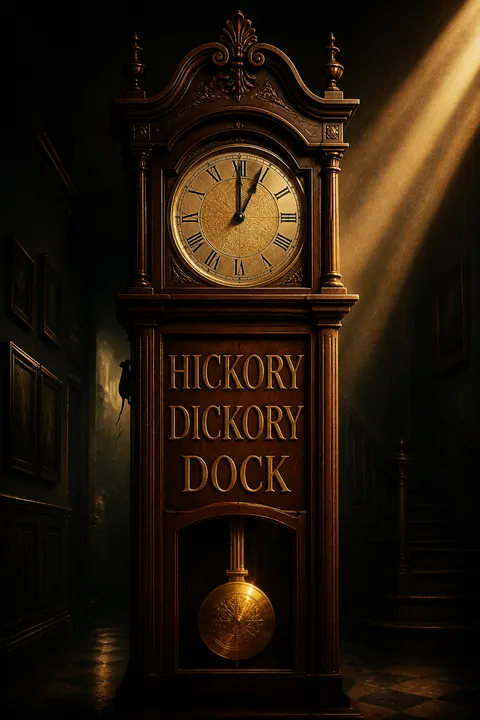
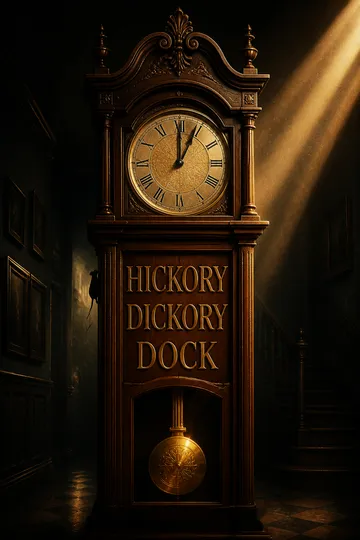
The "Hickory Dickory Dock" rhyme is referenced throughout, echoed by the progression of chaos and the ticking clock as metaphor for mounting danger. Foreshadowing is used within the thefts, the changing emotional weather, and the repeated motif of order disrupted—mirroring the rhyme's own structure as comfort and warning.
Hercule Poirot Series























About the Author
Other books by Agatha Christie


Download PDF
Download EPUB
.epub digital book format is ideal for reading ebooks on phones, tablets, and e-readers.








































