
Resumen de la trama
La Mujer que Engañó a Holmes
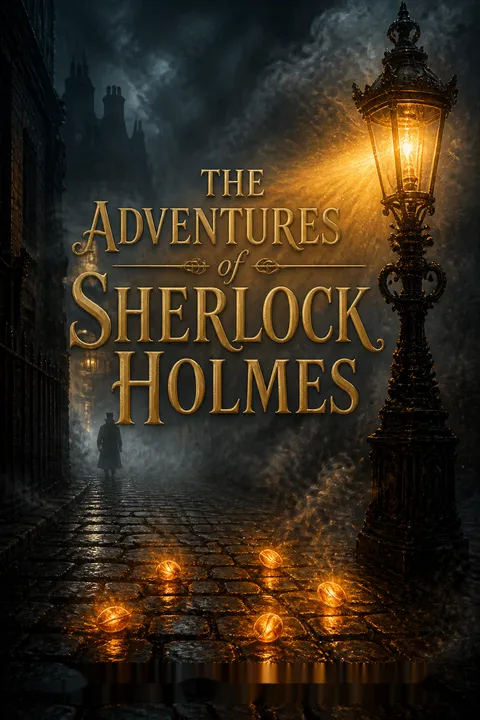
Sherlock Holmes recibe el encargo del Rey de Bohemia de recuperar una fotografía comprometedora en poder de Irene Adler, una mujer de notable ingenio e inteligencia. El Rey teme que la imagen ponga en peligro su compromiso real. Holmes idea un plan astuto que incluye un incendio simulado para localizar la fotografía. Sin embargo, Adler anticipa su movimiento y deja una carta junto con una fotografía suya como símbolo. Holmes queda maravillado por su astucia, refiriéndose a ella simplemente como "la mujer", un reconocimiento a su singular capacidad para superarlo.
El Engaño del Pelirrojo Revelado
Jabez Wilson, un prestamista con cabello rojo llamativo, es atraído por la Liga de los Pelirrojos, que de repente se disuelve. Holmes deduce que la Liga fue un ardid para distraer a Wilson de su tienda, orquestado por su asistente, John Clay, un criminal notorio. El plan de Clay era excavar un túnel hacia un banco cercano. Holmes y la policía capturan a Clay en el acto, desmantelando el elaborado esquema y demostrando la destreza deductiva de Holmes.
El Engaño del Novio Desaparecido
Mary Sutherland busca la ayuda de Holmes cuando su prometido, Hosmer Angel, desaparece el día de su boda. Holmes descubre que Angel es en realidad el padrastro de Mary, James Windibank, disfrazado. El motivo de Windibank es impedir que Mary se case y pierda su herencia. Holmes confronta a Windibank, quien admite el engaño pero evade las consecuencias legales. Holmes advierte que las acciones de Windibank eventualmente lo llevarán a su caída, resaltando el tema de la justicia.
El Enigma del Valle de Boscombe
Holmes investiga el asesinato de Charles McCarthy, cuyo hijo James es el principal sospechoso. A pesar de las pruebas, Holmes cree en la inocencia de James. Descubre que John Turner, un terrateniente adinerado, mató a McCarthy para evitar que este obligara a sus hijos a casarse. Turner confiesa, revelando un crimen pasado que McCarthy usaba para chantajear. Holmes mantiene la confesión en secreto, asegurando justicia sin escándalo público, mostrando su complejidad moral.
Las Mortales Semillas de Naranja
John Openshaw acude a Holmes tras recibir una carta con semillas de naranja, un presagio familiar de muerte. Holmes relaciona las semillas con el Ku Klux Klan, que persigue a la familia Openshaw por poseer documentos incriminatorios. A pesar de los consejos de Holmes, John es asesinado. Holmes rastrea a los culpables hasta un barco, pero mueren en el mar antes de que se haga justicia, dejando a Holmes frustrado por su incapacidad para evitar la muerte de John, subrayando los límites de su poder.
La Identidad Secreta del Mendigo
Holmes investiga la desaparición de Neville St. Clair, visto por última vez en un burdel de opio. Descubre que St. Clair lleva una doble vida como Hugh Boone, un mendigo. St. Clair usaba sus habilidades actorales para disfrazarse y ganar dinero mendigando. Holmes revela el secreto a la policía, protegiendo a la familia de St. Clair de un escándalo público. St. Clair promete abandonar su vida de mendigo y regresar con su familia, destacando temas de identidad y redención.
El Caso del Carbunclo Azul
Holmes se interesa por un sombrero maltrecho y un ganso de Navidad abandonados tras una pelea callejera. Dentro del ganso encuentra un carbunclo azul robado. Siguiendo el origen del ganso, Holmes descubre un robo cometido por James Ryder, empleado de un hotel. Ryder confiesa, motivado por la codicia, pero Holmes lo deja libre, creyendo que la experiencia lo reformará. El caso resalta la capacidad de Holmes para ver más allá de lo evidente y su ocasional indulgencia, reflejando su complejo código moral.
El Mortal Secreto de la Banda Manchada
Helen Stoner busca la ayuda de Holmes, temiendo por su vida tras la misteriosa muerte de su hermana. Holmes y Watson investigan a su padrastro, el Dr. Grimesby Roylott, un hombre violento con un pasado peligroso. Descubren que Roylott usó una serpiente venenosa, la "banda manchada", para matar a la hermana de Helen y planea hacer lo mismo con ella. La intervención de Holmes provoca que la serpiente ataque a Roylott, causándole la muerte y salvando a Helen, demostrando la valentía y rapidez mental de Holmes.
El Peligroso Encuentro del Ingeniero
Victor Hatherley, ingeniero hidráulico, relata a Holmes y Watson una experiencia aterradora. Contratado para un trabajo misterioso, escapa por poco de morir en una prensa hidráulica preparada por sus empleadores, que son falsificadores. Holmes deduce su ubicación, pero los criminales huyen tras incendiar su escondite. Hatherley pierde el pulgar pero gana experiencia, mientras Holmes reflexiona sobre los peligros de la codicia y el engaño, enfatizando los riesgos de la ambición humana.
La Novia Desaparecida del Noble
La novia de Lord St. Simon, Hatty Doran, desaparece durante el desayuno nupcial. Holmes investiga y descubre que el primer esposo de Hatty, Frank Moulton, a quien creía muerto, reapareció. Ella se fue con él, pues aún estaban legalmente casados. Holmes organiza un encuentro entre las partes, resolviendo el caso con comprensión y evitando el escándalo, mientras Lord St. Simon reflexiona sobre su desventura, resaltando temas de amor y perdón.
La Traición del Coronet de Berilo
El banquero Alexander Holder busca a Holmes tras el daño de un valioso coronet y la desaparición de gemas. Su hijo Arthur es acusado del robo. Holmes descubre que la prima de Arthur, Mary, y su amante, Sir George Burnwell, son los culpables. El silencio de Arthur fue para proteger a Mary. Holmes recupera las gemas, limpia el nombre de Arthur y expone la traición de Burnwell, restaurando el honor familiar, ilustrando temas de lealtad y traición.
La Verdad Oculta de Copper Beeches
Violet Hunter acepta un puesto de institutriz en Copper Beeches, donde enfrenta demandas extrañas y una habitación cerrada. Holmes y Watson investigan y revelan que Violet fue contratada para hacerse pasar por Alice Rucastle, la hija encarcelada de la casa. El padre de Alice buscaba controlar su herencia. La intervención de Holmes libera a Alice, y Violet escapa de la siniestra mansión, agradecida por la oportuna ayuda de Holmes, subrayando la importancia del coraje y la vigilancia.
Personajes
Sherlock Holmes
Holmes es un maestro de la deducción, usando su intelecto para resolver casos complejos. A menudo es distante y analítico, valorando la lógica sobre la emoción. A pesar de su frialdad, muestra respeto por adversarios dignos como Irene Adler y ocasionalmente compasión, como en el caso de James Ryder. Sus métodos incluyen disfraces y conocimientos psicológicos, permitiéndole ver más allá de lo evidente y resolver casos que desconciertan a otros.
Dr. John Watson
Watson es amigo y asistente de Holmes, documentando sus aventuras. Aporta una perspectiva humana a los casos, sirviendo de contrapunto a las teorías de Holmes. Su formación médica y brújula moral complementan las habilidades detectivescas de Holmes, formando un equipo eficaz. Su presencia añade calidez y humanidad a las historias, equilibrando la lógica fría de Holmes con empatía y comprensión.
Irene Adler
Adler es la única mujer que ha superado a Holmes, ganándose su admiración duradera. Es inteligente, independiente y capaz de burlar al detective más perspicaz. Sus acciones en "Un escándalo en Bohemia" demuestran su habilidad para protegerse y defender sus intereses. Su personaje desafía los roles tradicionales de género, mostrando a una mujer fuerte y capaz que impone respeto y admiración.
Rey de Bohemia
El Rey busca la ayuda de Holmes para recuperar una fotografía comprometedora en poder de Irene Adler. A pesar de su estatus, es vulnerable al escándalo y confía en la discreción y pericia de Holmes para proteger su reputación. Su personaje resalta el tema del poder y la vulnerabilidad, pues incluso los de alta posición no están exentos de indiscreciones personales y sus consecuencias.
Jabez Wilson
Wilson es un hombre sencillo y honesto que se ve involuntariamente envuelto en un complot para robar un banco. Su cabello rojo distintivo lo convierte en el objetivo perfecto para la Liga de los Pelirrojos, un engaño diseñado para distraerlo de su tienda. Su personaje representa a la persona común enfrentada a circunstancias extraordinarias, ilustrando el impacto del crimen en vidas ordinarias.
John Clay
Clay es un criminal notorio con talento para el engaño. Orquesta el plan de la Liga de los Pelirrojos para robar un banco, demostrando inteligencia y audacia. A pesar de sus actividades, es capturado por Holmes y la policía. Su personaje encarna el tema del crimen y el castigo, pues su astucia no es rival para el intelecto superior de Holmes.
Mary Sutherland
Mary es una mujer bondadosa cuyo padrastro, James Windibank, la engaña para impedir que se case. Su confianza en Holmes conduce a la revelación del plan de Windibank, destacando su vulnerabilidad e inocencia. Su personaje subraya el tema de la confianza y la traición, pues su fe en los demás es tanto su fortaleza como su debilidad.
James Windibank
Windibank crea la identidad de Hosmer Angel para evitar que Mary se case y pierda su herencia. Su astucia y manipulación son descubiertas por Holmes, pero evade consecuencias legales debido a la naturaleza de su engaño. Su personaje ilustra la ambigüedad moral, pues sus acciones responden al interés propio más que a la malicia.
John Openshaw
Openshaw busca a Holmes tras recibir una carta amenazante con semillas de naranja. A pesar de los esfuerzos de Holmes, es asesinado por el Ku Klux Klan, que busca documentos incriminatorios. Su muerte destaca los peligros de secretos heredados y los límites de las habilidades de Holmes, enfatizando el tema del destino y la inevitabilidad.
Neville St. Clair
St. Clair lleva una doble vida como mendigo, usando sus habilidades actorales para disfrazarse. Su desaparición motiva la investigación de Holmes, revelando hasta dónde llega para mantener la respetabilidad de su familia. Su personaje explora temas de identidad y expectativas sociales, navegando la dualidad de su existencia.
Recursos Narrativos
Razonamiento Deductivo
Holmes utiliza el razonamiento deductivo para resolver casos, sacando conclusiones de detalles aparentemente triviales. Su capacidad de observar e inferir le permite desentrañar misterios complejos, dejando a otros asombrados por sus métodos. Este recurso es central en la narrativa, mostrando la destreza intelectual de Holmes y el poder de la lógica y la observación.
Disfraz y Engaño
El disfraz y el engaño juegan papeles significativos en muchas investigaciones de Holmes. Personajes como Irene Adler, James Windibank y Neville St. Clair usan disfraces para lograr sus objetivos, desafiando a Holmes a ver más allá de las apariencias. Este tema resalta la dualidad de la naturaleza humana y las medidas que toman para ocultar sus verdaderas intenciones.
Cartas y Mensajes
Las cartas y mensajes suelen ser pistas cruciales en los casos de Holmes. Proporcionan información sobre los motivos y acciones de los personajes, ayudando a Holmes a reconstruir la verdad detrás de cada misterio. Este recurso enfatiza la importancia de la comunicación y la palabra escrita para descubrir verdades ocultas.
Comentario Social
Los casos de Holmes reflejan a menudo cuestiones sociales como la disparidad de clases, los roles de género y el impacto de acciones pasadas en el presente. Estos temas añaden profundidad a las historias, destacando las complejidades de la naturaleza humana y la sociedad. La narrativa utiliza estos asuntos para ofrecer una crítica a la dinámica social de la época victoriana.
Análisis
"Las aventuras de Sherlock Holmes" de Arthur Conan Doyle es una magistral colección de relatos detectivescos que profundizan en las complejidades del comportamiento humano y las normas sociales. A través del personaje de Sherlock Holmes, Doyle explora temas como la lógica, la justicia y la moralidad, invitando a los lectores a reflexionar sobre las complejidades de la verdad y el engaño. Las historias resaltan la dualidad de la naturaleza humana, mientras los personajes transitan la delgada línea entre el bien y el mal. La dependencia de Holmes en el razonamiento deductivo y su aguda observación subrayan el poder del intelecto para resolver los misterios de la vida. La narrativa también funciona como un comentario social, reflejando cuestiones de clase, género y dinámicas de poder en la sociedad victoriana. La obra de Doyle sigue siendo relevante hoy, ofreciendo lecciones eternas sobre la importancia del pensamiento crítico, la empatía y la comprensión en un mundo lleno de ambigüedad e intriga.
También leyeron




Preguntas frecuentes
Synopsis & Basic Details
What is The Adventures of Sherlock Holmes about?
- Collection of detective stories: The Adventures of Sherlock Holmes is a collection of twelve stories following the cases of Sherlock Holmes, a brilliant detective, and his loyal friend and biographer, Dr. John Watson.
- Solving mysteries through deduction: Holmes uses his keen observation skills, logical reasoning, and knowledge of various subjects to solve complex mysteries that often baffle the police.
- Exploring Victorian society: The stories offer a glimpse into Victorian England, showcasing its social issues, class distinctions, and the criminal underworld, all while highlighting Holmes's unique methods and eccentric personality.
Why should I read The Adventures of Sherlock Holmes?
- Experience brilliant deduction: Readers are invited to follow Holmes's thought process as he unravels mysteries, offering a chance to engage in logical reasoning and observation.
- Enjoy classic storytelling: The stories are well-crafted, with engaging plots, memorable characters, and a vivid portrayal of Victorian England, making for a captivating reading experience.
- Explore timeless themes: The Adventures of Sherlock Holmes explores themes of justice, morality, deception, and the power of intellect, which continue to resonate with readers today.
What is the background of The Adventures of Sherlock Holmes?
- Victorian England setting: The stories are set in late 19th-century England, reflecting the social, economic, and technological changes of the era, including the rise of industrialization, urbanization, and scientific advancements.
- Emergence of detective fiction: The Adventures of Sherlock Holmes contributed significantly to the development of the detective fiction genre, establishing many of the conventions and tropes that are still used today.
- Social commentary: The stories offer insights into Victorian society, addressing issues such as class inequality, crime, and the role of women, providing a glimpse into the social dynamics of the time.
What are the most memorable quotes in The Adventures of Sherlock Holmes?
- "Elementary, my dear Watson": While not actually verbatim from the stories, this phrase encapsulates Holmes's ability to make seemingly simple deductions, showcasing his intellectual superiority.
- "When you have eliminated the impossible, whatever remains, however improbable, must be the truth": This quote highlights Holmes's logical approach to solving mysteries, emphasizing the importance of eliminating possibilities to arrive at the correct conclusion.
- "It has long been an axiom of mine that the little things are infinitely the most important": This quote underscores Holmes's attention to detail and his belief that seemingly insignificant clues can often hold the key to solving a case.
What writing style, narrative choices, and literary techniques does Arthur Conan Doyle use?
- First-person narration: The stories are narrated by Dr. Watson, providing a personal and relatable perspective on Holmes's cases, while also creating a sense of mystery and intrigue.
- Episodic structure: Each story presents a self-contained mystery, allowing readers to enjoy individual cases while also following the overarching development of the characters and their relationship.
- Detailed descriptions: Doyle uses vivid descriptions of settings, characters, and clues to create a realistic and immersive reading experience, drawing readers into the world of Sherlock Holmes.
Hidden Details & Subtle Connections
What are some minor details that add significant meaning?
- Holmes's cocaine use: Holmes's occasional use of cocaine, mentioned in passing, reveals his restless mind and his need for stimulation when not actively engaged in a case, highlighting his complex personality. "alternating from week to week between cocaine and ambition, the drowsiness of the drug, and the fierce energy of his own keen nature."
- Watson's war wound: Watson's lingering war wound, often causing him pain, serves as a reminder of his past and his resilience, adding depth to his character and explaining his need for a stable and engaging life with Holmes.
- The recurring motif of disguises: Holmes's frequent use of disguises, even in seemingly simple cases, underscores his understanding of human nature and his willingness to go to great lengths to uncover the truth.
What are some subtle foreshadowing and callbacks?
- Irene Adler's warning: In "A Scandal in Bohemia," Irene Adler mentions being warned about Holmes, foreshadowing future encounters where his reputation precedes him and influences the actions of those he investigates. "I had been warned against you months ago. I had been told that if the King employed an agent it would certainly be you."
- The speckled band description: The dying words in "The Adventure of the Speckled Band" initially seem nonsensical, but later become the key to understanding the method of murder, highlighting the importance of seemingly random details.
- Watson's medical skills: Watson's medical expertise, often downplayed, proves crucial in several cases, such as identifying the cause of death or treating injuries, subtly reminding the reader of his value beyond being a mere narrator.
What are some unexpected character connections?
- The King of Bohemia and Irene Adler: The past relationship between the King and Adler, revealed in "A Scandal in Bohemia," creates a complex dynamic, showing how personal history can influence matters of state and intrigue.
- John Clay's aristocratic background: The revelation of Clay's noble lineage in "The Red-Headed League" adds an unexpected layer to his character, contrasting his privileged upbringing with his criminal pursuits. "His grandfather was a royal duke, and he himself has been to Eton and Oxford."
- Dr. Grimesby Roylott's past in India: Roylott's time in India, mentioned in "The Adventure of the Speckled Band," explains his knowledge of exotic animals and poisons, providing a crucial element in understanding his motive and method of murder.
Who are the most significant supporting characters?
- Inspector Lestrade: Lestrade's recurring presence as a Scotland Yard detective provides a contrast to Holmes's methods, highlighting the limitations of conventional police work compared to Holmes's deductive abilities.
- Mrs. Hudson: As Holmes's landlady, Mrs. Hudson offers a glimpse into his personal life and provides a sense of domesticity amidst his chaotic investigations, showcasing her tolerance and loyalty.
- The criminals: The diverse range of criminals, from cunning masterminds to desperate individuals, adds depth to the stories, reflecting the various motivations and circumstances that lead people to commit crimes.
Psychological, Emotional, & Relational Analysis
What are some unspoken motivations of the characters?
- Holmes's need for intellectual stimulation: Beyond solving crimes, Holmes is driven by a deep need for intellectual stimulation, seeking out complex cases to challenge his mind and alleviate boredom. "My life is spent in one long effort to escape from the commonplaces of existence. These little problems help me to do so."
- Watson's desire for adventure: Watson, despite his stable life as a doctor, is drawn to Holmes's dangerous lifestyle, seeking adventure and excitement to escape the monotony of everyday life.
- The criminals' desperation: Many criminals are motivated by desperation, driven to commit crimes due to poverty, blackmail, or a desire to protect their loved ones, adding a layer of complexity to their actions.
What psychological complexities do the characters exhibit?
- Holmes's emotional detachment: Holmes's emotional detachment, while essential for his analytical abilities, also reveals a vulnerability, as he struggles to connect with others on a personal level.
- The criminals' internal conflicts: Many criminals exhibit internal conflicts, torn between their desire for wealth or power and their conscience, highlighting the psychological toll of their actions.
- Watson's admiration and frustration: Watson's relationship with Holmes is marked by both admiration and frustration, as he struggles to keep up with Holmes's intellect while also questioning his methods and lack of empathy.
What are the major emotional turning points?
- Holmes's defeat by Irene Adler: Holmes's inability to retrieve the photograph in "A Scandal in Bohemia" marks a significant emotional turning point, as he acknowledges Adler's superior intellect and develops a deep respect for her.
- The death of John Openshaw: The failure to prevent Openshaw's death in "The Five Orange Pips" deeply affects Holmes, highlighting his vulnerability and the limitations of his powers in the face of fate.
- The confrontation with Dr. Roylott: The violent confrontation with Roylott in "The Adventure of the Speckled Band" reveals Holmes's protective instincts and his willingness to put himself in danger to save others.
How do relationship dynamics evolve?
- Holmes and Watson's deepening bond: The relationship between Holmes and Watson evolves throughout the stories, deepening their bond of friendship and trust as they face various challenges together.
- The impact of Holmes's cases on Watson's life: Watson's involvement in Holmes's cases influences his personal life, shaping his views on crime, justice, and human nature, and ultimately leading him to chronicle their adventures.
- The changing dynamics between Holmes and the police: Holmes's relationship with the police, particularly Lestrade, fluctuates between cooperation and competition, reflecting the tension between conventional methods and Holmes's unique approach to crime-solving.
Interpretation & Debate
Which parts of the story remain ambiguous or open-ended?
- The ultimate fate of the Lone Star crew: The ambiguous ending of "The Five Orange Pips," where the fate of the criminals is left uncertain, raises questions about the nature of justice and whether it always prevails.
- The extent of Irene Adler's feelings for the King of Bohemia: The true nature of Adler's feelings for the King remains open to interpretation, leaving readers to speculate whether her actions were motivated by revenge, self-preservation, or a genuine desire to protect him.
- The long-term consequences for James Windibank: The lack of legal repercussions for Windibank's actions in "A Case of Identity" raises questions about the effectiveness of the law and the potential for individuals to escape justice despite their wrongdoing.
What are some debatable, controversial scenes or moments in The Adventures of Sherlock Holmes?
- Holmes's drug use: Holmes's occasional use of cocaine is a controversial aspect of his character, raising questions about his moral compass and the potential impact of his addiction on his judgment.
- Holmes's manipulation of others: Holmes's willingness to manipulate others, such as staging a fire in "A Scandal in Bohemia," raises ethical questions about the means he employs to achieve his goals.
- Holmes's withholding of evidence: Holmes's decision to withhold evidence in "The Boscombe Valley Mystery" to protect Turner from public scandal sparks debate about the balance between justice and compassion.
The Adventures of Sherlock Holmes Ending Explained: How It Ends & What It Means
- Justice is not always served: While Holmes often solves the crime, true justice is not always achieved, as seen in cases where the criminals escape or the victims are left with lasting emotional scars.
- The power of observation and deduction: The endings consistently reinforce the power of observation and deduction, showcasing Holmes's ability to unravel complex mysteries through his unique methods.
- Moral ambiguity: The endings often highlight the moral ambiguity of human actions, as characters grapple with difficult choices and the consequences of their decisions, leaving readers to ponder the complexities of right and wrong.
Sherlock Holmes Serie




Descargar PDF
Descargar EPUB
.epub digital book format is ideal for reading ebooks on phones, tablets, and e-readers.








































