
Plot Summary
Stranger in the Sands
English nurse Amy Leatheran, practical and unpretentious, is recruited by Dr. Eric Leidner, the leader of an archaeological expedition excavating in remote Mesopotamia. Dr. Leidner's beautiful American wife is allegedly plagued by "nerves," unsettling those around her. Amy, recently adrift after her contract in Baghdad, views this as a chance to see the East—though she finds the realities far from the romance of stories. Amy soon learns Dr. Leidner's wife, Louise, has a curious reputation: she's mesmerizing and beloved, yet at the center of inexplicable fears. Amy's arrival as an outsider, pragmatic and compassionate, sets the stage—a fresh pair of eyes to the growing malaise and something more sinister brewing beneath the desert sun.
Arrival at Tell Yarimjah
The journey by train and rugged vehicle across the harsh, stunning landscape leaves Amy rattled. On arrival, she's thrust into an insulated family of various nationalities: researchers, hired hands, and the queenly Louise Leidner herself. Amy quickly senses an odd strain among the crowd—a 'too polite' reserve, an atmosphere bristling with secrets, jealousy, and subtle rivalries, all orbiting Louise. Amy is welcomed but also keenly observed by those already on edge, feeling immediately that she has entered not a peaceful camp, but the heart of a pressure cooker built around one stunning, fragile woman's anxieties and the unspoken fears of her companions.
The Queen Bee Uneasy
Amy's first encounters with Louise fragment her expectations; instead of a weak or hysterical woman, she finds someone ethereal, luminous, yet unmistakably troubled. Louise exerts an effortless dominance: the men hover, entranced; the women are wary, even resentful. She is elegant, weary, and carries herself as one marked by tragedy and power. Her fragile beauty both compels devotion and generates friction, yet beneath her enigmatic exterior, she's genuinely haunted. Amy, as confidante, is caught between admiration, skepticism, and growing unease as Louise's distress seems rooted in something more palpable than mere nerves.
Tensions in the Hot House
Amy begins to unravel the fraught relationships simmering within the small world of Tell Yarimjah. Old friends chafe under Louise's presence; new arrivals are enthralled or repelled by her charisma. Husbands and wives experience jealousy; old loyalties fracture. Gossip hints that Louise—dubbed "Lovely Louise"—exerts her charm not only innocently but with a subtle, destructive purpose. The women, Amy especially, feel the ripple of both empathy and exasperation. The suffocating heat, the pressures of work, and the intensity of close quarters turn the expedition into a psychological crucible.
Shadows at the Window
Strange events disturb the peace: tapping hands at windows after dark, fleeting glimpses of an unsettling face, phantom threats. Louise is terrified, claiming she is being watched and pursued. The only apparent witness, she is not believed by some; others begin to feel the mounting anxiety. Amy, for all her rationality, cannot ignore the effect—her patient isn't merely ill, but truly afraid. Outside, a stranger is spotted peering in, but when confronted, disappears. The line blurs between real and imagined menace, and Amy realizes Louise may have reason to fear not the supernatural, but real and present danger.
Confessions and Ghost Stories
In the intimacy of tired isolation, Louise confesses her story to Amy: she was once married to a man, Frederick Bosner, a government official revealed as a wartime traitor and spy. She turned him in, believing it right, but has since been haunted by threats—anonymous letters, always forbidding her happiness, always promising death if she should marry again. Louise describes her life as pursued by a relentless shadow: is it her dead husband, or his vengeful brother William, or simply a fiendish hoax? The atmosphere turns from nervous gossip to true dread, and Amy is left to wonder whether she has entered simply a troubled household, or a setting for murder.
Death in the Afternoon
On a day like any other, with the household distributed through the courtyard, roofs, and rooms, Dr. Leidner discovers Louise dead in her bedroom—her skull shattered by a single, massive blow. All windows are barred, the door was monitored: it seems impossible for a killer to have entered, let alone left unseen. The notorious "tension" becomes outright terror. Suspicions swirl; everyone realizes that if the killer was not an outsider, then one of them is hiding a monstrous secret. Amy's nursing instincts are of no help—her patient is beyond saving, and her presence has not averted the very fate she was brought to prevent.
Hercule Poirot Takes Command
Legendary detective Hercule Poirot, fortuitously traveling nearby, is drawn into the mystery. His presence transforms the camp: with disarming manner and clinical, analytical mind, he skillfully extracts stories, reconstructs timelines, and sizes up personalities. Poirot invites all to speak; none are above suspicion, and he makes it clear that, locked out or in, the impossible crime must be solved by examining character, psychology, and opportunity. His foreign eccentricities contrast with the raw pain and suspicion swirling through Tell Yarimjah, but no one can question his method, or deny his air of authority.
Suspicions Among the Ruins
Poirot, Amy, and the remaining expedition members reconstruct the fateful day. Each is pressed for alibi, motive, and relationships to the dead woman—devotion, jealousy, resentment, and old passions are revealed. The closed-circle nature of the camp means the killer must be among them, or hiding as one of them, possibly wearing a mask literal or metaphorical. Besides Louise's enigmatic past and the letters, other mysteries emerge: missing antiquities, suspicious behaviors, and the likelihood that someone is hiding a second, darker self. Amy's own perceptions shift: even the most innocuous become menacing.
Secrets, Masks, and Motives
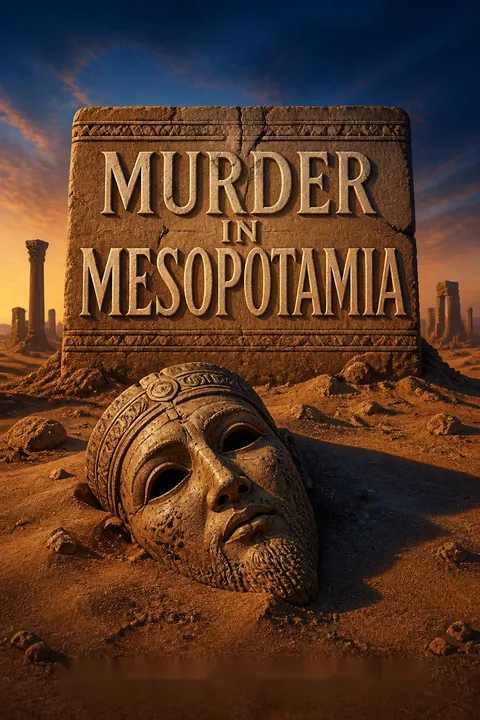
With method and psychology, Poirot explores beyond surfaces. The household's web of relationships is exposed: secret crushes, bitter rivalries, obsessive devotion, stifled resentment. Poirot discovers a hidden mask smeared with plasticine—proof that someone staged the ghostly apparitions. Rumors, missing objects, and slight-of-hand with artifacts grow in significance. Poirot weaves together not only the schedule and facts but the psychological triggers that might provoke murder: desperation, fear, love, or the thrill of dominance. All are unmasked, but the killer remains hidden behind layers of deceit and suppressed passion.
The Past Never Dies
As Poirot investigates, he focuses on history: the unresolved trauma of Louise's betrayal and her pursuit by the threatening letter writer. The possibility emerges that someone within the group—perhaps under a new identity—is actually Frederick Bosner or his vengeful brother, William. Poirot delves into backgrounds, points out discrepancies, and establishes that more than one member could have a hidden past. The weight of older crimes, lingering guilt, and obsessions surface, reminding all that the past is never truly dead—it merely waits its chance to return.
Pieces Fit Together
As Poirot closes in, death strikes again: Miss Johnson—who may have discovered something vital—is found dying, having swallowed corrosive acid. Her last words, "the window," become the key to unraveling the impossible crime. Poirot, through nuanced observation and rigorous logic, discerns that the murderer's method was as ingenious as their motive: crime blends with psychology, and only a complete portrait of character and circumstance will yield the truth. With mounting dread, the household realizes that the murderer, once unleashed, may strike again.
Through the Courtyard Window
Poirot discerns that Louise was killed not by someone entering the room, but by someone on the roof above—someone who was seen by all to be otherwise occupied. The murderer created an elaborate puppet show, luring Louise to the window and crushing her from above with a heavy quern, retrieved via a string. The mask, distractions, and perfectly timed movements ensured no one suspected the truth. The psychological lock is broken: murder is not always committed by monsters, but sometimes by desperate lovers, betrayed husbands, or those so consumed by obsession they become unrecognizable even to themselves.
The Web Unravels
Poirot turns from forensics to reason—the pattern, the emotions, the psychology. The explicit identity is disclosed: Dr. Leidner himself is revealed as Frederick Bosner, whose obsession with Louise—love curdling into possessive hatred—led him first to pursue her with letters and finally murder her when he suspected her of loving another. The second murder was a desperate act of self-preservation when Miss Johnson approached the truth. Every red herring, side plot, and personal drama now falls away; the dark secret emerges not from strangers, but from the person nearest to all.
Death Strikes Again
The camp reels from successive losses: not just Louise, but the kindly, capable Miss Johnson, struck down as she neared understanding. Grief, guilt, and lingering anxieties swirl. Attempts to ascribe guilt to outsiders falter. The collapse of Dr. Leidner—now unmasked as murderer, obsessed lover, and master of disguise—plunges the group into reluctant sympathy and horror. Relationships must be re-examined: victims, spectators, and even the "heroic" detective are tainted by their roles in the unfolding tragedy.
Journey to the Truth
Poirot explains the full architecture of the events; his inquiry has not been into opportunities and timelines alone, but into the peculiarities and extremities of the human heart. He traces the psychological archaeology of motive, character, obsession, and remorse. Amy—her ordinary, kindly presence—frames the aftermath with the compassion and ambiguity that these events evoke. The survivors are changed; old bonds are irrevocably broken; new possibilities, even for happiness, emerge only as the dust settles.
Lovers, Liars, and Enemies
Poirot's revelation leaves the camp in devastation, but also—strangely—relief. The human tangle of love, hate, and fear can prove more destructive than any 'curse' or external threat. Dr. Leidner, broken by his own crime, now feels both the enormity of his actions and the pain of love lost forever. The wounds in the group may one day scar over, but there is no perfect healing. Each survivor must reckon with guilt, misunderstanding, and the possibility that the heart's deepest violence is often hidden beneath devotion and gentleness.
Guilt and Mercy
Poirot departs; the authorities sweep away the physical traces. The survivors are left with inner questions and tangled memories. Some forge new connections—like young Sheila and Emmott, who marry, signaling fragile hope. Amy reflects on the events, struggling to reconcile duty, kindness, and the ambiguity of blame. Memories of violence are tempered by compassion: those who love most are often blindest; judgment and mercy are not easily separated. Amy, strong and sensible, concludes her account with empathy for all—a world where certainty and justice are always shadowed by tragedy and forgiveness.
Analysis
Exploration of inescapable past, destructive love, and the psychology of murder"Murder in Mesopotamia" is not merely a puzzle-box whodunit but a meditation on the human heart's capacity for obsession, self-deception, and violence. Christie masterfully exploits the enclosed setting—a desert camp, isolated by both geography and the emotional monarchy of Louise Leidner—to explore how charisma, fear, and longing can breed tragedy. The novel interrogates the dangers of idealization and possessive love: Dr. Leidner's transformation from gentle husband to murderer is both horrifying and deeply human, echoing the ancient stories unearthed by the expedition itself. The locked-room device, inventive as always, serves as metaphor: the greatest barriers are not physical but psychological; the killer was always among them, disguised not only by faked identities but by the costume of love and trust. Through Amy's eyes, readers are asked to consider the limits of justice, mercy, and understanding. For all Poirot's brilliance, there is no restoring innocence; every survivor is changed. Christie's ultimate lesson is that motives are rarely simple, victims are sometimes complicit, and judgment—both legal and moral—is clouded by the ambiguities of the human heart. The past endures, love kills as well as heals, and truth, when it is finally revealed, does not release us from tragedy—only, at best, from illusions.
Review Summary
Characters
Amy Leatheran
Amy is the unpretentious, grounded English nurse whose first-person narration shapes the story. She's intelligent, honest, and possesses a blend of sturdy common sense and a capacity for empathy. As a "neutral" observer—neither attached to the archaeological world nor any personal rivalries—she is ideal for unraveling the social and psychological tensions in the group. Initially skeptical, Amy is drawn into the emotional whirlwind, becoming confidante to Louise and witness to the aftermath of violence. Her psychological insight and growing compassion allow her to recognize pain behind masks and, ultimately, to narrate a tragedy that is as much about failures of love and understanding as it is about crime.
Dr. Eric Leidner / Frederick Bosner
Ostensibly the kindly, self-effacing head archaeologist, Dr. Leidner's character embodies contradiction: warm devotion to his wife, professional competence, and affable leadership—yet underneath is a ruthless, obsessed lover and a master of disguise. Born Frederick Bosner, he survived denunciation, reinvented himself, and haunted Louise's life with threats and manipulation—all under various names. Leidner is marked by a desperate need to possess, to punish, and to control, operating with chilling calm. His psyche is a study in the destructive fusion of love and hatred, culminating in violence against the woman he cannot let go. His guilt, grief, and final surrender reveal the complexity of human motives and the dangers of unchecked obsession.
Louise Leidner
Louise, the "Lovely Louise," is both catalyst and casualty—her beauty and mystery ensnare the expedition, stirring love, jealousy, and fear. At once manipulative and vulnerable, she thrives as the center of attention, orchestrating both affection and animosity. Haunted by her own actions—a betrayal of her first husband, the specter of guilt—Louise navigates the world as both queen and outcast, terrified by threats she half-believes she deserves. Her relationships with men are electric, with women fraught. Ultimately, Louise's complexity—her craving for drama, power, and love—leads her to a fatal rendezvous with her own past.
Richard Carey
Dr. Leidner's chief assistant and architect, Carey is sensitive, loyal, and deeply conflicted. Beneath his calm, polished exterior lies an emotional tempest: he is drawn irresistibly to Louise, torn between loyalty to his friend and forbidden passion for the woman he cannot have. His outward composure masks suffering, self-repression, and guilt. His journey is one of unspoken love—intense enough to provoke hatred for Louise, not only devotion. Carey's role is a tragic one—a victim of both Louise's magnetism and his own competing moral imperatives.
Miss Anne Johnson
Johnson, the senior assistant, is practical, efficient, and fiercely loyal to Dr. Leidner. She provides much of the historical continuity and stability in the camp, yet underneath her stony professionalism is a wellspring of jealousy and pain at being displaced by Louise. The violence of Miss Johnson's feelings, which she strives to repress, makes her both a potential suspect and a tragic casualty—she becomes the second victim as she nears the truth, symbolic of how emotional loyalties and repressions can lead to disaster even for the innocent.
Father Lavigny (Raoul Menier)
Allegedly a scholarly monk, Father Lavigny is in fact a conman and jewel thief masquerading as an archaeologist in order to steal priceless antiquities. Sly, observant, and adaptable, he operates on society's fringes, thriving in chaos and deception. Though potentially dangerous, his role as red herring emphasizes the story's theme: not all villains are murderers, and appearances—like masks—can conceal a multitude of secrets. His flight exposes ancillary plots and the broader danger of trusting surface identities.
Mrs. Mercado
Married to the weak, addicted Joseph Mercado, she is fiercely protective, stifling, and perpetually anxious. Driven by envy and isolation, she resents Louise with volatile intensity, seeking to undermine or accuse her rival at every turn. Mrs. Mercado is not murderous, but her emotional instability, paranoia, and small betrayals showcase the ways jealousy and fear can fester in a closed community. Her role as a disruptive force illustrates the psychological contagion of mistrust and suspicion.
Joseph Mercado
Mercado's declining health, erratic behavior, and secret weakness for drugs render him a figure of pity and concern. His professional inadequacy and dependence leave him vulnerable to manipulation, and his wife's compulsive protectiveness. Though not a killer, he embodies the dangers of secrets and how personal failure can ripple outward, enmeshing both the individual and the collective in webs of dysfunction.
Bill Coleman
The youngest of the team, Bill is at once garrulous, eager, and perpetually out of his depth, serving as a red herring with his Wodehousian banter and bumbling persona. Not as simple as he seems, his facility with mimicry and forgery style is crucial to Poirot's investigation. He symbolizes the unintentional dangers of understatement, distraction, and the masks people wear—even if, in his case, the mask is sincerity.
David Emmott
Emmott, an American assistant, is steady and undemonstrative, providing a point of calm amidst excitement. He remains largely uninvolved in the emotional dramas and intrigues, his outsider detachment both protective and diagnostically useful for Poirot. Emotionally intelligent but reticent, Emmott ultimately becomes a source of stability and even hope, as his understated romance with Sheila Reilly points toward the possibility of quiet happiness amid devastation.
Plot Devices
The Locked Room and "Impossible Crime"
The murder of Louise Leidner is presented as a classic locked-room mystery: her room appears secure from all sides, the courtyard monitored, the windows barred, and alibis constructed. Poirot's ultimate revelation—that the killer struck from above, using a clever ruse and timing—capitalizes on the expectations of genre while turning them inside out. The device serves to blind both characters and readers to unconventional possibilities, underscoring that true mystery often lies in the intersection of psychological and logistical subtlety.
Unreliable Testimony and the Mask Motif
The narrative makes extensive use of both literal and metaphorical masks. A physical mask is used to stage "ghosts," while nearly every major character adopts a role—meek wife, devoted friend, absent-minded professor, monk, buffoon—designed to obscure their true selves or vulnerabilities. Eye-witness accounts are revealed to be unreliable not merely by error, but by layers of intentional and unconscious performance, reflecting broader psychological truths: everyone hides, to others and to themselves, what they cannot bear to face.
The Past as Present—Foreshadowing via Backstory
Key devices include anonymous letters, traumatic confessions, and allusions to past betrayal and guilt. What begins as a straightforward murder inquiry is revealed as a decades-long pursuit culminating in a crime of passion. The interplay between old injuries (the wartime betrayal, the letters, hidden identities) and present actions foreshadows the revelation that the past not only haunts but drives the present—a consistent Christie theme, here executed with exceptional psychological intensity.
Psychological Method over Physical Clues
Poirot's method stands apart: rather than simply timelines, footprints, or physical evidence, his solution depends on understanding character, motive, and psychological realities. He tailors his approach—gathering everyone together, using confrontation, confession, and deduction—to force revelation. This inversion of the classic detective technique underscores Christie's narrative maturity: the most valuable clues are not objects, but the invisible architecture of fear, love, hatred, and self-deception.
Hercule Poirot Series


























About the Author
Other books by Agatha Christie


Download PDF
Download EPUB
.epub digital book format is ideal for reading ebooks on phones, tablets, and e-readers.








































