
Plot Summary
Dangerous Collector's Gambit
Mr. Shaitana, a flamboyant, enigmatic collector with a taste for the macabre, meets Hercule Poirot and boasts about his unique acquisitions—not objects, but "successful" murderers. Relishing psychology over evidence, Shaitana arranges a dinner, blending "sleuths" (Poirot, Battle, Race, and Oliver) with four alleged but unproven killers. Shaitana's dangerous hobby lies in exposing crime for his own amusement, a hubristic act of provocation. Poirot senses the peril of such a game, warning that collecting "tigers" is to risk the tiger's bite. This foundational encounter brims with tension and a sense of danger, as Poirot already suspects the party may become a fatal experiment—testing the difference between admiration for daring and the immutable threat of murder.
Eight Guests and a Game
At Shaitana's opulent Park Lane flat, eight guests dine: the four detectives and four suspected murderers—Dr. Roberts, Mrs. Lorrimer, Major Despard, and Anne Meredith. Shaitana delights in creating a social tableau that simmers with anticipation and unease. Mrs. Oliver speculates on the nature of poisons while Battle and Race offer their official and outsider perspectives. The hosts' banter sharpens as Shaitana toys with his guests, referencing "accidents" and "untraceable poisons"—gleefully stirring up suspicion. Each guest responds to Shaitana's barbed entertainment and their own secrets in distinctive ways, establishing both the intricate social web and undercurrent of fear that will define the night's drama.
Death by the Firelight
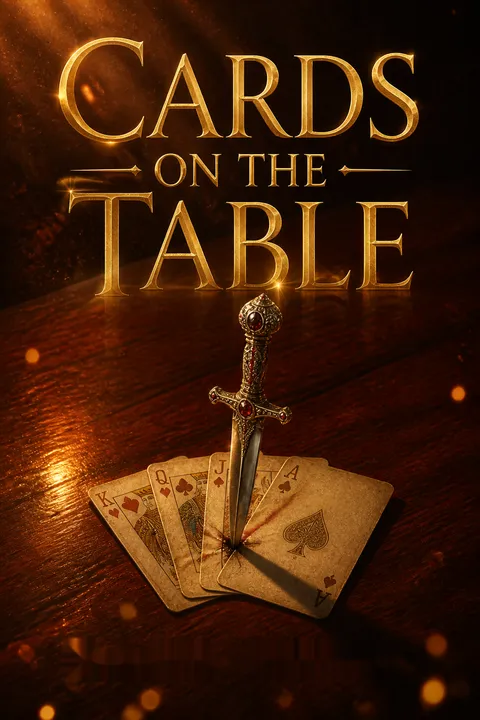
After dinner, the party divides: the four suspects play bridge in the firelit drawing room while the four investigators amuse themselves separately. Shaitana reclines, spectating as the tension mounts. When the two groups reconvene, Shaitana is found dead—a jeweled stiletto piercing his heart in the presence of all, yet under the cover of bridge's intensity. Battle's rapid investigation reveals an absence of external interference; only the four bridge players could have committed the crime. Poirot and his allies must unravel how one could murder calmly, almost invisibly, with three witnesses mere feet away. The social "game" has become deadly, and the psychological stakes rise.
Four Suspects Remain
Battle, Poirot, Race, and Oliver interrogate Dr. Roberts, Mrs. Lorrimer, Major Despard, and Anne Meredith. Each denies guilt, remembers the evening's movements with varying degrees of detail, and gives opinions about the others' potential for murder. The investigation pivots from physical evidence to character: their approach, temperament, and reactions to the murder become critical. Poirot turns to bridge scores, handwriting, and small behavioral clues, convinced the only way to discern the killer is through psychological deduction—examining not how, but who within, is capable. The atmosphere thickens with paranoia and introspective fear, as four "successful" murderers realize their triumphs may not last.
Battle's Psychological Hunt
Superintendent Battle and Poirot compare notes, discussing the psychological makeup of each suspect. Dr. Roberts is assertive, overconfident, and unafraid of risk. Anne is nervous, timid, capable under pressure. Despard acts methodically, weighing, and taking risks when needed. Mrs. Lorrimer appears orderly, cold, and possibly capable of premeditated crime—but less likely to act on impulse. The detectives recognize each would kill for starkly different reasons: pride, desperation, survival, or emotional calculation. Yet, all four are manipulative in their bridge games—mirroring perhaps, their approach to life's greater stakes. It is the mind, Poirot declares, which reveals the real murderer.
Past Crimes Resurface
As Poirot and Battle probe, they uncover tantalizing past incidents: each suspect is connected to a suspicious, unresolved death. Dr. Roberts' patient died suddenly after a scandal—an "accidental" anthrax poisoning. Anne's former employer, Mrs. Benson, died from poison, soon after Anne's petty theft was discovered; Major Despard is rumored to have killed a rival exploring botanist; Mrs. Lorrimer's past is shrouded, her late husband's death long unexamined. Shaitana's dinner was a deliberate trap, baited with these old, shadowy scandals: he sought the thrill of exposing them, but thus invoked their instinct for self-protection. The investigators must discern which, if any, old murderer has struck anew—and why.
Bridge, Bluffs, and Betrayals
Poirot obsesses over the bridge games played during the murder, collecting the scores and scrutinizing each player's style. He reasons that a crucial, thrilling hand—one requiring utmost attention—provided the timing for the killer to act unseen. Mrs. Lorrimer's flawless memory and self-control, Dr. Roberts' gambler's instinct, Despard's calculated steadiness, and Anne's hesitance mirror their approaches toward risk and concealment. These psychological outlines double as blueprints for their potential to kill. As Poirot reconstructs the hands, he notices oddities—timing, mistakes, tension—that hint at the internal drama unfolding beneath cool exteriors—a drama as dangerous as the murder itself.
Subtle Hands and Timid Hearts
Poirot and Mrs. Oliver focus on Anne Meredith, drawing out her unspoken fears and past. Anne's friendships are observed; her evasions about previous employment begin to raise suspicions. Through gentle but persistent questioning, Poirot links Anne to a previous "accidental" poisoning, suspecting her of murder to avoid shame. At the same time, Anne's timidity and anxiety suggest a mind unraveling under pressure. Her friend Rhoda and Mrs. Oliver become her unwitting protectors, further confusing motives of loyalty, rivalry, or guilt. The interplay among the women unfolds with mounting psychological complexity, building the emotional stakes for all involved.
Threads of Guilt
The investigation touches every suspect's private life, exposing vulnerabilities and secret shames. Dr. Roberts' history with Mrs. Craddock grows clouded; did love or malice drive mysterious deaths in his care? Major Despard's past is revealed as a tragic accident, yet rumors have dogged his reputation. Mrs. Lorrimer, ever composed, seems encumbered by unspoken guilt, but her true burden remains obscure. Anne's escapist tendencies intensify as the inquiry closes in. The cumulative emotional toll becomes evident—some seek confession, others hide desperately, all are haunted by their choices.
The Watchful Outsiders
Poirot, Battle, Oliver, and Race meet, exchange findings, and reflect on the unique contours of each suspect's psychology. Each has gathered pieces: personal histories, social observations, the timing and hand movements during the bridge. Mrs. Oliver's intuition, Race's background checks, Battle's interviews, and Poirot's "little grey cells" join forces. Yet, the answer remains elusive. Battle suspects Anne of old murder but not Shaitana's; Poirot is unconvinced of Mrs. Lorrimer's role. Psychological speculation dominates as physical proof remains scant, but all agree: each suspect, in their own way, is dangerous.
Echoes of Old Murders
Delving further into old cases, the investigators directly confront the suspects' pasts. Poirot uncovers Despard's truth: an accident, not murder, lies at the heart of the Amazonian tragedy. Similarly, Mrs. Lorrimer's confession emerges, steeped not in calculation but in exhaustion and shame—she admits to a murder long ago, seeking justice through self-sacrifice. Confessions and eyewitness claims cast new light, but not all words are trustworthy; stories are colored by self-preservation, guilt, and longing for absolution. The past offers not closure, but an even more tangled web.
Anne's Mirror
Anne Meredith, forced to confront her history and the mounting circumstantial evidence, begins to unravel. Rhoda tries to help, but Anne's fear of exposure leads her to contemplate—and attempt—escape by any means necessary, regardless of consequence. The psychological portrait evolves: Anne, once so mild and fragile, becomes a figure both pitiable and menacing, capable of betraying her only friend to save herself. Guilt and survival wage war within her, culminating in one last disastrous act.
Desperation's Final Act
When Battle and Poirot realize Anne's intentions, they race to Wallingford. On the river, Anne, in a desperate, clumsy attempt to silence Rhoda and protect herself, overturns a punt, nearly drowning both. Major Despard's timely heroics save Rhoda; Anne, ironically, is herself almost lost. This failed attempt at murder exposes Anne's true capacity for violence; in her panic, survival instinct overtakes any loyalty or affection. The cycle of secrets, fear, and guilt has spiraled into open disaster.
Poison, Panic and Punting
With Anne's latest crime failed and her psyche shattered, Poirot and Battle finally begin to close the net. Mrs. Lorrimer, in a parallel act of desperation and guilt, has already confessed to Shaitana's murder and taken her own life—her suicide, accompanied by letters confessing and apologizing to the remaining suspects, seems to settle matters. For a moment, relief and confusion mingle; the investigators suspect the case is over, but Poirot's unease lingers.
The Spider's Web Fails
Poirot's instincts prove correct: Mrs. Lorrimer's confession is revealed as a forged lie, manufactured to shield Anne from justice. Poirot uncovers the trick: a forged suicide note, three matching letters in Mrs. Lorrimer's hand, and circumstantial evidence do not add up—especially when a maid reveals Anne's suspicious visit before the suicide. The investigators realize that the web of guilt was spun not merely to destroy, but to protect, confusing the line between altruism and obstruction. The real murderer still lurks in plain sight.
The Clever Altruist
When Poirot re-examines every thread, he finds clarity in psychological patterns and confessions. Mrs. Lorrimer's supposed "altruism" is exposed as misdirection. Anne's capacity for both pitiful vulnerability and cold calculation is laid bare—and yet, Poirot suspects a still deeper plot: perhaps the real killer has played all, orchestrating deaths by manipulating expectations, guilt, or even kindness. The dynamics of protection, sacrifice, and blame are deconstructed; who kills for gain, who for love, who to escape?
Unmasking in the Library
Poirot calls the principals together, weaving the case's disparate strands: bridge scores, psychological profiles, old crimes, timing, and the subtle interplay of bluff and truth. The grand denouement is poised. Poirot eliminates Anne, Despard, and Mrs. Lorrimer, exposing the real murderer as Dr. Roberts. He reveals how Roberts' boldness, his methodical manipulation of public murders disguised as acts of care, and a forged letter intended to frame Mrs. Lorrimer, all led to Shaitana's murder. When pressed, Roberts confesses. The psychological game, not the physical clues, has unmasked the killer at last.
Poirot Lays His Cards
Poirot, serene and precise, explains step-by-step how the case was won: the bridge hands, personal histories, psychological patterns, and the timing of each suspect's move coalesced into truth. He reflects on how, in the absence of physical proof, character is the ultimate evidence. None of the suspects' prior successes, tricks, or lies could withstand the focus of intense, collective scrutiny. The story closes with Poirot's gentle, triumphant message: the mind is always the murderer's undoing—and sometimes, the only way to see the truth is to look into the heart.
Analysis
Cards on the Table stands out among Agatha Christie's works as a pure, distilled exercise in psychological detection, putting her faith in character and motive above all else. By constructing a case with only four viable suspects, each equally plausible and equally capable of murder, Christie discards misdirection for tension and human drama—the whodunnit becomes a "how do we know them?" Rather than hiding the killer among the periphery, she insists on investigation via empathy, logic, and deep understanding of the mind's capacity for darkness, guilt, and self-preservation. The interplay between the intellect (Poirot), the institution (Battle), and intuition (Oliver) demonstrates that crime's solution lives not only in evidence but in the cracks of conscience and the subtleties of the soul. The story is, at its core, about the responsibility of knowledge and the peril of underestimating it—Shaitana's death is the logical outcome of his own carelessness in wielding dangerous information. Each character, riven by past sins and present fear, reflects a different approach to evil: denial, cool calculation, desperate self-preservation, or false altruism. The novel's enduring lesson is that secrets, unexamined, can ruin, but so can the obsessive urge to uncover them; and that sometimes, to understand a crime, one must understand the very heart of the criminal.
Review Summary
Reviewers broadly praise Cards on the Table as one of Christie's cleverest and most psychologically rich mysteries. Many highlight the unique premise of four detectives versus four suspected murderers, with Ariadne Oliver's debut drawing particular enthusiasm. The bridge game as a narrative device and Poirot's psychological deduction method are frequently celebrated. Some note the middle section can feel slow, but most agree the twisty ending redeems and elevates the novel. A handful of readers found it predictable or basic, but the majority consider it an underrated gem.
Characters
Hercule Poirot
Poirot is Christie's master detective: precise, logical, and deeply aware of the nuances of human nature. In this case, Poirot must operate beyond traditional clues—relying on his unparalleled ability to deduce motive, temperament, and moral fiber from small behavioral details and psychological insights. His greatest strength is his capacity to intertwine observation, empathy, and calculated interrogation, patiently allowing the truth to reveal itself. Poirot is both imposing and comforting, navigating the intricate egos and secrets of his suspects while relying always on his guiding principle—that the "mind of the murderer" matters most. His relationships with other investigators are collegial but tinged with gentle rivalry and playful condescension.
Mr. Shaitana
Shaitana is the catalyst—a collector of secrets, thrill-seeker, and provocateur. He revels in the power of suggestion and exposure, assembling four suspected but unconvicted murderers and four investigators for his own amusement. His mephistophelian charisma masks both deep vanity and heedlessness; fascinated by human darkness yet oblivious to the risk, he underestimates the survival instincts of his own "exhibits." Ultimately, his provocative invitation to danger provokes his own murder—the fate of someone who plays at evil and believes himself immune.
Superintendent Battle
Battle is the main police investigator: unassuming, patient, and deeply persistent. He counters Poirot's psychological flair with steady, methodical work. Battle is not as sensational or intuitive but is quietly perceptive—especially attuned to practical evidence, character, and the importance of motive. His manner wins confidences and allows suspects to reveal themselves without knowing, yet, when roused, he presses relentlessly for the truth. His partnership with Poirot functions as a balance between hard fact and nuanced insight; where Poirot seeks psychology, Battle is attentive to routine and detail.
Mrs. Ariadne Oliver
Mrs. Oliver plays the part of both comic relief and sharp observer. She is instinctive, highly imaginative, and uses her status as a female crime writer both to connect with suspects (especially Anne and Rhoda) and to pursue unconventional lines of inquiry. Her seemingly erratic insights often hit close to home, uncovering facts the professionals miss because of their preconceived ideas. Her psychological empathy, particularly for young women, allows for revelations others might miss. Despite her dabbling and light manner, she is a key collaborator.
Colonel Race
Race provides a worldly, pragmatic view as a Secret Service operative. Detached but incisive, he leverages international contacts and deep knowledge of human behavior, especially in those accustomed to risk and violence. He conducts foundational checks into the characters and pasts of Major Despard and Dr. Roberts, using influence, resourcefulness, and discretion. Race is less about intuition and more about layered information-gathering, challenging easy conclusions with hard facts.
Mrs. Lorrimer
Mrs. Lorrimer is outwardly the perfect gentlewoman: precise, reserved, and respected. Underneath, she bears tremendous guilt for a murder long past (her husband's), and the burden of a lonely, penitent existence. Her psychological depth is extraordinary—she thinks in calculations, probabilities, and "what would I do?" When suspicion falls, she strives for justice through self-sacrifice: confessing to Shaitana's murder and taking her own life, both to end her suffering and to save Anne. Her character is defined by logic, control, and, ultimately, profound compassion twisted by remorse.
Dr. Geoffrey Roberts
Dr. Roberts is the quintessential "successful" murderer—popular, genial, and supremely confident. Under his cheerful bedside manner seethes a dangerous streak: he rationalizes murder as a clinical necessity and devises bold, public deaths (e.g., poisoning a rival's shaving brush while visiting). He is unafraid to gamble, acting in moments of peril with the same nerve he brings to bridge. Roberts' overconfidence finally leads him to attempt to frame Mrs. Lorrimer, forging her suicide confession. His mindset reveals the thin line between professional detachment and moral corruption.
Major Despard
Despard is athletic, practical, and reserved—a man shaped by a life of danger and difficult choices. Full of restraint and inner strength, he confesses to a death in the Amazon (the shooting of Professor Luxmore) only when compelled, explaining it as a tragic accident in self-defense. Despard is honest and often stoic, quick in emergencies (he saves Rhoda from drowning), and attracted to Anne's vulnerability but also Rhoda's spirit. His moral compass, though flexible under necessity, ultimately holds him clear of deliberate murder.
Anne Meredith
Anne is timid, fragile, and harried by guilt, with a lifelong tendency to evade blame and responsibility. Suspected of murdering an employer who caught her stealing, Anne becomes the case's emotional powder-keg—her survival instinct more powerful than any affection or remorse. Under pressure, she turns desperate and dangerous, ultimately attempting to murder her closest friend, Rhoda, to silence a threat. Anne functions as both a mirror and foil for other women in the story—a study in the costs of deceit, the depths of fear, and the spiral of self-destruction.
Rhoda Dawes
Rhoda, Anne's friend and housemate, is vigorous, outspoken, and uncomplicated—prone to act on principle and loyalty. Her role is first that of support and emotional anchor for Anne, then victim, as Anne's panic turns to violence. Her genuine affection and friendship for Anne become another weapon in the story: her trust makes Anne's betrayal all the more poignant. Rhoda's curiosity and candor also bring out key confessions, especially to Mrs. Oliver.
Plot Devices
Psychological Deduction Over Physical Evidence
Christie famously subverts her own "least likely suspect" cliché by giving the reader four—and only four—reasonable suspects, each with a likely motive and clear history of murder. There is no secret passage, cryptic clue, or elaborate twist: the bridge game, the timing, and small behavioral cues become the essence of detection. Foreshadowing abounds in Shaitana's conversational barbs, confessions about past crimes, and the interplay at the bridge table. The narrative alternates between investigator interviews, psychological observations, and confrontation scenes, jumping between London parlors and country cottages. Red herrings surface in the form of confessions, forged letters, and well-placed guilt, but ultimately, truth is established not by forensics, but by recognition of character and emotional psychology. Structure, parallelism, and contrast between pairs of detectives and suspects keep the web taut and the narrative tense until the cards are finally and literally laid on the table.
Hercule Poirot Series
























About the Author
Other books by Agatha Christie


Download PDF
Download EPUB
.epub digital book format is ideal for reading ebooks on phones, tablets, and e-readers.








































