
Plot Summary
Poirot's Empty Evenings
Hercule Poirot, retired but restless in London, laments a lack of intellectual stimulation and meaningful companionship. After a fine meal, he returns home only to find himself yearning for the excitement of investigating human puzzles. Unexpectedly, Superintendent Spence visits, bringing with him an unusual dilemma regarding the recent conviction of a man named James Bentley for the murder of Mrs McGinty. Despite overwhelming evidence, Spence harbors doubts about Bentley's guilt. Poirot, ever a connoisseur of mysteries and motivated both by Spence's appeal and his own need for purpose, agrees to travel to the countryside and open his famed "little grey cells" to the case—a promise that sets the stage for a deeper look at the secrets hidden in quiet Broadhinny.
Superintendent Spence's Doubt
Spence describes the McGinty case to Poirot: an elderly, modest charwoman murdered for her savings, with her awkward and alienated lodger, James Bentley, arrested and convicted based on circumstantial evidence. Yet Spence's years of experience lead him to believe Bentley isn't the typical "cocky" murderer but a frightened, hopeless outsider. Spence lays out the limitations in both personality and clarity of motive regarding all those connected—niece Bessie Burch, her husband Joe, Bentley's own background—and admits every investigation pointed to Bentley. Nevertheless, Spence's gut insists the truth is not so clear, compelling Poirot to reset the investigation from the ground up.
Dead Woman, Living Secrets
Poirot notes the absence of scandal or past intrigue: Mrs McGinty was, on surface, neither a mystery woman nor the subject of hatred. The life stories of both McGinty and Bentley seem average for English country life; neither stands out as a likely figure in a lurid crime. Poirot and Spence list possible motives, but money is a weak one, as Mrs McGinty's niece stood to gain just £200, and all other suspects—neighbors and relatives—either seem above suspicion or have solid alibis. Poirot's focus narrows: perhaps the murderer's identity is less about the victim's life and more about someone seeking to frame another, making Bentley a scapegoat.
Broadhinny's Unruly Guesthouse
Guest at Long Meadows, the Summerhayes' guesthouse, Poirot is thrown among eccentric hosts, threadbare furniture, unruly animals, and dreadful food. Mrs Summerhayes, distracted and scatterbrained, provides comic relief while lamenting the loss of Mrs McGinty, her reliable cleaner. The village's mundane and messy life frustrates Poirot, but in their household, as in Broadhinny at large, he finds hints of hidden turmoil beneath everyday complaints. The missing domestic order foreshadows how seemingly ordinary lives can conceal extraordinary secrets—the atmosphere subtly reinforcing the village's innocence and ignorance, or perhaps its willful blindness.
The Life of Mrs McGinty
Poirot interviews Bessie Burch, learning of Mrs McGinty's habits, character, and circle. Mrs McGinty emerges as ordinary—hardworking, thrifty, loyal but occasionally nosy, and generally reserved from deep intimacy with family or clients. Her niece and nephew-by-marriage, though beneficiaries of her estate, are cleared by Poirot's judgment and Spence's earlier investigation. The absence of any passionate enmity toward the victim or direct motive for murder continues to unsettle Poirot; anything sinister must now lurk not in the victim's past but in the hidden histories of those around her.
Unlikable Suspects and Alibis
Poirot delves into Bentley's work life, discovering from colleagues that the suspect was ineffective, nervous, and socially unskilled—enough to "look guilty," but not enough to be believed capable of murder. Notably, Poirot meets Maude Williams, an office colleague who insists Bentley was shy, gentle, and decent. Bentley's lack of confidence and friendlessness, combined with his inability to defend himself, helped cement his conviction in the court of public opinion. Poirot intuits that Bentley's social awkwardness, more than any evidence, made him the perfect scapegoat; the real culprit relies on public assumptions for cover.
Ink, Newspapers, and Remnants
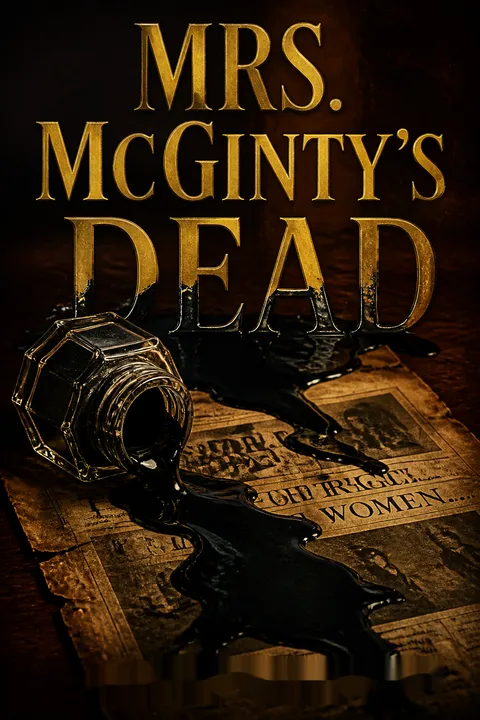
Poirot retraces Mrs McGinty's last days, finding a small but critical detail: she purchased a bottle of ink soon before her death—unusual for a woman who rarely wrote. Poirot's investigation of her personal effects yields a missing newspaper clipping, leading him to hypothesize that Mrs McGinty made a connection between something she read and her work. This missing piece points to an outside catalyst: perhaps a discovery or secret behind the murder, with the ink a symbol of her intent to take action—writing a letter that may have prompted her death.
Four Tragic Women
Poirot locates the issue of the Sunday Companion Mrs McGinty had read—a feature recounting the fates of four notorious women from past murder cases: Eva Kane, Janice Courtland, Lily Gamboll, and Vera Blake, all now vanished and, according to the piece, "living quietly somewhere." Poirot deduces that Mrs McGinty recognized someone from their old photograph—a current resident of Broadhinny harboring a dangerous secret. Thus, the murder becomes not about petty theft or family conflict, but a desperate attempt to bury a scandalous or criminal past before it can be revealed again.
Reluctant Faces in Doorways
Poirot calls on all homes for whom Mrs McGinty worked—Wetherbys, Carpenters, Rendells, Upwards. Each household offers little concrete, but there's a common undercurrent: secrets, concealed disappointment, awkward family dynamics, and fear of exposure. At Laburnums, the interplay between Robin Upward and his mother is sharp and artificial; at the Carpenters' home, Eve suffers from anxiety and fear of intrusion. Poirot's questioning unsettles many, drawing out defensive lies and nervous reactions—the reaction of people with stories they dare not tell, some rooted in long-ago tragedy rather than present-day vendetta.
Laburnums and Collaborations
The heart of Broadhinny's social whirl is Laburnums, home of Mrs Upward and her playwright son Robin, and their guest Mrs Ariadne Oliver—the spirited and skeptical mystery novelist. Here Poirot and Mrs Oliver compare notes, banter, and trade suspicions, while Robin enjoys center stage, rehearsing his performance of real life and drama. Amid their visits, Robin flaunts charm and wit, yet his relationship to his mother feels more professional than filial, suggesting deeper secrets. A social gathering at Laburnums—later marred by death—becomes the tableau wherein truth, performance, and disguise are indistinguishable.
Lipstick, Scent, and Lies
The murder of Mrs Upward shatters Broadhinny's routine social life—she is found strangled with her own scarf after receiving secretive evening phone calls to three women: Eve Carpenter, Shelagh Rendell, and Deirdre Henderson. Her guest cup bears lipstick and traces of expensive perfume, evidently meant to frame a woman. village witness Edna complicates matters by insisting the visitor was fair-haired. Suspicion falls on Eve, but Poirot quickly senses this evidence is planted—too heavy-handed, as though the real murderer wishes the blame transferred onto any woman, and away from himself.
A Pattern Hidden in Clutter
Poirot is frustrated by the daily disorder of the Summerhayes house— drawers overflowing, rooms in chaos—and realizes that in such confusion, an incriminating object could easily be hidden or planted. He hears from Maude Williams about an attempted break-in at Mrs Wetherby's; the household's secrets and the community's general untidiness serve both as camouflage for the guilty and as metaphor: the truth is present but buried beneath clutter, memory lapses, and misplaced guilt. Poirot becomes obsessed with reconstructing the hidden pattern that weaves these crimes together.
The Photograph in the Drawer
Among the detritus at Long Meadows, Poirot discovers the missing photograph of Eva Kane with the inscription "my mother." Its sudden appearance, after multiple searches, reveals it was recently (and surreptitiously) planted with intent to incriminate. Poirot realizes that the constant disorder of the household makes it an ideal place for evidence to be shifted at will, and that the murderer is not above manipulating both people and objects to mislead the investigation. The photograph, once Nostalgic, becomes the key to unraveling the deep web of identity and motive.
Suspicions and Surviving Secrets
Poirot pressures the Wetherby and Rendell households: the former ruled by an emotionally manipulative mother, the latter shadowed by fear and nervousness. Poirot's queries about anonymous letters and old crimes deepen Shelagh Rendell's anxiety. He learns (through informants like Maude Williams) that every prominent family has concealed pasts or vulnerabilities—fraud, war, failed ambitions, or emotional dependency. As suspects' secrets surface—from past marriages to anonymous accusations—it becomes clear the murder is an act born of desperate secrecy and fear of exposure, rather than vengeance or gain.
Truths, Confessions, Reunions
Maude Williams reveals that she herself is Craig's daughter—the child of the infamous murder case involving Eva Kane. Her curiosity and desire for closure brought her to Broadhinny under another name, with intentions as much personal as investigative. Poirot learns she entered Mrs Upward's house the evening of the murder, and found her already dead. Deciding she poses no further threat, Poirot lets her go. The case for all the villagers becomes not just one of murder but of generations seeking to survive or shed the weight of inherited infamy or shame.
Poirot Draws the Circle
Poirot gathers the principal players at Long Meadows, dramatically reconstructing both crimes. He lays bare the overcomplicated clues, the deliberate planting of evidence, and the obsessive need of "very nice people" to preserve appearances. The supposed clues of perfume and lipstick are revealed as misdirection, while planted photographs and manipulated memories implicate more people than actually involved. Poirot's analysis focuses on the psychology of guilt, performance, and the particular English drive to suppress scandal at any cost—even if that means murder.
Robin Upward's True Inheritance
The supposedly charming Robin Upward is exposed as the true murderer—Eva Kane's son, inheritor of both fortune and lethal secrecy. His entire persona is an act: adopted, renamed, protected by Mrs Upward, he kills Mrs McGinty to protect his origins, then kills his benefactor when threatened with exposure. His theatrical imagination drives both the crimes themselves and his efforts to frame others through props and drama. As Robin confesses, passed the test of Poirot's psychological pressure, his motives are revealed: love of self, fear of disgrace, and a desperate desire for a position he feels is due to him by cleverness and right of inheritance.
Analysis
Mrs. McGinty's Dead interrogates the consequences of buried secrets and the English obsession with appearances. Christie, through Poirot's outsider's lens, exposes the way "nice people" will go to astonishing lengths—including murder—to preserve respectability, particularly when haunted by scandals inherited from the past. The novel critiques both the criminal justice system and society's readiness to scapegoat outsiders like James Bentley simply because they are unlikable or awkward. Christie's use of the old news article as a plot catalyst reveals the impossibility of fully escaping the past: crimes, both personal and generational, are resurrected by the smallest details—a newspaper clipping, a bottle of ink, an old photograph. The village, under its surface of disorganization and comedy, is a nest of social anxieties, old wounds, and repressed shame, illustrating how every home holds its own darkness. Ultimately, the story warns against judging by appearances and underscores the necessity of understanding motive, context, and the strange bonds that tie people to secrets, shame, and survival. Christie's emotional arc—moving from suspicion through disorder towards truth and even reconciliation—argues for both justice and compassion as antidotes to both crime and the legacy of inherited trauma.
Review Summary
Mrs. McGinty's Dead is widely praised for its humor, clever plotting, and memorable characters. Readers particularly enjoy Ariadne Oliver's meta-fictional commentary, widely interpreted as Christie's self-referential frustration with her own famous detective. Poirot's suffering in uncomfortable lodgings provides comic relief, while Superintendent Spence's moral dilemma drives the plot. Though some find the mystery's resolution slightly far-fetched and the large cast of characters overwhelming, most agree the unexpected twist and witty dialogue make it a rewarding, entertaining entry in the Poirot series.
Characters
Hercule Poirot
Poirot, the brilliant Belgian detective, comes out of semi-retirement to rescue both his own sense of worth and possibly a man from the gallows. His love for order and intellect clash with the chaos of Broadhinny—and the untidy psyches of its residents. Poirot is driven by pride, the challenge of proving himself, and an old-fashioned sense of justice ("If a man has not committed murder, he should not be hanged"). His psychological insight allows him to see through social performance, but he is still exposed to manipulation by villains adept at stagecraft. In this case, Poirot's empathy for outsiders (Bentley, Maude) and his understanding of inherited trauma overcomes his sometimes comically exaggerated fastidiousness.
Superintendent Spence
Spence represents the English constabulary at its best: diligent, honest, but able to admit fallibility. Unmoved by mere appearances, Spence dislikes the idea of an innocent man being hanged—so much so that he risks career and comfort to seek Poirot's help. He is the foil to Poirot's foreign cleverness, providing grounded observations and local insight. Spence is haunted by the possibility of injustice, and serves as surrogate for the reader's moral anxiety in an imperfect system. His partnership with Poirot is rooted in mutual respect and the hope that two minds may together see clearer than one.
James Bentley
An awkward, withdrawn, and timid man, Bentley's very personality makes him the perfect scapegoat: he cannot defend himself, and his every action seems suspicious to those inclined to judge by manner rather than fact. His inability to cope leads to lies, panicky behavior, and social self-sabotage. Bentley represents a class of victims—those punished not by clear malice, but by a community's preference for simple explanations and a suspect whose social failure makes them more "guilty" than the evidence warrants. His eventual release is both a personal liberation and a commentary on the dangers of prejudice.
Maude Williams
Maude, energetic and resourceful, enters the story as an ally motivated by her private connection: she is the orphaned daughter of the notorious Craig, whose tragedy is at the heart of the case. Driven by both curiosity and a sense of justice, she is willing to take risks, go undercover, and even confront someone she believes ruined her family. Psychologically, Maude embodies the lasting consequences of parental sin—obsession, anger, and the pull between retribution and empathy. Her arc is one of reconciliation: in meeting the possibility of violence, she instead chooses mercy, symbolizing hope for healing inherited shame.
Robin Upward (Evelyn Hope)
Robin is the son of Eva Kane, raised to self-invention as Robin Upward. His entire identity is a series of performances—towards his benefactress, society, and (crucially) himself. Robin's psychological profile is one of narcissism, self-pity, and the typical murderer's "cockiness"—believing himself clever enough to control every consequence. He kills to preserve his fortune and reputation, not to avenge or out of hatred, but because survival means constant reinvention; others must pay to maintain his story. Robin is both a literal performer and a metaphor for all those in society who rely on appearance, charm, and performance to escape truth—and who will kill to avoid reality's intrusion.
Mrs Laura Upward
Mrs Upward is an iron-willed, clever, slightly theatrical woman devoted to her adopted son. She represents the older generation's will to maintain control by secrecy ("knowledge is power"), and is undone by her own decisiveness in investigating on her own. Her death, though tragic, is also the result of her refusal to trust others or share what she knows, and her belief that safety and love can be procured by means of discretion and careful stage-management. Her relationship with Robin is a mixture of possessiveness, theatricality, and ultimately blindness.
Mrs Maureen Summerhayes
As hostess to Poirot, Maureen is refreshingly unguarded—her scatterbrained, open-hearted approach providing comic relief, a safe haven, and finally, a key clue. Psychologically, she represents the "unmarked" victim of tragic inheritance: herself adopted, she is almost accidentally swept into the crimes of Broadhinny's past. Her strengths lie in her emotional candor, and yet her constant disorder also offers camouflage for the real murderer. Maureen is both the limit case—chaos enabling evil—and the reminder that not all inheritances breed violence.
Eve Carpenter
Eve is a study in outward success masking inward terror: wealthy and newly married, she fears the discovery of her own "unsavoury" past far more than she fears murder charges. Her every action is calculated for appearances, but her obvious distress and impulsivity—attempts to bribe her servants, suspicion of Poirot—make her an inevitable suspect. Yet her real crime is merely social: she has hidden origins, not malice. Psychologically, she is the "guilty without guilt," illustrating how social pressure can breed paranoia and defensive dishonesty in the innocent.
Deirdre Henderson
Deirdre, large, plain, and emotionally stunted, is the dutiful daughter of manipulative Mrs Wetherby, resented by a cold stepfather. Her psychological profile is classic for the "unmarriageable" daughter: emotionally and physically clumsy, yet capable of deep loyalty and, ultimately, independence. Deirdre's own suppressed longing finds release in a tenuous friendship with James Bentley, making her one of the few genuinely sympathetic figures in Broadhinny. Her arc gestures at optimism: that even in a web of family repression and old rivalries, new attachments and freedoms are possible.
Mrs Edith Wetherby
Manipulative, self-pitying, and secretly energetic despite her invalid status, Mrs Wetherby wields guilt and dependency as weapons. She is an ambiguous presence—both memory-keeper and emotional parasite, brimming with contempt for others and obsessed with her own fragility. Mrs Wetherby serves as an example of "respectability" weaponized, using sentimentality and faintness to preserve control, and enabling a household that feeds on mutual suspicion and suppressed malice.
Plot Devices
Old Newsprint as Key: Hidden Identities
The use of the Sunday Companion article listing four tragic women—Eva Kane, Janice Courtland, Lily Gamboll, Vera Blake—serves as Christie's main structural device. It enables Poirot to connect local villagers with infamous crimes buried decades earlier. The interplay of missing clippings, the bottle of ink, and the act of writing a letter are all imbued with significance far beyond their surfaces: each signals an attempt to grapple with, confess, or trade on the weight of historic guilt. The device works both as an engine of suspense and as a symbol of the recurring consequences of past sins.
The Red Herring: Feminine Clues
Throughout the middle of the novel, lipstick traces and the scent of expensive perfume at the murder scene prompt suspicion towards various female suspects—especially Eve Carpenter. Witness statements about seeing "a woman with fair hair" reinforce the assumption of a female perpetrator. These clues are shown to be deliberate misdirection planted by the murderer, both indicting others and playing on societal expectations of guilt. The device works structurally to keep audience and characters guessing, while thematically reinforcing the dangers of appearances versus reality.
The Concealed Photograph
The missing photograph of Eva Kane, first kept innocently, later planted to frame others, is the novel's central object. Its discovery at Long Meadows, and the realization it has been surreptitiously placed, reveals the presence of a manipulative hand. The murderer's use of this photograph exposes a reliance on both physical and psychological evidence—and the constant danger that evidence will be hidden, misunderstood, or used as a weapon. The photograph is not just proof of presence, but a symbol of the enduring connection between generations and the inability to fully escape one's origins.
Performance and Playacting
Laburnums, home to playwright Robin Upward, is a house of literal and metaphorical performances: real events are staged as dramas, and clues are "props" in a deadly game. Robin's histrionic confession, Mrs Upward's secretive management of the investigation, and even Poirot's own dramatic "lecture" at the denouement emphasize the blurred lines between performer and audience, between story and truth. Christie leans into theatre and collaboration with Mrs Oliver to inject humor, meta-commentary, and highlight the danger of life when everyone is pretending.
The House as Psychological Symbol
The physical spaces of Broadhinny—the Summerhayes' guesthouse, jumble of kitchens and bedrooms, the Wetherbys' stifling sitting room—reflect and reinforce character psychology. Disorder provides not only plot cover for the murderer's acts, but metaphorical resonance: secrets are lost amid clutter; memory and evidence become unreliable; and the stability (or instability) of families is projected onto their surroundings. Poirot's fastidiousness serves as both comedy and a philosophical stance: to bring order is to bring justice.
Hercule Poirot Series













About the Author
Other books by Agatha Christie

Download PDF
Download EPUB
.epub digital book format is ideal for reading ebooks on phones, tablets, and e-readers.








































