
Plot Summary
Meadowbank's Glittering Facade Cracks
As the new term dawns at Meadowbank, one of England's most exclusive schools, the grounds blossom with optimism and privilege. Miss Bulstrode, the visionary headmistress, welcomes an assortment of girls—including several foreign princesses—alongside strict, longstanding staff and a few new hires. Underlying this bright facade, questions of succession, staff tensions, and new, enigmatic arrivals flicker beneath the surface. Unseen by most, ambitions, secrets, and personal anxieties take root as Meadowbank seeks to preserve its shining reputation. Already, unbeknownst to the students playing in sunlit gardens, events as distant as Middle Eastern revolutions and as intimate as broken lives are converging on this place, setting the stage for one of the school's greatest, darkest challenges.
Ramat's Revolution, Jewels Vanish
Far from England, in the fictional Middle Eastern kingdom of Ramat, Prince Ali Yusuf and his British pilot, Bob Rawlinson, face imminent overthrow. Amid swirling tension, Ali entrusts his family's priceless hoard of jewels—worth nearly a million pounds—to Bob, asking him to evade the revolutionaries and send them to safety in Europe. As the collapse accelerates, Bob improvises: his sister Joan and niece Jennifer, tourists in Ramat, are unknowingly woven into the escape plan. The prince and Bob perish in a mountain air crash, their bodies discovered; but the fate of the legendary jewels remains a mystery. Unknown to those in power, Bob's desperate ingenuity sets in motion a chain of concealment that will haunt Meadowbank.
Smuggled Secrets in Luggage
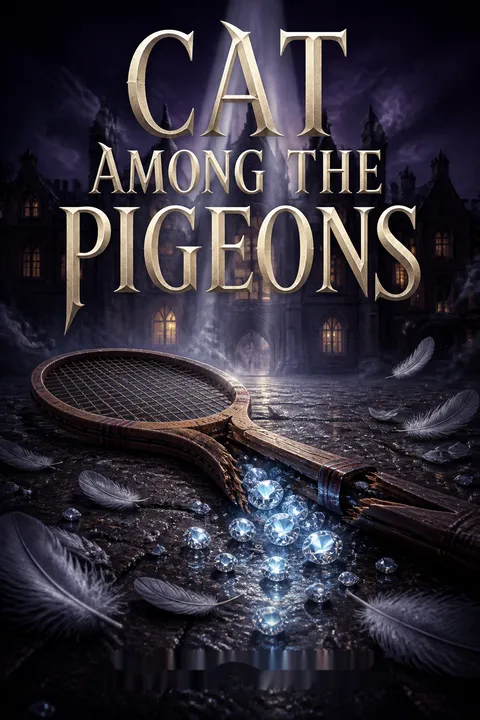
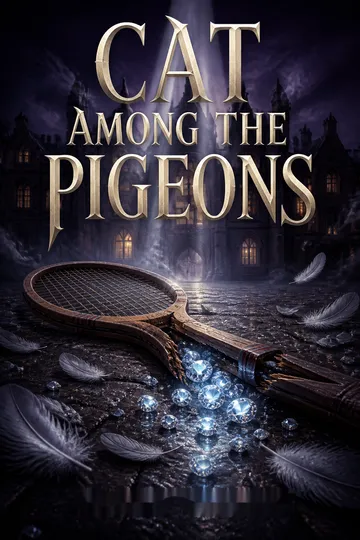
In the tumultuous aftermath, Bob Rawlinson slips the jewel cache—hidden inside the handle of Jennifer Sutcliffe's tennis racquet—into his sister's hotel room. Sighted in the act by a shadowy woman, the package travels with Jennifer and her mother from Ramat, through a hurried evacuation, to London and eventually their country home. Neither suspects their luggage harbors a secret worth killing for. As they settle into post-vacation life, they find themselves under suspicious scrutiny: a break-in, mysterious strangers, and intense questioning by British agencies. Yet, with casual denial and suburban distractions, the jewels remain at large—deep within the ordinary, innocent routines of English life.
Schoolgirls, Spies, and Shadows
As Meadowbank's term begins, international intrigue grows invisible tendrils through the school corridors. New staff arrive: efficient Ann Shapland, the enigmatic French mistress Mademoiselle Blanche, and a "gardener" with secrets of his own. Princess Shaista enrolls, her presence signaling royal stakes, while Julia Upjohn befriends Jennifer. Beneath tennis matches and language lessons, subtle questions emerge—about who's really watching whom. Interpol, spies, and dubious "parents" orbit the campus, each with their own agenda, all searching for any lead on the missing Ramatian jewels. Innocent eyes fail to notice; yet with every letter home and every clandestine glance, Meadowbank becomes less a sanctuary, more a silent battlefield.
Strange Staff and Hidden Purposes
Staffroom conversations simmer as personalities clash and subtext thickens. Miss Bulstrode weighs her own succession—should the steady, unimaginative Miss Vansittart lead, or the passionate, unconventional Miss Rich? Meanwhile, the bombastic Games mistress, Miss Springer, and nervous Frenchwoman, Mademoiselle Blanche, both display odd preoccupations with the new Sports Pavilion and the girls' activities. Adam Goodman, the charming young gardener, observes more than he admits, dispatched by authorities to monitor potential threats. Through whispered suspicions, accidental encounters, and free-roaming adolescent curiosity, the adults' secrets blend with those of the students, setting the tinder for future catastrophe.
Murder in the Sports Pavilion
Late one night, the tranquility of Meadowbank is destroyed: Miss Springer, the controversial Games mistress, is found dead in the Sports Pavilion—shot in the heart. The police descend, led by Inspector Kelsey, confronting a baffling scene. The door was unlocked with a key; no theft, no apparent motive. Staff and students are questioned with care, suspicions swirling around motivations and personal histories. Miss Springer's reputation for meddling and confrontation offers no clear enemy. Yet, it becomes quickly apparent: someone came prepared to kill, suggesting a premeditated plan linked to deeper, perhaps international secrets. The school's innocence is shattered, and trust rapidly corrodes.
School in Turmoil, Suspicions Grow
With the murder dividing the school, Meadowbank hovers between denial and hysteria. Local police, international agencies, and even hidden spies probe for the killer's identity. False trails arise: was Miss Springer blackmailing someone, or was she silenced to shut down an unknown investigation? Princess Shaista reports feeling threatened. Meanwhile, rumors of a burglary at Jennifer's house and odd behavior among the staff deepen the confusion. Girls whisper about assignations and imagined scandals; the administration struggles to retain authority and calm. Each is aware, however faintly, that the murder is only the beginning—a warning that more shadows hide in the familiar halls.
New Racquet, Old Danger
The search for the missing jewels intensifies from the shadows. A mysterious woman posing as a family friend persuades Jennifer to swap tennis racquets, attempting to extract the precious contraband. Yet, due to a prior exchange, it is Julia, not Jennifer, who unwittingly ends up with the incriminating racquet. The subtlety and error of this transfer go unnoticed by almost everyone, but Julia's growing unease and intelligence lead her to suspect there's more than chance at play. All the while, agents and criminals alike narrow their focus on Meadowbank, drawn by rumor and conjecture. Danger now lurks not merely in intent but in children's everyday games.
Cat Among the Innocents
Calm proves fleeting as a second staff member—Miss Vansittart, poised for headship—dies in the same Sports Pavilion, killed by a blow to the head. Security collapses: parents remove daughters, suspecting the school is cursed. Alongside the double killing, Princess Shaista is "kidnapped" in what appears to be a professional abduction. The authorities, including Adam and Inspector Kelsey, race to understand the confluence of violence: why target the Pavilion? Why these victims? Staff and students alike feel hunted, while each adult's alibi is tested. The mystery deepens; is the murderer an insider, an infiltrator, or merely a cat—lethal and unseen—among the Meadowbank pigeons?
Kidnapping and Double Disguises
International alarms sound as Shaista's "kidnapping" draws scrutiny from British, Middle Eastern, and European agents. Detective Adam suspects double-dealings: clues indicate the kidnapped girl wasn't Shaista at all but an impostor planted to intercept the jewels. Meanwhile, Mademoiselle Blanche, complicit and eager for profit, tries to blackmail the killer. Her fate is sealed—she too is found murdered, killed in her own room. Poirot enters the scene, consulting with authorities as threads finally begin to tighten: the Pavilion is a stage, but the real drama hinges on identity, possession, and betrayal among the ones least expected.
Legacies Revealed, Motives Exposed
Driven by suspicion—and a streak of independence—Julia examines her inherited racquet one sleepless night. Uncovering its false cap and stuffing reveals a cache of spectacular, priceless gems: the lost jewels of Ramat. Understanding the peril, Julia escapes to London, entrusting the booty to Hercule Poirot. The metals and stones provoke awe but have left a bloodstained trail. Poirot, examining espionage angles, hidden motives, and overlooked identities, traces participants' movements from Ramat to Meadowbank. In gathering all pieces, dark legacies—of envy, longing, espionage, and missed chances—bubble up, entangling staff, students, and international interests.
The Real Enemy Unmasked
Poirot orchestrates a confrontation, drawing the surviving suspects together. He eliminates red herrings: the crimes were not committed by international agents, nor were the deaths random. Instead, Poirot reveals that Ann Shapland, the efficient secretary, is in fact Angelica de Toredo, a notorious and deadly spy present in Ramat and a witness to Bob Rawlinson's secret. Her double life—assisting, then eliminating all threats and rivals—explains both the shootings and cover-up. When exposed, Ann attempts to kill again, but is subdued only after Miss Chadwick heroically intervenes. In the aftermath, grief mingles with relief as Meadowbank reckons with the enormity of betrayal and the banality of evil.
At the Heart of Meadowbank
The school reels from loss and scandal. Poirot quietly reveals to Miss Bulstrode that one murder—the death of Miss Vansittart—was not the work of the spy but of loyal, long-suffering Miss Chadwick herself. Driven by possessive love and jealousy for the school she helped create, Chadwick's unintended crime is a tragic consequence of devotion gone awry. Her final sacrifice saves others, but the knowledge breaks Bulstrode's heart. Meadowbank's legacy is almost destroyed by secrets and human frailty—but possibility stirs, as Miss Rich, passionate and idealistic, is offered a future in remaking what remains.
Poirot's Gathering of Witnesses
Poirot and Inspector Kelsey systematically gather statements: mothers, students, and staff. Through questioning, sketches, and psychological probing, they reconstruct how the shadows of Ramat wandered into English domesticity. They identify how subtle traitors—those "born observers" like Ann—thrive perpetually between identities, and how ordinary people can become pawns in extraordinary games. Gathering facts and feelings, they suss out the thin boundaries between notice and oblivion, love and envy, innocence and complicity. Only through this painstaking process do the remaining survivors glimpse both the depth of loss and the strange hope of renewal.
Truth, Grief, and a New Dawn
The jewels, at last, are handed to those to whom Prince Ali Yusuf intended them—his unseen, English family. Meadowbank totters, but through the shock, Miss Bulstrode and Miss Rich envision a school focused not on privilege but on the importance of character, inclusivity, and modern vision. Poirot's analysis stands: human frailty—greed, fear, longing for legacy—caused the tragedy, not monsters. Meadowbank can endure, but only if it learns from loss and guards both its treasures and its people with wisdom. The girls—Jennifer, Julia, and others—move forward, changed, but safer. The cat, finally, is no longer among the pigeons.
Analysis
Cat Among the Pigeons confronts the myth of safe spaces—be they schools, families, or even nations. Christie ingeniously blurs the lines between innocence and culpability, suggesting that the seeds of tragedy are sown wherever secrets, pride, or self-interest thrive unchecked. The novel's primary lesson is that danger, like the "cat" of its title, can sneak unnoticed into seemingly protected environments, exploiting blindness born of routine or assumption. Betrayal arises not always from foreign danger but from within: the efficient secretary, the tedious colleague, the loving co-founder. Yet, the story is also hopeful. It's not institutions themselves that are fatally flawed, but the failure to see, name, and respond to the cracks within. Through Poirot's intervention and Bulstrode's openness to new leadership, Meadowbank stares down ruin and chooses reinvention over rigidity. The solution to violence and disorder comes not by closure or isolation, but by embracing transparency, learning from error, and—crucially—recruiting the resourcefulness of the next generation. Christie ultimately contends that trust must be constantly earned and renewed, rigorously examined and never passively assumed, whether in people, possessions, or places called "home."
Review Summary
Cat Among the Pigeons receives generally positive reviews, averaging 3.86/5. Readers praise Christie's atmospheric setting of an elite English girls' school, the international espionage plot involving Middle Eastern jewels, and memorable characters like Miss Bulstrode and Julia Upjohn. The most common criticism is Poirot's late appearance — arriving only in the final third — though many find his brief intervention masterful. Some note the mystery's solution feels too obvious or insufficiently clued, while others appreciate the cozy spy-thriller blend.
Characters
Miss Honoria Bulstrode
Miss Bulstrode, founder and headmistress of Meadowbank, is defined by her charisma, authority, and unwavering commitment. She is a shrewd judge of character who retains personal warmth, inspiring both admiration and submission. Her approach balances tradition and innovation, seeking successors who will preserve rather than ossify her vision. Psychologically, she grapples with succession anxiety and growing awareness of her limits. The murders challenge her sense of control, leading her to deep introspection, grief, and reevaluation of trust—especially after learning Miss Chadwick's tragic secret. In the aftermath, she becomes the architect of both the school's survival and its moral reckoning.
Ann Shapland / Angelica de Toredo
Efficient, attractive, always in the background, Ann Shapland is the epitome of professionalism—until revealed as the mercenary spy Angelica de Toredo. In youth, she was recruited into espionage, skilled in adopting new identities and suppressing empathy. She is observed to relish detachment, never emotionally involved in her roles. Ann's ability to infiltrate and kill (Springer, Mademoiselle Blanche) stems from psychological compartmentalization; she acts decisively, indifferent to human consequence. Her eventual unmasking—when exposed by Poirot and Mrs. Upjohn—shows the emptiness beneath her competence: a brilliant mind corrupted by cynicism, opportunity, and amorality.
Miss Chadwick
An unassuming genius in mathematics, Miss Chadwick co-founded Meadowbank, serving loyally as Bulstrode's right hand. Psychoanalytically, she is the classic "helper-type": reliable, understated, hungry for belonging. Her devotion turns toxic—a possessive, almost maternal jealousy emerging when she fears losing the school to Miss Vansittart. In a moment of semi-conscious desperation, she kills, then is riven with shame and grief. Her last act—sacrificing herself to save others from Shapland's bullet—offers an ambiguous redemption. Chadwick's arc stands as a meditation on love, loyalty, and the corrosiveness of unexamined obsession.
Eileen Rich
Miss Rich is a brilliant, impulsive English teacher with an ugly-yet-magnetic face and untamable hair. Insecure and idealistic, she brings both inspiration and emotional volatility. Her time away in Ramat concealed a private heartbreak—an illegitimate pregnancy—making her an accidental red herring in the case. She is Meadowbank's future: chosen by Bulstrode to lead, not because of perfect stability, but for her vision and willingness to experiment. Psychologically, she moves from insecurity and secrecy to acceptance, fitting the novel's motif of self-knowledge triumphant over societal expectation.
Julia Upjohn
An unremarkable child in appearance, Julia stands out for her quick mind, intuition, and independence. Her suspicion regarding the racquet, cool response under pressure, and effective action (bringing the jewels to Poirot) showcase emergent maturity and resolve. Julia represents the next generation: capable of learning from past mistakes, less blinded by tradition or authority. Her relationship with Jennifer is both comic and touching, and her courage is central to unraveling the web of adult deceit.
Jennifer Sutcliffe
Jennifer is an ordinary yet resilient girl, remarkably unfazed even by the prospect of revolution or murder. Her literal, almost stoic mindset allows danger to pass her by unnoticed, while her tennis racquet becomes the silent carrier of a deadly secret. Psychologically, Jennifer embodies the safe ignorance of childhood but becomes a conduit for transformation—her possessions and actions stirring fates she scarcely comprehends. Her practical reactions provide a comic counterpoint to the melodrama around her.
Mademoiselle Blanche
Initially appearing as a mild-mannered, slightly odd French teacher, Blanche is revealed to be an opportunistic imposter—using her dead sister's credentials to reach Meadowbank. Driven by boredom, envy, and financial hunger, she mimics rather than inspires. When she tries to capitalize on her knowledge by blackmailing the real killer, she is herself silenced. Blanche illustrates the motif of mundane self-interest leading to disaster—a psychological parasite in the Meadowbank ecosystem.
Miss Vansittart
Handsome, dignified, and efficient, Miss Vansittart is Bulstrode's "safe choice" for Head, but is ultimately found wanting. She is psychologically locked into tradition, valuing continuity over creativity. Her murder arises less from personal failings than from being the unintended obstruction to another's devotion. Vansittart's death is the pivot that exposes the corrosiveness of repressed ambition and unspoken rivalry.
Adam Goodman
Posing as a gardener but actually an undercover operative, Adam is adept at blending in while watching for subversive activity. He represents institutional competence and measured risk, providing a masculine, external perspective. Psychologically, he's both a foil and a safety valve—his calm detachment highlighting the emotional storms of others while enabling crucial connections among clues and people.
Hercule Poirot
Poirot arrives late but swiftly takes control, orchestrating a careful investigation combining empathy, logic, and psychological acumen. He consults, provokes, and draws out the heart of the matter with his unique mix of humility and showmanship. Serving as the novel's conscience, Poirot refuses easy answers: he insists that human weakness—greed, love, ambition—underlie even the most sensational crimes. His resolution of the jewel's fate is both ethically satisfying and psychologically astute, honoring the dead while offering the living a new path.
Plot Devices
Parallel Narratives and Secret Histories
The novel expertly weaves together parallel narratives: the glamorous violence of revolution in Ramat; the cozy, complacent world of Meadowbank; the anonymous churn of international espionage. Christie uses "interlopers"—characters with secret or layered identities—to mirror the way institutions look safe but can hide chaos. The device of smuggling (jewels in a racquet; spies as instructors) literalizes the idea that danger comes in unremarkable packaging. Meadowbank is both haven and trap—privilege hiding peril.
MacGuffin: The Hidden Jewels
The missing jewels drive much of the action but matter less for themselves than for what they provoke—greed, duplicity, murder. The racquet as hiding spot is both plausible and symbolic: innocence encasing corruption. Each player in the search for the jewels brings their own morality—some covet, some protect, some destroy. This device entangles the personal and the political.
Misdirection and the Red Herring
Christie's staple misdirections are at their most layered: the killer is not the most "foreign" or flamboyant but rather the quiet secretary; Shaista is both herself and not herself; the "rightful heir" of the jewels is overlooked. False leads are sown in the form of convenient alibis, assumed professions, and swapped objects. These mechanisms challenge readers to question what they (and institutions) trust and why.
Psychological Motivation for Murder
Beneath the surface plot, Christie explores how ordinary desires—love, ambition, fear of obsolescence—can produce extraordinary consequences when unexamined. Each murder has an emotional logic: Ann kills to profit from chaos; Chadwick to preserve her life's meaning; Blanche to enrich herself. The narrative asks: Do "bad" things come from evil or simply from wounds unacknowledged?
Foreshadowing and Consultation Scrutiny
Early casual remarks ("cat among the pigeons", "noticing kind of child", "dangerous life") foreshadow actual events and motives. Poirot's methods—focusing on sketches, tiny psychological slips, and unguarded moments—expose the undercurrents invisible to official inquiry. Consultation scenes serve not only as plot mechanics but as a meta-commentary on the importance of listening to every voice.
Hercule Poirot Series


















About the Author
Other books by Agatha Christie


Download PDF
Download EPUB
.epub digital book format is ideal for reading ebooks on phones, tablets, and e-readers.








































