
Plot Summary
Clocks and Strange Death
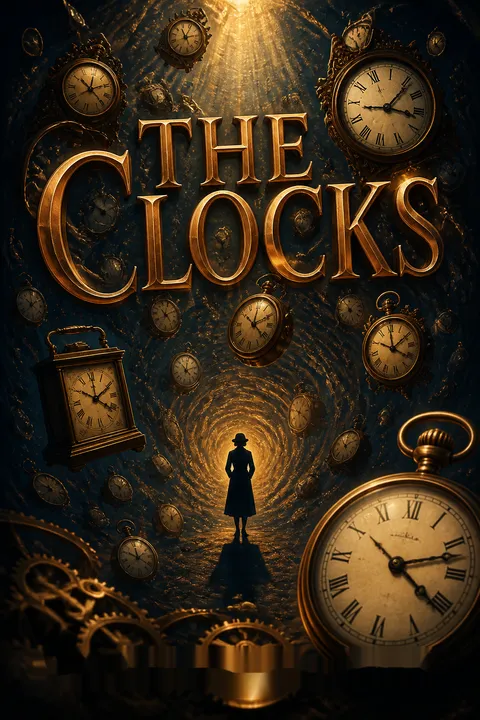
On a routine day, typist Sheila Webb is sent unexpectedly to Wilbraham Crescent, where she enters a house full of clocks and stumbles over a murdered man. This surreal scene is heightened by the fact that the clocks display the wrong time, and Sheila's shock is matched only by the calmness of the blind homeowner, Miss Pebmarsh. As the police arrive, the scene is frozen in confusion: Sheila swears she didn't know the victim and claims she was called specifically by name. The dead man, "Mr Curry," seems to have no connection to the women or the house, and the presence of the mismatched clocks adds a disturbing sense of orchestration. The ordinary has crashed into the fantastic, marking the beginning of a mystery that none of the players truly understand.
The Unasked-for Typist
Inspector Hardcastle investigates: Sheila insists she was summoned specifically by Miss Pebmarsh, but Pebmarsh denies making any such call. The Bureau verifies Sheila was asked for—but the request is traced to a telephone call that was never made. The reader senses everyone is both known and unknowable; the typist is at the story's heart but is also a pawn. The question grows: if neither party called, who engineered this meeting? The surrounding normalcy of the secretarial business and the lives of neighbours serve as a counterpoint to the violence and artifice of the murder, underscoring a sense of invisible manipulation from the very start.
An Unknown Man's Identity
The body has no legitimate identification: his pockets contain a card for an insurance business that does not exist, and the name "Curry" leads nowhere. When questioned, nearby residents are unable to provide any insight, further deepening the anonymity of the act. While fingerprints yield nothing, his clothing is expensive yet deliberately stripped of all clues. Even Mrs Curtin, the cleaning woman, affirms there were only two clocks normally present; all others are foreign, and no neighbour saw Curry enter. The murder victim essentially lacks a past in this neighbourhood, which makes the crime seem all the more calculated.
Puzzle of the Clocks
The clocks, each set to 4:13, point to deliberate staging. None belong to the house, and even the travelling clock marked "Rosemary" is not Miss Pebmarsh's. Every investigative avenue—laundries, shops, and the supposed insurance agency—is a dead end. In the background, the ordinary rhythm of the neighbourhood is observed through police interviews: everyone knows a little, but their knowledge is fragmented or distorted. Subtle details recur—a child's vantage point, strange laundry delivery, a missing clock after the crime—all contributing to the mounting surrealism of the setting.
Neighbours and Suspicions
Inspector Hardcastle and Colin Lamb canvass the houses, uncovering more confusion than clarity. Mrs Hemming, obsessed with her cats, offers little but odd remarks; the Blands are preoccupied with their recent wealth; Mrs Ramsay struggles with her chaotic children; the McNaughtons are elusive and guarded. Each household appears self-contained, yet all are linked by their proximity to 19 Wilbraham Crescent. A child, Geraldine, observes everything from her window, including a laundry van's unusual delivery. The investigation is mired in overlapping routines and half-truths, and every clue, whether a coin or an alibi, seems to double back into ambiguity.
Sheila's Fear and Secrets
Under stress, Sheila reveals she took the "Rosemary" clock from the scene—her real name is Rosemary Sheila. Nervous and insecure, she fears being framed and suspects someone knows her undisclosed past. Colin Lamb, both investigator and would-be protector, recognizes Sheila's vulnerability and pattern of evasive lying as a defense. Meanwhile, the revelation of postcards addressed to "Rosemary Webb," referencing courtroom remembrance and the mysterious time 4:13, suggest someone is weaponizing Sheila's hidden history, drawing her further into danger. Hardcastle and Lamb begin to suspect that Sheila's entire involvement was engineered.
Inspector Hardcastle Probes
Hardcastle methodically pieces together details from bureau girls, neighbours, and background checks. He discovers that evidence was manipulated: the call that brought Sheila to the house never happened, despite Miss Martindale's precise account. Someone within the bureau must be fabricating timelines and alibis. Meanwhile, Hardcastle pursues the victim's real identity—a quest revealing layers of fraud, lost names, and eerily convenient testimonies. The sense of a larger unseen plot grows, and suspicion attaches itself to the only constants—the local women and their buried connections.
Colin Lamb's Personal Quest
Colin Lamb, in reality a government agent, is privately searching for a Russian spy ring's headquarters, guided only by a cryptic drawing—pointing to a Crescent, a number, an "M." His quest crosses the official murder inquiry, and his discoveries—especially relating to Miss Pebmarsh—create a parallel investigation. Both stories are haunted by questions of identity, secrets, and hidden histories. The spy narrative overlays the murder plot, emphasizing themes of double lives, manufactured alibis, and the impossibility of knowing the full truth about anyone.
A Child's Observations
The child's perspective is sharper than any adult's. Geraldine records the laundry van delivery, the movements of neighbours, and even distinguishes between different types of visits. Her innocent but precise logbook details timing that will later prove crucial. Through her, we are reminded that the extraordinary hides in the background of the everyday, visible only to those who watch without adult assumptions. She underscores one of the book's lessons: vital truths are often overlooked by adults lost in complexities and logical patterns.
Laundry, Lies, and Women
The case comes to center on Miss Martindale and her sister, Mrs Bland. Their meticulously crafted alibis, knowledge of routines, and access to resources like the laundry van mark them as the planners. The murder hinges on inheritance—a Canadian relative coming to verify Mrs Bland's identity could expose their fraud. The murder victim's body is disposed of via the laundry, cleverly hidden, and an entire theatre of clocks and typists serves to misdirect the police. When a second murder occurs—of Edna, the bureau girl who suspected something about Martindale's telephone call—the core conspiracy is laid bare: family, trust, and ruthless ambition.
Spies Behind Closed Doors
Lamb's search for Russian communications reveals Miss Pebmarsh as the headquarters of a spy ring. Secret microdot messages in Braille have passed through her hands, and the garden's Czech coin reveals clandestine nocturnal meetings. While the murder plot unravels, the espionage subplot demonstrates that the greatest betrayals happen in the most unremarkable settings, implicating community and ideology alike. The ordinary English crescent is exposed as a fertile ground for both criminal and political duplicity.
Murder Strikes Again
The accidental witness, Edna, is strangled in a telephone box after the inquest. The act is calculated, swift, and performed in broad daylight—a demonstration of the killer's boldness and knowledge of habits and timing. It becomes clear only someone with close access and a talent for cold planning could have done it: Miss Martindale emerges as chief suspect. Poirot argues that only someone highly methodical—and lacking imagination—would push such baroque distractions in lieu of a simple killing.
Poirot Receives the Case
Summoned from his comfortable chair, Poirot receives the case as a gift from Lamb. He immerses himself in contemporary detective fiction for context, noting the murder's resemblance to melodramatic plots. His core tenet: when facts become outrageously complex, the truth must be simple. Poirot's real genius lies in attending to conversation, not just interrogation—he values offhand remarks, misplaced clocks, and the banality of evil masked by the theatrical. The truth, he asserts, is right in front of everyone.
Fantasies Hide Simple Crimes
The orchestration of events—the clocks, the frantic calls, the confusion around Sheila, the planted clocks and staged scene—only distracts from a simple motive: the avoidance of exposure and loss of wealth. The juxtaposition of spy craft and domestic secrecy reveals similar methodologies: misdirection, manipulation of evidence, and the erasure of identity. The book-stealing from a dead thriller writer's notebook (by Miss Martindale) proves that reality often imitates fiction, layering melodrama over cold rational calculation.
Sibling Schemes and Disguises
The sisters' plot is unraveled: Mrs Bland, the imposter heir, and Martindale, the mastermind, kill to prevent discovery and to preserve their claim to a Canadian fortune. Bland's day trips to France suggest a ruse to dispose of the victim's passport. Poirot's analysis uncovers the staged identification—Mrs Rival, paid to claim the corpse as her long-lost husband, is herself eliminated for knowing too much. Sibling loyalty, self-pity, and ambition unite, masquerading as respectability.
The Truth About Rosemary
The heart of the case is personal: Sheila, born Rosemary, is the illegitimate child of Miss Pebmarsh, who sacrificed her for an ideological life. The "Rosemary" clock becomes a symbol of memory, guilt, and the intertwining of innocence and manipulation. Sheila's journey is not only that of the falsely accused but of a woman finding authenticity and love—at last escaping the invisible scripts written for her by family, society, and strangers.
Justice Through Conversation
Poirot's insight is that the key to the crime lies not in forensic detail but in conversation. Whether it is Mrs Hemming's offhand comment, Geraldine's logbook, or a sister's careless mention, the truth is found through the texture of daily life. Misdirection only works when no one listens. "Everything makes sense," says Poirot, once one listens rightly and discards the garish in favour of the plain.
Endings, Beginnings, Remembrance
With Poirot's direction, justice is achieved: Martindale's plot is exposed, Mrs Bland confesses, Bland is arrested, and the mechanisms of inheritance fraud and murder are laid bare. The spy ring is also brought down by Lamb, who, changed by the case and his love for Sheila, resigns to embrace ordinary happiness. The clocks—symbols of lost, manipulated, and reclaimed time—stop being a distraction. Remembrance, both painful and necessary, gives way to new beginnings as personal healing echoes broader restoration of order and truth.
Analysis
Agatha Christie's The Clocks is both an intricate whodunit and a wry commentary on the detective genre itself. The elaborate clockwork staging, borrowed from the fiction within Poirot's reading pile, is ultimately revealed to be misdirection—a lesson that flamboyant clues placate the genre's appetite for ingenious puzzles but rarely reflect actual criminal motivation. Beneath the layers of melodrama, Christie prioritizes the banality of evil: greed for inheritance, protection of ill-gotten gains, and the willingness to construct fantasy at the cost of human life. Justice is achieved not simply through logical deduction, but by attentive listening—to neighbours' gossip, to a child's innocent record-keeping, to the nuances of ordinary speech. Sheila Webb's ordeal dramatizes the vulnerability of those caught in the machinery of others' ambitions, and Lamb's evolution from lonely spy to loving partner mirrors the book's subtle advocacy for personal connection over abstract duty. Through Poirot's quiet insistence that the "fantastic must conceal the simple," Christie points readers toward humility before the common details of life—reminding us that truth and innocence, however threatened by complexity or malevolence, are accessible to those who pay patient, human attention.
Review Summary
The Clocks receives mixed reviews, averaging 3.73/5. Readers appreciate Christie's clever dual-plot combining murder mystery and Cold War espionage, with many praising the intriguing setup of an unidentified corpse surrounded by mysterious clocks. However, a common criticism is Poirot's minimal presence — he appears only halfway through, solving the case from his armchair without visiting any crime scene. Some find this concept clever; others feel it undermines the novel. The romantic subplot is widely criticized as unconvincing. Most agree it's an entertaining but not definitive Christie work.
Characters
Sheila Webb
Sheila is the story's emotional anchor—a typist caught in a web of intrigue not of her own making. Born Rosemary Sheila, she is defined by abandonment, insecurity, and the expectation of being marked by hidden guilt. Her impulse to lie is self-protective, rooted in a lifetime of uncertainty about her parentage and value. As the mystery unfolds, Sheila's initial guilt is displaced by vulnerability as she becomes victim of manipulation by others seeking to frame or use her. In love with Colin Lamb, she finds both challenge and rescue. Her arc is one of moving from frightened suspect to self-aware woman, finally given the compassion and dignity denied her since childhood.
Colin Lamb
Both undercover spy and emotional protagonist, Colin Lamb investigates an espionage ring while entangled in the murder mystery and Sheila's fate. Cynical yet genuine, analytical yet empathetic, he embodies the tension between professional detachment and personal involvement—eventually choosing humanity over relentless duty. Colin's patience, observational skills, and refusal to be seduced by drama or false confession exemplify a new kind of detective integrity. His love for Sheila is both redemptive and humbling—a victory of tenderness over suspicion.
Inspector Hardcastle
Hardcastle represents the best of British policing: level-headed, unflappable, and committed to facts above intuition. Though initially suspicious of Sheila and everyone around her, his skepticism is not malicious; rather, it is a shield against the chaos of human motives. Hardcastle's greatest strength is his willingness to listen—and to defer, when necessary, to minds sharper than his own (like Poirot's). He is a necessary counterbalance to flamboyance, providing the investigation with structure and sober reassessment at each confusing juncture.
Miss Martindale
As principal of the Bureau and secret sister to Mrs Bland, Martindale is both terrifyingly competent and ruthlessly limited in imagination. Her genius is in practical detail—manipulating office routines, fabricating calls, organizing meticulous alibis. Yet her reliance on borrowed melodrama (using plot devices from a dead novelist's notebook) reveals a lack of originality: capable of murder, but unable to invent a truly unique plot. She is the embodiment of a mind simultaneously ordinary and deadly—a subtle critique of bureaucratic evil.
Mrs Bland (Valerie)
Valerie, the "heiress" whose assumed identity drives the murder, is manipulated by her husband and sister. Pale, sickly, and self-pitying, she is painted as simultaneously victim and passive accomplice. Though she wilts under pressure, her confession proves critical to the investigation. Her fragile morality and emotional helplessness contrast with Martindale's force, making the sisters' partnership both fateful and unstable.
Josaiah Bland
Bland is the builder who profits from his wife's inheritance and orchestrates the practical details of murder and deception. Outwardly hearty and likable, he is the embodiment of mediocrity corrupted by greed. His lack of imagination complements his wife's and sister-in-law's talents: he is the executor, not the planner, and ultimately a would-be patriarch undone by better minds and chance.
Miss Pebmarsh
Blind and fiercely independent, Miss Pebmarsh is both a victim and an agent of larger machinations. As Sheila's biological mother, she sacrificed love and conventional happiness to pursue ideological commitments, leaving her daughter scarred by abandonment. She is, in Colin Lamb's secret investigations, a spy ring's headquarters, embodying the story's theme of hidden identities in plain sight. Pebmarsh's character is a study in contradictions: compassionate and ruthless, devoted yet emotionally inaccessible, a person for whom ideals trump personal ties.
Hercule Poirot
Poirot's approach—disdaining running about, trusting conversation and "little facts"—serves as the philosophical spine of the novel. He is a parody and critique of detective story conventions, offering the insight that the outlandish (multiple clocks, arcane clues) usually masks an ordinary motive. Poirot's modesty and sense of humour disguise his unwavering confidence; his empathy allows him to see through both melodrama and self-pity. His ultimate satisfaction is less in catching the killer than in affirming the value of listening and remembering.
Edna Brent
Edna is a minor typist, slow to process the world but ultimately perceptive enough to notice the cracks in Martindale's story. Her abortive attempts to communicate what she knows become fatal; innocuous questions, for her, are acts of courage. As a victim, Edna's role underscores the hazards of knowing too much and the cruelty of conspiracies that silence the vulnerable first.
Geraldine Brown
Geraldine, an intelligent and bored child confined by a broken leg, reflects the theme that innocence can see what others miss. Her logbooks, opera glasses, and unsentimental curiosity provide the story's crucial observation of the laundry van—an unnoticed detail that unravels the mystery. Geraldine exemplifies the book's thesis: if you listen and watch attentively, secrets must eventually yield to the patient observer.
Plot Devices
Staged Scene, Misleading Melodrama
The core device is the planting of elaborate, seemingly significant clues—strange clocks, a false appointment, and an unknown body—to mislead both the investigators and the reader. Time is consistently displaced, with clocks set an hour ahead to introduce confusion and draw attention away from motive and opportunity. The actual crime is straightforward: a visitor who could expose an inheritance fraud is lured, drugged, and murdered to preserve the fortune stolen by his impostor relatives. The elaborate set-up mimics detective fiction, but as Poirot insists, its purpose is solely distraction—the false complexity masking a mundane, greedy crime.
Telephone Hoax and Fake Alibis
The murderer manipulates routines by faking a call to the Bureau (that was never made) and sending Sheila to the murder scene. The call's supposed specificity ("ask for Sheila Webb") makes her both witness and scapegoat, and is corroborated by Martindale's authority—belying the trust adults place in bureaucratic systems and their records. Alibis are further supported by forged testimonies (such as Mrs Rival's identification of the corpse), with each lie buttressed by another until an unravelling occurs through overlooked details.
Neighbours' Limited Views and the Child's Logbook
The motif of neighbours—disconnected, self-absorbed, and unreliable—works as both obstacle and eventual solution. Their fragmented observations yield little until a single logbook, meticulously kept by the child Geraldine, reveals the one event everyone else missed: the laundry van delivery. Only by collating the inconspicuous details of ordinary life does the truth appear.
Foreshadowing and Intertextuality
Poirot's reading of detective novels throughout the story functions as both foreshadowing and meta-commentary: he muses that convoluted set-ups are often the most transparent, and that motifs (the clocks, the baroque murder scene) owe more to fiction than real life. This self-awareness is reflected in the actual murderer's technique, who borrows her plot directly from unpublished notes of a thriller writer, expecting the added melodrama to obscure her tracks.
Dual Investigation, Domestic and Espionage
The book's unique structure doubles the central mystery: the practical, parochial murder is intertwined with an espionage investigation, both ultimately revolving around the manipulation of trust, identity, and communication. The motif of hidden pasts, false names, and illegible intentions resonates both in spycraft and murder; Lamb's search for his "Crescent" and "M" literalizes the abstract pursuit of meaning in a sea of symbols and encoded signals.
Hercule Poirot Series





























About the Author
Other books by Agatha Christie


Download PDF
Download EPUB
.epub digital book format is ideal for reading ebooks on phones, tablets, and e-readers.








































