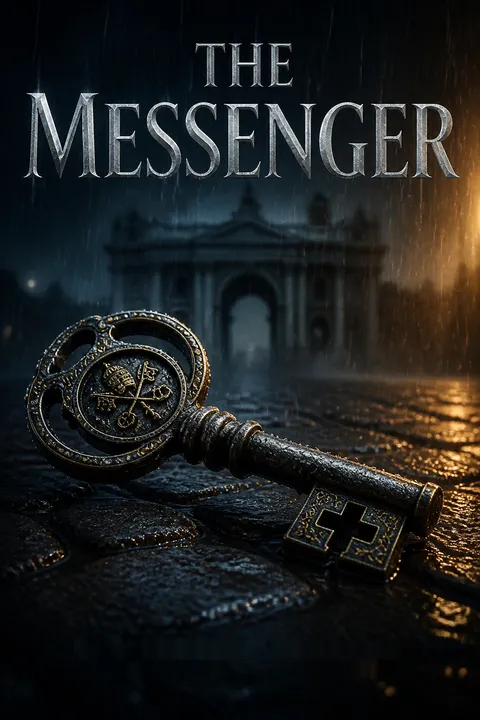

Plot Summary
Shadows in Bloomsbury Rain
On a rain-soaked London night, Professor Ali Massoudi, a supposed moderate, is killed in a traffic accident while being tailed by Israeli intelligence. His briefcase, seized by the watcher, contains evidence of a looming terrorist plot. Gabriel Allon, legendary Israeli operative and art restorer, is drawn from his uneasy retirement. The Office, Israel's secret service, suspects a major al-Qaeda operation is imminent, with Massoudi as a recruiter and planner. The discovery of surveillance photos of the Vatican and links to Saudi funding sets the stage for a global hunt, as Gabriel is tasked to warn the Vatican and uncover the true scope of the threat.
The Vatican's Hidden Threat
Gabriel meets Monsignor Donati, the Pope's private secretary, in Jerusalem, sharing the disturbing evidence: detailed surveillance of Vatican security and financial ties to Saudi Arabia's Prince Nabil. Donati, a trusted ally, is shaken but skeptical, as the Vatican has weathered many threats before. Together, they walk Jerusalem's ancient streets, reflecting on faith, history, and the ever-present danger. Donati is convinced to take the threat seriously, and Gabriel is drawn back into the world of espionage, where the lines between faith, politics, and violence blur, and the Vatican becomes the next target in a war that knows no sanctuary.
Old Friends, New Dangers
Gabriel's return to the Office is marked by tension with Shamron, his mentor, who urges him to accept a leadership role. The threat is personal: the Vatican's pro-Israel Pope is a symbol for both hope and hatred. Gabriel's own past—his family's suffering, his role as an assassin after Munich—haunts him. The Office's investigation reveals that Saudi money, funneled through charities, is fueling terror networks. The enemy is not just a man, but a system. As Gabriel prepares to travel to Rome, he is reminded that in this world, trust is rare, and every ally is a potential target.
Papal Warnings and Doubts
Gabriel meets Pope Paul VII, a reformer seeking peace between Christians and Jews. The Pope, eloquent but weary, debates the morality of violence with Gabriel, who insists that radical Islam cannot be appeased. The Vatican's security chiefs review the threat, but the Pope refuses to hide, insisting on holding the public audience in St. Peter's Square. Gabriel, given a Vatican security badge, is told to "make a nuisance of himself" and watch for danger. The stage is set for a confrontation between faith and fanaticism, as Gabriel prepares for a day that could change history.
The Door of Death Opens
Gabriel inspects Vatican security, finding dangerous gaps and lax procedures. He investigates the backgrounds of Vatican employees, focusing on a Muslim scholar, Ibrahim el-Banna, who has suspicious access. As the Pope's general audience begins, Gabriel races to confront el-Banna, only to find his office abandoned and a chilling note declaring war on the Vatican. Realizing too late, Gabriel rushes to the square as suicide bombers detonate, followed by a missile attack. Amid chaos and carnage, Gabriel saves the wounded Pope, but hundreds are dead. The attack, funded and planned by a Saudi-backed network, shakes the world.
Blood in St. Peter's Square
The Vatican attack leaves over seven hundred dead, including high-ranking clergy and security chiefs. Rome mourns, and the Basilica is condemned. Gabriel, unofficially involved in the investigation, learns the attackers were European converts recruited by Massoudi, with operational support from Ibrahim el-Banna and Saudi masterminds. The attack ignites jihadist celebrations and increases global terror activity. Gabriel is summoned home, but before leaving, the Pope thanks him privately, urging him to seek justice, not vengeance. The world is changed, and Gabriel is left with the burden of survival and the knowledge that the enemy is still at large.
Aftermath and Reckoning
Back in Jerusalem, Gabriel is confronted with the attempted assassination of Shamron, his mentor, by the same terror network. Shamron survives, but the attack is a stark reminder of the enemy's reach. The Israeli government authorizes Gabriel to hunt down the mastermind, Ahmed bin Shafiq, a former Saudi intelligence officer now running a private terror network with the backing of billionaire Abdul Aziz al-Bakari ("Zizi"). The Americans, unable to act directly, ask Gabriel to do their dirty work. The hunt becomes personal, as Gabriel assembles a team to penetrate Zizi's empire and find bin Shafiq.
The Art of Infiltration
To get close to Zizi, Gabriel devises a plan to lure him with a lost van Gogh painting, "Marguerite Gachet at Her Dressing Table," owned by Hannah Weinberg, a Parisian Jew. With the help of art dealer Julian Isherwood and American agent Sarah Bancroft, Gabriel orchestrates a sale that brings Sarah into Zizi's inner circle as his new art adviser. The operation is a delicate dance of deception, requiring Sarah to risk her life among Zizi's entourage, while Gabriel's team watches from the shadows, waiting for bin Shafiq to appear.
The Van Gogh Gambit
Sarah, posing as an ambitious art expert, is courted by Zizi and his daughter Nadia, eventually joining them on a lavish Caribbean cruise aboard the yacht Alexandra. The world of luxury masks a deadly undercurrent, as Sarah navigates the attentions of Zizi's security chief and the jealousies of his inner circle. Meanwhile, Gabriel's team shadows the yacht, using coded messages and clandestine meetings to maintain contact. The tension mounts as Sarah identifies a mysterious guest, "Alain al-Nasser," who matches bin Shafiq's profile. The trap is set, but the risks multiply.
The American Messenger
As Sarah closes in on bin Shafiq, the operation unravels. Bin Shafiq, sensing the net closing, escapes with the help of corrupt Swiss police, taking Sarah captive. She is drugged, beaten, and transported to a remote chalet in Switzerland, where she is tortured for information. Gabriel and his team mount a desperate rescue, storming the chalet in a bloody firefight. Sarah is saved, but not before she learns that another attack on the Vatican is imminent. The cost of the mission is high, and the line between justice and vengeance grows ever thinner.
Into Zizi's Empire
With Sarah's warning, Gabriel races to Rome, where the Pope is scheduled to meet the American president. Security is tightened, but the enemy is already inside: a Swiss Guard, recruited by Massoudi, attempts to assassinate the president. Donati, the Pope's secretary, is gravely wounded saving the president's life. The plot is foiled, but the infiltration of the Vatican's inner sanctum exposes the depth of the threat. Gabriel's notoriety grows, making further covert work impossible, but he is determined to finish what he started.
The Night Journey Begins
As the world reels from the second Vatican attack, Gabriel testifies before the U.S. Senate, exposing Saudi Arabia's role in global terrorism. The Americans, constrained by politics and oil, rely on Gabriel to deliver justice. With the help of CIA officer Adrian Carter, Gabriel tracks bin Shafiq to Istanbul, using Zizi's own money to buy information from a Saudi prince. The final confrontation is set in motion, as Gabriel prepares to end the reign of the man who orchestrated so much death.
Trapped in the Lion's Den
Bin Shafiq, now operating under a new identity, is lured to a hotel in Istanbul. Gabriel and his team, working with Carter, set a trap. The operation is swift and brutal: bin Shafiq is killed in a fiery explosion, his body left as a warning. The message is clear—no one is beyond reach. Meanwhile, Zizi, exposed and vulnerable, becomes the next target. The cycle of violence continues, as the hunters become hunted, and the cost of vengeance is measured in blood.
The Swiss Chalet Inferno
The aftermath of Sarah's torture and rescue leaves scars on all involved. Gabriel's team, battered but resolute, reflects on the price of their work. The Swiss authorities, complicit in the cover-up, bury the evidence. Sarah, traumatized but alive, is given a new identity and a new life in America, joining the CIA's Saudi desk. Gabriel, haunted by guilt and loss, returns to Israel, where he is both celebrated and isolated. The war is far from over, and the enemy adapts, but for now, justice has been served.
The Second Vatican Plot
The attempted assassination of the Pope and the American president marks the climax of the enemy's campaign. The infiltration of the Swiss Guard, the manipulation of faith and trust, and the willingness to die for a cause reveal the complexity of the threat. Donati's sacrifice and Gabriel's quick action prevent catastrophe, but the wounds—physical, emotional, and spiritual—remain. The Vatican, once a symbol of sanctuary, is forever changed, and the world is forced to confront the reality of a new kind of war.
The Assassin in the Guard
The revelation that a Swiss Guard, trusted and above suspicion, was the assassin shakes the Vatican to its core. The investigation uncovers a web of recruitment, radicalization, and deception, orchestrated by Massoudi and bin Shafiq. The Pope, mourning Donati and the loss of innocence, urges Gabriel to seek peace, but acknowledges that the world has changed. The boundaries between friend and foe, faith and fanaticism, are blurred, and the need for vigilance is greater than ever.
The Price of Justice
Gabriel's secret testimony before the U.S. Senate exposes the uncomfortable truths about Saudi Arabia's role in terrorism. The Americans, bound by economic interests, are reluctant to act, but Gabriel's words plant seeds of change. Sarah, recovering in America, chooses a new life in intelligence, while Gabriel, now a public figure, contemplates his future. The cost of justice is high, and the cycle of violence seems unending, but the pursuit of truth and the defense of the innocent remain the guiding lights.
Vengeance in Istanbul
In Istanbul, Gabriel and his team exact vengeance on bin Shafiq, ending his reign of terror with a fiery death. Zizi, exposed and hunted, is assassinated in Cannes by Gabriel's successor, Uzi Navot. The message is clear: those who fund and orchestrate terror will be held accountable. Yet, as Zizi's daughter Nadia screams for revenge, the cycle continues. The war is not over, but for now, the scales are balanced. Gabriel, weary but unbroken, returns to his art, his love, and the hope that one day, peace will prevail.
Analysis
Daniel Silva's The Messenger is a masterful exploration of the intersection between art, faith, and the shadowy world of modern espionage. At its core, the novel grapples with the moral ambiguities of the war on terror, exposing the uncomfortable truths about the sources of violence and the costs of security. Through Gabriel Allon, Silva examines the psychological toll of a life spent in pursuit of justice, where every victory is tinged with loss and every act of violence leaves a scar. The novel's use of art as both metaphor and plot device elevates the narrative, suggesting that the restoration of beauty is as vital as the pursuit of vengeance. The infiltration of the Vatican, the manipulation of global finance, and the complicity of powerful states highlight the complexity of the modern threat landscape, where enemies are both seen and unseen, and where the lines between good and evil are constantly shifting. Ultimately, The Messenger is a meditation on resilience, sacrifice, and the enduring hope that, even in a world of darkness, acts of courage and conscience can tip the balance toward justice.
Review Summary
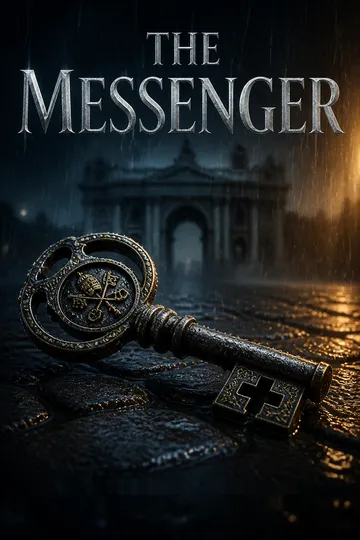
The Messenger is the sixth Gabriel Allon novel, featuring an Israeli spy and art restorer who pursues terrorists after Vatican and other attacks. Reviews praise Silva's fast-paced plotting, exotic settings, and suspenseful action, with ratings mostly positive (4-5 stars). Readers appreciate the educational geopolitical content, particularly regarding Middle East tensions and Saudi terrorism financing. Common criticisms include overly simplistic good-versus-evil portrayals, lack of moral complexity, melodramatic elements, and predictable characterizations. Many recommend reading the series in order for full character development, though books work as standalones.
People Also Read



Characters
Gabriel Allon
Gabriel is the heart of the story: a master art restorer and legendary Israeli operative, shaped by personal tragedy and national duty. Scarred by the loss of his family to terror and his own role as an assassin after Munich, Gabriel is both a creator and a destroyer. His relationships—with Shamron, Donati, Chiara, and Sarah—reveal a man torn between the desire for peace and the necessity of violence. Gabriel's psychological complexity lies in his struggle to reconcile his artistic soul with the demands of espionage, and his journey is one of sacrifice, resilience, and the search for redemption.
Ari Shamron
Shamron is the twice-former chief of Israeli intelligence, a living legend whose cunning and ruthlessness are matched only by his loyalty to Israel. He is both manipulator and protector, pushing Gabriel back into the field while mourning the costs of their work. Shamron's own family is fractured by his devotion to duty, and his near-fatal wounding by terrorists underscores the personal stakes of the conflict. He represents the old guard—pragmatic, unyielding, and deeply aware of the existential threats facing his people.
Monsignor Luigi Donati
Donati, the Pope's private secretary, is a Jesuit-educated intellectual and a master of Vatican intrigue. Fiercely loyal to the Pope, he bridges the worlds of faith and realpolitik, often serving as Gabriel's ally and conscience. Donati's willingness to risk his life for the Pope and his evolving friendship with Gabriel highlight the possibility of interfaith cooperation. His near-death saving the president cements his role as a symbol of sacrificial faith and courage.
Pope Paul VII (Pietro Lucchesi)
The Pope is a gentle, eloquent leader seeking reconciliation between Catholics and Jews. His progressive vision and opposition to violence make him a target for extremists. The Pope's philosophical debates with Gabriel reveal the tension between idealism and pragmatism, and his personal vulnerability underscores the human cost of leadership. His survival, thanks to Gabriel and Donati, is both a victory and a reminder of the fragility of peace.
Sarah Bancroft
Sarah is an American art historian recruited to penetrate Zizi's empire. Intelligent, resourceful, and marked by personal loss (her boyfriend died on 9/11), Sarah's journey from curator to undercover agent is one of transformation and trauma. Her ordeal—captivity, torture, and survival—exposes the psychological toll of espionage. Sarah's resilience and moral clarity make her both a victim and a hero, and her decision to join the CIA's Saudi desk reflects her commitment to justice.
Abdul Aziz al-Bakari ("Zizi")
Zizi is the embodiment of the new face of jihad: wealthy, sophisticated, and ruthless. His global business empire masks his role as financier and facilitator of terror. Zizi's psychological profile is one of entitlement, predation, and duplicity—he is generous to his inner circle but merciless to traitors. His obsession with art and power is ultimately his undoing, as Gabriel uses his vanity to infiltrate his world and bring about his death.
Ahmed bin Shafiq
Bin Shafiq, a former Saudi intelligence officer, is the architect of the Vatican attacks and the Brotherhood of Allah. He is a ghost, constantly changing identities, and driven by Wahhabi ideology and personal vendetta. His psychological makeup is defined by fanaticism, cunning, and a willingness to use any means to achieve his goals. Bin Shafiq's manipulation of faith, charity, and violence makes him a formidable and terrifying adversary.
Uzi Navot
Navot is a seasoned katsa (case officer), pragmatic and reliable, who becomes Gabriel's right hand and eventual successor as chief of Special Operations. His ambition is tempered by loyalty, and his role in rescuing Sarah and orchestrating Zizi's assassination demonstrates his competence and growth. Navot represents the next generation of Israeli intelligence, shaped by the lessons and scars of the past.
Julian Isherwood
Isherwood is Gabriel's long-time friend and secret helper, whose gallery becomes the stage for the van Gogh operation. A survivor of the Holocaust, Isherwood's wit and vulnerability provide both comic relief and emotional depth. His willingness to risk everything for Gabriel reflects the bonds of trust and the hidden networks that sustain the fight against terror.
Chiara Zolli
Chiara is Gabriel's lover and fellow operative, a woman of strength, intelligence, and deep emotional complexity. Her relationship with Gabriel is marked by passion, loss, and the shared burdens of their work. Chiara's presence grounds Gabriel, offering him a glimpse of normalcy and hope amid chaos. Her own scars and resilience mirror Gabriel's, and their union is both a refuge and a reminder of what is at stake.
Plot Devices
Duality of Art and Violence
The narrative structure weaves Gabriel's dual identity as artist and assassin, using art restoration both as literal cover and as a metaphor for the attempt to repair a broken world. The van Gogh painting is a plot device that enables infiltration, but also symbolizes lost innocence and the possibility of redemption. The contrast between creation and destruction, beauty and brutality, is a recurring motif, deepening the psychological resonance of the story.
Foreshadowing and Mirroring
The novel employs foreshadowing through repeated references to historical traumas—Munich, the Holocaust, 9/11—and the cyclical nature of violence. The initial Vatican plot is mirrored by the second, more insidious infiltration, highlighting the adaptability of the enemy and the perpetual vulnerability of even the most sacred spaces. The use of double agents, false identities, and betrayals underscores the theme that the greatest threats often come from within.
Psychological and Moral Complexity
The story is structured around philosophical debates—between Gabriel and the Pope, between Gabriel and his own conscience—about the morality of violence, the limits of justice, and the cost of survival. Characters are forced to confront their own beliefs and the consequences of their actions, creating a narrative that is as much about inner conflict as external danger.
Global Conspiracy and Realpolitik
The plot is driven by the revelation that terrorism is not just the work of fanatics, but is enabled by global financial networks, state actors, and the complicity of the West. The Americans' reliance on Gabriel to do their "dirty work" reflects the moral ambiguities of realpolitik, while the Senate testimony and the exposure of Saudi involvement serve as both plot resolution and social commentary.
High-Stakes Set Pieces and Escalating Tension
The novel is structured around a series of escalating set pieces: the Vatican bombings, the art world infiltration, the Caribbean cruise, the Swiss chalet rescue, and the final assassinations. Each sequence is tightly plotted, with foreshadowing, reversals, and cliffhangers that maintain tension and emotional investment. The use of multiple locations and shifting perspectives creates a sense of global urgency and relentless pursuit.
Gabriel Allon Series




About the Author
Other books by Daniel Silva


Download PDF
Download EPUB
.epub digital book format is ideal for reading ebooks on phones, tablets, and e-readers.








































