
Plot Summary
Death in the Birch Forest
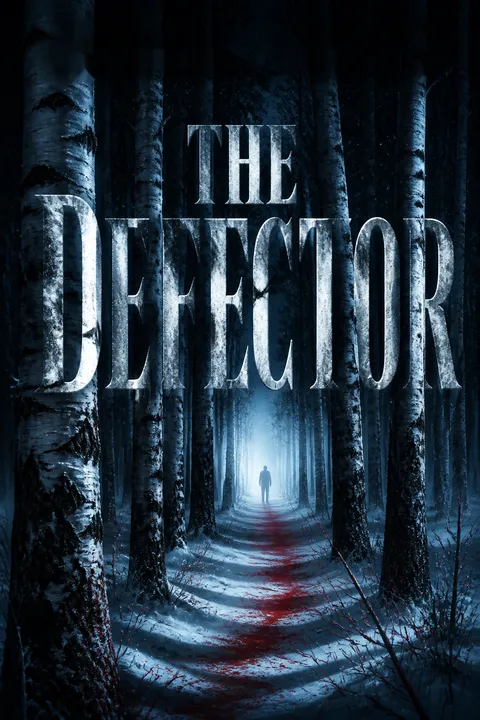
The novel opens with the chilling murder of Pyotr Luzhkov, a bodyguard, in a remote Russian birch forest. His death, orchestrated by his powerful master Ivan Kharkov, sets the tone for the story's exploration of Russian brutality and the cold calculus of vengeance. Luzhkov's demise is not just a personal punishment but a symbol of the ruthless traditions that persist in the new Russia, where betrayal is met with the highest form of punishment—vyshaya mera. This act of violence foreshadows the cycles of retribution and the personal stakes that will drive the characters, especially as the narrative shifts to the fate of other defectors and the shadowy world of international espionage.
The Defector Vanishes
Grigori Bulganov, a high-profile Russian defector and former FSB colonel, vanishes from his new life in London. His disappearance is shrouded in ambiguity: was it a voluntary return to Russia, a double-cross, or an abduction? British intelligence is slow to react, and suspicions fall on Gabriel Allon, the Israeli operative who helped Grigori defect. The event is a catalyst, drawing Gabriel back into the world of espionage and setting off a chain of international intrigue. The uncertainty around Grigori's fate becomes a test of trust, loyalty, and the limits of Western protection for those who betray the Kremlin.
Art, Love, and Shadows
Gabriel Allon, now living in Umbria as an art restorer, tries to build a life with his wife Chiara, haunted by past losses and the dangers of his profession. Their domestic tranquility is interrupted by news of Grigori's disappearance, forcing Gabriel to confront the reality that his enemies are never far behind. The chapter explores the tension between Gabriel's yearning for normalcy and the inescapable pull of his old life. The emotional stakes are heightened by Chiara's desire for a family and Gabriel's fear of exposing loved ones to his violent world, setting up the personal costs that will define the coming conflict.
The Trap is Sprung
Gabriel's investigation into Grigori's disappearance leads him through a maze of surveillance footage, coded messages, and bureaucratic indifference. He uncovers evidence that Grigori was lured into a car by his ex-wife, Irina, under duress—a sophisticated Russian operation designed to look like a voluntary return. The British, eager to avoid confrontation with Moscow, accept the narrative of redefection, leaving Gabriel isolated. The trap is not just for Grigori but for Gabriel himself, as Ivan Kharkov's vendetta begins to close in, using personal relationships as bait and exploiting the West's reluctance to challenge Russian aggression.
Promises and Pursuits
Haunted by a promise to Grigori, Gabriel refuses to abandon the search, even as his superiors urge caution. He enlists allies in British and American intelligence, but finds little support. The pursuit becomes personal when Chiara is kidnapped in a violent attack that leaves two bodyguards dead. Gabriel's world collapses into grief and rage, and the mission shifts from rescue to retribution. The chapter explores the psychological toll of loyalty and the moral ambiguity of vengeance, as Gabriel is forced to operate outside the law and confront the darkness within himself.
The Bait and the Net
Ivan Kharkov, seeking revenge for the loss of his wife and children, orchestrates a series of abductions and murders, targeting those who betrayed him. Using a network of ex-KGB operatives and professional kidnappers, he manipulates both personal and political vulnerabilities. The narrative delves into the mechanics of Russian power, the complicity of the Kremlin, and the impotence of Western institutions. Gabriel and his team must navigate a world where truth is obscured by deception, and every move is anticipated by a cunning adversary who understands the value of patience and brutality.
London's Ghosts
Gabriel's investigation in London uncovers a web of Russian agents, compromised officials, and false leads. He interrogates Irina, Grigori's ex-wife, and pieces together the methodical planning behind the abduction. The British government, eager to protect its financial interests in Russia, is reluctant to act, forcing Gabriel to rely on his own resources. The chapter is marked by a sense of isolation and betrayal, as Gabriel realizes that the rules of the game have changed and that the West is ill-equipped to confront the new Russian threat.
The Russian Web Tightens
As Gabriel's team races to identify the mastermind behind the kidnappings, they are drawn into a deadly game of cat and mouse. The Russians, led by the enigmatic Anton Petrov, use every tool at their disposal—surveillance, forgery, and violence—to stay ahead. Gabriel's efforts are hampered by bureaucratic inertia and the ever-present danger to his loved ones. The narrative builds tension through a series of near-misses and escalating threats, culminating in the realization that Chiara's life hangs by a thread and that time is running out.
The Woman in Oxford
Olga Sukhova, a Russian journalist and friend of Grigori, becomes the next target of Ivan's wrath. An assassination attempt in Oxford is narrowly thwarted by Gabriel, who spirits her away to safety. Olga's testimony provides crucial insight into the Russian operation, revealing the depth of Ivan's reach and the complicity of Western enablers. The chapter highlights the vulnerability of truth-tellers in a world dominated by power and fear, and the necessity of solidarity among those who resist tyranny.
The Interrogation Game
Gabriel's team orchestrates a high-stakes interrogation of Irina, using psychological pressure and evidence to break her silence. Irina reveals how she was manipulated into luring Grigori into a trap, and provides details about the Russian network responsible for the kidnappings. The chapter explores the ethics of coercion, the trauma of betrayal, and the thin line between victim and accomplice. The information extracted from Irina becomes the key to unraveling Ivan's operation and sets the stage for the rescue mission.
The Betrayal of Trust
As Gabriel's team prepares for the rescue, they confront the reality that their own ranks may be compromised. The Russians have infiltrated Western institutions, and trust is a scarce commodity. The narrative examines the psychological impact of betrayal, the erosion of moral certainties, and the necessity of ruthless action in the face of existential threat. Gabriel's leadership is tested as he must decide whom to trust and how far to go to save those he loves.
The Kidnapping
Chiara's perspective reveals the horror of her abduction and imprisonment in a Russian dacha. She endures physical and psychological torment, clinging to memories of Gabriel and the hope of rescue. Her suffering is compounded by the loss of her unborn child, a secret she keeps from Gabriel. The chapter is a harrowing exploration of trauma, resilience, and the human capacity for hope in the darkest circumstances.
The Price of Loyalty
Gabriel's relentless pursuit of Chiara and Grigori leads him into a confrontation with Anton Petrov, the Russian assassin. Through a combination of violence and psychological manipulation, Gabriel extracts the information needed to locate the dacha where the hostages are held. The chapter underscores the personal and ethical costs of loyalty, as Gabriel is forced to become the very thing he despises in order to save those he loves.
The Rescue Plan
With the help of American and British intelligence, Gabriel's team devises a complex plan to rescue Chiara and Grigori. The operation involves deception, coordination with the White House, and a race against time as Ivan closes in. The narrative builds to a crescendo of tension, as every detail must be executed flawlessly to avoid disaster. The chapter is a testament to the power of teamwork, ingenuity, and the willingness to risk everything for a just cause.
The Reckoning
The rescue operation erupts into a violent confrontation in the Russian forest. Gabriel and his team battle Ivan's forces, and the true nature of the dacha is revealed—a mass grave from Stalin's Great Terror. The past and present collide as the characters are forced to confront the legacy of violence and the possibility of redemption. Grigori sacrifices himself to save Chiara, and Ivan is finally brought to justice in a dramatic showdown.
The Last Grave
The survivors return home, physically and emotionally scarred. The discovery of the mass graves becomes a symbol of Russia's unresolved history, and the personal losses suffered by Gabriel and Chiara underscore the enduring cost of violence. The chapter explores themes of grief, healing, and the search for meaning in the face of tragedy. The characters must come to terms with their actions and find a way to move forward.
The Final Justice
Gabriel and his team embark on a campaign of retribution, systematically eliminating those responsible for the kidnappings and murders. The narrative examines the ethics of vengeance, the limits of justice, and the possibility of closure. Ivan, now isolated and disgraced, is finally hunted down and killed by Gabriel in Saint-Tropez. The cycle of violence is brought to an end, but the scars remain, and the characters are left to grapple with the consequences of their choices.
Analysis
A meditation on loyalty, trauma, and the cost of justice"The Defector" is more than a spy thriller; it is a profound exploration of the personal and political consequences of betrayal, the enduring scars of violence, and the struggle to uphold one's humanity in a world defined by power and fear. Daniel Silva uses the conventions of the genre—espionage, action, and intrigue—to probe deeper questions about the nature of evil, the possibility of redemption, and the limits of justice. The novel's structure, with its interwoven timelines and shifting perspectives, mirrors the psychological fragmentation of its characters, who are haunted by the past and driven by promises they cannot break. The discovery of the mass graves serves as both a literal and metaphorical reckoning, forcing characters and readers alike to confront the legacy of unacknowledged crimes. In the end, the novel offers no easy answers—only the hard-won wisdom that healing is possible, but only through the courage to face the truth, the willingness to act, and the grace to forgive. The lessons of "The Defector" resonate in a world where the boundaries between right and wrong are blurred, and where the fight for justice is both necessary and never-ending.
Review Summary
The Defector receives mixed reviews averaging 4.33/5 stars. Many readers praise Silva's fast-paced thriller featuring Israeli spy Gabriel Allon, noting strong action sequences, detailed research, and compelling international intrigue involving Russian oligarch Ivan Kharkov. Several reviewers appreciate the series' character development and political relevance. Critics cite formulaic plotting, excessive repetition from the previous book Moscow Rules, predictability, and stereotypical characterizations. Some readers find the protagonist too perfect, lacking tension. Multiple reviews mention the book works best as a direct sequel and recommend reading the series in order. The ending divides opinion, with some finding it satisfying and others considering it weak.
Characters
Gabriel Allon
Gabriel is the heart of the novel—a master art restorer and legendary Israeli intelligence operative, torn between his longing for peace and the demands of his violent profession. His psyche is shaped by personal loss: the death of his son, the trauma of his first wife's injuries, and the constant threat to those he loves. Gabriel's relationships are marked by loyalty and guilt, especially toward Chiara, his second wife, whose abduction becomes the catalyst for his most ruthless actions. Throughout the story, Gabriel's development is a study in the cost of keeping promises, the burden of leadership, and the struggle to retain humanity in a world of betrayal and brutality.
Chiara Zolli
Chiara is both Gabriel's anchor and his vulnerability—a skilled operative in her own right, yet yearning for a normal life and a family. Her abduction and ordeal in Russia reveal her strength and resilience, but also leave her deeply scarred, physically and emotionally. Chiara's relationship with Gabriel is complex, marked by love, fear, and the shared trauma of loss. Her insistence on vengeance after her rescue reflects the psychological toll of violence and the difficulty of healing in the aftermath of terror.
Ivan Kharkov
Ivan embodies the ruthless new Russia: a former KGB officer turned billionaire, whose power is built on violence, corruption, and the complicity of the state. His vendetta against Gabriel is both personal and political, driven by the loss of his wife and children and his need to reassert control. Ivan's psychological profile is that of a sociopath—calculating, charismatic, and utterly remorseless. His downfall is precipitated by his inability to adapt to a world where his methods are no longer unchallenged, and his legacy is one of destruction and isolation.
Grigori Bulganov
Grigori is a former FSB colonel whose defection sets the plot in motion. His character is defined by courage, loyalty, and a deep sense of guilt for his past actions. Grigori's relationship with Gabriel is one of mutual respect and indebtedness, and his ultimate sacrifice to save Chiara is a redemptive act that underscores the novel's themes of loyalty and the price of freedom. Grigori's fate is a commentary on the dangers faced by those who challenge the Russian state and the limits of Western protection.
Anton Petrov
Petrov is the architect of the kidnappings—a former KGB operative who has turned his skills to private enterprise. His psychological makeup is defined by detachment, professionalism, and a willingness to do whatever is necessary to achieve his goals. Petrov's interactions with Gabriel are a battle of wills, and his eventual capture and interrogation reveal the limits of even the most hardened operatives when confronted with relentless pressure. Petrov serves as a mirror to Gabriel, highlighting the thin line between justice and vengeance.
Olga Sukhova
Olga is a Russian journalist whose investigations into corruption and violence make her a target of the regime. Her friendship with Grigori and Gabriel is based on shared values and mutual respect. Olga's survival and testimony are crucial to unraveling the Russian operation, and her character represents the power and vulnerability of truth-tellers in an age of propaganda and repression. Olga's resilience in the face of danger is a testament to the enduring human spirit.
Uzi Navot
Uzi is Gabriel's trusted ally and the chief of Special Operations. His relationship with Gabriel is marked by both camaraderie and tension, as he struggles with the burden of responsibility and the shadow of Gabriel's brilliance. Uzi's development is a study in the challenges of leadership, the necessity of compromise, and the importance of loyalty in a world where trust is always provisional.
Mikhail Abramov
Mikhail is a key member of Gabriel's team—a former Russian dissident with a talent for violence and a complicated relationship with his own past. His affair with Elena Kharkov and his role in the rescue operation highlight the personal costs of espionage and the difficulty of escaping one's history. Mikhail's loyalty to Gabriel is unwavering, but his actions are often driven by a need for redemption and belonging.
Elena Kharkov
Elena is Ivan's ex-wife, whose defection and testimony are central to the plot. Her character is defined by courage, intelligence, and a fierce love for her children. Elena's journey from victim to survivor is a commentary on the power of agency and the possibility of transformation, even in the face of overwhelming odds. Her relationship with Gabriel is one of mutual respect and shared trauma.
Ari Shamron
Shamron is the legendary former head of Israeli intelligence—a master strategist whose influence pervades every aspect of the story. His relationship with Gabriel is paternal, marked by both affection and manipulation. Shamron's psychological complexity lies in his ability to see the big picture, his willingness to make hard choices, and his recognition of the personal costs of the life he has chosen. He is both a guide and a cautionary tale for Gabriel and his team.
Plot Devices
Dual Timelines and Interwoven Narratives
The novel employs a structure that alternates between Gabriel's investigation and Chiara's captivity, as well as flashbacks to past traumas and betrayals. This device creates a sense of urgency and deepens the reader's emotional investment, as the personal and political stakes are revealed in tandem. The interweaving of past and present underscores the cyclical nature of violence and the difficulty of escaping history.
Foreshadowing and Symbolism
The use of birch forests, mass graves, and art restoration serves as both literal and symbolic elements, foreshadowing the characters' fates and the novel's exploration of memory, guilt, and the possibility of healing. The motif of promises—kept and broken—runs throughout the narrative, highlighting the tension between personal loyalty and the demands of justice.
Deception and Misdirection
The plot is driven by layers of deception—false identities, forged documents, and double-crosses. These devices not only propel the action but also serve as metaphors for the characters' internal struggles and the broader theme of truth versus propaganda. The narrative structure itself mimics the uncertainty and paranoia of the spy world, keeping both characters and readers off-balance.
Moral Ambiguity and Ethical Dilemmas
The novel repeatedly places its protagonists in situations where the right course of action is unclear, and the cost of doing good is measured in blood. The use of torture, assassination, and extrajudicial killings raises questions about the ethics of vengeance and the possibility of redemption. These dilemmas are not resolved easily, reflecting the complexity of the real world and the psychological toll of violence.
Historical Parallels and Political Commentary
The discovery of the mass graves and the references to Stalin's Great Terror provide a historical backdrop that contextualizes the characters' actions and the persistence of authoritarianism in Russia. The novel draws explicit parallels between past and present, suggesting that the failure to confront history dooms societies to repeat its horrors. The political machinations of Western governments, eager to protect their interests, serve as a critique of moral compromise and the dangers of appeasement.
Gabriel Allon Series



















About the Author
Other books by Daniel Silva


Download PDF
Download EPUB
.epub digital book format is ideal for reading ebooks on phones, tablets, and e-readers.








































