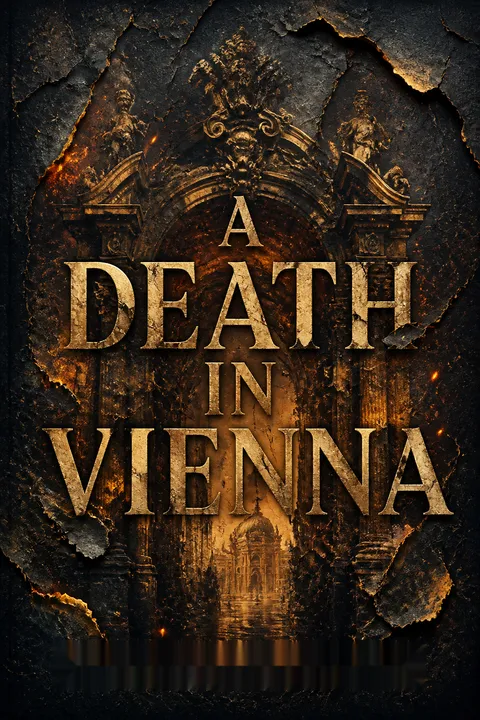

Plot Summary
Vienna's Shattered Silence
Vienna's Jewish community is rocked by a devastating bombing at Wartime Claims and Inquiries, killing two young women and leaving Eli Lavon, a gentle investigator of Holocaust restitution, in a coma. The attack, initially blamed on Islamic extremists, is more than a random act of terror—it is a calculated strike against those who dig into Austria's Nazi past. The city's old ghosts stir, and the trauma of history is made violently present. The survivors, both literal and figurative, are left to pick up the pieces, haunted by the knowledge that the past is never truly buried. The emotional weight of loss and the sense of unfinished business set the stage for a journey into the heart of darkness, where memory and justice collide.
The Restorer's Return
In Venice, art restorer and former Israeli intelligence operative Gabriel Allon is drawn back into the world he tried to leave behind. His peaceful life, spent repairing the wounds of old paintings, is interrupted by Ari Shamron, his legendary mentor, who brings news of the Vienna bombing. The call is personal—Eli Lavon is not just a colleague but a friend. Gabriel's reluctance is palpable; Vienna is a city of pain for him, the site of his own family's tragedy. Yet the bonds of loyalty and the pull of unfinished history are too strong. As he prepares to return, the emotional cost is clear: love, guilt, and the scars of old wounds threaten to overwhelm him, but duty and friendship prevail.
Shadows of the Past
Gabriel's arrival in Vienna is fraught with tension and memory. The city's beauty is a thin veneer over a history of complicity and denial. As Gabriel visits Lavon in the hospital, he is confronted by Max Klein, a Holocaust survivor tormented by guilt and haunted by a chance encounter with a man he believes to be a war criminal. Klein's story is one of survival and unbearable memory, a testament to the enduring pain of the Shoah. The investigation into the bombing becomes a journey into the labyrinth of Austria's unresolved past, where the line between victim and survivor blurs, and the cost of truth is measured in lives and souls.
Forbidden City, Forbidden Truths
Vienna is a city that guards its secrets fiercely. Gabriel's inquiries draw the attention of the Austrian security services, led by the cold and calculating Manfred Kruz. The official narrative—Islamic terror—serves as a convenient cover for deeper, more uncomfortable truths. Gabriel's meetings with Renate Hoffmann, a courageous lawyer, reveal the extent of Austria's collective amnesia and the institutional barriers to justice. The city's political climate, with the rise of the far-right, mirrors the darkness of its history. Gabriel's own past in Vienna, marked by personal tragedy, threatens to consume him as he delves deeper into the shadows.
Survivor's Guilt and Secrets
Max Klein's anguished confession to Gabriel is a turning point. He recounts his encounter with Ludwig Vogel, a prosperous Viennese businessman whom he recognizes as an SS officer from Auschwitz. Klein's guilt over setting the investigation in motion is palpable, as is his fear. His story is a microcosm of the survivor's dilemma: the burden of memory, the impossibility of justice, and the corrosive effects of silence. The emotional resonance of Klein's narrative underscores the novel's central theme—the inescapable legacy of the Holocaust and the moral imperative to confront it, no matter the cost.
The Ghosts of Austria
Gabriel's investigation exposes the depth of Austria's denial and the complicity of its institutions. The figure of Ludwig Vogel emerges as a symbol of the country's unresolved past—a man with a spotless postwar record, powerful connections, and a hidden history. The narrative weaves together the stories of survivors, collaborators, and bystanders, painting a portrait of a society that has chosen forgetfulness over reckoning. The emotional toll on Gabriel and his allies is immense, as they confront not only external obstacles but also the internal scars left by history's violence.
The Man Called Vogel
The investigation into Vogel's past intensifies. Documents and testimonies suggest that he is not who he claims to be, but rather a high-ranking SS officer who vanished after the war. The trail leads to the Vatican and the shadowy networks that facilitated the escape of Nazi war criminals. Gabriel's encounters with Vogel are charged with psychological tension—a battle of wits between hunter and hunted, memory and denial. The stakes are raised as it becomes clear that powerful forces will stop at nothing to protect the secret, and that the pursuit of justice is fraught with peril.
Café Central Confrontations
Gabriel's surveillance of Vogel at Café Central brings the investigation to a head. The confrontation is subtle but electric, a dance of recognition and threat. Vogel's confidence is matched by Gabriel's determination, but the encounter also serves as a warning—Gabriel is being watched, and time is running out. The emotional intensity of the scene is heightened by the knowledge that the past is not dead, but alive and dangerous. The café, a symbol of Vienna's cultural heritage, becomes a stage for the drama of memory and justice.
The Trail of Ashes
The pursuit of Vogel's true identity takes Gabriel from Vienna to Rome, Buenos Aires, and the remote reaches of Argentina. Each step uncovers new layers of deception and complicity: the Vatican's role in the Nazi escape routes, the sanctuary provided by Argentina, and the global web of silence that allowed war criminals to vanish. The journey is both physical and emotional, as Gabriel confronts the enormity of the crime and the inadequacy of justice. The trail of ashes is not just literal—the remains of the murdered—but also metaphorical, the residue of a world that failed to reckon with its own evil.
The Web Tightens
As Gabriel closes in on the truth, the dangers multiply. The Austrian security services, the CIA, and shadowy assassins all have a stake in keeping the past buried. The narrative becomes a high-stakes game of cat and mouse, with Gabriel and his allies racing against time to expose Vogel before he can disappear again. The emotional stakes are heightened by the personal risks involved—loyalty, love, and the possibility of betrayal. The web of intrigue is global, but the heart of the conflict remains deeply personal.
The Deal with Darkness
Confronted with the impossibility of legal justice, Gabriel and his allies are forced to make a deal with darkness. The CIA's complicity in Vogel's postwar life is revealed, and a bargain is struck: Vogel, now unmasked as Erich Radek, will confess his crimes in exchange for the protection of his son, a rising Austrian politician. The emotional cost of the deal is immense—justice is compromised, but the truth is brought to light. The chapter explores the moral ambiguities of history, the limits of vengeance, and the possibility of redemption through memory.
The Hall of Names
Gabriel's journey takes him to Yad Vashem, Israel's memorial to the Holocaust. Here, the personal and the historical converge. Gabriel confronts his own family's past, reading his mother's testimony and grappling with the legacy of survival and guilt. The Hall of Names, with its endless files of the murdered, becomes a symbol of the duty to remember and the impossibility of closure. The emotional resonance of this chapter is profound—a meditation on loss, resilience, and the power of bearing witness.
The Vatican's Hidden Hands
The investigation uncovers the Vatican's role in aiding Nazi fugitives, particularly through the actions of Bishop Hudal. Gabriel's meetings with Vatican officials are fraught with tension and moral complexity. The Church's complicity is both institutional and personal, a reflection of the broader failures of conscience that allowed evil to flourish. The emotional impact is one of disillusionment and anger, but also a recognition of the need for truth and reconciliation. The chapter underscores the global dimensions of the Holocaust's aftermath.
The Ratlines of Rome
The narrative follows the "ratlines"—the clandestine escape routes that spirited war criminals out of Europe. Gabriel's pursuit of Radek's trail through Rome and Argentina reveals the machinery of denial and the ease with which evil can reinvent itself. The emotional tone is one of frustration and determination, as each discovery brings new obstacles and the realization that justice is always just out of reach. The ratlines are both a literal and symbolic representation of the world's failure to confront its own darkness.
Argentina's Sanctuary
In Argentina, Gabriel finds a society complicit in the protection of Nazi fugitives. The search for Radek becomes a journey through a landscape of denial, where the past is both hidden and omnipresent. Encounters with survivors, collaborators, and the children of the disappeared reveal the enduring power of memory and the corrosive effects of silence. The emotional arc is one of anger, sorrow, and a renewed commitment to the pursuit of truth, no matter how elusive.
The River of Bones
The journey culminates at the sites of mass murder—Belzec, Sobibor, Treblinka—where the physical evidence of genocide has been all but erased. Gabriel's confrontation with Radek at Treblinka is the emotional and moral climax of the story. Here, the abstract horror of history becomes painfully real, and the imperative to remember is made explicit. The river of bones is both a literal and metaphorical reminder of the cost of forgetting. The chapter is a meditation on evil, memory, and the possibility of justice.
The Trap is Set
The plan to capture Radek is set in motion, involving a complex web of deception, alliances, and moral compromise. The operation is a testament to the skill and determination of Gabriel and his allies, but also a reflection of the limits of justice in a world shaped by power and expediency. The emotional tension is at its peak, as the risks are immense and the outcome uncertain. The chapter explores the costs of action and the burden of responsibility.
Truth at Treblinka
At Treblinka, Radek is confronted with the evidence of his crimes and the reality of his legacy. The confession is both a personal and historical reckoning—a moment of truth that is as much about the living as the dead. Gabriel's role as witness and avenger is complicated by his own family history and the knowledge that justice is always incomplete. The emotional impact is devastating, but also cathartic—a recognition that memory, though painful, is the only antidote to evil. This climactic confrontation serves as the novel's emotional peak.
Justice and Memory
Radek's capture and confession are made public, but the world's attention quickly shifts to new horrors. The limits of justice are made clear—there is no closure, only the ongoing work of memory and testimony. Gabriel returns to his life, changed but not healed, carrying the burden of history and the knowledge that the fight against forgetting is never over. The emotional arc is one of sorrow, resilience, and a renewed commitment to the truth. The story ends not with triumph, but with the quiet dignity of remembrance.
Analysis
A Death in Vienna is a profound meditation on the enduring legacy of the Holocaust and the moral complexities of justice, memory, and survival. Through its intricate plot and deeply drawn characters, the novel explores the ways in which the past continues to shape the present, both for individuals and for nations. The pursuit of a single war criminal becomes a lens through which to examine the failures of postwar justice, the complicity of institutions, and the psychological scars borne by survivors and their descendants. The novel refuses easy answers, instead embracing the ambiguity and pain of history. Its central lesson is that memory is both a burden and a duty—that the work of remembrance is never finished, and that the fight against forgetting is the only true form of justice. In a world where the temptation to move on is strong, A Death in Vienna insists on the necessity of bearing witness, of gathering the sparks of the past, and of telling the truth, no matter how difficult. Gabriel Allon's journey from art restorer to seeker of justice, guided by Ari Shamron and driven by loyalty to Eli Lavon, embodies this struggle. The dual timelines and moral compromises throughout the narrative reinforce the complexity of confronting historical evil, while the climactic confrontation at Treblinka with Erich Radek serves as a powerful reminder that justice, though imperfect, remains essential.
Review Summary
A Death in Vienna receives an overall rating of 4.25 out of 5 stars. Readers praise the fourth Gabriel Allon novel for its complex plot following Israeli spy/art restorer Gabriel Allon as he hunts a Nazi war criminal hiding in Vienna. Reviewers appreciate Silva's meticulous research into Holocaust atrocities, the Vatican's collaboration with Nazis, and post-war escape networks. The graphic descriptions of concentration camps are noted as disturbing but powerful. While most find it fast-paced and compelling, some critics note formulaic elements and static character development.
People Also Read






Characters
Gabriel Allon
Gabriel Allon is both an art restorer and a former Israeli intelligence operative, a man whose life is defined by loss, guilt, and the search for justice. His personal history—marked by the trauma of his family's destruction in Vienna and his own violent past—drives his relentless pursuit of Nazi war criminals. Gabriel's relationships are complex: he is loyal to his mentor Shamron, deeply connected to his comatose friend Eli Lavon, and torn between love for Chiara and the shadow of his first wife, Leah. Psychologically, Gabriel is a study in survivor's guilt, unable to escape the ghosts of the past but compelled to confront them. His development is one of painful growth, as he moves from vengeance to a deeper understanding of justice and memory.
Ari Shamron
Ari Shamron is the architect of Israel's intelligence service, a man whose life is inseparable from the history of the Jewish people. He is both mentor and father figure to Gabriel, pushing him into the darkness in pursuit of justice. Shamron is driven by a sense of historical mission, haunted by his own losses and the knowledge that the work of remembrance is never done. His methods are often ruthless, his morality pragmatic, but his commitment to truth is unwavering. Shamron's psychological complexity lies in his ability to balance the demands of the present with the imperatives of the past, serving as both conscience and catalyst for those around him.
Eli Lavon
Eli Lavon is a scholar and investigator dedicated to uncovering the unfinished business of the Holocaust. His office in Vienna is a sanctuary for survivors and a target for those who wish to keep the past buried. Lavon's near-fatal wounding in the bombing is both a personal tragedy and a symbol of the ongoing violence inflicted by history. His relationships—with Gabriel, with his assistants, and with the survivors he helps—are marked by empathy and quiet strength. Lavon's psychological burden is the knowledge that his work is never truly safe, and that the pursuit of justice is always dangerous.
Max Klein
Max Klein is an elderly Holocaust survivor whose chance encounter with a former SS officer sets the plot in motion. His confession to Gabriel is an act of courage and desperation, driven by the unbearable weight of survivor's guilt. Klein's relationships—with his lost family, with Lavon, and with Gabriel—are shaped by the trauma of the camps and the impossibility of closure. Psychologically, Klein embodies the dilemma of the survivor: the need to remember, the desire to forget, and the fear that justice will never be done. His death is both a personal tragedy and a commentary on the costs of truth.
Chiara Zolli
Chiara is both Gabriel's lover and a skilled intelligence operative in her own right. Her relationship with Gabriel is marked by passion, jealousy, and a deep understanding of the emotional costs of their work. Chiara's psychological strength lies in her ability to balance vulnerability with courage, serving as both partner and protector. Her actions—risking her life to save Gabriel, confronting the dangers of the mission—reflect a commitment to love that is inseparable from the pursuit of justice. Chiara's development is one of increasing agency, as she moves from supporting role to equal partner in the fight against forgetting.
Ludwig Vogel / Erich Radek
Vogel, unmasked as Erich Radek, is the novel's central antagonist—a former SS officer who reinvented himself as a respectable Austrian businessman. His psychological complexity lies in his ability to compartmentalize, to live with the knowledge of his crimes while maintaining a façade of normalcy. Radek's relationships—with his family, with his protectors, and with his pursuers—are defined by manipulation and self-preservation. His ultimate confession is both a moment of reckoning and an act of self-interest, driven by the desire to protect his son. Radek embodies the theme of the banality of evil, the capacity for monstrous acts to be hidden behind ordinary lives. His use of false identities is central to his survival.
Manfred Kruz
Kruz is the head of Austria's security services, a man whose loyalty is to the state and its secrets. His relationship with Vogel/Radek is one of complicity and mutual benefit, marked by a willingness to bend the law in service of power. Psychologically, Kruz is a study in moral ambiguity, capable of both ruthlessness and restraint. His development is shaped by the realization that the past cannot be contained, and that the pursuit of order often serves to perpetuate injustice.
Renate Hoffmann
Renate is a reformist lawyer dedicated to exposing Austria's Nazi past. Her alliance with Gabriel and Lavon is marked by mutual respect and shared risk. Renate's psychological strength lies in her refusal to be intimidated, her willingness to confront power, and her empathy for the victims of history. Her development is one of increasing isolation, as the costs of her work become clear, but also of moral clarity, as she refuses to compromise her principles.
Peter Metzler
Metzler is the rising Austrian politician whose career is threatened by the revelation of his true parentage. His relationship with Radek is both filial and political, shaped by secrets and the desire for legitimacy. Psychologically, Metzler is a study in the inheritance of guilt—the ways in which the sins of the fathers are visited upon the sons. His development is marked by the tension between ambition and the weight of history, serving as a reminder that the past is never truly past.
Plot Devices
Dual Timelines and Interwoven Testimonies
The novel employs a dual structure, weaving together the present-day investigation with testimonies and memories from the Holocaust. This device allows the emotional and historical weight of the past to inform every action in the present, creating a sense of inevitability and moral urgency. The use of survivor testimonies, particularly that of Gabriel's mother, serves as both evidence and emotional anchor, grounding the narrative in lived experience. The interplay of timelines heightens the tension, as the reader is constantly aware of the stakes and the costs of forgetting.
False Identities and Deception
The motif of false identities runs throughout the novel, from Vogel/Radek's postwar reinvention to the use of cover names and forged documents by Gabriel and his allies. This device underscores the theme of concealment—both literal and psychological—and the difficulty of discerning truth in a world built on lies. The tension between appearance and reality is mirrored in the characters' internal struggles, as they grapple with the need to hide and the imperative to reveal.
Foreshadowing and Symbolism
The novel is rich in foreshadowing, with early references to Vienna's tragic past, the dangers of memory, and the inevitability of reckoning. Symbols such as the Hall of Names, the river of ashes, and the restored paintings serve as metaphors for the work of remembrance and the possibility of redemption. The recurring motif of music—both as a tool of torture and a symbol of survival—adds emotional depth and resonance.
Moral Ambiguity and Bargains
The plot is driven by a series of moral compromises: deals with the CIA, bargains with war criminals, and the decision to prioritize truth over vengeance. These devices force the characters—and the reader—to confront the limits of justice and the costs of survival. The narrative structure, with its shifting alliances and unexpected betrayals, reflects the complexity of history and the impossibility of simple answers. Gabriel and his allies must navigate these difficult choices throughout their pursuit of Radek.
Climactic Confrontation and Catharsis
The emotional and narrative climax occurs at Treblinka, where Gabriel forces Radek to confront his crimes and confess the truth. This device serves as both a reckoning and a catharsis, allowing the characters—and the reader—to bear witness to the horror and to affirm the necessity of memory. The use of place as a character in its own right underscores the novel's central message: that the past is always present, and that justice, though imperfect, is essential.
Gabriel Allon Series















About the Author
Other books by Daniel Silva


Download PDF
Download EPUB
.epub digital book format is ideal for reading ebooks on phones, tablets, and e-readers.








































