
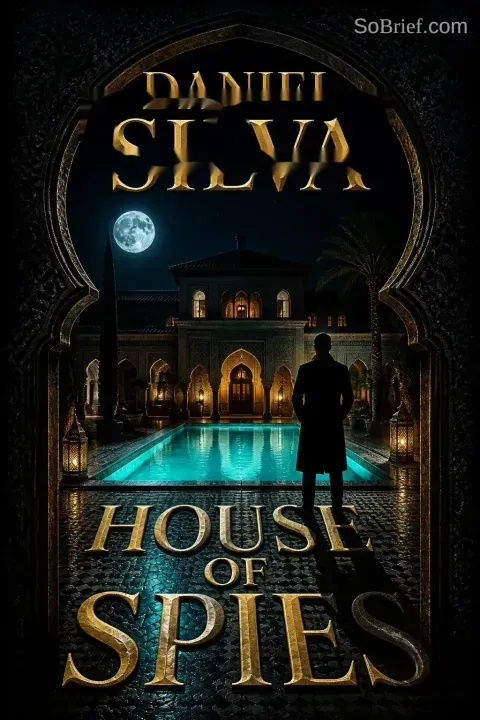


Plot Summary
London's Night of Blood
On a stormy February evening, five terrorists storm the Garrick Theatre, another five hit the Prince Edward, and a third cell attacks St. Martin's. Julian Isherwood,11 a seventy-five-year-old art dealer nursing a drink at the Ivy after being stood up, spots the white Ford Transit van braking outside St. Martin's.
He watches armed men enter the theatre, hears gunfire and screams. Instead of fleeing, he staggers across the street and bursts into the Ivy, waving his arms to evacuate the dining room.
His warning allows police to intercept the third cell, limiting deaths there to eighty-four. The other two cells slaughter nearly a thousand people combined, making it the deadliest attack in British history. Saladin,2 the mastermind, leaves his work unsigned.
This opening sequence establishes the modern terrorist threat as decentralized, simultaneous, and designed for maximum civilian bloodshed. Isherwood's transformation from aging roué to accidental hero introduces the novel's recurring theme: unlikely people rising to extraordinary circumstances. The attack creates the narrative's central wound; Saladin has struck the heart of the West, and the intelligence services failed to stop him. Their institutional shame, particularly Graham Seymour's, will drive the entire operation.
The Scorpion's Trail
Amanda Wallace, director general of MI5, summons Graham Seymour8 to Thames House with news that will shift the investigation. Omar Salah, the Harlow cell leader killed at St. Martin's, had used his sister's laptop for ISIS business.
Forensic technicians recovered an encrypted message from ISIS central command instructing Salah to meet a man called the Scorpion in Calais. The coded language clearly referred to the Kalashnikovs used in the attack.
French intelligence has had the Scorpion on their radar as part of a Moroccan drug gang, but they know almost nothing about him, not even his real name. Wallace admits she cannot pursue him abroad; that falls to MI6. Seymour,8 whose service has produced nothing of consequence since the attacks, now has his loose thread.
This section dramatizes the frustrating, painstaking reality of counterterrorism: a single message on a compromised laptop becomes the only operational lead. The inter-agency dynamic between MI5 and MI6 reflects the inherent tension in British intelligence, with Wallace and Seymour's rivalry softened only by shared professional desperation. The coded language, the encryption that even the NSA could not crack, and the criminal-terrorist nexus all ground the narrative in contemporary security challenges.
Keller Comes Home
Christopher Keller,3 once a legendary SAS operator, faked his death in Iraq in 1991 after a friendly fire incident killed his squadron. Enraged, he walked away from the war and eventually washed up on Corsica, where Don Anton Orsati's14 crime family took him in.
For twenty-five years, Keller3 worked as a professional assassin, posing as an olive oil executive. Now Graham Seymour8 has resurrected him, granting him a new identity as Peter Marlowe and enrolling him in MI6's Intelligence Officers New Entry Course at the Fort.
Keller3 outshines every other recruit, spotting MI5 watchers, vanishing from surveillance in five minutes flat, and placing an entire magazine through a target's left eye. On graduation day, he escapes the Fort by scaling a fence with a rope, then steals a car to reach Seymour8 at Wormwood Cottage.
Keller embodies the novel's fascination with redemption and borrowed identities. His trajectory from elite soldier to mercenary assassin to British spy raises uncomfortable questions about what services will overlook for operational necessity. His exceptional skills make him invaluable but also dangerous: he operates by rules learned in the Regiment and Corsican vendetta culture, not Queen's Regulations. The false name Peter Marlowe signals his liminal state, neither fully dead nor fully reborn.
Three Dead in Nice
Posing as a Corsican arms dealer named Nicolas Carnot,3 Keller meets Nouredine Zakaria at a café in Nice. He establishes dominance, demands Zakaria's bodyguards leave, and agrees to sell him twenty weapons for sixty thousand euros.
At the Orsati14 warehouse in Grasse, Zakaria hands Keller3 a slip of paper demanding he kill his own associate to prove he is not a spy. Keller3 reads the words, drops the paper, draws his Tanfoglio, and shoots both Moroccans in the forehead with professional precision. The third man outside hears nothing unusual until Keller3 invites him inside to see the merchandise.
All three end up in the Mediterranean. Keller3 reports to Seymour8 at a Stockwell safe house, where the MI6 chief fumes about diplomatic complications but privately recognizes that Keller's3 methods might be exactly what the operation requires.
This sequence establishes Keller's operational methodology: lethal, instinctive, and impossible to constrain within legal frameworks. His execution of three ISIS-linked criminals raises the novel's central ethical question: what rules apply when fighting an enemy that recognizes none? Seymour's performative anger masks genuine dependency on Keller's skills. The line between spy and assassin blurs deliberately, foreshadowing the extralegal tactics that will define the hunt for Saladin.
Bomb on Rue de Grenelle
Gabriel1 visits Paul Rousseau9 at the elegant building on the rue de Grenelle that secretly houses the Alpha Group. After discussing the Zakaria case and its connection to Jean-Luc Martel,4 Rousseau9 orders Martel's4 file. Minutes later, a white Renault Trafic van detonates directly beneath Rousseau's9 fifth-floor office.
The blast kills pedestrians, a mother and daughter at a pharmacy, and numerous Alpha Group officers including Rousseau's9 secretary. Gabriel,1 Rousseau,9 and deputy Christian Bouchard survive only because they were in the glass-walled secure conference room.
Gabriel1 spends forty-five minutes buried in rubble, his ribs broken, two vertebrae fractured, before his bodyguards pull him free. At the Val-de-Grâce military hospital, he refuses pain medication, then is secretly flown back to Israel.
This bombing serves as the novel's point of no return. Gabriel's physical injuries mirror his psychological wound: Saladin has hurt him personally, and the professional mission now carries private stakes. The destruction of the Alpha Group headquarters demonstrates that no institution is safe from Saladin's reach. Gabriel's refusal of pain medication reveals his ascetic determination; he will not allow anything to dull his focus on vengeance.
Forty-Eight Blank Canvases
Eli Lavon's financial investigation of Galerie Olivia Watson5 reveals that it sold over two hundred million dollars in art in eighteen months, at prices far exceeding auction records. Shipping waybills show paintings sent to the Geneva Freeport, a tax-free repository for the global superrich.
Gabriel1 travels to Geneva with Christoph Bittel, head of Swiss counterterrorism, who secures access to Vault 19. Inside, forty-eight identical crates bear the gallery's shipping labels. Gabriel1 pries one open with a tire tool.
Inside the protective frame, wrapped in glassine paper, is a canvas. It is completely blank. Every other crate contains the same: empty canvases, shipped as priceless art, serving as invoices for drug money laundered through Martel's4 legitimate businesses.
The blank canvas serves as the novel's central metaphor: a surface upon which identities can be painted, erased, and repainted. The vault's contents expose the ingenious laundering mechanism while revealing the emptiness at the core of Martel's empire. Gabriel, the art restorer, immediately grasps the significance: these canvases are not failures but deliberate tools of deception. For Olivia, these blank canvases represent both her complicity and, ultimately, her chance at redemption.
The Antonovs Arrive
With five hundred million dollars stolen from Syrian regime accounts, Mikhail Abramov7 and Natalie Mizrahi6 become Dmitri7 and Sophie Antonov.6 He is a pale, unsmiling Russian arms dealer; she is his chic, chain-smoking French wife.
They purchase Ivan Kharkov's notorious Villa Soleil, renovate it at impossible speed, and hang Old Master paintings acquired under Julian Isherwood's11 expert eye. Their parties are bacchanalian affairs: naked swimmers, fistfights, damaged luxury cars. Across the bay, Jean-Luc Martel4 and Olivia Watson5 watch with fascination and irritation.
The Antonovs deliberately snub them, refusing invitations and frostily dismissing Olivia5 at her own gallery. When Martel4 finally secures a lunch invitation, Gabriel1 orchestrates every detail: the closed gate, the carefully chosen wine, the calculated tension between contempt and allure.
This section explores the theatrical nature of intelligence operations: the Antonovs are a performance, a carefully scripted provocation designed to exploit Martel's vanity and greed. Their marital friction, their conspicuous consumption, their studied rudeness all serve the operation's goals. Gabriel's direction of every detail, from closed gates to menu choices, reveals his artist's approach to spycraft. Martel sees only what he wants to see, a reflection of his own criminal duplicity.
Olivia Breaks
Under the pretense of a gallery visit, Keller3 escorts Olivia5 to the safe house in Ramatuelle. There, in a room hung with her blank canvases, Gabriel1 presents her with a choice: face prosecution for money laundering and complicity in drug trafficking, or cooperate.
He walks her through her own history: discovered at sixteen, exploited by her agent Freddie Mansur, addicted to cocaine, washed up at thirty-three. Then Martel4 rescued her, made her a gallery owner, and used her to clean his drug profits.
Olivia,5 cornered, admits she knew Martel's4 business was narcotics but claims she was too afraid to leave. Gabriel1 counters that she was afraid to lose her gallery. She finally surrenders the name of Martel's4 drug operations chief: René Devereaux.13
Olivia's interrogation reveals the psychological architecture of complicity. Her modeling career, with its exploitation and addiction, primed her for a transactional relationship with Martel. Gabriel's approach is both ruthless and empathetic: he dismantles her self-protective narratives but offers genuine redemption. The blank canvases that incriminated her become the symbol of her potential liberation. Her decision to cooperate marks the first moral choice she has made in years.
Hammer Interrogation at Sea
Don Orsati's14 men snatch René Devereaux13 from his electronics shop in Marseilles and deliver him to a yacht in the Mediterranean. Keller,3 reverting to his Corsican tradecraft, uses a hammer to extract a two-hour video confession.
Devereaux13 names Martel4 as his boss, describes the murder of Martel's4 mentor Philippe Renard with a hammer, and details the global hashish network: product from Mohammad Bakkar12 in Morocco's Rif Mountains, shipments through Libyan ports, distribution across Western Europe.
He reveals that Bakkar12 took on a partner around 2012, an Iraqi who called himself Khalil and wanted to maximize profits quickly. Devereaux13 met the man twice. The video provides granular detail on money flows, routes, and methods, giving Rousseau9 and Gabriel1 everything they need to break Martel.4
This sequence confronts the reader with the brutal reality of intelligence gathering. Keller's violence, inherited from his Corsican years, produces actionable intelligence that legal methods never could. The hammer, the same tool Martel used to kill his father and his mentor, functions as poetic justice: the instrument of the drug lord's rise becomes the instrument of his downfall. Devereaux's confession video represents the irreversible pivot point.
The Asset Speaks
Summoned to Villa Soleil, Martel4 watches excerpts of Devereaux's13 confession and hears Rousseau's9 terms: cooperate with French intelligence and receive immunity, or face prison and the destruction of his empire. Martel4 resists, denies, counterattacks, but the video is devastating.
Gradually, he begins talking about his supplier, Mohammad Bakkar,12 a religious hashish producer who hates the West. He describes Bakkar's12 mysterious partner, Khalil:2 tall, broad-shouldered, Iraqi accent, present at meetings in Casablanca and the Rif Mountains.
At the second meeting, after the Washington attacks, Khalil2 wore a djellaba and walked with a limp. His face had changed, thinned by plastic surgery. Gabriel1 produces composite sketches. Natalie,6 summoned to view them, nods silently: it is Saladin.2
Martel's recruitment demonstrates the alchemy of coercion transformed into cooperation. His progression from denial to grudging disclosure mimics the psychological stages of asset cultivation. The revelation that Bakkar's partner matches Saladin's description, including the irreversible limp, provides the operation's first hard confirmation. Martel's dual identity as legitimate celebrity and criminal kingpin makes him uniquely positioned to access Saladin's world.
Sahara Camp Revelation
Following a summons from Bakkar,12 the Antonovs, Martel,4 Olivia,5 and Keller3 journey to a remote desert camp near Erg Chebbi. After a tense dinner, Bakkar12 arrives and discusses the seized shipments with Martel.4 Then he introduces his partner to Dmitri Antonov.7
Saladin2 emerges from a Toyota Land Cruiser, walking with a pronounced limp despite his surgically altered face. He addresses Mikhail7 with penetrating intelligence, asking if Antonov can supply cesium chloride to replace material lost in the seizures.
He also asks to meet Madame Sophie.6 In the tent, Saladin2 studies Natalie's6 face, pushing aside her hair. She stares back, unblinking. Saladin2 finally withdraws, claiming he was mistaken. Outside, he whispers to Bakkar:12 the Antonovs are Israeli agents.
This sequence represents the operation's climax of tension, with predator and prey finally sharing the same space. Saladin's request for cesium confirms his nuclear ambitions, while his nearly recognizing Natalie dramatizes the operation's fragility. The scene inverts power dynamics constantly: Mikhail plays the arms dealer, but Saladin controls the desert. Natalie's composure under Saladin's scrutiny, after months of nightmares about him, marks her psychological triumph over trauma.
Drone Strike Fails
Saladin2 orchestrates a decoy: four identical SUVs circle him in a dust cloud before he enters one. The American Predator fires two Hellfire missiles, destroying two vehicles, but Saladin's2 Toyota crashes instead of exploding. He survives, badly injured. At the camp, Bakkar12 gives Martel4 a gun, ordering him to kill the Antonovs.
Martel4 enters the tent, presses the barrel to Olivia's5 head, and demands she leave with him. Keller3 shoots Martel4 twice in the face, then he and Mikhail7 engage Bakkar's12 five armed men. Natalie6 grabs Martel's4 fallen gun and fires through the tent entrance. Gabriel,1 watching via drone, directs the firefight. Within seconds, the guards are dead, Bakkar12 is dying, but Saladin2 has escaped in the fourth SUV.
The failed drone strike dramatizes the limits of technological warfare against a cunning adversary. Saladin's decoy tactic, his survival despite direct engagement, reinforces his mythic status. Martel's betrayal and death close his arc: the man who killed his father and mentor with a hammer dies by the gun of the man who once posed as his friend. The team's desperate firefight in the desert, broadcast to Langley, renders abstract counterterrorism viscerally immediate.
Eleven Shots in Zaida
Using Bakkar's phone, Natalie6 tricks Saladin's2 lieutenant Nazir Bensaïd into revealing the location: a walled compound near Zaida in the Middle Atlas Mountains. Gabriel,1 Keller,3 Mikhail,7 and Yaakov Rossman storm the gate before dawn. They kill two guards and Nazir Bensaïd in the courtyard, then enter the house.
On the stairs, a female suicide bomber screams and detonates, her body shredding across the landing. Upstairs in a room facing Mecca, they kick down the door. Saladin2 lies on a bare mattress, lit by his mobile phone. He reaches for a Kalashnikov, but Gabriel1 is faster, firing eleven shots into Saladin's2 heart. The phone falls from Saladin's2 hand. On the screen, a final message: Inshallah, it will be done.
Gabriel's personal execution of Saladin, with eleven rounds echoing the eleven Israeli athletes murdered at Munich, transforms the professional operation into an act of ritual vengeance. His decision to lead the assault, despite being chief, violates every rule of command but satisfies a deeper psychological necessity. The female suicide bomber, whose blue eyes Gabriel closes, represents the human cost of jihadist ideology. Saladin's final text message introduces a terrifying complication: even in death, he may have triggered another attack.
The Dead Man's Thumb
MI5 and MI6 crack Saladin's2 captured devices and discover a martyrdom operation planned for nine that morning. A suicide bomber carrying cesium chloride, enough to contaminate Westminster for years, is approaching Parliament.
The prime minister, advised by Gabriel,1 keeps the area open as a trap. Gabriel1 and Keller,3 deputized as SCO19 officers, spot the bomber near Parliament Square: sweating, pale with radiation sickness, clutching a detonator with a dead man's switch.
As he approaches Downing Street, Keller3 seizes the bomber's left hand, pinning his thumb to the trigger. Gabriel1 fires repeatedly into the bomber's head, then flees in a waiting car. Keller3 holds the dead man's thumb to the detonator for three hours while bomb disposal technicians disarm the device.
The Westminster sequence brings the novel's two operational climaxes together: the elimination of Saladin and the prevention of his final atrocity. Keller's three-hour ordeal holding a dead hand represents the ultimate test of nerve, transforming the former assassin into a national hero. Gabriel's role as both executioner and savior completes his dual identity as chief and field operative. The dirty bomb's nature, rendering areas uninhabitable for decades, raises the stakes beyond immediate casualties to civilizational threat.
Olivia's Blank Canvas
Hidden at Wormwood Cottage on Dartmoor, Olivia5 slowly recovers from the trauma of Morocco. Miss Coventry feeds her cottage pie; Parish the caretaker judges her tabloid notoriety. Keller3 visits, and over dinner she asks his real name. He tells her he cannot share it. Gabriel1 plants a story in the Telegraph portraying Martel4 as the unsung hero of the hunt for Saladin,2 exonerating Olivia5 of any knowledge of his crimes.
Her gallery inventory, worth millions, is released to her. Months later, she opens a new gallery in St. James's, London. At the opening, Keller3 pulls her aside. She whispers an invitation. He considers the blank canvas of his own life, the possibility of happiness with a woman who knows his darkness and does not flinch.
Olivia's restoration completes the novel's meditation on redemption. The blank canvas metaphor becomes literal: she is given the freedom to paint a new identity, free from Martel's shadow. Gabriel's manipulation of the press, rehabilitating a dead criminal to protect a living witness, demonstrates that truth, like art, can be restored and retouched. Keller's attraction to her acknowledges their shared past of violence and survival.
The Lucky Guy
The Antonovs' fortune, stolen from the Syrian dictator, is disbursed: millions to refugee aid, Palestinian schools teaching peace, a Negev facility for disabled children, Hadassah Medical Center, and the Bezalel Academy. The art collection is donated anonymously to the Israel Museum.
The remainder funds future Office operations. At Shamron's10 villa in Tiberias, overlooking the battlefield where Saladin's2 namesake defeated the Crusaders, the team celebrates. Mikhail7 and Natalie6 are engaged.
Shamron10 and Gabriel1 watch American ordnance flash over the Golan Heights. Shamron10 asks if Gabriel1 hears the clashing swords of history. Gabriel1 hears only music. Shamron10 calls him a lucky guy. Gabriel,1 chief of Israeli intelligence, survivor of countless battles, agrees that perhaps he is.
The novel's coda balances triumph with uncertainty. The distribution of stolen wealth to humanitarian causes represents a moral laundering, transforming the Butcher of Damascus's loot into medicine and education. Shamron's presence connects the operation to Israel's founding generation. The flashing ordnance over Syria and the battlefield of Hittin below remind readers that this victory, like all victories in the region, is provisional. Gabriel's admission that he is lucky acknowledges the capricious nature of survival in his profession.
Analysis
House of Spies examines the moral architecture of counterterrorism in an age when the boundaries between criminality and ideology have dissolved. Saladin2's network exploits drug trafficking routes, money laundering schemes, and the disposable loyalties of the underworld, forcing Western intelligence services to adopt similarly flexible ethics. The novel's central metaphor, the blank canvas, operates on multiple levels: it is the money laundering device that incriminates Olivia Watson,5 the operational blank slate upon which identities like Dmitri Antonov7 are painted, and the promise of redemption offered to those willing to cooperate with the hunters. Gabriel Allon,1 the art restorer turned spymaster, understands that both paintings and people can be retouched, their damaged surfaces made new. Yet the novel refuses easy moral comfort. Christopher Keller,3 a former assassin, becomes a national hero by holding a dead man's thumb to a detonator for three hours. Jean-Luc Martel,4 a murderer and drug lord, is retroactively declared a hero in the press to protect his girlfriend's reputation. The Americans claim full credit for an operation they nearly botched, while the Israelis and British who did the actual killing remain invisible. Silva suggests that victory in the shadow war requires not just courage and skill but a willingness to operate in ethical penumbra, where the line between hero and criminal blurs beyond recognition. The novel also explores the psychological toll of deep-cover work through Natalie Mizrahi,6 who must face Saladin2 again after treating his wounds in the caliphate. Her PTSD, night terrors, and final composure under his gaze dramatize the human cost of intelligence operations. The final image, Gabriel1 listening to music while his mentor Shamron10 hears clashing swords from an ancient battlefield, captures a generational divide: the old man cannot forget the battles that forged Israel, while the younger chief, for a moment, allows himself to feel lucky rather than perpetually vigilant.
Review Summary
House of Spies, the 17th Gabriel Allon thriller, continues the hunt for ISIS mastermind Saladin following devastating terrorist attacks. Now chief of Israeli intelligence, Allon refuses to stay behind his desk, assembling his team including Christopher Keller for an elaborate operation tracking a French drug kingpin with terrorist connections. Reviews praise Silva's prescient, headline-ripping plots and meticulous research, though some critics note formulaic elements and excessive page-padding. The complex espionage tale maintains the series' trademark authenticity and intensity, with most readers finding it a gripping, fast-paced thriller despite occasional pacing issues.
People Also Read



Characters
Gabriel Allon
Israeli intelligence chief and avengerThe legendary field operative who has now assumed command of Israel's secret intelligence service, the Office. An art restorer by training, he brings an artist's precision to espionage. His green eyes miss nothing; his left hand can restore a Caravaggio or fire a pistol with equal skill. Haunted by past losses including his first wife Leah, he now balances the duties of chief with a young family: his wife Chiara and their twin children, Irene and Raphael. As chief, he struggles with the tension between operational command and the personal hunger for direct action against enemies who have tried to destroy everything he loves. His relationship with his mentor Ari Shamron10 and his network of allies across Western intelligence services forms the backbone of his operational reach.
Saladin
ISIS terror mastermind and strategistThe nom de guerre of an Iraqi former intelligence officer who served Saddam Hussein's Mukhabarat before joining the anti-American insurgency. Rising through ISIS to command external operations, he has orchestrated devastating attacks on Washington, London, and cities across Europe. He walks with a permanent limp from a shrapnel wound that was crudely treated. His face has been surgically altered, but his dark eyes radiate predatory intelligence. He views terrorism as asymmetrical warfare, treating civilians as legitimate targets in a cosmic struggle between Islam and the West. Finances his operations through a partnership with Moroccan hashish producers, merging criminal enterprise with jihadist ideology.
Christopher Keller
Former assassin turned MI6 operativeA former SAS soldier who faked his death in Iraq after a friendly fire incident killed his squadron in 1991. For twenty-five years, he worked as a professional assassin for Don Anton Orsati's14 Corsican crime family, posing as an olive oil executive. Now recruited by MI6 under the alias Peter Marlowe, he navigates the space between spy and killer with unsettling ease. He speaks French with a Corsican accent, wears a red coral talisman against the evil eye, and approaches his new role with the lethal pragmatism of his old one. Beneath his operational coldness lies grief for a woman he lost in Belfast during his SAS years. His exceptional skills make him invaluable but dangerous: he operates by rules learned in the Regiment and Corsican vendetta culture.
Jean-Luc Martel
French drug lord and celebrity businessmanA wildly successful French entrepreneur whose hospitality empire, spanning restaurants, hotels, and retail boutiques, masks a continent-spanning narcotics network. Charismatic, handsome, and utterly amoral, he murdered both his abusive father and his criminal mentor with a hammer on his way to becoming Europe's largest hashish distributor. His public persona as a self-made celebrity obscures his ruthless criminal origins in Marseilles. His relationship with Olivia Watson5, a former fashion model, is both romantic and transactional. His vanity, greed, and need for admiration make him vulnerable to a well-designed trap. He views his ISIS connections as simply another business arrangement.
Olivia Watson
Martel's partner and compromised gallery ownerA British former fashion model who found success in the 1990s before the industry discarded her at thirty-three. Discovered at sixteen, exploited by her agent, addicted to cocaine, she washed up in Saint-Tropez with few prospects until Jean-Luc Martel4 rescued her. He made her the nominal owner of Galerie Olivia Watson, an art gallery that laundered his drug profits through fake sales of blank canvases. Tall, blonde, and professionally beautiful, she has spent her life being looked at rather than seen. Her complicity in Martel's4 crimes weighs on her, but her desire for security and luxury has always overridden her conscience. Beneath the glamorous surface lies a woman who knows exactly what she has become.
Natalie Mizrahi
Israeli doctor and deep-cover agentA French-born Israeli physician recruited by the Office for her fluency in Algerian Arabic and her medical expertise. She previously infiltrated ISIS by posing as a Palestinian radical named Leila Hadawi, spending weeks in the caliphate treating wounded fighters, including Saladin2 himself. That experience left her with PTSD, night terrors, and an intimate knowledge of the terrorist's body and habits. Now she must face him again, this time posing as Sophie Antonov, the chic, chain-smoking French wife of a Russian arms dealer. Her relationship with Mikhail Abramov7, her operational husband, has become genuinely romantic, complicating the already perilous boundaries between cover and reality.
Mikhail Abramov
Elite Israeli operative and false oligarchA Moscow-born Israeli operative known as Gabriel1 without a conscience. Tall, pale, and gray-eyed, he served in the elite Sayeret Matkal before joining the Office. Lethal in combat but equally adept at assuming false identities, his cover as Dmitri Antonov requires him to play a Russian arms dealer with a passion for art and a difficult French wife. His real relationship with Natalie Mizrahi6 deepens during the operation. He once killed four ISIS terrorists single-handedly in a Washington restaurant and has a history with an American CIA officer that complicates his current romance. His operational coolness masks genuine emotional depth.
Graham Seymour
Chief of MI6The elegant and calculating head of Britain's Secret Intelligence Service. The son of a legendary Cold War spy who was destroyed by Kim Philby's treachery, he carries the institutional memory of betrayal and failure. His decision to resurrect Christopher Keller3 and deploy him extralegally reflects his belief that the rules of the game have fundamentally changed. His long rivalry with Amanda Wallace of MI5 has softened into a pragmatic alliance, but he remains fiercely protective of his service's prerogatives. His bond with Gabriel Allon1, forged through numerous joint operations, makes him Israel's most reliable ally in the West.
Paul Rousseau
French counterterrorism chiefChief of the DGSI's secretive Alpha Group, a chain-smoking French counterterrorism specialist who operates in legal gray zones to protect a Republic he fears is losing its identity. World-weary and intellectually formidable, he has plotted more terrorist attacks than Osama bin Laden because his unit specializes in deception operations that lure jihadists into traps. The bombing of his headquarters on the rue de Grenelle kills many of his officers and intensifies his determination to destroy Saladin2. His willingness to partner with Israeli intelligence, despite France's historically prickly relationship with the Office, marks a new era of cooperation.
Ari Shamron
Gabriel's mentor and former chiefThe legendary spymaster who built the Office from the ground up and personally dragged Adolf Eichmann from a Buenos Aires street. Now elderly and confined to a lakeside villa in Tiberias, he still meddles in Gabriel's1 affairs, dispenses operational wisdom, and tinkers with antique radios. His oversized hands, once the instruments of Israel's vengeance, now rest on an olive wood cane. He views the hunt for Saladin2 with the cold-eyed perspective of a man who has seen empires rise and fall. His presence connects Gabriel's1 generation to the Office's founding ethos of ruthless self-reliance.
Julian Isherwood
Art dealer and intelligence assetAn elderly London Old Master art dealer whose Savile Row suits and backbone-of-England surname conceal a harrowing past. Born Samuel Isakowitz in Germany, he was carried across the Pyrenees as a child refugee after his parents were murdered at Sobibor. Recruited as a sayan, a volunteer helper for Israeli intelligence, in the 1970s, he has spent decades quietly assisting Gabriel Allon1. His gallery in Mason's Yard is struggling in a market that favors contemporary art, but his accidental heroism during the West End attacks redeems a life he feared was ending in irrelevance. His unrequited romantic pursuits of much younger women are both comic and poignant.
Mohammad Bakkar
Moroccan hashish kingpinMorocco's largest hashish producer, a devout Muslim from the Rif Mountains who hates the West and flies into a rage at the mention of Israel. His partnership with Saladin2 gives the terrorist access to drug smuggling infrastructure and substantial financing. He meets Martel4 regularly to negotiate prices and shipping schedules.
René Devereaux
Martel's drug operations chiefThe Marseilles-based criminal who runs the day-to-day operations of Martel's4 narcotics network. A hardened professional who communicates only in person and never uses phones, his kidnapping and video confession provide the leverage needed to recruit Martel4 as an asset.
Don Anton Orsati
Corsican crime bossThe head of an ancient Corsican family whose legitimate olive oil business fronts a murder-for-hire enterprise. He employed Keller3 for twenty-five years as a professional assassin and now provides crucial resources for the operation against Saladin2, motivated partly by honor and partly by hatred of Islamist terrorists.
Adrian Carter
CIA deputy directorThe longest-serving chief of the CIA's Directorate of Operations and Gabriel's1 longtime ally. Fighting for professional survival under a new administration that views him as yesterday's man, he needs a victory against Saladin2 to preserve his career and his legacy.
Uzi Navot
Gabriel's deputy and former chiefGabriel's1 predecessor as chief, now serving as his loyal deputy. Heavyset and endlessly dieting, he provides institutional ballast while Gabriel1 chases Saladin2, managing the Office's daily operations from his office across the hall.
Plot Devices
Geneva Freeport Vault
Hidden evidence of money launderingA secure tax-free storage facility in Geneva where the global elite hide art and valuables. Jean-Luc Martel4 uses Vault 19 to store forty-eight blank canvases shipped by Galerie Olivia Watson5, creating a paper trail of fake art sales that launders drug profits. Gabriel's1 discovery of the empty frames, made with Swiss intelligence cooperation, provides the leverage needed to turn Olivia Watson5 and then Martel4 himself. The vault represents the intersection of legitimate wealth concealment and criminal enterprise that makes modern financial investigations so complex. Its existence as a legal gray zone, where art becomes an untraceable commodity, mirrors the novel's broader concern with the blurring of criminal and legitimate worlds.
Bakkar's Mobile Phone
Crucial link to Saladin's locationA Samsung Galaxy recovered from Mohammad Bakkar's12 body at the desert camp. The phone's call history connects the dead hashish producer to Nazir Bensaïd, Saladin's2 lieutenant, and ultimately to Saladin2 himself. Natalie Mizrahi6 uses the phone to send text messages in Arabic, impersonating Bakkar12 to trick Bensaïd into revealing the location of the mountain compound near Zaida and opening its gate. The phone's battery, dwindling to ten percent, creates additional tension during the team's desert escape. It represents how a single captured device, properly exploited, can unravel an entire terrorist network.
The Blank Canvases
Metaphor for guilt and redemptionForty-eight identical empty canvases stored in the Geneva Freeport, professionally framed and wrapped as valuable contemporary art. They serve as the central mechanism of Martel's4 money laundering operation: paintings are fictitiously sold for millions, but nothing actually changes hands except clean money. Gabriel1 uses them as a psychological weapon during Olivia's5 interrogation, hanging them on the walls of the safe house to confront her with her complicity. He then reframes them as a promise: a blank surface upon which she can paint any picture she wants, a chance to start over without Martel4. The canvases thus function as both evidence of crime and symbol of potential redemption.
Cesium-137
Radiological material for a dirty bombA highly radioactive powder concealed in a spool of insulated wire aboard a hashish shipment from Libya. Discovered by French customs during the coordinated seizure of three drug cargoes, it reveals Saladin's2 plan to construct a radiological dispersion device, a dirty bomb capable of rendering large urban areas uninhabitable for years. The material's likely origin, from former Soviet stockpiles or looted Libyan nuclear facilities, underscores the proliferation risks of the post-Cold War world. Its discovery remains secret, allowing the intelligence services to make Saladin2 believe the shipment arrived safely, which in turn leads him to request more cesium from the fake Russian arms dealer Dmitri Antonov7.
American Drones
Overhead surveillance and missile strikeA Sentinel stealth surveillance drone and an armed Predator, deployed by the CIA over Morocco without the host government's knowledge. The Sentinel provides real-time infrared imagery of the desert camp and the mountain compound, allowing Gabriel1 to direct the team's movements from Casablanca. The Predator carries two Hellfire missiles intended to kill Saladin2 as he flees the camp. However, Saladin's2 decoy tactic, using four identical SUVs in a dust cloud, causes the drone operators to strike the wrong vehicles. The failed strike forces Gabriel's1 team into a direct ground assault on the Zaida compound and creates a diplomatic crisis when Morocco discovers American missiles were fired on its territory.
Gabriel Allon Series











About the Author

Download PDF
Download EPUB
.epub digital book format is ideal for reading ebooks on phones, tablets, and e-readers.








































