
Plot Summary
Death in the Alps
In the glittering French ski resort of Courchevel, investigative journalist Aleksandr Lubin is sent to shadow the enigmatic oligarch Ivan Kharkov, suspected of illicit arms deals. Lubin's paranoia is justified: he meticulously checks his hotel room for bugs and poison, knowing the fate of those who cross the Russian elite. His caution is futile. A professional assassin slips into his room and kills him with chilling efficiency, retrieving Lubin's dossier. The murder is staged as a drunken accident, but it is a message to all who would probe too deeply into the affairs of Russia's new ruling class. The chilling atmosphere of fear and impunity sets the stage for a global conspiracy, as the West remains oblivious to the storm gathering in the East.
The Restorer's Retreat
Gabriel Allon, legendary Israeli spy and art restorer, seeks solace in the Italian countryside, restoring a Vatican masterpiece and savoring a rare honeymoon with his new wife, Chiara. The villa's staff speculate about his mysterious past, sensing the darkness beneath his quiet routine. Gabriel's days are filled with the slow, meditative work of cleaning and retouching a centuries-old painting, but the peace is fragile. The arrival of coded messages and a visit from his old colleague, Uzi Navot, signal that the world of espionage is never far away. Gabriel's retreat is a temporary illusion, soon to be shattered by the demands of his true calling.
Summoned from Exile
Gabriel's idyllic isolation is broken when Navot arrives with urgent news: a Russian journalist has been murdered, and his editor, Boris Ostrovsky, claims to possess information vital to the security of Israel and the West. Ostrovsky insists on meeting Gabriel personally, violating every rule of tradecraft. Reluctantly, Gabriel agrees, drawn by curiosity and a sense of duty. The meeting is arranged with elaborate precautions, but the shadow of danger looms. Gabriel's wife, Chiara, fears for his safety, knowing that every return to the field risks not only his life but their fragile happiness. The past, it seems, will not let Gabriel go.
A Russian's Last Message
In Rome, Gabriel and his team orchestrate a complex surveillance run to ensure Ostrovsky is not followed. Despite their precautions, Ostrovsky is assassinated in the heart of St. Peter's Basilica, dying in Gabriel's arms before he can reveal his secret. The murder is a masterstroke of Russian tradecraft, executed in public yet invisible to all. Vatican security footage reveals a professional assassin, but the trail is cold. Ostrovsky's death is a warning: the siloviki, former KGB men now ruling Russia, will stop at nothing to protect their interests. Gabriel is left with only fragments—a name, a fear, and the certainty that something catastrophic is being planned.
Honeymoon Interrupted
The murder in Rome forces Gabriel to abandon his restoration and return to the world of espionage. Ari Shamron, his mentor, insists that Gabriel is the only one who can unravel the mystery Ostrovsky died to protect. The clues point to Ivan Kharkov, a former KGB officer turned billionaire arms dealer, whose network reaches from Moscow to the Middle East. Gabriel's mission: infiltrate Kharkov's world, discover the nature of the threat, and prevent a disaster. The stakes are personal and global, as Gabriel's marriage is tested by the demands of duty and the ever-present specter of violence.
The Vatican Poisoning
Ostrovsky's death by poison in the Vatican is both a scandal and a puzzle. Gabriel, aided by Vatican insiders, uncovers evidence of a sophisticated Russian assassination—an injection of a Cold War-era toxin, delivered in a public place with no witnesses. The Vatican, under pressure from Italian authorities, must tread carefully to avoid a diplomatic crisis. Gabriel's investigation reveals that Ostrovsky was under surveillance from the moment he left Moscow, and that the Russians anticipated every move. The message is clear: in Moscow's new order, no one is untouchable, and the old rules of espionage are back in force.
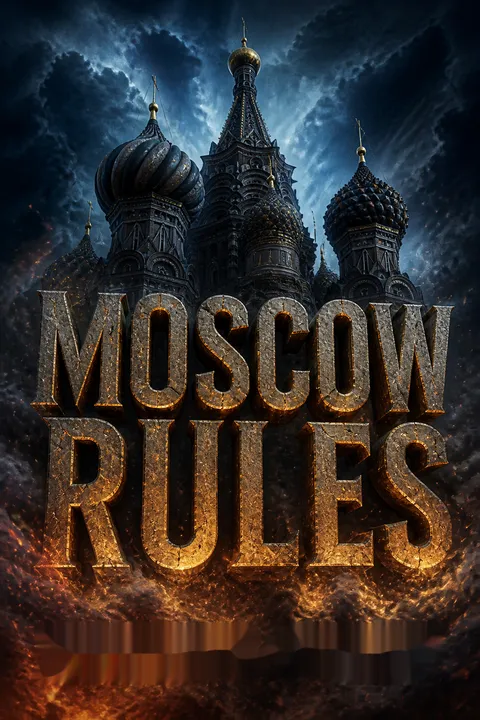
The Moscow Rules
Gabriel prepares to enter Russia under diplomatic cover, adopting a new identity as a cultural envoy. The "Moscow Rules"—assume every room is bugged, every person is under surveillance, and never trust appearances—govern every step. In St. Petersburg and Moscow, Gabriel navigates a world where oligarchs flaunt their wealth, journalists are silenced, and the security services are omnipresent. His target is Olga Sukhova, acting editor of Moskovsky Gazeta, who may hold the key to Ostrovsky's secret. Every encounter is a test of nerves and deception, as Gabriel walks a tightrope between discovery and success.
The Journalist's Secret
In a tense, coded meeting, Olga Sukhova confirms Gabriel's fears: Kharkov is orchestrating a massive arms deal, selling advanced Russian missiles to an African client, with a portion destined for al-Qaeda. The deal is protected at the highest levels, and previous attempts to expose it have ended in murder. The Gazeta has been gutted, its investigative staff replaced, and its new owner is a Kharkov associate. Olga's information is incomplete, but she hints that Kharkov's wife, Elena, may know more. The only way to stop the sale is to penetrate Kharkov's inner circle—a task fraught with mortal danger.
The Oligarch's Shadow
Gabriel and his allies in MI5, the CIA, and French intelligence devise a plan to approach Elena Kharkov through her passion for art. Using a forged Mary Cassatt painting as bait, they orchestrate a meeting at an English country estate. Elena, intelligent and perceptive, quickly sees through the deception but is intrigued by the offer of help. Meanwhile, Kharkov's paranoia grows, and his private security service, led by the ruthless Arkady Medvedev, tightens its grip. The operation becomes a high-stakes game of cat and mouse, as Gabriel must win Elena's trust without alerting her husband or the FSB.
Courting Elena
In the sun-drenched luxury of Saint-Tropez, Gabriel's team engineers a series of encounters between Elena and Sarah Bancroft, an American art expert. Elena, trapped in a loveless marriage and aware of her husband's crimes, is torn between fear and the hope of escape. A staged affair with Mikhail, Gabriel's Russian-speaking operative, provides the cover for Elena to break free. The plan is risky: Elena must return to Moscow, retrieve Kharkov's secret files, and defect with her children. The emotional stakes are high, as Elena faces the loss of everything she knows for the chance to save innocent lives.
The Art of Deception
The operation hinges on deception at every level. Gabriel's forged Cassatt painting, Sarah's assumed identity, and Elena's feigned infidelity all serve to distract Kharkov and his security team. The French police, MI5, and the CIA coordinate to isolate Kharkov, seize his assets, and protect Elena's children. The tension mounts as each move is shadowed by the threat of discovery. The line between truth and lie blurs, and the cost of betrayal becomes painfully clear. For Gabriel, the mission is both a professional challenge and a personal reckoning with the ghosts of his past.
The Trap in Saint-Tropez
As Kharkov is lured into bureaucratic entanglements in France, Elena slips away under the pretense of visiting her ailing mother in Moscow. The children are spirited to safety by French authorities, while Gabriel and Elena travel separately to Russia. Every step is monitored by Kharkov's men and the FSB, and a single misstep could mean death. Elena's courage is tested as she navigates the labyrinth of her husband's world, knowing that failure will cost not only her life but the lives of her children and those who have risked everything to help her.
The Defector's Gamble
In Moscow, Elena executes the plan with nerve and precision, retrieving the encrypted disks from Kharkov's vault. But Arkady Medvedev, suspicious and relentless, intercepts her. Gabriel, following at a distance, is captured and brutally beaten. The operation teeters on the brink of disaster as Medvedev demands the return of Kharkov's children in exchange for Elena's life. The full weight of Russian power bears down, and Gabriel must rely on an unexpected ally within the FSB, Colonel Bulganov, to turn the tables. The price of defection is revealed in blood and sacrifice.
Moscow's Deadly Embrace
In a remote warehouse, Gabriel and Elena face torture and execution at the hands of Medvedev and his thugs. Bulganov, secretly disillusioned with the regime, orchestrates a daring rescue, killing Medvedev and his men. The trio races through the night, pursued by the full apparatus of Russian security. The city's haunted history looms over them, a reminder that in Moscow, the past is never truly dead. The escape is a testament to resilience and the thin line between survival and annihilation in a world ruled by fear.
The Warehouse of Death
As they flee, Elena reveals the details of Kharkov's operation: the sale of SA-18 missiles to an African client, with a portion diverted to al-Qaeda. The disks contain the evidence needed to expose the network and prevent a catastrophic attack. Bulganov, now a defector himself, provides further insight into the corruption at the heart of the Russian state. The journey is fraught with peril, as every checkpoint and border crossing is a potential trap. The stakes are no longer just personal—they are global, as the threat of mass murder hangs in the balance.
The Angel's Choice
With time running out, Gabriel must choose between obeying orders and saving Elena. Defying his superiors, he stays behind in Moscow, orchestrating a final, desperate rescue. The operation is a symphony of tradecraft, violence, and trust, as Gabriel, Elena, and Bulganov outwit their pursuers and secure the evidence. The cost is high: wounds, trauma, and the permanent loss of a home. Yet in the end, the angel of vengeance delivers justice, and the innocent are given a chance at a new life. The emotional toll is etched in every scar and every memory.
The Harvest of Missiles
The disks reveal the full extent of Kharkov's crimes, enabling Western intelligence to intercept the missiles before they can be used in a coordinated terrorist attack on airliners across Europe and America. The world is spared a tragedy, but the victory is bittersweet. Kharkov vanishes into the protection of the Kremlin, his fortune and power diminished but his capacity for vengeance undimmed. Elena and her children disappear into witness protection, while Gabriel returns to Umbria, wounded in body and spirit. The harvest is both literal and metaphorical—a gathering of grapes, a gathering of consequences.
The Price of Betrayal
In the quiet hills of Umbria, Gabriel struggles to heal, haunted by the violence and loss that shadow his every triumph. The world moves on: governments claim credit, journalists write their stories, and the machinery of power grinds forward. Yet the scars remain—on Gabriel, on Elena, on all who dared to challenge the new Moscow. The lesson is clear: in a world ruled by fear and ambition, the price of betrayal is steep, and the line between justice and survival is razor-thin. The angel's work is never done, and the rules of Moscow endure.
Analysis
A modern fable of power, fear, and conscienceMoscow Rules is more than a spy thriller; it is a meditation on the corrosive effects of unchecked power and the moral compromises demanded by survival in a world ruled by fear. Daniel Silva uses the conventions of the genre—tradecraft, betrayals, high-stakes operations—not just to entertain, but to probe the psychological and ethical dilemmas faced by those who resist authoritarianism. The novel's Russia is a place where truth is dangerous, loyalty is provisional, and the past is never truly buried. Through Gabriel Allon's journey, Silva explores the tension between justice and vengeance, the cost of personal sacrifice, and the fragile hope that individuals can make a difference against overwhelming odds. The story's emotional arc—from the murder of a journalist to the rescue of a family and the foiling of a terrorist plot—reminds us that the fight for truth and decency is never easy, and that the rules of Moscow, both literal and metaphorical, are as relevant today as ever. The lesson is clear: in a world of shadows, courage and conscience are the only true guides.
Review Summary
Moscow Rules receives mixed reviews averaging 4.24 stars. Many readers note the book follows Silva's established formula: Gabriel Allon reluctantly returns to intelligence work, forms a plan that goes awry, and saves the day. The eighth installment features a Russian arms dealer selling weapons to al-Qaeda. Reviewers praise Silva's tradecraft knowledge, pacing, and timely political insights about Putin's Russia. However, critics cite repetitive plots, aging protagonists still doing fieldwork, formulaic female characters, and convenient plot resolutions. Some find it airport reading; others call it brilliant espionage. The Moscow setting adds freshness despite familiar patterns.
People Also Read





Characters
Gabriel Allon
Gabriel Allon is the heart of the novel—a legendary Israeli intelligence operative and master art restorer, forever torn between the violence of his profession and the solace of his craft. Scarred by personal tragedy, including the loss of his son and the maiming of his first wife, Gabriel seeks peace in the quiet of Umbria but is repeatedly drawn back into the shadows by duty and conscience. His relationships—with his new wife Chiara, his mentor Shamron, and his loyal team—reveal a man of deep loyalty, empathy, and moral complexity. Gabriel's journey is one of sacrifice, resilience, and the relentless pursuit of justice, even as he questions the cost to his soul.
Elena Kharkov
Elena is the wife of Ivan Kharkov, trapped in a gilded cage of wealth, surveillance, and emotional abuse. Intelligent, cultured, and deeply moral, she becomes the linchpin of the operation to expose her husband's crimes. Her decision to betray Ivan is driven by a desire to protect her children and atone for the blood on her family's hands. Elena's journey from passive victim to active agent of change is fraught with fear, guilt, and the agony of leaving everything behind. Her courage and vulnerability make her both a symbol of hope and a reminder of the personal cost of resistance.
Ivan Kharkov
Ivan is the embodiment of post-Soviet Russia's dark transformation—a former KGB officer who leverages his connections to amass a vast fortune through corruption, violence, and arms trafficking. Charismatic yet ruthless, he maintains a veneer of respectability while orchestrating murder and mayhem behind the scenes. Ivan's paranoia, possessiveness, and capacity for cruelty are matched only by his cunning. His relationship with Elena is a study in control and betrayal, and his shadow looms over every page, a constant threat to all who oppose him.
Ari Shamron
Shamron is the aging architect of Israeli intelligence, a man whose life has been defined by war, loss, and the relentless defense of his people. He is both a father figure and a tormentor to Gabriel, pushing him to ever-greater feats while warning of the dangers of obsession. Shamron's worldview is shaped by the Holocaust and the existential threats facing Israel, making him both pragmatic and ruthless. His presence is a reminder that the personal and the political are inseparable in the world of espionage.
Chiara Allon
Chiara, Gabriel's second wife, is a formidable intelligence officer in her own right. Her love for Gabriel is fierce and protective, but she struggles with the constant danger and the demands of his work. Chiara's wit, courage, and emotional intelligence provide a counterbalance to Gabriel's brooding intensity. Her presence grounds him, offering a glimpse of the normal life he craves but can never fully attain.
Uzi Navot
Navot is Gabriel's trusted colleague, a capable field leader who often serves as the voice of reason. His loyalty is unwavering, but he is not immune to envy and frustration at living in Gabriel's shadow. Navot's pragmatism and dry humor provide stability amid chaos, and his willingness to challenge Gabriel reflects the deep trust between them.
Sarah Bancroft
Sarah is an American art historian recruited into the world of espionage by Gabriel. Intelligent, resourceful, and emotionally complex, she plays a pivotal role in the operation to recruit Elena. Her unrequited feelings for Gabriel add a layer of tension, but her professionalism and courage shine through. Sarah's journey is one of transformation, as she moves from academic to operative, embracing the risks and ambiguities of her new life.
Olga Sukhova
Olga is the acting editor of Moskovsky Gazeta, a rare voice of integrity in a country where journalism is a deadly profession. Haunted by the murders of her colleagues, she becomes a crucial source for Gabriel, risking her life to expose Kharkov's crimes. Olga's cynicism and fear are tempered by a stubborn hope for a better Russia. Her eventual defection is both a personal liberation and a testament to the power of truth.
Arkady Medvedev
Medvedev is the chief of Kharkov's private security, a former KGB thug who delights in violence and intimidation. His loyalty to Ivan is absolute, and his methods are brutal. Medvedev's pursuit of Gabriel and Elena is relentless, and his eventual downfall is a moment of cathartic justice. He represents the dark heart of the new Russia—a world where power is enforced at gunpoint and morality is expendable.
Grigori Bulganov
Bulganov is a high-ranking officer in Russia's security service, outwardly loyal but secretly appalled by the corruption and brutality of the regime. His decision to aid Gabriel and Elena is a turning point, revealing the cracks in the system and the possibility of redemption. Bulganov's defection is both an act of conscience and a survival strategy, and his knowledge proves invaluable in dismantling Kharkov's network.
Plot Devices
The Moscow Rules
The "Moscow Rules" are the backbone of the novel's narrative structure, dictating every action and decision in the hostile environment of post-Soviet Russia. These rules—assume every room is bugged, every person is under surveillance, trust no one—create a pervasive atmosphere of paranoia and tension. The rules are not just practical guidelines but a metaphor for the moral ambiguity and constant danger of the spy's world. They shape the plot's twists, the characters' relationships, and the ever-present threat of betrayal.
Art as Cover and Symbol
Gabriel's dual identity as a restorer and a spy is central to the story. The forged Cassatt painting is both a literal plot device—used to lure Elena—and a symbol of the blurred lines between truth and illusion. The meticulous craft of art restoration parallels the careful construction of false identities and operations. The theme of authenticity versus forgery runs through the novel, reflecting the characters' struggles to discern reality in a world of lies.
Tradecraft and Surveillance
The novel is rich in the details of espionage tradecraft: surveillance detection runs, coded messages, safe houses, and elaborate cover stories. These devices heighten the suspense and realism, immersing the reader in the high-stakes chess game between Gabriel's team and their Russian adversaries. The constant threat of discovery drives the plot forward, making every encounter fraught with risk.
Foreshadowing and Parallelism
The narrative is layered with foreshadowing—Gabriel's past losses, the fate of previous defectors, the recurring motif of betrayal. The personal histories of the characters mirror the larger political drama, with individual choices reflecting the broader struggle between freedom and oppression. The parallel between art restoration and intelligence work, between personal healing and political redemption, gives the story emotional depth.
Defection and Betrayal
The act of defection—Elena's, Bulganov's, Olga's—is both a plot engine and a thematic core. Each defector must weigh loyalty, fear, and the hope for a better future, knowing that betrayal comes at a steep price. The logistics of extraction, the psychological toll, and the aftermath of starting anew are explored in detail, underscoring the human cost of espionage.
Gabriel Allon Series
















About the Author
Other books by Daniel Silva


Download PDF
Download EPUB
.epub digital book format is ideal for reading ebooks on phones, tablets, and e-readers.








































