


Plot Summary
A Runner's Scream
The third week of shooting The Word is Murder unfolds on a closed road near the fishermen's huts in Hastings. Cy Truman7 directs a scene where two child mannequins are struck by a car, the crew absorbed in capturing the money shot from inside a Mr Softy van.
No one notices Izzy Mays,10 a young runner with ginger hair, staggering from the unit base, her face hollow with horror. She pushes through the fake market stalls and screams that someone is dead, stabbed. Teresa de León,6 the producer, reaches her first and demands to know who.
Izzy's10 answer is a single word: Hawthorne.1 But the body in the Winnebago, a Japanese Syokami knife jutting from the neck, belongs to David Caine,3 the actor playing Hawthorne.1 The film's lead has been murdered on set, and production stops cold.
The opening weaponizes dramatic irony: a murder on a murder-mystery film set collapses the distance between fiction and reality. Izzy's confusion, naming Hawthorne instead of Caine, plants the first seed of the story's central ambiguity: was the killer after the actor or the detective? The setting itself, a fake accident scene with mannequin children and theatrical blood, mirrors the authentic violence happening just steps away, suggesting that artifice and truth have become indistinguishable. This blurring of performance and reality will echo through every subsequent revelation: actors who are not what they seem, hypocrisies that kill, and a detective whose own past is the real crime scene.
Dandelion's Poisoned Seed
Eighteen months earlier, Anthony's2 agent Hilda Starke15 delivers news that Dandelion Productions wants to adapt The Word is Murder into a film. Teresa de León,6 the CEO, runs an independent company whose only feature, The Point of It All, won a minor Welsh festival award and disappeared from every streaming platform.
At a meeting in Covent Garden, screenwriter Shanika Harris8 announces she dislikes crime novels and finds the book's murder upsetting. Hawthorne,1 invited without Anthony's2 knowledge, performs his trademark deduction, revealing Teresa's6 secret trip to Mexico for her dying father and Shanika's8 eco-activism from the mud on her trousers.
Shanika8 is not impressed and threatens to quit. Anthony's2 wife Jill warns him he's making a mistake. But Hilda15 negotiates the deal anyway, splitting profits fifty-fifty with Hawthorne,1 and the adaptation lurches forward.
The meeting functions as a miniature of the entire narrative: a gathering of people with incompatible agendas, each concealing vulnerabilities. Teresa needs the film to survive financially after her father's death; Shanika wants to smuggle environmental messaging into a genre she disdains; Hawthorne demonstrates his Holmesian reasoning while alienating everyone he needs to impress. The production is built on a foundation of mutual deception and quiet desperation. Jill's instinct that this will end badly is the voice of experience speaking to ambition, and Anthony's willingness to ignore it reveals his own hunger for validation beyond the printed page.
The Wreck of Ralph Seymour
Gary Starr, the casting director, announces that Ralph Seymour5 will play Anthony2 after a parade of stars including Hugh Grant and Colin Firth declined. Anthony2 remembers Seymour5 as the handsome, charismatic co-star of The Point of It All, once tipped to be the next James Bond.
But when they meet at Soho House, the man who shuffles to the table is unrecognizable: blotchy skin, ill-fitting beige suit, sad eyes, wheezing breath. Seymour5 orders a banana daiquiri and sucks it through a straw like a child.
He has studied Anthony2 obsessively, reading all his books, watching his shows, even offering to take Jill to dinner to better inhabit the role. He reveals he's been in New Zealand for four years, his career destroyed by something that happened at the BAFTAs. Anthony2 feels horror, pity, and shame at his own shallow disappointment.
Seymour embodies the gap between public image and private collapse. His disintegration is physical, psychological, and professional, yet he clings to this role with the desperate thoroughness of a drowning man. Anthony's reaction, recoiling from the man hired to represent him, forces an uncomfortable confrontation with his own vanity. The scene sets up Seymour as the story's most sympathetic figure, a walking wound whose trauma is tied directly to the victim. The banana daiquiri, absurdly incongruous, becomes a marker of his regression, a child's drink for a man undone by adult cruelties he still cannot name.
Overheard Contempt
Anthony2 visits the Hastings set three weeks into filming. He watches David Caine3 and Ralph Seymour5 walking the promenade, delivering dialogue about the Coriolis effect and the tyranny of cars that never appeared in his book. A sound technician hands Anthony2 headphones just as the director calls cut, and the microphones remain live.
What Anthony2 hears is devastating: Caine3 calls the dialogue shit and complains his stupid agent talked him into the role. He sneers at Ralph's5 return from New Zealand and references their last encounter at the BAFTAs, where Ralph5 apparently wasn't having a great night.
Cy Truman,7 dressed in black with a silver scarf, interrupts to give notes. Later, Hawthorne1 reveals he has been hired as a police consultant on the film, attending the read-through without Anthony's2 knowledge. The set is a tinderbox of resentment.
The live microphone is a narrative device that literalizes the story's obsession with what people say when they think no one is listening. Caine's private contempt, so different from his public charm, establishes him as a master of performance who performs constantly even when the cameras are off. Hawthorne's presence as a consultant, undisclosed to Anthony, deepens the narrator's sense of displacement: his own creation is being remade by people who neither understand nor respect it, while the real detective shadows the fake one. The mismatch between the philosophical dialogue and the original book's simpler truth mirrors the film's fundamental misunderstanding of its source material.
A Snapshot Worth Killing For
At The Battle pub that evening, tensions spill into the open. Peter Richardson, the director of photography, confronts Teresa6 about not being paid. Cy Truman7 and Teresa6 argue about Caine's3 constant script changes. Izzy Mays,10 the fired runner, drinks heavily at her leaving party.
She shows Shanika Harris8 a photograph taken by her friend Rana at The Aviator pub in Lydd-on-Sea: David Caine,3 in baseball cap and dark glasses, sitting alone with a notepad and a half-eaten meal. The knife on his table is unmistakably a steak knife with a serrated blade.
Izzy10 explains Caine3 complained about the photo and got her fired. The barmaid, Deborah Morgan,4 joins the conversation and stares at the image. Meanwhile, Cy Truman7 pulls Ralph Seymour5 aside for an intense private discussion. Hawthorne,1 observing it all, tells Anthony2 the whole production is reaching boiling point.
This single evening in the pub crystallizes every conflict that will lead to murder. The photograph is the narrative's central puzzle piece: a candid image that captures not just a man eating lunch, but the fatal contradiction between his public persona and private appetites. Deborah Morgan's involvement, though presented as casual, introduces the story's hidden engine: grief so old it has become identity. Her scrutiny of the photo, coupled with her earlier look of horror at Hawthorne, marks her as the story's true fulcrum, even as the other suspects perform their more obvious grievances. The pub, named after England's most famous invasion, stages its own quiet conquest of secrets.
Blood in the Winnebago
Detective Superintendent Sarah Milnes,11 a surprisingly cheerful officer in a pink dress, welcomes Hawthorne1 to the cordoned-off unit base. DC Joe Fuller14 walks them through the murder scene: Caine3 was stabbed at 2:04 PM while voice-texting his brother Nicholas.
The killer entered the Winnebago, plunged a Syokami knife into the side of Caine's3 neck, and vanished. A chef saw a man in a jacket and jeans leaving hastily. A bloody footprint on the steps matches an expensive Prada Montecarlo trainer.
The final WhatsApp messages show Caine3 told his brother he'd just fired his agent. An unsent text begins: Get out of here you utter bastard I want to talk to you about that. The knife matches the one in Izzy's10 photograph. Hawthorne1 notes that Caine3 was facing a mirror and had his back to the door.
The crime scene presents a paradox: a murder that appears both meticulously planned and chaotically executed. The killer brought the weapon yet struck in broad daylight steps from a film crew. The unsent text is the story's most haunting artifact: a sentence severed mid-thought, its meaning dependent entirely on punctuation that will never arrive. Hawthorne's immediate attention to the mirror and the body's position reveals his method: he reads spaces the way other detectives read documents, understanding that what a room hides is often more telling than what it displays. Milnes's warmth toward Hawthorne establishes an unusual dynamic, a police officer who welcomes rather than resents his involvement.
Seduced for Secrets
The investigation unearths cascading motives. James Aubrey,9 the fired agent, admits a drunken confrontation with Caine3 the night before the murder and lies about owning Prada trainers. Teresa de León6 confesses her company is insolvent after her father's death; she needed the insurance payout.
Shanika Harris,8 Caine's3 former lover and eco-protégé, speaks of him with a hollow detachment that Hawthorne1 finds suspicious. Then Cy Truman,7 in his clifftop Airbnb, delivers the most damning testimony: three years earlier, Caine3 engineered a one-night stand with him to extract confidential BAFTA jury information.
Cy7 told him Ralph Seymour5 had won Best Supporting Actor, not Caine.3 After getting what he wanted, Caine3 dumped Cy7 without a word. On BAFTA night, Cy7 watched Caine3 smile as Ralph5 collapsed on stage.
Cy's confession transforms the murder from a whodunit into a reckoning with accumulated moral injury. Caine's seduction is not about sex but about intelligence: he weaponized desire to steal knowledge, then weaponized knowledge to destroy a rival. The BAFTAs become a crime scene in retrospect, an assault committed with information rather than a weapon. Cy's complicity, trading professional ethics for a night of false intimacy, makes him both perpetrator and victim of the same deception. His continued attraction to Caine, the torch he admits still carrying, illustrates how humiliation and desire can coexist, a psychological state that leaves him simultaneously suspect and sympathetic.
Sick on National Television
Over dinner at an Italian restaurant, Ralph Seymour5 tells Anthony2 the full story of his destruction. At the BAFTA ceremony, already shaking with nerves, he met Caine3 backstage who offered him a Nurofen capsule for his headache.
When his name was announced as Best Supporting Actor, Ralph5 walked to the stage feeling liquid sloshing in his stomach. He vomited explosively over the front row, voided himself, and managed only four words before fleeing: I'm very sorry. The footage never aired, but the headlines destroyed him: ACTOR VOMITS ON JUDI DENCH.
His marriage collapsed, his career evaporated, and he spent years as a groundskeeper in remote New Zealand. Cy Truman7 later told Ralph5 at The Battle what he suspected: Caine,3 knowing Ralph5 had a severe nut allergy, had ground up peanuts and put them in the emptied capsule.
Ralph's story is the book's emotional center, a detailed anatomy of public humiliation so total it becomes existential obliteration. The peanut allergy as murder weapon without a corpse is devastatingly intimate: Caine didn't need to kill Ralph, only to make him wish he'd never been seen. The method's cruelty lies in its precision, exploiting a physical vulnerability Ralph had no reason to hide from a colleague. The fact that Caine smiled throughout the ceremony transforms him from mere rival into something closer to predator. Ralph's exile to Doubtful Sound, one of the most remote places on earth, reads as a man trying to find a place far enough away from the person he became in that single, catastrophic minute.
The Barmaid's Accusation
When Hawthorne1 sees the name on Caine's Winnebago door, he reveals someone in Hastings has reason to want him dead. He leads Anthony2 to The Battle, where the barmaid Deborah Morgan4 meets him with naked hatred.
She accuses Hawthorne1 of framing her husband Harry12 for a murder at Foss Hall in Yorkshire a decade ago. Harry,12 she insists, was a gentle churchgoing man destroyed by Hawthorne's1 twisted investigation. He confessed only because Hawthorne1 pressured him, then hanged himself in Manchester Prison.
Her daughter Jenny, who had autism, recently died of epilepsy. Deborah4 blames Hawthorne1 for everything. Hawthorne,1 unusually subdued, says he attended Harry's12 funeral to tie up loose ends. He takes Anthony2 to Harry's12 grave, where the headstone reads: Blessed are the innocent.
Deborah's confrontation pulls back a curtain on Hawthorne's hidden past, revealing the detective not as infallible hero but as a man haunted by unfinished business. Her grief has crystallized into a narrative of persecution that gives her life its remaining structure: without Hawthorne as villain, she would have to confront the more complicated truth of her husband's choices. Hawthorne's admission that he always had doubts about the case is the first crack in his armor of certainty, a vulnerability the reader has never seen. The grave inscription, with its double meaning, asks whether innocence refers to Harry or to someone else entirely. The past, it turns out, is not a foreign country but a crime scene that was never properly processed.
Murder at Foss Hall
Hawthorne1 recounts his first case as a private detective. In 2010, Duncan McClintock, the estate manager at Foss Hall, disappeared after being seen entering the stables. Police found blood matching his DNA, then his body buried in Whashton Wood, throat cut with a hoof knife.
Evidence pointed to Rupert Ratcliffe, the family's elder son, whose VW contained blood traces and who had been paying McClintock monthly for years. Rupert confessed privately to his parents: at nineteen, he'd been driving drunk when he crashed and killed his best friend. McClintock helped cover it up and blackmailed him ever since.
The Ratcliffes, old acquaintances of Hawthorne,1 called him to save their son. Hawthorne1 found the body using Rupert's TomTom, then discovered the murder weapon bearing Harry Morgan's12 fingerprints. Harry12 confessed: he claimed he killed McClintock because the gamekeeper caught him stealing valuable lead soldiers from the estate.
Foss Hall is a gothic miniature: a country house where every relationship is structured by dependence, resentment, and secrets that have calcified over years. McClintock embodies a particular kind of rural predator, using knowledge as currency and exploiting vulnerability as a matter of course. Harry Morgan's confession appears to close the case but contains the seeds of its own implausibility: the stolen soldiers, the convenient TomTom trail, the theatrical piece of torn cloth. Hawthorne's role is compromised from the start, hired by the family whose son he must exonerate, and the chapter quietly asks what a detective owes to truth when truth would destroy everyone who trusted him.
A Father's Frame-Up
Hawthorne1 always suspected Harry Morgan's12 confession was a lie. The inconsistencies multiplied: Harry12 knew Whashton Wood and didn't need the TomTom; he sold lead soldiers in the middle of a police investigation, ensuring he'd be caught; he left the murder weapon with his fingerprints intact while wiping the spade clean.
At The Battle, before DSI Milnes11 and DC Fuller,14 Hawthorne1 reveals the truth. Harry's12 autistic daughter Jenny killed McClintock in the stables, lashing out with the hoof knife in fury over her dog's shooting. Harry12 covered up the crime, then later realized his actions would implicate Rupert Ratcliffe.
To protect both his daughter and the family he loved, Harry12 exhumed McClintock's body, planted the knife with his own prints, staged the theft of the lead soldiers, and manufactured a confession that would satisfy the police. He hanged himself in prison a year later without ever telling his wife the truth.
Harry Morgan's story revises the detective genre's traditional morality. Here, the criminal is also the hero, a man who committed no crime but willingly died for one to protect the innocent. His suicide in prison is not guilt but the terminal exhaustion of a performance that could never end. The lead soldiers, meticulously arranged in their regiments, become the story's central symbol: human lives ordered into patterns of conflict by forces beyond their control. Hawthorne's role in this tragedy is ambiguous: he solved the surface crime while missing the deeper one, and his certainty helped send a good man to his grave. Deborah's refusal to forgive him is not irrational; it is the only power she has left.
Reeth's Burned Secret
While Hawthorne1 returns to London, Anthony2 drives to Reeth, the Yorkshire village where Hawthorne1 grew up. He searches for St Edwin's School, mentioned by a local as the site of something terrible. The village, tilted on its axis as if by tectonic shift, gives up nothing willingly.
After fruitless conversations with suspicious locals, Anthony2 finds the school's ruins: a blackened footprint hidden behind a wall of shrubbery, deliberately erased from maps and memory. Returning to Foss Hall, he confronts Anne Ratcliffe, who reveals Hawthorne1 came to live with them at age ten after his parents died.
Before Anthony2 can learn more, Dr. Morton,13 the elderly founder of the intelligence agency Fenchurch International, intercepts him in the garden and threatens to expose every secret in Anthony's2 digital life unless he stops investigating Hawthorne's1 past immediately.
The Reeth interlude transforms the novel's subtext into text: the question of what made Hawthorne is also a question about what power has been deployed to hide it. The erasure of St Edwin's, so complete it defies Google and living memory, suggests institutional violence on a scale that dwarfs individual murder. Dr. Morton's threat weaponizes the surveillance technology that haunts the entire book, from Caine's voice-texting to the CCTV on trains. Anthony's investigation, born of genuine care for Hawthorne, becomes a transgression that reveals his powerlessness. The garden confrontation, with its flowers blooming while a man makes credible threats of destruction, captures the story's central irony: the most dangerous people look the most ordinary.
The Vegan's Steak Knife
At The Battle, Hawthorne1 explains that Caine3 was not the eco-crusader he pretended to be. The photograph from The Aviator showed a steak knife because Caine,3 the vegan who lectured strangers about sausage rolls, was eating meat. He flew private jets between Scotland and Lydd Airport while preaching against carbon emissions.
But the final revelation is personal: on St David's Day in 2012, Caine's3 activist group Last Gasp blocked the M62 motorway in protest, causing a massive tailback. That same day, Deborah Morgan4 was driving to Manchester Prison to visit her suicidal husband.
She got stuck in the traffic and had to turn back. Harry12 killed himself the next day. Deborah4 learned all this the night she saw the photograph, when Shanika8 and Izzy10 showed her the image and she understood that the man who had destroyed her family was a complete fraud.
The solution hinges on a chain of causality so precise it feels like fate: a protest organized years earlier, a traffic jam, a missed prison visit, a suicide. Caine's hypocrisy is not merely personal failing but a betrayal with body count. The steak knife, first seen as a clue in a photograph, becomes a symbol of double meaning: it exposes both Caine's dietary lies and the violence that lies ultimately attract. Deborah's decision to use the same type of knife to kill him is an act of poetic justice, turning his own consumption against him. The revelation also forces a reconsideration of the entire investigation: every suspect's motive was real, but only one was built on grief that had been compounding interest for a decade.
Closing Time Confession
Deborah Morgan,4 wiping glasses behind the bar, listens to Hawthorne's1 reconstruction and then speaks the words that end the case. She confirms she killed David Caine,3 taking the Syokami knife from The Battle's kitchen and walking to the unit base during the lunch break.
She had hated him for eight years, ever since Harry's12 death, but she had done nothing because Harry12 would not have wanted revenge. Learning that Caine3 was a hypocrite, that the protest that killed her husband was built on lies, snapped something inside her.
She tells Hawthorne1 that Harry12 had the last laugh: he outsmarted the detective all those years ago. DSI Milnes11 takes her into custody. Deborah4 says she doesn't care about prison. Hastings had been a prison for her anyway, ever since she buried her husband in the cemetery overlooking the sea.
Deborah's confession is delivered in the same language of bar service and closing time that has defined her existence, a ritual acknowledgment that something is over. Her insistence that Harry had the last laugh reveals that for her, this was never about justice or even revenge in the conventional sense. It was about restoring her husband's dignity, proving he was smarter than the system that crushed him. The tragedy is that her act will change nothing: Harry is still dead, Jenny is still dead, and Deborah will spend her remaining years in a different kind of cell. The pub named after a battle becomes the site of a surrender that feels, in its exhausted way, almost like peace.
Analysis
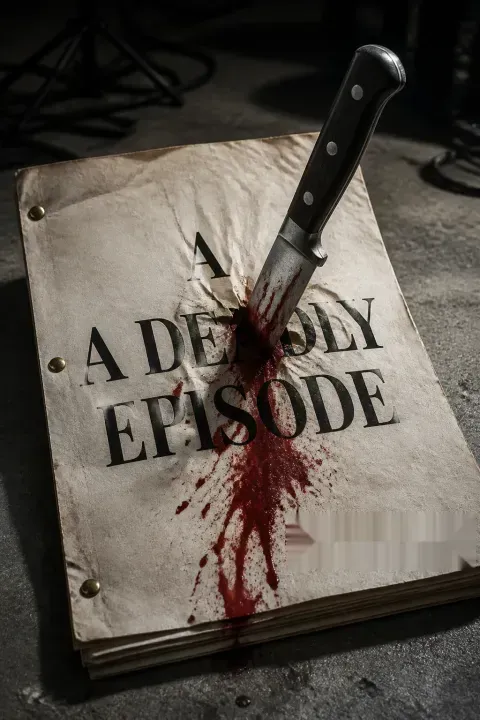
A Deadly Episode operates as a triple-layered investigation: a murder on a film set, a decade-old killing in Yorkshire, and an unauthorized biography of the detective himself. The novel's structural brilliance lies in making these layers interdependent, so that solving one requires solving all three. The metafictional frame, Anthony Horowitz2 writing about Anthony Horowitz2 writing about Daniel Hawthorne,1 is not mere cleverness but a sustained meditation on how stories are constructed and who controls the narrative. Hawthorne's1 revelation that he has been hacking Anthony's2 iPad collapses the final boundary between subject and author: the detective1 has been editing his own portrayal all along, correcting mistakes, inserting clues, managing his image. This is the story's deepest truth: everyone in it is performing, from Caine's3 vegan persona to Harry Morgan's12 false confession to Deborah Morgan's4 years of displaced blame. Performance is not deception but survival. The novel also functions as a quiet critique of the true-crime genre. Hawthorne's1 involvement in the Foss Hall case produced a legally correct but morally catastrophic result, proving that solving a crime and delivering justice are not the same thing. Harry Morgan's12 self-sacrifice, meticulously engineered to satisfy police expectations of how a murderer should behave, exposes the formulaic nature of criminal investigation itself: detectives look for patterns, and a good enough fiction will satisfy them. The book's most unsettling implication is that Hawthorne1 knows all of this. His hesitation when asked if he ever arrested the wrong man is not guilt but something more complex: the recognition that his entire career rests on a case that was, in the deepest sense, unsolved. Deborah Morgan's4 final line, crediting Harry12 with the last laugh, grants a dead man victory over a living detective,1 a reversal of the genre's fundamental premise. The truth, in this world, does not always win; it just sometimes gets written down.
Review Summary
A Deadly Episode receives mostly positive reviews, with an overall rating of 4.14/5. Fans praise the witty meta-fictional premise — a murder occurring on the film set adapting the series' first book — and the sharp, humorous dynamic between Hawthorne and Horowitz. Many highlight this as Hawthorne's most personal case yet, offering glimpses into his mysterious past. Common criticisms include a slow opening, disjointed pacing, and an occasionally unconvincing resolution. Despite mixed feelings about the plot, most readers remain devoted to the series and eagerly anticipate future instalments.
People Also Read

Characters
Daniel Hawthorne
Brilliant, secretive ex-detectiveA former Metropolitan Police detective who now works as a private consultant, Hawthorne is the inscrutable center around which Anthony's2 books revolve. He wears only black suits and white shirts, smokes constantly, drinks black coffee, and never eats in public. His deductive powers border on supernatural, but his interpersonal skills are punishingly direct. Beneath the abrasive surface lies a man shaped by childhood trauma he refuses to discuss, a childhood connected to a burned-down school in Yorkshire and a powerful intelligence agency. He is separated from his wife and maintains a distant relationship with his son. His greatest vulnerability is self-doubt about a case he never fully believed he solved correctly.
Anthony Horowitz
Narrator, writer, and reluctant sidekickThe author writes himself into his own detective series as Hawthorne's1 chronicler and fifty-fifty profit-sharer. He is perpetually five steps behind Hawthorne's1 reasoning, frequently wrong in his deductions, and honest enough to document his own mistakes. His motivations are mixed: genuine admiration for Hawthorne1, professional ambition, and a frustrated desire to understand the man he has spent years writing about. He resents how the film adaptation distorts his work yet craves its validation. His secret trip to Reeth, undertaken behind Hawthorne's1 back, reveals his deep investment in their relationship even as it violates Hawthorne's1 carefully guarded privacy.
David Caine
Murdered actor and secret hypocriteCast to play Hawthorne1 in the film adaptation, Caine is a rising star with piercing blue eyes and a BAFTA nomination. He founded Last Gasp, an environmental protest group, and converted Shanika Harris8 to veganism and activism. Beneath the charismatic surface, he is pathologically competitive, sexually manipulative, and consumed by jealousy toward Ralph Seymour5, whose career once eclipsed his own. His public veganism masks private indulgence: he eats steak, flies private jets, and uses activism as a brand rather than a conviction. His cruelty is precise and personal, as demonstrated when he weaponized Ralph's5 peanut allergy to destroy him at the BAFTAs.
Deborah Morgan
Grieving widow turned avengerThe barmaid at The Battle pub in Hastings, Deborah wears bright clothes and costume jewelry that fail to conceal decades of accumulated sorrow. Her husband Harry12 died by suicide in prison after being convicted of a murder she insists he didn't commit. Her autistic daughter Jenny died recently of epilepsy. Deborah has blamed Hawthorne1 for years, directing her grief into a narrative of persecution. When she discovers the truth about David Caine3, the eco-activist whose protest prevented her final visit to Harry12, her long-suppressed rage finds a target she can finally reach.
Ralph Seymour
Actor destroyed by public humiliationOnce a rising star tipped to be the next James Bond, Seymour won a BAFTA for The Hateful Eight but collapsed on stage in front of two thousand people, vomiting and soiling himself. The moment destroyed his career, his marriage, and his sense of self. He spent years in exile in New Zealand, working as a groundskeeper at a remote fjord. His return to play Anthony2 in the film is a desperate bid for redemption. He studied Anthony2 obsessively, reading all his books and requesting to meet his family. Beneath his ruined exterior, he remains a talented actor, but the trauma of his BAFTA night has hollowed him out, leaving him vulnerable to manipulation by the man who caused it3.
Teresa de León
Financially desperate film producerCEO of Dandelion Productions, named after her father (Don de León), a wealthy Mexican businessman. She came to England after her parents' divorce and built her company with her father's money. With her father recently dead and her stepmother blocking promised funds, she is facing potential bankruptcy. Her film The Word is Murder is over budget, behind schedule, and hemorrhaging goodwill. She needed the insurance payout from Caine's3 death, giving her a powerful financial motive. Despite her glamour, she moves through the story like someone perpetually on the verge of collapse, her emotional reserves depleted by grief and stress.
Cy Truman
Pretentious director seduced and discardedThe director of The Word is Murder and previously The Point of It All, Cy dresses entirely in black with a signature silk scarf and speaks in rehearsed pronouncements about cinema as art. He was in love with David Caine3 from their first film together, and Caine3 exploited that attraction to extract confidential BAFTA jury information. Their one-night stand was a tactical maneuver by Caine3, who discarded Cy immediately afterward. He voted for Ralph Seymour5 to win the award and told Caine3 the truth, unwittingly enabling the sabotage. His artistic pretensions mask a man still nursing the wound of being used by someone he genuinely desired.
Shanika Harris
Screenwriter and eco-activist in love with a lieThe screenwriter adapting The Word is Murder, Shanika met David Caine3 at university and joined his activist group Last Gasp. He converted her to veganism, shaped her politics, and became the love of her life. They had a child together, Forrest, but are no longer a couple. Her screenplay smuggles environmental themes into the murder mystery, and she defends Caine's3 proposed dream-sequence additions despite Cy Truman's7 resistance. Her devotion to Caine3 has outlasted their relationship, making her blind to his cruelties. When she finally learns he was a hypocrite, the revelation shatters the foundation on which she built her adult identity.
James Aubrey
Fired agent caught in a cover-upDavid Caine's3 talent agent for ten years, Aubrey presents himself as successful but wears a fake Patek Philippe and drives himself into debt maintaining appearances. Caine3 fired him the night before the murder, and Aubrey's drunken text messages betray his desperation. He blackmailed Cy Truman7 into casting Caine3 by threatening to expose the BAFTA confidentiality breach. On the day of the murder, he visited Caine's3 Winnebago for one last appeal and found the body. He fled in panic, stepped in blood, then tried to hide his expensive trainers through a hotel laundry scheme. His cowardice makes him look guilty, but he is merely pathetic.
Izzy Mays
Fired runner whose photo exposed a secretA young, ginger-haired runner on her first film job, Izzy was living her dream until David Caine3 complained about a photograph her friend took of him at The Aviator pub. Despite the photo being harmless, Caine3 insisted she be fired. She was packing to return to her parents in Southampton when Caine3 was murdered. She discovered the body when she went to ask if he wanted coffee. Her police record, an aggravated burglary from her teens when she carried a knife during a drug-fueled break-in, makes her an unlikely but viable suspect. She is young, resilient, and already planning her next move into directing.
DSI Sarah Milnes
Cheerful, competent lead investigatorThe detective superintendent assigned to Caine's3 murder, Milnes is refreshingly free of the hostility Hawthorne1 usually encounters from police. She wears colorful dresses, drives terribly, and admits openly that the case is beyond her experience. A single mother with a five-year-old son, she is the daughter of a chief constable and a criminology professor. She welcomes Hawthorne's1 assistance without territorial resentment and shares information freely. Her warmth toward Hawthorne1 leads Anthony2 to mistakenly assume a romantic involvement, a misreading that reveals more about Anthony's2 possessiveness regarding his detective than about Milnes herself.
Harry Morgan
Dead father who sacrificed everythingA former soldier who worked as chauffeur and handyman at Foss Hall, Harry was a gentle, churchgoing man who loved his autistic daughter Jenny and his wife Deborah4. When Jenny killed the estate manager who had shot her dog, Harry orchestrated an elaborate cover-up: he hid the body, then later exhumed it, planted his own fingerprints on the murder weapon, staged a fake blackmail motive, and confessed to a crime he didn't commit. His goal was to protect Jenny and, when Rupert Ratcliffe became a suspect, to save the family he served. He hanged himself in Manchester Prison after Deborah4 was unable to visit him, blocked by Caine's3 protest.
Dr. Morton
Shadowy puppet master of Hawthorne's lifeThe elderly founder of Fenchurch International, a security and intelligence agency that employs Hawthorne1, provides his London flat, and seems to own vast quantities of surveillance data. Morton placed the ten-year-old Hawthorne1 with the Ratcliffe family at Foss Hall after whatever happened at St Edwin's School. He threatens Anthony2 with comprehensive exposure of his digital life to stop him investigating Hawthorne's1 past. His power is quiet and absolute, his manner grandfatherly, his capacity for harm implicit in every polite sentence.
DC Joe Fuller
Diligent and cheerful assistant detectiveSarah Milnes's11 detective constable, Fuller is young, curly-haired, and disarmingly casual. He wears crumpled suits with white socks and crooked ties. His competence surprises Hawthorne1, who is accustomed to police resentment. Fuller provides the forensic details of the crime scene with enthusiasm, including the precise time of death and the make of the murder weapon. His request for a biscuit during a murder interrogation captures his peculiar blend of professionalism and informality.
Hilda Starke
Anthony and Hawthorne's shared agentAnthony's2 literary agent, who initially opposed his fifty-fifty profit split with Hawthorne1 but was charmed into acceptance after meeting the detective. She negotiated the Dandelion Productions deal without consulting Anthony2 on key points, including hiring another writer and giving Hawthorne1 a consultancy role. She is pragmatic, unsentimental, and far more interested in Hawthorne1 than in her longtime client.
Plot Devices
The Syokami Steak Knife
Murder weapon that exposes hypocrisyA Japanese knife with a curved, serrated, Damascus-patterned blade, part of a high-end table service. The same knife appears in two critical places: on David Caine's3 table in the photograph taken at The Aviator pub, and embedded in Caine's3 neck in his Winnebago. Because steak knives are used for eating meat, the knife provides the first visual evidence that Caine3, a vocal vegan activist, was secretly eating steak. The killer deliberately chose this weapon to make a symbolic point about Caine's3 betrayal of his stated principles. The matching knives at The Battle and The Aviator, both owned by the same pub group, connect Deborah Morgan's4 workplace to both the victim and the murder.
The Aviator Photograph
Image that reveals the victim's secret lifeTaken by Izzy Mays's10 friend Rana at The Aviator pub near Lydd Airport, the photograph shows David Caine3 in a baseball cap and dark glasses, sitting at a table with a notepad, a half-eaten meal, and a serrated steak knife. Caine's3 furious reaction to being photographed, which got Izzy10 fired, was disproportionate to the offense and alerted Hawthorne1 that the image captured something Caine3 desperately wanted hidden. The pub's location next to a private airport and its aviation-themed decor confirmed that Caine3 flew private jets, another contradiction of his environmental activism. The photograph circulated among the cast at The Battle on the night before the murder, reaching both Shanika Harris8 and Deborah Morgan4.
The Nurofen Capsule
Concealed allergen that destroyed a careerBefore the BAFTA ceremony, David Caine3 offered Ralph Seymour5 a Nurofen capsule for his nervous headache. Caine3 had emptied the capsule, ground peanuts into powder, and resealed it. Ralph5, who had a severe nut allergy, took it without suspicion. The allergic reaction, building slowly, produced exactly the symptoms of extreme nerves that Ralph5 attributed to his anxiety. When he reached the stage to accept his award, the reaction peaked: projectile vomiting, loss of bowel control, and total humiliation. The sabotage was virtually undetectable because both men took capsules from the same packet, and Caine's3 appeared to be an identical Nurofen.
The TomTom Satnav
Navigation device used to fake a trail of evidenceAn early portable GPS unit belonging to Rupert Ratcliffe's VW hatchback. After his daughter killed McClintock, Harry Morgan12 used Rupert's car to transport the body but deliberately programmed the TomTom with the burial site address, knowing the device would retain the location in its history. This created a digital trail for Hawthorne1 to follow, making it appear that Rupert had driven to Whashton Wood. The device was the key to Hawthorne's1 initial 'solution,' but its very convenience became, in retrospect, a clue that the evidence had been planted: Harry12 knew the wood intimately and wouldn't have needed satnav to find it.
Hawthorne's Name on the Winnebago
Red herring suggesting a different targetFilm sets conventionally label actors' trailers with character names rather than real names to protect privacy. The Winnebago where Caine3 was murdered had HAWTHORNE on the door instead of DAVID CAINE. When Anthony2 noticed this, he theorized the killer might have been targeting Hawthorne1 himself, mistaking Caine3 for the detective. This possibility led directly to Deborah Morgan4, who had reason to hate Hawthorne1 for his role in her husband's conviction. The name became a misdirection that served to introduce the Foss Hall backstory while obscuring the killer's true motive, which was far more personal than a case of mistaken identity.
Hawthorne & Horowitz Series
About the Author
Other books by Anthony Horowitz




Download PDF
Download EPUB
.epub digital book format is ideal for reading ebooks on phones, tablets, and e-readers.








































