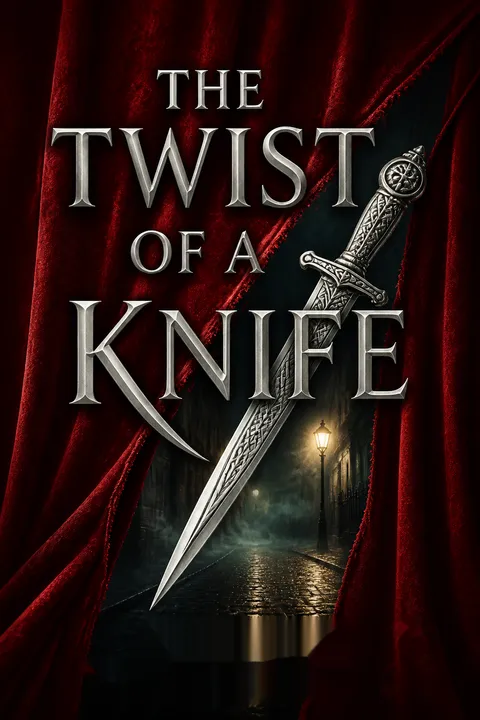

Plot Summary
Broken Stage, Broken Trust
Anthony Horowitz, the author and narrator, marks the end of a creative partnership with private detective Daniel Hawthorne, intending to close the chapter on their real-life crime-solving adventures. Their relationship, always fraught with ambiguity, is punctuated by invisible walls—Hawthorne's secrecy, Horowitz's frustration at being unable to truly know or write Hawthorne fully. The scene shifts to the opening night of Horowitz's play "Mindgame," a professional triumph shadowed by tension and self-doubt. The glitter of theatre collides with uncertainty about purpose, friendship, and future. Just as Horowitz resigns himself to moving on, both from Hawthorne and his own insecurities, the stage is set inadvertently for tragedy: the bright spotlight now illuminates lurking dangers he had not anticipated.
The Bad Review's Sting
The first night of the much-anticipated play erupts with backstage tension and anxious energy, the creative team teetering between hope and dread as critics file in. When the caustic reviewer Harriet Throsby publishes a vicious and personal critique, the fragile bonds among the cast and crew shatter instantly. Horowitz and his colleagues reel from the humiliation and doom-laden certainty that their dreams have been dashed. Hurt turns to outrage in the green room, as Throsby's cutting words ignite anger, self-blame, and threats. The cast, crew, and production team swap blame and accusations, and the seeds of something much darker—vengeance—are sown in the aftermath of artistic failure.
A Night of Suspects
The after-party, meant for celebration, becomes a petri dish of jealousy, resentments, and hidden grievances. The critic Throsby, surprisingly present, moves through the crowd like a Queen of Spite, feeling both feared and inexplicably drawn to the discomfort she causes. Subtle glances and sharp exchanges swirl between the actors—Jordan's method-fueled intensity, Tirian's budding stardom, Sky's inscrutability. Producer Ahmet, his optimism crumbling, struggles to rally the team. That night, every key player gets entangled in petty disputes—some trivial, some with the weight of old betrayals. Unseen, the party's host leaves with an unease: seven suspects, each with a knife's worth of bitterness.
The Murder Weapon's Trail
Following the disastrous party, an ornate theatrical dagger—presented to the cast as a first-night memento—emerges as a deadly object. When news arrives that Harriet Throsby is found stabbed to death in her home, the cast's joking, drunken threats the night before are cast in sinister relief. Police focus on Horowitz: his dagger is missing, his fingerprints are discovered, and circumstantial evidence mounts swiftly. The weapon links cast, motive, and opportunity. As police sift the debris of the party, the critical detail is not simply who owned the dagger, but who manipulated the chaos to frame someone else, turning the drama of the stage into a real murder mystery.
Framed in the Spotlight
Panic descends as the police spotlight turns on Horowitz. Detective Grunshaw and her aide Mills interrogate him with increasing suspicion, exposing every inconsistency and seemingly damning detail. The missing dagger, his print and hair found on the body, his quarrels with Throsby, and the cast's partial statements all cast him deeper into the role of the accused. Friends distance themselves, and his carefully managed public persona is threatened with ruin. Horowitz is arrested, stripped of his agency, and left doubting the loyalty of those around him. The stagecraft of fiction collides violently with the machinery of legal accusation, leaving him vulnerable, bewildered, and desperate.
Under Police Suspicion
Locked away, Horowitz faces the dehumanizing grind of the police system—chains of questioning, deprivation, and procedures that assume guilt over innocence. Suspected of stabbing for revenge, his fate hinges on exoneration before the damning DNA evidence is processed. Hawthorne is only tangentially responsive, adding to Anthony's sense of abandonment. As police press closer, Horowitz's view of his own life—his reputation, family, and creative future—becomes one of helpless limbo. The privileges of an author mean nothing in a cell. Fear, paranoia, and isolation gnaw at his sense of identity as he struggles to imagine who might want to see him destroyed.
Desperation and Doubt
Released temporarily due to a police computer snafu, Horowitz leans on Hawthorne, who agrees—reluctantly—to try and solve the case before police evidence seals Horowitz's fate. Old wounds deepen: does Hawthorne truly believe in his friend's innocence, or even value their partnership at all? The author is forced to dig into the hearts and histories of his social and theatrical circle, suspecting that any of them could have framed him. The real murderer's motives blur in a crowd of plausible enemies, personal vendettas, and secret relationships, building the tension of not just a whodunit, but a "who hated me enough to do it?"
Hawthorne's Reluctant Return
Hawthorne, enigmatic as ever, agrees to help—his pride, professional curiosity, and complicated affection for Horowitz all motivating factors. Their joint investigation leads them through London's theatre world and the faded glories of their own partnership. Each interview with suspects—Jordan, Sky, Tirian, Ahmet, Maureen, director Ewan, and others—peels back layers of lies, old feuds, and hidden traumas. Hawthorne discards the police's "obvious" answers, refusing to trust appearances. The duo interrogate, observe, and analyze, coming to believe that the true motive might lie not with the present cast, but in ancient wounds—crimes and betrayals far predating the events of the play.
The Seeds of Old Crimes
The investigation leads out of the theatre and into the past—decades-old deaths and traumas. An old case in a Wiltshire village, exposed in a controversial book by Harriet, suggests a pattern of destruction linked to her writing. The Longhursts, a powerful family destroyed by both the law and the court of public opinion, once employed many of the current suspects or their relations. Connections wind between past accidents, ruined careers, and broken families. The idea emerges that the root of Throsby's murder is not artistic criticism, but a twisted act of historical revenge—one that implicates not only the suspects, but the fragile illusions of justice itself.
Past Shadows, Present Lies
Horowitz and Hawthorne pursue leads through interviews with survivors of old scandals—disgraced headmasters, haunted widows, embittered ex-neighbors—and unearth secrets that recast the roles of "victim" and "villain." Betrayals, perjuries, and conspiracies—especially involving rich parents, lost children, and compromised witnesses—suggest that many lives were irreparably altered by Throsby's words. Her reputation for warping narratives and hurting innocent people emerges as a possible motive for her murder. But Horowitz, still at the center of suspicion, questions whether the tangle of motives and lies is merely obfuscation or the true map to the killer's heart.
Lovers and Lies
The investigation exposes love affairs and hidden relationships whose secrecy (or public shame) binds the suspects in relying on lies—some white, some deadly. Sky and Olivia's secret romance, Maureen's loyalty to Ahmet, and Jordan's fragile marriage bubble to the surface. The price of hiding one's true self, whether due to sexual orientation, status, or shame about the past, proves to be incalculably high. These personal bonds, and the lengths to which people go to protect or obscure them, become interwoven into the investigation. It is in these intimate entanglements that the seeds of both vengeance and compassion are planted.
Knives on the Table
Hawthorne and Horowitz stage a series of confrontations, gathering every key player at the scene of the crime in classic whodunit fashion. Each person is forced to account for their movements, confess pent-up resentment, and attempt to deflect blame onto others—often the author himself. The focus shifts from evidence to psychology, exposing the fragile egos and the deep wounds everyone shares. Hawthorne notes that the attempts to frame Anthony relied not on brilliant planning, but on a desperate need to redirect suspicion—revealing just how dangerous fear, envy, and herd mentality can be when passions run high.
Final Act Unveiled
In a tense gathering at the Vaudeville Theatre, Hawthorne uses classic detective theatrics to reconstruct the murder step-by-step, tying strands of forensic evidence, testimony, and psychological profiles together. The truth emerges: the real killer is not the obvious suspect, nor anyone acting out of a simple desire for revenge over a bad review. Instead, the murderer's motives are traced back to deep trauma—stemming from old crimes in a rural village, warped identities, and lives ruined by injustice and abandonment. The final reveal is as much a study in the shadow of the past as it is in the act of murder—a cathartic, painful closure for all.
Justice Behind the Curtain
With the murderer unmasked, the remaining characters grapple with the aftermath—grief, guilt, relief, and unresolved questions. The justice system grinds back into motion, but emotional resolution is far more difficult. Relationships remain fractured, the theatre lies dark, and careers are marked (or ended) by the stigma of murder. Horowitz, exonerated, is left to mull the dangers of narrative—who gets to tell the story, and how the stories we tell shape—and sometimes warp—our fates. Hawthorne, as mysterious at the end as at the beginning, slips away, leaving questions about his own secrets and intentions unanswered.
Wounds That Don't Heal
Anthony tries to return to "normal life," but the recent trauma lingers. Friendships are tested; trust has been damaged. He reflects on the fates of those scarred by injustice, especially the murderer whose life was shaped by past cruelty. Even as the wheels of the law move forward, the author sees how deep wounds—family secrets, miscarriages of justice, homophobia, the pain of public shaming—do not simply heal. The theatre, a place of make-believe, is left haunted by truths too complex for easy endings.
Signing Away the Future
In the aftermath, Anthony and Hawthorne face fresh choices: to part ways at last, or exploit their troubled bond for more books. Their agent, practical and opportunistic, pressures them to renew their creative contract—"real life" tragedy translated into marketable fiction. Despite Anthony's ambivalence, he agrees, ink drying on an agreement for more Hawthorne mysteries. The cycle of adaptation, exploitation, and uneasy alliance continues. Reality and narrative, cynicism and hope, become inseparable: the author's fate is to transform even his own wounds, again and again, into story.
Analysis
A Mirror for Modern Anxiety and Storytelling's Dangers"The Twist of a Knife" is both an intricate murder mystery and an interrogation of storytelling itself: who gets to create meaning, at what cost, and to whom? By placing the author at the mercy of police, critics, and the machinery of his own narrative, Horowitz sharply critiques the perils of exposure in the Internet age—the way reputations are destroyed or remade through words. At its core, the novel examines the corrosive power of public criticism, the psychic wounds of childhood trauma, and the impossibility of escaping the consequences of old injustices. The theatre serves as a symbol for performance in all its guises—legal, personal, and artistic. Even as the case is "solved," wounds remain and the lines between "actor" and "author," performance and reality, storytelling and manipulation, are ever more blurred. Ultimately, the book argues that none of us can fully rewrite our own story: the past is both enemy and muse, and in the retelling, every twist of the knife wounds the teller, too.
Review Summary
The Twist of a Knife receives mostly positive reviews, averaging 4.09/5. Readers praise the clever metafiction premise, witty dialogue, and Christie-esque mystery structure, with Horowitz becoming the prime murder suspect after a theater critic is killed. Many appreciate learning more about the enigmatic Hawthorne and enjoy the humorous dynamic between the two leads. Critics note the slow opening third and some implausible plot elements. The audiobook narration by Rory Kinnear earns consistent praise. Most recommend reading the series in order.
People Also Read






Characters
Anthony Horowitz
Serving as both narrator and character, Anthony is a successful novelist and playwright whose penchant for self-doubt and desire to "make sense" of Hawthorne's mysteries often lands him in trouble. His creative ambition is thwarted by critical failure and by his implacable entanglement in real crime. Framed for a murder he did not commit, his guilt, fear, and alienation expose his vulnerabilities, especially as friends and colleagues turn on him. Driven to clear his name, Anthony's journey highlights how stories can save or damn us, and how easily one's life can be rewritten—by others or by oneself. His relationship with Hawthorne swings between begrudging admiration and profound frustration, making him both unreliable witness and emotional core.
Daniel Hawthorne
A private investigator whose opaque past, ethical flexibility, and keen psychological insight make him both a brilliant detective and a frustrating confidante. Hawthorne's private trauma (including being adopted after parental loss) haunts his refusal to open up, but his loyalty (if hard-won) is real. He functions as both savior and tormentor for Anthony; the latter's limitations often amuse and exasperate him. Hawthorne's technique blends classic deduction with psychological understanding—his own wounds granting him sensitivity to the invisible histories of others. But his manipulation of both facts and his "sidekick" raise questions about whether his relationships are ever truly genuine.
Harriet Throsby
Throsby is the archetypal "villainous" reviewer—brilliant, venomous, uncaring of whom she wounds in print or in person. Her past as a crime journalist, her love affairs, and her penchant for gatecrashing make her a figure everyone both fears and loathes. Yet the murder investigation reveals that her destruction of others' lives (through cruel journalism and self-serving books) has collateral costs she never anticipated. Her legacy is a trail of broken careers and ruined reputations, and in the end, her death invites both catharsis and despair as her true impact is laid bare.
Jordan Williams
A star actor juggling his American Lakota heritage, past trauma, method-driven violence, and fragile relationships. His passion and volatility inspire both admiration and fear: he can be generous and charismatic, yet his anger and physicality make him a key suspect. His marriage troubles and reliance on performing as identity echo deeper issues of belonging and self-worth. Despite past wounds, Jordan's loyalty (to friends and art) is genuine, and his distress at his own violent outbursts signals his dissonance between roles played and real life—a crucial motif in discerning the story's truth.
Tirian Kirke / Wayne Howard
A young star with a carefully constructed identity, Tirian is the product of both deep personal trauma and institutional "protection." Having been involved in another crime as a child, he was shaped by institutionalization, mistaken justice, and forced reinvention. His efforts to distance himself from his own tragic past are undermined by his fear that his true identity will destroy his career. Torn between shame, fear, and a desperate need for reinvention, his psychological unravelling is central to the novel's resolution—demonstrating what happens when unresolved trauma intersects with opportunity and pressure.
Sky Palmer
Sky is both enigmatic and emotionally complex, at once open-hearted (in her romance with Olivia) and fiercely protective of her privacy. Her privilege (as the daughter of a famous musician) belies her feelings of insecurity and difference. Drawn into the murder mystery by her proximity to both the victim and her partner, Sky is the story's most ambiguous presence—sometimes a confidante, sometimes a wild card. She illustrates the difficulty of living truthfully in a world that punishes deviation or transparency, and her choices highlight how self-preservation can feed mistaken suspicion.
Ahmet Yurdakul
Ahmet's immigrant optimism and love for theatre are slowly ground down by critical attack, financial disaster, and professional betrayal. His combination of shrewd business instincts and naiveté (especially about Western artistic politics) make him alternately vulnerable and suspicious. His failure is palpable, marked by broken dreams and an unshakeable sense of being sabotaged, whether by critics, fate, or friends. His relationship with his assistant Maureen serves as both anchor and blind spot—together, they're the story's emotional "parents," powerless to protect their "family" from harm.
Maureen Bates
Maureen, devoted to Ahmet and emotionally attached to actors (notably Jordan), embodies loyalty and longing for meaning. Her personal loneliness and spiritual kinship to the isolated and misunderstood fuel her willingness to lie or bend the truth for those she loves—sometimes with disastrous results. Her judgment and sense of justice are shaped by emotional needs as much as rationality, and her role as protector is ultimately compromised by her credulity.
Arthur Throsby
Arthur is a man long diminished by his wife's overbearing personality and emotional abuse. His grief at Harriet's death is mixed with relief and confusion; his apparent lack of agony raises suspicion, but ultimately reflects the psychological toll of living in a state of continual criticism. His quiet resilience (and secret happiness, once freed) hints at the persistent effects of emotional trauma and the ambiguous liberation that comes with the loss of a toxic relationship.
Olivia Throsby
Olivia's emotional state swings between numbness and open rebellion, having been shaped by a lifetime of her mother's hostility and judgment, especially regarding her sexuality. Her secret romance with Sky and her willingness to accuse others to deflect suspicion are both defense mechanisms and acts of self-assertion. Olivia is at once a victim, an accomplice, and a survivor—inheriting and transforming the legacy of family pain.
Plot Devices
Meta-narrative and Author as Character
Central to the novel is the conceit of Anthony Horowitz as both narrator and participant. This metafictional device turns real events into a "whodunit," with the twist of placing the author at risk both creatively and physically. The classic structure of a Golden Age detective novel is both honored and subverted by having the author as potential culprit and unreliable narrator, adding layers of self-awareness and commentary. This blending of reality (author's career) and fiction (murder plot) is heightened by recurrent references to writing, reviews, and adaptation.
Framing and False Evidence
The murder is framed using meticulously planted forensic evidence—specifically, a dagger known to belong to the author, the transfer of hair, fingerprints, and circumstantial connections. The plot turns on the careful use (and misuse) of physical clues to not only implicate the wrong party but to mask the true motive and identity of the killer. The audience and characters alike are repeatedly forced to revise their assumptions as new "red herrings" and incriminating clues emerge.
The Play Within the Book
The internal play "Mindgame" provides not just motive (the critic's review) and setting (chambers of suspicion), but a metafictional echo of the murder plot itself. Themes of illusion, identity swapping, and madness on stage mirror the games being played backstage and in the investigation. The destabilization of reality and performance blurs the distinction between character and actor, innocence and guilt.
Flashbacks and Intercalary Documents
Key chapters detail historical crimes, recreated through interviews, memory, and excerpts (such as the "Bad Boys" book), showing how ripples of old injustices and betrayals poison the present. This temporal layering allows the emotional and factual resonance of "truths" to shift, connecting perpetrators, victims, and bystanders across generations and classes.
Classic Whodunit Structure
The novel uses the venerable detective-story technique of assembling all suspects in a single location, letting the detective reconstruct the crime through rational deduction and public revelation. Self-incriminating testimony and the unmasking of the real killer occur in classic form—but here, the process is further complicated by unreliable witnesses, reluctant allies, and the ambiguous role of the author-detective.
Themes of Identity and Reinvention
Many central figures have reinvented themselves—sometimes as a defense against trauma, sometimes as a cover for guilt. The plot explores how people try to escape their histories, yet remain inescapably marked by them. Whether by changing names, careers, or public personas, each character's struggle with their own story becomes a crucial plot engine.
Hawthorne & Horowitz Series
About the Author
Other books by Anthony Horowitz





Download PDF
Download EPUB
.epub digital book format is ideal for reading ebooks on phones, tablets, and e-readers.








































