
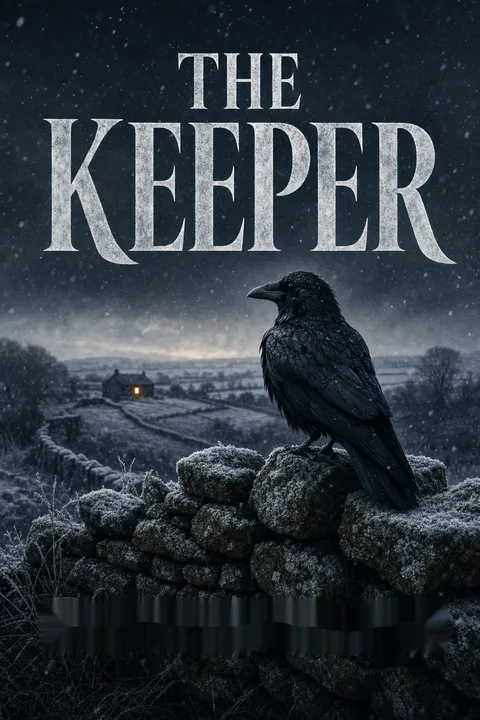


Plot Summary
The Girl on the Doorstep
Cal Hooper,1 a retired Chicago detective rebuilding his life as a woodworker in rural western Ireland, glimpses Rachel Holohan7 outside Noreen's8 shop — drifting in the November mist beside her boyfriend Eugene Moynihan,6 her face turned from his.
That evening Rachel7 appears at the door of Lena Dunne,2 Cal's1 fiancée, with a sick cat as pretext and desperation underneath. She's crying, asking whether love is worth losing your friends, whether standing by a man means standing alone. Lena,2 who has spent thirty years walling Ardnakelty out of her inner life, offers nothing back.
Rachel7 leaves in tears. In the pub, meanwhile, old-timer Francie Gannon14 mutters that Tommy Moynihan5 — Eugene's6 father, the townland's richest man — has been buying up farmland for reasons no one can explain. Cal's1 cop instinct twitches at something he can't name.
White Shape in Black Water
Mart Lavin,4 Cal's1 wily elderly neighbor and the townland's unofficial strategist, calls at 3:40 AM: Rachel7 never came home. Cal1 and Trey3 — the sixteen-year-old he's been raising alongside her mother9 — join the search in freezing dark, sweeping flashlights through riverbank undergrowth while distant calls carry Rachel's7 name across the fields.
Upstream, Francie14 spots a white shape snagged in the current. Cal1 braces against a willow trunk and holds Francie's14 wrist while Francie14 wades in. They drag Rachel7 onto the bank.
Cal1 starts compressions, feeling ribs crack under his palms, but she's been gone too long. Trey3 stands above them training the flashlights, silent. Walking home through the gray dawn, she asks whether Eugene6 killed Rachel.7 Cal1 says mostly, when someone dies young, nobody killed them.
The Song That Clears the Room
The townland lies under silence heavier than the rain. No one's been talking to Cal;1 the conversations are happening without him. When Tommy5 and Eugene6 walk into Seán Óg's pub one evening, Francie14 leans back and starts singing an old ballad about a girl who hangs herself because her butcher-boy lover takes another woman.
One by one, every man in the room picks up the hum — a low drone swelling beneath the melody. Cal1 joins in. Eugene6 cracks first, storming out red-faced.
Tommy5 follows with wounded dignity, leaving money on the table for an untouched pint. The verdict is clear: Ardnakelty holds Eugene6 responsible for Rachel's7 death. Mart's4 circle of regulars — Senan,10 Bobby,11 Francie,14 and lanky P.J.15 — close ranks. Cal1 is inside this now, whether he chose it or not.
Tommy Moynihan Comes Calling
Tommy's5 black Range Rover growls into Cal's1 yard. In his beige jacket and frozen silver hair, Tommy5 is all magnanimity: his heartbroken son needs closure, and Cal1 — a real detective — could chat with neighbors, trace rumors, discover why Rachel7 ended things.
Cal,1 playing the dumb-redneck American, refuses. Tommy's5 eyes flash with something savage before he covers it with a sigh. On his way out, he mentions a friend at the Revenue who could help Cal1 go legit with his unlicensed woodworking — or, if that's not possible, well.
The threat hangs. On the roof later, replacing slates, Cal1 watches rooks methodically dismantle Tommy's5 windshield wiper. Tommy5 doesn't just want answers about Rachel.7 He wants to know whether she talked before she died — and to whom.
Deeper Than Drowning
Trey3 arrives with news from a friend's cousin who's a Guard: Rachel7 drank antifreeze before the river. The medical examiner ruled suicide. This shifts everything — antifreeze takes hours to kill, is treatable if caught in time. Why choose something that slow?
Trey3 doesn't buy suicide. Meanwhile, Mart4 pulls Cal1 aside during a wood-chopping session to map the hidden power structure Cal1 never saw. Tommy5 doesn't just have money; he has favors banked with Guards, inspectors, politicians.
Anyone who crosses him gets their license pulled, their farm inspected to death. Mart4 tells Cal1 about Tommy's5 father, the Boss Moynihan, who once forced a woman while the whole townland looked away. Something's coming, Mart4 says. He can feel it the way some men feel weather in their bones.
Five Teenagers Bag a Thug
Someone's been terrorizing the Reddy house for weeks — rocks at the windows, pig manure on the door, a headless fox on the step. Trey3 and her friends, including her football teammate Kate,13 spend nights staking out the yard with garden wire.
They tackle the intruder face-down: Donie McGrath, the town lowlife, complete with a flick knife in his pocket. Cal1 interrogates him and gets the truth — Eugene6 hired Donie on Tommy's5 orders. The goal isn't revenge; Tommy5 wants the Reddys scared out so the landlord will sell him the field.
Cal1 dumps Donie, trussed and furious, on Tommy's5 doorstep at two in the morning. Trey3 sneaks close enough to overhear Tommy5 berating Donie for failing: the goal was eviction, not just harassment. The fight has come to Cal's1 family.
Blackberry Jam Intelligence
Armed with twelve jars of homemade blackberry jam — the currency of innocent drop-ins — Lena2 begins a quiet circuit of townland women she hasn't visited in years. She tracks the rumor that Rachel7 was cheating on Eugene6 through a chain of gossips until it dead-ends at Clodagh Moynihan, Tommy's5 wife, who planted the story deliberately.
Separately, she visits Sheila Reddy,9 Trey's3 tough, clear-eyed mother, and discovers that Rachel7 came to Sheila9 the same evening she visited Lena2 — begging for advice on how to stop a man from doing terrible things, though she wouldn't say what.
Sheila9 told her sometimes there's nothing to be done. Lena2 drives home with the windows open, sick of voices, certain the Moynihans had a hand in Rachel's7 death beyond heartbreak. She decides she can't tell Cal.1 He'd bring it straight to Mart.4
The Matriarch's Price
Dymphna Duggan,12 Noreen's8 immense and all-seeing mother-in-law, has been beckoning Lena2 from her window. Now Lena2 goes, bringing jam. The old woman sits enthroned in an overheated room of porcelain, gold jewelry, and cigarette smoke — Ardnakelty's deepest intelligence broker.
She extracts her price first, probing Lena2 about Sean's death. Then she delivers. Tommy's5 endgame: the factory near Kilhone needs more land. Tommy's5 been buying scattered parcels to sell at enormous markups. With Eugene6 on the county council, he can force compulsory purchase orders on every farm in between.
The townland itself — stone walls, hedgerows, homesteads — would be erased for megafarms and housing estates. Whatever Rachel7 knew, it was this. Mrs. Duggan12 watches Lena's2 face and smiles at the trouble she sees flowering there.
The Threat at the Gate
Tommy's5 Range Rover blocks Lena's2 gate. He stands against her wall, hat tipped back, all avuncular concern. She's been going off-piste, he says gently. Asking questions, calling on people she hasn't seen in years.
His aunt Marie had the same problem once — nothing to keep her mind occupied, poor woman ended up in the mental hospital. Lena2 holds her ground, says she has no questions for him. Tommy5 nods sadly. If she doesn't step back, he'll have to mention his concerns to others. For her own good.
After he drives away, Lena2 sits on her hall floor while the dogs press close, understanding what he's done. Every move she made — the jam visits, the conversations — is now evidence of instability. Anything she reveals will be dismissed as the ravings of a woman losing her mind.
The Straitjacket Tightens
Tommy5 moves on three fronts at once. A housing inspector descends on the Reddys — broken slates, no carbon monoxide monitor, rising damp — threatening their tenancy. Garda Dennis, the friendly local policeman, arrives at Cal's1 door looking miserable: someone reported seeing Cal1 strike Lena2 on the road.
And across the townland, a new story spreads: Cal1 was sleeping with Rachel,7 Lena2 suspected it, and that's why Rachel7 died. Cal1 recognizes the artistry — each strike calibrated just hard enough to sting, just soft enough to deny.
The domestic violence report is a pulled punch, a warning: next time, Tommy5 targets Trey.3 Lena,2 hearing the rumors, withdraws into a silence so deep Cal1 begins losing sight of her. She stops coming for dinner. Her texts go monosyllabic. She feels like she's dissolving.
Fifty Men at the Gate
Trey3 delivers the full story to Cal1 — Mrs. Duggan's12 revelation, the land scheme, everything. Lena2 told her rather than Cal.1 He swallows his hurt and takes it to Mart,4 who spreads the word and builds momentum.
That night, Cal1 joins fifty men walking shoulder to shoulder through the village in homemade balaclavas. They pour through Tommy's5 gates into the blinding security lights and surround his house, stamping and chanting: Hands off our land. The sound shifts, deepens: Out out out out.
A young man picks up a rock; Mart4 catches his arm. For one suspended moment they could storm the place and reduce it to kindling. A distant siren breaks the spell, and the men melt back into darkness. Tommy's5 lights blaze on over an empty garden. He hasn't come outside.
Fists Fly at Seán Óg's
Saturday afternoon, Mart4 stands up in the crowded pub and announces to every drinker present that Tommy Moynihan5 fed Rachel Holohan7 antifreeze and is planning to steal their land. Bernard McHugh, the calm manager at Tommy's5 plant, walks over to argue Tommy's5 side — jobs, progress, hope for young people.
Cal1 cuts the debate short by decking Mouth McHugh, who called Lena2 a poisoner. The brawl swallows the room: tables overturned, pints flying, old F.X. Deery joyfully whacking people with his walking stick. Barty ejects them all.
On the street, bruised and exhilarated, Cal1 outlines a new strategy to Senan,10 Francie,14 P.J.,15 and Bobby:11 go public, accuse Tommy5 openly, and make enough noise that anyone holding information feels safe stepping forward. This direct approach is Cal's1 now.
Gin and an Alibi
Three cars crunch up Lena's2 drive. Sheila,9 Yvonne McCabe, and Julie Quinn come bearing gin, vodka, and chocolate-orange cake. They know what Tommy5 is doing, and they've come armed. All three will testify they were with Lena2 the evening Rachel7 died — a manufactured alibi that removes Tommy's5 scapegoat entirely. Each parked car signals Tommy's5 watchers: this woman is not alone anymore.
Yvonne adds intelligence she's held back for weeks: she saw Rachel7 knocking on the Duggans' door that same evening, when only Mrs. Duggan12 was home. Lena,2 thawed by gin and the unfamiliar shock of women showing up for her, agrees to pass this to Cal.1 Something has shifted. She is not, it turns out, done with this place. She says she'll tell Cal1 what she knows.
A Spade in the Moonlight
Cal1 sets Trey3 and Kate13 to surveil the Moynihan house from a wooded ridge. Meanwhile he intercepts Eugene6 on a back lane and tells him witnesses saw Tommy5 heading for the bridge the night Rachel7 died.
Eugene's6 face freezes in shock, but his lifelong obedience holds — he snaps that Cal1 should stay away. That night, past two AM, Trey3 texts: someone left the Moynihans' back gate, too tall for Clodagh, heading toward Mart's4 land. Carrying something. Another text: they saw his face in his phone light.
It's Tommy.5 What he carries isn't a gun. Cal1 alerts Mart4 immediately. Mart's4 sheepdog Kojak barks into the darkness. But Tommy,5 desperate enough now to do his own dirty work, has come with a spade and the patience to dig where a tractor tire will pass.
The Tractor in the Field
Kojak's howl cuts through the morning air like nothing Cal1 has ever heard — a sound between a death cry and a war cry. He vaults the wall and runs. Mart's4 little red tractor lies on its side in the bottom field, Kojak rigid beside it. Incredibly, Mart4 is conscious and talking.
The boggy ground cushioned the crush, but below the waist he's porridge, held together only by the tractor's weight. He tells Cal1 the hole was dug deliberately, that someone replaced the sod to hide it. He says Cal1 must not waste this.
He asks for whiskey. Cal1 sprints to Mart's4 kitchen, past the breakfast things still on the table, and sprints back. He steadies the bottle while Mart4 drinks. They talk about scald in the sheep and who should take Kojak. Mart4 dies before the ambulance arrives.
Eugene Breaks the Dam
Five men sit in Tommy's5 living room that evening: Cal,1 Senan,10 Francie,14 P.J.,15 and Bobby.11 Cal1 presents the evidence — witnesses at the bridge, photos of the sabotaged hole. Tommy5 bats it all away with practiced ease: rabbit holes, grudges, no proof.
He starts counting to ten. Then the door opens. Eugene,6 who's been listening, tells the room everything: how he told Rachel7 about the land plan, how she begged him to stop it, how Tommy5 went to the bridge to talk to Rachel7 himself.
How Tommy5 came back climbing the walls and later admitted he shut her mouth. How Tommy5 took a spade into the dark the night before Mart4 died. Tommy5 backhands his son across the face. Cal1 steps between them and delivers the terms: dismantle the land scheme, or everything goes to the Guards.
Rachel's Chosen Death
Lena2 returns to Mrs. Duggan12 with the right question at last: what did you and Rachel7 say to each other that night? Mrs. Duggan12 is delighted — she's been waiting weeks for someone clever enough to ask. Rachel7 came desperate for some weapon against Tommy.5
Mrs. Duggan12 told her there was only one thing powerful enough: a death. A good one. Someone young, innocent, beloved. Then she showed Rachel7 where Noreen8 kept the antifreeze. Rachel7 left a note on the bridge for Eugene6 to find — proof of Tommy's plan, meant to give him the courage to defy his father.
But Tommy5 got there first, destroyed the note, and bent the story to his purposes. Lena2 tells Eugene6 the truth. She tells Cal.1 She will not share it with Ardnakelty. Rachel's7 death accomplished what she intended. It belongs to Rachel7 now.
Tacos, Snow, and Beginnings
Early morning, frost glittering across the fields. Cal1 parks at Lena's2 house and sits on her cold step — Bobby's11 advice, of all people. When Lena2 comes out, they talk for the first time in weeks with nothing hidden: his deepening entanglement with Ardnakelty's battles, her withdrawal when Tommy's5 pressure made the air unbreathable, their separate failures to share what they knew.
She'll tell Rachel's7 parents the truth. That evening Trey3 and Kate13 come for dinner — they're officially together now. Cal1 makes tacos. Kojak, Mart's4 old sheepdog who hasn't eaten since his master died, finally takes food from Lena's2 hand.
When Trey3 opens the front door, snow is falling — the first real snow anyone can remember. The four of them stand on the doorstep watching it whiten the fields, while inside the fire burns and the radio plays.
Analysis
Tommy Moynihan5 is not a foreign invader. He is the townland's own creation, nourished on its deference and its silence. The novel's deepest irony is that the same communal reflexes that make Ardnakelty beautiful — loyalty, discretion, collective identity — are precisely what Tommy5 exploits. The men who march on his house at night are fighting not just his greed but the centuries of conditioning that produced both Tommy5 and their inability to confront him sooner.
Rachel Holohan's7 death is the novel's moral earthquake, handled with extraordinary precision. Rachel7 is neither victim nor hero in any simple sense — she is a young woman who understood the weight of what she was doing and did it anyway, not from despair but from a terrible strategic clarity. That Mrs. Duggan,12 the townland's oldest and most calculating inhabitant, essentially prescribes sacrifice to its youngest and most innocent member is French at her most devastating: this is what places do to the people who love them most. The dual narration through Cal1 and Lena2 maps two fundamentally different relationships with belonging. Cal,1 the outsider who chose this place, becomes more deeply enmeshed with each crisis, discovering that community membership is not a subscription he can cancel. Lena,2 the insider who spent thirty years fortifying herself against belonging, finds her walls breached not by enemies but by allies — women who simply show up with gin and manufactured alibis, refusing to let her drown.
French's final snow is earned precisely because it falls on a landscape irrevocably altered — Mart4 dead, Tommy5 broken, Rachel7 mourned, old certainties dissolved. The four people standing on Cal's1 doorstep have not been rescued. They have chosen, again, to remain. Ardnakelty has never stopped requiring that choice be made fresh, and this novel suggests it never will.
Review Summary
Reviews for The Keeper are largely positive, averaging 4.3/5 stars. Readers praise Tana French's atmospheric prose, rich character development, and immersive depiction of the Irish village of Ardnakelty. The slow-burn pacing divides opinion — some find it rewarding, others feel the book is overlong. The relationships between Cal, Lena, and Trey are widely celebrated. Most reviewers recommend reading the trilogy in order. The emotionally resonant ending is frequently highlighted as deeply satisfying, with many expressing sadness at bidding farewell to beloved characters.
People Also Read





Characters
Cal Hooper
Retired detective turned keeperA retired Chicago homicide detective who moved to Ardnakelty seeking peace and found purpose instead. Cal is defined by a compulsive need to fix things—houses, furniture, broken kids, broken situations—which masks a deeper fear of powerlessness. His relationship with Trey3 began when a half-feral twelve-year-old appeared in his yard looking for help; reluctant aid became something like fatherhood. With Lena2, he found companionship built on mutual respect and comfortable distance. Cal's fundamental tension is between his outsider's clarity—he sees this place's power structures without the generations of conditioning that blind locals—and his growing entanglement with the community's obligations. He is a man who left one set of duties only to discover he cannot exist without them.
Lena Dunne
The woman behind the wallsNoreen's8 sister, Cal's1 fiancée, a woman who has spent thirty years constructing elaborate barricades between herself and Ardnakelty. Widowed by Sean Dunne, whose possessive love nearly consumed her, Lena chose Cal1 partly because nothing about him came from this place. She touches the townland at as few points as possible—no WhatsApp groups, no committees, no casual friendships—to prevent it from snuffling through her life and branding her as it pleases. Underneath this fortress runs a fierce love for the landscape itself and for the few she's let inside her walls. Her central psychological conflict is between self-protection and engagement: whether keeping the world out is strength or a different kind of captivity.
Trey Reddy
The wild kid growing rootsSixteen, sharp-edged and wiry, raised half-feral on a mountainside by a negligent mother9 and an absent criminal father. Trey spent childhood as Ardnakelty's enemy—shoplifting, fighting, trusting no one. Cal's1 patient presence taught her that adults could be reliable; now she has friends, a talent for woodworking, and a deepening bond with her football teammate Kate13. But Trey's core architecture remains defensive: she defaults to silence, watches exits, fights before she negotiates. Her desire to stay in Ardnakelty and build a life—rather than fleeing, as everyone expected—represents her most radical act of trust. The question haunting those who love her is whether this place deserves that trust or will crush it.
Mart Lavin
The shrewd farmer-strategistCal's1 neighbor, a wiry old farmer in his sixties with an eccentric hat collection and a genius for indirect communication. Mart is Ardnakelty's unofficial intelligence chief—nothing happens within three townlands that he doesn't analyze, encode, and file for future use. Behind his cheerful banter and elaborate schemes lies a man wrestling with mortality: no children, no heirs, a beloved farm that will outlive him. Mart operates through layers of misdirection, speaking the full Ardnakelty dialect of the unsaid, but he is driven by genuine love for this land and its people. His relationship with Cal1 is his most improbable friendship—built on mutual usefulness, grudging respect, and a growing recognition that they need each other badly.
Tommy Moynihan
The townland's unchallenged bossSilver-haired and sleek, with a ranch house, a Range Rover, and a conservatory, Tommy is the local power broker whose influence runs so deep that people can't distinguish respect from fear. His father, Boss Moynihan, ran the place before him with crueler methods; Tommy refined the family trade into something smoother but no less absolute. His psychology is pure entitlement crystallized into strategy: he genuinely believes his superiority justifies any means. He sees people as instruments—including his own son6—and responds to resistance with methodical, escalating destruction. His blind spot is the assumption that fear will always win, because it always has. He delegates dirty work to minions and distances himself from consequences, maintaining a permanent remove that he considers power.
Eugene Moynihan
The son under Tommy's thumbTommy's5 son, a finance worker in Dublin with a weedy build and a chip on his narrow shoulder. Eugene was raised to inherit his father's kingdom but privately detests the role—he despises the townland's people as yokels while depending on their deference for his identity. His relationship with Rachel7 was the one genuine thing in his carefully managed life, and the knowledge of how events unfolded has left him hollowed out. His defining conflict is between a lifetime of obedience and the slow recognition that obedience has cost him everything that mattered.
Rachel Holohan
The girl who loved too fiercelyA young woman with platinum ringlets, fake lashes, and a heart that couldn't stand to see anyone hurt. Rachel appears initially as a type—the bouncy, chatty girlfriend—but beneath her surface runs unexpected depth. She grew up in Ardnakelty, loved it, and saw clearly what threatened it. Her tragedy is not weakness but a particular kind of strength: she was too soft to fight dirty and too brave to look away. She spent her final hours searching for someone who could help her stop the powerful, and found only silence.
Noreen Duggan
The townland's central switchboardLena's2 sister, proprietor of Ardnakelty's only shop, and the community's nervous system. Noreen dispenses advice, sympathy, and gossip at ninety miles an hour while demanding nothing in return for herself. Beneath her perm and relentless chatter lies fierce protectiveness toward anyone she considers hers. Her relationship with Lena2 oscillates between exasperation and devotion—she cannot understand why her sister insists on isolation, yet she defends her with the ferocity of someone guarding a wound.
Sheila Reddy
Trey's iron-willed motherOnce beautiful, now weather-hardened, Sheila survived a disastrous marriage to the charismatic, useless Johnny Reddy. She spent decades in silence on the mountainside raising children alone; since moving down to the village and getting a job, she is slowly rediscovering that she exists. She operates with unsentimental clarity about human nature that comes from having seen its worst face at intimate range. Her relationship with Lena2 runs on deep, unspoken understanding—two women who chose different forms of armor against the same place.
Senan Maguire
The loudest man at the tableA big, forceful farmer with a hundred acres and a face like a ham. Senan is Bobby's11 lifelong best friend (expressed mainly through mockery), married to Angela, and fiercely opinionated. He carries a past loss—a child who died—that surfaces in his intensity about protecting what he has. His rebelliousness has always been private, confined to the pub alcove; events force him into a different, more dangerous kind of openness.
Bobby Feeney
The gentle heart with new courageRound, pink, and humble, Bobby tends his mother and his farm and has always longed for love. A trip to France brought him Róisín, his first girlfriend, transforming a man who'd given up hope into someone with a future worth protecting. Bobby's seemingly guileless exterior conceals deep loyalty—he won't go against someone he feels he owes, but once that debt is reexamined, his allegiance shifts with the simplicity of a compass finding north. He owns the group's only bottle of Lourdes holy water.
Mrs. Duggan
The spider in the velvet chairNoreen's8 mother-in-law, an immense woman enthroned in a pink armchair patinated by decades of cigarette smoke. She has sat in her window gathering intelligence the way a spider gathers silk—patiently, methodically, for eventual use. Her prices are high and non-negotiable. She is arguably the most powerful person in Ardnakelty, operating from a position that requires no movement, no allies, and no loyalty to anyone. What she craves is not power but stimulation—something to keep her formidable mind from devouring itself.
Kate Carroll
Trey's steady, clear-eyed matchTrey's3 football teammate from neighboring Knockfarraney—tall, steady-eyed, cheerful. Kate plays bass, takes no nonsense, and possesses the rare ability to evaluate adults on their merits. She comes from a solid farming family, which means her presence in Trey's3 life represents something Trey3 has never had: a relationship chosen freely, with someone who sees her clearly, isn't frightened by what she sees, and stays.
Francie Gannon
Gloomy farmer, beautiful singerA deep-voiced farmer who missed his true love decades ago when his mother took too long to die. Francie is cynical by temperament and loyal by nature, with a singing voice rich enough to silence a room when it matters most.
P.J. Fallon
Slow-thinking, deep-feeling neighborCal's1 lanky neighbor, gentle and deliberate, who has never been in a fight, never had a girlfriend, and never said anything memorable—until the day circumstances reveal capacities that surprise everyone, himself most of all.
Plot Devices
The Antifreeze
Method, weapon, and moral symbolEthylene glycol—sweet-tasting, slow-acting, found in every shed in the townland—serves as the story's central instrument of transformation. It begins as the puzzling method of Rachel's7 death, its deliberate slowness raising questions that simple drowning would not. Tommy5 later weaponizes it symbolically, having a bottle left on Lena's2 doorstep with a half-filled bowl beside it: a message that her dogs can be poisoned and that she should follow Rachel's7 path. The antifreeze becomes a lens through which ordinary rural substances reveal their potential for violence—the same liquid that keeps a car running through winter can end a life, depending entirely on the intent of the hand that pours it.
Tommy's Land Scheme
Engine driving all conflictTommy's5 plan to buy scattered parcels of land, install Eugene6 on the county council, and push through compulsory purchase orders to sell everything to factory investors at enormous profit. This scheme is the gravitational center around which every character orbits—it explains Rachel's7 distress, the harassment of the Reddys, the rumors about Lena2, the assault on Mart4, and the fracturing of the community. The scheme represents the collision between two visions of rural Ireland: one that values land as an ancestral trust, held and worked across generations, and another that sees it as a commodity to be leveraged by whoever accumulates enough power. The scheme also functions as a test of community solidarity under existential pressure.
The Blackberry Jam
Lena's investigative camouflageLena's2 homemade jam—better than shop-bought, made from wild brambles gathered without anyone's permission—serves as both currency and cover for her investigation into Rachel's7 death. Dropping round with a jar is unassailable within Ardnakelty's social code: generous enough to earn a cup of tea and a chat, minor enough to create no obligation of repayment. The jam embodies Lena's2 relationship with the place she's lived in all her life: she harvests its overlooked wild things, transforms them by her own skill, and deploys them on her own terms. When Tommy5 later weaponizes her visits as evidence of mental instability, the jam's innocence inverts—her independence becomes proof of madness.
The Sabotaged Tractor Path
Tommy's most desperate weaponA small hole dug in the wet earth of Mart's4 regular tractor route, covered with replaced sod. Tommy's5 decision to do this himself—to go out in the dark with a spade rather than sending a minion—marks the moment his calculated distance collapses. The hole is deliberately modest enough to look like rabbit damage to inspectors, but any farmer who knows the difference between animal digging and spade cuts will see the truth. Cal1 photographs it and then deliberately treads down the edges, preserving evidence while ensuring plausible ambiguity. The hole becomes half of Cal's1 leverage against Tommy5: proof of lethal intent that Tommy5 cannot explain away to men who have spent their lives reading their own soil.
The Old Bridge
Where all secrets convergeAn ancient stone arch over a fast river, once called the Lovers' Bridge, now half-forgotten and being reclaimed by creepers and weeds. It is where Eugene6 planned to propose, where Rachel7 chose to die, where she left a note that Tommy5 destroyed, and where witnesses placed Tommy5 on the fatal night. The bridge functions as the story's moral fulcrum—a place where private intentions collide with public consequences. Its physical characteristics are essential: low-walled enough that one slip or one shove sends you into the current, old enough to exist outside the mapped world. It will eventually become a ghost story, the real girl with her fake lashes and her courage reduced to a myth to scare children.
Download PDF
Download EPUB
.epub digital book format is ideal for reading ebooks on phones, tablets, and e-readers.








































