
Plot Summary
Prologue: Coffin Confession
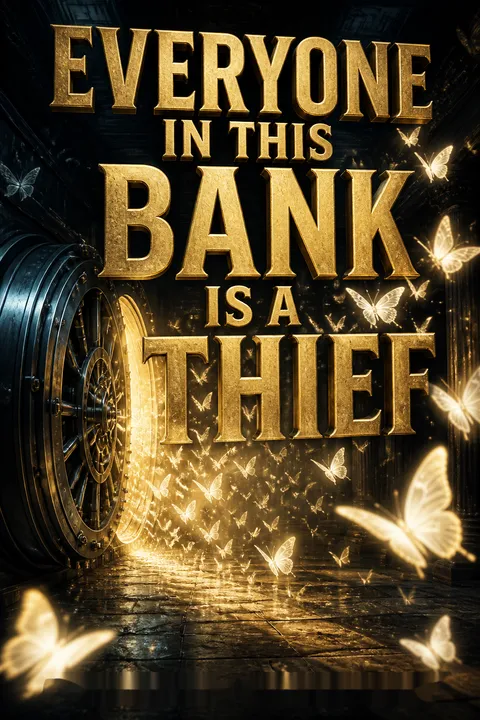
Ernest Cunningham, amateur detective-turned-hostage, begins his tale from inside a suffocating bank vault, using his last hours and dwindling ink to recount the events that led to his predicament, a remarkable robbery, and several murders. As oxygen runs low and clues run rampant in his mind, his playful, self-deprecating narration lures us into a golden-age "fair-play" mystery. He confesses he's not just a narrator but a participant, perhaps even a thief himself. All he can offer is transparency—except he doesn't know the killer, not yet. The game is afoot, not for the reader to merely witness but to solve alongside Ernest before the vault's air runs out.
Murder Magnet Returns
Eight months after surviving another near-death adventure, Ernest finds his public reputation as a "murder magnet" has made normal life—let alone launching a detective agency—almost impossible. He and his fiancée, Juliette, are denied loan after loan until a desperate invitation arrives from the powerful Winston Huxley. Personal stresses (wedding costs, mortality statistics) mix with the unsettling news that the actor set to portray Ernest on television has died. Dark omens, coded humor, and an ever-present sense that danger dogs every footstep mark the couple's journey to tiny Huxley, a town steeped in gold and secrets, for a fateful meeting at its forbidding family-run bank.
Arrival Amidst Butterflies
Ernest and Juliette arrive in Huxley to find the streets overrun by a biblical migration of white butterflies, masking the usual pastoral peace with a sense of inescapable fate. The Huxley Bank itself is a fortress of old money, museum-like, peppered with relics and clues hiding in plain sight. Inside, the atmosphere is tense yet ordinary: a suspicious receptionist, a flirty guard, a priest who cannot speak, a teenage gamer, an ailing girl and her grandmother, and a parade of townfolk circulate. As Ernest warms up his detecting skills—and senses unresolved rivalries—he can't shake the feeling that today is already significant for all the wrong reasons.
Meeting the Bank of Lies
The meeting with Winston Huxley is less about a business loan than an urgent, secretive favor for which only a detective with a death wish would volunteer. Winston's brother Edward, co-director and keeper of the vault code, has disappeared and with him, access to the bank's heart. Strange evidence—a suspicious bag of dyed cash, a gold pen, conflicting reports about shirts and time—raises red flags. Ernest is reluctantly hired to unravel the loss, but a tangle of masculinity, family shame, and trauma over past tragedies is quickly apparent. Winston's anxiety is palpable: someone is manipulating the very structure and security of the bank for their own opaque ends.
The Wrong Robbery Begins
The ordinary banking day is ripped apart when a masked figure, dubbed "The Fencer," storms in with a gun and takes the entire room hostage. Sprinklers blast, alarms scream, windows lock down—the bank's elaborate security both shields and imprisons. Everyone is panicked but, oddly, the robbery unfolds against expectation: The thief demands neither millions nor jewels, but a single dollar—specifically from the vault he cannot access. Soon, the hostages (including Ernest, Juliette, and a rogue's gallery of townsfolk) realize they're not mere bystanders: several are thieves in their own right. A murder mystery and an old-fashioned caper entwine, and nothing is what it first appears.
The Hostages' Secrets
With the police outside and a seemingly reluctant thief within, the hostages debate whether to cooperate or rebel. Online audiences (through a teenager's live stream) follow the drama, while anxious dynamics flare: suspicion toward the priest, secret romance between bank staff, con-artist whispers about the sick girl, and endless clues (odd coin counts, a gold bar, cryptic notes, gaming slang, and a talking parrot named Ditto). Every professional in the room—real or pretending—looks for angles and escape, but Ernest discerns that the real heist may not be for cash at all. Loyalties shift as secrets and lies bubble to the surface, revealing everyone's potentially criminal intent.
One Dollar Heist
The thief's bizarre demand—a dollar from the vault—baffles even seasoned thieves. Michelle, the "new" receptionist, is revealed as a professional security tester; Cordelia, supposedly dying, may be a fraud; the priest keeps holy water locked away; and Juliette catches key contradictions. As the group surrenders electronics and alliances form, Ernest is sent around the bank to hunt for clues to the missing vault code. Every artifact (postcards, old umbrellas, magnetic numbers, gold pens, dirty chairs, and a cryptic bird) is quietly catalogued by Ernest and steadily reveals a broader framework of personal and collective thefts. Meanwhile, the outside world negotiates, but the center cannot hold.
Locked With the Suspects
Time becomes currency as windows are smashed, locks tested, and everyone settles for the long haul. Ernest races the clock—and the oxygen supply—trying combinations and uncovering schemes: a thank-you card for a fraudulent fundraiser, eBay receipts for overvalued "artifacts," a doctor in on the con, umbrellas as measuring tools, and more. The hostages' stories (especially Edward's, Cordelia's, and Eric's) reveal overlapping motives of guilt, desperation, and vengeance. The gold nugget's true value is questioned. A murdered banker's presence is sensed as the vault becomes both a literal and metaphoric tomb. Increasingly desperate, Ernest turns to old detective tropes and obscure chemistry, praying for an answer.
The Impossible Vault
When the vault finally opens, the centerpiece of conspiracy is revealed: Edward lies within, burned almost beyond recognition in what seems "spontaneous human combustion." Nothing is missing except time, hope, and truth. The mechanics of the crime—pistachio-fueled fire, swapped safes, magnetic clues, and the possibility of an internal switch—baffle even the most devious minds. No one's alibi is ironclad. Suspects multiply and motives tangle, especially around debts, lost children, and ancient grievances. The thief wanted something no amount of money can buy: delayed fate, a stolen hour, perhaps a life for a life. As hostages turn on one another, Ernest and Juliette are driven to a breaking point.
Exploding Clues and Alibis
True motives for everyone's presence emerge: a priest as underground bookie, fraudulent fundraising for a heart, high-stakes bets on eSports, an insurance scam behind a failed TV shoot, a decades-old family feud, and more. Gabriel's vow of silence is broken; Cordelia's illness is exposed as a con; Eric's gaming rivalry is unmasked as murderous. Ernest, swapping between thief and detective personas, stages a dangerous deception to keep the murderers among them from escaping. Pistachios combust, codes are cracked through hacker slang, and the group's grudges threaten to create more deaths. Suspicion twists through every utterance, and a daring escape plan is hatched—all leading to a fiery rooftop confrontation.
The Father's Hidden Code
Ernest pieces together the emotional logic behind Edward's actions: a man broken by the loss of his son uses trucker's radio code (10-11) to leave a message for his brother. The swapped safe holds ancestral evidence—an urn with the remains of a murdered Chinese partner, proving old gold rush atrocities. A gold bar, a chemistry textbook, and the discovery that certain nuts can self-ignite provide the key to Edward's death: a pocket fire started in unconsciousness. But the greater emotional core is the legacy of theft and harm, where family pride, intergenerational guilt, and unspoken loss drive not just bank robberies, but violence and cover-up.
Burning Man on the Roof
In a surreal climax, Ernest meets "The Fencer"—the dying thief—alone on the bank's roof. Haunted by what he's done (and failed to do), the thief raves about time, lists, and energy, then, as if supernaturally cursed, bursts into flames and dies in front of Ernest. The reality is less magical; the thief's sunscreen was laced with white phosphorus. Ernest nearly becomes the next victim as suspects begin eliminating witnesses. An unseen hand—motivated by guilt, grief, or cold utilitarian logic—has weaponized the smallest, most scientific facts. The stage is set for a final reckoning, and the cost of everyone's secrets will be paid, one way or another.
Gamble, Grief, and Gold
The casino-like accounting behind the town's shriveled souls comes fully to light. The priest, Father Gabriel, has been running an illicit betting ring on local eSports matches, fixing odds and laundering debts through eBay "artifacts." Edward's gambling losses and collateral (including priceless family gold and first-edition books) have set off a cascade of events ending in betrayal and murder. Petty theft—both literal and existential—runs through every hostages' story: fake illnesses, insurance cons, rigged competitions, slow smuggling of gold. And in the background, the true cost of "winning" becomes evident. The glorious, weighty gold prop was, in truth, stained with the blood and sweat of exploitation.
The Great Reveal Unravels
Ernest, having narrowly survived (broken and battered) his brush with death, arranges a macabre parlour scene at his own staged funeral. From the coffin, he walks the suspects and townsfolk through their crimes: the dollar-timer heist, eSports match-fixing, generational theft, faked illnesses, fraudulent security reviews, even the literal slowless theft of gold via chemical sorcery. Suspects are confronted with physical evidence—urns, gold bars, ledgers, magnets, counterfeit scripts, and more. Betrayals and motives are laid bare as community, family, and professional ties unravel completely. In one cathartic moment, fear and shame give way to understanding, making possible both justice and some redemption.
Pistachios, Parrots, and Plots
The tiniest clues—a parrot's repeated nonsense phrase, a smudge on Edward's shirt, the mechanics of an umbrella—prove decisive. Edward's death, thought impossible, is revealed to be caused by pistachios' self-heating properties igniting while he was unconscious inside the vault. Ditto's mangled mimicry supplies Ben Huxley's last words as recorded during his fated eSports match, and provides evidence of the call that led to his shooting. The final vaults are cracked, the last keys turned, and the story's structural elegance comes into focus: multiple thefts, a set of cascading dominoes, and one literal and metaphorical locked room. The solution is logical, tragic, and bitingly clever.
The Final Dominoes Fall
The last revelations tumble like dominoes: a family's shame, an addict's gamble, the insidiousness of white-collar crime, and—above all—a parent's desperate love collide in a bell-tower shootout and confessions. The negotiator, Tobias, driven by a need to "clean up" his son's (Eric's) mistakes, becomes a murderer to preserve appearances and fortune. White phosphorus, church bells, and gunsmoke combine for a macabre, kinetic chase, with Ditto the parrot swooping in for the literal last word. The old town is forced to confront its collective responsibility for cycles of theft, lies, and loss. Ernest, scarred but alive, closes his notebook on his own grave.
The Coffin Parlour Scene
At his staged funeral, Ernest guides the suspects—and the reader—through the complete web of lies. Every theft, every shame, every murder is accounted for, and justice dispensed where due. Some criminals (and crimes) are beyond legal sanction, but the community—led by Ernest and Juliette—makes amends where possible. Emma Fredericks finally gets her heart transplant (and some funds), the falsely accused are exonerated, and the truly guilty are handed over. Ernest himself rediscovers what—and whom—he values most in the world, learning that real treasures may be as modest as a moment, a gesture, or the company of those you love. The last line, and lesson, belongs to him.
Analysis
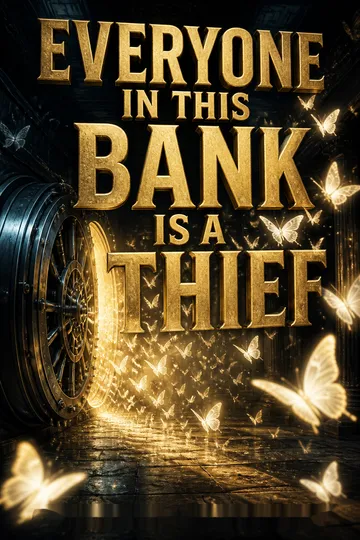
Benjamin Stevenson's Everyone in This Bank Is a Thief is a masterclass in the modern whodunit: not just a locked-room mystery but a locked-community puzzle, where everyone is both hero and thief, and the boundaries of crime, accident, and social harm are so slippery as to be nearly indistinguishable. The novel asks readers to consider not just who killed whom, or how (though it delivers on both, with intricate, plausible solutions), but why we are so drawn to stories of theft, deception, and confession—because, in Stevenson's world, secrets are a form of currency and time itself the ultimate thing worth stealing or safeguarding. Playing with genre conventions (parodying the "rules" and devices of golden-age detection even as it employs them), Stevenson crafts a narrative that is as emotionally resonant as it is intellectually dazzling. At its heart, the book is about the cost of lies—personal, familial, communal—and the possibility of redemption through truth-telling, even when that risk requires self-sacrifice. The emotional payoff comes in Ernest's realization that the greatest treasures are time, empathy, and love—resources continually imperiled by greed and fear, within as well as without. Ultimately, Stevenson's novel reminds us that behind every crime, and every story, there is a human need—sometimes ugly, sometimes noble—that binds us all, thief and victim alike.
People Also Read

Characters
Ernest Cunningham
Ernest is a witty, self-mocking amateur sleuth haunted by his own reputation as a "murder magnet." Deeply influenced by classic whodunits, he both parodies and reinvents detective tropes, insisting on transparency for the reader while struggling with what he himself misses. Caught between his desire for normalcy, personal insecurity, and his undeniable pull towards danger, Ernest's relationships (especially with Juliette) are marked by affection, exasperation, and dark humor. His defining traits are a stubborn sense of justice, guilt for past mistakes, and a relentless compulsion to untangle the truth—even at the cost of his own happiness and safety. By story's end, he is physically battered but emotionally renewed, discovering the true weight of time and love.
Juliette Henderson
Juliette is Ernest's fiancée and frequent partner in detection—his moral compass, emotional anchor, and sometimes, his chief antagonist (in the most loving sense). Marked by pragmatic optimism, clear-sighted empathy, and a readiness for danger, she acts as both a foil and a catalyst for Ernest's revelations. She navigates the hostages' fraught politics, smuggles clues to the outside, and exposes truths long before others dare. Her readiness to physically confront the disguised Ernest, and her willingness to forgive (but not forget) underscore her strength. Their bond—marked by banter, bruised egos, and mutual rescue—is ultimately the story's quiet heart as she helps redefine what's truly worth "stealing."
Winston Huxley
Winston is the imperious, sardonic owner of Huxley's Bank, fiercely protective of his family legacy and public image. His strained relationship with his missing brother Edward, deep-seated guilt over family tragedies, and willingness to manipulate others for self-preservation make him both a suspect and a victim. Winston's compassion is all but hidden beneath bluster and class-consciousness; his efforts to cover up murderous family secrets ultimately stem from the weight of inherited sins and personal shame. Throughout the ordeal, he lurches between grandeur and humiliation, but ultimately faces the bank's—and his own—truths with forced humility.
Edward Huxley
Edward, though missing for much of the physical narrative, is the emotional pivot—his disappearance and death drive the central plot. Traumatized by family loss, isolating himself through gambling and paranoia, Edward becomes both victim and enabler. His genius for security (and misdirection) hides a desperate attempt to escape the cycles of grief and guilt. In the end, his death is a tragic accident: seeking sanctuary, he is undone by a pocket of pistachios and a world gone mad with small betrayals. His final coded messages—and his choice to shield his brother—reveal a heart fractured, not criminal.
Felix Gao
Felix is the "working-class" security guard with a sharp mind and a deeper grudge. Descended from the Chinese gold miner cheated and poisoned by the town founder, he embodies the legacy of generational theft and marginalization. His slow-burning chemical heist ("polishing" the gold nugget with aqua regia) is both justice and revenge, yet he is ultimately a tragic figure, more sinned against than sinning. Drawn into the murder web by proximity and resentment, he is both wrongly accused and yet guilty of slow-motion larceny—showing the shades of gray in every "crook."
Cordelia & Laverna
Cordelia and her grandmother Laverna are master con artists, faking illness (and a need for a heart transplant) to extract the town's pity and money. While Cordelia's psychological need for sympathy hints at Munchausen's syndrome, she is also manipulated by Laverna's greed and experience. Their double-act is both desperate and complex—they succeed in stealing much from the town, but at the cost of genuine connection, and indirectly cost another real patient her place on a donation list. Their confession is a study in pathological lying and rationalization.
Father Gabriel
Gabriel, the mute priest, is less holy than he appears; behind his forced vow is a hidden career running an illegal betting operation on the town's eSports matches. His guilt over Edward's gambling, illicit profit, and the side effects of swatting (leading to a young man's death) mark him as another thief of innocence and hope. His role as observer rather than actor serves the novel's meta-commentary on witnessing, silence, and complicity; when he finally speaks, it is to offer confession of his own hidden sins. He is a key part of the mystery's structure and thematic depth.
Michelle
Michelle, posing as the bank's new receptionist, is actually a "practical security consultant"—a professional paid to rob banks as a test of systems. Her presence exposes the layers of deception in high-trust institutions and the ambiguous morality of "legal" crime. Michelle's keen professional pride and quick-witted dialogue add a cool, nearly sociopathic energy to the cast, and her methods (hacker slang, leetspeak codes) are pivotal to unravelling the vault's secrets. Despite being innocent of homicide, she is the catalyst for many revelations and the model of theft as legitimate labor.
Remy Allard
Remy, the film producer, is every opportunistic capitalist cliché—deeply invested in insurance fraud schemes, willing to "bet" on Ernest's (or his own actor's) death. His manipulations of narrative, money, and perception echo Ernest's own meta-storytelling, but without a scrap of conscience. Remy's confusion of fiction and reality, and confident manipulation of the town (and banking systems) for personal gain, serve as a damning portrait of modern greed. In the story's conclusion, he ends up rewriting the events with himself as hero, a final, scathing joke on "true" crime.
Tobias Cuthbert & Eric
Tobias, brought in as the police negotiator, is, ironically, both the story's closest thing to a lawman and its most driven, efficient killer. His drive to "fix" his son Eric's accidental swatting death of Ben leads him to murder Edward (to cover up the evidence) and the thief Bryce (by weaponizing sunscreen), demonstrating how love and pride can corrode into violence. His final, desperate acts—fleeing up the bell tower, gun in hand—show the consequences of generational guilt and failed empathy. Eric, a brilliant but emotionally troubled teen, becomes both the domino and the excuse for everything that collapses.
Plot Devices
Locked-room puzzle and layered heists
The novel is structured with a meticulous web of nested mysteries: at least ten thefts (big and small), a literal locked-room (the vault and, later, Ernest's coffin-esque safe), and a cast in which every single person is, in some sense, a thief. The structure relies on cleverly seeded clues—coded locks, edible evidence, recursive alibis, digital red herrings, and narrative misdirection. Genre tropes are subverted or inverted—from the talking parrot to "spontaneous human combustion"—with each twist serving as both genuine clue and a wink to the reader. The "reverse" bank robbery (where the main job is to keep someone inside rather than steal something out) is a fresh play on heist conventions, keeping even veteran mystery readers guessing.
Meta-narration and unreliable narration
Ernest insists he's a reliable narrator, but the story plays with the idea that truth—like cash—can be hidden, forged, or changed by perspective. The narrative is self-conscious: referencing detective fiction's "rules," playing tricks with chapter structure, and inviting the reader to play along. Key clues are occasionally overlooked not just from forgetfulness but from the limitations of a first-person voice under duress. The coffin "parlour scene," where Ernest "rises from the dead" to solve the case, is both a literal and literary resurrection, echoing the genre's love of final reveals and the futility of pretending stories exist in isolation from readers' (and writers') expectations.
Science as plot mechanism
The central locked-room murders rely on real but obscure science: self-igniting nuts, phosphorus-laced sunscreen, the chemistry of cremation, and the properties of gold and iron. The story uses these elements both as plausible explanation (no supernatural cheating) and as metaphor. Science here is the ultimate weapon: subtle, invisible, but devastating when wrongly applied. The layering in of umbrellas, magnets, poisoned teapots, and code-speak demonstrates a love of puzzle building, but always keeps the "solution" organic, not just clever for its own sake.
Time and misdirection
Time is weaponized as a plot device, from Ernest's literal dwindling oxygen, to the thief's use of hostages to "steal" the critical hours needed for a heart transplant window, to the narrative's recursive consideration of how time is wasted, stolen, or spent. Timers on digital watches, countdowns for transplant, and the familial clock-watching of guilt and hope are all echoed in the tight clockwork structure of the plot. The story continually forces the characters and readers to ask: what do you really value? What would you spend your last hour doing? And what, truly, can be stolen?
Ernest Cunningham Series



Download PDF
Download EPUB
.epub digital book format is ideal for reading ebooks on phones, tablets, and e-readers.








































