
Plot Summary
The Funeral Visitor
The story opens with Diana Cowper, a composed, well-off mother to a famous actor, crossing a sunny London street to arrange her own funeral. Six hours later, she is strangled in her home. Her calm, deliberate demeanor, combined with the oddity of swift death after funeral planning, casts an aura of eerie prescience. Investigators initially stare down cul-de-sacs of motive: she's neither widely disliked nor fearful, but as police and forensics puzzle over the scene, the weird coincidence gnaws at everyone involved. This is no ordinary murder; it signals the start of a case suffused with calculated malice and enigmatic warnings, propelling a reluctant writer—Anthony Horowitz himself—into partnership with the acerbic, secretive ex-detective Daniel Hawthorne, who knows more than he lets slip.
Hawthorne's Proposition
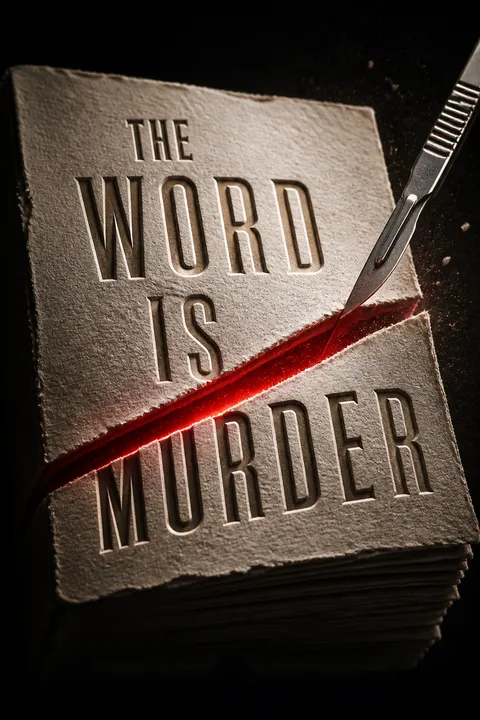
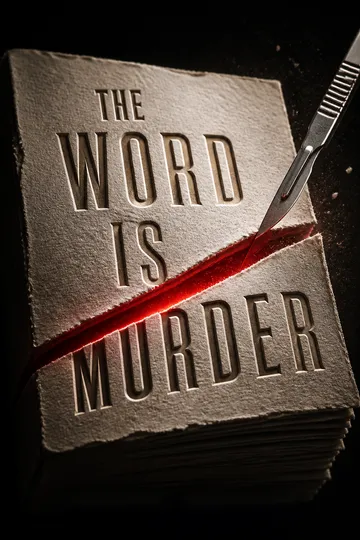
Anthony Horowitz, basking in career successes but feeling creatively adrift, is approached by Daniel Hawthorne in a Clerkenwell café. Hawthorne, a challenging presence with a shadowy dismissal from police work, pitches a true-crime partnership: Horowitz will shadow him through a murder investigation and transform real events into a book. Hawthorne isn't after flattery, and his blunt insistence ("The word is murder—that's what matters") clashes with Horowitz's instincts as a fiction writer. Initially rebuffed, Hawthorne's tantalizing summary—a woman arranging her funeral, murdered six hours later—sticks fast in Horowitz's mind. A probing comment at a literary festival gets under his skin. The real draws: Hawthorne's skill and the case's irresistible narrative pull.
A Case for Fiction
After agreeing to the partnership, Horowitz finds the mechanics of investigative writing are messier than fiction. Hawthorne is infuriatingly precise, resistant to embellishment but quick to critique narrative slip-ups. Every detail—bus routes, credit cards, the absence of a bell in a funeral parlor—might be significant. Through their tense dynamic, Horowitz is thrust deeper: he surrenders his usual authorial control, forced to experience crime's reality rather than invent it. The case, with its links to an accident ten years before and a meticulous, nearly forensic narrative structure, promises a challenge—one complicated by Horowitz's self-doubt and the need to document, not invent.
Following in Death's Wake
Visiting Diana's home, crime scene details seize Horowitz's senses: the aftermath is viscerally raw, the neatness of Diana's life violently ruptured. Hawthorne voices golden rules—a close killer, purposeful theft. Enter Detective Meadows, Hawthorne's ex-colleague, embodying the friction and skepticism within official ranks. As they walk through the home and speak to the cleaner Andrea, new shadows appear: secrets, a stolen cat, and possible links to Diana's past. Horowitz's role oscillates between observer and participant, his emotional distance eroding—the abstract violence of fiction replaced by the choking reality of death.
Shadows from the Past
The investigation veers sharply with a cryptic, unfinished text Diana sent her son: "I have seen the boy who was lacerated and I am afraid." Hawthorne produces news clippings from a decade prior: Diana killed a twin boy, Timothy Godwin, in a hit-and-run. The surviving brother, Jeremy, was savagely injured. The incident's legal consequences (a light sentence for Diana), opaque remorse, and a family left devastated suggest powerful, long-dormant motives for revenge. The event's anniversary looms, and Diana's prior trauma—unforgiven by some—revives specters of revenge, raising suspicion beyond simple burglary.
Tangled Motives
Hawthorne drags Horowitz into interviews with those orbiting Diana: a cleaner with a criminal past who admits to theft, a theatrical producer (Raymond Clunes) with whom Diana lost money, even the undertaker himself. Each interaction reveals not only fractured lives and grievances but also how personal histories compound pain and obscure truth. Diana's supposedly serene existence is anything but—money troubles, bitter disappointment, and emotional debts simmer just below the surface. Yet possible guilt seems dispersed, leaking out in pettiness and secrets rather than clear-cut motive, intensifying the complexity of motive and means.
Visiting the Godwins
Horowitz and Hawthorne visit the Godwins' home in Harrow-on-the-Hill, where bitterness hangs as palpably as the faded decorations. Judith Godwin, the dead boy's mother, is embittered, convinced that Diana and her son's privilege cost them justice. Alan Godwin, her estranged husband, is bitter and desperate, Jeremy is brain-damaged and cared for by Mary, his devoted nanny. Hawthorne's probing uncovers lies and omissions—the Godwins deny recent contact, but privilege and suffering breed contempt; every exchange is haunted by pain. If revenge fuels murder, motive is everywhere—yet not all wounds drive to violence.
Unmasking Old Wounds
After the Godwin visit, Hawthorne faces unexpected pushback. The homophobia in his reaction to Clunes shocks Horowitz, sparking a rift in their partnership and underscoring the moral ambiguities that surface during a murder hunt. But as leads from other suspects peter out, the most promising path remains the Godwins' unresolved trauma. Meanwhile, the narrative's meta-layer swells: Horowitz, forced out of his comfort zone, realizes he is as much under investigation by Hawthorne as vice versa, and the story's "truth" is as slippery as motive.
Famous Son Returns
Damian Cowper, Diana's famous son, returns from LA for the funeral. Hawthorne and Horowitz visit his slick London flat, meeting both Damian and his partner Grace Lovell. Damian's grieving is suspect, his priorities crystalline (television, wealth, self-regard), and Hawthorne's questions unearth rifts, secrets, and resentment between son and mother. Damian admits family stalkers have resurfaced; money worries and hints of unresolved business point toward complex financial ties to Diana. Grace's discomfort and her subtle revelations suggest further emotional chasms. The "celebrity" sheen only highlights self-interest, fueling questions about what family really means.
Burial Interrupted
Diana's funeral devolves into chaos when, as her coffin is lowered, a music box hidden inside blares "The Wheels on the Bus"—Timothy Godwin's favorite song. The macabre "practical joke" rattles the mourners and reveals an intensely personal, mocking message from the killer. Both Hawthorne and Meadows are forced to discard their simple theories: this is no robbery gone wrong, but cold, calculated performance. The underlying question—who could have planted the music, and when—returns focus to those with intimate access. Grief, shock, and fury all collide, and the investigation's urgency intensifies.
Cat's Cradle of Lies
Convergence comes in the form of emotional confessions: Alan Godwin and Mary, Jeremy's nanny, are guiltily entangled—an affair, remorse, and complicity in the accident that killed Timothy. Their secret, and Mary's unwavering devotion to the injured boy, had clouded everyone's judgment and sense of justice. Diana's planned suicide—threatened by her missing cat, Mr Tibbs—becomes clearer; her despair, compounded by the past, leaves her equally a victim and catalyst. Yet as Hawthorne sharpens the field of suspects, Horowitz realizes personal truths are as important as forensic ones. Motive mixes guilt, love, secrecy, and anger.
Buried Secrets Surface
Digging deeper, Hawthorne uncovers a dramatic link: Diana's funeral arrangements, with Shakespearean quotations and themes of suicide, connect obliquely to her son's theatre background. A trip to Deal, site of the accident, exposes how guilt, coincidence, and obsession collide. Meanwhile, clues surface about an old drama school rivalry: the mysterious disappearance of Amanda Leigh hints at more than just coincidence among Diana, Damian, and their social web. The case is filtered through lives warped by grief, artistic longing, and the bruising proximity of failure.
The Actor's Mask Slips
Horowitz's investigation into Damian's RADA days and the climate of envy and rivalry there exposes the extent to which artistic ambition warps lives. Old classmates recount how parts were stolen, friendships betrayed, and lasting grudges formed. Damian's rise—and the murky means by which he got a coveted Hamlet role—left others embittered and possibly vengeful. Amanda's vanishing is re-contextualized: did professional jealousy and personal betrayal have mortal consequences? Suspicion intensifies as Horowitz connects funeral director Robert Cornwallis (née Dan Roberts) to this toxic circle.
Behind Closed Doors
Cornwallis, pressed by Horowitz, is unmasked as "Dan Roberts," erstwhile actor whose dreams soured into darkness. Lured alone into Cornwallis's mortuary, Horowitz falls victim to Rohypnol and is violently attacked: Cornwallis, driven mad by envy and a ruined career, confesses. If he couldn't have fame, he'd destroy those who did—notably Damian Cowper and his mother, using his unique access as undertaker to engineer their deaths and send theatrical messages from beyond the grave. Cornwallis's long, vicious monologue, his rage at those who "stole" his destiny, crystallizes a terrible psychological truth: shame and thwarted ambition can germinate murder.
The Deal in Deal
Upon learning of Mary and Alan Godwin's unwitting role in their son's death, as well as the riddle of Jeremy's haunting last cries, Hawthorne interlaces fact and psychological insight: the boys recognized their father on the street, ran toward him, and in that split-second, fate reversed. The car, guilt, and agony became inescapable. All parties are condemned not just by outside judgment but by their own feelings—haunted, estranged, unable to move forward. Revenge, far from fueling the murder, only keeps misery alive. While police procedure unspools, Horowitz and Hawthorne understand the true cost of secrets.
Truth at Knifepoint
Seized and immobilized, Horowitz faces death—and a chilling confession—from Cornwallis. If he couldn't be the star, he would script the end for all he envied. He describes murdering Amanda Leigh, shows glee at his role in engineering Diana and Damian's murders, and outlines the careful choreography of each violent act. Emotions peak: Cornwallis is both monstrous and pathetic, shaped by years of family pressure and his own sense of mediocrity. Before he can kill again, Hawthorne intervenes; Cornwallis instead turns the knife on himself in a final "performance," leaving the psychological scars and proof of his crimes for the living to interpret.
The Writer's Dilemma
In the hospital, Horowitz grapples with his choices. The events have disturbed the safe boundaries between storytelling and real violence—an experience both sobering and addictive. Hawthorne's brilliance (and his profound emotional isolation) come into sharper relief as Horowitz is forced to confront the ambiguities of "truth" in narrative: how much to fictionalize, how much to tell, and how much of himself (and Hawthorne) to risk on the page. The real events have changed him; he's no longer just a creator of fictions but a chronicler of very real, very messy emotions and consequences.
Hawthorne Unveiled
The investigation's aftermath is shadowed by loose ends: legal messes, destroyed families, and Hawthorne's intransigent secrecy. Horowitz, frustrated by how little he truly knows of Hawthorne despite all they've shared, breaks into his home, hunting for clues about his partner's elusive humanity. Their relationship—never warm, always circling—achieves a kind of resolution. The final reveal: even in orchestrating this story, Hawthorne manipulated Horowitz into becoming his chronicler, for reasons as complex as any motive in the case. The line between subject and storyteller is permanently blurred, suggesting new adventures—and new emotional wounds—await.
Analysis
A novel about stories, damage, and what lies beneathThe Word is Murder subverts the classic whodunit by turning its focus inward—not just to the trauma and enigma of murder, but to the act of storytelling itself. By making the author a character, Horowitz questions who controls narrative, what truth is, and how much empathy can be extended to both victims and perpetrators. The investigation shifts from external clues to inner wounds—grief, ambition, envy, and the enduring consequences of childhood and family failure. It is not merely a puzzle to solve, but a mirror on the fragile humanity of everyone involved: police, suspects, even the writer himself. The novel is a meditation on the cost of secrets, the violence bred by frustration and neglect, and the ways in which the past is ever-present. Ultimately, it suggests that motives for murder are never simple, and that the act of writing (or remembering) is itself a perilous, transformative endeavor—one that cannot leave its storyteller unchanged.
Review Summary
The Word is Murder receives mostly glowing reviews, averaging 3.92 stars. Readers frequently praise Horowitz's clever meta-narrative device of inserting himself as Watson to detective Hawthorne's Holmes. Many highlight the satisfying whodunit structure, witty banter between characters, and comparisons to classic Agatha Christie mysteries. The mystery's clues and red herrings are widely appreciated, with most readers unable to predict the ending. Critical reviews cite Horowitz's self-promotion as distracting and the central device as contrived. The Hawthorne-Horowitz dynamic is considered entertaining, and most readers eagerly anticipate subsequent series installments.
People Also Read




Characters
Daniel Hawthorne
Former police inspector, sacked under mysterious circumstances, Hawthorne is the driving intelligence of the case: methodical, abrasive, mercurial, and socially awkward. He's haunted by both his failed relationships and a problematic past, including having potentially injured a suspect. Hawthorne keeps even his own biographer at arm's length, doling out details about his life (a son, an ex-wife, a passion for model-making) only when pressed. His sharp deductions reveal not only the truth of murder but also the brokenness of the people involved. He prizes truth over personality or sympathy, displaying troubling biases and limited empathy. Hawthorne's true enigma lies in his emotional isolation, his addiction to violent puzzles, and his manipulative talent for drawing Horowitz into his world—blurring the lines between investigator, inspiration, and friend.
Anthony Horowitz
As protagonist and narrator, Horowitz embarks on the investigation with creative curiosity, self-doubt, and a desire to understand real crime, not merely invent it. Initially skeptical of his own suitability, he's soon immersed in the case's emotional chaos. He's reflective, self-critical, and always cognizant of the artifice built into storytelling. Horowitz's role gradually shifts from passive observer to emotionally invested participant, exposing his vulnerabilities: his fears, his relationships, and his lifelong quest to turn chaos into story. The meta-narrative of writing the book secures his place inside the case as both witness and character, and the partnership with Hawthorne unsettles and transforms him—forcing him to risk his own life and reevaluate what, if anything, is real in the stories he tells.
Diana Cowper
Polished, solitary, and apparently secure, Diana is both a figure of pity and enigma. Her unannounced funeral planning, secret stockpiling of sleeping pills, and marked isolation suggest deep, lifelong wounds. Having killed a child—Timothy Godwin—in a car accident a decade earlier and escaped with minimal punishment, she becomes a lightning rod for guilt, blame, and vengeance. Her relationships (a distant son, unreliable friends, and a long-absent husband) and her emotional exhaustion reveal a life hollowed by grief and haunted by past sins. Her final text—garbled in its urgency—becomes both confession and clue, underscoring her role as the story's cipher for fate, remorse, and unjust endings.
Damian Cowper
Diana's only child, Damian is ambitious, charismatic, and ruthlessly self-interested. His flourishing career (from the RSC to Hollywood) has left him detached from family and haunted by secrets from his past. His role in the RADA Hamlet production, achieved through manipulation and betrayal, plants the seed for long-held grudges. Damian's return for his mother's funeral exposes his vanity, his strained relationship with both parent and partner, and, ultimately, his own vulnerability. In death, he becomes the object of someone else's performance: a man slain to settle another's score, forever marked by the role he did—not quite—earn.
Robert Cornwallis / Dan Roberts
Cornwallis is the most insidious figure—a failed actor forced into his family's undertaking business, crushingly aware of his own mediocrity. At RADA, he was the promising Hamlet; a twist of betrayal (deliberately infected with illness) saw his rival, Damian, take the glory he craved. Years of bitterness and feeling invisible boil over when fate brings Diana—a figure from his lost world—into his funeral parlor. His pathology fuses murder and performance: each crime (against Diana, Damian, Amanda Leigh) is a scene, a bid for significance. Cornwallis is both manipulator and victim, his psyche a cauldron of frustrated ambition, self-pity, and rage, rendering him a chilling study in how art can metasasize into violence.
Alan Godwin
Alan, whose world crumbled after Diana killed one of his twin sons, is portrayed as both suspect and victim. His marriage, sanity, and financial stability shatter under the burden of loss. His clandestine relationship with Mary O'Brien, his secret presence at the accident, and his emotional volatility paint a portrait of complex, not always sympathetic, suffering. Alan's trauma is a reminder of how rage and grief can warp motive, creating the permanent possibility of violence—even when not acted upon. His tears and confessions, however, reveal a man who punishes himself as much as others.
Judith Godwin
Judith is a study in the corrosive power of grief left to fester. Determined to believe that Diana and the justice system betrayed her family, she's retreated into gloom, her home a mausoleum of sorrow. Her relationship with her husband is gutted by tragedy, her interactions with the world tinged with suspicion and disappointment. Though she stands at one remove from murder, her pain radiates into the case, making her a living reminder of unresolved wrongs and the impossibility of closure.
Mary O'Brien
Jeremy's caregiver and the Godwins' former nanny, Mary is the silent fulcrum on which past and present hinge. Her affair with Alan, her role (unwitting or not) in the circumstances leading to Timothy's death, and her sustained devotion to the damaged Jeremy intertwine guilt with atonement. Her confession, and the unspoken traumas binding her to Alan, serve both to muddy the waters of blame and to highlight how tragedy can warp the boundaries between love, responsibility, and complicity.
Grace Lovell
Damian's partner and mother of his child, Grace is both observer and survivor of chaos. Her life—career interrupted, emotions manipulated, desires repressed—was upended by Damian's ambitions and family entanglements. Her relationship with Diana is competitive and cold; her grief at Damian's murder is genuine but also liberating. She embodies the emotional costs of living in the orbit of driven, damaged men—resourceful but always an outsider in their conflicts.
Detective Inspector Meadows
Serving as Hawthorne's professional foil, Meadows is the embodiment of old-school policing—world-weary, skeptical, and bruised by institutional failure. His resentment of Hawthorne is both personal and professional, rooted in rivalry and frustration at the "consultant's" unofficial status. Though he occasionally demonstrates acuity, he is often a step behind—his methods hampered by bureaucracy, his emotional life in disarray. Meadows represents the limitations and loneliness inherent in the pursuit of perfect justice.
Plot Devices
Meta-Detective Structure
The book's key device is its blending of fiction and "reality": Anthony Horowitz does not merely narrate but inserts his real-life self into the case as biographer and character. This self-awareness confounds traditional detective story norms—Horowitz's creative process, doubts, and emotions become as much a part of the investigation as murder and motive. The relationship between author and detective is meta-textual, often echoing Holmes and Watson, but with skepticism, rivalry, and psychological complexity.
Self-Referential Clues and Red Herrings
Key clues—auto-corrected texts, Shakespearean memorials, musical "pranks," funeral arrangements—are steeped in literary references, theatricality, and personalized messages. The reader, like Horowitz, is forced to decipher actions that are both literal and allegorical, clues that speak to motive as much as means. Numerous suspects are plausible; false confessions, intentional misdirection, and emotional red herrings ensure that suspicion is perpetually displaced, driving the plot's tension.
Obsession and Broken Ambition
The underlying logic of the murders is psychological: years of envy, alienation, and unfulfilled promise solidify in Cornwallis into not just motive but imperative. The professional world of actors and writers, saturated with risk and the fear of insignificance, is a closed but combustive universe, where small betrayals curdle into vengeance. The killer's method—using his funeral director's skills and access—is both ingenious and emotionally revealing, highlighting how personal disappointments metastasize into monstrous acts.
Dual Narratives: Case and Writer's Journey
The book is as much about Horowitz's emotional and creative journey as it is about solving a murder. His internal dialogue (creativity vs. reality, observer vs. participant, confidence vs. fear) parallels the external investigation, offering an evolving, almost essayistic narrative voice that invites the reader to inhabit every doubt and insight. This doubling not only slows the final reveal but ensures that solving the crime is interwoven with less tidy, more ongoing self-examination.
Hawthorne & Horowitz Series
About the Author
Other books by Anthony Horowitz






Download PDF
Download EPUB
.epub digital book format is ideal for reading ebooks on phones, tablets, and e-readers.








































