
Plot Summary
Shadows of Justice
The story opens with Helena, Vonvalt's clerk, reflecting on the nature of justice and the importance of procedure, even in the face of obvious guilt. Vonvalt, once a Justice of the Empire, is now a fugitive, his authority revoked as the Empire teeters on the edge of collapse. The group—Vonvalt, Helena, Sir Radomir, and von Osterlen—are haunted by nightmares and hunted by both mortal and supernatural enemies. Their journey through a lawless land is marked by moral ambiguity, as they are forced to kill to survive, blurring the lines between justice and necessity. The Empire's institutions are crumbling, and the old certainties of law and order are replaced by chaos, fear, and the encroaching darkness of both human and otherworldly threats.
Nightmares and Betrayals
The group is plagued by shared nightmares, portents of a world unraveling. Their travels bring them to a village where they are betrayed by a baron seeking Vonvalt's bounty. Forced to kill their would-be captors, the companions are left shaken, questioning the morality of their actions. The encounter underscores the collapse of trust and the pervasiveness of betrayal in a world where the old order is gone. The supernatural threat grows, as the fabric between worlds thins, and the group realizes that the horrors stalking them are not just human. The sense of being hunted—by both men and monsters—deepens, and the companions are forced to confront the cost of survival in a world where justice is a memory.
The Vanished Legion
Rumors swirl that the 16th Legion, thought destroyed, has instead taken up residence in Seaguard. Vonvalt and his companions investigate, only to find the fortress and its surrounding town eerily deserted, save for a single, mindless soldier patrolling the walls. Helena is drawn into the heart of the empty castle, where she encounters Lady Karol Frost—long thought dead—who reveals herself as the leader of a pagan uprising. The truth emerges: the Legion was destroyed, and the fortress taken by Frost's forces using both arms and forbidden magicks. The encounter marks a turning point, as the companions are forced to reckon with the reality of supernatural war and the necessity of alliances with former enemies.
Pagan Alliances Forged
Lady Frost proposes an alliance: her pagan army and Vonvalt's group must unite to stop Claver, the zealot threatening to seize the Empire. The companions are introduced to the pagan encampment, a disciplined force of warriors and shamans who wield the arcana with skill and reverence. Tensions simmer, as old prejudices and wounds are laid bare, but the existential threat posed by Claver and his demonic patron leaves no room for division. The group witnesses the power and danger of the pagan magicks, including the use of dreadports—gateways to other planes—and the creation of the Tree of Death, a permanent link to the afterlife. The alliance is uneasy, but necessary, as the fate of the Empire hangs in the balance.
Dreadports and Demons
The pagans demonstrate the dreadport, a gateway to the liminal Izmyesta, and the Tree of Death, which allows for easy passage into the afterlife. The companions journey through these realms, encountering the tormented soul of Margrave Westenholtz, held in purgatory as a bulwark against Claver's schemes. The boundaries between worlds are dangerously thin, and the group is attacked by Ghessis, the Gatekeeper of Purgatory, barely escaping with their lives. The experience leaves them shaken and aware that the war will be fought on both mortal and spiritual planes. The cost of meddling with such powers becomes clear, as the afterlife itself is thrown into turmoil by the ambitions of men and demons alike.
The Wolfmen's Empire
Vonvalt, Helena, and von Osterlen travel south to the Kasar Kyarai, seeking the aid of the legendary wolfmen. Their arrival is met with suspicion and violence, as the Kasar have suffered at the hands of the Empire and the Templars. With the help of Sir Anzo Amalric, a Sovan exile, they navigate the complex politics of the Kyarai and are introduced to the Spiritsraad, the Kasar's secretive council of magicians. The companions witness the Kasar's own dark practices, including the breeding of hybrids for necromantic rituals, and are forced to confront the moral compromises required in the fight against Claver. The alliance is secured, but at a heavy cost to conscience and soul.
Kasar and Conscience
The group participates in a séance with the Spiritsraad, entering the City of Sleep—a liminal realm where the sleeping souls of mortals reside. There, they attempt to contact Kimathi, the Imperial Warden, to warn Sova of the impending threat. The séance is disrupted by Ghessis and a horde of demons, and the companions barely escape, traumatized by the encounter. The experience underscores the interconnectedness of the mortal and immortal planes, and the necessity of using every tool—no matter how dark or forbidden—to prevent catastrophe. The companions are left questioning the price of victory, and whether the ends can ever justify the means.
The City of Sleep
The City of Sleep is revealed as a nexus where the boundaries between life, death, and dream are blurred. The companions' actions there have far-reaching consequences, drawing the attention of both allies and enemies in the afterlife. Claver's power is shown to be rooted in his ability to manipulate these realms, and the companions realize that defeating him will require not just martial strength, but mastery of the arcana and the courage to face the horrors of the soul. The City of Sleep becomes a symbol of the Empire's decline—a place where the past, present, and future are all haunted by the specter of failure.
The Broken Path
Helena is drawn into the afterlife, where she walks the Broken Path—the road to the Halls of Hell. Guided by Justice August, she witnesses the true nature of Ramayah, the Progenitor, and the cosmic struggle between order and chaos. The afterlife is revealed as a society of its own, with its own wars, politics, and ambitions. Helena's journey is both literal and symbolic, as she confronts her own fears, regrets, and the weight of her choices. The experience leaves her forever changed, marked by the knowledge that the battle for the Empire is but a reflection of a greater, eternal war.
The Siege Begins
The companions return to Sova, now a city under siege from within and without. The Emperor is a broken man, the Senate is paralyzed, and the city's defenders are outnumbered and demoralized. Vonvalt assumes the Regency, deposing the Emperor and rallying the remaining loyalists, pagans, and Kasar to the city's defense. The battle lines are drawn, and the defenders brace themselves for the onslaught of Claver's Templars and their demonic allies. The sense of impending doom is palpable, as the last hope of the Empire rests on a fragile alliance and the courage of a few.
The Gates Unbarred
As the siege begins, the defenders are betrayed from within. Possessed cannoneers and archers turn the city's own defenses against its people, and the Victory Gate is unbarred, allowing Claver's thralls to pour into Sova. Chaos reigns as the defenders are overwhelmed by both human and supernatural enemies. Helena and Sir Radomir race to retrieve the Flame of Savare, the only weapon capable of destroying the demonic thralls. The battle becomes a desperate struggle for survival, as the city teeters on the brink of annihilation.
The Battle for Sova
The defenders are pushed to their limits as Claver's forces surge through Sova. The Imperial Guard, pagans, Hauners, and Kasar fight side by side, but are steadily driven back. The cost is immense—friends and allies fall, and the city is awash in blood. Helena, marked by the Trickster, becomes the focal point of Ramayah's attention, and the battle spills over into the spiritual realm. The fate of Sova—and the Empire—hangs by a thread, as the defenders make their last stand in the Temple of Nema.
Severing the Dark Bond
With Claver's power rooted in his bond to Ramayah, Helena is sent into the afterlife to sever the connection. Guided by Lady Frost and Justice August, she braves the horrors of the Palace of Blood, facing the Decapitator and the legions of Hell. Armed with the Spear of Vangrid, she cuts the tether binding Claver to his demonic patron, sacrificing her own safety and nearly her soul. The act breaks the back of Claver's supernatural power, but at a terrible cost—August is lost, and Helena is forever marked by her journey.
The Fall of Claver
With Claver's power broken, the tide turns. The Kasar and Südenburg Templars arrive in time to rout the remaining Templars, and Claver is captured. Vonvalt, urged by Helena, refuses to execute Claver on the spot, insisting on a public trial. The trial exposes Claver's crimes and hypocrisy, laying bare the rot at the heart of the Empire. Claver is condemned and burned as a heretic, his death marking the end of an era. The victory is bittersweet, as the survivors reckon with the cost of their choices and the wounds—physical and spiritual—that will never fully heal.
The Last Justice
In the aftermath, Vonvalt assumes the Regency but refuses to become Emperor. He dismantles the Magistratum, abolishes the arcana, and cedes the northern provinces to the pagans, seeking to end the cycle of conquest and violence. The Empire is dissolved, replaced by a fragile republic. Vonvalt's actions are both lauded and condemned, and he becomes a controversial figure—savior to some, traitor to others. He and Helena part ways, their relationship forever changed by the trials they have endured.
The Price of Order
The survivors struggle to find meaning in the aftermath. Sir Radomir, grievously wounded, is ennobled but haunted by the violence he has witnessed. Von Osterlen rebuilds Südenburg, forging new alliances with the Kasar. Helena, adrift and traumatized, buries her friend Bressinger and seeks solace in the quiet places of the world. The wounds of the past linger, and the price of order is revealed to be steep—measured in lives, souls, and the loss of innocence.
The End of Empire
The Empire of the Wolf is no more. The Republic of Sova is born, but its future is uncertain. The arcana is purged, the Templars are broken, and the old order is swept away. The survivors scatter, each seeking their own path in a changed world. The afterlife remains a place of mystery and danger, its wars and politics echoing those of the mortal realm. The story ends with Helena reflecting on the meaning of justice, the weight of history, and the hope that, in the end, good can outweigh evil.
New Dawns, Old Wounds
Helena, now free of Vonvalt's shadow, sets out to find her own purpose. She visits the graves of the fallen, reconnects with old friends, and seeks peace in the quiet places left untouched by war. The world is changed, but not destroyed. The wounds of the past will never fully heal, but there is hope for renewal and redemption. The story closes on a note of cautious optimism, as Helena and the survivors look to the future, determined to build something better from the ashes of the Empire.
Analysis
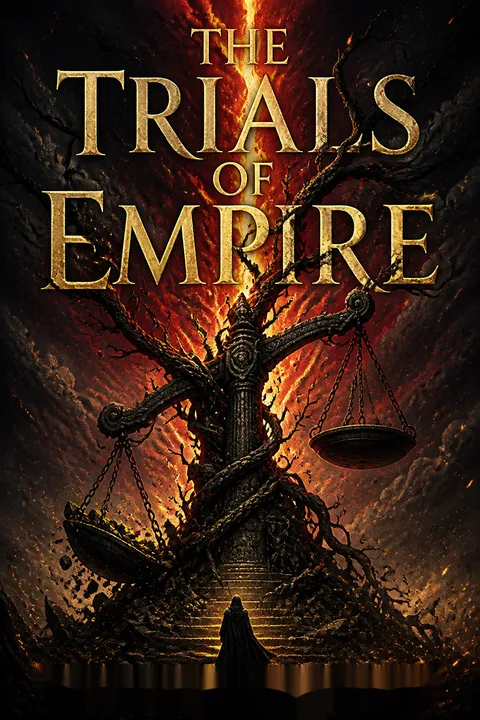
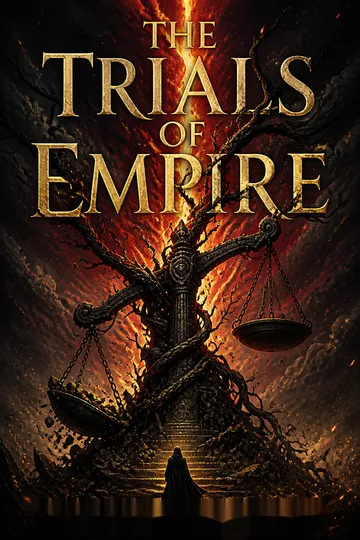
Richard Swan's The Trials of Empire is a sweeping meditation on the collapse of order and the cost of justice in a world beset by both human and supernatural evil. The novel interrogates the nature of power, the limits of law, and the moral compromises required to confront existential threats. Through the intertwined journeys of Vonvalt and Helena, Swan explores the tension between idealism and pragmatism, showing that the pursuit of justice is fraught with ambiguity and sacrifice. The story's use of the afterlife as both setting and metaphor allows for a profound exploration of trauma, memory, and the persistence of evil—both as an idea and as a force. The ultimate lesson is that systems—legal, religious, social—are only as strong as the people who uphold them, and that the fight for order is never-ending. The novel's ending, with the dissolution of the Empire and the uncertain dawn of a republic, is both hopeful and cautionary: history is cyclical, and the price of peace is eternal vigilance. Swan's work resonates in a modern context, reflecting anxieties about the fragility of institutions, the allure of fanaticism, and the enduring need for courage, empathy, and the willingness to do what is right—even when the outcome is uncertain.
Review Summary
The Trials of Empire concludes Richard Swan's Empire of the Wolf trilogy with mixed reception. While many praised the satisfying ending and compelling themes of justice and morality, others felt the pacing suffered. The first half drags with side-quest-like alliance-building, though the second half delivers intense action and horror elements. Reviewers appreciated Helena's narration and character growth, but some disliked her relationship with Vonvalt. The supernatural elements escalate significantly, transforming into medieval horror-fantasy. Most agree Swan stuck the landing despite cramming substantial plot into one book.
People Also Read




Characters
Konrad Vonvalt
Vonvalt is the central figure whose journey from principled Justice to embattled regent mirrors the Empire's decline. Once a paragon of law and order, he is forced to confront the collapse of the institutions he served and the moral compromises required to fight existential evil. His relationship with Helena is complex—mentor, father figure, and at times, would-be lover. Vonvalt's psyche is marked by guilt, exhaustion, and a relentless drive to do what is necessary, even as he fears becoming the very thing he fights. His arc is one of tragic heroism: he saves the city, but at the cost of his ideals and his own peace.
Helena Sedanka
Helena is the narrator and emotional core of the story. Orphaned and hardened by a brutal world, she is both witness and participant in the Empire's fall. Her journey is one of self-discovery, as she is forced to confront her own trauma, the horrors of the afterlife, and the burden of being chosen by fate. Marked by Aegraxes, she becomes the key to severing Claver's demonic bond. Her relationship with Vonvalt is fraught—she loves and resents him, and ultimately must find her own path. Helena's arc is one of survival, resilience, and the search for meaning in a world where justice is never simple.
Sir Radomir
Sir Radomir is a gruff, hard-drinking veteran whose black-and-white worldview is both a comfort and a challenge to the others. He provides comic relief and emotional ballast, but is deeply scarred by the violence he has witnessed. His loyalty to Vonvalt and Helena is unwavering, and his willingness to do what is necessary—no matter how brutal—makes him both indispensable and tragic. Radomir's arc is one of endurance; he survives when many do not, but is forever changed by the cost.
Severina von Osterlen
Von Osterlen is a disciplined, pragmatic leader whose faith is tested by the horrors she witnesses. Her relationship with Vonvalt is professional but strained, as she struggles to reconcile her piety with the necessity of allying with pagans and wielding forbidden magicks. She is a model of stoic courage, but her inner turmoil is profound. Von Osterlen's arc is one of adaptation—she must let go of old certainties to survive and help build a new world.
Lady Karol Frost
Lady Frost is a formidable leader, both feared and respected. She is a survivor of persecution, a master of the arcana, and the architect of the pagan alliance. Her pragmatism and willingness to do what is necessary make her a mirror to Vonvalt, and her relationship with Helena is one of mentorship and maternal care. Frost's arc is one of vindication—she helps save the Empire, but at the cost of her own life and the certainty that peace will always be fragile.
Bartholomew Claver
Claver is the antagonist whose fanaticism and ambition unleash chaos on the Empire. Once a pious priest, he is corrupted by power and the arcana, becoming the puppet of Ramayah. Claver's psyche is a study in self-delusion—he believes himself righteous even as he commits atrocities. His arc is one of tragic downfall; he is exposed, broken, and executed, but the ideas he represents linger, a warning that evil is never truly vanquished.
Aegraxes (The Trickster)
Aegraxes is a being of the afterlife, marked by cunning and inscrutability. He marks Helena, guiding and manipulating events to counter Ramayah's schemes. His motivations are complex—he opposes chaos, but is not wholly benevolent. Aegraxes represents the ambiguous morality of the immortal realm, where good and evil are matters of perspective. His arc is one of intervention; he helps tip the balance, but at a cost to those he uses.
Justice Resi August
August is a Justice whose soul is trapped between worlds, guiding Helena through the afterlife and helping to orchestrate the severing of Claver's bond. Her presence is both comforting and tragic—she is a reminder of what is lost, and of the cost of meddling with forces beyond comprehension. August's arc is one of sacrifice; she gives everything to help save the Empire, and her loss is deeply felt.
Sir Anzo Amalric
Sir Anzo is a Sovan exile in the Kyarai, whose wealth and influence are built on the suffering of others. He facilitates the alliance with the Kasar, but his methods—breeding hybrids for necromancy—are abhorrent. Anzo's arc is one of moral ambiguity; he is necessary, but never admirable, and his fate is a warning about the cost of survival at any price.
Ramayah, the Progenitor
Ramayah is the true antagonist, a being of immense power and malice whose schemes span centuries. He manipulates Claver and seeks to reopen the bridge between worlds, unleashing chaos and suffering. Ramayah is the embodiment of evil as patient, cunning, and ultimately inscrutable. His arc is one of near-victory, thwarted only by the courage and sacrifice of mortals and immortals alike.
Plot Devices
Entanglement and the Temporal Pathway
The narrative is structured around the concept of Entanglement—certain individuals, by their actions, become pivotal in the flow of history, able to alter the "temporal pathway." This device allows for both foreshadowing and the exploration of fate versus free will. The story is filled with portents, visions, and the sense that small choices can have world-shaping consequences. The thinning of the fabric between worlds is both literal and metaphorical, as the boundaries between law and chaos, life and death, are eroded. The use of multiple planes—the mortal world, the afterlife, the City of Sleep, the Broken Path—creates a layered narrative where battles are fought on every level of existence. The story's structure mirrors the collapse of order: as the Empire falls, so too does the coherence of reality, and only by embracing uncertainty and moral ambiguity can the characters hope to survive.
Empire of the Wolf Series
Download PDF
Download EPUB
.epub digital book format is ideal for reading ebooks on phones, tablets, and e-readers.








































