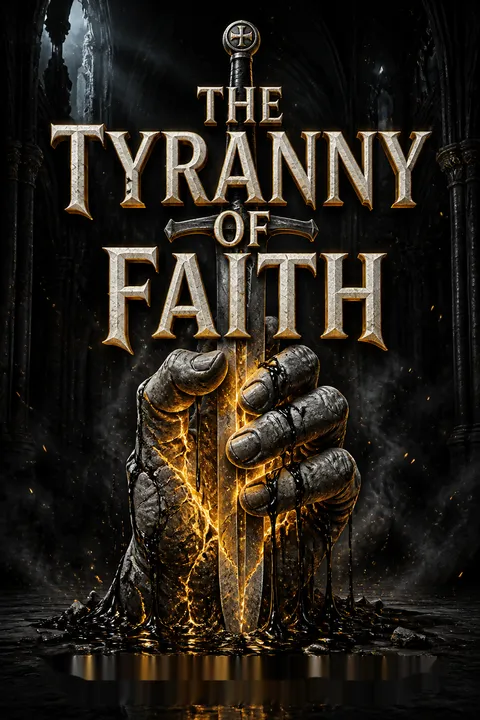

Plot Summary
Shadows on the Road
The story opens with Sir Konrad Vonvalt, a Justice of the Empire, traveling with his companions—Helena, Bressinger, and Sir Radomir—toward Sova, the Empire's heart. Vonvalt is unwell, plagued by a mysterious malaise that saps his strength and spirit. The group's camaraderie is strained by exhaustion, past wounds, and the weight of their mission. As they traverse the rain-soaked countryside, the shadow of political unrest and personal secrets looms. The journey is slowed by Vonvalt's illness and the burdens of recent violence, setting a tone of foreboding and vulnerability. The world feels on the brink, and the travelers sense that the events ahead will test their loyalty, resolve, and very identities.
Sova's Gilded Labyrinth
Arriving in Sova, the travelers are overwhelmed by the city's scale, diversity, and gothic splendor. Helena, the narrator, is both dazzled and unsettled by the city's opulence and the teeming masses. The group navigates the city's districts, from the imposing Wolf Gate to the Summit of the Prefects, encountering the city's legal, religious, and political institutions. Vonvalt's status as a Justice grants them access, but also draws scrutiny. The city's beauty is shadowed by a sense of oppression and the knowledge that beneath its surface, power struggles and corruption fester. The group's sense of purpose is tested as they are swept into Sova's relentless currents.
Wolves Among Lawkeepers
Vonvalt's return to the Grand Lodge, seat of the Magistratum, is fraught with tension. He confronts Master Kadlec, his former mentor, about rumors of treachery and the Order's entanglement with the Neman Church and the Templars. The conversation is a dance of civility and accusation, revealing deep fractures within the lawkeepers. Kadlec's evasions and the Order's factionalism point to a rot at the heart of Imperial justice. Vonvalt's authority is both a shield and a burden, as he realizes the Order is compromised and that the arcane powers they guard may have been leaked to dangerous hands. The stage is set for a reckoning.
The Emperor's Mandate
Vonvalt and his companions are summoned to the Imperial Palace for an audience with the Emperor. The encounter is a display of power, ritual, and veiled threats. The Emperor, shrewd and weary, tasks Vonvalt with purging the Magistratum of traitors and grants him the title of Lord Prefect, making him the Empire's chief lawkeeper. The Emperor's trust is double-edged, as Vonvalt is now responsible for rooting out corruption while navigating the treacherous politics of Sova. The Emperor's focus on external threats and internal dissent leaves Vonvalt isolated, forced to act decisively even as his own health and the loyalty of his peers waver.
Schemes in the Capital
As Vonvalt assumes his new role, he is beset by political machinations from all sides. The Senate is riven by factions—the Mlyanars, the Templars, the Neman Church—all vying for power and influence. Rumors swirl of blackpowder, rebellion, and arcane secrets stolen from the Magistratum's vaults. Vonvalt's efforts to restore order are hampered by bureaucratic inertia, personal rivalries, and the Emperor's own reluctance to act. The city is a powder keg, and Vonvalt's every move is watched and second-guessed. The sense of impending crisis grows, as enemies within and without prepare to strike.
Purge of the Magistratum
With Imperial Guard at his side, Vonvalt orchestrates a purge of the Magistratum, arresting or executing Justices suspected of treason. The process is swift, violent, and deeply unsettling. Some resist, others take their own lives, and a few are dragged away to face the Emperor's justice. The purge exposes the depth of the Order's corruption and leaves Vonvalt isolated, burdened by the cost of his actions. The law, once a shield, becomes a weapon wielded without mercy. The emotional toll on Helena and the others is profound, as they witness the collapse of the ideals they once served.
Nightfall in Sova
In the aftermath of the purge, the group is left reeling. Personal relationships fray—Helena's feelings for Vonvalt, Bressinger's trauma, and Sir Radomir's cynicism all come to the fore. The city itself is restless, with riots, rumors, and the ever-present threat of violence. Night brings little respite, as nightmares and supernatural portents—rooks, moths, and whispers—haunt the characters. Vonvalt's illness worsens, and the sense of doom intensifies. The boundaries between the mortal and the arcane grow thin, and the group is forced to confront not only political enemies but forces beyond their understanding.
Vaults of Forbidden Power
Helena and Sir Radomir search the Master's Vaults for missing grimoires, discovering that many of the most dangerous arcane texts have been stolen. The theft points to a conspiracy involving the Templars and the Neman Church, with Master Kadlec implicated. The loss of the old lore is a dire threat, as it grants their enemies powers once thought safely contained. Vonvalt's frustration and fear mount, as he realizes that the tools needed to fight the coming darkness are slipping from his grasp. The theft of the arcana is a turning point, signaling that the Empire's enemies are ready to wield forbidden magicks.
Templars and Traitors
The investigation leads Vonvalt and his companions to the Temple of Savare, where they interrupt an illegal séance orchestrated by Claver and his allies. The ritual is a nexus of political and supernatural intrigue, involving Templars, senators, and foreign agents. Claver's growing mastery of the arcane is on full display, and his taunts reveal that he is behind Vonvalt's mysterious illness—a hex cast with knowledge stolen from the Magistratum. The confrontation is chaotic and terrifying, as the boundaries between life and death, loyalty and betrayal, are violently blurred. The group barely escapes, but the true scale of the threat is now clear.
The Prince Disappears
News breaks that Prince Kamil, the Emperor's grandson, has been abducted. The city erupts in panic and outrage, and Vonvalt is ordered to lead the investigation, diverting him from the pursuit of Claver. The search is frantic and fruitless, as clues are scarce and the political stakes are immense. The abduction is a masterstroke by the Empire's enemies, designed to destabilize Sova and discredit the Magistratum. Vonvalt's frustration grows, as he is forced to chase shadows while the real threat gathers strength. The sense of being manipulated, of always being one step behind, gnaws at the group.
The Search and the Trap
The investigation leads to a ransom demand and a plan to exchange gold for the prince at Kormondolt Bay. Vonvalt and his companions set a trap, enlisting rowers and Imperial Guard for a daring nighttime assault on the kidnappers' ship. The operation is a disaster—blood is spilled, the prince is not found, and the supposed culprit is a madman manipulated by false memories. The failure is devastating, both personally and politically. The group is left with more questions than answers, and the realization that they have been outmaneuvered at every turn.
Blood on the Frontier
With the investigation in shambles and Vonvalt's health failing, the group travels south to the Frontier, seeking the stolen arcana and a cure for the hex. The journey is perilous, marked by skirmishes with native Saekas, the desolation of ruined towns, and the ever-present threat of supernatural forces. Bressinger's loyalty and sacrifice are tested to the breaking point, culminating in a tragic confrontation with demons unleashed by a miscast spell. The cost of the quest is measured in blood and loss, as friends fall and hope wanes.
The Hex and the Hunter
Vonvalt's illness is revealed to be a deadly hex, binding him to the Muphraab, a monstrous entity from the afterlife. The only hope lies in forbidden necromancy and the recovery of the Codex Elementa. Helena is forced to learn the rudiments of the arcane arts, risking her sanity and soul. The boundaries between life and death blur, as the group confronts the horrors of the Edaximae, the purgatorial plane. The struggle against the hex is both a personal and cosmic battle, with the fate of Vonvalt—and perhaps the Empire—hanging in the balance.
The Afterlife Beckons
Helena journeys into the afterlife, guided by the spirit of Justice August, who is herself trapped and hunted. The afterlife is a place of bleakness, horror, and shifting realities, where time and identity are mutable. Helena learns that the struggle against Claver and the Muphraab is part of a larger cosmic conflict, with entities like the Trickster and Ghessis shaping the fate of worlds. The lessons of the afterlife are hard and terrifying, but Helena's courage and resilience are tested and proven. The cost of meddling with forbidden lore is made clear, as the boundaries between hope and despair, life and death, are crossed and recrossed.
The Battle of Agilmar Gate
The group is swept into the Battle of the Agilmar Gate, where Claver and his Templars wield their stolen arcana to devastating effect. The battlefield is a place of chaos, blood, and supernatural terror, as Claver's priests use the Emperor's Voice and other magicks to rout their enemies. Helena, forced into the vanguard, witnesses the true horror of war and the seductive power of zealotry. The battle is a turning point, as Claver's ascendancy becomes undeniable and the Empire's defenders are shattered. The cost of victory is measured in lives and the corruption of ideals.
The Inner Sanctum Burns
Helena infiltrates Keraq's inner sanctum, seeking the Codex Elementa. The sanctum is a place of arcane power and mortal danger, guarded by possessed nuns and priests driven mad by their own sorceries. In a desperate act, Helena unleashes demons from the Broken Path, threatening to destroy the fortress and all within. The boundaries between the mortal and immortal planes are torn, and the consequences are immediate and catastrophic. The group's escape is fraught with loss, as Bressinger is mortally wounded and the cost of forbidden knowledge is paid in blood and souls.
Betrayal in the Capital
The survivors return to Sova, only to be arrested and betrayed. Justice Roza, revealed as a Kòvoskan agent, has orchestrated the downfall of the Magistratum, the execution of an innocent man, and the discrediting of Vonvalt. The Order is dissolved, the Grand Lodge burned, and the Empire's enemies seize the narrative. The Emperor is powerless, the Senate is in chaos, and the city is on the brink of collapse. Vonvalt's rage and despair are matched by Helena's, as they realize that the ideals they served have been twisted and destroyed by cunning and malice.
Exile and Unfinished Business
With the help of loyal allies, Vonvalt, Helena, and Sir Radomir escape Sova, now fugitives in a collapsing Empire. They find refuge with Senator Jansen and Margrave von Osterlen, who reveal the full extent of the conspiracy and the challenges ahead. The disappearance of the 16th Legion, the rise of Claver, and the threat of supernatural forces leave the future uncertain. The group is disavowed, their Order destroyed, but the struggle is not over. The story ends with the promise of unfinished business, as the survivors set out to find new allies and confront the darkness gathering on the horizon.
Analysis
Richard Swan's The Tyranny of Faith is a sweeping, immersive tale of the collapse of ideals in the face of corruption, ambition, and cosmic horror. At its heart, the novel interrogates the nature of justice, the cost of power, and the fragility of institutions. Through the eyes of Helena, the reader experiences the disintegration of the Empire's legal and moral order, as the very tools designed to protect civilization—law, magick, faith—are twisted into instruments of oppression and destruction. The story is as much about personal loss and the search for meaning as it is about political intrigue and supernatural threats. Swan's use of the afterlife as both a literal and metaphorical battleground elevates the narrative, forcing characters to confront not only their enemies but their own limitations and fears. The lessons are stark: that hope is hard-won and easily extinguished, that the line between justice and vengeance is perilously thin, and that the greatest dangers often come from within. In a world where the old certainties are gone, survival demands courage, adaptability, and the willingness to face the darkness—both in the world and in oneself.
Review Summary
The Tyranny of Faith receives overwhelmingly positive reviews (4.26/5), with readers praising its superior character development, political intrigue, and explosive finale. Most reviewers note the middle section feels slow or like filler, but emphasize the payoff in the final third is worth it. The sequel expands on necromancy and magic systems while exploring darker themes of law, morality, and justice. Character relationships, particularly between Helena and Vonvalt, receive significant attention. Some readers found it superior to the first book, though a few negative reviews criticize logical inconsistencies and pacing issues.
People Also Read







Characters
Sir Konrad Vonvalt
Vonvalt is the central figure—a Justice of the Empire, now Lord Prefect, whose authority is matched only by his sense of duty and the weight of his past. He is a man of principle, but his ideals are tested by the corruption of the Order, the Emperor's demands, and the encroaching darkness of forbidden magicks. Vonvalt's relationships—with his protégée Helena, his loyal taskman Bressinger, and his lost love Justice August—reveal a man torn between justice and vengeance, law and necessity. His journey is one of increasing isolation, as he is forced to make brutal choices, confront his own fallibility, and ultimately face a supernatural curse that threatens his life and soul. Vonvalt's arc is a study in the cost of power and the limits of justice in a world unraveling.
Helena Sedanka
Helena is the story's narrator and emotional core—a former orphan, now Vonvalt's clerk and apprentice. Intelligent, curious, and fiercely loyal, she is both witness and participant in the Empire's decline. Her journey is one of growth and trauma, as she is forced to confront the realities of power, the horrors of war, and the seduction of forbidden knowledge. Helena's relationships—with Vonvalt, Bressinger, and Sir Radomir—are complex, marked by love, jealousy, and loss. Her forays into the afterlife, guided by Justice August, reveal her courage and adaptability, but also the psychological scars left by her experiences. Helena's arc is one of coming of age in a world where ideals are shattered and survival demands hard choices.
Dubine Bressinger
Bressinger is Vonvalt's first taskman, a Grozodan veteran of the Reichskrieg who has lost an arm and much of his former self. His loyalty to Vonvalt is absolute, forged in the crucible of war and personal tragedy—the murder of his wife and children. Bressinger is gruff, sardonic, and deeply wounded, using humor and bravado to mask his pain. His relationship with Helena is paternal, protective, and sometimes fraught, as both struggle with the burdens of their pasts and the demands of the present. Bressinger's arc is one of sacrifice, as he gives everything in the fight against darkness, ultimately paying the ultimate price in a world that offers little mercy.
Sir Radomir Dragić
Sir Radomir is a former sheriff, pressed into Vonvalt's service after the fall of Galen's Vale. He is pragmatic, world-weary, and often at odds with the idealism of his companions. Radomir's experience as a lawman and soldier gives him a hard edge, but beneath his cynicism lies a deep sense of duty and loyalty. His relationship with Helena is one of mutual respect, tempered by generational and philosophical differences. Radomir's arc is one of reluctant heroism, as he is drawn deeper into the Empire's unraveling and forced to confront the limits of his own endurance and faith.
Justice August (Resi)
Justice August, once Vonvalt's colleague and friend, is now a spirit trapped in the afterlife, her mind destroyed by Claver's hex. She becomes Helena's guide in the purgatorial plane, offering wisdom, warnings, and a link to the world beyond. August's presence is both comforting and tragic, a reminder of what has been lost and what is at stake. Her efforts to help Helena and Vonvalt are acts of defiance against the forces that seek to consume them. August's arc is one of endurance and sacrifice, as she fights to preserve hope and justice in a world where both are fading.
Bartholomew Claver
Claver is the story's primary antagonist—a Neman priest whose ambition, cunning, and mastery of stolen arcana make him a formidable foe. He is both a political and supernatural threat, orchestrating the downfall of the Magistratum, the rise of the Templars, and the destabilization of the Empire. Claver's charisma and ruthlessness allow him to manipulate allies and enemies alike, while his willingness to wield forbidden powers marks him as a harbinger of a new, darker age. His relationship with Vonvalt is one of mutual recognition and enmity, as both see in the other a reflection of what they might become. Claver's arc is a study in the seduction and corruption of power.
Luitgard Roza (Basia Jask)
Roza, posing as a Justice, is in fact a Kòvoskan agent working with Claver and the Neman Church to destroy the Magistratum and destabilize the Empire. Her intelligence, beauty, and apparent competence mask a ruthless cunning and willingness to betray. Roza's affair with Vonvalt and manipulation of Helena are calculated moves in a larger game. Her exposure and death reveal the depth of the conspiracy and the vulnerability of even the most powerful institutions. Roza's arc is one of deception, ambition, and the ultimate cost of treachery.
Severina von Osterlen
Von Osterlen is the margrave of Südenburg, a Templar commander caught between duty, survival, and the shifting tides of power. She is practical, unsentimental, and fiercely protective of her people. Her alliance with Vonvalt and Helena is born of necessity, but she proves a valuable and resourceful partner. Von Osterlen's perspective on the Empire, the Templars, and the coming darkness offers a counterpoint to the idealism and despair of the main characters. Her arc is one of adaptation and resilience in the face of overwhelming odds.
Senator Tymoteusz Jansen
Jansen is a Haugenate senator, a veteran of war and politics, whose loyalty to Vonvalt and the Empire is tempered by pragmatism and experience. He is a source of information, support, and occasional comic relief, but also a reminder of the limits of power and the dangers of apathy. Jansen's efforts to help the fugitives, even as the Empire collapses, are acts of quiet heroism. His arc is one of endurance, as he seeks to preserve what can be saved in a world unraveling.
The Muphraab
The Muphraab is a monstrous being from the afterlife, summoned by Claver's hex to consume Vonvalt's life force. It is a symbol of the dangers of forbidden knowledge and the thinness of the veil between worlds. The Muphraab's presence haunts the narrative, manifesting in nightmares, omens, and the slow unraveling of Vonvalt's body and mind. Its defeat requires courage, sacrifice, and the breaking of taboos. The Muphraab's arc is one of inexorable hunger, a reminder that some powers are better left untouched.
Plot Devices
Dual Narrative: Political and Supernatural Threats
The novel masterfully weaves together two primary plot threads: the political unraveling of the Empire and the encroachment of supernatural forces. The political narrative is driven by conspiracies, betrayals, and the collapse of institutions—the Magistratum, the Senate, the Templars—while the supernatural thread introduces forbidden magicks, hexes, and the horrors of the afterlife. The interplay between these threads heightens the stakes, as victories in one realm often lead to setbacks in the other. The use of first-person narration by Helena grounds the story in personal experience, while the shifting perspectives and revelations keep the reader off-balance. Foreshadowing is employed through dreams, omens, and the recurring presence of rooks and moths, signaling the thinness of the veil between worlds. The narrative structure is cyclical, with past traumas and choices echoing into the present, and the story's unresolved ending sets the stage for further upheaval.
Empire of the Wolf Series
Download PDF
Download EPUB
.epub digital book format is ideal for reading ebooks on phones, tablets, and e-readers.








































