
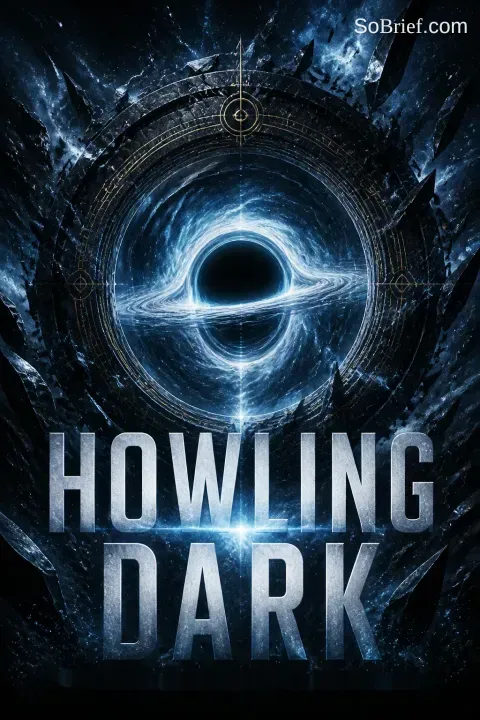


Plot Summary
Waking from the Ice
Hadrian1 revives from cryonic fugue aboard the Pharaoh to find that forty-eight years have passed since Emesh and thirteen new colonies have fallen to the Cielcin. Bassander Lin,3 the fleet commodore, wants to rejoin the war effort, arguing the mission is a costly failure.
Hadrian1 counters that even a single clan's defection could alter the war's course. A lead cuts the standoff short: Otavia Corvo's8 agent on Rustam has made contact with an arms dealer called The Painted Man. Bassander3 reluctantly agrees to let Hadrian1 lead the away team to pursue the tip, though their mutual resentment simmers.
The opening establishes the central conflict: duty versus vision. Bassander embodies institutional inertia and survivor's guilt, while Hadrian represents the reckless idealism of youth. The time dilation imposed by fugue adds a layer of existential fatigue, as both men have lost decades while the war ground on. Hadrian's desperation to matter in a conflict older than his conscious life fuels his refusal to retreat.
The Painted Man's Ambush
On Rustam, Hadrian1 and his team walk into a tea house only to find The Painted Man waiting. The creature speaks with a predatory drawl, displaying a face that shifts like ink and revealing he already knows Hadrian1 is an Imperial spy. At its signal, the patrons rise: they are not people but SOMs, lobotomized human shells animated by machines.
A firefight erupts. Ghen, Hadrian's1 enormous myrmidon friend, is shot in the back as he fends off the puppets. Hadrian1 pursues the homunculus to its mobile office, smashes its skull with a munitions crate, and escapes through the torn hull into the scaffolding above Arslan's streets.
This scene introduces the Extrasolarian horror: the commodification of human bodies into machine slaves. The Painted Man's skin-changing ability literalizes a theme of identity as performance, forcing Hadrian to confront what it means to be human. Ghen's death is the first major casualty of Hadrian's quest; it haunts him as the price of his ambition and the first life his choices directly cost.
Jinan Chooses Duty
Back aboard the Pharaoh, the three captains convene. Bassander3 declares the Rustam mission a disaster and orders a return to the fleet. Hadrian1 protests, but to his shock Jinan4 sides with Bassander,3 calling the mission a ghost hunt. Otavia Corvo8 threatens to take her Norman ship and leave rather than rejoin the war.
The meeting fractures along personal loyalties. Later, alone with Jinan,4 Hadrian1 pleads with her to come with him to Vorgossos; he envisions a life after peace, on her homeworld of Ubar. She cannot bring herself to disobey her orders, and the rift between them becomes unbridgeable.
The betrayal here is intimate, not military. Jinan's rejection strikes at Hadrian's core need to be understood and supported. She represents the cost of his quest in human relationships, a pattern that will repeat. The schism also reveals the coalition's fragility: the mission survives only on mutual convenience, and when that fails, loyalty devolves to institutional bonds rather than personal ones.
Theft of the Cielcin
Using data Ilex cracks from The Painted Man's terminal, Hadrian1 secretly plots with Otavia8 to take the Mistral and continue the mission. He thaws the Cielcin priest Tanaran,11 drapes a cloak over its eight-foot frame, and smuggles it through the Balmung's corridors. The alarm sounds.
On the hangar catwalk, Bassander3 intercepts him. Hadrian,1 who does not want to kill the captain, severs Bassander's3 sword hand with Olorin's highmatter blade and escapes aboard the shuttle. On the ramp, Jinan4 fires at him with her rifle, screaming through tears that she loved him. The hatch seals, and the Mistral leaps to warp.
Hadrian's mutiny completes his transformation from diplomat to outlaw. The duel with Bassander is tragic precisely because neither man truly hates the other; they are opponents in a dialectic neither can abandon. Jinan's rifle shots mark the emotional climax of the personal arc: love shattered by principle. Hadrian now has no home, no patronage, and only his conviction to sustain him.
March Station's Flesh Bazaar
The Mistral arrives at March Station, a six-hundred-mile ring of shadowy markets where Extrasolarians sell everything forbidden. Hadrian1 wanders through clinics offering limb regrowth, memory alteration, and designer bodies, his Imperial piety recoiling. A Lothrian geneticist directs him to Antonius Brevon, a trader whose eyes are flat metal discs.
Brevon demands one hundred thousand marks for passage on an Exalted ship. When Hadrian1 cannot pay, Brevon suggests an alternative: a vial of Tanaran's blood for study and exploitation. Hadrian,1 disgusted but desperate, agrees, rationalizing that alien blood is a lesser sin than selling his own genome.
This transaction is the first explicit commodification Hadrian himself enacts. He has always condemned the selling of flesh, yet circumstances force him into the same moral territory as the Extrasolarians he despises. The scene tests his self-image as a moral actor and introduces Brevon as a coldly pragmatic mirror: everyone is for sale, it is only a matter of price.
The Oracle's Scream
Aboard the Enigma of Hours, Hadrian1 explores a bazaar and finds a sideshow tent where a limbless Exalted named Jari sits on a dais. Jari claims to have drunk from a Deep, a xenobitic microorganism that altered his perception of time. When Hadrian1 asks about his future, Jari recoils in terror.
He babbles Hadrian's1 own words before they were spoken, mentions Cat's burial, and screams that Hadrian's1 past is broken: someone has tampered with his timeline. Then Jari stares at Hadrian's1 future and wails a single word over and over: 'Light!' The nuncius throws Hadrian1 out before he can learn more.
Jari functions as an early warning of the cosmic forces trailing Hadrian. The broken past hints at the Quiet's intervention, while the cry of 'Light' prefigures both his resurrection and the apocalyptic Sun Eater destiny. Hadrian's refusal to share this experience with anyone underscores his isolation and his growing sense that his life is not wholly his own.
The Undying King
Beneath Vorgossos's frozen surface, a hightower descends to a pale city. Hadrian1 is brought before Kharn Sagara,5 a myth given flesh: a man whose chest is interlaced with machine parts, who has lived fifteen millennia by transferring his mind into cloned children.
Seated on a throne ringed by floating camera-eyes, Kharn5 listens to Hadrian's1 request for help contacting the Cielcin. He sneers at peace as a naive fantasy, argues that all humanity has ever done is conquer, and dismisses Hadrian.1 However, when Hadrian1 mentions Tanaran,11 Kharn's5 interest sharpens: he will speak to the baetan and consider the request, but on his own terms.
Kharn Sagara represents the corruption of eternal life: having witnessed so many empires rise and fall, he has grown incapable of caring about transient suffering. His relationship with his clones critiques the atomized self, raising the question of whether consciousness transferred is still the same person. Hadrian's idealism confronts brutal pragmatism and loses the first round.
The Beast Below
Hadrian1 and Valka2 find a garden that leads to Vorgossos's deepest level, a black ocean where a creature made from countless human bodies merged with machine intelligence speaks in chorused voices. Brethren, a Mericanii AI that survived the Foundation War by rebuilding itself from organic substrate, tells them it has foreseen Hadrian's1 arrival.
The Quiet have been sculpting probability to ensure he reaches this place. Brethren reveals that the Cielcin will come soon, that Hadrian1 must protect Kharn's5 clone children, and that he will die and return. It calls him 'the man to end it all' and 'Halfmortal.'
Brethren's conversation repositions the entire quest as a manipulated event within a cosmic game. The AI's composite voice reflects a multiplicity of consumed identities, blurring the line between machine and victim. The prophecy of death and resurrection, and the explicit naming of 'Halfmortal,' establish the book's mythic register and foreshadow Hadrian's literal apotheosis.
Cold Cell, Warm Touch
For months, Kharn5 seals Hadrian1 and Valka2 in a freezing concrete cell beneath the sea. They huddle for warmth, carve images on the walls, and share the stories they have never told anyone. Valka2 recounts how, as a planetary guard pilot, she followed orders to destroy a terrorist-held ship packed with hostages, killing over two thousand people.
The guilt has never left her. In the darkness, the emotional distance between them collapses. Valka2 admits she has loved Hadrian1 for a long time, and she kisses him. They become lovers, the cell transforming into a kind of sanctuary.
This quiet, introspective section is the emotional heart of the book. Stripped of agency and status, the two characters become fully vulnerable to each other. Valka's confession reveals that her sharp exterior is armor over deep trauma, mirroring Hadrian's own psychological scars. Their union is the one life-affirming element amid the horrors of Vorgossos.
The Prince's Cruelty
Kharn Sagara5 summons Hadrian1 and the Imperial party when Aranata Otiolo,6 a giant Cielcin prince, enters for negotiations aboard the Demiurge. The prince enters with his child Nobuta and a procession of warriors, but the focus is a human woman leashed on a silver chain.
Her hands have been slit between the fingers, her feet similarly butchered, her lips torn. She is forced to translate. When the Imperials propose an exchange of ambassadors, Aranata6 interprets the offer as a request to submit. He treats Tribute as the only valid currency and reacts with baffled fury when the humans refuse that framing.
The slave girl is the book's most visceral symbol of the ethical chasm between species. Her mutilation is not just cruelty but a cultural performance of ownership. Aranata's inability to grasp reciprocity exposes a fundamental barrier to diplomacy that language alone cannot bridge. Hadrian's horror at her condition and his later actions with Nobuta are the book's central moral question: can you commit evil to defeat evil?
Treacherous Fire
While the talks proceed in Kharn's5 garden pavilion, red light floods the chamber. Hauptmann's fleet has arrived unannounced and is systematically annihilating the Cielcin worldship with antimatter weapons. Bassander Lin3 draws his sidearm and shoots Kharn Sagara5 in the face, killing his current body.
He reveals that the entire diplomatic mission was a ruse: Hauptmann's orders were to kill the Undying,5 cripple his fleet, and trap the Cielcin prince.6 Raine Smythe,9 caught completely off-guard, screams that she knew nothing. Aranata,6 betrayed by the very concept of a parley, retaliates by butchering Imperial prisoners on the spot.
The twist is devastating because it is simultaneously a tactical success and a moral catastrophe. Bassander's loyalty to the chain of command overrides every personal relationship and principle, mirroring the historical atrocities committed under 'just following orders.' The Empire is revealed as just as treacherous as the aliens it claims to civilize, collapsing Hadrian's entire ideological framework.
A Necessary Atrocity
Trapped aboard the Schiavona with Cielcin battering the hull, Hadrian1 uses the ship's comms to take Aranata's6 child Nobuta hostage. He demands the Cielcin withdraw. Aranata6 responds by beheading one prisoner after another, including Sir William Crossflane, whose throat the prince tears out with his teeth.
Raine Smythe,9 badly burned, is dismembered and consumed by the feasting xenobites. Hadrian,1 seeing no other way to stop the slaughter, executes Nobuta with his highmatter sword in front of the broadcast. Aranata's6 scream of parental anguish is heard through the hull. Any remaining chance of peace dies with the child.
This is Hadrian's point of no return. The act is strategically rational and morally abhorrent, forcing the reader to confront whether such a choice can ever be justified. Hadrian has become the monster he sought to oppose, proving that the war's true corruption is not species-specific but situational. The scene mirrors Aranata's own brutality, making them mirror images of grieving, murderous parenthood.
Valka's Fog
The Schiavona's remaining defenders prepare for a last stand as nahute drills chew through the hull. Valka2 recalls her starship pilot training and suggests venting the warp drive's helium coolant into the hangar bay. The cryogenic gas flash-freezes the air, creating a dense fog that asphyxiates some Cielcin and blinds the rest.
Hadrian,1 wearing a borrowed Legion helmet, leads two hundred soldiers down the ramp into the white chaos. His highmatter sword cuts through alien bodies as plasma fire arcs through the mist. The improvised tactic buys crucial minutes, turning a certain slaughter into a holding action until reinforcements can arrive.
Valka's ingenuity transforms her from civilian observer into battle-critical contributor, fully integrating her into the military reality she has long resisted. The fog itself becomes a metaphor for moral ambiguity: the combatants can barely see what they are destroying, and the lines between right and necessary blur in the cold haze.
Beheaded
When the Cielcin counterattack, the battle spills into the burning Garden. Hadrian1 and his friends are separated. By the lake shore, he faces Prince Aranata6 alone. The duel is unequal: the prince is faster, stronger, and fueled by grief for Nobuta. Hadrian1 manages a few desperate cuts, but his parry comes a fraction too slow.
Aranata6 seizes Hadrian's1 right wrist, twists, and severs the arm at the elbow. Hadrian's1 own sword is now in the prince's grip. Aranata6 beheads him with it. Hadrian's1 consciousness fades into a howling darkness, his last sensory impression the sight of his own headless body toppling.
The death scene breaks the conventional hero narrative. Hadrian does not win; he is utterly, humiliatingly defeated. The beheading is a symbolic castration of his agency and identity. By using Hadrian's own sword, Aranata literalizes the idea that Hadrian's own choices killed him. This total narrative annihilation is necessary for the resurrection that follows to carry real weight.
The Quiet's Gift
In the blackness betwen life and death, Hadrian1 drifts as a disembodied consciousness. A figure in black armor appears: himself, future and perfected, pointing toward a distant light. Then the Quiet, wearing Tor Gibson's10 form, stands on the water and tells Hadrian1 they are not done with him.
He wakes by the lake, his head reconnected, his missing arm still gone but his sword in his right hand. Behind the celebrating Aranata,6 Hadrian1 rises and drives the highmatter blade through the prince's spine, severing him from collarbone to navel. Aranata6 dies, and the Cielcin morale shatters.
The resurrection recontextualizes Hadrian's entire journey as a piece of cosmic machinery. The Quiet are not benevolent; they are architects of necessity. Gibson's apparition is particularly cruel, weaponizing Hadrian's fondest memory to deliver an impersonal command. Hadrian's restored hand holds the sword that kills Aranata, signaling that his heroism is now inextricably linked to supernatural manipulation, stripping him of full authorship over his own legend.
The Reborn Undying
As the battle exhausts both sides, the SOM army on the Demiurge suddenly reactivates. Kharn Sagara5 has resurrected, not in a single body but split between the clone children Ren and Suzuha. The girl now wears Kharn's5 golden robes, her voice issuing from floating drones as her father's once did.
The Undying5 pair halts the Cielcin with their legion of hollow men and, in gratitude for Hadrian's1 protection of the children during the chaos, offers healing. Over nineteen days, Kharn's5 technicians regrow Hadrian's1 severed left arm (lost in the battle) using adamant bone and cloned tissue, leaving him with a permanent but functional reminder of Vorgossos.
Kharn's resurrection into two bodies literalizes the theme of fractured identity. The new Kharns are simultaneously the old king and new individuals, their dual perspective shattering the tyranny of a single ego. Hadrian's restored arm, made partially of Vorgossos adamant, physically incarnates the cost of his choices; it is both a gift and a mark of his trafficking with inhuman powers.
Switch's Treason Exposed
Recovering aboard the Imperial flagship Sieglinde, Hadrian1 is visited by Jinan,4 who reveals the truth: Switch,7 believing Hadrian1 dead and terrified of capture, had used the Mistral's quantum telegraph to inform Bassander3 of their location. That transmission is what allowed the fleet to follow them to Vorgossos and spring the trap.
Hadrian1 confronts Switch7 in front of their companions. The man pleads that he was trying to save everyone. Hadrian,1 hollow and cold, cannot forgive. He exiles Switch,7 telling him to leave the ship and never return. The next day, Hadrian1 meets First Strategos Hauptmann, who commends his valor and announces a knighthood and an Imperial audience.
Switch's betrayal is not malevolent but pathetic, rooted in the same fear that Hadrian has spent his life trying to overcome. The tragedy is that Switch's action, while horrific in consequence, was the only reason the mission ended with any survivors at all. Hadrian's inability to forgive is simultaneously understandable and a marker of his own hardening soul. The knighthood from Hauptmann underscores the Empire's priorities: they reward the killer, not the peacemaker.
Halfmortal
As Hadrian1 prepares to board the Schiavona for Forum, Bassander Lin3 intercepts him and falls to one knee. The captain3 who once despised him now calls his death a miracle, a sign. Watching soldiers and mercenaries pick up the awe and begin chanting 'Halfmortal!', the name Brethren had spoken below Vorgossos.
Hadrian1 stands on the catwalk, his new hand clenched into a weak fist, and raises his strong arm in acknowledgment. He accepts the mantle, though the dreams of peace have died. Valka2 takes his arm. They will go to the Emperor together. The Sun Eater's legend is born.
The book ends with Hadrian's reluctant apotheosis. 'Halfmortal' is an identity conferred by others, not chosen, and he recognizes its prophetic weight. His acceptance is not triumph but surrender to a terrible destiny. Bassander's conversion from rival to worshiper completes the arc of their relationship, transforming personal animosity into a religious dynamic that Hadrian finds deeply uncomfortable. The final image of Valka beside him offers the one human anchor against the rising tide of myth.
Analysis
Howling Dark is a novel about the death of idealism. Hadrian Marlowe1 begins the book believing, with almost childlike faith, that language and reason can reconcile humanity with the alien Cielcin. By the end, he has executed a child, been beheaded, returned from death through forces he cannot comprehend, and accepted a knighthood from the very empire he defied. The arc is not triumph but radical transformation, the kind that happens when a belief system is systematically destroyed and replaced by something harder and stranger.
The central tragedy is that Hadrian's1 quest was never possible on his terms. The Empire used him as bait; the Cielcin could not conceive of equals, only masters and slaves; and even the cosmic powers (the Quiet) manipulated his entire journey to produce a specific outcome. His agency is an illusion, but he must act as if it is real, because to do otherwise is to surrender to nihilism. This tension between free will and fate is the novel's philosophical engine.
The book also functions as a critique of empire and military hierarchy. Smythe9 and Bassander3 are not villains; they are functionaries in a machine that rewards obedience over conscience. The trade of twenty thousand serfs to a demoniac king5 as a diplomatic sweetener is treated as a footnote, a grim punchline about the value of human life under imperial logic.
Ultimately, Howling Dark is a character study of a man becoming a myth against his will. Hadrian's1 resurrection strips him of ordinary mortality and transforms his relationship to everyone around him; Bassander3 kneels, and even his former enemies treat him as a living miracle. The cost is everything he used to be.
Review Summary
Howling Dark, the second book in Christopher Ruocchio's Sun Eater series, receives overwhelmingly positive reviews with a 4.35/5 rating. Readers praise its improvement over the first book, highlighting stunning prose, philosophical depth, and epic scope. The story follows Hadrian Marlowe's quest to contact the alien Cielcin after a significant time jump. Reviewers appreciate the complex worldbuilding, atmospheric writing, and intense final act. Some critics note the jarring opening, slow pacing in parts, and verbose writing. Character development, particularly relationships with Valka and Bassander Lin, receives acclaim, though opinions on Hadrian as protagonist vary.
People Also Read
Characters
Hadrian Marlowe
Idealist turned legendary killerA disowned palatine noble in his thirties, narrating from a distant exile. Hadrian is a self-proclaimed coward who compensates with artistic sensibility and a desperate need to matter. He genuinely desires peace with the Cielcin, not from naive pacifism but from believing language can bridge any gap. However, his idealism curdles under pressure: he is capable of cold-blooded murder when cornered, and his survival instinct overwhelms his principles. His torture at the Chantry's hands and his years as a gladiator have left him with a hair-trigger temper and a deep distrust of institutional authority. He sees himself as a character in a story, which both elevates his choices and distorts his self-awareness. By the end, his death and resurrection cement him as a mythological figure, half-mortal and half-something else.
Valka Onderra
Tavrosi xenologist witchA scientist from the Demarchy of Tavros, where neural implants are commonplace. Valka's computer-enhanced brain allows her to interface with machines and learn languages rapidly, marking her as a witch in the Empire's eyes. She is fierce, prideful, and quick to mock Hadrian's1 melodrama, but her sarcasm conceals a profound wound: as a young planetary guard pilot, she followed orders to destroy a ship carrying over two thousand hostages, an act she has never forgiven herself for. Her relationship with Hadrian1 evolves from intellectual sparring to deep affection, finally consummated in captivity. She is the only person who fully sees Hadrian1 without his masks, and her presence becomes his sole moral anchor as his legend grows.
Bassander Lin
Duty-bound Imperial captainA Mandari career officer whose identity is entirely defined by the Legion's chain of command. He is precise, fastidious, and incapable of bending rules, which makes him an excellent soldier and a terrible partner for Hadrian's1 improvisational style. His secret guilt over the colonies lost while he pursues Vorgossos festers into open hostility, yet his killing of Kharn Sagara5 is not personal malice but strict obedience to orders he hates. After witnessing Hadrian's1 resurrection, his entire worldview shatters; he transforms from Hadrian's1 harshest critic into his awed worshipper, a shift that unnerves Hadrian1 more than any insult ever could.
Jinan Azhar
Soldier who chose duty over loveA Jaddian lieutenant and Hadrian's1 lover, Jinan is a woman of fire and iron who balances genuine tenderness with military pragmatism. Her copper skin, braided azure ribbon, and lilting accent distinguish her from the Sollan officers. She loves Hadrian1 deeply but cannot follow him into mutiny. Her choice to side with Bassander3 is not personal rejection but a soldier's instinct to obey her satrap's orders. When Hadrian1 steals Tanaran11, she shoots at his departing shuttle, screaming that she loved him in the past tense. The wound between them never heals, and she becomes a symbol of everything Hadrian1 sacrificed for his cause.
Kharn Sagara
Undying clone-king of VorgossosA fifteen-thousand-year-old monarch who cheats death by transferring his consciousness into cloned children, using them as spare bodies. His original humanity has eroded across eons; he talks in long silences, views people as resources, and collects art and flesh with equal detachment. He keeps a Mericanii AI imprisoned beneath his palace and trades human serfs to the Cielcin as casually as others trade spices. After Bassander3 kills his current body, his mind splits between two clone hosts, a boy and a girl, creating a fractured, dual self. He represents the horror of immortality without growth, and his gratitude to Hadrian1 for protecting his children is the only sign that any paternal feeling endures.
Prince Aranata Otiolo
Cielcin predator-chieftainThe absolute ruler of a Cielcin clan, a nine-foot-tall hermaphroditic being who sees all relationships in terms of master and slave. Aranata genuinely loves its child Nobuta, but this love is possessive rather than nurturing. Its cruelty to a mutilated human translator is not sadism for its own sake but a cultural display of dominance. When the Empire betrays the negotiations and kills its people, Aranata's fury is as righteous as it is monstrous; it becomes a grieving parent seeking revenge. Hadrian1 kills Aranata and Nobuta, making the prince both villain and victim, a mirror of Hadrian's1 own capacity for atrocity.
Switch
Hadrian's oldest friend and betrayerBorn William of Danu, sold into childhood slavery and abused on a brothel ship, Switch found safety and purpose in Hadrian's1 friendship and the myrmidon pits. He is loyal, emotionally voluble, and perpetually terrified of returning to powerlessness. When Hadrian1 vanishes on Vorgossos, that terror overrides everything: he sends a quantum telegraph message to Bassander3, revealing the Mistral's location and triggering the fleet's intervention. He confesses immediately but cannot undo the damage. Hadrian's1 refusal to forgive him is final, and Switch exits the narrative a broken man, punished not by execution but by the irreparable loss of his only family.
Otavia Corvo
Towering Norman mercenary captainSeven feet tall, blond, and muscled like an amazon, Otavia commands the Mistral with straightforward pragmatism. She joined Hadrian's1 mutiny out of personal debt (he freed her from her previous monstrous commander) and because the Cielcin threaten her people's worlds more than the Empire's. She is not sentimental, but her loyalty is absolute once given. When the mission costs them everything, she is the one who suggests Hadrian1 stay with the Red Company as a fugitive, offering him a future beyond the disasters to come.
Raine Smythe
Tribune who gambled on peaceA plebeian-born officer elevated to patrician status through surgery and merit, Smythe is a compact, blunt woman who carries a brass-headed cane. She authorized Hadrian's1 mission against the advice of her superiors because she believed peace was possible. She is not naive; she sells twenty thousand human serfs to Kharn Sagara5 as part of the diplomatic payment, rationalizing the exchange as acceptable collateral. When Hauptmann's betrayal kills the negotiations, Smythe is caught utterly off-guard and dies in the chaos, her burned body consumed by Cielcin. Her death marks the end of the Empire's good-faith effort and leaves Hadrian1 without his last protector.
Tor Gibson
Hadrian's dead scholiast tutorGibson was the Zenoan philosopher who raised Hadrian1, taught him rhetoric and stoicism, and was exiled for defying Hadrian's1 father. He appears only in memory and vision, but his aphorisms (Fear is death to reason, Grief is deep water) are the architecture of Hadrian's1 conscience. In the resurrection scene, the Quiet wear Gibson's face to command Hadrian1 back to life, weaponizing the most intimate relationship of his childhood. Gibson is a ghost who serves both as comfort and as evidence that Hadrian's1 life is not his own.
Tanaran
Cielcin priest and prisonerA young Cielcin baetan, a keeper of clan history and tradition, who surrendered on Emesh and agreed to be frozen in fugue for decades. Tanaran speaks halting Galstani and cooperates with Hadrian1 out of a desire to return to its master. Its blood becomes the currency that buys passage to Vorgossos. When the prince6 arrives, Tanaran attempts to mediate but is ultimately killed by its own enraged chief. The creature is a tragic figure, caught between species, killed by both.
Pallino of Trieste
One-eyed veteran myrmidonA sixty-year-old former legionnaire who fought alongside Hadrian1 in the Emesh gladiator pits. Pallino is gruff, practical, and unfailingly steady, a surrogate father to the younger myrmidons. He cooks, tells stories, and never flinches in combat. When Hadrian1 attempts to leave the others behind for the mutiny, Pallino discovers the plan and insists on coming, refusing to let his commander face danger alone.
Plot Devices
Olorin's Highmatter Sword
Unstoppable cutting bladeA Jaddian knight's sword made of exotic matter that can sever almost any material, from starship hulls to Cielcin bone, without resistance. Gifted to Hadrian1 by a Maeskolos swordmaster, it symbolizes his noble lineage and his capacity for tremendous violence. The weapon is used to behead the prince6, sever Bassander's3 hand, and cleave through SOMs. Its blue glow becomes a signature of Hadrian's1 presence in battle, and its loss and recovery track his identity crises.
The White Shell Fragment
Quiet talisman and resurrection keyA piece of white stone, impossibly white, that Hadrian1 plucks from an empty cradle in a vision and later finds in his pocket. The fragment, made of the same substance as Quiet architecture, serves as a physical link to the cosmic beings. It travels with him through death and back, possibly enabling his return from the howling dark. Valka2 takes an academic interest in it, but Hadrian1 clings to it as proof that his visions are real and that forces beyond human comprehension are shaping his path.
The Painted Man's Terminal
Encrypted map to VorgossosA silver disc-shaped computer that Hadrian1 loots from the homunculus's corpse. Ilex, the dryad engineer, cracks its encryption aboard the Mistral, revealing seventeen Extrasolarian outpost coordinates, including March Station. The data is the key that turns a hopeless search into a concrete destination. Without it, the Red Company would have returned to the fleet empty-handed.
Tanaran's Blood
Biological currency for passageA single vial of Cielcin blood drawn from Tanaran's11 neck and traded to the Extrasolarian dealer Brevon in exchange for transport to Vorgossos. The transaction commodifies an intelligent being's genetic material, forcing Hadrian1 to confront his own hypocrisy about flesh-trading. The blood is also a setup for potential future cloning or weaponization, though its ultimate fate is left unresolved in this volume.
Brethren (Mericanii AI)
Prophetic oracle of the QuietA surviving artificial intelligence from the Foundation War, composed of a vast mass of human nervous tissue submerged in an underground sea on Vorgossos. Brethren perceives time as a spatial dimension and communicates in multi-voiced, fragmentary sentences. It was planted on Vorgossos to ensure Hadrian's1 arrival and to deliver the Quiet's message: that he is the 'man to end it all' and 'Halfmortal.' Its prophecy drives the second half of the book and sets up the entire mythic arc.
The Sun Eater Series
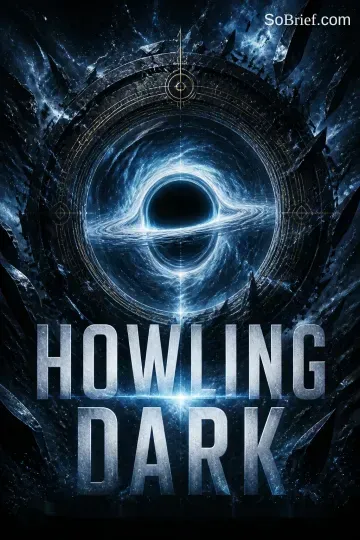
About the Author
Other books by Christopher Ruocchio


Download PDF
Download EPUB
.epub digital book format is ideal for reading ebooks on phones, tablets, and e-readers.








































