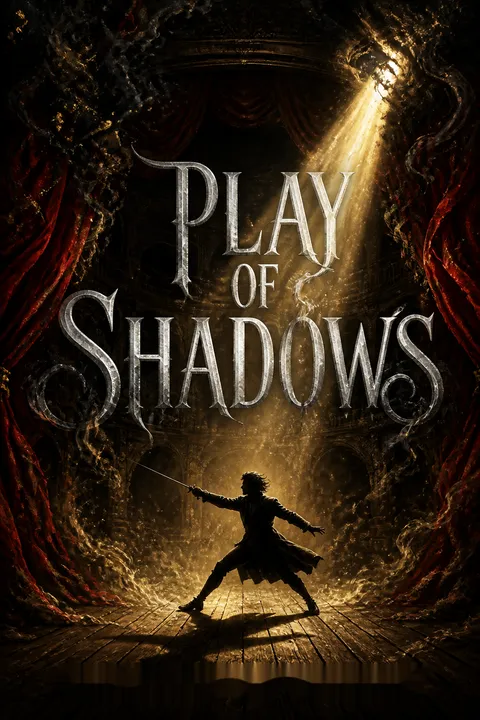

Plot Summary
Rabbit, Rabbit, Run
Damelas Chademantaigne, a failed actor and even worse duelist, flees through the labyrinthine streets of Jereste, pursued by the Iron Orchids—mercenary thugs enforcing a duel he cannot win. Nicknamed "Rabbit" for his tendency to run, Damelas's only hope is to escape into the Operato Belleza, a crumbling theater whose ancient privileges might shield him from the Vixen, the city's deadliest duelist. In a desperate act, he bluffs his way into the troupe, claiming to be their new herald. The actors, wary but united by their own outsider status, reluctantly shelter him. This moment of panic and improvisation sets Damelas on a path where cowardice and cunning become his only weapons, and the stage his unlikely sanctuary.
The Herald's Gambit
Damelas's quick thinking and talent for deception win him a temporary reprieve as he's absorbed into the Knights of the Curtain. The troupe's director, Shoville, and the burly actor Beretto, see potential in Damelas's audacity, if not his skill. The Iron Orchids, frustrated, are forced to leave, but the threat of the Vixen's duel lingers. Damelas's new role as herald is both a shield and a shackle—he is safe only as long as he remains part of the company. The theater's ancient rights protect its players from duels, but Damelas's presence brings tension and suspicion. The troupe's fragile unity is tested, and Damelas's survival now depends on his ability to play a part both on and off the stage.
Sanctuary of the Stage
Life in the Belleza is a blend of camaraderie and hardship. The actors, misfits and dreamers, find purpose in their art, even as poverty and rivalry gnaw at them. Damelas, haunted by his lineage as a Greatcoat—a legendary order of dueling magistrates—struggles with his own mediocrity. The troupe's star, Abastrini, is a Veristor, believed to channel the spirits of historical figures, but Damelas suspects it's all a sham. Yet, the magic of performance is real: the stage transforms fear into courage, and lies into fleeting truths. Damelas's bond with Beretto deepens, and the theater becomes both his hiding place and the crucible where he must confront his failures.
The Vixen's Shadow
The Vixen, Ferica di Traizo, is more than a threat—she is a force of nature, her vendetta against Damelas's family rooted in old wounds. Damelas's cowardice is both his curse and his shield, but the Vixen's patience is not infinite. The city's dueling courts, corrupt and theatrical in their own right, loom over Damelas's every move. The Iron Orchids, emboldened by the city's unrest, tighten their grip. Damelas's only hope is to remain indispensable to the troupe, but the line between performance and reality blurs. The Vixen's presence is a constant reminder that the past cannot be outrun, only delayed.
The Troupe's Pact
The Knights of the Curtain are more than actors—they are a found family, bound by necessity and shared struggle. Shoville's leadership is tested as the company faces dwindling audiences and mounting debts. Damelas, despite his self-doubt, becomes a vital part of the ensemble, his lies evolving into genuine loyalty. The troupe's rituals, from backstage banter to opening night speeches, forge a sense of belonging. Yet, the threat of violence outside the theater is mirrored by rivalries within. The troupe's unity is both their strength and their vulnerability, as Damelas's secret and the city's unrest threaten to tear them apart.
The Veristor's Curse
Damelas's accidental invocation of forbidden lines on stage triggers a scandal. The audience, nobles and commoners alike, are shocked by his unscripted denunciation of the city's founding myths. The Duke, Firan Monsegino, takes notice, and Damelas is summoned—first by the enigmatic Black Amaranth, then by the Duke himself. The Veristor's art, once thought a fraud, reveals itself as a dangerous power: Damelas begins to channel the memories and emotions of the dead, blurring the line between actor and vessel. This curse isolates him, as both ally and enemy seek to use his gift for their own ends.
The Black Amaranth
Shariza, the Black Amaranth, is the Duke's deadly agent, her presence both a threat and a strange comfort to Damelas. Their encounters are charged with danger and reluctant intimacy. Shariza's loyalty is to the Duke, but her actions suggest a deeper code. She tests Damelas, probing his motives and weaknesses, while offering cryptic guidance. The city's politics are a web of intrigue, and Shariza moves through it with lethal grace. Her relationship with Damelas becomes a dance of trust and betrayal, as both recognize in each other a kindred spirit shaped by violence and longing.
The Duke's Decree
The Duke, seeking to control the narrative of the city's history, commands the troupe to stage a new play—one that centers the villainous Corbier as protagonist. Damelas is thrust into the lead, forced to embody a figure reviled by tradition. The troupe is divided, some seeing opportunity, others fearing ruin. The Duke's motives are opaque: is he seeking truth, or manipulating the past for his own ends? The Iron Orchids, meanwhile, escalate their campaign of terror, enforcing their own laws and targeting the vulnerable. The stage is set for a confrontation that will blur the boundaries between art, politics, and violence.
The Play Unravels
As rehearsals begin, Damelas's Veristor gift intensifies. He is haunted by visions and voices from the past, unable to distinguish memory from performance. The troupe struggles with the new script, their roles shifting as the play's meaning changes. Abastrini, once the star, is sidelined, his resentment simmering. The audience, drawn by scandal and curiosity, becomes a volatile force. Damelas's performance is electrifying and dangerous, as he channels Corbier's rage and sorrow. The play becomes a battleground for the city's soul, with Damelas at its center, torn between loyalty to his friends and the demands of history.
The Iron Orchids' Threat
The Iron Orchids, emboldened by the city's chaos, attack the Belleza. The troupe, forced to defend their home, discover reserves of courage and solidarity they never knew they possessed. The battle is brutal, with losses on both sides. Shoville, the director, sacrifices himself to save Zina, a street urchin who has become part of the troupe's family. The Belleza burns, and the survivors are left to pick through the ashes. The Iron Orchids' true power is revealed—not in their swords, but in their ability to turn the city's people against each other, sowing fear and division.
The Bardatti's Secret
Rhyleis, a Bardatti Troubadour, reveals herself as an agent of the Greatcoats, the legendary order to which Damelas's grandparents belonged. The Bardatti's art is more than performance—it is a means of preserving and uncovering the truth. Rhyleis becomes both mentor and provocateur, challenging Damelas to use his Veristor gift not just for survival, but for justice. Together, they uncover the existence of the Court of Flowers, a shadowy conspiracy manipulating the city's fate. The past and present intertwine, as Damelas learns that the stories told on stage can shape the world beyond it.
The Court of Flowers
The Court of Flowers is not a person or a cabal, but a self-perpetuating machine—a system of lies, prejudices, and ambitions that recruits its own agents. The Iron Orchids are its enforcers, but the true enemy is the city's willingness to believe in scapegoats and myths. Ajelaine, the "Never Queen," emerges from the past as the key to understanding the Court's origins. Her investigations, preserved in a lost book, reveal that the city's greatest tragedies were engineered not by villains, but by the collective actions of the fearful and the ambitious. The only way to break the cycle is to confront the truth, no matter the cost.
The Past Awakens
Damelas, guided by Ajelaine's spirit and Corbier's memories, travels deeper into the past. He witnesses the events that led to the city's founding trauma: the love triangle between Corbier, Pierzi, and Ajelaine, and the manipulations that turned friends into enemies. The deaths that shaped the city's myths were staged, a desperate attempt to outwit the Court of Flowers. Damelas's gift allows him to share these revelations with the present, but each journey into memory brings him closer to madness and death. The past is not dead—it is a living force, demanding to be heard.
The Lovers' Tragedy
The true story of Corbier and Ajelaine is one of love thwarted by politics and fear. Pierzi, manipulated by his own lieutenants—agents of the Court of Flowers—believes he must kill Ajelaine and her children to secure his throne. In reality, the deaths are faked, a last act of mercy and rebellion. Corbier, consumed by grief and rage, becomes the city's scapegoat, his name synonymous with villainy. Damelas, embodying both Corbier's passion and his own longing for Shariza, must choose between vengeance and forgiveness. The play's climax is not a duel, but an act of surrender to the truth.
The Battle of Belleza
The final performance is interrupted by a real battle as the Iron Orchids storm the stage. The troupe, inspired by Damelas's Veristor gift, become more than actors—they channel the memories and skills of the city's forgotten heroes. The audience, swept up in the magic, joins the fight, turning the tide against the Orchids. The boundaries between past and present, fiction and reality, dissolve. The city is saved not by swords, but by the power of shared memory and collective action. The cost is high, but the victory is real.
The City in Flames
The Belleza is destroyed, Shoville and others are dead, and the city is forever changed. The Duke, exposed and dethroned, is replaced by Viscountess Kareija, but the true enemy remains at large. The Iron Orchids are routed, but the system that created them endures. Damelas, exhausted and wounded, is hailed as a hero, but he knows the fight is not over. The troupe, battered but unbroken, vows to continue their quest for truth. The city mourns its losses, but the seeds of hope are sown in the ashes.
The Final Act
Damelas, now recognized as a true Veristor, is offered a place among the Greatcoats but chooses instead to lead a new troupe—a Court of Shadows—dedicated to uncovering the hidden truths that threaten Tristia. Beretto, finally named a Greatcoat, joins him, along with Ornella, Abastrini, Rhyleis, Shariza, and the rest of the Knights of the Curtain. Their mission is to travel the land, staging historias that reveal the secrets of the past and expose the conspiracies of the present. The battle is not over, but the players are ready.
The Curtain Rises Again
In the aftermath, Damelas and Shariza find solace in each other, their love forged in the crucible of violence and loss. The troupe, united by purpose and friendship, prepares to take their art to the world. The city, scarred but resilient, begins to heal. The Veristor's gift, once a curse, becomes a beacon of hope—a reminder that the truth, however painful, is the only path to justice. The curtain rises on a new era, and the players step into the light, ready to face whatever shadows await.
Analysis
Sebastien de Castell's Play of Shadows is a masterful meditation on the power of art, memory, and collective action in the face of systemic injustice. At its heart, the novel is a love letter to the theater—not just as entertainment, but as a crucible where truth and identity are forged. The story's central conceit—the play within the play—serves as both mirror and weapon, allowing the characters to confront the traumas of the past and the conspiracies of the present. Damelas's journey from cowardice to courage, from isolation to community, is both deeply personal and profoundly political. The Veristor's gift, with its ability to channel the memories of the dead, is a metaphor for the ways in which history haunts and shapes us. The Court of Flowers, as a self-perpetuating system of lies and prejudice, is a chilling allegory for the dangers of collective complicity and the seductive power of myth. Yet, the novel is ultimately hopeful: it insists that the truth, however painful, is the only path to justice, and that love and solidarity are the sharpest blades we possess. In a world where the lines between performance and reality are ever more blurred, Play of Shadows is a timely reminder that the stories we tell—and the ones we choose to believe—can save or damn us.
Review Summary
People Also Read




Characters
Damelas Chademantaigne
Damelas is a failed actor and even worse duelist, haunted by the legacy of his Greatcoat grandparents. His self-loathing and cowardice are both shield and prison, but beneath them lies a deep empathy and a longing for belonging. Damelas's Veristor gift—his ability to channel the memories and emotions of the dead—isolates him, making him both a vessel and a target. His relationships with Beretto, Shariza, and the troupe transform him, forcing him to confront his fears and accept his role as both actor and agent of change. Damelas's journey is one of self-acceptance, as he learns that courage is not the absence of fear, but the willingness to act despite it.
Shariza (The Black Amaranth)
Shariza is the Duke's deadly agent, a Dashini assassin whose loyalty is to both her master and her own code. Her relationship with Damelas is fraught with danger and longing, as both recognize in each other a kindred spirit shaped by violence and loss. Shariza's exterior is cold and impenetrable, but her actions reveal a deep capacity for love and sacrifice. She is both Damelas's greatest threat and his most steadfast ally, her presence a constant reminder that trust and betrayal are two sides of the same coin.
Beretto Bravi
Beretto is Damelas's best friend and the emotional core of the Knights of the Curtain. His strength and optimism mask a deep yearning for purpose and recognition. Beretto's failed attempts to join the Greatcoats are a source of both humor and pathos, but his true greatness lies in his unwavering loyalty and courage. When finally named a Greatcoat, Beretto's joy is tempered by his commitment to the troupe and their mission. He is the embodiment of the idea that heroism is found not in grand gestures, but in everyday acts of kindness and solidarity.
Hujo Shoville
Shoville is the beleaguered director of the Belleza, a man whose love for the theater and his troupe is matched only by his capacity for self-sacrifice. His leadership is tested by poverty, rivalry, and violence, but he never wavers in his commitment to his players. Shoville's death, saving Zina from the burning theater, is both a personal tragedy and a symbol of the cost of resistance. His legacy endures in the unity and courage of the troupe, who honor his memory by continuing the fight for truth and justice.
Abastrini
Abastrini is the troupe's star and self-proclaimed Veristor, a man whose arrogance and resentment mask a deep insecurity. His rivalry with Damelas is both comic and tragic, as he struggles to accept his own limitations and the changing world around him. Abastrini's redemption comes in the final battle, where he uses his talents to inspire and protect his friends. His journey is one of humility and growth, as he learns that true greatness lies not in fame, but in service to others.
Ornella
Ornella is the oldest member of the troupe, her roles diminished by age but her wisdom and courage undimmed. She is a stabilizing force, offering guidance and support to Damelas and the others. Ornella's willingness to fight, both on stage and in battle, is a testament to her resilience. Her decision to join Damelas's new troupe is an act of faith in the power of art and community.
Rhyleis
Rhyleis is a master of song and story, her sharp tongue and sharper mind making her both mentor and antagonist to Damelas. As an agent of the Greatcoats, she is committed to uncovering the truth and exposing the conspiracies that threaten Tristia. Rhyleis's relationship with Damelas is one of mutual respect and rivalry, as both challenge each other to grow. Her presence is a reminder that art is both weapon and shield.
Firan Monsegino (The Duke)
Monsegino is a foreigner on the throne, his reign marked by insecurity and idealism. His obsession with the city's history and his own lineage drives the events of the story, as he seeks to use Damelas's Veristor gift to uncover the truth. Monsegino's abdication is both a personal defeat and a political necessity, but his willingness to sacrifice himself for the city's future redeems him. His relationship with Shariza and Damelas is complex, marked by both manipulation and genuine affection.
Ferica di Traizo (The Vixen)
The Vixen is Damelas's greatest threat, her vendetta against his family rooted in old wounds and personal loss. She is both predator and victim, her skill with the blade matched only by her capacity for cruelty. The Vixen's pursuit of Damelas is relentless, but her own humanity is revealed in moments of vulnerability. Her death at the hands of Shariza and Paedar Chademantaigne is both an end and a beginning, as the cycle of violence is finally broken.
Ajelaine (The Never Queen)
Ajelaine is the heart of the city's founding tragedy, her love for Corbier and Pierzi the catalyst for the events that shaped Jereste. Her investigations into the Court of Flowers, preserved in a lost book, reveal the true nature of the city's conspiracies. Ajelaine's spirit guides Damelas through memory and loss, her wisdom and courage a beacon in the darkness. She is both victim and victor, her legacy the hope that truth and love can overcome even the deepest wounds.
Plot Devices
The Play Within the Play
The central device of the novel is the play staged by the Knights of the Curtain, which becomes both a literal and metaphorical battleground. The performance is not just entertainment, but a means of uncovering and confronting the city's hidden traumas. The Veristor's gift allows Damelas to channel the memories of the dead, blurring the line between actor and vessel, past and present. The play's evolving script reflects the shifting alliances and revelations of the story, with each performance bringing the characters closer to the truth—and to danger.
The Veristor's Gift
Damelas's ability to embody the spirits of the past is both a blessing and a burden. It isolates him, making him a target for those who would use or destroy him, but it also gives him the power to change the world. The gift is activated by ritual—theater, music, and collective belief—and its use exacts a heavy toll. The Veristor's journeys into memory are both personal and communal, as he learns that the past is not dead, but a living force that shapes the present.
The Court of Flowers
The Court of Flowers is not a person or a cabal, but a machine—a network of lies, prejudices, and ambitions that recruits its own agents. The Iron Orchids are its enforcers, but the true enemy is the city's willingness to believe in scapegoats and myths. The conspiracy is revealed not through a single villain, but through the collective actions of the fearful and the ambitious. The only way to break the cycle is to confront the truth, no matter the cost.
The Past as Prologue
The novel's structure is recursive, with the events of the past echoing in the present. The love triangle between Corbier, Pierzi, and Ajelaine is both a personal tragedy and a political allegory. The deaths that shaped the city's myths were staged, a desperate attempt to outwit the Court of Flowers. Damelas's gift allows him to share these revelations with the present, but each journey into memory brings him closer to madness and death. The past is not dead—it is a living force, demanding to be heard.
The Troupe as Found Family
The Knights of the Curtain are more than actors—they are a found family, bound by necessity and shared struggle. Their rituals, from backstage banter to opening night speeches, forge a sense of belonging. The troupe's unity is both their strength and their vulnerability, as Damelas's secret and the city's unrest threaten to tear them apart. In the end, it is their solidarity and courage that save the city, proving that art is both weapon and shield.
About the Author




Download PDF
Download EPUB
.epub digital book format is ideal for reading ebooks on phones, tablets, and e-readers.








































