


Plot Summary
Prologue
In the frozen fortress of Sul Adair, Empress Margot Chastain21 holds the empire's most dangerous prisoner: Gabriel de León, the Last Silversaint,1 the man who massacred his own holy brotherhood to save a girl whose blood might end the eternal night.
He has been telling his story to the Marquis Jean-François,4 Margot's21 vampire historian — a tale of the Holy Grail of San Michon and the quest to undo daysdeath. Now, rival vampire powers are converging on the Empress's doorstep, and Margot21 needs the rest of Gabriel's1 story. She needs the Grail. And so the razor returns to the silversaint's throat, the wine is poured, and Gabriel1 resumes his tale.
The Prisoner Resumes His Tale
Gabriel de León1 has spent six nights starving at the bottom of an empty well — punishment for attacking his captor. Now the vampire historian Jean-François4 hauls him out, bathes him, and shaves him with a straight razor, the blade hovering over his jugular in a show of elegant dominance.
Empress Margot21 needs the rest of Gabriel's1 story because three rival vampire rulers are converging on Sul Adair for a Convocation, and the Grail could be her leverage. Gabriel1 knows they cannot kill him — he alone knows what happened to Dior Lachance.2
So when the razor presses his throat, he leans back and tells the vampire to buy him a drink first. The wine is poured, the quill dipped, and the story recommences in the bloodstained cathedral of San Michon.
Celene's Bargain at Swordpoint
Standing amid the silversaints he butchered to save her, Gabriel1 vows to Dior2 he will never leave her side. She breaks then — weeping in his arms for the first time — the girl who survived gutters and inquisitors finally letting someone see her crack.
Their fragile peace shatters when Celene3 appears: Gabriel's1 baby sister, killed seventeen years ago, now undead and wielding impossible powers. Celene3 insists she can lead Dior2 to an ancient named Jènoah in the Nightstone Mountains, who knows how to end daysdeath.
Gabriel1 draws his broken sword. They fight — Celene3 impales him through the chest — but Dior2 presses a blood-anointed dagger to the vampire's throat and brokers a truce. The three will seek Jènoah together. Dior2 has chosen her road: west, into the dark.
Aveléne in Ashes
Gabriel's1 former apprentice Lachlan8 stumbles from the woods wounded and swordless, reporting that Château Aveléne — refuge of their friends Aaron9 and Baptiste10 — is burning. Despite the danger, Dior2 insists they investigate. At the ruined city, Dyvok vampires are loading children into meatwagons, commanded by Kiara the Wolfmother.11
In the battle that erupts, Celene3 drinks the massive Dyvok warrior Rykard to ashes — the first horrifying demonstration of Esani communion. Kiara11 smashes the frozen river underfoot to escape, nearly drowning Dior.2
A lioness drags Gabriel1 from the water — Phoebe á Dúnnsair,5 the duskdancer thought killed months before. She transforms into a woman and swears a heartblood oath to protect the Grail for life. Gabriel1 tricks Lachlan8 into escorting rescued children north, hiding Dior's2 true identity from his loyal former pupil.
Jènoah's Empty Tomb
Two weeks of frozen hell deliver them to Cairnhaem — a gothic cathedral buried in the Nightstone peaks, its walls plastered with scripture, its halls strewn with ashes. The Esani elder Jènoah committed suicide centuries ago, unable to bear the weight of the damned souls he carried.
Celene3 weeps blood, then reveals the history Gabriel1 was never taught: the Esani were not villains but vampire crusaders who consumed other kith to save their souls from hell, until Fabién Voss20 led an alliance to destroy them.
In a shattered chapel, they find half a prophecy about ending daysdeath — the other half smashed beyond reading. Their hope now rests with one last elder: Mother Maryn, sleeping in eventide beneath the Ossian capital of Dún Maergenn. But the Terrors16 have found them first.
Celene Lets Him Fall
Alba and Aléne Voss16 — the Terrors, Fabién's20 eldest daughters — arrive with an army. Gabriel,1 Celene,3 and Phoebe5 mount a desperate defense on Cairnhaem's narrow bridge while Dior2 hides inside. The Wolfmother11 ambushes from behind, killing their horses and beating Phoebe5 nearly to death.
In the chaos, Gabriel1 strikes Dior2 across the face — an act born of fear, amplified by Celene's3 subtle emotional manipulation — fracturing their bond. As the bridge crumbles, Gabriel1 dangles from his sister's grip over the abyss, Dior2 screaming above.
Celene3 looks into his eyes and opens her hand. He plunges into the dark. She escapes the Wolfmother's11 flames as a swarm of blood-moths, one tiny mote clinging to Dior's2 skin. The Grail is hauled south in iron chains, unconscious.
A Second Prisoner Speaks
Jean-François4 descends to the deepest pit in Sul Adair, where Celene3 is caged across an underground river no vampire can cross. She nearly lures the historian4 into the water with stolen Ilon mind-powers before agreeing to speak — for blood.
A droplet of herself survived the fire at Cairnhaem and clung to Dior2 like a crimson parasite, observing everything. Celene3 becomes the second narrator, telling the Grail's story from within the girl's collar, her hair, her ruined choker.
The historian's4 contempt for this wretched prisoner curdles into something approaching fear when he grasps what she truly is: a sanguimancer, a soul-drinker, a monster whose compliance is strategy, not submission. The tale resumes with Dior2 waking bound and blindfolded, riding south toward Ossway and the court of the Dyvok.
Lilidh Claims Her Prize
Dún Maergenn is a conquered capital running on slaughter: prisoners auctioned for loyalty, the elderly fed to foulbloods, corpses butchered for the larder. Dior2 is paraded before Count Nikita the Blackheart,6 a six-hundred-year-old incubus of staggering power, and his elder sister Lilidh the Heartless,7 more ancient still.
Dior2 demonstrates her healing blood, and Lilidh7 seizes her. Over three nights, the Contessa forces Dior2 to drink from her veins — the ritual that should forge eternal servitude. But Dior's holy blood renders her immune.
She plays the besotted thrall, feigning devotion while her mind remains entirely her own. When a kennelboy named Joaquin13 — whom she healed on the road — refuses to betray her, Dior2 realizes her blood does more than burn vampires. It shatters the chains of servitude entirely.
The Dance and the Mistake
Gabriel1 wakes in a cave, his body shattered, saved by Phoebe5 who dragged him through the mountains in lioness form — paying a price each time she transforms, her eyes now permanently golden. They trek to the city of Redwatch, where his old comrade Sœur Fionna19 runs a tavern called the White Rabbit. That night, Phoebe5 asks him to dance, and their bodies press closer than their guarded words ever allowed.
Later, she comes to him in the dark. Half-dreaming, he mistakes her for his murdered wife Astrid. When reality ruptures the fantasy, shame and grief detonate between them. Gabriel1 cannot reconcile his desire with his guilt. Phoebe5 leaves before dawn without a word, and Fionna19 gives him a warhorse named Argent for the road ahead.
Ravenspire's Secret Unveiled
Lachlan8 and fellow silversaints ambush Gabriel,1 dragging him toward trial in Augustin. In the Forest of Sorrows, Phoebe5 returns — terrorizing the camp for days with duskdancer tricks before striking to free him.
They shelter at a ruined château called Ravenspire, where the tension between them finally ignites. Gabriel1 bites Phoebe5 during their lovemaking, and the power that floods him is staggering — duskdancer blood, corrupted by the Blight that poisons the earth, amplifies a paleblood's strength far beyond any sanctus.
He remembers the golden vial from the Wolfmother's11 neck. This is how the Dyvok crushed Ossway in two years. Not military brilliance, not ancient sorcery — stolen blood. A whole nation conquered because the Untamed had been farming duskdancers in secret.
Wintermoot Unites the Clans
Gabriel1 arrives at the sacred Wintermoot of the Highland clans — a gathering of duskdancer tribes who would kill a silversaint on sight. Phoebe5 speaks for war, but centuries of inter-clan slaughter have left the Highlanders divided and suspicious.
None will march south to rescue a Lowlander they have never met. Then Phoebe5 holds aloft the golden vial from Kiara's11 necklace. The hall erupts: the Dyvok have been drinking duskdancer blood, violating the truce, using their sacred power to raze Ossway.
Gabriel,1 flush with that same stolen strength after drinking from Phoebe,5 inadvertently proves the danger by fighting the entire moot to a standstill barehanded. Outraged and unified for the first time since their last great queen was assassinated, the clans agree to march south. An army materializes from nothing.
The Princess in Servants' Cloth
The maidservant Lilidh7 calls Worm tries to stab Dior2 — then reveals she is Lady Reyne á Maergenn,12 fifth daughter of the legendary Nineswords, the conquered duchess of all Ossway. Freed from thralldom by Dior's blood, Reyne12 has been scrubbing floors and absorbing Lilidh's7 cruelties while rebellion kindles behind her mismatched eyes.
The two forge an alliance: Reyne's12 freed swordmaids will distribute Dior's blood to other thralls one drop at a time, each freed soldier another link in the conspiracy.
They plan to strike Nikita6 and Lilidh7 simultaneously, using silver blades anointed with the Grail's blood. But the web must be spun in whispers — one misstep means death. Between the planning, Dior2 and the Princess12 begin circling each other with a warmth that has nothing to do with strategy.
The Prophecy Made Whole
Beneath the ruins of the Mothermaid's Sepulchre, Reyne12 leads Dior2 through a secret passage to a crypt no one knew existed — marked with the twin-skull sigil of the Esani. The silver sculpture atop the Mothermaid's empty coffin shifts when touched, revealing a hidden stair.
Below, surrounded by hundreds of vampire tombstones and five towering statues of screaming priests, they find what Celene3 failed to recover at Cairnhaem: the complete prophecy.
Before the Five, come unto one — with sainted blade, beneath virgin sun — by sacred blood, or else by none — this blackened veil shall be undone. Here too lies the crypt of Mother Maryn, eldest of the Esani. The answers Celene3 promised all along have been sleeping directly under the Blackheart's6 stolen throne.
Wulfric Was Their Father
The night before battle, the siblings sit across a campfire that Celene3 fears and Gabriel1 feeds. She reveals the secret she has carried since childhood: she met their father — a vampire named Wulfric — when she was ten years old. He came in the night and gave blood to save the dying Gabriel.1 After Laure Voss murdered her, the undead Celene3 sought Wulfric out and became his student in the ways of the Esani.
Then she consumed him — drank his soul, his power, his centuries — before he could teach her everything she needed to know about Dior's2 destiny. Gabriel1 is not shattered by grief for a father he never knew. He is staggered by the revelation of yet another lie from the sister who has built her existence on deceiving him.
Isla's Treachery Unveiled
Nikita6 has known everything. The sweet Ossian girl Isla á Cuinn18 — the one who wept and prayed and cleaned blood from the Blackheart's6 floors — was never truly thralled. She came willingly to Nikita6 after the fall of Dún Cuinn, seduced by his promise of immortality.
She is his Treasure, his willing spy, and she reports every whisper of Dior's2 conspiracy. The Blackheart6 summons the plotters for a sadistic demonstration: forcing lovers to stab each other, watching who flinches.
When Dior2 lunges at Nikita6 with a bloodied blade, he swats her aside and butchers her allies — the old swordmaid Arlynn, her husband, the young knights. The ironsaw is confiscated. Horns sound in the distance as Gabriel1 arrives, but Dior2 is beaten and imprisoned, her careful design in ruins.
The Black Lion at the Gates
Gabriel1 stands before Dún Maergenn with the Highland host at his back, pipes singing and thunder splitting the sky. Nikita6 has lined every mortal soldier on the outer battlements — thralls forced to serve as the first wave of the dead. But Dior2 played one last card before she fell.
She bled into Joaquin's13 hipflask, and the kennelboy13 poured her holy blood into the morning ration of homebrew — that foul Ossian spirit called the Black, whose cabbage-and-catpiss stench masked her blood's scent.
As the Highlanders hit the walls, the freed scorched refuse to fight. Celene3 screams for the attackers to hold. Along the entire length of those shattered battlements, not a single blade is raised against them. Men and women awaken from a living nightmare, and the outer defenses simply open.
Blackheart Falls in Maergenn
The battle for Maergenn rages across three fronts. Lachlan8 arrives with the remnants of the Silver Order, turning the tide. Gabriel1 and Celene3 kill the Terrors16 at the gatehouse — Celene3 drinks Aléne16 to ashes while Gabriel1 boils Alba's16 blood dry.
Nikita6 dances the Dyvok Tempest, hurling boulders and breaking Lachlan8 across the battlements. He corners Baptiste,10 commanding Aaron9 to execute his former lover. But Aaron9 — thralled, broken, supposedly lost — cannot murder the man who loved him through everything.
He hurls away his master's sword and whispers that Nikita6 may own his heart, but not all of it. While the lordling falters, Baptiste10 brings a silversteel hammer crashing down on the Blackheart's6 skull, and Lachlan8 holds the Priori's ankle from the rubble below. Nikita Dyvok6 bursts to ashes.
The Heartless Cannot Die
In the crypt beneath the Sepulchre, Reyne12 wounds Lilidh7 with the Nineswords' own blade anointed in Dior's blood. Dior2 drives the sword through the Contessa's chest. Lilidh7 erupts in white flame — then rises. She has no heart.
Centuries ago, Tolyev tore it out, and the Heartless earned her name literally. A charred skeleton of impossible will, she seizes Dior2 and snaps her neck. A white wolf — Lilidh's7 pet Prince, who is actually Connor, Phoebe's5 long-lost husband — leaps to the Grail's defense.
He tears Lilidh's7 head from her shoulders as she rips out his heart. Both die in each other's ruins. Gabriel1 arrives moments too late, finding Dior2 broken and lifeless in the dark water, and the scream he lets loose shakes the walls of the ruined city.
San Dior Opens Her Eyes
They call her San Dior2 — saint and savior, the Red Hand of God. She is laid in the Mothermaid's silver coffin, clad in platemail, her mangled left hand bare for all to see. Gabriel1 does not attend. He vanishes on Argent without a word.
But beneath the tomb, blood from the battle seeps into the ancient vault — Dyvok and duskdancer and mortal, dripping onto the capstone of Mother Maryn's coffin. The eldest Esani awakens: a vampire child, old beyond reckoning, who nearly drains Celene3 to dust before sensing the girl above.
In the present, the thrall called Dario is revealed as Joaquin Marenn,13 the freed kennelboy, planted inside Sul Adair by the conspirators. Celene's3 silver muzzle lies shattered on the floor. And in the tomb above, the Grail opens her eyes.
Epilogue
Gabriel1 has vanished into the world with his grief and his warhorse, but the game inside Sul Adair continues. The thrall Jean-François4 calls Dario is not what he seems — he is Joaquin Marenn,13 the kennelboy Dior2 freed with her blood, embedded inside the Empress's fortress.
Gabriel1 whispers the complete prophecy to him like a password, confirming their shared conspiracy. Meanwhile, Celene3 sits alone in her cell, her silver muzzle shattered from Gabriel's1 attack, speaking to a spy-mouse that belongs to the historian.4
Her message is simple and chilling: Tell Margot21 we will see her soon. The prison walls are closing in. But the prisoners have only just begun to play their hand, and in a silver coffin beneath a ruined cathedral, something stirs.
Analysis
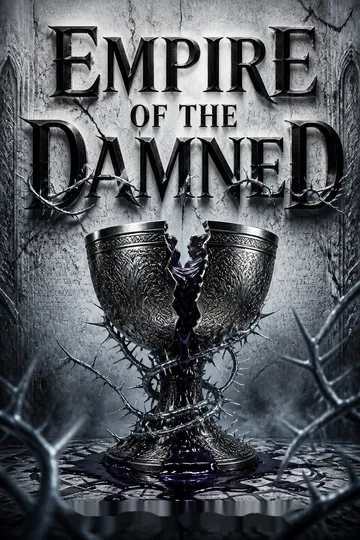
Empire of the Damned is a 240,000-word argument that love is not the opposite of power but its most dangerous form. Every major villain in the novel — Nikita,6 Lilidh,7 Fabién20 — operates on the premise that attachment is weakness, that what makes you care makes you vulnerable. Nikita's6 origin story is a parable of a boy whose father killed his pet lamb to teach him this lesson. The entire Dyvok philosophy is distilled into that trauma: sever all bonds, and you become invulnerable. Yet it is precisely this philosophy that destroys them. Nikita6 falls because Baptiste's10 love for Aaron9 proves unbreakable. Kiara11 turns because her father's rejection cuts deeper than any sword. The conspiracy within the dún succeeds because Dior's blood — the literal substance of divine love — liberates those who drink it.
The novel's dual-narrator structure is not merely a formal trick but an epistemological argument. Gabriel1 and Celene3 tell contradictory versions of the same events, and Jean-François4 must triangulate truth from two unreliable sources. This mirrors the book's treatment of faith itself: every religion in the novel — the One Faith, the Highland worship of Moons and Earth, the Esani cult — claims access to truth while distorting it. The shattering revelation that the Redeemer's dying words were not a promise but a curse reframes the entire theological architecture of the world. God did not save humanity from vampires; God's son created vampires with his dying breath. Faith, then, is not belief in a benevolent creator but the decision to act as if the world is worth saving despite evidence to the contrary.
Dior Lachance2 is the novel's most radical figure because she operates entirely outside institutional power. She is not a queen, a priestess, or a chosen one in any traditional sense — she is a pickpocket who happens to have divine blood. Her greatest victories are not martial but social: she frees people not by killing their masters but by sharing a drink. The Ossian Black gambit is the novel's thesis statement in miniature: salvation comes not from above but from below, not through swords but through cups, not through heroes but through the ordinary courage of terrified people who choose to take one more sip before the killing starts.
Review Summary
Empire of the Damned continues Gabriel de Leon's story, receiving mostly positive reviews. Readers praise the expanded worldbuilding, character development, and intense action scenes. Many find it an improvement over the first book, with better pacing and a more engaging narrative. The addition of new characters and perspectives is well-received. Some criticize the excessive violence and sexual content. The ending leaves readers eagerly anticipating the next installment. Overall, fans of dark fantasy and vampire stories are likely to enjoy this sequel.
People Also Read
Characters
Gabriel de León
The Last SilversaintA paleblood — half-human, half-vampire — Gabriel was once the greatest hero the Silver Order ever produced. Excommunicated for loving a woman, widowed by the Forever King20, he is a man whose identity has been constructed entirely around the people he protects. His wife Astrid and daughter Patience were murdered, and the wound has calcified into an operating philosophy: his friends are the hill he dies on. He drinks too much, smokes too much sanctus, and the red thirst — the hereditary madness of all palebloods — is rising in him. His bond with Dior2 fills the void left by his murdered daughter, but his protective instincts shade into control. He is ruled by Pride and Wrath, and his greatest enemy may be himself.
Dior Lachance
The Holy Grail of San MichonA former street urchin from Lashaame, Dior dressed as a boy for years to survive and carries the blood of the Redeemer in her veins — blood that heals any wound, burns vampires to cinders, and can end the eternal night called daysdeath. She is sharp-tongued, profane, and far more cunning than her youth suggests. Her survival instinct is a grifter's instinct: read the room, play the mark, keep your real cards hidden. She carries profound guilt that Gabriel's1 massacre at San Michon — his sacrifice of the ritual that might have ended daysdeath — was made for her sake alone. Beneath the bravado is a girl who has been abandoned by everyone she ever trusted, desperate to prove she is worth what others have paid.
Celene Castia
The Last LiatheGabriel's1 younger sister, murdered at fifteen and reborn as a vampire, Celene serves the Esani — the Faithful, a persecuted cult of vampires who consume their own kind to carry damned souls toward salvation. Her face was torn apart by her vampire maker, and she hides behind a porcelain mask. She wields sanguimancy — blood magic — with terrifying skill, and carries the souls and powers of every vampire she has consumed within her. She is fanatically devout, speaking in the plural 'we' to acknowledge the chorus of stolen lives inside her. Her resentment of Gabriel1 is bottomless: he left their village and never answered her letters, his actions led to her death, and yet the world worships him as a hero while she rots in shadow.
Jean-François Chastain
Margot's Vampire HistorianA young-seeming vampire turned at perhaps seventeen, Jean-François is the favored child of Empress Margot Chastain21, tasked with extracting the Grail's story from both Gabriel1 and Celene3. He is an artist, a sensualist, and a dandy — golden curls, chocolat eyes, ruby lips — who paints portraits and keeps five pet mice. Beneath the silk and charm, he is deeply afraid of his mother and desperately lonely. He ran from an abusive father as a mortal boy, and Margot21 found him, killed him, and remade him. He is drawn to Gabriel1 with a fascination that troubles him — envying the silversaint's ability to love, to feel, to burn. He wields cruelty and kindness as twin instruments of interrogation.
Phoebe á Dúnnsair
Duskdancer LionessA duskdancer — a shapeshifter who can take the form of a mountain lioness at the cost of being marked more deeply by her beast each time — Phoebe swore a blood oath to protect Dior2 after surviving what should have been a lethal wound. She is fierce, irreverent, and incapable of deference to anyone she does not respect. Widowed by clan violence, she lost not only her husband Connor but also a child who never drew breath. Grief taught her to fight the darkness within rather than embrace it. She challenges Gabriel1 constantly, matching his stubbornness with her own, and their relationship becomes the book's central exploration of whether damaged people can find wholeness in each other's broken edges.
Nikita Dyvok
The Blackheart, Priori DyvokA six-hundred-year-old vampire of devastating beauty and perfect cruelty, Nikita is the son of a shepherd who became a god of war. He conquered all Ossway in two years and rules through a philosophy distilled from childhood trauma: what makes you care makes you weak. He buys loyalty with blood, literally — golden vials of stolen duskdancer essence distributed to his court. His relationships are instruments of control, from his complicated dynamic with his elder sister Lilidh7 to the systematic breaking of those he claims as lovers. He refers to himself in the third person, a verbal tic that reveals the extent of his narcissism: he sees himself not as a person but as an institution.
Lilidh Dyvok
The Heartless ContessaNikita's6 elder sister and co-ruler of the Dyvok court, Lilidh is a creature of whispers, not swords — the political architect who brokered the truces and alliances that made her brother's conquests possible. She was once a priestess of the Highland Moonsthrone before Tolyev made her. She controls through seduction, humiliation, and the Whip — the Dyvok power to command obedience by voice alone. Her claim on Dior2 is possessive and predatory, yet beneath the cruelty, there flickers something like loneliness: an ancient being who has outlived her relevance in a world that prizes the sword over the tongue.
Lachlan á Craeg
Gabriel's Former ApprenticeA paleblood son of the Dyvok line, Lachlan was raised among the Untamed vampires and rescued by Gabriel1 as a boy on the walls of Báih Sìde. He became Gabriel's1 apprentice and the most loyal silversaint in the Order — a man whose faith in his mentor was absolute. When he learns Gabriel1 massacred their brethren, that faith becomes righteous fury. He is disciplined, devout, handsome, and possessed of the Dyvok's terrible strength. The tension between his love for Gabriel1 and his duty to the Order tears him apart, making him both pursuer and protector.
Aaron de Coste
Capitaine of AveléneOnce Gabriel's1 boyhood rival turned dearest friend, Aaron was a silversaint of noble blood who sacrificed his career and his place in the Order for his love of Baptiste10. After the fall of Aveléne, he is turned into a fledgling vampire and bent to Nikita's6 will through blood servitude. His arc tests whether love can survive being instrumentalized by evil — whether the man inside the thrall still exists when the one who controls him demands the annihilation of everything that man holds dear.
Baptiste Sa-Ismael
Blackthumb of AveléneA gentle giant and master smith, Baptiste is Aaron's9 partner — the man who forged Gabriel's1 first sword and built the fortress where they made their home. He is the book's moral compass, a man whose faith in God and love never wavers even when both seem to have abandoned him. Thralled to the Wolfmother11, forced to forge the chains that bind his fellow captives, he endures horrors no man should survive, anchored only by his belief that love conquers all.
Kiara Dyvok
The WolfmotherNikita's6 broodchild and former lover, Kiara commands the Dyvok military campaigns with savage efficiency. She is a veteran slayer, responsible for the slaughterfarms at Triúrbaile, yet her devotion to Nikita6 reveals a paradox: a monster who loves the monster who made her. She wields a warmaul the size of a child's coffin and fights with terrifying strength. Her loyalty is absolute but unrequited — Nikita6 discards her affections as casually as he breaks bones — and the friction between her service and her pride drives her toward a breaking point.
Reyne á Maergenn
The Hidden PrincessThe Nineswords' youngest daughter, Reyne was sent away as a child by a mother who could not look at her without seeing the man who broke her heart. Trained by master swordfighters in Elidaen, she returned to defend her homeland only to be assigned to guard a grain silo while her sisters fought and died. Captured when Maergenn fell, she disguises herself as a lowly maidservant within the Dyvok court. She carries her mother's shadow like a stone around her neck, desperate to prove she is more than a bastard's footnote in a legend's story.
Joaquin Marenn
The Kennelboy of AveléneA handsome young thrall who once kept the hounds at Aveléne, Joaquin is freed from blood-servitude when Dior2 heals him. He becomes a quiet instrument of the Grail's rebellion, risking his life among the scorched to carry messages and, ultimately, to smuggle Dior's blood where it must go. His love for the girl Isla18 drives him to endure captivity rather than flee. He is braver than he appears, more resourceful than anyone expects, and devoted beyond measure.
Ashdrinker
Gabriel's Sentient Broken SwordAn enchanted starsteel blade with a mind of her own, Ashdrinker was broken when Gabriel1 tried to kill the Forever King20. She stutters, rambles, sings nursery rhymes and bawdy limericks, and often cannot remember where or when she is. Despite her confusion, she delivers the book's sharpest emotional truths — chiding Gabriel1 for his self-destruction, mourning his lost family, and encouraging him to let himself love again. She is loyal beyond reason and broken beyond repair.
Meline
Jean-François's MajordomoJean-François's4 fiercely devoted thrall, Meline hates Gabriel1 for attacking her beloved master but is drawn to the silversaint with a desire she cannot suppress. She embodies the paradox of blood servitude — genuine adoration indistinguishable from enchanted slavery.
Alba and Aléne Voss
The Terrors, Forever PrincessesFabién's20 eldest daughters, ancient beyond reckoning, who move in perfect mirrored unison and speak as one voice. They represent the Ironheart dynasty's patience and cruelty — willing to spend every soldier in pursuit of their father's property.
Brynne á Killaech
Bear-Kin Highland WarriorA massive úrfuil duskdancer who fights Gabriel1 in the Daesweald and grudgingly escorts him to the Wintermoot. She is gruff, suspicious, and quietly smitten with Phoebe5. Her pragmatism helps bridge the gap between Highland mistrust and Gabriel's1 desperation.
Isla á Cuinn
Refugee from Dún CuinnA young Ossian maid with twin beauty spots, Isla is Joaquin's13 beloved and a survivor of multiple city falls. She presents herself as fragile and devout, a girl seeking her Ever After in a world determined to deny it.
Sœur Fionna
The White RabbitA former swordsister turned tavernkeeper, Fionna fought beside Gabriel1 in the Ossian campaigns and lost her faith at the slaughterfarms of Triúrbaile. She provides Gabriel1 shelter, a horse, and the advice that saves his spirit: enjoy the music while you can.
Fabién Voss
The Forever KingThe oldest and most powerful vampire alive, Fabién rules from the east and hunts Dior2 for reasons unknown. He appears only through puppet-foulbloods, whispering threats and half-truths. He murdered Gabriel's1 wife and daughter, and his shadow hangs over every page.
Margot Chastain
Empress of Wolves and MenThe reclusive Priori of Blood Chastain, Margot is so ancient she cannot remember her own face. She has Jean-François4 paint flattering portraits in lieu of a reflection. She holds Gabriel1 and Celene3 prisoner, seeking the Grail as a weapon for an unprecedented Convocation of all vampire bloodlines.
Plot Devices
Dior's Holy Blood
Heals, burns, and liberatesThe blood of the Redeemer's descendant is the story's most versatile engine. It heals mortal wounds on contact, burns vampire flesh like holy fire, and — the book's central revelation — breaks the bond of blood servitude when consumed by thralls. This final property transforms Dior2 from a passive 'treasure' to be fought over into an active agent of liberation. The device escalates throughout: from healing a single boy on the road, to freeing a handful of conspirators, to the masterstroke of an entire army freed through a keg of homebrew. It also drives the political tension — every faction wants Dior's2 blood for different reasons, none of them altruistic.
The Golden Vials
The Dyvok's stolen secret weaponSmall golden containers worn around the necks of Dyvok highbloods, filled with duskdancer blood. In the Time of Blighted Blood, the corruption of the earth has made duskdancer blood uniquely potent — any vampire who drinks it gains strength far beyond their years. This explains the Dyvok's impossible military success: Nikita6 conquered Ossway not through genius but through pharmaceutical advantage. The vials are introduced as a mystery at Aveléne, identified at Redwatch, and weaponized at Wintermoot when Phoebe5 reveals one to the Highland clans, proving the Dyvok violated their truce. The device ties the political, personal, and mythological threads into a single knot.
Celene's Blood Moths
Surveillance through scattered selfWhen set ablaze at Cairnhaem, Celene's3 sanguimancy allows her body to fragment into dozens of tiny blood-moths. Most of her reforms elsewhere, but one mote clings to Dior2 — a living speck of consciousness that can observe, tap simple messages on skin, and guide the Grail through danger. This device solves the structural problem of following Dior's2 captivity without a POV character present. It also embodies Celene's3 nature: she is literally everywhere and nowhere, watching from the margins, influencing through the smallest possible touch. The moth cannot speak, fight, or truly act — only witness. Its limitations mirror Celene's3 own frustrating helplessness.
The Daysdeath Prophecy
Roadmap to ending eternal nightA two-stanza verse that describes how daysdeath can be undone. The first half — known since the previous book — speaks of a holy cup, a faithful hand, and mere man ending endless night. The second half, discovered in fragments at Cairnhaem and completed beneath Dún Maergenn, specifies the conditions: the Five bloodlines must become one, a sainted blade must be wielded beneath a virgin sun, and sacred blood must be the instrument. The prophecy drives the entire quest structure, each half-verse revealed at a moment of deepest despair, providing just enough hope to push the characters forward. Its full meaning remains deliberately unresolved.
The Ossian Black
Vehicle for mass liberationA homebrew Ossian spirit distilled from potato peel and rotting weeds, described as smelling like cabbage mixed with cat urine. Its appalling stench is precisely what makes it the perfect vehicle for Dior's blood: the reek masks the scent that would otherwise alert every vampire in the keep. When Joaquin13 pours Dior's blood into the morning liquor ration, every soldier who drinks before battle is freed from thralldom. The device is a triumph of Dior's2 gutter instincts — she knows soldiers drink before a fight, she knows the Black stinks enough to cover her trail, and she knows no one questions a morning dram. It transforms an entire army in a single stroke without a drop of violence.
FAQ
Synopsis & Basic Details
What is Empire of the Damned about?
- A Dark Empire's Struggle: The story follows Gabriel de León, a disgraced silversaint, and Dior Lachance, a girl with the power to end the eternal night, as they navigate a world overrun by vampires and political intrigue.
- Quest for Redemption: Driven by loss and a thirst for vengeance, Gabriel becomes Dior's protector, challenging the established order of the Church and the vampire courts.
- Ancient Prophecies and Power: The narrative explores the complex history of the Esani bloodline and the ancient prophecy that ties Dior to the fate of the world, as various factions seek to control her power.
Why should I read Empire of the Damned?
- Intricate World-Building: Jay Kristoff crafts a richly detailed world with complex political systems, diverse cultures, and a unique take on vampire lore.
- Morally Gray Characters: The story features morally ambiguous characters with complex motivations, blurring the lines between heroes and villains.
- High-Stakes Action and Emotion: The narrative is filled with intense action sequences, emotional depth, and thought-provoking themes, creating a compelling and immersive reading experience.
What is the background of Empire of the Damned?
- Post-Apocalyptic Setting: The story takes place in a world plunged into eternal night after a cataclysmic event known as daysdeath, leading to the rise of vampires and the collapse of human society.
- Religious and Political Conflict: The Church of the One Faith and the vampire courts are locked in a power struggle, with ancient prophecies and hidden agendas driving the conflict.
- Cultural Influences: The world draws inspiration from various historical and cultural sources, including medieval Europe, Ossian folklore, and vampire mythology, creating a unique and immersive setting.
What are the most memorable quotes in Empire of the Damned?
- "There is no one more afraid of dying than things who live forever.": This quote highlights the vulnerability of even the most powerful vampires, revealing their fear of mortality.
- "You don't need God. You've got me.": This quote showcases Gabriel's fierce protectiveness of Dior and his willingness to defy religious dogma for her sake.
- "We are taking Dior to Master Jènoah. Stand not in our way.": This quote emphasizes Celene's unwavering determination and her belief in the Esani cause, even at the cost of her relationship with Gabriel.
What writing style, narrative choices, and literary techniques does Jay Kristoff use?
- Vivid and Descriptive Prose: Kristoff employs rich, evocative language to create a strong sense of atmosphere and immerse the reader in the story's dark and brutal world.
- Multiple Perspectives: The narrative shifts between different characters' points of view, providing a multifaceted understanding of the events and their motivations.
- Foreshadowing and Symbolism: Kristoff uses subtle foreshadowing and recurring symbols to create a sense of unease and hint at future events, adding layers of meaning to the story.
Hidden Details & Subtle Connections
What are some minor details that add significant meaning?
- The Silver Tattoos: Gabriel's silver tattoos, initially a symbol of his faith, become a reminder of his past and the burden he carries, burning red when he uses his powers.
- The Broken Sword: Ashdrinker, Gabriel's broken sword, symbolizes his shattered past and his struggle to regain his former glory, yet it still holds power and a connection to him.
- The Names: The names of characters, such as Esan (meaning Faith) and Liathe (meaning Crusader), hint at their roles and destinies within the story.
What are some subtle foreshadowing and callbacks?
- The Recurring Dream: Gabriel's recurring dream of his wife and daughter foreshadows his internal struggle with loss and his desire for a family, which is later mirrored in his relationship with Dior.
- The Broken Blade: The broken tip of Ashdrinker foreshadows the broken nature of the world and the challenges Gabriel faces in his quest.
- The Silverbell Scent: The scent of silverbell, Astrid's favorite bloom, is used to evoke memories of her and Patience, highlighting Gabriel's grief and the love he has lost.
What are some unexpected character connections?
- Gabriel and Celene's Shared Blood: The revelation that Celene is also a paleblood and shares the Esani bloodline with Gabriel creates a complex sibling dynamic, marked by both love and hatred.
- Dior and Esan's Lineage: Dior's connection to Esan, the daughter of the Redeemer, establishes her as a key figure in the prophecy and a target for various factions.
- Phoebe and Saoirse's Bond: The connection between Phoebe and Saoirse, both duskdancers, reveals a deeper history and shared purpose among the wealdlings.
Who are the most significant supporting characters?
- Meline: Jean-François's majordomo, Meline, is a complex character whose loyalty and envy create tension and reveal the dark side of vampire servitude.
- Baptiste Sa-Ismael: Baptiste, a former blackthumb and Aaron's lover, represents the power of love and loyalty, and his actions have a significant impact on the plot.
- Reyne á Maergenn: Reyne, a former thrall and a daughter of a fallen queen, becomes a key ally to Dior, offering her knowledge and strength in the fight against the Dyvok.
Psychological, Emotional, & Relational Analysis
What are some unspoken motivations of the characters?
- Gabriel's Fear of Failure: Beneath his bravado, Gabriel is driven by a deep-seated fear of failing to protect those he cares about, stemming from the loss of his family.
- Celene's Desire for Acceptance: Celene's actions are motivated by a desire to be accepted by her brother and to find purpose in her new existence as a vampire.
- Phoebe's Longing for Connection: Phoebe's fierce loyalty to Dior is rooted in her own loss and her desire to find a new purpose after the death of her cousin, Saoirse.
What psychological complexities do the characters exhibit?
- Gabriel's Internal Conflict: Gabriel struggles with his dual nature as a paleblood, torn between his desire for vengeance and his need to protect the innocent.
- Celene's Identity Crisis: Celene grapples with her identity as a vampire, torn between her love for her brother and her loyalty to the Esani cause.
- Dior's Burden of Destiny: Dior is burdened by the weight of her destiny as the Holy Grail, struggling to reconcile her desire for a normal life with the expectations placed upon her.
What are the major emotional turning points?
- The Loss of Aveléne: The destruction of Aveléne and the apparent death of Aaron and Baptiste serve as a major emotional turning point for Gabriel, fueling his rage and determination.
- The Revelation of the Esani: The revelation of the Esani's history and their connection to Dior's lineage forces the characters to confront their beliefs and loyalties.
- The Betrayal at Cairnhaem: The betrayal at Cairnhaem, where Gabriel's brethren attempt to sacrifice Dior, shatters his faith in the Silver Order and sets him on a new path.
How do relationship dynamics evolve?
- Gabriel and Celene's Sibling Bond: The relationship between Gabriel and Celene evolves from hatred and mistrust to a fragile alliance, marked by their shared history and the burden of their bloodline.
- Gabriel and Dior's Protector-Protectee Dynamic: The relationship between Gabriel and Dior deepens from a reluctant alliance to a bond of mutual respect and love, with Gabriel becoming a father figure to the orphaned girl.
- Phoebe and Dior's Sisterhood: Phoebe and Dior's relationship evolves from a bond of duty to a deep sisterhood, marked by their shared experiences and mutual respect.
Interpretation & Debate
Which parts of the story remain ambiguous or open-ended?
- The True Nature of the Redeemer: The true nature of the Redeemer and his motivations remain ambiguous, leaving the reader to question the origins of the One Faith and the validity of its teachings.
- The Full Extent of the Esani Power: The full extent of the Esani's power and their connection to the Redeemer's bloodline is not fully explored, leaving room for further revelations in future installments.
- The Fate of the World: The ending leaves the fate of the world uncertain, with the threat of the Forever King and the other Priori still looming large.
What are some debatable, controversial scenes or moments in Empire of the Damned?
- Gabriel's Treatment of Dior: Gabriel's overprotectiveness of Dior and his attempts to control her choices can be seen as both a sign of his love and a manifestation of his own internal struggles.
- Celene's Actions and Motivations: Celene's actions and motivations are often ambiguous, leaving the reader to question her true allegiances and the extent of her manipulation.
- The Morality of the Silver Order: The Silver Order's willingness to sacrifice an innocent child to end daysdeath raises questions about the morality of their actions and the nature of faith.
Empire of the Damned Ending Explained: How It Ends & What It Means
- Dior's Sacrifice: Dior's apparent death at the hands of Lilidh is a tragic culmination of her journey, highlighting the theme of sacrifice and the cost of fighting for a better world.
- The Power of Belief: The ending suggests that the power to change the world lies not in ancient prophecies or divine intervention, but in the choices and actions of individuals.
- The Cycle of Violence: The cycle of violence and betrayal continues, with the threat of the Forever King and the other Priori still looming large, suggesting that the fight for a better world is far from over.
Empire of the Vampire Series

About the Author
Other books by Jay Kristoff




Download PDF
Download EPUB
.epub digital book format is ideal for reading ebooks on phones, tablets, and e-readers.








































