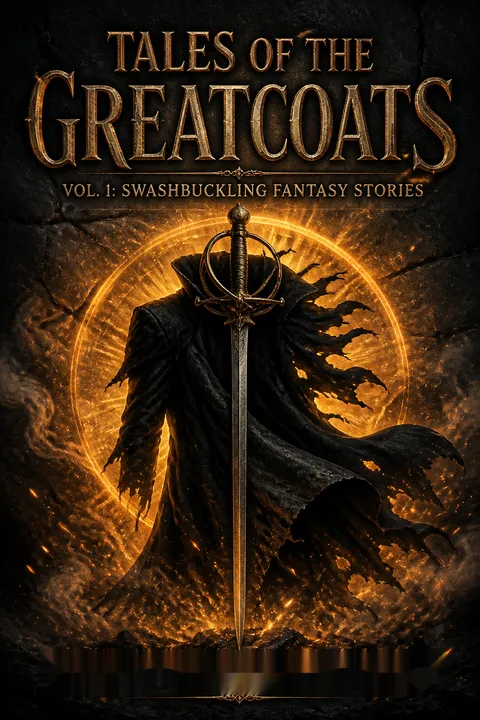

Plot Summary
The Assassin's Gambit
In the dead of night, Gavelle Sanprier, a master assassin, stalks Falcio val Mond, the famed Greatcoat, through a decaying library. Every detail of Falcio's life and weaknesses has been studied, every tool prepared, and the assassin's resolve is absolute. Yet, as the two men circle each other, their blades and words reveal a deeper game. Falcio, weary and battered by years of violence, seems almost resigned to his fate, but the encounter is a duel of minds as much as steel. In a twist, Falcio reveals he orchestrated the entire assassination attempt, turning the assassin's own preparations against him. The line between hunter and hunted blurs, and the cost of legend is revealed: to survive, Falcio must become the very thing his enemies fear, sacrificing his own peace for the safety of those he loves.
The Language of Steel
In the city of Rijou, the duelling court is both spectacle and crucible. Percevar, a young noble, is haunted by his inability to wield a sword with the grace expected of his station. He watches as Bézan Réchambeau, the famed "Lord of Midnight," dismantles an opponent in a trial by combat, the crowd's bloodlust echoing the city's cruel traditions. Percevar's sister, Aline, is drawn to the artistry of the blade, while their aunt schemes in the shadows. The duel is more than a contest; it is a language of power, reputation, and survival. Percevar's fear and self-doubt are laid bare, but beneath the surface, the true lesson of the sword is not in technique, but in understanding the cost of violence and the courage to face it.
Sins of the Greatcoats
The Greatcoats, once the King's travelling magistrates, are scattered and scarred by the wars and betrayals that have torn Tristia apart. Murielle de Vierre, the disgraced "King's Thorn," wanders the land seeking redemption for her role in a failed rebellion. Her journey leads her to a remote village, where she is forced into a brutal prizefight, her reputation preceding her as both traitor and hero. The fight becomes a metaphor for her internal struggle: every blow, every jeer from the crowd, is a reminder of the ideals she failed and the friends she lost. On a hilltop by the King's grave, she confronts her guilt and the meaning of doubt, finding a measure of forgiveness not from the dead, but from the living.
The Dancing Corpse
Estevar Borros, the King's Crucible, is summoned to a noble's palace where the chamberlain's corpse dances from a chandelier, defying death and reason. The room is filled with suspects—nobles, priests, and knights—each with their own secrets and ambitions. Estevar's investigation is methodical, cutting through superstition and manipulation. By recreating the music and dances of the night of the murder, he forces the truth to the surface: the crime is not just of the flesh, but of faith and power. The dead man's spirit, animated by the collective will and guilt of those present, reveals the rot at the heart of the palace. Justice, in Tristia, is as much about confronting the living as it is about laying the dead to rest.
The Price of Betrayal
Murielle's journey is one of self-reckoning. After her defeat in the ring, she seeks solace at the grave of King Paelis, hoping for absolution. Instead, she finds understanding in an unexpected companion, who helps her reenact the King's final command: to doubt. Through their conversation, Murielle relives the moment she chose rebellion over loyalty, and the moment she chose to return. The lesson is harsh—doubt is both a weapon and a wound—but it is also the path to forgiveness. The past cannot be undone, but the future is shaped by the courage to face one's own failures and to keep fighting for justice, even when the world has turned away.
The Lesson You Only Learn Once
Percevar's sister, Aline, orchestrates a dangerous lesson to force her brother to confront his fears. She arranges a private fencing lesson with Bézan Réchambeau, manipulating both her family and the famed duellist. The lesson turns deadly as Bézan threatens Aline, forcing Percevar to act. In the ensuing duel, Percevar discovers the true nature of courage—not in skill, but in the willingness to sacrifice for another. The confrontation is a crucible, burning away illusions and revealing the strength that lies beneath fear. In the end, Aline's scheme is revealed: she needed her brother to believe in himself, to become the protector she knows he can be. The lesson is one that can only be learned in the face of real danger.
The King's Crucible
Estevar Borros is the investigator of the uncanny, the King's Crucible. His cases are never simple, blending the supernatural with the all-too-human. In the palace of Cajoulac, he navigates a web of intrigue, faith, and ambition. His method is to listen, to observe, and to cut through the noise with quiet authority. Estevar's strength lies not in his sword, but in his refusal to be swayed by fear or superstition. He exposes the true culprits not through violence, but through the relentless pursuit of truth, even when it means confronting the powerful and the pious. In Estevar's hands, the law is both shield and sword, and justice is a matter of patience and resolve.
Trial by Combat
Janva Slade, a middle-aged craftswoman, is dragged into the Court of Blades, accused of grievous violence against a noble's child. The trial is a farce, the outcome seemingly predetermined. Her only hope lies in the unexpected aid of Kest Murrowson, the legendary "King's Blade," who teaches her the brutal truth of duelling: victory is not about skill, but about surviving pain and seizing the moment. In the circle, Janva faces her accuser's brother, both knowing that "first blood will be last." The duel is swift and savage, ending in a simultaneous strike that leaves Janva the unlikely victor. Her triumph is not just survival, but a reclamation of dignity and the possibility of a new life.
The Demon in the Court
Estevar Borros is called to judge a series of cases in a lawless town, only to find himself in the midst of a riot incited by Celize, a local power broker. The duel that follows is not just of blades, but of influence and testimony. Estevar exposes Celize's crimes by turning the crowd's accusations against her, using the chaos to reveal the true nature of her control. The "demon" in the court is not supernatural, but the corruption and fear that have taken root in the town. Through wit, courage, and a refusal to yield, Estevar restores order and gives the people the tools to reclaim their own justice.
The Wheelwright's Duel
Janva's story is a testament to the resilience of the ordinary. With Kest's guidance, she turns her greatest weakness—her pain and fear—into her strength. The duel is a microcosm of Tristia's harsh justice: the law is a weapon, but it can be wielded by anyone with the courage to stand and fight. Janva's victory is not just over her opponent, but over the system that sought to crush her. In the aftermath, she is offered a place among the Greatcoats, a symbol that justice is not the province of the elite, but of all who are willing to pay its price.
The Fire That Remains
Estevar Borros is summoned to judge the case of Olivier, a boy accused of supernatural crimes. The boy's powers are a manifestation of trauma and grief, his "magic" the echo of a life cut short. Estevar's role is not to punish, but to help Olivier understand and let go. The trial is a quiet, heartbreaking negotiation between the living and the dead, between justice and compassion. In the end, Estevar ensures that the boy's memory is honored, and that mercy, not vengeance, is the final verdict.
The Assassin's Heresy
An unnamed assassin prepares for a kill, transforming herself through disguise and ritual. The process is not just physical, but psychological: to kill, she must first kill the part of herself that hesitates, that remembers, that feels. The narrative is an exploration of identity and morality, the thin line between assassin and victim. The true heresy is not in the act of murder, but in the willingness to become someone else entirely, to lose oneself in the mask. The assassin's greatest skill is not in killing others, but in silencing her own conscience.
The Smile of the Sword
In the quiet of a rented cottage, Falcio val Mond contemplates the end of his life as a duellist and the beginning of a new one as a father. Haunted by the violence of his past and the enemies he has made, he struggles to lay down his sword. His wife, Ethalia, now a Saint, helps him see that the true gift he can give their child is not protection, but the spirit of swashbuckling—the belief that the impossible can be made inevitable. Through memory and imagination, Falcio finds peace, accepting that his legacy is not just in the battles he fought, but in the hope he inspires.
Redemption on the Hill
Murielle de Vierre's journey to the King's grave is a pilgrimage of guilt and longing. In conversation with Brudal, she reenacts the King's final lesson: doubt. Through their exchange, she confronts the pain of betrayal and the burden of impossible expectations. The act of forgiveness is not a gift from the dead, but a choice made among the living. Murielle's redemption is hard-won, a testament to the enduring power of doubt as both a curse and a catalyst for change.
The Verdict of Justice
In the palace ballroom, Estevar orchestrates a trial that is both performance and revelation. By reenacting the dances of the night of the murder, he forces the guilty to reveal themselves. The trial is a microcosm of Tristia's struggle: faith, power, and justice in constant tension. Estevar's verdict is not just a sentence, but a restoration of order and meaning. The dead are laid to rest, the living are held to account, and the law endures as the fragile thread that binds the nation together.
The Impossible, Inevitable
Falcio, Kest, and Brasti face impossible odds, yet their bond and belief in each other turn the tide. The lesson is not in victory, but in the refusal to accept defeat. Swashbuckling is more than bravado; it is the courage to make the impossible inevitable, to defy the world's cynicism with hope and action. This spirit is the true legacy of the Greatcoats, passed from one generation to the next, a promise that justice and friendship can prevail even in the darkest times.
The Cost of Mercy
Throughout the tales, the theme of mercy recurs: in Estevar's judgments, in Falcio's choices, in the forgiveness Murielle seeks. Mercy is not weakness, but the strength to see beyond vengeance and retribution. It is the recognition of shared humanity, the willingness to offer grace even to those who have failed. In Tristia, where the law is often a weapon, mercy is the act that redeems both the giver and the receiver, and it is the foundation upon which true justice is built.
Analysis
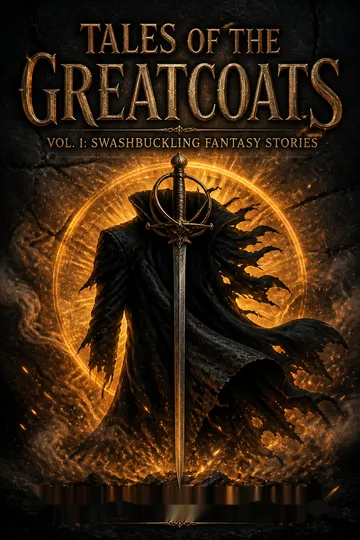
Tales of the Greatcoats Vol. 1 is a masterful exploration of justice, identity, and redemption in a world where the law is both weapon and shield. Through interconnected stories, Sebastien de Castell interrogates the cost of heroism and the meaning of mercy. The duelling circle is both literal and metaphorical, a place where characters are stripped to their essence and forced to confront their fears, failures, and hopes. The narrative structure, blending swashbuckling action with psychological depth, allows for a nuanced examination of power, vulnerability, and the possibility of change. The stories challenge the reader to consider the true nature of justice: is it found in victory, in survival, or in the willingness to show mercy? The lessons of the Greatcoats are hard-won—courage is not the absence of fear, but the resolve to act despite it; redemption is not erasure, but acceptance and growth; and the impossible is made inevitable not by strength alone, but by belief, friendship, and the refusal to yield. In a world that often seems irredeemable, these tales offer a vision of hope grounded in the messy, painful, and beautiful struggle to do what is right.
Review Summary
People Also Read






Characters
Falcio val Mond
Falcio is the heart and conscience of the Greatcoats, a man driven by ideals in a world that punishes them. His journey is marked by loss, guilt, and the relentless pursuit of justice, even as the world conspires to break him. Falcio's relationships—with his comrades Kest and Brasti, with his wife Ethalia, and with the memory of his King—define his struggles and triumphs. Psychologically, he is torn between the need to protect and the fear of failing those he loves. His development is a slow acceptance of his own limitations and the realization that true strength lies not in invincibility, but in the courage to keep fighting, to inspire hope, and to pass on the spirit of swashbuckling to the next generation.
Estevar Borros
Estevar is a magistrate who prefers reason to superstition, patience to violence. His role is to uncover truth in a world clouded by fear, faith, and manipulation. He is methodical, often underestimated, and wields both his sword and his intellect with precision. Estevar's psychological depth lies in his quiet empathy and his refusal to be swayed by power or panic. He is a stabilizing force, bringing order to chaos and justice to the forgotten. His development is subtle, marked by a growing recognition of the mundane evils that rival the supernatural, and a commitment to mercy as the highest form of justice.
Murielle de Vierre
Once a celebrated Greatcoat, Murielle's betrayal during a rebellion haunts her. Her journey is one of self-forgiveness, as she confronts the consequences of her choices and the pain of lost ideals. Her relationships are marked by longing—for the King's approval, for Falcio's respect, for her own sense of worth. Psychologically, she is defined by doubt, both as a wound and as a tool for growth. Her development is a hard-won acceptance that redemption is possible, not through erasing the past, but by choosing to fight for justice anew.
Aline
Aline, the King's daughter, is wise beyond her years, navigating the dangers of Rijou with cunning and grace. Her relationship with her half-brother Percevar is both protective and challenging, as she orchestrates events to force him to confront his fears. Psychologically, Aline is both vulnerable and formidable, aware of her precarious position and determined to shape her own destiny. Her development is a testament to the power of intelligence and love in a world that values strength and violence.
Percevar
Percevar is defined by self-doubt and a deep-seated fear of violence. His journey is one of transformation, as he is forced to act to save his sister. His relationship with Aline is central, a mix of protectiveness and dependence. Psychologically, Percevar is paralyzed by the expectations of his family and society, but beneath his fear lies a capacity for courage and sacrifice. His development is the discovery that true strength is not in skill, but in the willingness to stand for others.
Kest Murrowson
Kest is the embodiment of martial excellence, yet his true strength lies in his understanding of pain and sacrifice. As a mentor to Janva and others, he teaches that victory is not about talent, but about enduring and overcoming suffering. Psychologically, Kest is stoic, carrying the weight of his own losses and the burden of being the best. His development is in passing on his knowledge, offering hope to those who believe themselves powerless.
Janva Slade
Janva is a wheelwright thrust into a world of violence and injustice. Her journey is one of survival and self-discovery, as she learns to turn her weaknesses into strengths. Her relationship with Kest is transformative, giving her the tools to fight and the belief that she matters. Psychologically, Janva is defined by resilience and a stubborn refusal to give in to despair. Her development is a testament to the power of ordinary people to achieve justice.
Ethalia
Ethalia is Falcio's wife and spiritual counterpoint, embodying compassion and wisdom. Her role is to help Falcio see beyond his fears and to embrace the possibility of peace and fatherhood. Psychologically, she is both nurturing and strong, unafraid to challenge Falcio and to demand honesty. Her development is in finding ways to reconcile her own nature with the violence of the world, and in helping Falcio do the same.
Gavelle Sanprier
Gavelle is a master of preparation and patience, a killer who becomes the instrument of his own undoing. His relationship to Falcio is adversarial, but also intimate—a duel not just of blades, but of identities. Psychologically, Gavelle is defined by his need to prove himself, to become legend by killing a legend. His development is a cautionary tale: in seeking to become more than a man, he loses himself.
The Unnamed Assassin
The unnamed assassin in "The Assassin's Heresy" is a study in the dissolution of self. Her role is to become whoever is needed, to kill not just her target, but her own conscience. Psychologically, she is fragmented, her identity a mask that threatens to consume her. Her development is a warning: the true cost of mastery is the loss of self, and the greatest danger is not from without, but from within.
Plot Devices
Duelling as Justice
Throughout the stories, trial by combat is the ultimate arbiter of justice in Tristia. It is a system that is both brutal and fair, offering even the powerless a chance to fight for their lives and dignity. The narrative structure often centers on the build-up to a duel, using it as a means to explore character, power dynamics, and the nature of justice. Foreshadowing is used to heighten tension, with the outcome of each duel reflecting the internal struggles of the participants. The duelling circle becomes a stage for transformation, where the impossible becomes possible, and where the true cost of violence is revealed.
The Unreliable World
The stories are set in a world where the law is fragile, and justice is constantly under threat from corruption, superstition, and ambition. Plot devices such as supernatural mysteries, political intrigue, and personal vendettas are used to complicate the search for truth. Estevar's investigations often reveal that the real demons are human, and that the supernatural is a mirror for the anxieties and desires of society. The narrative structure is episodic, with each story a self-contained trial or investigation, but all are linked by the overarching theme of the struggle for justice.
Masks and Identity
Characters frequently adopt masks—literal and figurative—to navigate a world that punishes vulnerability. The assassin's transformation, Murielle's self-doubt, Percevar's fear, and even Falcio's legend are all forms of disguise. The plot device of the mask is used to explore the tension between who we are and who we must become to survive. The stories question whether it is possible to remain true to oneself in a world that demands constant adaptation.
Mercy and Redemption
The recurring motif of mercy—whether in Estevar's judgments, Falcio's choices, or Murielle's quest for forgiveness—serves as a counterpoint to the brutality of the law. Redemption is possible, but it is never easy; it requires facing one's own failures and choosing to act with compassion. The narrative structure often brings characters to the brink of despair, only to offer a path to grace through acts of mercy.
Greatcoats Series

About the Author




Download PDF
Download EPUB
.epub digital book format is ideal for reading ebooks on phones, tablets, and e-readers.








































