
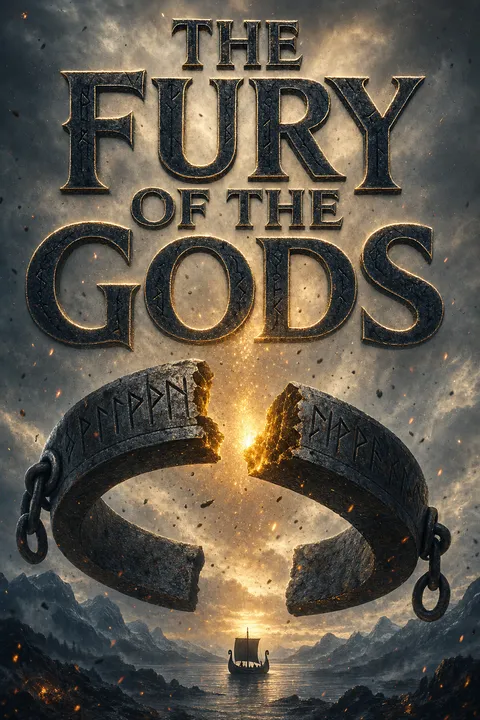


Plot Summary
Vengeance and a Dragon-Contract
Fresh from storming Prince Jaromir's fortress in Iskidan, Varg,2 a former farm thrall now carrying wolf-blood, finally claims the debt owed him by Vol11 the Seiðr-witch. She performs the akall, letting him witness his sister Froya's final moments through her own eyes: a weathered hunter named Brak21 nails her to a tree and guts her.
Varg2 sears the killer's face and name into memory. As the Bloodsworn bury their dead, two giant ravens and the tennur Vesli22 arrive with a message from Orka Skullsplitter:1 Elvar3 of the Battle-Grim wants to hire them to kill a dragon. Chief Glornir,6 whose brother was slain and nephew stolen by the same enemy, agrees at once. They will sail home to Vigrid for war.
The opening fuses the trilogy's twin engines, personal grief and continental war. Varg's akall converts his sister's death from rumor into lived, first-person trauma, making vengeance feel morally inevitable rather than chosen, though Gwynne warns such visions may be best left unseen. The dragon-contract, delivered by comic tooth-hungry messengers, yokes intimate loss to catastrophe. Notably the book begins in the aftermath of a victory, insisting that in this world no triumph is ever final. Chosen family among the Bloodsworn is established as the central value against which every coming atrocity will be measured.
The Dragon-Queen's Bloody Court
In conquered Darl, the freed dragon-god Lik-Rifa8 rules the ruins of Queen Helka's hall, and the cowardly drengr Guðvarr4 survives by flattering her. Summoned to the courtyard, he watches her order trolls to pulp Helka's oathsworn drengrs, then force two rival jarls to duel to the death for the honor of serving her. Her tower floor writhes with serpents and frost-spiders.
Guðvarr4 and his aunt, Jarl Sigrun, cling to usefulness as their only shield against a god who forgets names and devours those who bore her. Lik-Rifa8 fixes on one goal: hunt down and kill her brother, the wolf-god Ulfrir.7 Beside her stand the dragon-born siblings Ilska24 and Drekr,15 with her rat-god brother Rotta9 soon to join the hunt.
Gwynne's dragon-queen is a portrait of power as an untreated wound. Three centuries of imprisonment leave Lik-Rifa incapable of patience or reason, and her court runs on spectacle cruelty. Guðvarr's cowardly interiority makes her terror legible, turning the reader into a fellow survivor calculating usefulness. The chapter also exposes the machinery beneath godhood: Ilska and Drekr actually run a war their deity is too volatile to manage. Crucially, Lik-Rifa's recruitment of the Tainted with promises of freedom is revealed as hollow, seeding the book's argument that liberation offered by a tyrant is only a better-decorated collar.
Elvar Claims Her Father's Seat
Having killed her tyrant father Jarl Storr, devoured by the thralled wolf-god Ulfrir,7 and slain her brother Thorun, Elvar3 sits the throne of Snakavik, now mistress of his feared Berserkir guards. Feeling numb rather than triumphant, she summons the mercenary bands and petty jarls, kicks open a chest of Oskutred treasure, and buys an army to fight Lik-Rifa,8 boasting gold enough to pay a thousand warbands.
Bound by a blood oath to rescue Bjarn, the Seiðr-witch Uspa's16 abducted son, Elvar3 has no choice but to march. When the traitor Ingvild's crew steals a chest and flees to the docks, Elvar3 hunts them down and butchers Ingvild in a duel, teaching her uneasy followers that theft from her means death.
Elvar's hollow victory interrogates the emptiness of achieved vengeance. Having dreamed of confronting her father, she feels only numbness at his death, and the coveted throne becomes a weight. Gwynne stages recruitment as a transaction, gold buying loyalty, exposing the fragility of an army bound by greed rather than conviction, a fragility Ulfrir will later name. The Ingvild duel shows Elvar performing her father's ruthlessness, the very inheritance she dreads. The section establishes the crucible of her arc: whether she will rule through fear and chains, as she was taught, or discover a different foundation for power and command.
Rotta Murders Spert
Dragged in chains with Svelgarth's captives, Orka1 refuses to tell the rat-god Rotta9 where Ulfrir7 hides, even under Myrk's kicks. Then Brak's21 hunters return, not with her son Breca,10 but with Spert, the loyal spertus who guarded her family for years. Rotta9 holds a spear over the little creature and demands answers.
To save her friend, Orka1 breaks: Ulfrir7 travels with Elvar3 and the Battle-Grim, bound for Snakavik. Rotta9 thanks her, then drives the spear through Spert anyway. Orka1 erupts, tearing at the god with tooth and claw before she is beaten down. Her knowledge spent, Myrk begs to kill her with the very seaxes that slew Orka's1 husband Thorkel. The duel begins.
This is the book's clearest thesis on gods and loyalty. Orka withstands torture but breaks for friendship, revealing that her flat killer's exterior guards a fiercely relational core; she values Spert as family, not tool. Rotta's murder of Spert after getting his answer distills the gods' essential treachery: promises are instruments, mercy is theater. Orka's own earlier warning to Biorr, that gods use lives for their ends, is proven on her friend. The scene weaponizes grief into her vendetta and draws the moral line the whole novel patrols: between beings who honor bonds and beings who merely exploit them.
Orka Reclaims Her Son
As Myrk circles for the kill, the treeline explodes. Ulfrir's7 telepathic call has summoned a warband of Berserkir and Ulfheðnar, and Orka's1 own crew, Gunnar, Halja, Lif23 and Sæunn, storm the camp alongside them. In the chaos Orka1 wraps her chains around Myrk's throat and rips it open with her wolf-jaws, avenging her lost eye.
Then a small figure reaches her: Breca,10 alive, gripping a hand-axe, calling her Mama. He refused to flee without her. Cradling Spert's body, they fight through frost-spiders and rune-fire to Jarl Orlyg's17 longship and row free of Rotta's9 grasp. Orka1 has her son back at last, but grief and a new debt to the gods ride downriver with her.
Reunion arrives through slaughter, the book's characteristic mode. Orka's continent-spanning goal is achieved, yet Gwynne denies catharsis: she kills Myrk in a blood-frenzy, and Breca vomits from his own violence. The mother-son bond is fierce rather than sentimental; Breca insists on the pack. The scene introduces the grim accounting that shadows every rescue, that people die to save one child. Ulfrir's mind-call binding scattered wolf-blooded warriors previews the novel's convergence structure. Above all, completing the quest reframes rather than ends Orka's story: with her son safe, her hunger simply transfers to vengeance and to guarding the family she has left.
The Ambush at Ulaz
Marching to the Iskidan seaport of Ulaz with Sulich's freed Tainted riders, Varg2 is jumped in the crowds. Leif Kolskeggson, hunting Varg2 for killing his slaver father, has hired the mercenary Sterkur to take him. Bound in a warehouse, Varg2 watches Svik13 trick their captors into severing a man's hands, then Glornir6 and the Bloodsworn smash through the wall and slaughter the crew, though Leif and Sterkur escape in the chaos.
Worse, Varg2 spots the docks bristling with hundreds of warships and Rurik, dead Jaromir's brother, riding at their head: the promised invasion of Vigrid is nearly ready to sail. The Bloodsworn flee to the Sea-Wolf as five of Rurik's drakkars give chase across open water.
The Ulaz sequence widens the lens from personal grudge to imperial dread. Varg's past as a hunted thrall resurfaces in Leif, dramatizing how the old world's ownership stalks the newly free. Svik's warehouse trickery and the wall-smashing rescue reaffirm the Bloodsworn as chosen family who leave no one behind. But the section's real payoff is structural foreshadowing: Rurik's vast fleet reveals the god-war in Vigrid is only one front, with a mortal empire waiting to swallow whatever survives. Gwynne refuses a closed conflict, insisting that even a dragon's defeat cannot resolve the larger machinery of conquest bearing down on the land.
Fire and Ice on the Whale-Road
Rurik's longships corner the Sea-Wolf and Sulich's slower knarr on open water. Lashing the ships together to fight as one, the Bloodsworn endure arrow-storms and dueling rune-magic as the Seiðr-witches Vol11 and Iva hurl ice and summon a sea serpent against Rurik's fire-wielders. One enemy drakkar freezes and shatters; boarders swarm the decks, and Glornir6 loses himself to his bear, tearing men apart barehanded.
Just as the defenders are being overwhelmed, Orka1 and Jarl Orlyg's17 ship crashes into the fray and turns the tide. When the fighting ends, Orka1 and Glornir6 embrace as long-parted kin, and Breca10 meets the uncle he never knew. The Bloodsworn sail on toward the Iron Wood and Elvar's3 war.
The sea battle showcases Gwynne's set-piece craft while advancing the reunion that grounds the trilogy's emotional spine. Magic here is elemental and terrifying, but the human beats matter more: Glornir surrendering to his bear reveals the cost of the Tainted's power, the loss of self. Orlyg's arrival dramatizes the book's economy of debts and favors, the informal bonds that substitute for law in a lawless world. The Orka-Glornir embrace and Breca meeting his uncle knit the scattered protagonists into one family, converting a mercenary contract into kinship as the disparate threads finally braid together toward Wolfdales.
Grend's Hidden Wolf-Blood
At Snakavik, Elvar's3 beloved guardian and weapons-master Grend14 vanishes for days. She sends searchers, gnawed by worry, until the mercenary Hjalmar drags him back beaten and leashed: his hound-blood has been sniffed out, and Grend14 is Tainted. Publicly shamed and pressed by advisers to execute him, Elvar3 instead has him collared and caged aboard her ship.
Privately he confesses the truth he hid for fifteen years. He once saved her mother from outlaws, swore a blood oath to protect the newborn Elvar,3 and could keep it only as a free man, not a collared thrall. He is, in all but blood, her father. Elvar3 cuts his bonds but leaves the collar, torn between betrayal and love.
Grend's revelation deepens the collar as the book's master symbol while striking Elvar's deepest fear. His decades of concealment expose how enslavement forces the loving to lie, and his oath to her mother reframes their whole bond: he is a chosen father, family by vow not blood, the trilogy's recurring ideal. Elvar's paralysis, collaring the man she loves while advisers demand his death, stages her internal war between inherited cruelty and conscience. Cutting his bonds but leaving the collar embodies her unresolved compromise. The section quietly plants the emotional reason, love for Grend, beneath the political revolution she will soon dare to enact.
War-Hosts Gather at the Wolf-Den
Elvar3 sails into the Iron Wood to Ulfrir's7 ancient lair, Wolfdales, where stone wolves guard doors that open only for the wolf-god's kin. The Bloodsworn arrive with Orka,1 Breca10 and Jarl Orlyg,17 and Vol11 reunites with her sister Uspa.16 Fortifications rise as jarls, mercenaries and freed Ulfheðnar swell the host.
The giant ravens Grok and Klo, once Snaka's spies, offer to scout and bring dire news: Lik-Rifa8 is marching from Darl by land, her horde too vast to count. Meanwhile Estrid, Helka's ousted daughter, and the one-eyed Galdurman Skalk arrive begging sanctuary, secretly playing both sides and feeding Lik-Rifa8 the fatal secret that Ulfrir7 is only a thrall, bound to Elvar.3
The convergence at Wolfdales is both logistical and thematic, drawing every thread into one besieged space while dramatizing the fragility of coalitions. Ulfrir's warded ancestral den literalizes the theme of home and lineage. Gwynne complicates the alliance immediately with double agents whose betrayal hinges on the story's key vulnerability: that Ulfrir is a thrall, a secret turning Elvar's greatest asset into her greatest liability. The ravens' shifting loyalties and the scale of the approaching horde push toward inevitability. The section sets the board for a siege while seeding the internal rot that will prove deadlier than the enemy outside.
The Fleet in Ruins, a Brother's Blade
Lik-Rifa8 reaches Wolfdales but cannot breach the Seiðr-warded gate Ulfrir7 and the witches have raised, so she vents her rage on the moored longships, smashing Elvar's3 entire fleet to matchwood and trapping the host against a cliff. Amid the shock, Elvar's3 own younger brother Broðir, whom she had spared, drives a seax at her, backed by the traitor jarl Runa Red-Axe.
Orka's1 warning and hurled axe save her; Broðir and the Galdurwoman Silrid leap into the river and flee. The reason chills Elvar:3 should she die, control of Ulfrir7 and the Berserkir passes to Broðir by blood. Runa is captured, and the knife-edge of Elvar's3 rule is suddenly, terrifyingly clear.
Lik-Rifa's destruction of the fleet is character as catastrophe, a god's tantrum with strategic consequence, sealing the defenders in. But the deeper threat is dynastic: Broðir's betrayal exposes the fatal flaw in rule-by-thralldom, that control of the gods is inheritable and therefore assassination-worthy. Gwynne makes the mechanism explicit, converting the political into the intimate and forcing Elvar's hand. The spared brother turning assassin echoes her own patricide, underscoring the trilogy's meditation on toxic bloodlines. The section demonstrates that a power built on chains invites everyone within reach to grasp for the key.
Elvar the Chainbreaker
Rather than rule by fear as her father did, Elvar3 hangs the oath-breaker Runa, then does the unthinkable. She has Uspa16 carve a blood oath into Ulfrir's7 chair and frees the wolf-god, binding him only to protect Tainted and untainted alike and to enforce justice.
Then she unlocks the collars of Skuld,19 her Berserkir, and every Tainted thrall in the host, speaking the ancient words of manumission and daring her jarls to free their own or leave. One by one they comply. Even the Bloodsworn drop their collars, revealing they too have always been Tainted. Last, she frees Grend,14 telling him she did it for him. Elvar3 earns a new name: Chainbreaker.
This is the trilogy's moral climax and its title's inversion, fury answered by liberation. Elvar chooses trust over fear, explicitly repudiating her father's creed, and remakes the balance of power through a single ethical act. Gwynne stages it as ritual, the ancient words repeated down a line of the freed, giving abolition the weight of scripture. The blood oath she binds Ulfrir to models control based on justice rather than ownership. The Bloodsworn's revelation that they were always Tainted universalizes the moment. Freeing Grend last, and admitting she did it for love, fuses the political and personal: revolution rooted in a daughter's devotion.
The Trap and the Assassins
At dawn Lik-Rifa's8 horde assaults the bridge and embankments with rafts, ladders, spertus and trolls. By plan, Elvar's3 shield wall bleeds them, breaks, and flees into the hall, luring the enemy in while the stone wolves savage the trolls at the gate. But Rotta9 has his own way inside.
Using words tortured from Ulfrir's7 flayed daughter, he and Biorr5 squeeze through a warded ruin atop the hill with Skalk and Estrid's spies. That night they steal into Elvar's3 chamber. Her guard Solin dies defending her; Biorr5 and Elvar3 duel through the burning tree's stairwell until Rotta9 seizes her head from behind, snaps her neck, and casts her body tumbling to the hall floor far below.
Gwynne juxtaposes tactical cunning with intimate horror. The lure-and-retreat plan shows Elvar and Ulfrir's growing partnership of deep-cunning, while Rotta's infiltration exploits the trilogy's darkest image, knowledge tortured from a flayed god-daughter, to bypass every ward. The assassination's staging is pitiless: the liberator murdered by the betrayer Biorr and the treacherous rat-god, her body cast down before the followers she just freed. That she dies immediately after her greatest act is the book's central irony, testing whether ideals can outlive their author. The burning stairwell literalizes a collapsing world, and Grend's scream carries the private grief beneath the political rupture.
The Dragon and the Burning Den
Grend's14 scream and Elvar's3 shattered corpse ignite chaos as Estrid and Hjalmar's men try to force the doors. Glornir6 cuts Hjalmar down, but Rotta9 speaks the wolf-words and the great gates grind open, loosing night-hags, spiders and Ilska's24 Raven-Feeders into the hall.
Lik-Rifa8 lands amid it and drops the captured Broðir, who commands Ulfrir7 to heel, only for the now-freed wolf to laugh; enraged, the dragon8 devours her useless pawn. Ulfrir7 wakes Gelta, the Froa-spirit sleeping within his great tree, whose roots bind Lik-Rifa8 fast, while Rotta9 sets the ancient ash ablaze to burn her loose. Fire consumes Wolfdales as gods tear at one another and the defenders are forced up the collapsing stairwell.
The chapter escalates from human treachery to divine cataclysm while paying off long-planted seeds. Broðir's failed command over the freed Ulfrir vindicates Elvar's liberation posthumously: her gift cannot be undone by her death, and the wolf-god's laughter is her victory. Lik-Rifa devouring her own pawn is the gods' contempt for mortals made literal. Gelta the Froa, established chapters earlier, awakens as living defense, while Rotta's fire answers with ecological violence. Gwynne stages the burning of the ancestral tree as the death of a home and a lineage, forcing the coalition upward and inward as the mythic and personal collide amid collapsing sanctuary.
Snaka Reborn
As the hall burns, a deeper horror wakes. The Boneback Mountains heave, and the skull of Snaka, father of the gods, sheathes itself in new scale and rises from the fjord at Snakavik, crushing an incoming fleet beneath a wall of water. Lik-Rifa8 flies free and lures the colossal serpent inland toward Wolfdales, while from the rooftop the survivors watch the sea turn black with Rurik's invasion fleets landing all along Vigrid's coast.
Snaka smashes what remains of the hall as Glornir6 leads the Bloodsworn in a desperate leap from the cliff into the river. They escape through tunnels and water into the snowbound forest, having lost Elvar,3 Einar20 to Brak's21 blade, and their fortress in a single dawn.
Snaka's resurrection is the trilogy's sublime turn, dwarfing even the dragon and reframing the war as a family tragedy among world-makers. Gwynne renders the father-god's rising as geological horror, mountains and seas remade, insisting these forces exceed mortal scale. The simultaneous arrival of Rurik's fleets is a masterstroke of dread: even if the gods destroy each other, empire waits to inherit the ruins. The cliff-leap escape and the losses tallied, Elvar, Einar, the fortress, deliver a nadir of defeat. The section performs the epic's cruelest lesson, that survival is not victory, and that the oldest powers care nothing for those crushed beneath them.
The Gods Devour Their Maker
In the forest the battered survivors regroup and mourn, and Hrung18 reveals the secret plan Elvar3 devised before her death. Meanwhile Snaka, taking man-shape, walks into Lik-Rifa's8 camp and humbles his children, reminding them the world is his. But they never raised him to win their war.
At a feast Rotta9 and Lik-Rifa8 poison their father, cut his throat and carve out his heart, meaning to devour it and seize godlike power. Before they can feast, a tennur loyal to Ulfrir7 snatches the heart and flies into the dark. As Snaka dies, Ulfrir7 howls the attack, and the wolf-god's host, faunir allies and all, charges the reeling, leaderless camp. The last battle for Vigrid begins.
The killing and attempted devouring of Snaka is the book's darkest revelation and thematic keystone: the gods resurrected their maker not to save their followers but to consume him for power. Gwynne exposes divinity as pure appetite, kinship meaning nothing even among the divine. The tennur's theft of the heart, an act of freely chosen mortal loyalty, denies them the prize and vindicates the contrast between exploited bonds and honored ones. Snaka's humbling of his children before his murder underscores the cycle of domination that liberation must break. Ulfrir's answering howl converts horror into resolve, launching the finale on righteous fury.
The Final Reckoning
In the swirling snow the debts are paid. Varg2 fights the weasel-swift Brak21 to a standstill, pins him to a tree with his own sword, and the freed children finish him for murdering Einar;20 Froya is avenged at last. Orka1 teaches Breca10 to hunt as they cut down Drekr,15 killer of Thorkel, using frost-spider venom on the blade.
Lif23 runs down the fleeing coward Guðvarr4 and kills him for his brother Mord. The giant ravens seize Rotta,9 drop him screaming from the sky, and break him for slaying their maker Snaka. Sickened by vengeance's emptiness, Biorr5 spirits the Tainted children to safety and returns Bjarn to Uspa's16 arms, only for Gunnar Prow to strike him down for Revna.
Gwynne cashes every vengeance thread at once, then interrogates the payoff. Brak, Drekr, Guðvarr and Rotta each fall to those they wronged, and the choreography delivers visceral catharsis. Yet the section refuses triumphalism: Orka teaching her son to kill men is as troubling as it is satisfying, and Biorr supplies the counter-argument. Awakened to revenge's hollowness, he chooses a single act of grace, restoring a child to its mother, and is killed anyway. The message is stark: vengeance is owed and taken, but it heals nothing, and mercy arrives too late to save the merciful. War consumes the just and unjust alike.
The Dragon's Poisoned Death
Only Lik-Rifa8 remains. Orka1 and Glornir6 scale the thrashing dragon and hack her jaw half from her skull while Ulfrir7 pins her and Uspa's16 witches bind her in ropes of ice and fire. As the dragon rears to kill Orka,1 the bull-man Taras hurls Hrung,18 the poison-filled talking head who once slew Snaka this very way, straight down her throat.
She swallows, and the ancient venom spreads black through her veins until she topples dead in the snow, Ulfrir7 howling over her corpse. But the victory is bought in blood: Lik-Rifa's8 claw guts Glornir.6 He dies in Orka1 and Breca's10 arms, asking them to look after his grieving widow Vol11 and the Bloodsworn he leaves behind.
The dragon's death rewards patient mythic setup, Hrung the poison-head deployed exactly as he once slew Snaka, tying deep past to present in a single throw. Gwynne makes victory collective, witches, wolf-god, mortals and a talking head all required, insisting no lone hero fells a deity. But the immediate gutting of Glornir converts triumph into grief, and his dying charge, to care for Vol and the crew, redirects the survivors from war to stewardship. The scene distills the trilogy's ethic: glory is bought with the beloved, and the only meaningful legacy is the responsibility to protect those left behind.
A Home Among the Barrows
The dragon8 and the rat9 are dead, though Snaka's stolen heart and Rurik's invasion still shadow the land. Orka1 leads the survivors up a pine slope to her burned homestead at Fellur, where she buries her husband Thorkel, her brother-in-law Glornir,6 and faithful Spert side by side beneath piled stones.
Grief settles like the falling snow as the freed Bloodsworn drink to Elvar3 Chainbreaker. Then Varg,2 once a nameless thrall, offers a new idea: that the Bloodsworn need not only a chief but a home, a steading where the old, the young and the war-weary can live in peace between raids. Rokia12 chooses him as her own, and the survivors agree to build new lives here, on Orka's1 old ground.
The elegiac coda answers the trilogy's opening wound. Orka's homestead, where her story of loss began, becomes a graveyard and then, through Varg's proposal, a promise of continuity. Gwynne resists false closure: Snaka's stolen heart and Rurik's invasion still loom, so peace is chosen rather than won. The three barrows, husband, brother-in-law and the loyal vaesen Spert, honor family across blood, oath and species, crystallizing the theme. Varg, the former nameless thrall, articulating a future of hearth and children completes his arc from property to founder. Rokia's choice of him affirms chosen bonds over inherited fate. The gods are gone; ordinary love endures.
Analysis
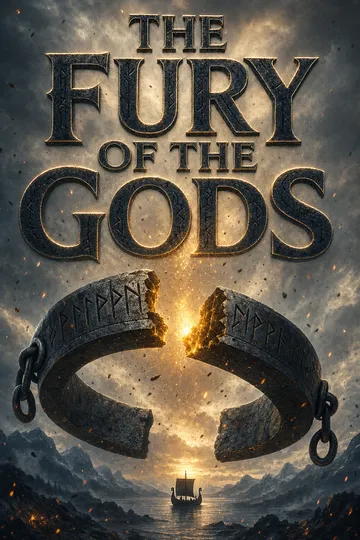
The Fury of the Gods closes John Gwynne's Bloodsworn trilogy as a study of freedom, vengeance and chosen family dressed in Norse-flavored apocalypse. Its engine is the thrall-collar: a civilization built on enslaving the god-blooded, and the question of whether that order can be broken. Elvar's3 arc supplies the answer. Terrified of becoming her tyrant father, who taught that fear is safer than trust, she gambles everything on the opposite proposition, freeing the wolf-god7 and every Tainted thrall by blood oath. Her murder moments later is the book's cruelest irony and its thesis: the liberator dies, but the liberation holds, outlasting her when a freed Ulfrir7 refuses to heel. Against Elvar's3 idealism, Gwynne sets a brutal anatomy of revenge. Varg,2 Orka1 and Lif23 each hunt a killer, and each kill is rendered less as triumph than as grim necessity that changes nothing about the loss. Rokia12 says outright that vengeance felt good but brought no one back, and Biorr,5 the story's most tragic figure, finally names vengeance as ash in the mouth and chooses one redemptive act, returning a stolen child, before he is cut down anyway. The book refuses to let payback feel clean. The gods, meanwhile, are the villains of every ideology. Lik-Rifa's8 promised liberation is a recruiting lie; the maker Snaka is devoured by his own children grasping for power. Only mortal loyalty, the Bloodsworn's oath-kin, the tennur's freely given devotion, proves trustworthy. That is the emotional core: family you choose over family you inherit. The elegiac final chapters, burying Thorkel, Glornir6 and Spert together and founding a home where the war-weary can raise children in peace, answer the trilogy's opening wound. Gwynne argues that after gods fall and empires still loom, the only victory worth having is a hearth, a barrow, and people to protect. The dragon8 dies; grief and a new invasion remain.
Review Summary
The Fury of the Gods receives mostly positive reviews as an epic conclusion to the Bloodsworn Saga. Readers praise Gwynne's masterful storytelling, vivid battle scenes, and compelling character development. Many consider it a satisfying finale, with intense action and emotional moments. Some criticize the abundance of fight scenes and pacing issues. The found family aspect and Norse-inspired setting are highlights for many. While a few readers feel it's the weakest in the trilogy, most rate it highly and recommend the series overall.
People Also Read
Characters
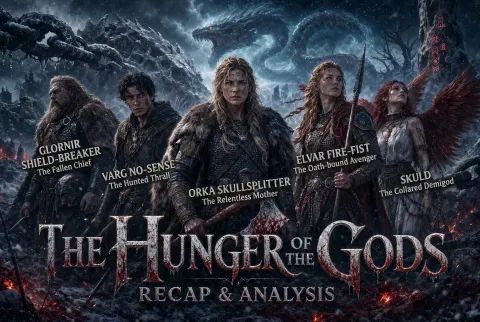
Orka Skullsplitter
Grieving wolf-blooded motherOnce the feared chief of the Bloodsworn, Orka traded war for a quiet steading with her husband Thorkel and son Breca10, only to have her husband murdered and her boy stolen. She carries the wolf-god's7 blood, and grief has honed her into something relentless and terrifying. Beneath the killer's calm and the flat stare lies a fierce, protective love; she measures the world by whom she can keep safe and who owes her a blood-debt. Distrustful of gods and contemptuous of grand causes, she fights only for family, whether by blood or by oath. Her tenderness with Breca10 and her old crew reveals the warmth that violence guards, and her arc balances vengeance against the harder work of protecting what remains.
Varg No-Sense
Freed thrall turned BloodswornA former farm thrall who killed the man who owned him and fled, Varg joined the Bloodsworn to learn how his sister Froya died, and discovered he carries the wolf-god's7 blood. Wary, hungry for belonging, and driven by grief, he has slowly found in the crew the family and home he never had. His need to avenge Froya sharpens him, but his deeper transformation is learning that his choices matter, that a nameless thrall can shape the world. Blunt and earnest, mocked as No-Sense, he proves quietly wise, offering the crew a vision of peace. His prickly bond with the warrior Rokia12 and his loyalty to his oath-kin anchor his search for a life beyond violence.
Elvar Fire-Fist
Reluctant jarl and liberatorDaughter of the tyrant Jarl Storr, Elvar fled his court to win glory with the Battle-Grim, craving both her father's respect and his ruin. Ambitious, deep-cunning and haunted by the fear of becoming him, she has thralled the wolf-god Ulfrir7 and bound herself by blood oath to rescue a stolen child. Leadership sits heavy on her; she feels numb where she expected triumph and lonely in command. Her defining struggle is moral: whether power must rest on fear and chains, as her father taught, or on trust and freedom. Fierce in the shield wall and tender toward those she loves, she carries a conscience that could either remake the world or destroy her, and she refuses to be the monster who raised her.
Guðvarr
Cowardly, self-serving survivorA drengr of Fellur village and nephew to Jarl Sigrun, Guðvarr has clawed his way close to power by making himself useful to whoever holds the whip, first the Galdurman Skalk, now the dragon-queen8. Vain, self-pitying and forever wiping his nose, he narrates his own terror with squirming honesty and rebrands every act of self-preservation as cleverness. He longs to be respected, dreams of skalds singing his name, and hates those who see through him. His aunt's counsel about mastering fear gives him a fragile shell of courage, but his instincts always pull toward the safe shadows and the knife in the back. He is Gwynne's darkly comic study of cowardice mistaking itself for cunning.
Biorr
Conflicted rat-blood betrayerA Tainted rat-blood who once infiltrated and betrayed the Battle-Grim, Biorr now rides with the Raven-Feeders, torn between zealous belief and creeping doubt. He truly thinks he fights to free the Tainted from slavery, yet the cost, dead friends, murdered captives, a lost lover, gnaws at him. Gentle with the abducted children he guards and quick to show unexpected mercy, he is a true believer slowly awakening to the emptiness of the gods' promises. Orka's1 blunt warnings and Elvar's3 memory haunt his conscience. Caught between the cause that gave his life meaning and the growing sense that it has all been a lie, Biorr embodies the moral wreckage of a war fought in gods' names.
Glornir Shieldbreaker
Bear-blooded Bloodsworn chiefChief of the Bloodsworn, a bear-blooded Berserkir, and brother to Orka's1 murdered husband Thorkel. Steady, laconic and iron-hard, he lives by a strict code of loyalty and vengeance: no one steals from or slays his crew and walks away. His fury in battle is matched by deep tenderness for his Seiðr-witch wife Vol11 and his newfound nephew Breca10. He is the crew's unshakeable center.
Ulfrir
Resurrected thralled wolf-godThe wolf-god of legend, resurrected weak from ancient wounds and forced into a thrall-collar. Proud, wolf-cunning and grieving the murder of his wife Orna and daughter, he hungers to kill his mad sister Lik-Rifa8. Bound to serve Elvar3, he tests her constantly, speaking into the minds of the wolf-blooded and watching for the trust or cruelty that will define their alliance. His relationship with Elvar3 becomes the book's crucible: can a god and his captor learn to trust one another? Beneath the menace lies a surprising capacity for gratitude, loyalty and mourning, and a fierce protectiveness toward his scattered Ulfheðnar children that reframes him from monster to grieving father and king.
Lik-Rifa
Mad, vengeful dragon-godThe dragon-god, caged for three hundred years beneath the world-tree and now loosed upon Vigrid, styling herself queen of all. Insane, impatient and ravenous, she craves the death of her brother Ulfrir7 above all, nursing centuries of grudges against her siblings. She rules by terror, forgetting names, devouring the disappointing, and lashing out in tantrums that flatten fortresses. Yet fear runs beneath her rage: she dreads Ulfrir's7 cunning and will not risk herself in a fair fight. Her captains Ilska24 and Drekr15 steer the war she is too volatile to command. She is a portrait of unchecked power as a wound that never healed, appetite and vengeance given monstrous form.
Rotta
Cunning, silver-tongued rat-godThe rat-god, once tortured and chained by Ulfrir7 and Orna for a monstrous crime, now healed and marching beside his sister. Silver-tongued, charming and genuinely clever, he prefers honeyed persuasion and self-preservation to brute force, forever reminding others that some jobs must be done oneself. He plays the reasonable brother against Lik-Rifa's8 madness, offering friendship, mercy and freedom to those he means to use. Cowardice and cunning war within him; he flatters, plots and flees, yet ventures into danger when the prize is great enough. Beneath the smiles lies a bottomless capacity for cruelty, always dressed as good sense and warm-hearted generosity.
Breca
Orka's fierce young sonOrka1 and Thorkel's young son, abducted and returned, now growing fierce with both wolf and bear blood in his veins. Loving, brave and quick-tempered, he insists on fighting in an adult's world and refuses to abandon his mother. His grief for his father and his devotion to Orka1 drive much of her tenderness, and his coming-of-age in war is one of the book's most bittersweet threads.
Vol
Bloodsworn Seiðr-witchThe Bloodsworn's Seiðr-witch and Glornir's6 wife, sister to Uspa16. Powerful, wry and fiercely loyal, she wields rune-magic, a shape-shifting serpent whip and hard-won calm. Her love for Glornir6 and her craft make her the crew's beating heart, and the akall she performs for Varg2 opens the book. Bruised in body and spirit, she still stands as one of the war's most decisive powers.
Rokia
Fierce Ulfheðnar mentorAn Ulfheðnar of the Bloodsworn tasked with training Varg2, hard as carved stone and happiest with enemies to kill. Beneath the scorn lies old grief, her mother murdered before her eyes, turned into weaponized rage. Her blunt loyalty and unexpected tenderness toward Varg2 reveal a woman who chooses her own bonds with the same ferocity she brings to the shield wall.
Svik
Charming cheese-loving warriorThe Bloodsworn's charming, red-braided skald, fond of cheese, fine hair and well-told tales. His easy banter masks lethal skill and deep love for his oath-kin. He becomes a needling brother and mentor to Varg2, and his humor lightens even the grimmest marches, though grief cuts him deep when kin fall.
Grend
Elvar's devoted guardianElvar's3 lifelong guardian and weapons-master, stern, silent and utterly devoted. A crag of a man who taught her to fight and to survive her father's cruelty, he loves her as a daughter and lives to keep an old, secret promise made to her mother. His steady, wordless presence is the emotional bedrock Elvar3 leans on, and his loyalty is tested to its limits.
Drekr
Dragon-born, Thorkel's killerA hulking dragon-born, brother to Ilska24 and Myrk, the man who murdered Orka's1 husband Thorkel and abducted Breca10. Hard, brutal and scarred by Thorkel's dying blows, he is the primary target of Orka's1 blood-debt and a captain in Lik-Rifa's8 war, a living wound she has crossed a continent to close.
Uspa
Seiðr-witch, grieving motherA Seiðr-witch and Vol's11 sister, whose abducted son Bjarn is the reason for Elvar's3 blood oath. Grieving and morally clear-eyed, she presses Elvar3 toward mercy and freedom even against Elvar's3 own interests, and her rune-craft proves vital in battle. Her hope of reunion keeps the war's human stakes burning at its heart.
Jarl Orlyg
Blustering displaced jarlThe bluff, white-bearded lord of ruined Svelgarth, a veteran who loves nothing more than putting others in his debt. Pragmatic and jovial even in disaster, he throws his surviving warriors behind Elvar3 and provides Orka's1 crew safe passage north, trading favors as shrewdly as silver in a world where trust is scarce.
Hrung
Ancient talking severed headThe animated severed head of a giant, once Jarl Storr's counsellor, who long ago slew the god-serpent Snaka and lost his body for it. Garrulous, melancholy and darkly funny, he dispenses wisdom about waiting, grief and the fickleness of life from his stone pedestal, and proves that even a helpless relic can shape the fate of gods.
Skuld
Winged daughter of UlfrirOne of Ulfrir's7 winged, red-haired daughters, long a gaoler of Lik-Rifa8 and now allied to Elvar3. Proud and grieving her slain mother Orna, she fights fiercely from the sky and carries the memory of the eagle-god into battle.
Einar Half-Troll
Gentle giant BerserkirThe Bloodsworn's tree-huge Berserkir, a lover of food, tales and children. His gentle warmth and terrifying strength make him the crew's beloved heart, and his fondness for the rescued Tainted children shows the tenderness beneath his enormous frame.
Brak Trolls-Bane
Sadistic hunter, Froya's killerA weathered, sadistic hunter and trapper in the dragon-born's service, weasel-blooded and blindingly fast. He murdered Varg's2 sister Froya and scarred Orka's1 son Breca10, and he takes cruel pride in the tusk-necklace of his kills, making him the object of Varg's2 long vendetta.
Vesli
Loyal tooth-eating tennurA small tennur devoted to Breca10 and Orka1 after Breca10 once saved her, forever hungry for teeth. Brave far beyond her size, she becomes the survivors' loyal scout and messenger, her comic appetite masking a fierce, freely given loyalty that shames the gods.
Lif
Fisherman turned warriorA fisherman of Fellur who lost his brother Mord and father Virk, trained by Orka1 into a capable warrior. Gentle-hearted and courageous, he seeks vengeance on the coward who killed his kin4, and his steady growth into a true shieldman is quietly moving.
Ilska the Cruel
Cold Raven-Feeder chiefThe cold, iron-faced chief of the Raven-Feeders, dragon-born sister to Drekr15 and Myrk. Ruthlessly competent and emotionally armored, she runs Lik-Rifa's8 war where the mad god cannot, the hard mind behind the horde's terrifying discipline.
Sighvat
Food-loving Battle-Grim secondThe fat, food-obsessed second of the Battle-Grim, loyal and shrewd beneath his grumbling. He guards Elvar3 by choice rather than command, speaks plain sense in council, and hides real cunning behind a bottomless appetite.
Plot Devices
The Akall
Spell revealing the dead's last momentsA magical invocation that lets a person witness, through the eyes of the dead, the final moments of someone's life. Varg2 spends the story seeking this rite to learn how his sister Froya died, and the book opens with its terrible payoff: he watches the hunter Brak21 nail her to a tree and gut her, seizing the killer's face and name. The akall converts abstract loss into visceral, first-person horror, weaponizing Varg's2 grief into a vendetta that steers his arc to its bloody conclusion. It also seeds the story's larger meditation on vengeance, whether seeing and avenging a death eases the pain or merely feeds it, a question the whole novel refuses to answer comfortably.
Thrall-Collars and the Freeing
Iron collars enslaving the TaintedThe Tainted, humans carrying the blood of gods, are enslaved through Seiðr-forged iron collars built around shards of Ulfrir's7 ancient chain, which compel obedience. The collar is the story's central symbol of oppression, and every faction defines itself against it: Lik-Rifa8 recruits the Tainted by promising freedom, the Bloodsworn hide their nature to avoid it, and Elvar3 wields collars on a wolf-god7 and a Berserkir army. The device pays off when Elvar3 breaks the world's oldest cruelty by unlocking every collar, proving the balance of power and morality can be remade by a single choice. It transforms a war of gods into a war over freedom itself, and reveals which characters were secretly Tainted all along.
The Blood Oath
Magic oath that binds thoughtThe blood oath is a Seiðr-sealed vow that binds its swearer not only in deed but in thought, punishing even the intention of betrayal with agony and death. Elvar3 and her companions swore it to rescue Uspa's16 son, and it drives their war more surely than any cause. Unlike the thrall-collar, which enforces obedience through fear, the blood oath binds by will, and it becomes the instrument by which a bond can be remade on terms of justice rather than slavery. The device dramatizes the book's contrast between two kinds of control, chains versus vows, and asks which can truly be trusted when gods and mortals must fight side by side.
Ravens and Tennur Scouts
Winged eyes across the battlefieldThe giant talking ravens Grok and Klo and the small tooth-eating tennur Vesli22 serve as the story's aerial intelligence, ferrying messages across oceans and tracking enemy war-hosts from the sky. Vesli's22 loyalty, born when Breca10 once saved her, and the ravens' shifting allegiances, they once served Snaka, drive key turns: the opening summons, warnings of ambush, and the scouting that lets the survivors strike back. Their comic hunger and blunt candor lighten the grimness, but their function is structural, giving scattered characters the knowledge to converge, ambush and survive. They also embody the book's argument that loyalty, freely chosen, matters more than blood or command.
Hrung the Dragon-Poison
A poison-filled head as weaponHrung18 is the animated severed head of a giant who, centuries ago, killed the god-serpent Snaka by filling his own body with poison and letting himself be swallowed. In this book he functions as a long-fused weapon: Elvar3 quietly devises a plan built on his lethal secret before her death, and Hrung18 reveals it to the survivors afterward. In the climax the bull-man Taras hurls Hrung18 down the dragon Lik-Rifa's8 throat, and the ancient venom that once felled the father of gods kills the daughter. The device rewards patient setup, ties the mythic past to the present war, and grants the beloved, seemingly helpless head a decisive, unlikely heroism.
Bloodsworn Saga Series
About the Author
Other books by John Gwynne



Download PDF
Download EPUB
.epub digital book format is ideal for reading ebooks on phones, tablets, and e-readers.








































