
Plot Summary
Wedding Play's Deadly Deception
The story opens with a wedding on a barge, where a Greatcoat named Chalmers attempts to stop a forced marriage and rescue a captive bride. The event, staged as a play, is in fact a deadly trap set by Margrave Evidalle to lure and destroy the Greatcoats, legendary traveling magistrates. Falcio, Kest, and Brasti—three of the last true Greatcoats—reveal themselves and fight to save Chalmers and the innocent, exposing the corruption and cruelty of the nobility. The scene is a microcosm of Tristia's decay: justice is mocked, and violence is entertainment. The Greatcoats' intervention is both heroic and chaotic, setting the tone for a tale where law, performance, and power are inextricably entwined.
The Greatcoats Reunite
After the barge battle, Falcio and his companions regroup, rescuing the innocent and confronting the reality that the Greatcoats are scattered and their reputation in tatters. The reunion is bittersweet: the bonds of loyalty are tested by the country's descent into lawlessness and the personal costs of their mission. Chalmers, a young and untested Greatcoat, becomes a symbol of both hope and the order's vulnerability. The trio's camaraderie is laced with exhaustion and doubt, but their shared purpose—upholding the King's laws and protecting the weak—remains their anchor. The chapter pulses with nostalgia and the ache of lost glory, as the Greatcoats set out to confront the spreading rot in Tristia.
A Trap for Justice
The Greatcoats' journey takes them to villages where justice has become a hollow ritual. In Vois Calan, they witness a mock trial for a dead man, a suicide blamed for abandoning his family. The women of the village, left behind by men who fled or died, hold these trials to teach their children that cowardice is not virtue. The Greatcoats are powerless to intervene, forced to watch as law becomes a tool for survival rather than truth. The scene is haunting: justice is a performance, and the law's meaning is lost in the struggle to endure. The Greatcoats' ideals are battered by the realities of a country unraveling.
The Tyrant's Game
Falcio and his friends are drawn into the web of Tristia's politics, where minor nobles and Margraves conspire to seize power amid the chaos. Duchess Ossia, one of the last pragmatic rulers, enlists the Greatcoats to investigate a brewing rebellion. The lines between ally and enemy blur as the Greatcoats are forced to play the nobles' games, gathering intelligence while trying to avoid becoming pawns. The country's unity is a façade; every noble seeks advantage, and the Greatcoats' presence is both a threat and a tool. The chapter is a dance of manipulation, where justice is a currency and trust is scarce.
The Margrave's Fall
The arrival of Margrave Rhetan, Evidalle's uncle, shifts the balance of power. Rhetan, a master of patience and subtlety, orchestrates the downfall of his nephew, seizing control through calculated violence. The Greatcoats broker a fragile peace, saving innocents and redistributing power, but at the cost of further entrenching noble self-interest. The execution of Evidalle is swift and cold, a reminder that in Tristia, justice is often delivered by the blade, not the law. The Greatcoats' victory is hollow: they have averted one atrocity, but the system remains unchanged.
The Price of Mercy
After the bloodshed, the Greatcoats reflect on the cost of their actions. Falcio, haunted by the compromises he must make, questions whether justice is possible in a world so broken. The camaraderie of the trio is tested by the weight of their failures and the knowledge that their victories are fleeting. The chapter is suffused with exhaustion and longing for a simpler time, when the law was clear and the Greatcoats were heroes. Mercy, they realize, is not a virtue but a burden—one that demands sacrifice and offers little reward.
The Road to Ruin
The Greatcoats travel north, witnessing the devastation wrought by war, famine, and neglect. Villages are empty, fields untended, and hope is scarce. Along the way, they encounter refugees, deserters, and the remnants of a once-proud nation. The journey is both physical and emotional: Falcio is forced to confront his own limitations and the futility of heroism in a world that no longer believes in heroes. The road is a crucible, burning away illusions and leaving only the raw need to endure.
The Seditious North
In the northern Duchies, the Greatcoats find entire villages fleeing to Avares, the barbarian land across the mountains, in search of food and safety. The bonds of Tristia are breaking: the people no longer see themselves as part of a nation that has abandoned them. The Greatcoats' authority is meaningless here; their coins and verdicts are relics of a dead order. The chapter is a meditation on belonging and the fragility of identity, as Falcio realizes that the law cannot bind a people who have lost faith in their country.
The Avarean Threat
The threat from Avares becomes real as the Greatcoats are captured and brought before Morn, a former Greatcoat who has become the Magdan, Warlord of Avares. Morn has united the Avarean warbands and armed them with Shan steel and cannons, preparing to invade Tristia. The encounter is a reckoning: Morn offers a vision of a new country ruled by magistrates, not nobles, and demands the Greatcoats join him or be destroyed. The chapter is a clash of ideals and a warning that the old ways cannot survive the coming storm.
The King's Secret Heir
Back in Aramor, the political crisis deepens as Trin, the cunning daughter of Patriana, reveals Filian, the secret son of King Paelis, as the true heir to the throne. The revelation shatters the fragile alliance around Aline, the girl Falcio has protected for years. The Dukes, ever opportunistic, rally to Filian, and the Greatcoats are forced to choose between law and loyalty. The chapter is a study in betrayal and the corrosive power of secrets, as the dream of a just monarchy is threatened by the very bloodline it was meant to protect.
The Divided Order
The Greatcoats themselves are divided: many have joined Morn, seduced by his vision of a new order, while others remain loyal to Falcio and the old King's dream. The Order's unity is shattered, and the few who remain are beset by doubt and recrimination. Falcio is forced to confront his own failures as a leader and the possibility that the Greatcoats are no longer a force for good. The chapter is a crucible of identity, as each character must decide what it means to be a Greatcoat in a world that no longer wants them.
The Coup and the Crown
As the Avarean invasion looms, Duchess Ossia and Falcio plot a coup to secure the throne for Aline, but betrayal is everywhere. Ossia, revealed as Filian's mother, attempts to kill her own son to save the country, but Aline sacrifices herself to save him. The throne is won at the cost of innocence: Aline dies, poisoned, and Falcio is left broken, accused of regicide. The chapter is a tragedy of good intentions undone by the cruelty of necessity, and the law is revealed as both shield and weapon.
The War of Seven
With Tristia's army shattered and the Avareans poised to conquer, Falcio and six companions—Kest, Brasti, Valiana, Dariana, Ethalia, and Quillata—stage a desperate last stand, reenacting the Avarean legend of "Seven for a Thousand." Their defiance, aided by the Bardatti's warsong, becomes a performance that wins the respect of the enemy and the horde watching from the cliffs. The battle is brutal and heroic, a final assertion of Tristia's spirit. The Greatcoats' sacrifice buys a truce, but at the cost of two Duchies and the end of the old order.
The Last Verdict
In the aftermath, Falcio is put on trial by the surviving Orders—the Dal Verteri—to decide if Tristia is worth saving. The trial is both literal and symbolic: each Order testifies to the failures and virtues of the country, and Falcio must render a verdict. The chapter is a meditation on justice, mercy, and the limits of law. Falcio's decision—to fight for a country of heroes, not tyrants—becomes the foundation for a new beginning, even as the old Tristia dies.
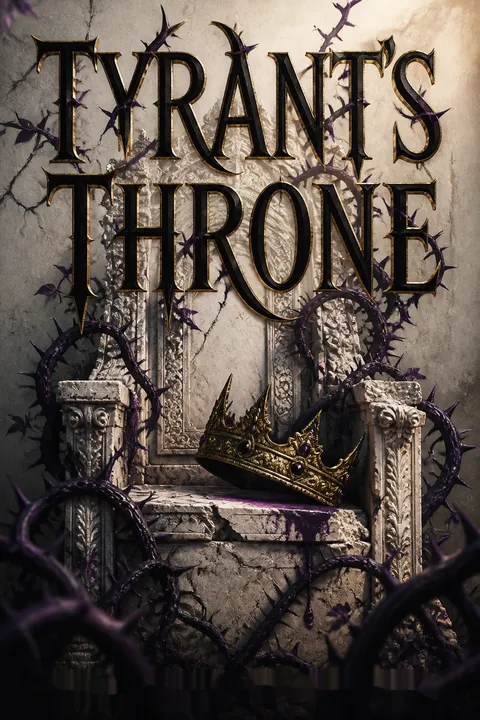
The Tyrant's Throne
Filian is crowned King, but the cost is immense: the country is fractured, the Greatcoats are exiled or scattered, and the dream of a just monarchy is all but dead. Trin, the would-be tyrant, is banished, and the Greatcoats' legacy is both honored and ended. Falcio, broken by loss and failure, refuses the role of First Cantor, passing the mantle to Chalmers. The chapter is an elegy for heroism and a reckoning with the impossibility of perfect justice.
The End of Heroes
The surviving Greatcoats go their separate ways: Kest reforms the Knights, Brasti joins the Rangieri, Valiana becomes Duchess of Rijou, and Chalmers takes up the burden of leadership. Falcio, exhausted and heartsick, prepares to leave with Ethalia, who is pregnant with his child. The bonds of friendship endure, but the age of heroes is over. The chapter is a quiet, bittersweet farewell, suffused with hope and regret.
The Dead Remember
Falcio and the Tailor journey to bury Aline beside her father, King Paelis. Along the way, they are visited by the Gods—Valor, Death, and Love—who grant Aline a final meeting with her father. Falcio confronts his own failures and the limits of heroism, finding solace in memory and the love of those who remain. The dead are honored, and the living are left to carry on.
The New Beginning
In the end, Falcio finds peace in the promise of new life: Ethalia's pregnancy is revealed, and the friends gather to honor the past and look to the future. The Greatcoats' legacy endures not in law or legend, but in the courage to love and hope in a broken world. The story closes on a note of quiet triumph: the dead are remembered, the tyrant's throne is empty, and the next generation waits to be born.
Analysis
Tyrant's Throne is a swashbuckling epic that interrogates the very nature of heroism, justice, and the cost of idealism in a world that resists both. Sebastien de Castell's final Greatcoats novel is a meditation on the limits of law and the necessity of mercy, set against a backdrop of political intrigue, war, and personal loss. The story's structure—built on performances, trials, and reversals—mirrors its themes: justice is always a negotiation between appearance and reality, principle and necessity. The characters are defined by their willingness to endure pain and betrayal for the sake of a dream that may never be realized. The novel's greatest strength is its refusal to offer easy answers: every victory is compromised, every act of mercy is costly, and the line between hero and tyrant is perilously thin. In the end, the legacy of the Greatcoats is not in law or legend, but in the courage to love, to hope, and to remember the dead. The story's final note is one of quiet triumph: the age of heroes is over, but the possibility of a better world endures in the hearts of those who refuse to kneel.
Review Summary
People Also Read

Characters
Falcio val Mond
Falcio is the First Cantor of the Greatcoats, a man driven by an unyielding sense of justice and haunted by the murder of his wife, Aline. His journey is one of relentless sacrifice: he upholds the King's laws even as the world crumbles around him, and his faith in heroism is battered by betrayal, loss, and the futility of good intentions. Falcio's relationships—with Kest and Brasti, with Valiana and Ethalia—are the core of his resilience, but also the source of his deepest pain. He is both duelist and magistrate, torn between the need for action and the demands of conscience. By the end, Falcio is broken but not defeated, passing on his legacy to a new generation and finding hope in love and memory.
Kest Murrowson
Kest is the Queen's Shield, the greatest swordsman in Tristia and Falcio's closest friend. His devotion to Falcio is unwavering, but he is also the voice of reason and restraint, often forced to stop Falcio from crossing the line into tyranny. Kest's journey is one of self-sacrifice: he gives up Sainthood, endures physical and emotional pain, and ultimately chooses to reform the Knights, seeking to instill true honor in a corrupted Order. Kest's calm, analytical mind is both a strength and a burden, as he struggles with the weight of impossible choices and the loss of the world he once knew.
Brasti Goodbow
Brasti is the Queen's Jest, a master archer whose wit and irreverence mask a deep loyalty and compassion. He is the emotional glue of the trio, using humor to defuse tension and keep hope alive. Brasti's journey is one of unexpected growth: he contemplates marriage, joins the Rangieri, and becomes a symbol of the ordinary heroism that endures when legends fail. His relationship with Falcio and Kest is both brotherly and antagonistic, and his willingness to die for his friends is matched only by his refusal to let them give up.
Valiana
Valiana is the adopted daughter of Falcio, raised to believe she was a princess, only to discover her true parentage is both more humble and more complicated. Her journey is one of self-discovery and resilience: she overcomes poison, betrayal, and the loss of her claim to the throne, ultimately becoming Duchess of Rijou. Valiana's strength is both physical and moral; she is a warrior and a leader, but also a young woman searching for her place in a world that constantly shifts beneath her feet. Her bond with Falcio is both filial and aspirational, and her courage is a beacon for those around her.
Ethalia
Ethalia is a former Sister of Merciful Light who becomes the Saint of Mercy, embodying compassion and forgiveness in a world of violence. Her relationship with Falcio is a source of healing and hope, but also a challenge: she demands that he see her as a woman, not a savior. Ethalia's power is both blessing and curse, as she struggles to retain her humanity and resist the temptation to use her Awe as a weapon. Her pregnancy at the end of the story is a symbol of renewal and the possibility of a better future.
Chalmers
Chalmers is the King's Question, a young and inexperienced Greatcoat whose courage and determination earn her the mantle of First Cantor. Her journey is one of transformation: from frightened novice to the embodiment of the Greatcoats' ideals. Chalmers' willingness to face death, her humility, and her insistence on truth make her both a symbol of the order's renewal and a reminder that heroism is not the absence of fear, but the refusal to be ruled by it.
Trin (Tarindelle)
Trin is the daughter of Patriana, raised to be a weapon and a ruler. Her intelligence and ruthlessness make her a formidable adversary, but her capacity for love and her longing for connection are her undoing. Trin's relationship with Filian is both genuine and destructive, and her laughter at Aline's death is the final act of a woman who cannot escape the patterns of her upbringing. Trin is both tyrant and victim, a mirror for Falcio's own struggles with power and mercy.
Filian
Filian is the hidden son of King Paelis, raised in secrecy and thrust into power by Trin's machinations. His intelligence and decency are genuine, but he is also shaped by Patriana's teachings and his love for Trin. Filian's journey is one of painful awakening: he must choose between love and justice, between the law and the needs of the people. His decision to banish Trin and honor Aline's legacy is a sign of hope, but his reign is shadowed by the cost of survival.
Morn (The Magdan)
Morn is a former Greatcoat who becomes the Magdan, Warlord of Avares. His vision of a new country ruled by magistrates is both seductive and terrifying, and his ability to manipulate events makes him a formidable antagonist. Morn's hatred for Paelis and Falcio is rooted in betrayal and the failure of ideals. His defeat is not just a military loss, but a moral reckoning: the dream of a perfect order is revealed as another form of tyranny.
The Tailor (Magrit Denezia)
The Tailor is the King's mother, a genius of strategy and manipulation who shapes the destinies of nations. Her love for Paelis and Aline is both her strength and her undoing. The Tailor's journey is one of loss and resignation: she abandons her role as architect of fate, recognizing that even the greatest plans cannot save those we love. Her presence is both comfort and warning, a reminder that the cost of power is always personal.
Plot Devices
Performance as Power
Throughout the novel, performance is both literal and metaphorical: trials are plays, battles are orchestrated spectacles, and power is maintained through the manipulation of appearances. The opening wedding play sets the tone, and the climactic "War of Seven" is a deliberate reenactment of legend to sway both enemy and audience. The Bardatti's warsong is a weapon, and even the law is a script to be interpreted and performed. This device blurs the line between truth and illusion, forcing characters to question what is real and what is merely convincing. The narrative structure itself is episodic, moving from set piece to set piece, each a stage for the drama of justice and survival.
The Law as Both Shield and Sword
The Greatcoats' mission is to uphold the King's laws, but the law is constantly weaponized by those in power. Trials become rituals devoid of meaning, and the law's authority is undermined by corruption and necessity. Falcio's struggle is to reconcile the ideal of justice with the reality of a world where mercy and violence are inseparable. The law is both a shield for the weak and a sword for the strong, and the story's central question is whether justice can survive in a world that no longer believes in it.
Betrayal and Loyalty
The novel is structured around betrayals—personal, political, and ideological. Friends become enemies, and enemies become reluctant allies. The Greatcoats themselves are divided, and every alliance is provisional. Loyalty is tested not by oaths, but by sacrifice and the willingness to endure loss. The narrative uses foreshadowing and reversals to keep the reader off balance, mirroring the characters' own uncertainty.
The Trial as Metaphor
The climactic trial, where Falcio must decide if Tristia is worth saving, is both literal and symbolic. Each Order testifies, and the verdict is not just about the country, but about the possibility of redemption, the value of sacrifice, and the meaning of heroism. The trial structure allows for a meditation on the failures and virtues of the past, and the possibility of a new beginning.
Cycles of Violence and Renewal
The story is haunted by cycles of revenge and the inability to break free from the past. Every act of mercy or violence echoes through generations, and the dead are never truly gone. The ending, with Ethalia's pregnancy and the promise of a new generation, is both a break from and a continuation of these cycles. The narrative uses foreshadowing—Aline's sacrifice, the burial beside her father, the Gods' intervention—to suggest that hope endures, even when justice fails.
Greatcoats Series

About the Author


Download PDF
Download EPUB
.epub digital book format is ideal for reading ebooks on phones, tablets, and e-readers.








































