
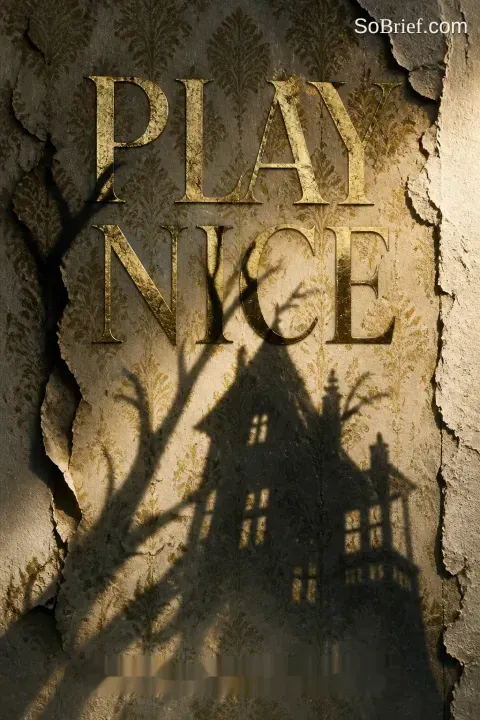


Plot Summary
The Midnight Phone Call
Clio Barnes1 works a flirtation at a glittering Manhattan brand party, charming Ethan, a watch CEO she pretends not to recognize. Her phone buzzes relentlessly. When she finally answers her sister Daphne,5 the news lands like a physical blow: their estranged mother Alexandra2 died of a massive heart attack, alone. She was gone before paramedics arrived.
Earlier that evening, Clio1 received a party gift, a white gold snake charm with tiny diamond eyes. She processes the call by revoking Ethan's invitation into her Uber, going home solo, and collapsing into bed fully dressed, glitter and mascara smearing across her pillow. Tomorrow she will have to face New Jersey Transit and her family. For now, she just sleeps.
Clio's response to death is calibrated as performance. She weaponizes Ethan's attraction and discards him at the threshold of intimacy, following her mother's advice to open your legs before you open your heart. The snake charm arrives at the exact moment of maternal loss, a piece of jewelry she will wear obsessively. Glitter mirrors how this death will embed itself in her life: permanent, invasive, impossible to fully remove. Clio has built an identity on control of her image, her emotions, her curated online reality. Alexandra's death is the first thing she cannot style away, filter, or caption into acceptability.
The House She Never Sold
Clio1 drags Tommy,10 her sweet but timid brother-in-law, to the funeral in Connecticut at the gaudy Victorian home of Mariella,12 a theatrical psychic. She meets Roy,7 her mother's2 silver-haired demonologist boyfriend, and endures a circle of remembrance full of strangers sharing stories about a version of Alexandra2 she never knew.
Upstairs on a balcony, Aunt Helen8 tells her the truth: Alexandra2 never sold the Edgewood Drive house. She kept it all these years, visiting periodically, trying to keep its demonic presence dormant. And she died there, inside that house, alone. The property now belongs to Clio1 and her sisters. Clio1 realizes her family has been lying by omission, curating her ignorance as carefully as she curates her social media.
The funeral introduces Clio to the parallel universe of occult belief where her mother was not crazy but courageous. Helen occupies a fascinating middle ground: she does not believe in demons but believed in Alexandra's belief. The house revelation transforms Clio's grief into a project. Renovation becomes her coping mechanism. She will make the house unrecognizable, literally paint over the past. But the inheritance is more than property. It is unanswered questions, suppressed memories, and a demon that may have been waiting for her return. Clio's decision to handle the house herself reveals her subconscious desire to engage with what happened there.
The Book Left Behind
Driving alone to Edgewood Drive, Clio1 confronts the house of her nightmares: ugly red siding, splintered stairs, narrow windows that barely admit light. Inside, the beige shag carpet persists. The ceiling fan spins by itself. A cold hand grips the back of her neck.
Muddy boot prints cross the floor toward her childhood bedroom. On the nightstand sits a crumbling copy of Demon of Edgewood Drive, missing its back half. The title page bears her mother's2 handwriting: 'For my Clio,1 my troublemaker, my fireball.
May you always be brave. Don't ever let anyone extinguish your light. I hope this helps you understand.' A mouse scurries over her feet and she bolts, terror overriding curiosity. Outside, she discovers the book is still clutched in her hand, as if fused there.
The house immediately generates phenomena that resist rational explanation. The fan, the touch, the boot prints could each be dismissed alone, but together they create an atmosphere of wrongness Clio's body recognizes before her mind does. Her mother's inscription reframes the book not as exploitation but as a gift, an explanation, an act of love. The phrase 'my fireball' suggests Alexandra saw herself in Clio. The warning to never let anyone extinguish her light foreshadows the family's attempts to suppress Clio's emerging belief. The book sticking to her hand literalizes how trauma adheres whether we acknowledge it or not.
The Thing in the Closet
Clio1 reads the book in secret, violating the promise she and her sisters made never to touch it. Alexandra's2 version of events centers on young Cici (Clio)1 as an unnervingly perceptive child who announced that 'the thing that lives in my closet' made a mess in the kitchen.
The memoir describes phantom laughter, cabinets opening themselves, a blanket fort breathing as if something inside were inhaling, and Cici1 speaking to an invisible presence at night. Clio1 wrestles with fragmented memories: she remembers the kitchen incident but not her alleged role in blaming an entity.
She remembers wanting the upstairs bedroom with her sisters but being guilted into the downstairs room near that closet. The line between her mother's2 dramatic license and recovered memory blurs with every page.
This turning point introduces the epistemological crisis at the novel's core. Whose version is true: the mother's memoir, the father's denials, the sisters' testimony, Clio's own fragmentary memories? The book functions as a third parent, a textual authority competing with both living and dead voices. Young Cici's claim that the entity 'doesn't have a body yet' is chilling because it makes the demon developmental, something that grows alongside the child. Clio's obsession with reading reveals her deeper need: not to know what happened, but to know whether her mother was crazy. If Alexandra was not crazy, everything Clio believes about herself is wrong.
The Boy Next Door Returns
While sleeping on the couch at Edgewood, Clio1 is awakened by a shadowy figure screaming in the living room. She chases the intruder onto the deck, where rotting stairs give way, dropping a teenage boy into the yard. His uncle Austin6 comes running, apologizing profusely. Austin6 recognizes Clio1 immediately: he grew up down the street, had a crush on her as a kid.
His brother Jackson helped Alexandra2 move in years ago. The next evening, he returns with apology cookies from his mother and a six-pack. They drink on the deck, share a joint, and end up on the couch. He leaves his phone number on a torn sketchpad page. It is the best hookup Clio1 has had in a long time, and it complicates everything.
Austin enters as an antidote to Clio's isolation. Unlike the men she discards in New York, he is warm, unpretentious, and connected to her past without being entangled in her trauma. He lives with his mother who has MS, works as a nurse at a senior facility, and wears his dead father's gold chain. For Clio, intimacy is usually performance. With Austin, she lets herself be touched without a script. But their connection is shadowed by the house: he has read her mother's book, knows things about her childhood she does not remember, and becomes a witness she desperately wants to believe her, if only she could risk telling him the truth.
Hello on the Page
Strange phenomena escalate. Clio1 wakes on the floor with her bedding piled beside her. She finds her sketchpad open to a page where 'Hello' is scrawled in her own handwriting, a drawing she has no memory of making.
At night, beneath her white noise sleep track, a whispering voice surfaces: 'Hello hello. It's so good to see you again.' Her mother's2 book continues: Alexandra2 called a priest, Father John, who fled the house within minutes. A second priest, Father Bernard, confirmed a demonic presence and warned of danger to the girls, especially Cici.1
Clio1 also finds the fridge mysteriously open, dead flies accumulating on windowsills, and she feels watched constantly, a presence hovering just behind her shoulder that vanishes when she turns.
The demon's communication style mirrors Clio's own: performative, attention-seeking, clever. 'Hello' is innocuous enough to be dismissed but specific enough to terrify. The sleep track whispers, the unremembered sketch blur the boundary between Clio's consciousness and the entity's influence. Alexandra wrote that demons are 'beings of attachment' who seek codependence. The demon is wooing Clio the way Clio woos Instagram followers: with small provocations that demand engagement, making her complicit in her own haunting by forcing her to ask whether the disturbance comes from the house or from herself.
Flames Consume the Truth
At the Memorial Day barbecue, Clio1 sneaks into her father's3 study and finds the missing back half of the annotated book hidden in his desk drawer. She confronts him in front of the guests, screaming. He drags her inside, then marches to the firepit and feeds the pages to the flames. Clio1 watches her mother's2 handwritten notes, her only inheritance of maternal truth, curl into ash.
She accuses him of cheating on Alexandra2 with Amy,9 their former dance teacher. He refuses to answer. Tommy10 drives her to Edgewood afterward, where she finds four deep scratches gouged into the freshly primed living room wall, forming a massive frowning face. The demon has answered fire with permanent, physical testimony carved into the house itself.
The book burning is the novel's most overt act of patriarchal censorship. James does not just disagree with Alexandra's account; he destroys it, erasing her voice from the family record just as he worked to erase her from their lives. The scratches on the wall answer his fire with testimony that cannot be burned. The demon marks the house itself, turning Clio's renovation into a palimpsest: every coat of paint will cover but never remove what lies underneath. This is when Clio's loyalty definitively shifts. She stops trying to reconcile her parents' competing versions of history and starts investigating on her own terms.
The Scar's True Story
Over a disastrous lunch in Manhattan, Leda4 accuses Clio1 of having antisocial personality disorder, citing conversations with Tommy,10 who has a psychology minor. Then her sisters drop a revelation Clio1 has waited her whole life to hear: the burn on her forearm was not inflicted by their mother.2
They found seven-year-old Clio1 at the kitchen table in the middle of the night, giggling, pressing a hot pink lighter to her skin. She told them it felt like nothing, 'just like it said it would.'
The 'it' was the demon, or, per Leda4 and Daphne,5 a delusion their mother2 encouraged. They told their father3 a different story, one that helped him win full custody. Clio's1 foundational narrative of maternal abuse was a lie her sisters fabricated to save them all from that house.
This revelation is the book's moral earthquake. Clio's identity was built on a false premise: that her mother abused her, that her father rescued her. The truth recasts everyone. Leda and Daphne's choice was pragmatic but corrosive; it traded short-term safety for long-term distortion of every relationship in the family. The demon emerges less as a monster and more as a family secret everyone participated in creating. Clio's burn becomes a symbol not of maternal cruelty but of how families construct convenient narratives at the expense of inconvenient truths, and how children absorb the stories adults need them to tell.
Playing with Fire Again
Clio's1 life implodes. Her Brooklyn apartment building catches fire when a neighbor's rooftop party spins out of control. She salvages what she can: laptop, jewelry, the fire safe her father3 insisted on.
Returning to Edgewood, she buys a hot pink lighter identical to her childhood one, a bottle of vodka, and cigarettes. Austin6 arrives, worried after watching her increasingly erratic Instagram stories. She picks a fight, mocking his father's gold chain necklace, and he walks away wounded, telling her she is already 'alone and fucked-up.'
Drunk and desolate, Clio1 posts a blurry, tear-streaked selfie. Then she presses the lighter's flame to her old scar. The burn blisters yellow. She feels nothing, then smells her own flesh smoking and gasps back to awareness.
Clio's breakdown is both surrender and test. She recreates her childhood trauma exactly, as if proving to herself that it really happened, that the demon exists, that her mother was not crazy. The repetition compulsion is textbook but also strategic: she needs physical evidence that the supernatural is real. Pushing Austin away is self-sabotage as self-protection; she cannot tolerate being loved by someone who might not believe her. The Instagram stories perform vulnerability to an audience of strangers, a cry for witnesses that her family refuses to be. Better to be alone and right than together and gaslit.
Therapy as Ambush
Clio1 discovers her father3 has been Googling psychiatric holds and 'genetic psychosis.' She calls Roy,7 the demonologist, and asks him to meet her at Edgewood. Then she is frog-marched to family therapy, where the session devolves into chaos. Leda4 calls Clio1 a manipulator.
Daphne,5 the lifelong peacemaker, finally erupts, confessing she hates how everything works out for Clio,1 hates that Dad3 is quietly homophobic, hates that she has always known he cheated. In response, James3 throws a chair against the wall and screams that Alexandra2 was a terrible mother who 'got exactly what she deserved,' that sometimes he looks at Clio1 and hates how much she reminds him of her. Clio1 walks out. No one stops her.
The therapy scene is the family's mask-off moment. James's eruption reveals the contempt underneath his doting-dad performance. His Google searches confirm he pathologizes any Barnes woman who challenges his narrative, ready to institutionalize Clio as he once effectively institutionalized Alexandra through the courts. Daphne's confession that she has 'always known' about the affair demonstrates how the family system depends on everyone agreeing to pretend. The therapist is rendered irrelevant; the dysfunction is too entrenched. Clio's calm exit is her most powerful act: she stops performing the role of problematic daughter and simply leaves the stage.
The Demonologist Disappears
Clio1 returns to Edgewood to meet Roy.7 His car sits in the driveway, but the house is empty. She calls his phone repeatedly, following the ringtone down to the lower level, where it lies on the carpet outside her childhood bedroom. Every door downstairs is shut except hers. In her closet, the ladder to the attic has been set up, positioned beneath the panel.
The panel is weighted from above, resisting her attempts to push it open. Dread coils in her stomach. Roy7 told her over the phone that Jed and Ruth, his former teammates, are all dead, that working in this field takes a toll. Now the expert has vanished, and Clio1 is alone in the house with whatever took him.
Roy's disappearance is a potent horror beat because it eliminates the expert. The demonologist, the one person professionally equipped to handle this, has been neutralized off-page. The ladder set up in Clio's closet is an invitation, not a trap. The demon does not need to chase her; it knows she will climb up voluntarily because her need to understand outweighs her fear. Roy's earlier words haunt the moment: demons are beings of attachment, and this one has been attached to Clio since she was seven years old. It has been waiting for her to come back and finish what they started.
Sisters at War
Leda4 and Daphne5 arrive, having seen Clio's1 unhinged Instagram Live. They find her bloody-nosed from a ladder fall. The house immediately performs: cabinets slam open and shut, doors swing on their own. Leda,4 desperate to rationalize, accuses Roy7 of rigging the house.
The sisters devolve into a physical fight, hair pulling and kicking, decades of resentment erupting. Daphne5 screams that she hates being the family mediator. Leda,4 weeping and unhinged, finally confesses: she read the book too, and she saw the demon as a child.
It would come into their shared bedroom at night, a shadow with white eyes and a serpentine tongue, watching her sleep. She ignored it to make it go away, but she missed the attention. She lied about the burn because she 'wanted out of this house.'
The sisters' fight is the demon's masterpiece of manipulation. Each woman's deepest wound is weaponized: Daphne's invisible labor, Leda's jealousy of Clio's favored status, Clio's perceived selfishness. Leda's confession reframes the entire family history. She did not just lie about the burn to help their father; she did it because she resented that the demon favored Clio. The entity does not need to possess anyone; it just needs to amplify existing fractures. The Barnes women's anger at each other is misdirected anger at their circumstances, a perfect closed loop of trauma that keeps them fighting each other instead of the source of their pain.
The Attic's Dark Bargain
They hear Roy's7 muffled voice from the attic. Daphne5 climbs the ladder, shifts the panel, and Roy's7 body crashes down, his eyes gouged out but still alive, a broken sound escaping his throat. Leda4 and Daphne5 drag him outside while Clio,1 compelled, climbs into the crawl space alone.
The attic is a museum of her childhood: their fruit-shaped cups, Mom's2 jewelry box, photographs, and copies of the book inscribed to each sister. The demon peels itself from the rafters, a hulking thing with milky eyes, red slit pupils, a forked crimson tongue.
It shows Clio1 her own forgotten memories, stored here like artifacts. She unclasps her snake charm necklace and offers it as tribute, then cries real, sincere tears for the first time. The demon drinks her grief and retreats into shadow.
The attic is the unconscious made literal: a crawl space crammed with repressed material, mementos of a childhood Clio cannot fully access. The demon functions as a dark archivist, hoarding what she has lost. Her offering of the snake charm, the gift she received the night her mother died, is a surrender of the persona she built to survive. The snake, symbol of deception and transformation, is exactly right. Clio's sincere tears are the first genuine emotion she has shown anyone, and the demon recoils from them. Its power depends on performance, on fake feelings, on the games people play. Real grief is indigestible. When Clio stops playing, the demon loses interest.
Scars Become Vindication
Clio1 descends from the attic to find Daphne5 and Leda4 waiting on the landing. They push her outside, past Roy's7 broken body on the lawn, and hold each other as police and ambulance arrive. Neighbors gather in the street.
In the commotion, Clio1 walks to Austin,6 standing in the cul-de-sac in his sweatpants. She apologizes for everything she said. He says he believes her about the demon. Hours later, the three sisters sit in a McDonald's, faces bruised and swollen. Leda4 spoons into Clio's1 McFlurry.
Daphne5 dips chicken nuggets in honey. They do not resolve everything, but they are together. Clio1 looks at her burn scar and thinks: this is proof. They should not need scars to be believed, but that is the world their mother2 tried to prepare them for.
The McDonald's scene is deliberately, almost aggressively normal after the attic's gothic horror. The sisters eating fast food with their battered faces is both funny and devastating. These are women taught by their mother that fast food makes you 'chubby,' that their bodies were liabilities. Now they eat McFlurrys with black eyes, and it feels like triumph. Austin's simple belief carries more weight than any expert testimony. Clio's reflection on scars as vindication reframes the entire novel: women should not need visible wounds to prove invisible suffering, but in a world that calls them crazy, the scars become evidence they can hold up to the light.
Epilogue
One year later, on Halloween Eve, Clio1 is the creative director of a gothic fashion line, celebrating a launch party with Austin,6 her sisters, and her family. Roy7 has retired from demonology. The Edgewood house has finally found buyers, a couple, and the sale is moving forward.
Clio1's Instagram notoriety actually boosted her career; fashion is forgiving of a little madness. But she has changed. Her father3 overcompensates with wedding offers she will not accept.
Her mother's2 absence aches differently now, not as betrayal but as irreversible loss. On the balcony, smoking with Helen,8 Clio1 reflects that she is done with the demon. The real way to win is to not play at all. She inhales the morning air: coffee, tobacco, a new day. It smells like hope.
The epilogue lands on radical acceptance rather than triumph. The demon is not defeated; it is simply no longer fed. Clio has learned what Alexandra could not: that some battles are won by walking away. The house sale represents not closure but risk management. Another family will move in, and Clio has chosen not to warn them. This moral ambiguity is the novel's final provocation: she protects herself at potential cost to strangers, just as her sisters once protected themselves at cost to her. Clio's career success feels hollow; she is aware that her 'unhinged' Instagram activity made her more marketable, that female instability sells. Austin's steady presence offers genuine connection, but Clio remains guarded. She has learned to play nice without surrendering her truth, a more sustainable survival strategy than her mother ever managed.
Analysis
Play Nice operates as both a haunted house novel and a surgical examination of how families manufacture consensus reality at the expense of inconvenient members. The demon at 6 Edgewood Drive is real within the novel's world, but its most devastating power is not supernatural. It is the way it exposes the preexisting rot in the Barnes family: the father's3 infidelity and controlling rage, the sisters' complicity in a foundational lie about their mother's2 abuse, the quiet homophobia, the weaponized pathologizing of any woman who deviates from the approved script. The novel's title is bitterly ironic. Clio's mother2 spent years 'playing nice' with a demon to keep it dormant, and her daughters spent decades playing nice with their father's3 version of history to keep the peace. Both strategies failed catastrophically. The book argues that appeasement is not survival but slow suicide. Real survival requires acknowledging the demon, naming the family secrets, and accepting that some houses, and some relationships, cannot be renovated into safety. The question the novel leaves unresolved is whether walking away from the demon constitutes victory or simply abandonment. The house sells to an unsuspecting couple. Clio1 does not warn them. Some cycles, the book suggests, are not broken. They are simply passed on.
Review Summary
Play Nice is a haunted house thriller with dark humor and family drama. Readers praised Harrison's sharp writing, complex characters, and creepy atmosphere. Many found the protagonist Clio unlikeable yet compelling. The book blends supernatural elements with psychological tension, exploring themes of trauma, mental health, and dysfunctional families. While some wished for more overt horror, most enjoyed the slow-building dread and twisty plot. Reviewers appreciated the book-within-a-book structure and annotations. Overall, it's seen as a unique, layered, and entertaining read perfect for spooky season.
People Also Read







Characters
Clio Barnes
Fashion influencer and youngest sisterClio is a twenty-five-year-old stylist and influencer living in Brooklyn, the youngest of three sisters. She has built her identity around control: of her image, her emotions, her carefully curated online presence. Beneath the glamour, she is emotionally walled off, using tears only as manipulation and treating intimacy as transaction. Her estranged mother's2 death forces her to confront a childhood she has largely repressed. She discovers she was the demon's 'favorite' as a child, the one it communicated with most freely. Clio's arc traces her movement from performance to genuine feeling, from her family's sanctioned version of history to an independent reckoning with uncomfortable truths. She is sharp, funny, and self-aware enough to recognize that her charm is both weapon and shield.
Alexandra Barnes
Dead mother and controversial memoiristAlexandra is the gravitational center of the novel despite being dead before it begins. She was an alcoholic who lost custody of her daughters after a series of incidents tied to her belief that their house was possessed by a demon. She wrote a memoir, Demon of Edgewood Drive, which her ex-husband3 forbade the girls from reading. The novel presents her through multiple, contradictory lenses: as abuser, as victim, as truth-teller, as madwoman. She left annotated copies of her book for each daughter, personalized with inscriptions that reveal a mother who loved fiercely but could not escape her own demons, literal or figurative. Her death at Edgewood Drive, alone, replays the central tragedy of her life: nobody believed her, and nobody came.
James Barnes
Controlling father with a curated imageDad is a six-foot-four Viking of a man who presents as the steady, reliable captain of the family. He pays for Clio's1 phone, does her taxes, and rushes to her aid at every crisis. But as the novel progresses, his image cracks. He cheated on Alexandra2 with Amy9, their daughters' dance teacher, then spent decades painting Alexandra2 as crazy to secure custody and protect his reputation. He burns Clio's1 annotated copy of the memoir to suppress Alexandra's2 version of events. When Clio1 begins echoing her mother's2 beliefs about the demon, he Googles psychiatric holds and threatens to have her committed. He loves his daughters but his love is possessive, conditional, and weaponized against any woman who challenges him.
Leda Barnes
Rigid eldest sister in BostonLeda is the oldest Barnes sister, married to Tommy10 and living a meticulously controlled life in Boston. She has sharp features, platinum-dyed hair (to spite Alexandra2, who had dark hair), and an iron will that manifests as rigidity. She is the most openly hostile toward their mother's2 memory, refusing to attend the funeral. But her confession late in the novel reveals she secretly read the book, saw the demon as a child, and lied about Clio's1 burn to escape the house. She envies Clio's1 freedom and charm while pathologizing it as sociopathy. Her arc moves from brittle denial to shattered honesty, acknowledging that her perfect life is built on a foundation of strategic forgetting.
Daphne Barnes
Peacemaker middle sister and chefDaphne is the middle sister, a talented chef in Hudson Valley who has spent her life mediating between Leda's4 rigidity and Clio's1 chaos. She is the family's emotional shock absorber, absorbing everyone else's pain while never expressing her own. She is gay, which their father3 quietly disapproves of, another burden she carries without complaint. During the climactic fight at Edgewood, she finally erupts, confessing she hates being the mediator, hates that Clio1 is spoiled and pretty, hates that she has always known about their father's3 affair. Her arc is about learning that peacekeeping at all costs is its own form of erasure, and that anger, when finally expressed, can be liberating rather than destructive.
Austin
Neighbor, nurse, and love interestAustin grew up down the street from Edgewood Drive and had a childhood crush on Clio1. Now twenty-six, he lives with his mother Dawn11, who has MS, and works as a nurse at a senior facility. He wears his dead father's gold chain, drives a modest car, and brings apology cookies and beer when he wants to see Clio1 again. Unlike the men Clio1 typically discards, Austin is genuine, warm, and unafraid of emotional connection. He has read Alexandra's2 book and knows Clio's1 history without judging her for it. He becomes the one person Clio1 risks being honest with, and his simple belief in her experience with the demon is more validating than any expert testimony could be.
Roy Johnston
Demonologist and Alexandra's partnerRoy is Alexandra's2 longtime boyfriend, a handsome silver-haired demonologist who belongs to the New England Occultist Society. He met Alexandra2 during the original investigation of Edgewood Drive and stayed with her for fifteen years. Clio1 is suspicious of his motives, suspecting he encouraged Alexandra2 to keep the house so he could maintain access to the demon. He arrives at Edgewood to help Clio1 but is overpowered by the entity, found in the attic with his eyes gouged out. His fate confirms the demon's physical danger while also validating Clio's1 intuition that Roy's professional interest in the supernatural compromised his care for Alexandra2.
Helen
Alexandra's chain-smoking sisterHelen is Alexandra's2 older sister, a tall woman with gray-streaked curly hair and an Eileen Fisher wardrobe. She does not believe in demons but believed in Alexandra's2 belief. She maintained a relationship with Leda4 over the years while respecting the family's boundaries. She serves as a bridge figure between the family's denial and Alexandra's2 occult world, providing Clio1 with crucial information about the house and the circumstances of her mother's2 death. Her weary pragmatism and chain-smoking glamour make her one of the novel's most trustworthy voices, precisely because she refuses to simplify Alexandra2 into either saint or monster.
Amy Barnes
Stepmother and former dance teacherAmy was the Barnes girls' dance teacher before becoming their stepmother. She wears kohl eyeliner, low-rise jeans, and perfume that smells like caramel. Clio's1 relationship with her is affectionate but shallow. Alexandra's2 memoir claims James3 cheated with Amy while they were still married, an accusation Amy denies with unconvincing panic. She is a secondary figure in the family drama, more concerned with maintaining surface harmony than confronting uncomfortable truths. Her drunk plea at the barbecue for Clio1 to confirm she still loves her reveals the insecurity beneath her cheerful stepmother performance.
Tommy Kowalski
Leda's sweet, sweater-vested husbandTommy is a social worker married to Leda4, a gentle man with tortoiseshell glasses and a wardrobe of earnest sweater vests. Daphne5 once described him as having 'the sex appeal of a raisin,' but the family loves him for his purity of heart. He accompanies Clio1 to the funeral, serves as a buffer during family conflicts, and is the only character who consistently offers nonjudgmental support. His minor in psychology becomes a point of tension when Leda4 uses it to armchair-diagnose Clio1 as having antisocial personality disorder, a betrayal Tommy likely did not intend.
Dawn
Austin's mother with MSDawn is Austin's6 widowed mother who uses a cane and reads with drugstore glasses. She had coffee with Alexandra2 years ago and was likely the last person to see her alive. Her account of Alexandra's2 final day, disoriented and slurring, provides Clio1 with a haunting image of her mother's deterioration. She is warm and maternal in a way Clio1 never experienced, making her home a refuge from Edgewood's escalating horrors.
Mariella
Flamboyant psychic and funeral hostMariella is Roy's7 aunt, a theatrical psychic medium who wears red satin dressing gowns with old mascara stains and hosts the funeral at her Victorian home. She leads a 'circle of remembrance' and surrounds herself with the trappings of the spiritualist movement: framed Ouija boards, séance photographs, and inherited stories about the Fox sisters. She embodies the occult world's combination of genuine belief and performative eccentricity.
Plot Devices
Demon of Edgewood Drive (the memoir)
Competing version of family historyAlexandra's2 out-of-print memoir recounts her experience of moving into 6 Edgewood Drive and discovering a demonic presence. The book was moderately successful before fading into obscurity. Alexandra2 left annotated copies for each daughter with personal inscriptions and handwritten footnotes that add nuance, admit her drinking problem, and correct her own dramatic embellishments. The annotated copy Clio1 finds becomes both a message from beyond the grave and a contested object: her father3 burns the back half to suppress it, while the demon adds its own annotations to another copy. The memoir functions as a third parental voice in the novel, a textual authority that neither the living family nor the demon can fully control or silence.
The Snake Charm Necklace
Talisman of inheritance and sacrificeA white gold snake pendant with tiny diamond eyes, gifted to Clio1 at Veronica's jewelry launch party on the same night Alexandra2 dies. Clio1 becomes inexplicably attached to it, wearing it constantly. The snake carries multiple symbolic valences: it is a traditional symbol of deception and transformation, it evokes the serpentine tongue of the demon, and it arrives at the exact moment Clio1 inherits her mother's2 unresolved relationship with the supernatural. The charm connects Clio's1 glamorous New York life to the gothic horror of Edgewood Drive, collapsing the distance between the curated and the uncanny.
The Hot Pink Lighter
Recurrent object of self-inflicted harmA hot pink Bic lighter connected to the burn scar on Clio's1 forearm. For most of her life, Clio1 believed her mother2 inflicted this burn, a belief her father3 and sisters encouraged. The truth, revealed late in the novel, is that seven-year-old Clio1 burned herself while in an altered state, communing with the demon, and reported that it 'felt like nothing.' When adult Clio1 buys an identical lighter and re-burns the same spot, she is both testing the demon's reality and compulsively repeating her childhood trauma. The lighter is the novel's most potent symbol of how family narratives overwrite individual memory, and how the truth resurfaces regardless.
The Sketchpad
Medium for demonic communicationClio's1 design sketchpad becomes the demon's preferred method of communication. Words appear in her own handwriting that she has no memory of writing: 'Hello,' 'Leave Me Alone,' 'NO,' and, most ominously, 'Remember?' The demon also tears out pages and scatters them across the living room, each bearing the same word repeated obsessively. The sketchpad is significant because drawing was Clio's1 childhood talent, the skill her mother2 praised. The demon uses art, Clio's1 own creative medium, to breach the boundary between her consciousness and its influence, making her question whether the messages come from the entity or from some dissociated part of herself.
The Attic Crawl Space
The demon's physical lair and memory archiveThe attic above Clio's1 childhood closet, accessible through a small panel, is where the demon lives. It is freezing cold regardless of the season, littered with dead mice parts and the possessions of the Barnes family: the daughters' fruit-shaped cups, Alexandra's2 jewelry box, photographs, and multiple copies of the memoir inscribed to each sister. The attic functions as both literal monster's den and psychological metaphor: the unconscious made spatial, crammed with repressed memories the demon has hoarded. Clio1 must climb into this space voluntarily to confront the entity, reenacting the childhood dynamic in which she was the only sister willing to acknowledge and engage with what lived there.



Download PDF
Download EPUB
.epub digital book format is ideal for reading ebooks on phones, tablets, and e-readers.








































