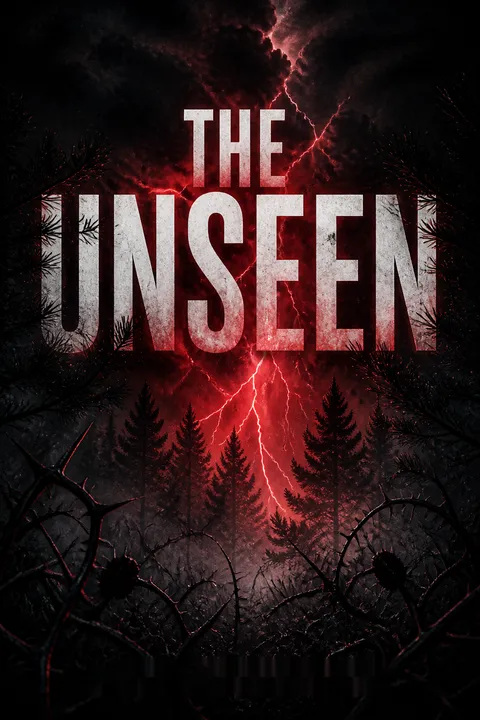

Plot Summary
Shadows in the Garden
Isla, still reeling from the loss of her infant son Adam, seeks solace in her overgrown Colorado garden, unable to escape the relentless news of missing children. Her family is fractured by grief: her husband Luke and teenage son August argue constantly, while her other children withdraw. Isla's sorrow is compounded by a sense of isolation and a history of family trauma, including her own mother's instability and the mysterious disappearance of her cousin Ruby Mae years ago. The garden, once a symbol of hope, now mirrors her inner turmoil—choked by weeds, haunted by memories, and overshadowed by a sense of something unseen lurking at the edge of her world.
The Boy from Nowhere
One morning, Isla glimpses a strange, red-haired boy standing at the edge of her property, barefoot and wild-eyed. He is mute, physically deformed, and seems to have emerged from the woods with no explanation. The authorities cannot identify him; no one is searching for him, and he cannot communicate. Isla feels an inexplicable connection to the boy, whom she names Rowan, convinced he is a sign or a gift—perhaps even sent by her lost son. Against Luke's deep misgivings, the family agrees to foster Rowan, hoping to heal their wounds, but the boy's presence only deepens the sense of unease and the fractures within the household.
A Family Unravels
The Hansen family struggles to integrate Rowan into their already fragile home. Each member reacts differently: Isla is obsessed, Luke is wary, August is hostile, and the younger children are frightened. The family's golden retrievers, Buster and Maize, react violently to Rowan, a first for the gentle dogs. The children's relationships with their parents and each other deteriorate as Rowan's presence amplifies existing tensions and brings new fears. The family's attempts at normalcy—meals, chores, playdates—are increasingly disrupted by inexplicable events and a growing sense that something is deeply wrong.
Feral Child, Fractured Home
Rowan's behavior is animalistic and uncanny: he does not eat, speak, or respond to affection. The children are disturbed by his appearance and his effect on the household. The dogs must be sent away after attacking Rowan, devastating August. Isla's obsession with Rowan grows, and she begins to experience blackouts and lost time and vivid, intrusive memories of her own childhood and Ruby Mae's disappearance. The family's sense of safety erodes as Rowan's presence seems to invite chaos, accidents, and a pervasive, buzzing sense of dread that no one can explain.
The Dogs Know
The family's dogs, Buster and Maize, once beloved companions, become aggressive and terrified in Rowan's presence, culminating in a violent attack that leaves everyone shaken. The dogs are sent to live with a relative, a decision that devastates August and further alienates him from his parents. The children begin to experience strange symptoms—buzzing in their ears, headaches, and episodes of paralysis or lost time. The family's attempts to rationalize these events fail, and the sense that Rowan is at the center of it all grows stronger, even as Isla refuses to see the danger.
Rowan's Arrival
As Rowan settles into the family, inexplicable phenomena escalate. Electronics malfunction, the children suffer from mysterious ailments, and accidents multiply. Isla's mental state deteriorates; she experiences fugue states and violent outbursts she cannot remember. The children, especially the youngest, are plagued by nightmares and visions of shadowy figures. Rowan's presence is both magnetic and repellent—he draws Isla in even as he terrifies the others. The family's isolation deepens, and the outside world offers no help: the authorities are overwhelmed by a rash of missing children, and no one can explain Rowan's origins.
Screams and Silence
The household is rocked by a series of terrifying incidents: Sophie, the youngest, is rendered temporarily deaf after a confrontation with Rowan; Eden nearly chokes to death at the dinner table while Rowan watches impassively; and the family's electronics erupt in a cacophony of noise. Isla's blackouts become more frequent and violent, culminating in an attack on her estranged mother, Skye, who arrives unexpectedly. The children begin to vanish one by one, each disappearance accompanied by storms, red lightning, and a sense of being watched by something inhuman.
The Vanishing
As the supernatural phenomena escalate, Sophie and Willow vanish, seemingly into thin air. The family is thrown into chaos, searching the woods and the community for any sign of the girls. The outside world is similarly plagued: more children go missing, and the authorities are powerless. The family's sense of reality unravels as they confront the possibility that Rowan—and whatever he represents—is at the heart of the disappearances. Isla's memories of her own childhood abduction resurface, and she begins to suspect that the cycle is repeating itself.
The Red Storm
A massive, unnatural storm descends on the town, marked by red lightning and a suffocating, electric atmosphere. The family is beset by hallucinations, paralysis, and lost time. Isla's memories return in fragments: she recalls being taken as a teenager, along with Ruby Mae, and returning changed, pregnant, and haunted. The children experience similar symptoms—buzzing, floating, and visions of shadowy, insectile beings. The storm is revealed to be a cover for the arrival of the "visitors", and the disappearances are part of a recurring, predatory cycle.
The Unraveling Mind
Isla's mental state collapses as she confronts the reality of her own abduction and the loss of her children. She realizes that Rowan is not a child but a vessel or avatar for the beings that have haunted her family for generations. The visitors feed on trauma, grief, and the bonds of family, using Rowan as a lure and a conduit. Isla's memories of her pregnancies, miscarriages, and blackouts are revealed to be the result of repeated abductions and experiments. The family's suffering is part of a larger, incomprehensible pattern.
The Children Are Taken
In a final, terrifying sequence, the remaining children are taken—lifted into the sky by beams of red light, paralyzed and helpless. Luke, in a desperate attempt to save his family, is killed in a car crash orchestrated by the visitors. Isla is left alone, paralyzed and dying, as the truth of her life is laid bare: she has been a pawn in an ancient, inhuman cycle of predation. The visitors erase the family's existence, leaving only fragments and trauma behind. The community is left to mourn the missing, unable to comprehend the true horror.
The Truth in the Woods
In the aftermath, the surviving family members and the community struggle to make sense of the disappearances. Eden, traumatized and alone, returns to consciousness in a public park, naked and disoriented, with no memory of how she got there. She is haunted by the sense that something is growing inside her—a legacy of the visitors' experiments. The cycle of abduction and return is shown to be ongoing, with new victims and new families drawn into the web. The truth is hidden in plain sight, obscured by trauma and denial.
The Visitors Return
The visitors—shadowy, insectile, and utterly alien—are revealed to be the true antagonists, operating beyond human understanding or morality. They use children as vessels, erase memories, and manipulate reality to suit their purposes. Rowan is only one of many avatars, and the cycle of abduction, experimentation, and erasure continues unabated. The family's suffering is only a small part of a much larger pattern, one that has recurred throughout history and will continue into the future.
The End of the Family
The Hansen family is annihilated: Isla and Luke are dead, the children are missing or changed, and the community is left with only questions and grief. The family's story is repeated in news reports, missing person flyers, and whispered rumors, but the true horror remains unseen and unacknowledged. The visitors move on, seeking new victims, leaving only trauma and emptiness in their wake. The cycle is unbroken, and the world remains blind to the threat lurking in the shadows.
The Cycle Continues
In the final moments, Eden, now pregnant with something inhuman, senses the presence of the visitors watching her. The cycle of abduction, trauma, and erasure is poised to begin again, with new families, new children, and new horrors. The unseen threat endures, feeding on the pain and confusion of its victims, hidden in the spaces between memory and reality. The story ends with a sense of dread and inevitability: the unseen will always return, and the cycle will never truly end.
Analysis
A modern parable of trauma, denial, and the inhumanThe Unseen is a masterful blend of domestic horror, science fiction, and psychological thriller, using the device of the feral child to explore the vulnerability of families to forces beyond their control. At its core, the novel is about the cyclical nature of trauma—how pain, loss, and violence are transmitted across generations, often hidden behind the façade of normalcy. The visitors, with their inscrutable motives and inhuman methods, represent the ultimate unknowable threat: predation that cannot be reasoned with, denied, or escaped. The novel's use of unreliable memory, lost time, and supernatural phenomena mirrors the experience of trauma and the difficulty of confronting painful truths. The family's destruction is both literal and symbolic, a warning about the dangers of denial, the limits of love, and the persistence of the unseen. In the end, The Unseen suggests that some horrors are too vast to be contained by memory or language, and that the cycle of predation—whether supernatural or all too human—will continue as long as we refuse to see what lurks in the shadows.
Review Summary
People Also Read


Characters
Isla Hansen
Isla is the emotional core of the novel—a woman devastated by the loss of her infant son and haunted by a lifetime of trauma, including her cousin's disappearance and her own history of blackouts and fugue states. She is both fiercely protective and dangerously obsessed, her grief making her vulnerable to the supernatural threat embodied by Rowan. Isla's psychological unraveling is central to the story: her longing for connection, her guilt over her children's suffering, and her inability to distinguish reality from hallucination. Ultimately, Isla is revealed to be both a victim and an unwitting participant in the visitors' cycle, her body and mind used as a conduit for their predations.
Luke Hansen
Luke is a pragmatic, loving father who struggles to hold his family together as Isla's mental health deteriorates and supernatural events escalate. He is deeply conflicted—torn between supporting his wife and protecting his children, between rational explanations and the mounting evidence of something unnatural. Luke's attempts to intervene are repeatedly thwarted by forces beyond his control, and his growing sense of helplessness culminates in his violent death. His journey is one of increasing isolation, as he realizes too late that the threat is real and that he is powerless to save his family.
August (Gus) Hansen
August is the eldest child, a rebellious teenager who feels unseen and misunderstood. He is the first to sense the true danger posed by Rowan, especially after the family's dogs react violently. Gus's skepticism and anger mask a deep vulnerability, and his attempts to protect his siblings are ultimately futile. He experiences blackouts and lost time, culminating in his own abduction and transformation. Gus's arc is one of growing terror and impotence, as he is forced to confront the reality of the visitors and his own helplessness in the face of their power.
Eden Hansen
Eden is a thoughtful, introspective teenager who is fascinated by true crime and the darkness lurking beneath ordinary life. She is both empathetic and skeptical, trying to make sense of the chaos around her. Eden experiences her own blackouts and physical symptoms, and is ultimately left alone, traumatized and pregnant with something inhuman. Her arc is one of reluctant awakening: she moves from denial to a horrifying understanding of the cycle of predation, realizing that she is both a victim and a vessel for the visitors' ongoing experiments.
Olive Hansen
Olive is the family's caretaker, mature beyond her years and desperate for stability. She tries to hold the family together, looking after her younger siblings and seeking rational explanations for the inexplicable. Olive is deeply affected by the loss of the dogs and the growing strangeness in the house. Her arc is one of increasing anxiety and helplessness, as she realizes that her efforts are futile and that the threat is beyond her ability to control or understand.
Willow Hansen
Willow is a sensitive, rule-following child who tries to do the right thing, even as she is swept up in events she cannot comprehend. She is the first to suspect that Rowan is not what he seems, and her intuition leads her to the edge of the woods in search of her missing sister. Willow's arc is one of growing fear and isolation, culminating in her own abduction and erasure. She represents the vulnerability of children in the face of predatory forces, both human and inhuman.
Sophie Hansen
Sophie is a bright, imaginative five-year-old who is the first to suffer the direct effects of Rowan's presence—losing her hearing, experiencing terrifying visions, and ultimately vanishing. Her innocence and helplessness make her a poignant symbol of the family's loss and the predatory nature of the visitors. Sophie's arc is one of increasing terror and confusion, as she is drawn into the cycle of abduction and erasure.
Rowan
Rowan is the enigmatic, mute boy who appears at the edge of the Hansen property. He is physically deformed, emotionally blank, and utterly uncanny. Rowan is both a victim and an agent of the visitors: he is used as a lure, a conduit, and a vessel for their predations. His presence amplifies the family's trauma, triggers supernatural events, and ultimately leads to the destruction of the household. Rowan's true nature is revealed to be inhuman—an avatar for the visitors, capable of erasing memories, manipulating reality, and perpetuating the cycle of abduction.
Skye Berkley
Skye is Isla's mother, a bohemian, unstable woman whose own history of trauma and loss mirrors her daughter's. She is both a source of pain and a reluctant messenger, arriving at the Hansen home with warnings and secrets about Isla's past. Skye's relationship with Isla is fraught with guilt, anger, and misunderstanding. Her death at the hands of the visitors (or Isla, in a fugue state) underscores the generational nature of the trauma and the inescapability of the cycle.
The Visitors
The true antagonists of the novel, the visitors are shadowy, insectile, and utterly alien beings who operate beyond human understanding. They use children as vessels, erase memories, and manipulate reality to suit their purposes. The visitors feed on trauma, grief, and the bonds of family, perpetuating a cycle of abduction, experimentation, and erasure that recurs throughout history. Their motives are inscrutable, their methods inescapable, and their presence is felt in every moment of dread, loss, and confusion.
Plot Devices
The Feral Child as Catalyst
The appearance of a mute, feral child with no past or identity is the inciting incident that sets the plot in motion. Rowan is both a literal and symbolic outsider, embodying the family's grief and the supernatural threat. His presence amplifies existing tensions, triggers supernatural events, and serves as a conduit for the visitors' predations. The device of the feral child allows the novel to explore themes of trauma, otherness, and the vulnerability of families to forces beyond their control.
Unreliable Memory and Lost Time
The novel employs fugue states, blackouts, and lost time as both a psychological and supernatural device. Characters experience gaps in memory, episodes of paralysis, and hallucinations that blur the line between reality and nightmare. This device heightens the sense of dread and confusion, obscures the true nature of the threat, and mirrors the experience of trauma and denial. It also allows for the gradual revelation of Isla's past and the cyclical nature of the visitors' predations.
Animal Instinct and Foreshadowing
The family's dogs, Buster and Maize, react violently to Rowan, serving as an early warning system for the supernatural threat. Their behavior foreshadows the inhuman nature of Rowan and the visitors, and their removal from the household marks a point of no return. The device of animal instinct underscores the theme that some dangers are beyond human understanding or rationalization.
The Red Storm and Electric Phenomena
The arrival of unnatural storms, marked by red lightning and a suffocating electric atmosphere, signals the climax of the novel. These phenomena are both literal and symbolic, representing the arrival of the visitors and the breakdown of reality. The storms are accompanied by paralysis, buzzing, and lost time, mirroring the experience of abduction and erasure. This device heightens the sense of inevitability and doom, and marks the point at which the family's fate is sealed.
Generational Trauma and Repetition
The novel's structure and plot are built around the repetition of trauma: Isla's childhood abduction, her mother's instability, the loss of children, and the reappearance of the visitors. The device of generational trauma allows the novel to explore the inescapability of certain patterns, the transmission of pain, and the difficulty of breaking free from cycles of abuse and predation. The visitors' predations are shown to be part of a larger, ancient pattern that recurs throughout history.
News Reports and Missing Person Flyers
The novel intersperses news reports, missing person flyers, and community alerts to show the broader context of the disappearances. These devices serve to ground the supernatural events in a recognizable reality, highlight the community's helplessness, and underscore the theme of denial and erasure. The true horror remains unseen and unacknowledged, hidden behind the banality of official language and the limits of human understanding.
About the Author

Download PDF
Download EPUB
.epub digital book format is ideal for reading ebooks on phones, tablets, and e-readers.








































