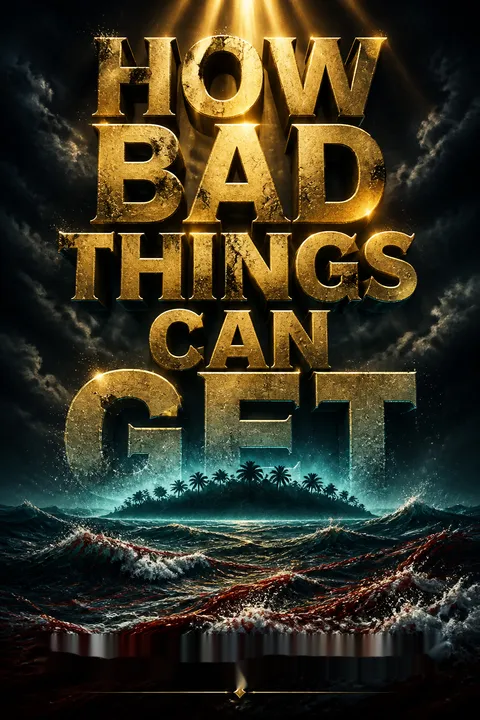

Plot Summary
Nightmares and Arrival
Ruth, plagued by vivid nightmares of a cult's massacre, boards a cruise to Prosperity Island with her boyfriend Zach and his friends, hoping for a carefree festival. But the island's silhouette is eerily familiar from her dreams. As the group arrives, Ruth's unease grows, sensing that her past is not as distant as she hoped. The festival's charismatic host, Eton, welcomes guests with games and prizes, but Ruth's anxiety deepens, especially when she is selected for the first game. The island's beauty is laced with dread, and Ruth's memories of cult life begin to bleed into her present, setting the stage for a collision between past trauma and present danger.
The Island's Shadow
The festival's opening is a spectacle, but Ruth's discomfort intensifies as she's drawn into the first competition—a dangerous maze suspended over rocks and water. Eton's charm masks a lack of safety, and Ruth's group is swept up in the excitement. Ruth's unease is mirrored by other guests, including Logan, a journalist with a nose for scandal, and Petra, Eton's project manager, who senses something is off with the staff. The island's history of failed developments and tragedies is revealed, hinting at a curse. Ruth's nightmares and the island's dark past begin to intertwine, as the festival's games become more perilous and the staff's behavior grows increasingly strange.
Games Begin, Secrets Stir
Ruth is forced into the spotlight during the maze game, where a contestant is gravely injured. The event is brushed off as an accident, but Ruth confronts Eton, who feigns remorse. The group's dynamic shifts as Ruth's trauma surfaces, and she becomes convinced she was chosen for the game because of her past. Meanwhile, Logan investigates the staff and uncovers unsettling patterns, while Petra grows suspicious of Eton's motives and the staff's loyalty. The festival's veneer of fun is cracking, and Ruth's sense of safety is eroding as she realizes she may not have been brought to the island by chance.
The Maze of Survival
The next day, a team-based treasure hunt is announced, and Ruth's group bands together, determined to win. The hunt is chaotic, with contestants turning aggressive and traps hidden among the debris. Ruth is injured by a net of fishhooks, a sign that someone is sabotaging the games. The staff's responses are robotic and unhelpful, and Petra discovers a staff member with no record of employment. As Ruth's paranoia grows, she witnesses more signs that the festival is spiraling out of control. The group's unity is tested, and Ruth's nightmares intensify, blurring the line between memory and premonition.
Blood on the Boards
After the treasure hunt, a guest goes missing, and the staff's attempts to account for everyone are suspiciously efficient. Ruth's injury is treated, but she is haunted by the sense that the staff are hiding something. Petra and Logan investigate, discovering evidence of tampering and a staff member who doesn't exist. The festival's infrastructure is compromised, and the staff's true numbers and identities are unclear. Ruth's group begins to fracture under the strain, and Ruth's visions become more prophetic, warning of blood and betrayal. The island's curse feels increasingly real as the festival's facade crumbles.
The First Sacrifice
The discovery of a staff member's corpse in a suitcase shatters any remaining sense of safety. Petra realizes the staff have been infiltrated by a cult, and the guest list has been manipulated. Communications are cut, and the staff begin herding guests into confined areas. Ruth's secret as the Petition Child is exposed to her friends, and she is devastated by Zach's betrayal. The group splinters, and Ruth flees into the jungle, pursued by both her past and the cultists. The festival has become a trap, and the true nature of the staff is revealed as they prepare for a ritual sacrifice.
Unsettling Revelations
As chaos erupts, Ruth learns that Zach's obsession with Petition led him to expose her identity to Eton, trading her secret for festival tickets. Carson and Hayleigh, caught in the fallout, reveal Zach's manipulations and their own guilt. Meanwhile, Petra and Eton discover the staff's true allegiance to Petition, and Logan uncovers the cult's plan to reenact their apocalyptic ritual. The staff's numbers swell as they reveal themselves, and the guests are hunted through the island. Ruth's sense of self is shattered, but she resolves to survive, even as the cult closes in for their final ceremony.
The Witch's Legend
The cult's leader, Barry, claims to be Barom's successor and orchestrates a mass cleansing ritual, mirroring the original Petition massacre. Guests are slaughtered, and the staff drink and bathe in their blood, believing it will purify them. Ruth is captured and forced to confront Barry, who reveals the cult's twisted interpretation of Petition's teachings. As the ritual reaches its climax, the cultists ingest a neurotoxic "honey," triggering a frenzy of self-destruction. Ruth, forced to drink as well, braces for death, but her survival instinct and knowledge of the original cult's failings give her hope.
The Treasure Hunt
Survivors band together, seeking weapons and shelter as the cultists hunt them through the storm-lashed island. Petra, Logan, and Eton attempt to restore communications, but the staff have sabotaged every system. Ruth, Zach, and Hayleigh hide in the medical clinic's roof, while Makayla risks her life to retrieve a satellite phone. The survivors' efforts are hampered by injuries, betrayal, and the cult's relentless pursuit. As dawn approaches, the cultists prepare for their final act, and Ruth realizes that only by confronting her past can she hope to break the cycle of violence.
A Deadly Discovery
The cultists' ritual descends into chaos as the neurotoxin takes effect, and they turn on themselves in a frenzy of violence. Ruth, numbed by the poison but still conscious, witnesses the carnage and wades into the ocean, surrounded by the bodies of the dead. The approaching rescue ships signal the end of the nightmare, but Ruth knows her ordeal is far from over. The world will soon learn her identity, and the cycle of public fascination and mythmaking will begin anew. Yet, for the first time, Ruth feels a measure of peace, having survived both Petition and its monstrous echo.
Petition's Ghosts
In the wake of the massacre, survivors are rescued, and the world is gripped by the horror of what transpired. Ruth's identity as the Petition Child is exposed, and she becomes the focus of media obsession and conspiracy theories. The truth of Petition is distorted and sensationalized, but Ruth resolves to tell her story on her own terms. The survivors struggle with trauma, guilt, and the burden of being witnesses to atrocity. The cult's legacy endures in rumor and legend, but Ruth's voice offers a counter-narrative, grounded in the mundane reality of survival and the hope for healing.
The Staff's Smile
The staff's infiltration of the festival is revealed to be a calculated effort by Petition's remnants to lure Ruth and complete their prophecy. Heather, a trusted employee, confesses her role as the cult's inside agent, and the staff's use of drugs and psychological manipulation is exposed. The cult's obsession with ritual purity and sacrifice drives them to ever greater extremes, and the guests' attempts to resist are met with brutality. The staff's cheerful facade masks a fanatical devotion, and the island becomes a stage for their apocalyptic ambitions.
The Festival Fractures
Ruth's relationships with Zach, Carson, and Hayleigh are irrevocably damaged by the revelation of her past and Zach's betrayal. The group's dynamic, once a source of comfort, becomes a crucible of blame and regret. As the cult's violence escalates, the survivors are forced to confront their own complicity and the limits of forgiveness. Ruth's struggle to assert her identity in the face of myth and manipulation becomes a fight for agency and survival. The festival's promise of escape is shattered, replaced by a desperate bid to outlast the night.
The Hunt Unleashed
The cultists announce a final game: a deadly hunt where the guests must survive until dawn. The staff, now fully revealed as cultists, arm themselves and pursue the survivors through the island. Ruth, Zach, and Hayleigh hide in the medical clinic's roof, while others scatter or attempt to fight back. The cult's numbers and ferocity overwhelm most resistance, and the island becomes a killing ground. The survivors' ingenuity and courage are tested to the limit, and the boundaries between hunter and hunted blur as the night wears on.
The Night of Knives
As the cultists succumb to the effects of the neurotoxin, their violence turns inward, and the beach becomes a scene of unspeakable horror. Ruth, numbed by the poison but still lucid, navigates the carnage, searching for meaning and closure. The survivors' fates are revealed in flashes: some escape, some perish, and some are left forever changed. The cult's attempt to recreate Petition's sacrifice ends in self-destruction, and the island is left littered with bodies and broken dreams. Ruth's survival is both a victory and a curse, as she faces the world's insatiable curiosity.
The Tower's Secret
Petra, Logan, and Eton discover the bodies of the real staff in the communications tower, revealing the extent of the cult's infiltration. Heather, dying from her wounds, confesses the cult's plan and her own role in orchestrating the festival's downfall. The survivors' attempts to call for help are thwarted at every turn, and the island's isolation becomes absolute. The cult's ritual is exposed as a hollow imitation of Petition's original sacrifice, driven by fanaticism and a longing for meaning. The survivors are left to pick up the pieces and bear witness to the truth.
The Cleansing Ritual
The cultists, having completed their cleansing, gather for the final ritual. Ruth is forced to drink the honey, but her knowledge of Petition's true teachings gives her the strength to resist. As the cultists turn on themselves, Ruth wades into the ocean, surrounded by the dead. The approaching rescue ships signal the end of the nightmare, but Ruth knows her story is just beginning. The world's fascination with Petition will continue, but Ruth's voice offers a counterpoint—a testament to survival, resilience, and the power of truth.
The Last Prophecy
In the aftermath, Ruth reflects on her journey from victim to survivor. She resolves to tell her story on her own terms, rejecting the myths and sensationalism that have defined her life. The survivors grapple with trauma and the burden of being witnesses to atrocity, but Ruth's determination to speak the truth offers hope for healing. The cult's legacy endures in rumor and legend, but Ruth's voice stands as a testament to the mundane reality of survival and the possibility of redemption. The story ends with Ruth ready to face the world, her past no longer a curse but a source of strength.
The End of Petition
The world's response to the massacre is a frenzy of media, conspiracy, and commodification. Ruth's identity as the Petition Child becomes a symbol, distorted and exploited by those seeking profit or notoriety. Yet, amidst the noise, Ruth finds her own voice, determined to reclaim her story and honor the truth of her experience. The survivors' fates are varied, but all are marked by the trauma of what they endured. The cult's attempt to rewrite history ends in self-destruction, and Ruth's survival becomes a quiet act of defiance against the forces that sought to define her.
Analysis
Darcy Coates's How Bad Things Can Get is a harrowing exploration of trauma, cult psychology, and the commodification of suffering in the digital age. The novel's structure—interweaving past and present, memory and prophecy—mirrors the inescapable grip of trauma on survivors. Ruth's journey from victim to survivor is both deeply personal and universally resonant, challenging the mythologizing of tragedy and the erasure of individual agency. The story critiques the allure of charismatic leaders, the dangers of groupthink, and the ease with which ordinary people can become complicit in evil. Through its use of unreliable narration, ritual symbolism, and social media commentary, the novel interrogates the ways in which stories are told, distorted, and consumed. Ultimately, How Bad Things Can Get is a meditation on survival—not just of the body, but of the self and the truth—offering a hard-won hope that healing is possible, even in the aftermath of unimaginable horror.
Review Summary
People Also Read



Characters
Ruth Phillips (The Petition Child)
Ruth is the sole survivor of the Petition cult's mass suicide, carrying deep trauma and a legacy she never asked for. Her psyche is marked by vivid nightmares, prophetic visions, and a desperate desire for normalcy. Ruth's relationship with Zach is both a source of comfort and betrayal, as his obsession with her past leads to her exposure. Throughout the story, Ruth struggles with guilt, identity, and the burden of being mythologized. Her journey is one of reclaiming agency, confronting the ghosts of her past, and ultimately surviving a second massacre. Ruth's resilience and insight into cult psychology become her greatest assets, allowing her to outlast both the original Petition and its monstrous imitators.
Zach Waldon
Zach is Ruth's boyfriend, whose fascination with cults—and Petition in particular—drives him to betray her trust in pursuit of answers. His charm and intelligence mask a deep need for control and understanding, leading him to manipulate those around him, including his friends Carson and Hayleigh. Zach's actions are driven by a mix of genuine affection and selfish curiosity, and his inability to separate love from obsession ultimately destroys his relationship with Ruth. In the festival's chaos, Zach's strategic thinking helps the group survive, but his past choices catch up with him, and he meets a tragic end, his quest for truth leaving only devastation.
Petra
Petra is Eton's project manager and the festival's de facto adult, juggling logistics, safety, and crisis management. Her sharp intellect and emotional detachment make her a stabilizing force, but also leave her isolated. Petra's growing suspicion of the staff and Eton's motives drives much of the investigation into the cult's infiltration. Her sense of responsibility is both her strength and her undoing, as she sacrifices herself to ensure a rescue call is made. Petra's journey is one of confronting the limits of control and the cost of leadership in the face of overwhelming evil.
Eton
Eton is the festival's public face, a YouTube celebrity whose persona is built on generosity and fun. Beneath the surface, he is impulsive, avoidant, and ultimately negligent, prioritizing spectacle over safety. Eton's refusal to heed warnings and his desire for distraction lead to disaster. His relationship with Petra is complex, marked by dependence and unspoken regret. Eton's past mistakes—including a scandal involving a minor—fuel his need for control and redemption, but his inability to confront reality makes him complicit in the tragedy. Eton survives, but his legacy is forever tainted.
Logan Lloyd
Logan is a journalist and YouTuber specializing in exposing scandals. His skepticism and analytical mind make him one of the first to suspect the staff's true nature. Logan's outsider status allows him to see patterns others miss, and his moral code drives him to warn and protect the guests. He is haunted by past failures and the knowledge that his work can both save and destroy lives. Logan's journey is one of moving from detached observer to active participant, risking his life to document and ultimately survive the massacre.
Carson
Carson is Zach's childhood friend, physically imposing but emotionally sensitive. He is caught between loyalty to Zach and his growing discomfort with Ruth's secret and Zach's manipulations. Carson's sense of justice and protectiveness lead him to confront Zach and ultimately sacrifice himself to protect Hayleigh. His internal struggle reflects the story's themes of complicity, guilt, and the limits of friendship. Carson's death is both heroic and tragic, a testament to the cost of standing up for what is right.
Hayleigh
Hayleigh is the group's peacemaker, eager to belong and quick to forgive. Her optimism and warmth are a balm to Ruth, but also make her vulnerable. Hayleigh is caught in the crossfire of Zach and Carson's conflict, and her loyalty is tested as the truth about Ruth and Petition emerges. She is gravely injured during the hunt, her fate left uncertain. Hayleigh's arc is one of innocence lost, and her suffering underscores the story's themes of bystander complicity and the human cost of secrets.
Barry (Barom)
Barry is the cult's new leader, claiming to be Barom's successor. His charisma and cruelty drive the staff's infiltration and the festival's descent into horror. Barry's obsession with Petition's mythology blinds him to the reality of his actions, and his need for validation leads to ever greater violence. He is both a true believer and a manipulator, orchestrating the massacre in the name of prophecy. Barry's ultimate failure to live up to Barom's legacy is a bitter irony, and his death is a fitting end to his delusions of grandeur.
Heather
Heather is a trusted staff member who orchestrates the cult's infiltration from within. Her grief over her daughter's death makes her susceptible to Petition's promises, and her administrative skills enable the cult's plan. Heather's confession in the tower reveals the depth of her indoctrination and the cult's use of drugs and psychological manipulation. Her death is both a release and a condemnation, a reminder of the dangers of misplaced faith and the ease with which ordinary people can become complicit in evil.
Makayla
Makayla is a contestant who suffers a brutal injury in the first game but returns to play a crucial role in the survivors' resistance. Her courage and resourcefulness help secure the satellite phone and buy time for a rescue. Makayla's arc is one of redemption and agency, moving from victim to hero. Her survival is a testament to the power of solidarity and the importance of bearing witness.
Plot Devices
Dual Timelines and Flashbacks
The novel uses Ruth's nightmares and flashbacks to the Petition cult to create a dual narrative, blurring the line between memory and prophecy. This device deepens the psychological tension, as Ruth's past becomes both a source of dread and a tool for survival. The flashbacks provide crucial context for the cult's rituals and Ruth's trauma, while also foreshadowing the festival's descent into violence. The interplay between past and present heightens the sense of inevitability and underscores the story's themes of repetition and the inescapability of trauma.
Unreliable Narration and Paranoia
Ruth's perspective is colored by trauma, guilt, and the fear of being discovered. Her visions and suspicions create an atmosphere of paranoia, making it difficult for both her and the reader to distinguish between real threats and imagined ones. This device is mirrored in the festival's structure, where games and performances mask genuine danger. The unreliable narration amplifies the suspense and forces the reader to question every character's motives, culminating in the revelation of Zach's betrayal and the staff's true nature.
Cult Symbolism and Ritual
The story is saturated with cult imagery—songs, symbols, rituals—that recur in both the past and present timelines. The cleansing, the honey, the bound lamb, and the emphasis on sacrifice all serve as plot devices to connect the festival's events to Petition's legacy. These motifs are used to manipulate both characters and readers, creating a sense of inevitability and doom. The cult's rituals are both a source of horror and a means of control, driving the narrative toward its bloody climax.
Social Media and Mythmaking
The novel explores how trauma and atrocity are commodified and mythologized in the digital age. The survivors' stories are twisted by media, podcasts, and conspiracy theories, while Ruth's identity becomes a symbol rather than a person. This device critiques the public's hunger for spectacle and the erasure of nuance in favor of sensationalism. The proliferation of misinformation and the survivors' struggle to reclaim their narratives add a layer of meta-commentary on the nature of storytelling and memory.
Foreshadowing and Prophecy
Ruth's visions—her "sightings"—function as both literal and metaphorical foreshadowing. They create a sense of fatalism, as events unfold in ways she has already seen. The cult's obsession with prophecy is mirrored in the narrative structure, where the reader is primed to expect disaster. This device heightens the tension and reinforces the story's themes of repetition, trauma, and the difficulty of breaking free from the past.
Download PDF
Download EPUB
.epub digital book format is ideal for reading ebooks on phones, tablets, and e-readers.








































