
Plot Summary
Dream Mall Longings
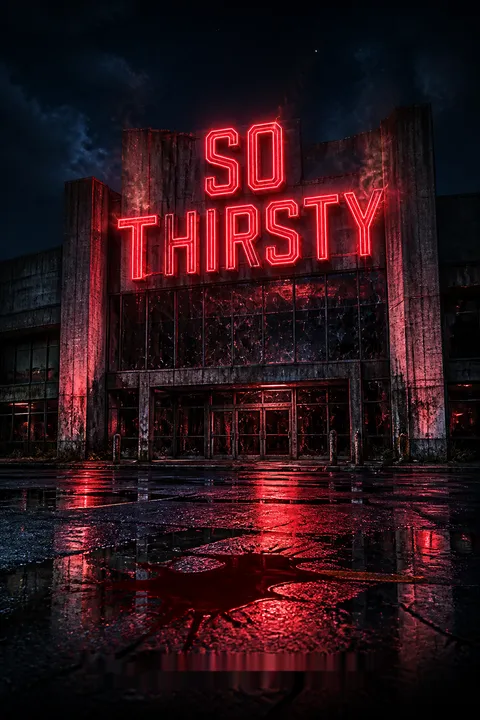
Sloane wakes from a recurring dream of a mall, a symbol of her friendship with Naomi and her own indecision. Her life feels stagnant, her marriage to Joel is strained by old wounds and new suspicions, and her upcoming birthday only sharpens her sense of aging and malaise. The morning routine is a battle against time and self-doubt, and Sloane's inner monologue is laced with humor and anxiety. The dream mall is a place she and Naomi have never found each other, a metaphor for their missed connections and the choices that haunt Sloane. The day begins with a surprise from Joel—a girls' weekend at a luxury resort, a gesture that feels both generous and suspect, setting the stage for a journey that will test the boundaries of friendship, desire, and self.
Birthday Surprise Unwrapped
Joel's birthday surprise for Sloane—a weekend at the Waterfront resort with Naomi—triggers a cascade of emotions. Sloane's gratitude is tangled with suspicion, as her marriage is shadowed by Joel's past infidelities and her own emotional distance. Naomi, globe-trotting and glamorous, is Sloane's opposite: impulsive, magnetic, and seemingly fearless. Their phone call is a dance of affection and avoidance, revealing the deep bond and the cracks beneath. Sloane's anxiety about the trip is matched by her longing for escape, and the dead mouse she finds outside becomes a memento mori, a reminder of mortality and the futility of routine. Packing for the trip, Sloane wonders if she wants more from life, or if she's simply running from herself.
Arrival at Whispering Woods
Sloane's arrival at the Waterfront resort is marked by discomfort and self-consciousness. The luxury is both alluring and alienating, and every interaction—from the overly enthusiastic receptionist to the indifferent porter—reminds her of her invisibility and aging. The cottage is beautiful but feels like a stage set, designed for curated experiences rather than authentic living. Sloane's anticipation of Naomi's arrival is tinged with insecurity; she measures her own reactions against what Naomi will think, always seeking validation. The setting is postcard-perfect, but Sloane's sense of unease grows, foreshadowing the unraveling of the ordinary and the intrusion of the extraordinary.
Naomi's Return, Old Wounds
Naomi's arrival is a burst of energy and chaos, her presence both comforting and destabilizing. Their friendship is a tapestry of shared history, inside jokes, and unspoken resentments. Naomi's career in music PR, her relationship with Lee, and her restless spirit contrast sharply with Sloane's settled, if unsatisfying, domesticity. As they prepare for a night out, their banter masks deeper issues: Naomi's dissatisfaction with her life, Sloane's fear of change, and the ways they enable and challenge each other. The cottage becomes a crucible for their dynamic, a place where old wounds are reopened and new desires are kindled.
Night Out, Old Patterns
Sloane and Naomi's night out in town is a return to familiar patterns: drinking, flirting, and the push-pull of abandonment and loyalty. Naomi's charisma draws strangers, leaving Sloane alone with her thoughts and insecurities. The bar is a liminal space, haunted by memories of their teenage years and the dream mall that symbolizes their connection. Sloane's sense of being watched, her unease with her own desires, and the intrusion of a mysterious figure in the bar foreshadow the supernatural turn to come. The night ends with Sloane feeling both closer to and more distant from Naomi, their friendship tested by the secrets they keep and the truths they avoid.
Fights, Fears, and Surveillance
The return to the cottage is fraught with tension. Sloane and Naomi's argument exposes their opposing worldviews: Sloane's caution and fear of disaster, Naomi's reckless optimism. The fight is both a release and a reaffirmation of their bond, as they grant each other the freedom to be ugly, to be real. Sloane's anxiety about Joel's fidelity resurfaces, leading her to check the doorbell camera and confirm her worst suspicions. The night is haunted by nightmares and a sense of being watched, the boundaries between reality and dream blurring. The handprint on the window, the tapping at the glass, and the figure in the dark signal the intrusion of the uncanny, the beginning of a transformation neither woman can control.
Handprints and Hangovers
The next day is a haze of hangover and dread. Sloane is haunted by the handprint on the window, a physical manifestation of her nightmare and a symbol of the violence to come. Naomi's plans for Sloane's birthday are shrouded in secrecy, forcing Sloane to confront her fear of the unknown and her reluctance to take risks. Their brunch is a return to nostalgia, a reminder of the power and peril of their friendship. The day is spent in a wine-fueled haze, the anticipation of the night's surprise growing heavier. Sloane's memories of Joel, her doubts about her marriage, and her longing for something more all converge, setting the stage for the night that will change everything.
Dressing Up, Dressing Down
As Sloane and Naomi dress for the night's mystery event, their differences are thrown into sharp relief. Naomi's flamboyance and Sloane's self-doubt play out in a ritual of dress-up, a performance of identity and desire. The act of putting on makeup, choosing outfits, and listening to music becomes a form of armor, a way to prepare for the risks ahead. Sloane's memories of Joel, her ambivalence about their relationship, and her fear of losing control all surface. The night is charged with anticipation, the sense that something irrevocable is about to happen. The arrival of Ilie, the mysterious stranger from the bar, signals the crossing of a threshold, the point of no return.
The Party at the Lake House
Ilie's invitation leads Sloane and Naomi to a secluded lake house, where they are introduced to a group of beautiful, dangerous strangers. The atmosphere is charged with eroticism, menace, and the promise of transgression. The party is a masquerade of pleasure and violence, a place where boundaries dissolve and desires are unleashed. Sloane's discomfort grows as she realizes the house is not what it seems, the hosts are not who they claim to be, and the night is spiraling out of control. The cellar's secret, the locked door, and the clanking from below all hint at the horror to come. Sloane's sense of agency slips away, replaced by a growing thirst she cannot name.
Temptation, Truth, and Dares
Sloane's encounter with Henry, the enigmatic man in the shadows, becomes a game of truth or dare, a dance of seduction and confession. Their conversation is a battle of wills, each probing the other's wounds and desires. Sloane's vulnerability, her history of heartbreak and self-destruction, is laid bare. Henry's age, his secrets, and his hunger are revealed in turn. The game is both a flirtation and a test, a way to navigate the dangers of intimacy and the lure of the forbidden. As the party devolves into an orgy, Sloane is drawn to Henry, her longing for connection and her fear of annihilation colliding in a moment of surrender.
Crossing Lines, Crossing Wires
Sloane and Henry's connection deepens, their physical and emotional boundaries dissolving in a haze of bloodlust and longing. The revelation of the cellar's secret—the imprisoned, starved man—shatters any illusion of safety. Violence erupts as the man escapes, attacking Naomi and Sloane in a frenzy of hunger. The others reveal their true nature: vampires, ancient and amoral, offering Sloane and Naomi a choice between death and transformation. The decision is made in desperation, a bargain struck to save Naomi's life. The ritual of turning is both brutal and ecstatic, a baptism in blood that marks the end of their old selves and the birth of something monstrous and new.
The Cellar's Secret
The aftermath of the attack is a blur of pain, thirst, and confusion. Sloane and Naomi awaken to their new existence, their bodies healed but their souls in turmoil. The thirst is overwhelming, a need that eclipses all else. The rules of vampirism are explained by their new "family," a group of vampires who live by their own code. Sloane and Naomi struggle to control their hunger, to reconcile their humanity with their monstrous appetites. The bonds of friendship are tested as they navigate the ethics of survival, the temptation to feed, and the fear of losing themselves. The world is suddenly alien, every sensation heightened, every choice fraught with consequence.
Blood, Violence, and Choice
On the run from the scene of their transformation, Sloane and Naomi are forced to confront the reality of their new nature. Their first kills are acts of necessity and accident, tinged with guilt and exhilaration. The violence is both shocking and seductive, a release of long-repressed desires. The aftermath is a reckoning: with the law, with their own consciences, and with each other. The lines between victim and perpetrator blur, and the question of what it means to be a monster becomes urgent and unanswerable. The friendship that once sustained them now threatens to destroy them, as each woman grapples with her own capacity for violence and her longing for connection.
Becoming the Monster
As Sloane and Naomi flee across state lines, pursued by both human and supernatural threats, they are forced to adapt to their new reality. The thirst becomes a defining feature of their existence, a need that cannot be denied or controlled. Encounters with other vampires, including the cannibalistic Ms. Alice, reveal the spectrum of monstrosity and the dangers of isolation. Sloane's relationship with Henry deepens, offering both solace and danger. The group becomes a found family, bound by blood and necessity, but the fractures within threaten to tear them apart. The journey is a test of will, a search for meaning in a world where the old rules no longer apply.
The Thirst Awakens
The group's attempt to find safety is complicated by the need for blood, the threat of exposure, and the unresolved tensions between Sloane and Naomi. The theft of blood from hospitals and blood banks becomes a lifeline, but also a source of moral conflict. The violence escalates, and the consequences of their actions become impossible to ignore. Sloane's struggle to accept her new identity is mirrored by Naomi's descent into recklessness. The friendship is strained to the breaking point, as each woman must decide what she is willing to do to survive, and what she is willing to forgive.
Aftermath and Reckoning
The group's journey leads them to a series of confrontations: with the law, with other vampires, and with their own pasts. Sloane's relationship with Henry offers a glimpse of hope, a possibility of love and acceptance, but is shadowed by guilt and fear. Naomi's choices become increasingly dangerous, forcing Sloane to intervene and make impossible decisions. The violence they have unleashed cannot be contained, and the dream of escape becomes a nightmare of pursuit. The question of what it means to live forever, to love and lose, to hunger and be sated, becomes the central dilemma. The story hurtles toward a climax in the dream mall, where the boundaries between life and death, dream and reality, are finally dissolved.
Friendship Fractures, Family Forms
In the ruins of the dream mall, Sloane and Naomi confront the ultimate test of their friendship. Faced with death, they choose each other, giving and taking blood in an act of mutual salvation. The found family of vampires arrives, offering rescue and a new beginning. The epilogue finds Sloane and Naomi, changed but unbroken, traveling the world with their new companions. The dream of the mall, the symbol of their connection, becomes a reality: a place where they are seen, where they belong, where forever is not a curse but a promise. The story ends with a vision of hope, of love that endures beyond death, of friendship that survives even the thirst.
Analysis
Rachel Harrison's So Thirsty is a darkly comic, emotionally resonant exploration of female friendship, desire, and the monstrousness that lurks beneath the surface of ordinary life. By reimagining the vampire myth through the lens of millennial malaise and the complexities of adult relationships, Harrison crafts a narrative that is both thrilling and deeply human. The novel interrogates the ways we hunger—for love, for meaning, for escape—and the costs of satisfying those hungers. Sloane and Naomi's journey is a meditation on the power and peril of intimacy, the necessity of change, and the courage required to embrace one's true self. The supernatural elements serve as a metaphor for the violence and vulnerability inherent in living, loving, and letting go. Ultimately, So Thirsty is a celebration of chosen family, of the bonds that survive even death, and of the possibility of joy in the face of despair. The lesson is clear: to live fully is to risk pain, to accept the messiness of desire, and to choose, again and again, the people who make life worth living—even, or especially, when forever is on the table.
Review Summary
So Thirsty receives mixed reviews, with ratings ranging from 1 to 5 stars. Many praise Harrison's writing style, complex female friendships, and the vampire twist. Readers appreciate the book's humor, fast pace, and exploration of themes like aging and self-discovery. However, some find the characters unlikable or immature, and the plot lacking. Critics note it doesn't bring much new to the vampire genre. Overall, fans of Harrison's work and those who enjoy contemporary fiction with supernatural elements seem to appreciate it most.
People Also Read

Characters
Sloane Parker
Sloane is the novel's narrator and emotional core, a woman in her mid-thirties grappling with the slow erosion of her marriage, her sense of self, and her dreams. Her friendship with Naomi is both a lifeline and a source of pain, a mirror for her own fears and desires. Sloane's psychological landscape is marked by anxiety, self-doubt, and a longing for meaning. Her transformation into a vampire is both a literal and metaphorical awakening, forcing her to confront her capacity for violence, her hunger for connection, and her fear of change. Sloane's journey is one of reluctant acceptance, as she learns to embrace her monstrosity, her desires, and the possibility of love and friendship that endures beyond death.
Naomi Rowe
Naomi is Sloane's best friend and foil, a force of nature whose impulsiveness, charm, and hunger for experience drive much of the novel's action. Her relationship with Sloane is deeply intimate, marked by shared history, mutual admiration, and unspoken resentments. Naomi's restlessness masks a profound vulnerability, a fear of being ordinary or unloved. Her transformation into a vampire amplifies her appetites and her recklessness, threatening to destroy the friendship that has defined her life. Naomi's arc is one of both self-destruction and self-discovery, as she learns the cost of freedom and the value of loyalty.
Henry/Drago
Henry, also known as Drago, is the enigmatic vampire who becomes Sloane's lover and guide. His centuries-long existence is marked by loneliness, regret, and a longing for something new. Henry's attraction to Sloane is both romantic and existential; she represents a chance for renewal, for meaning in an endless life. His wisdom is tempered by melancholy, his power by restraint. Henry's role is both mentor and tempter, offering Sloane a vision of what immortality can be, while also challenging her to define her own morality. His development is tied to his willingness to be vulnerable, to risk love and loss again.
Joel
Joel is Sloane's husband, a man whose infidelities and emotional distance have eroded the foundation of their marriage. He represents the safety and suffocation of routine, the compromises of adulthood, and the fear of starting over. Joel's presence in the novel is mostly as an absence, a reminder of what Sloane has lost and what she is afraid to lose. His role is to catalyze Sloane's transformation, to force her to confront the difference between survival and living, between settling and choosing.
Ilie
Ilie is the flamboyant, magnetic vampire who draws Sloane and Naomi into the world of the supernatural. His charisma masks a predatory nature, and his actions are often self-serving. Ilie's relationship with Naomi is flirtatious and fraught, a dance of mutual attraction and mutual risk. He embodies the allure and the peril of the vampire lifestyle, the promise of pleasure without consequence. Ilie's development is tied to his willingness to protect the group, to form bonds that go beyond appetite.
Elisa
Elisa is the elegant, nurturing vampire who acts as a stabilizing force within the group. Her wisdom and restraint are hard-won, the result of centuries of survival. Elisa's role is to teach Sloane and Naomi the rules of their new existence, to offer comfort and guidance without judgment. She represents the possibility of community, of finding family in unlikely places. Elisa's development is subtle, revealed in her acts of kindness and her willingness to share power.
Tatiana
Tatiana is the sharp-tongued, glamorous vampire whose skepticism and pragmatism often clash with the others' idealism. She is both a critic and a protector, unafraid to speak uncomfortable truths. Tatiana's relationship with Sloane and Naomi is adversarial but ultimately supportive; she challenges them to accept the reality of their situation and to take responsibility for their choices. Her development is seen in her grudging acceptance of the newcomers and her willingness to fight for the group's survival.
Ms. Alice
Ms. Alice is an ancient, isolated vampire whose descent into cannibalism serves as a cautionary tale. Her loneliness and hunger have warped her humanity, making her both pitiable and terrifying. Ms. Alice's interactions with Sloane and Naomi force them to confront the dangers of unchecked appetite and the importance of community. She is a mirror of what they could become if they lose themselves to the thirst, a symbol of the monstrous potential within.
Lee
Lee is Naomi's long-term boyfriend, a musician whose ambition and volatility have shaped much of Naomi's adult life. His presence in the novel is mostly as a memory and a source of conflict, representing the ties that bind and the pain of letting go. Lee's role is to force Naomi to choose between the past and the future, between comfort and growth.
Costel and Miri
Costel and Miri are younger vampires in the group, their relationship marked by passion and unpredictability. They represent the dangers and delights of immortality, the temptation to live without restraint. Their presence in the novel is both comic and menacing, a reminder that not all monsters are tragic.
Plot Devices
Duality of Desire and Fear
The novel's central plot device is the tension between desire and fear, embodied in the friendship between Sloane and Naomi and their transformation into vampires. The dream mall is a recurring symbol of longing and indecision, a place where choices are both infinite and paralyzing. The narrative structure alternates between moments of intimacy and violence, humor and horror, using foreshadowing (the handprint, the tapping at the window) to build suspense. The use of first-person narration allows for deep psychological exploration, while the shifting settings (the resort, the lake house, the road trip, the dream mall) mirror the characters' internal journeys. The supernatural elements are grounded in emotional realism, making the horror both literal and metaphorical. The story's climax in the dream mall is both a fulfillment and a subversion of the characters' desires, forcing them to choose between survival and living, between the past and the future.
About the Author
Other books by Rachel Harrison

Download PDF
Download EPUB
.epub digital book format is ideal for reading ebooks on phones, tablets, and e-readers.








































