
Plot Summary
Shadows in the Mine
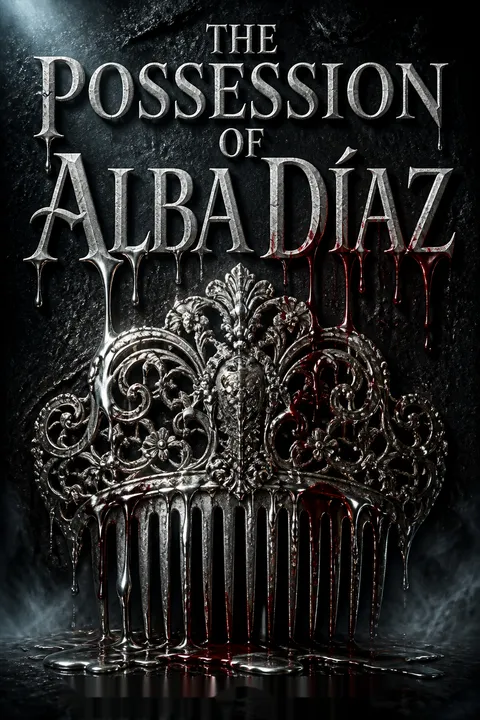
The story opens with a chilling legend: the Monterrubio mine, a place of ancient terror and whispered curses. Survivors speak of Alba Díaz, who emerged from the cathedral steps bloodied and screaming, her wedding gown slick with gore. The narrator claims to know the truth, warning that the tale is more than a ghost story—it is a curse, a story that evaporates like mercury if told. The reader is invited to listen closely, for the truth is far worse than the rumors. The stage is set for a tale of possession, greed, and the struggle for freedom in a world built on silver and secrets.
The Prodigal Alchemist Returns
Elías Monterrubio, a learned alchemist, finds a mysterious book of spells in a distant bazaar. Drawn by a letter from his grandfather, he returns to Spain, only to learn his father has died in the Indies. Manipulated by family debts and the promise of silver, Elías bargains to travel to Nueva España, carrying mercury to save the family mine. The journey is perilous, marked by storms, hunger, and haunting memories. Elías's greed is not for wealth, but for knowledge and freedom. As he steps onto the New World's soil, he senses he will never return to Spain—only forward, into the unknown.
Bargains and Betrothals
Alba Díaz, adopted daughter of wealthy merchants, is trapped by her parents' ambitions and the city's obsession with silver. To escape a future of being bartered for marriage, she blackmails her childhood friend Carlos Monterrubio into a mutually beneficial engagement. Their alliance is one of convenience, not love, but it offers Alba a chance at autonomy. Yet, secrets about her origins—an abandoned infant found in the mine—haunt her. The world of Zacatecas is one where women are possessions, and Alba's only hope is to outmaneuver those who would own her.
The Wedding Ball's Omen
At a lavish wedding ball, Alba and Carlos play the part of the golden couple. Alba meets Bartolomé, a priest with piercing eyes and hidden motives, and dances with a mysterious stranger—Elías, newly arrived from Spain. Their connection is immediate, a rare comfort in a world of masks. But the night turns grim when the bride collapses, the first victim of a spreading plague. The city's veneer of wealth cracks, and the characters' fates become entwined by secrets, debts, and the shadow of something ancient stirring beneath the mine.
Fleeing the Plague
As plague ravages Zacatecas, the Monterrubios and the Díaz family flee to the remote Casa Calavera, the mine's hacienda. Tensions simmer: Alba's engagement is threatened, her parents plot alternatives, and Bartolomé's presence grows ominous. The journey is marked by unease—Alba feels an inexplicable dread, a voice urging her to leave. The mountains are beautiful but unforgiving, and something in the land does not want her there. The stage is set for old wounds and buried evils to resurface.
Arrival at Casa Calavera
Life at Casa Calavera is bleak and cold. Alba is haunted by nightmares and sleepwalking, while Elías is shunned as a convict and outsider. The mine's workers are wary, and the house is filled with tension—between families, between past and present. Alba's search for her origins leads her to María Victoriana, Victoriano's illegitimate daughter, who becomes both rival and reluctant ally. The mine itself seems alive, its darkness reaching for Alba, whispering warnings and threats.
Secrets Beneath the Surface
Alba, restless and determined, explores the mine and is drawn into its depths by the sound of a crying infant. Lost and terrified, she is rescued by Elías, who soothes her with a lullaby. The experience leaves her shaken and covered in blood, unable to distinguish dream from reality. The mine's history of violence and abandonment echoes in her own story. Meanwhile, Elías uncovers evidence of occult practices and a shrine to a local goddess, hinting at a power older and more dangerous than Christianity.
The Crying in the Dark
Alba's sleepwalking worsens; she wakes in strange places, her feet dirty, her mind clouded. Elías witnesses her in a trance, her eyes black pits, her body not her own. The demon's influence grows, manifesting as violence and rage. Romero, the other azoguero, is found dead, and suspicion falls on Elías. Only Alba knows he is innocent, but her own grip on reality is slipping. The mine's evil is no longer just a legend—it is alive, and it has chosen her as its vessel.
Blood and Blame
The murder of Romero fractures the fragile peace at Casa Calavera. Elías is imprisoned, accused of a crime he did not commit. Bartolomé intervenes, using the power of the Church and the threat of the Inquisition to free him, but the real danger is ignored: Alba's possession. The families turn on each other, old resentments boiling over. Alba, desperate and alone, confesses her fears to Bartolomé, but the priest's zeal is as dangerous as the demon itself. The lines between victim and monster blur.
The Demon's Awakening
Elías and Alba attempt to banish the demon using a circle of protection and forbidden rituals from El Libro de San Cipriano. The possession intensifies—Alba attacks Elías, the demon taunting him with his deepest shames. Bartolomé's exorcism is brutal and public, exposing secrets and inflicting pain but failing to free Alba. The Inquisition arrives, bringing with it the threat of torture and death. The mine's curse is now a matter of life and death for all.
Possession and Confession
Alba is confined, watched by priests and betrayed by those she trusted. The Inquisition's methods are cruel, and Bartolomé's ambition eclipses compassion. Elías, wounded and hunted, seeks help from the local shrine, bargaining with the goddess of the mountain. He learns that only darkness can undo darkness, and that to save Alba, he must risk his soul. The demon's grip tightens, and Alba's hope fades as she is prepared for a final, fatal exorcism.
The Circle of Protection
Elías, aided by María Victoriana and Carolina, learns the true history of the mine's evil: a demon bound to the land, unleashed by greed and violence. The only way to banish it is through sacrifice or sorcery. Elías chooses the latter, using mercury as a conduit to the goddess's power. He and Alba confess their love and make a pact to escape together, but the demon is cunning, and the Inquisition is closing in. Their only hope is to fight dirty, to use the very darkness that threatens to consume them.
The Priest's Judgment
Bartolomé, now the Inquisition's instrument, leads a final exorcism. Alba is bound and tortured, her body and soul at the mercy of priests who see only evil. Elías is captured, beaten, and left for dead. María Victoriana and Carlos risk everything to help them escape, but the cost is high. The demon, sensing its end, lashes out with fury, threatening to destroy everyone. The line between salvation and damnation is razor-thin.
The Shrine's Power
Elías, near death, bargains with the mountain's goddess at the hidden shrine. He is told to use mercury to channel her power and banish the demon. The ritual is dangerous, and the price is steep—his own soul may be forfeit. Armed with new strength, Elías and Alba make a desperate bid for freedom, pursued by Bartolomé and the Inquisition. The mine's curse, the demon's hunger, and the lovers' defiance converge in a final confrontation.
The First Exorcism
In the chapel, Bartolomé's exorcism becomes a war of words and power. The demon exposes the secrets and shames of all present, turning them against each other. Alba, bound and suffering, finds a sliver of agency—she bargains with the demon, offering revenge against Bartolomé in exchange for help. Elías intervenes, using mercury and forbidden incantations to weaken the demon. The exorcism ends in chaos, with the demon escaping into Elías, and Alba left broken but alive.
The Inquisition Arrives
The Inquisition's arrival brings new horrors. Alba is imprisoned, starved, and prepared for execution. Elías, presumed dead, is hidden and nursed back to health by María Victoriana. The priests' cruelty is matched only by their incompetence; their rituals fail, and the demon grows stronger. Alba, with the help of her allies, escapes her bonds and flees to the stables, where Carlos provides the means for her and Elías to escape. Their love is now their only weapon.
Sacrifice and Escape
Alba and Elías flee into the mountains, pursued by Bartolomé. The demon, now within Elías, battles for control, seeking priestflesh and vengeance. In a final act of will, Elías uses the power of mercury and the goddess's blessing to draw the demon out of Alba and into himself. The cost is nearly fatal—Elías is stabbed by Bartolomé and left for dead. Alba, believing him lost, is recaptured and returned to Zacatecas for a final exorcism.
The Road to Acapulco
Alba, now free of the demon but shattered by loss, is prepared for marriage and a return to her old life. The city celebrates her survival, but she is haunted by grief and the knowledge that true freedom is still out of reach. Elías, secretly alive and recovering, learns of Alba's fate and resolves to save her. The legend of the possessed bride grows, but the truth is more complicated—a story of love, sacrifice, and the refusal to be owned.
The Demon's Last Stand
On her wedding day, Alba is possessed one last time. In the cathedral, before the city's elite and the priests who tormented her, she unleashes the demon's fury, exacting revenge on those who wronged her. Elías arrives, alive and transformed, and uses the last of his strength and the power of mercury to banish the demon forever. In a ritual of love and defiance, he and Alba are finally freed—from the mine, from the curse, and from the chains of their pasts.
The Cathedral Reckoning
The aftermath is chaos: blood, screams, and the collapse of old orders. Alba and Elías vanish from the city, their fate the subject of rumor and fear. Some say Alba walked back to the mine, possessed and vengeful; others whisper of a sorcerer and his bride sailing west, beyond the reach of curses and kings. The truth is a story of survival, love, and the power to reclaim one's destiny, even in the face of darkness.
The Legend of Alba Díaz
The story ends as it began—with a legend. Alba and Elías, hand in hand, board a ship in Acapulco, leaving behind the silver mines, the curses, and the ghosts of their past. Their love, forged in darkness and defiance, is their true possession. The tale of the possession of Alba Díaz becomes a story not of damnation, but of liberation—a new legend, written by those who refused to be owned.
Analysis
A modern gothic of possession, power, and liberationThe Possession of Alba Díaz is a masterful reimagining of the gothic horror novel, set against the backdrop of colonial Mexico's silver mines. At its core, the book interrogates the nature of possession—literal, social, and psychological—and the ways in which women, the colonized, and the marginalized are made into objects, vessels, and scapegoats. Through the intertwined stories of Alba and Elías, the novel explores the costs and possibilities of agency: the struggle to reclaim one's body, voice, and future in a world built on exploitation and violence. The use of supernatural horror is both a metaphor and a reality, blurring the line between victim and monster, self and other. The narrative's refusal to offer easy redemption—its insistence on fighting dirty, on embracing forbidden knowledge, on loving in defiance of all odds—makes it a powerful meditation on survival and resistance. The lessons are clear: freedom is never given, only seized; love is not possession, but partnership; and the stories we tell—about demons, about women, about the past—can either bind us or set us free.
Review Summary
The Possession of Alba Díaz is a Gothic horror novel set in 18th-century Mexico. Readers praise Cañas's atmospheric writing, blending of horror and romance, and exploration of themes like bodily autonomy and patriarchy. Many found the possession elements creepy and effective, though some felt the pacing was slow at times. The characters of Alba and Elías were well-received, with their forbidden romance adding tension. While opinions varied on the balance of historical detail and horror, most agreed the ending was satisfying and cathartic.
People Also Read





Characters
Alba Díaz
Alba is the adopted daughter of wealthy Zacatecas merchants, marked from birth by abandonment and the city's obsession with silver. Her life is a constant negotiation for agency in a world that seeks to possess her—first as a daughter, then as a bride, and finally as a vessel for an ancient demon. Intelligent, resourceful, and stubborn, Alba's psychological journey is one of self-ownership: she manipulates her engagement to Carlos for freedom, seeks the truth of her origins, and ultimately battles both human and supernatural forces for control of her body and fate. Her relationship with Elías is transformative, offering her both love and the possibility of true autonomy. By the end, Alba is both victim and victor, her possession a metaphor for the struggle against societal and spiritual oppression.
Elías Monterrubio
Elías is a prodigal son, an alchemist whose intellect and ambition set him apart from his greedy, fractious family. Haunted by guilt, loss, and a stint as a convict in the mercury mines of Almadén, he is both outsider and inheritor of the Monterrubio legacy. His psychoanalytic core is a tension between the desire for knowledge and the need for belonging. Elías's journey is marked by sacrifice: he bargains with family, the occult, and the goddess of the mountain, risking his soul to save Alba. His love for her is both redemptive and dangerous, leading him to acts of forbidden magic and ultimate self-sacrifice. Elías's development is from isolated, wounded scholar to a man willing to fight dirty for love and justice, even at the cost of his own life.
Carlos Monterrubio
Carlos is the charming, well-liked scion of the Monterrubio family, hiding his own secrets and desires beneath a veneer of confidence. His engagement to Alba is a pragmatic alliance, masking his lack of interest in women and his longing for genuine connection. Carlos's psychological arc is one of loyalty and self-preservation: he is torn between family duty, personal happiness, and the need to protect those he cares for. His relationship with Alba is one of mutual understanding, but his inability to confront his own truth leads to complicity in her suffering. Ultimately, Carlos's actions—helping Alba and Elías escape—reveal a capacity for courage and selflessness, even as he remains trapped by societal expectations.
Bartolomé Verástegui Robles
Bartolomé is a former soldier turned priest, driven by a hunger for power, recognition, and spiritual conquest. His psychoanalytic profile is marked by repression, ambition, and a need to control. Bartolomé's relationship to Alba is complex: he is both confessor and persecutor, using the tools of the Church and the Inquisition to assert dominance over the supernatural and the vulnerable. His friendship with Carlos is strained by his own secrets and the demands of his vocation. Bartolomé's development is a descent into fanaticism, his exorcisms becoming acts of violence and self-aggrandizement. He is both a symbol of institutional oppression and a tragic figure, undone by his own pride.
María Victoriana Monterrubio
María Victoriana is the daughter of Victoriano and Carolina, raised on the margins of both family and society. Intelligent, resourceful, and fiercely loyal, she is both rival and confidante to Alba. Her psychoanalytic core is a longing for recognition and justice, channeled into expertise in the mine's workings and a pragmatic approach to survival. María Victoriana's relationship with Elías is fraught—she resents his inheritance but ultimately aids him, recognizing a shared outsider status. Her development is from suspicion to solidarity, risking everything to help Alba and Elías escape.
Carolina Hernández
Carolina is María Victoriana's mother and Victoriano's lover, a woman shaped by loss, resilience, and the brutal realities of colonial life. She is the guardian of the mine's true history and the local shrine, embodying the syncretic blend of indigenous and European beliefs. Carolina's psychoanalytic profile is one of pragmatism and protective ferocity—she will do whatever it takes to safeguard her daughter and her people, even if it means urging Elías to kill Alba for the greater good. Her relationship to the supernatural is ambivalent: she respects its power but fears its consequences.
Heraclio Monterrubio
Heraclio is the head of the Monterrubio family, driven by debt, pride, and the need to maintain the family's status. He is emotionally distant, using his children and relatives as pawns in financial and social games. Heraclio's psychological core is a fear of ruin and a willingness to sacrifice others for survival. His relationship with Elías is transactional, and his actions set much of the plot in motion. He is both a symbol of colonial greed and a tragic figure, undone by forces beyond his control.
Emilio and Lucero Díaz
Emilio and Lucero are merchants whose love for Alba is conditional, shaped by their own ambitions and anxieties. Emilio is practical, focused on debts and alliances; Lucero is emotional, obsessed with appearances and control. Their psychoanalytic profiles are marked by denial and projection—they cannot see Alba as anything but a possession. Their relationship to Alba is both loving and suffocating, and their inability to protect her from the mine's curse is a source of guilt and tragedy.
The Demon
The demon is both literal and metaphorical—a supernatural force bound to the mine, feeding on violence, greed, and abandonment. Its psychological essence is hunger: for flesh, for priestflesh, for vengeance. It is cunning, manipulative, and deeply tied to the land's history of conquest and exploitation. The demon's relationship to Alba is parasitic but also symbiotic; it is both her tormentor and, at times, her only companion. Its development is a mirror of the characters' struggles with power, autonomy, and the legacy of colonial violence.
The Goddess of the Mountain
The local goddess, worshipped in secret at the shrine, represents an older, deeper force than the Church or the demon. She is invoked through mercury, the mine's lifeblood, and offers a path to liberation that is dangerous and forbidden. Her psychological role is that of the unconscious—the repressed, the indigenous, the feminine power that survives beneath the surface. Her relationship to Elías and Alba is ambiguous: she aids them, but her help comes at a cost. She is both hope and threat, a reminder that true freedom is never without risk.
Plot Devices
Dual Possession and Agency
The central plot device is Alba's possession by a demon, which serves both as a supernatural horror and a metaphor for the ways women, the colonized, and the marginalized are owned, silenced, and used by others. The narrative structure alternates between Alba's struggle for agency and the external forces—family, Church, demon—that seek to control her. The use of sleepwalking, blackouts, and unreliable memory blurs the line between victim and monster, forcing the reader to question who is truly in control. Foreshadowing is achieved through recurring motifs: the crying infant, the mine's darkness, the lure of silver and mercury. The story's climax—an exorcism that fails, followed by a forbidden ritual that succeeds—subverts expectations and reclaims agency for the protagonists.
Mercury and Alchemy
Mercury is both literal (the key to refining silver) and symbolic (the medium through which Elías channels the goddess's power). Alchemy, both as science and occult practice, is used to explore themes of transformation, hybridity, and forbidden knowledge. The plot hinges on the use of mercury to banish the demon, a device that ties together the mine's history, the characters' ambitions, and the supernatural threat. The goddess's demand to "use quicksilver" is both a plot catalyst and a commentary on the dangers and possibilities of embracing the other.
The Shrine and Syncretism
The secret shrine to the mountain goddess is a plot device that embodies the syncretic blend of indigenous and European beliefs. It is a place of both danger and hope, where bargains are struck and destinies rewritten. The shrine's presence foreshadows the failure of Christian exorcism and the necessity of alternative, local forms of resistance. The narrative structure uses the shrine as a pivot point, shifting the story from one of victimization to one of active struggle.
The Inquisition and Social Control
The arrival of the Inquisition escalates the stakes, transforming personal horror into public spectacle. The priests' rituals, interrogations, and tortures are plot devices that expose the limits of institutional power and the dangers of zealotry. The narrative uses the Inquisition to critique colonial authority, gendered violence, and the ways in which "possession" is used to justify the destruction of the other. The final exorcism, staged as a public execution, is both a climax and a subversion, as Alba and the demon turn the spectacle against their oppressors.
Love as Resistance
The relationship between Alba and Elías is a plot device that transforms the story from tragedy to legend. Their love is forbidden, dangerous, and ultimately redemptive—a force that allows them to reclaim their bodies, their destinies, and their story. The narrative structure uses their romance to counterbalance horror with hope, and to suggest that true possession is not ownership, but mutual recognition and choice.
Download PDF
Download EPUB
.epub digital book format is ideal for reading ebooks on phones, tablets, and e-readers.








































