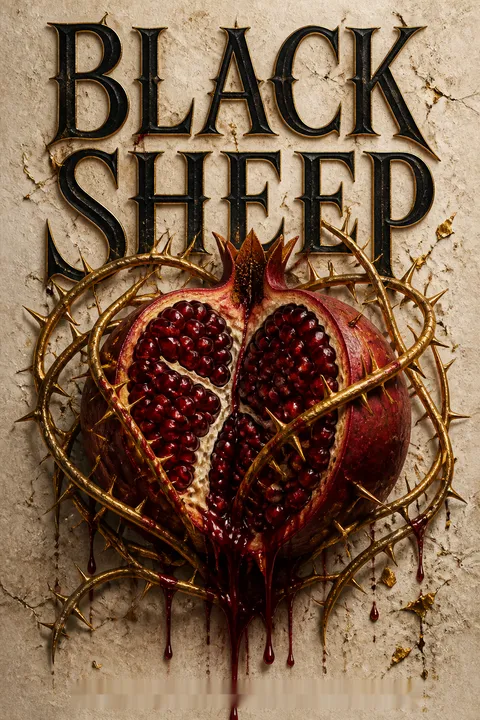

Plot Summary
Birthday Song in Hell
Vesper Wright, a sharp-tongued waitress, endures another soul-crushing shift at Shortee's, a chain restaurant where the birthday song is a recurring torment. Her life feels stagnant and joyless, her only solace a numb detachment. But tonight, a customer recognizes her uncanny resemblance to her estranged mother, Constance Wright, a cult horror actress. The encounter stirs up old wounds and longing for the family she left behind. Fired after a workplace incident, Vesper returns to her lonely apartment, only to find a mysterious red envelope on her doorstep. The invitation inside—her cousin Rosie's wedding to Brody, Vesper's childhood love—pulls her back toward the family and faith she abandoned, reigniting a storm of resentment, curiosity, and unresolved pain.
The Invitation Arrives
Haunted by the invitation, Vesper wrestles with the urge to return to the insular, Satanic community she fled years ago. Memories of her close bond with Rosie and her complicated love for Brody resurface, tangled with bitterness over their impending marriage. The invitation's handwritten plea—"Please come home. Stay for the weekend, or forever. We love & miss you."—gnaws at her. Despite her cynicism and anger, Vesper can't resist the gravitational pull of family, legacy, and unfinished business. She boards a train back to rural New Jersey, steeling herself for the confrontation with her past, her mother's coldness, and the secrets she suspects still fester at the heart of her family.
Homecoming and Old Wounds
Vesper's return to the family farmhouse is fraught with tension and nostalgia. The house is alive with wedding preparations and the rituals of the Hell's Gate Satanic church. Her mother, Constance, greets her with icy sarcasm, while Rosie's embrace is warm but complicated by guilt and unresolved betrayal. The family dinner is a surreal blend of mundane and macabre, with Satanic blessings and veiled hostilities. Vesper is forced to confront the unchanged dynamics: her mother's disdain, her aunt Grace's affection, and the community's wary fascination with her. The sense of being both outsider and center of attention is suffocating, and Vesper's old wounds—her father's absence, her mother's emotional distance, her own sense of unbelonging—throb beneath the surface.
Family Dinner, Satanic Style
The rehearsal dinner plunges Vesper back into the rituals and dogma of Hell's Gate. The meal is laced with Satanic prayers, and the community's devotion is both intoxicating and alienating. Vesper's skepticism and sarcasm clash with the fervor around her, especially as she's asked to lead a blessing she no longer believes in. Old friends and family members reveal their own scars and secrets, hinting at others who have left or been lost. The dinner is a microcosm of the community's insularity and the price of belonging. Vesper's sense of self is battered by the weight of expectation, the pressure to conform, and the knowledge that her presence is both a disruption and a fulfillment of prophecy.
Ghosts, Memories, and Mirrors
Alone in her childhood room, Vesper is beset by memories and unsettling phenomena. The house is a museum of her mother's horror memorabilia and the traumas of her upbringing. Mirrors and clocks seem to move of their own accord, and Vesper's reflection sometimes acts independently, echoing her deepest fears and questions. She is stalked by the sense of being watched, by ghosts of her father and the intruder who once broke into the house. The boundaries between memory, dream, and reality blur, and Vesper's psychological defenses begin to crack. The house, and her own mind, become battlegrounds for the unresolved pain and supernatural forces that define her legacy.
The Wedding and the Lamb
The wedding is a spectacle of Satanic pageantry, blending the familiar trappings of a rural celebration with the dark rituals of Hell's Gate. Vesper is both participant and pariah, forced to don her pentagram necklace and witness the slaughter of a lamb as a blood sacrifice. The ceremony is a grotesque affirmation of the community's beliefs and the inescapability of blood ties. Vesper's alienation is complete as she watches Rosie and Brody pledge themselves to a faith she cannot share, surrounded by people who see her as both a prodigal daughter and a harbinger of doom. The sense of being trapped by destiny and family is overwhelming.
Aftermath and Unraveling
In the aftermath of the wedding, Vesper's unease intensifies. She is plagued by strange occurrences—her window mysteriously opened, objects moved, and a sense of being stalked by an unseen presence. Encounters with Brody and Rosie reveal lingering feelings and betrayals, while her mother's cryptic warnings hint at deeper secrets. Vesper's anger and pain begin to manifest in uncanny ways, as those who cross her suffer bizarre accidents. The boundaries between coincidence and supernatural power blur, and Vesper is forced to confront the possibility that she is more than just a black sheep—she may be the catalyst for something catastrophic.
The Devil's Daughter
The truth shatters Vesper's world: her father is not just absent, but is Lucifer himself, the literal Satan worshipped by Hell's Gate. Her entire life has been shaped by this secret, her special treatment a result of being the prophesied harbinger of the apocalypse. The community's adoration is revealed as fear and expectation, and her own powers—wrathful, destructive, uncontrollable—are the inheritance of her infernal bloodline. Vesper's sense of self is obliterated by the revelation, and she is thrust into a reckoning with her identity, her family's betrayal, and the role she is expected to play in the end of the world.
Revelations and Reckonings
Vesper's powers erupt in violence as her anger and pain are weaponized against those who have wronged her. Friends and enemies alike suffer as her supernatural wrath is unleashed, confirming her worst fears about herself. The community's faith in her as the apocalypse's harbinger becomes a self-fulfilling prophecy, and Vesper is swept up in a tide of destruction she cannot fully control. The cost of legacy—of being born into a family and a faith that demand sacrifice—is laid bare. Vesper must choose between embracing her role as destroyer or fighting for her own agency, even as the world teeters on the brink of hellfire.
Power, Wrath, and Escape
The climax is a cataclysm of fire, blood, and betrayal. Vesper is drugged and ritually sacrificed by her own family, her rib removed and her throat slit to open the seal to hell. But death is not the end—she is resurrected in flames, her powers fully awakened. In a final confrontation with Lucifer and the Hell's Gate faithful, Vesper rejects her destiny as destroyer, turning her wrath against those who would use her. The cathedral collapses, the cult is consumed by the pit they sought to open, and Vesper escapes—scarred, traumatized, but alive. She carries with her the knowledge that she can choose her own fate, even if it means walking away from everything she once called home.
Hellfire and Closure
In the aftermath, Vesper struggles to rebuild her life. She returns to the mundane world, haunted by scars both physical and psychological. Attempts at normalcy—work, friendship, romance—are complicated by the legacy of trauma and the lingering threat of her powers. She is forced to confront the impossibility of erasing the past, but also the possibility of healing and change. Through therapy, self-reflection, and the symbolic destruction of her family's relics, Vesper begins to claim agency over her story. She learns that while she cannot choose her blood, she can choose who she becomes—and that hope, however fragile, is worth holding onto.
Epilogue: Never Look Back
Years later, Vesper returns incognito to the ruins of her childhood home, now a tourist attraction and the subject of lurid speculation. The world has moved on, commodifying her family's horrors and turning her mother into a legend. Vesper, now anonymous and free, reflects on the impossibility of closure and the necessity of forging her own path. She leaves behind the last relics of her past—a necklace, a photo, a hairpin—at the memorial stone, choosing not to look back. The scars remain, but so does the possibility of a future unbound by the sins of her parents. As she walks away, she is finally, truly, her own.
Analysis
Rachel Harrison's Black Sheep is a darkly comic, emotionally raw exploration of family, faith, and the struggle for self-determination in the shadow of inherited trauma. By reimagining the "prodigal child" narrative within the framework of a Satanic cult, Harrison interrogates the ways in which legacy can both define and destroy us. The novel's horror elements—ritual sacrifice, supernatural powers, apocalyptic prophecy—are deployed not just for shock, but as metaphors for the psychological violence of family and the difficulty of escaping the roles we are born into. Vesper's journey is one of painful self-discovery, as she confronts the seductive pull of belonging, the corrosive effects of secrecy and betrayal, and the terrifying possibility that evil is not just external, but internalized. Yet the novel resists nihilism, offering instead a hard-won hope: that agency is possible, that the cycle of violence can be broken, and that the scars of the past, while permanent, need not dictate the future. In a world obsessed with legacy and myth, Black Sheep is a fierce, funny, and ultimately redemptive reminder that we are more than the sum of our blood.
Review Summary
Black Sheep receives generally positive reviews, averaging 3.58/5. Fans praise Rachel Harrison's signature "cozy horror" style, blending dark humor with supernatural elements and strong female protagonists. Readers consistently highlight Vesper's relatable, snarky character and recommend experiencing the story blind due to a significant mid-book reveal. Comparisons are frequently drawn to Harrison's earlier works, Cackle and Such Sharp Teeth. Critics cite predictability, pacing issues, and underwhelming horror elements. A recurring theme among reviewers is the book's exploration of family trauma, religious estrangement, and personal identity.
People Also Read








Characters
Vesper Wright
Vesper is the black sheep of her family and community, defined by her sharp wit, cynicism, and deep wounds. Raised in the insular, Satanic Hell's Gate church, she flees at eighteen, seeking numbness and anonymity in the outside world. Her return for Rosie's wedding forces her to confront the unresolved pain of her father's abandonment, her mother's coldness, and her own sense of unbelonging. Vesper's psychological complexity is rooted in her longing for love and her terror of legacy—she is both desperate for connection and fiercely resistant to the roles imposed on her. The revelation that she is Lucifer's daughter and the prophesied harbinger of the apocalypse shatters her self-concept, forcing her to grapple with the possibility of inherent evil and the burden of supernatural power. Her journey is one of painful self-discovery, culminating in the rejection of her family's destiny and the forging of her own path, scarred but free.
Constance Wright
Constance is Vesper's mother, a famous scream queen whose public persona masks a profound emotional detachment. She is both a product and perpetuator of Hell's Gate, wielding her status and wealth to maintain power within the community. Her relationship with Vesper is defined by cruelty, disappointment, and a refusal to offer the love or protection her daughter craves. Constance's own traumas and ambitions are buried beneath layers of performance and ritual, and her complicity in Vesper's sacrifice is both chilling and tragic. She is a symbol of the ways in which family can wound, and of the dangers of legacy unexamined. In the end, her final gesture—passing Vesper the hairpin—suggests a flicker of remorse or solidarity, but it is too little, too late.
Lucifer (Vesper's Father)
Lucifer is both literal and symbolic—the Devil worshipped by Hell's Gate, and Vesper's absent, adored father. His charm and warmth mask a monstrous narcissism and a willingness to sacrifice his own daughter for power. He is the architect of the community's faith and the orchestrator of Vesper's destiny, manipulating her with promises of love and belonging while demanding her destruction. Lucifer's psychological hold on Vesper is profound, rooted in childhood adoration and the longing for paternal approval. His true face—ancient, decayed, and pitiless—is revealed only at the end, exposing the hollowness of his love and the horror of inherited evil. He is both the source of Vesper's pain and the adversary she must overcome to claim her own agency.
Rosemary (Rosie) Smythe
Rosie is Vesper's cousin, best friend, and emotional anchor—a figure of sweetness, faith, and longing. Her marriage to Brody is both a personal betrayal and a symbol of the community's insularity. Rosie's optimism and devotion are genuine, but they are also products of indoctrination and fear. She is torn between love for Vesper and loyalty to the church, ultimately complicit in Vesper's sacrifice. Rosie's inability to see beyond the boundaries of faith and family is both pitiable and infuriating, and her fate—falling into the pit with Brody—underscores the tragedy of those who cannot break free from legacy.
Brody Lewis
Brody is Vesper's childhood sweetheart and Rosie's groom, a figure caught between desire and duty. His love for Vesper is real, but he lacks the courage to defy the expectations of family and faith. Brody's choices are shaped by fear and the need for belonging, and his betrayal is both personal and systemic. He is a mirror for Vesper's own struggles with conformity and rebellion, and his ultimate fate—falling with Rosie—reflects the cost of refusing to choose one's own path.
Grace
Grace is Vesper's aunt and emotional refuge, offering the affection and care Constance withholds. Her warmth and humor are genuine, but she is ultimately complicit in the community's violence, drugging Vesper and participating in the rituals that lead to her sacrifice. Grace embodies the tragedy of good intentions corrupted by faith and the dangers of loving without questioning. Her death in the pit is a consequence of her inability to protect Vesper or herself from the demands of legacy.
The High Priest
The High Priest is the spiritual leader of Hell's Gate, a figure of ritual and dogma. He is both a true believer and a tool of Lucifer, orchestrating the ceremonies and sacrifices that define the community. His authority is absolute within the church, and his complicity in Vesper's suffering is total. He represents the dangers of blind faith and the ways in which institutions perpetuate violence in the name of salvation.
Kerri
Kerri is Vesper's coworker and reluctant confidante, a figure of everyday concerns and petty dramas. Her openness and need for connection contrast with Vesper's guardedness, and her eventual betrayal—spreading Vesper's secret—underscores the risks of vulnerability. Kerri's fate, a gruesome accident, is both a consequence of Vesper's wrath and a symbol of the collateral damage wrought by trauma and secrecy.
George
George is Vesper's brief romantic distraction, a coworker whose interest in her is both genuine and self-serving. His inability to keep her secret and his ultimate victimization by her powers highlight the dangers of intimacy and the impossibility of escaping legacy. George is a reminder that normalcy is elusive for those marked by trauma, and that even well-meaning outsiders can become casualties of inherited violence.
The Intruder
The intruder is a figure from Vesper's past, a would-be assassin driven by fear of her supposed evil. His death at her hands—accidental, but inevitable—marks the awakening of her powers and the beginning of her reckoning with legacy. He is both a victim and a perpetrator, a symbol of the ways in which myth and fear breed violence.
Plot Devices
Unreliable Narration and Blurred Reality
The novel is filtered through Vesper's sardonic, traumatized voice, blurring the lines between reality, memory, and hallucination. Mirrors, clocks, and supernatural phenomena reflect her fractured sense of self and the unreliability of her perceptions. This device heightens suspense and ambiguity, forcing readers to question what is real and what is the product of trauma or supernatural influence. The use of dreams, flashbacks, and shifting timelines deepens the psychological complexity and underscores the theme of legacy as both inescapable and mutable.
Family as Fate and Curse
The narrative is structured around the inescapability of family—its rituals, secrets, and expectations. The Satanic faith of Hell's Gate is both literal and metaphorical, a stand-in for any insular, dogmatic community that demands conformity and sacrifice. The plot is driven by the tension between belonging and autonomy, with Vesper's journey mirroring the classic arc of the prodigal child forced to confront the sins of the parents. The revelation of her true parentage and destiny is foreshadowed by the community's treatment of her and the supernatural events that escalate as she approaches her "role."
Foreshadowing and Symbolism
The novel is rich in foreshadowing—red envelopes, pentagram necklaces, the slaughter of lambs, and the ever-present threat of fire and blood. These symbols accumulate meaning as the story progresses, culminating in the apocalyptic climax. The use of horror movie tropes—final girls, haunted houses, ritual sacrifice—serves both as homage and subversion, reflecting Vesper's struggle to escape the scripts written for her by family, faith, and genre.
Power, Wrath, and Agency
Vesper's emerging powers—her ability to inflict harm through anger, to ignite fire, to survive death—are both literal and symbolic. They represent the destructive potential of unprocessed trauma, the dangers of inherited violence, and the possibility of reclaiming agency. The narrative structure builds toward the moment when Vesper must choose whether to fulfill her family's prophecy or to break the cycle, using her power to save herself rather than destroy the world.
About the Author
Other books by Rachel Harrison


Download PDF
Download EPUB
.epub digital book format is ideal for reading ebooks on phones, tablets, and e-readers.








































