
Plot Summary
Shadows in the Penthouse
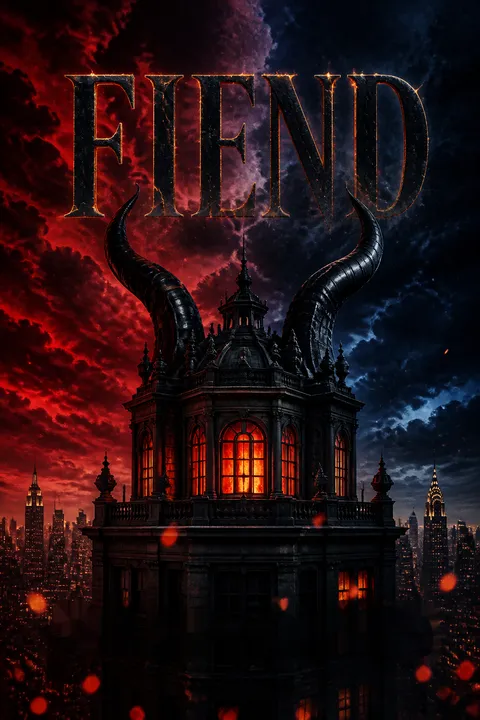
The Berisha family, Albanian-American business royalty, live in a Manhattan penthouse that feels more like a fortress than a home. Maris, the middle child, senses a malevolent presence lurking in the walls—a feeling that intensifies when her father, Zef, is near. The children are raised in a world of privilege but also of fear, where obedience is demanded and affection is rare. Zef, the patriarch, rules with an iron fist, and each child is assigned a role: Dardan, the heir; Maris, the pawn for alliances; Nora, the overlooked youngest. The family's "blessing"—a string of uncanny good luck—masks a deeper, darker force. Early on, Maris and Dardan witness inexplicable events, hinting at a supernatural protector bound to the family's will, but at a terrible cost.
The Family Blessing Unravels
As adults, the Berisha siblings are entangled in the family business, Berisha International, a global import-export empire. Maris, ambitious but sidelined, yearns for recognition. Dardan, burdened by expectation, struggles with the family's legacy. When a whistleblower threatens to expose the company's corruption, the family's luck falters. Zef's response is ruthless, and Maris, eager to prove herself, urges him to "take care of it." The whistleblower's mysterious death—brutal, inexplicable, and officially ruled a suicide—shakes the siblings. The "blessing" now feels like a curse, and the siblings begin to question the true nature of their family's power.
Sins of the Heir
Dardan, the designated heir, is suffocating under the weight of expectation. Haunted by childhood trauma and the knowledge of the family's supernatural protector, he is torn between loyalty and a desire for escape. His relationship with Marcie, a woman outside the family's circle, offers hope, but Zef's insistence on tradition and bloodline threatens to destroy it. Dardan's guilt over past tragedies—especially the death of a friend, Conner, in a suspicious accident—gnaws at him. He fears the family's power is not just a blessing but a monstrous inheritance, one that demands sacrifice and obedience above all.
Whistleblower's Last Breath
The whistleblower's demise is both a relief and a horror for the Berishas. Maris feels vindicated, Dardan is sickened, and Nora is numb. The details—locked room, signs of violence, no evidence of an intruder—point to something beyond human intervention. The family's fixer culture is exposed, but this time, the violence is too close, too personal. The siblings' reactions reveal their fractures: Maris's ambition, Dardan's conscience, Nora's alienation. The event cements the family's reputation for ruthlessness and deepens the sense that their "protector" is both real and uncontrollable.
Blood on Our Hands
The siblings grapple with their roles in the family's crimes. Maris rationalizes the violence as necessary for survival; Dardan is tormented by the blood on his hands, both literal and figurative. Nora, the family's black sheep, oscillates between self-destruction and moral outrage. The family's history of violence—accidents, disasters, deaths—comes into focus as a pattern, not coincidence. The siblings' complicity is inescapable, and each is forced to confront the cost of their privilege. The protector, once a source of security, now feels like a ticking time bomb.
The Protector's Price
The Berisha "protector" is revealed as a supernatural entity bound to the family by an ancient curse. Its power is triggered by the head of the family's anger and desire for vengeance. Zef's control over the demon is tenuous, and the cost is isolation and emotional decay. The protector enforces the family's will but also feeds on their worst impulses, amplifying their cruelty. The siblings learn that the blessing is a double-edged sword: it brings prosperity but demands suffering, secrecy, and the sacrifice of their humanity. The demon's presence is both a shield and a prison.
Sibling Rivalries Ignite
With Zef's health failing and the family in crisis, Maris and Dardan vie for control. Maris, emboldened by her father's approval, schemes to secure her place as heir. Dardan, desperate for freedom, considers betraying the family to their enemy, Andy Garrison. Nora, underestimated and dismissed, manipulates events from the shadows. Old wounds resurface—childhood slights, parental favoritism, and betrayals. The siblings' alliances shift as each pursues their own agenda, and the family's unity crumbles. The protector's influence exacerbates their worst traits, setting the stage for tragedy.
The Curse Revealed
Through flashbacks and confessions, the true story of the Berisha curse emerges. Centuries ago, a rival's widow bound a demon to the Berisha bloodline as revenge for her son's death. The demon, meant to destroy the family, was instead harnessed by a ruthless ancestor. Each generation's head of the family inherits the power—and the burden—of controlling the protector. The curse demands constant vigilance: any lapse in self-control can unleash catastrophe. The family's prosperity is built on a foundation of blood, fear, and supernatural coercion. The siblings realize they are both victims and perpetrators of this legacy.
Dardan's Descent
Dardan, unable to reconcile his conscience with his inheritance, spirals into despair. His attempt to break free—by marrying Marcie and threatening to leave the family—provokes Zef's wrath. In a moment of confrontation, Dardan is killed in a manner both violent and inexplicable, his death staged as suicide. The security footage is ambiguous, showing a shadowy presence at the scene. Maris is both relieved and haunted: with Dardan gone, she is next in line, but the cost is unbearable. The family's curse claims another victim, and the sibling rivalry turns deadly.
Betrayals and Bargains
Maris, now the presumptive heir, is forced to navigate a minefield of corporate intrigue, family expectations, and supernatural peril. She bargains with Zef for power, only to be told her role is to marry and produce heirs. Nora seduces Maris's lover, Ricardo, in a calculated move to destabilize her sister. Andy Garrison, seeking justice for his son's death, confronts Maris, only to die mysteriously after their meeting. The siblings' betrayals multiply, each seeking leverage over the others. The protector's influence grows, and the line between human agency and demonic intervention blurs.
The Minotaur's Children
The Berisha children reflect on their upbringing, likening themselves to the Minotaur—monstrous, trapped, and feared. Maris, in particular, sees herself as both victim and inheritor of her father's monstrous legacy. The family's rituals, secrets, and violence have shaped them into creatures capable of both great ambition and great cruelty. The siblings' attempts to break free only entangle them further in the family's web. The protector, once a myth, is now an undeniable force in their lives, shaping their fates and magnifying their flaws.
Zef's Final Sacrifice
Zef, devastated by Dardan's death and his own failing health, loses control of the protector. In a final act of despair, he turns the demon on himself, dying in a gruesome, supernatural fashion. Maris discovers his body, torn apart in a manner no human could achieve. The family's secret is now hers alone to bear. Olga, the matriarch, reveals that the protector's power is too great for any one person, and that Zef's isolation was a necessary sacrifice. Maris inherits not just the company, but the curse—and the knowledge that power comes at the cost of love and sanity.
The Inheritance of Power
With Zef and Dardan gone, Maris becomes CEO and head of the family. The transition is fraught: protestors gather, lawsuits mount, and the company's reputation teeters. Maris feels the protector's presence growing stronger, its power seductive but terrifying. She struggles to control her emotions, knowing that any lapse could unleash disaster. Walter, the family's lawyer, uncovers evidence implicating Maris in Dardan's death—a doctored video that appears to show her pushing her brother. Maris's grip on power is tenuous, and she is haunted by guilt, paranoia, and the ever-present threat of the protector.
The Demon Unleashed
Maris's inability to control the protector leads to tragedy. In a moment of rage, she inadvertently summons the demon, resulting in the disappearance of Ricardo. The experience is excruciating, both physically and emotionally, and Maris realizes she is no longer in control. Nora reveals her own connection to the protector, having manipulated events to frame Maris for Dardan's death. The sisters' confrontation is a reckoning: Maris is stripped of her power, institutionalized, and left alone. Nora, now in possession of the protector, contemplates freeing the demon, ending the family's cycle of violence.
Nora's Secret
Nora, long dismissed as unstable and weak, emerges as the true architect of the family's downfall. Her childhood bond with the protector, born of loneliness and neglect, gives her unique influence over the demon. She orchestrates Maris's downfall, exposes the family's crimes, and seizes control. Unlike her siblings, Nora seeks not power but liberation—from the curse, from the family's legacy, from the endless cycle of violence. Her plan to free the protector is both an act of mercy and a final rebellion against the family's monstrous inheritance.
The Fall of Maris
Maris, once the most ambitious and ruthless of the siblings, is undone by her own desires and the family's curse. Institutionalized, stripped of power, and abandoned by her family, she is left to confront the consequences of her actions. The protector, once her greatest weapon, is now beyond her reach. Maris's story is a cautionary tale: the pursuit of power without compassion leads to isolation and ruin. The Berisha dynasty, built on blood and secrets, collapses under the weight of its own sins.
The End of the Berishas
With Nora in control, the Berisha family's reign ends—not with a bang, but with a reckoning. The protector, finally freed, leaves the family to face the world without its supernatural shield. The company's future is uncertain, and the siblings' fates are left unresolved. The story closes on a note of ambiguity: the curse is broken, but the scars remain. The Berishas are both victims and villains, shaped by forces beyond their control. The lesson is clear: power gained through violence and fear is ultimately self-destructive, and true liberation comes only through breaking the cycle.
Analysis
A modern horror fable about power, trauma, and the inescapability of legacyFiend reimagines the dynastic family saga as a supernatural horror, using the Berisha family's curse as both literal demon and metaphor for generational trauma. The novel interrogates the costs of power: emotional isolation, moral decay, and the perpetuation of violence. Each character is shaped—and ultimately destroyed—by the roles assigned to them, the secrets they keep, and the supernatural force they cannot control. The protector, as both enforcer and curse, embodies the dangers of unchecked rage and the seductive allure of power. The story's structure, with its dual timelines and unreliable narration, mirrors the characters' fractured psyches and the difficulty of confronting the past. Ultimately, Fiend is a cautionary tale: the pursuit of power without compassion leads to ruin, and true liberation comes only through breaking the cycle of violence. The Berishas' downfall is both a tragedy and a warning, resonating with contemporary anxieties about wealth, privilege, and the monsters we inherit—and become.
Review Summary
People Also Read

Characters
Maris Berisha
Maris is the middle child, defined by her hunger for recognition and power in a family that values sons above all. Psychologically, she is shaped by years of neglect, rivalry, and the need to prove herself to her father, Zef. Her relationship with her siblings is fraught: she envies Dardan's status as heir and resents Nora's perceived weakness. Maris's ambition drives her to embrace the family's dark legacy, but she is ultimately undone by her inability to control the supernatural protector. Her arc is one of transformation from victim to perpetrator to outcast, illustrating the corrosive effects of power and the longing for love that remains unfulfilled.
Dardan Berisha
Dardan, the eldest and only son, is groomed from birth to inherit the family's power and secrets. He is torn between duty and morality, haunted by guilt over past tragedies and the knowledge of the family's supernatural curse. His relationships are marked by ambivalence: he loves his sisters but is complicit in their marginalization. Dardan's psychological torment stems from the impossible expectations placed upon him and his fear of becoming like his father. His attempt to escape—through love, rebellion, or self-sacrifice—ends in his destruction, a victim of both human and supernatural forces.
Nora Berisha
Nora, the youngest, is dismissed as unstable and irrelevant by her family. Her childhood loneliness and neglect foster a unique bond with the protector, making her both vulnerable and dangerous. Nora's psychological complexity lies in her oscillation between self-destruction and moral clarity. She is the only sibling to question the family's legacy and ultimately becomes the agent of its undoing. Her manipulation of events, exposure of her siblings' crimes, and decision to free the protector mark her as both avenger and liberator. Nora's arc is one of transformation from victim to redeemer, challenging the family's cycle of violence.
Zef Berisha
Zef is the head of the Berisha family, embodying both its strength and its curse. He is ruthless, controlling, and emotionally distant, driven by the need to protect and perpetuate the family's power. Zef's relationship with his children is transactional: he demands obedience and sacrifices affection. Psychologically, he is isolated by the burden of controlling the protector, a role that requires constant vigilance and self-denial. His eventual loss of control and self-destruction reveal the toll of wielding supernatural power. Zef is both monster and martyr, a cautionary example of the costs of unchecked authority.
Olga Berisha
Olga, Zef's wife, is both victim and collaborator in the family's legacy. She is beautiful, calculating, and fiercely protective of her children, but also complicit in the family's crimes and secrets. Olga's psychological survival depends on denial and adaptation; she manages the household and shields her children from the worst of Zef's wrath, but also enforces the family's oppressive rules. Her relationship with Maris is particularly fraught, marked by both empathy and rivalry. Olga's ultimate revelation of the protector's nature is an act of both confession and abdication.
Walter Slocomb
Walter, the family's longtime lawyer, is a fixture in the Berisha world. He is pragmatic, loyal, and deeply aware of the family's secrets, but ultimately powerless to prevent their self-destruction. Walter serves as a mirror to the family's moral decay, offering warnings and counsel that go unheeded. His discovery of the doctored video implicating Maris in Dardan's death is a turning point, forcing him to choose between loyalty and justice. Walter's arc is one of increasing disillusionment, as he witnesses the collapse of the dynasty he served.
Andy Garrison
Andy Garrison, a former friend turned enemy, is driven by grief over his son's death and a desire for justice. His pursuit of the truth about the Berishas' crimes makes him both a threat and a victim. Garrison's psychological motivation is rooted in loss and obsession; he is unable to let go of the past and becomes entangled in the family's supernatural web. His confrontation with Maris and subsequent mysterious death underscore the Berishas' capacity for destruction and the futility of seeking justice against them.
Ricardo
Ricardo, Maris's lover and later Nora's, is emblematic of those drawn to the Berishas' orbit and destroyed by it. He is charming, opportunistic, and ultimately expendable—a plaything for the sisters' rivalries. Ricardo's psychological vulnerability lies in his desire for acceptance and status, which makes him easy prey. His fate—disappeared by the protector—serves as a warning about the dangers of proximity to power and the expendability of outsiders in the family's world.
The Protector (Demon)
The protector is the supernatural entity bound to the Berisha family by an ancient curse. It is both a tool and a tormentor, enforcing the head of the family's will but feeding on their anger and violence. Psychologically, the protector represents the family's repressed rage, guilt, and desire for control. Its presence magnifies their worst traits and punishes any lapse in self-control. The demon's ultimate liberation by Nora is both an act of mercy and a symbolic breaking of the family's cycle of violence.
The Berisha Family (Collective)
The Berisha family as a whole is a character: a dynasty shaped by centuries of violence, secrecy, and supernatural intervention. Each member is both a victim of the curse and a perpetrator of its horrors. The family's psychological landscape is one of fear, ambition, and denial, with each generation repeating the sins of the last. The collapse of the dynasty is both inevitable and tragic, a testament to the corrosive effects of power and the impossibility of escaping one's inheritance.
Plot Devices
Dual Timelines and Flashbacks
The novel employs a dual timeline structure, alternating between the siblings' childhoods and their adult lives. Flashbacks provide crucial context for the family's current predicament, revealing the origins of the curse, the trauma that shapes each character, and the evolution of the protector's influence. This structure allows for gradual revelation of secrets, building suspense and deepening the reader's understanding of the characters' motivations. The interplay between past and present underscores the inescapability of the family's legacy and the cyclical nature of violence.
Supernatural Realism
The protector functions as both a literal supernatural entity and a metaphor for generational trauma, rage, and the corrupting influence of power. Its presence is ambiguous—sometimes manifesting physically, sometimes as a psychological force. The ambiguity heightens the horror and allows for multiple interpretations: is the demon real, or is it the family's collective guilt made manifest? The supernatural elements are grounded in the characters' emotional realities, making the horror both intimate and universal.
Unreliable Narration and Doctored Evidence
The novel plays with unreliable narration, particularly through the use of doctored security footage and suppressed memories. Characters' perceptions are shaped by trauma, denial, and manipulation—both supernatural and human. The shifting nature of evidence (e.g., the video of Dardan's death) creates uncertainty and tension, forcing both characters and readers to question what is real. This device mirrors the family's culture of secrecy and the difficulty of confronting uncomfortable truths.
Sibling Rivalry and Inheritance
The central conflict is the struggle for inheritance—of both the company and the supernatural curse. Sibling rivalries, parental favoritism, and the pressure to conform to tradition fuel the characters' actions. The protector amplifies these tensions, rewarding ruthlessness and punishing weakness. The inheritance of power is both a prize and a burden, and the siblings' attempts to claim or escape it drive the narrative toward its tragic conclusion.
The Curse as Social Critique
The Berisha curse serves as a critique of dynastic wealth, privilege, and the moral compromises required to maintain them. The supernatural element literalizes the idea that great fortunes are built on violence and exploitation. The family's inability to break free from the curse reflects the difficulty of escaping cycles of abuse and the seductive nature of power. The novel interrogates the myth of meritocracy and the dark underbelly of success.
Download PDF
Download EPUB
.epub digital book format is ideal for reading ebooks on phones, tablets, and e-readers.








































