
Plot Summary
Movie Night Shadows
At Autumn Springs Retirement Home, Rose DuBois and her fellow residents gather for movie night, a cherished ritual that masks the underlying melancholy of their twilight years. The film's themes of death and fate echo through the group, stirring up existential questions and a sense of vulnerability. Rose, fiercely independent yet quietly lonely, navigates the complex web of friendships and flirtations, especially with Miller, her persistent but gentle companion. The campus itself is a microcosm of aging—well-kept but haunted by reminders of mortality, like the abandoned asylum at its edge. As the night ends, a chill of foreboding lingers, hinting that the peace of Autumn Springs is more fragile than it appears.
Death in the Dark
The calm of Autumn Springs is shattered when Angela Forrest, a resident, is murdered in her apartment by a masked intruder. The attack is swift, violent, and deeply personal, leaving Angela helpless and terrified. Her desperate attempt to summon help fails as the killer taunts her, ultimately ending her life with cold efficiency. The community reels from the news, but the official explanation is a tragic accident—a slip and fall. Rose, however, is unsettled by the details and the administrator's shaken demeanor. The first death is a crack in the home's façade, exposing the residents' vulnerability and the possibility that something far more sinister is at play.
Suspicions and Secrets
Rose's instincts tell her that Angela's death was no accident. She confides in Miller, who tries to reassure her with logic, but her unease only grows. The arrival of the eccentric Baxter sisters, rumored to be witches, adds to the atmosphere of suspicion. Gossip and paranoia spread as residents recall strange noises and odd behavior. Rose's investigation leads her to the Medical Center, where she encounters new staff and senses that changes are afoot. The home's routines are disrupted, and the residents' sense of safety erodes. Rose's determination to uncover the truth is matched only by her fear that the killer is hiding in plain sight.
The Sisters' Ritual
The Baxter sisters, convinced that evil stalks Autumn Springs, perform a secret ritual in the abandoned asylum, hoping to summon a demon for protection. Their actions are both comic and tragic, reflecting the residents' powerlessness and longing for control. Meanwhile, Rose's suspicions deepen as she interviews staff and residents, piecing together inconsistencies and rumors. The sisters' ritual is a symbol of the community's collective anxiety—a desperate attempt to fight back against an invisible threat. The boundaries between superstition and reality blur, and the sense of dread intensifies as more deaths follow.
A Killer Among Us
As more residents die under mysterious circumstances, the community fractures. Some believe in accidents, others whisper of murder. Rose, Miller, Gopi, and Mickey form an uneasy alliance, determined to uncover the truth. They share information, track strange occurrences, and confront the possibility that the killer is one of their own. The police are called, but their presence is perfunctory, and the residents realize they must rely on themselves. The killer's methods grow bolder, and the sense of isolation deepens. Trust is scarce, and every friendship is shadowed by suspicion.
The Alien Letters
Stan Swanson, a resident obsessed with conspiracy theories, receives mysterious letters claiming to be from the government, inviting him to witness proof of aliens. The letters are a cruel manipulation, exploiting his loneliness and delusions. Stan's descent into madness is orchestrated by the killer, who uses drugs and psychological tricks to drive him to suicide. The community is horrified by his death, but the official verdict is again suicide. The killer's ability to exploit the residents' weaknesses becomes clear, and Rose realizes that the threat is both physical and psychological—a predator who preys on the mind as well as the body.
Bodies and Blame
The deaths accelerate: Egor dies of a heart attack under suspicious circumstances, and others follow. The administration imposes curfews and security measures, but these only heighten the residents' fear and resentment. The police investigation is hampered by bureaucracy and disbelief. Rose and her friends gather evidence, but the killer always seems one step ahead, sowing confusion and panic. The home becomes a pressure cooker of anxiety, with residents turning on each other and the staff. The killer's methods grow more theatrical and sadistic, and the sense of impending doom is inescapable.
The Party Turns
Sandra Freeman hosts a party to lift spirits, but the event quickly devolves into chaos. A parlor game called Murder in the Dark becomes horrifyingly real when the lights go out, a gun is fired, and panic erupts. Simultaneously, the Baxter sisters' final ritual in the asylum ends in tragedy as the building is set ablaze, killing them. The fire alarms and blackout create confusion, allowing the killer to strike again. The party, meant to restore normalcy, instead becomes a crucible of fear, exposing the residents' fragility and the killer's cunning. The community is left traumatized and leaderless.
Fire and Flight
The asylum fire marks a turning point. The home is now a crime scene, and the remaining residents are urged to leave. Some flee to family, others are trapped by circumstance or pride. Rose, wracked by guilt and grief, debates leaving but feels compelled to stay and fight. The killer, emboldened by the chaos, escalates their attacks, targeting those who resist or investigate. The police finally recognize the pattern, but their intervention comes too late for many. The home's social fabric unravels, and the killer's identity remains hidden, even as the body count rises.
The Final Game
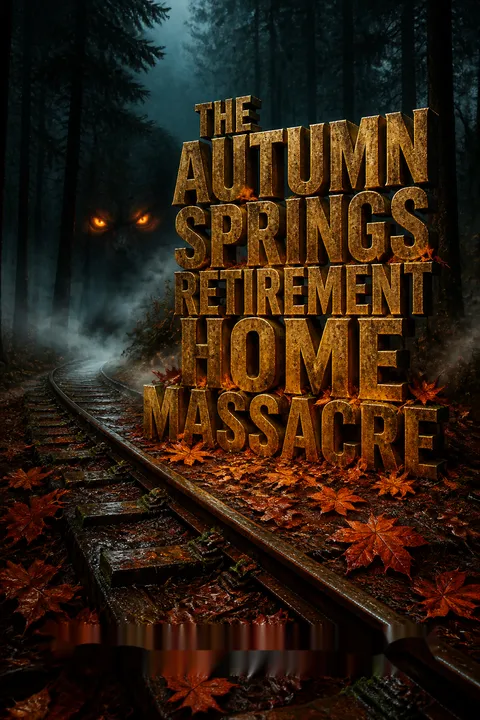
Rose becomes the killer's primary target. After a failed attempt on her life, she is lured back to Autumn Springs by a fake emergency involving Miller. Drugged and abducted, she awakens tied to the train tracks—a classic, sadistic set piece. The killer is revealed as Mindy Jarvis, a nurse who has manipulated, drugged, and murdered residents for her own twisted amusement. Rose, hallucinating and desperate, manages to escape the tracks with the help of her own ingenuity and a hallucinatory vision of the Baxter sisters. The final confrontation is brutal and primal, culminating in a chase through the woods.
Predator in the Pines
As Rose flees through the forest, Mindy pursues her, knife in hand. In a moment of supernatural ambiguity, a mountain lion—possibly the demon Haures summoned by the Baxter sisters—appears and attacks Mindy, saving Rose. The killer meets a violent, fitting end, torn apart by the beast. Rose, battered and traumatized, stumbles back to the home, where she is found and rescued. The line between reality and hallucination blurs, but justice is served in a way that feels both mythic and cathartic. Rose's survival is hard-won, and the cost is immense.
The Last Letter
In the days following the massacre, Rose recovers in the hospital, surrounded by her daughter and grandson. The truth about Mindy's crimes comes to light, and the home begins to heal. Rose receives a letter from Miller, who survived his ordeal and confesses his love and gratitude. The administration offers Rose a new home and a role as an ambassador, recognizing her courage and resilience. Though scarred by loss and haunted by memories, Rose finds a measure of peace and connection. The story ends with her visiting Miller in the hospital, their bond stronger for all they have endured.
Analysis
A meditation on aging, vulnerability, and the fight for agencyThe Autumn Springs Retirement Home Massacre is more than a slasher novel; it is a poignant exploration of what it means to grow old in a society that often renders the elderly invisible and powerless. Through Rose's journey, the story interrogates themes of autonomy, trauma, and the longing for connection in the face of mortality. The killer's manipulation of perception and exploitation of weakness is a metaphor for the broader dangers faced by the vulnerable—neglect, abuse, and the erasure of identity. The supernatural elements, whether real or imagined, reflect the residents' desperate need for meaning and protection in a world that has abandoned them. Ultimately, the novel is a testament to resilience: Rose's survival is not just a victory over the killer, but a reclamation of selfhood and hope. The story challenges readers to confront their own fears of aging and mortality, and to recognize the dignity and strength that persist even in the darkest of circumstances.
Review Summary
The Autumn Springs Retirement Home Massacre by Philip Fracassi is a slasher-horror novel featuring 78-year-old Rose DuBois as the "final girl" investigating murders at her retirement home. Reviews praise the unique setting, complex elderly characters, dark humor, and blend of thriller and horror elements. Readers appreciated Rose's strength and the emotional depth exploring aging and societal neglect of seniors. Most found it fast-paced and engaging, though some noted the length, predictable killer reveal, and extreme violence against vulnerable characters. The audiobook narration by January LaVoy received high marks. Overall ratings averaged 4-5 stars.
Characters
Rose DuBois
Rose is the emotional heart of the story—a retired teacher who values her autonomy but is haunted by past trauma and a deep-seated mistrust of intimacy, especially with men. Her relationship with Miller is both a comfort and a source of anxiety, as she struggles to balance her need for connection with her fear of vulnerability. Rose's sharp instincts and moral courage drive the investigation into the deaths, even as she battles self-doubt and survivor's guilt. Her psychological complexity is revealed through her inner monologue, her interactions with friends, and her ultimate willingness to risk everything to stop the killer. By the end, Rose emerges as a "final girl" not just in the slasher sense, but as a survivor who reclaims agency and hope.
Beauregard Mason Miller ("Miller")
Miller is Rose's steadfast companion—a retired professor with a wry sense of humor and a deep well of patience. He is persistent in his affection for Rose, but respects her boundaries, offering friendship and support without pressure. Miller's own past is marked by loss and secrets, including the death of his daughter, which he reveals only late in the story. His kindness and intelligence make him a stabilizing force, but he is not immune to fear or anger, especially as the killings escalate. Miller's near-death at the hands of the killer and his heartfelt letter to Rose underscore his vulnerability and the depth of his love.
Mindy Jarvis
Mindy is the story's hidden antagonist—a young nurse whose outward friendliness masks a sadistic, calculating mind. She exploits the residents' weaknesses, using drugs, psychological manipulation, and violence to orchestrate their deaths. Mindy's motivations are rooted in a desire for control and amusement, treating murder as a game. Her ability to blend in and gain trust makes her especially dangerous. Mindy's final confrontation with Rose reveals her true nature: gleeful, remorseless, and obsessed with being the architect of others' suffering. Her end—devoured by a supernatural predator—serves as poetic justice.
The Baxter Sisters (Bridget, Betsie, Barbara)
The Baxter sisters are a trio of elderly women rumored to be witches. Their rituals and dark humor provide both comic relief and a sense of the uncanny. They represent the residents' longing for agency in a world that renders them invisible and vulnerable. Their attempt to summon a demon for protection is both a desperate act and a metaphor for the community's collective fear. Their deaths in the asylum fire are both tragic and mythic, and their spectral presence in Rose's hallucinations suggests that their influence lingers, blurring the line between superstition and reality.
Gopi Sharma
Gopi is a retired filmmaker who brings art and intellectual stimulation to Autumn Springs through his movie nights. He is perceptive and open-minded, forming close bonds with Rose and the others. Gopi's curiosity and willingness to investigate make him a key ally, but also a target. His murder is especially brutal, and his final act—using his camera to record the killer—demonstrates his resourcefulness and commitment to the truth. Gopi's death is a turning point, galvanizing the survivors and exposing the killer's escalating violence.
Mickey Lake
Mickey is a former athlete whose imposing appearance belies a kind, sensitive nature. He is loyal to his friends and eager to protect them, but becomes a victim of the killer's psychological warfare. Drugged and manipulated, Mickey is driven to madness and ultimately murdered while restrained in the Medical Center. His death is a devastating blow to the group, symbolizing the killer's power to destroy even the strongest among them.
Tatum Bird
Tatum is a resident suffering from dementia, obsessed with finding his long-dead dog, Jack. His confusion and childlike trust make him an easy target for the killer, who exploits his vulnerability. Tatum's death is both a mercy and a tragedy, and his presence in Rose's hallucinations serves as a reminder of the community's fragility and the importance of compassion.
Jerry Blackwell
The administrator of Autumn Springs, Blackwell is a well-intentioned but ultimately ineffectual leader. He is caught between his duty to the residents and the pressures of corporate management. Blackwell's attempts to maintain order and reassure the community are undermined by his inability to recognize or stop the killer. His interactions with Rose reveal his own fears and limitations, and his offer of a new home and role to her at the end is both an act of gratitude and a plea for redemption.
Detective Ernie Hastings
Hastings is the homicide detective assigned to the case. Initially dismissive of the residents' suspicions, he is gradually convinced by Rose and her friends. His investigation is hampered by bureaucracy and the invisibility of the elderly, but he persists, ultimately playing a crucial role in the killer's downfall. Hastings represents the outside world's indifference and the slow, often inadequate response to violence against the vulnerable.
Sybil DuBois
Sybil is Rose's daughter, a single mother juggling work, parenting, and concern for her aging mother. She offers Rose a home and support, but their relationship is complicated by Rose's need for independence and fear of being a burden. Sybil's presence grounds Rose, reminding her of what is at stake and offering hope for healing and connection beyond the trauma of Autumn Springs.
Plot Devices
Closed Community as Pressure Cooker
The retirement home setting creates a closed environment where everyone is both a potential victim and suspect. The physical and social isolation of the elderly amplifies fear, suspicion, and the sense of being trapped. The killer exploits this, moving unseen among the residents and staff, turning the home into a crucible of anxiety and violence. The setting also allows for a rich exploration of aging, mortality, and the longing for agency.
Unreliable Perception and Psychological Manipulation
The killer uses hallucinogens and psychological tricks to destabilize victims, making accidents and suicides plausible. The residents' own cognitive decline, trauma, and isolation further blur the line between reality and paranoia. Rose's hallucinations—especially during her final ordeal—merge the supernatural with the psychological, creating ambiguity and tension. The narrative structure leverages shifting perspectives and unreliable narration to keep readers off-balance.
Red Herrings and Misdirection
The story is structured as a whodunit, with multiple suspects, false leads, and shifting alliances. The eccentricities of the residents, the presence of the Baxter sisters, and the introduction of new staff all serve as red herrings. The killer's ability to blend in and manipulate perceptions keeps the protagonists—and the reader—guessing until the final reveal.
Supernatural Ambiguity
The Baxter sisters' rituals and the appearance of the mountain lion inject a supernatural element that is never fully explained. Is the demon real, or a hallucination? Is the animal a coincidence, or the result of the sisters' summoning? This ambiguity heightens the sense of dread and underscores the theme that evil can be both mundane and mythic.
Final Girl and Slasher Tropes
The narrative borrows from slasher conventions—isolated victims, a masked killer, escalating body count, and a climactic showdown. Rose is cast as the "final girl," but her age, experience, and psychological scars give the trope new depth. The killer's theatricality and obsession with games and set pieces (the train tracks, the party, the chase) pay homage to and subvert genre expectations.
Download PDF
Download EPUB
.epub digital book format is ideal for reading ebooks on phones, tablets, and e-readers.








































