
Plot Summary
Rill's Quiet Rebellion
The story begins in the unremarkable northern village of Rill, where Justice Sir Konrad Vonvalt, his clerk Helena, and taskman Bressinger arrive to dispense the Emperor's law. Beneath the mud and thatch, Rill's people cling to the outlawed Draedist religion, led by Lady Karol Frost. Vonvalt's investigation, using his arcane Emperor's Voice, exposes the villagers' heresy. He offers leniency if they recant, but the tension between ancient faith and imperial law simmers. The encounter with the "witch" in the woods—revealed as a staged illusion—sets the tone: justice here is both a performance and a threat. The seeds of conflict are sown, and the law's reach, though vast, is fragile at the Empire's edge.
Pagan Fires and Falsehoods
Vonvalt's party confronts the Draedist ritual in the forest, where Lady Frost's followers gather around a fire. The confrontation escalates when a staged magical display incites panic and violence. Vonvalt's authority, both legal and supernatural, quells the chaos, but not without bloodshed. The villagers, cowed, renounce their faith for survival. The episode reveals the Empire's method: subsume, not erase, the old ways, but always under threat. The law is wielded with both mercy and menace, and the cost of resistance is made clear. The party moves on, but the encounter leaves Helena uneasy, sensing that justice here is a brittle mask over deeper unrest.
Murder in Galen's Vale
The travelers reach Galen's Vale, a prosperous merchant town, only to be drawn into the murder of Lady Bauer. The investigation exposes the town's wealth and its undercurrents of rivalry, suspicion, and grief. Vonvalt's powers are tested as he examines the body and interviews the town's sheriff, Sir Radomir, and Lord Bauer, the bereaved husband. The case is complicated by old wounds—Bauer's lost children, his daughter's retreat to a kloster, and a history of business enmity with Zoran Vogt. The murder is not just a crime but a symptom of a society where law, commerce, and personal pain are tightly interwoven.
The Merchant's Web
As Vonvalt and his companions dig deeper, they uncover a web of merchant assurance, fraud, and blackmail. Lord Bauer's business, guaranteeing cargoes, is revealed as a high-stakes gamble, ripe for abuse. The investigation points to a conspiracy involving Bauer, Vogt, and the kloster's obenpatria, Fischer. Money flows illicitly from the town's treasury to the kloster, and Bauer's daughter Sanja is held as a hostage to ensure his compliance. The law's pursuit is methodical but hampered by lies, missing suspects, and the town's own complicity. Justice here is not just about guilt, but about untangling a system built on secrets and leverage.
The Justice's Burden
Letters from fellow Justices warn of political storms brewing in the Empire. The zealous priest Claver, once a nuisance, is revealed as a dangerous agitator with powerful allies. Vonvalt's own powers—his Voice, his necromancy—are both tools and burdens, and his relationship with Helena grows strained as she questions her place in his world. The investigation's weight, the threat of rebellion, and the fragility of law in a changing Empire press on Vonvalt. Justice is no longer a matter of simple right and wrong, but a struggle against forces that threaten to overwhelm the very order he serves.
Snake in the Night
The party survives a night of terror as venomous snakes are loosed in their quarters—an attempt on Vonvalt's life. The would-be assassin is chased through the town, only to vanish into the deadly currents of the Gale. The attack is a stark reminder that the law's enforcers are not immune to violence. The town's veneer of order cracks, and paranoia grows. Vonvalt's authority, once absolute, is now openly challenged. The attempt on his life is not just personal—it signals that the Empire's enemies are emboldened, and that justice itself is under siege.
The Law's Sharp Edge
The investigation accelerates as Vonvalt uses his powers to extract confessions and confront suspects. The Emperor's Voice, once a tool of order, becomes a weapon of last resort. The trial of Bauer, Vogt, and Fischer looms, but the law's process is threatened by political interference and the approach of Westenholtz's army. The boundaries between justice and vengeance blur as Vonvalt is forced to act decisively, executing those who threaten the fragile peace. The law's sharp edge is both shield and sword, but each use leaves a mark on those who wield it.
Hearts and Loyalties
Helena's relationship with Matas, a town watchman, offers a glimpse of ordinary happiness, but is doomed by the violence that engulfs the town. Bressinger's haunted past and Vonvalt's paternal care for Helena complicate their loyalties. The cost of justice is not just paid in blood, but in the erosion of trust, love, and innocence. As the town descends into chaos, personal choices become as consequential as legal ones. The law is not just an institution, but a crucible for the hearts of those who serve it.
The Kloster's Dark Secret
Helena infiltrates the kloster, uncovering its role as the nexus of the town's corruption. Sanja Bauer is found imprisoned, a pawn in the schemes of Fischer, Vogt, and Bauer. The kloster's dungeons are a microcosm of the Empire's rot—where faith, power, and greed intertwine. The rescue of Sanja and the exposure of the kloster's crimes come at a high price, as Helena is betrayed, imprisoned, and forced to confront the limits of her own courage. The law's reach extends even into the darkest places, but not without cost.
Hostages and Betrayals
The conspiracy unravels in blood. Matas is murdered by Vogt, shattering Helena's hopes for a different life. The town's fragile order collapses as Fischer, Vogt, and Bauer are brought to trial. Betrayals multiply—within the kloster, among the town's leaders, and in the hearts of the protagonists. The law's victory is pyrrhic, won at the expense of innocence and love. Justice, in the end, is not about restoration, but about survival in a world where trust is a rare and fragile commodity.
The Priest's Crusade
The zealous priest, now allied with Margrave Westenholtz and the Savaran Templars, returns at the head of an army. The trial is interrupted as the town is besieged. Claver's mastery of forbidden magicks—gained through betrayal within the Order—turns the tools of justice into weapons of war. Justice August, Vonvalt's old friend and fellow Justice, is struck down by Claver's power, her mind trapped and destroyed. The law, once the Empire's shield, is now a battlefield, and the lines between faith, power, and justice are obliterated.
The Siege of Justice
Westenholtz's army storms Galen's Vale, aided by treachery within the town's own ranks. The watchmen, outnumbered and outmatched, are slaughtered. Vonvalt, Helena, and Bressinger fight desperately to protect the prisoners and each other. The law's last stand is marked by brutality—executions without trial, the collapse of due process, and the triumph of might over right. The siege is not just a military defeat, but the symbolic end of the Empire's faith in justice as a civilizing force.
Blood and Ashes
In the aftermath, the town is a ruin. Friends are dead or broken—Bressinger maimed, Matas gone, August mindless. Vonvalt, once the embodiment of the law's ideals, is changed by grief and necessity. The executions of Westenholtz and his co-conspirators are swift and merciless, the law now a tool of vengeance. The survivors are left to reckon with what has been lost—not just lives, but the very idea that justice can be impartial, fair, or redemptive. The Empire's wounds are deep, and the future uncertain.
The Aftermath of Power
With the town in ruins and the conspiracy exposed, Vonvalt and his companions prepare to leave. The execution of Westenholtz, denied a noble death, is a final act of defiance—but also a sign that the law's moral compass is spinning. The survivors—Helena, Vonvalt, Bressinger, and the newly recruited Sir Radomir—set out for Sova, the Empire's heart, seeking answers and retribution. The journey ahead is shadowed by the knowledge that the tools of justice can be turned to any purpose, and that power, once unleashed, is hard to contain.
The Emperor's Shadow
As the party departs Galen's Vale, the Empire itself teeters on the brink. The lessons of Rill, Galen's Vale, and the siege echo: justice is fragile, power is seductive, and the line between order and chaos is thin. The Emperor's Justice, once a symbol of hope, is now a question mark—can the law survive in a world where faith, ambition, and violence are ascendant? The story closes with the promise of further trials, both personal and political, as the characters journey toward the Empire's heart, carrying with them the scars—and the burdens—of all they have seen.
Analysis
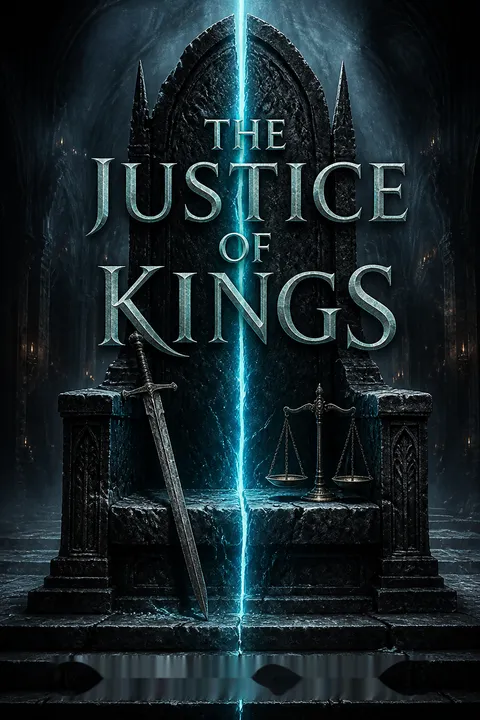
Richard Swan's The Justice of Kings is a meditation on the fragility of law, the seduction of power, and the cost of justice in a world on the brink of collapse. Through the eyes of Helena Sedanka, the novel explores how ideals—of order, fairness, and civilization—are constantly undermined by ambition, faith, and violence. The law, embodied in Sir Konrad Vonvalt, is both shield and sword: it protects the weak, but is always at risk of becoming a tool for the strong. The supernatural elements—the Emperor's Voice, necromancy—are not just fantasy flourishes, but metaphors for the law's reach and its dangers. The narrative's structure, with its blend of investigation, trial, and siege, mirrors the Empire's own oscillation between order and chaos. The novel's lesson is clear: justice is never absolute, always contingent, and its pursuit exacts a heavy toll on those who serve it. In a world where the lines between law and vengeance, faith and fanaticism, are blurred, the true cost of justice is measured not just in verdicts, but in the scars—physical, emotional, and moral—left on its practitioners. The story is both a warning and a lament: that the institutions we trust to hold back the darkness are only as strong as the people who serve them, and that even the most principled can be undone by grief, doubt, and the relentless tide of history.
Review Summary
The Justice of Kings receives mostly positive reviews (4/5 overall), praised for its compelling characters, particularly the relationship between Justice Vonvalt and narrator Helena Sedanka. Readers appreciated the legal thriller aspects, first-person retrospective narration, and themes exploring law, power, and justice. The medieval German-inspired setting and limited magic system drew mixed reactions. Common criticisms included slow pacing initially, instalove subplot, lack of female characters, and some instances of ableist language. Many found the murder mystery engaging, though some wanted deeper worldbuilding. Several reviewers ranked it among their favorite 2022 fantasy debuts despite minor flaws.
People Also Read










Characters
Sir Konrad Vonvalt
Vonvalt is the Emperor's Justice, a man of principle, intellect, and supernatural power. His role is to enforce the law across the Empire's wild frontiers, wielding both the Emperor's Voice (compelling truth) and necromancy (speaking with the dead). Vonvalt is both mentor and father figure to Helena, and his relationship with Bressinger is forged in the crucible of war. Psychologically, Vonvalt is driven by a belief in the law as a civilizing force, but he is increasingly burdened by doubt, grief, and the moral compromises demanded by a crumbling order. His arc is one of tragic erosion: as the Empire's institutions falter, Vonvalt's own ethics are tested, and he is forced to choose between justice and survival, law and vengeance.
Helena Sedanka
Helena, the novel's narrator, is Vonvalt's clerk and apprentice, plucked from poverty and given a place in the machinery of justice. Intelligent, observant, and emotionally complex, she is both participant and outsider—her loyalty to Vonvalt is deep, but her longing for a normal life is ever-present. Helena's psychological journey is one of disillusionment: she witnesses the cost of justice, the fragility of law, and the personal toll of violence. Her relationships—with Vonvalt, Bressinger, and Matas—are marked by longing, loss, and the search for meaning in a world where ideals are constantly betrayed. By the end, she is both hardened and haunted, her voice a testament to the Empire's decline.
Dubine Bressinger
Bressinger is Vonvalt's taskman, a Grozodan veteran of the Reichskrieg, and a man of action and deep loyalty. His rough exterior hides profound grief—he has lost his family to war, and his camaraderie with Vonvalt and Helena is both shield and wound. Bressinger's psychological landscape is shaped by trauma, survivor's guilt, and a fierce protectiveness. His arc is one of physical and emotional maiming: he is literally disarmed in the siege, and his sense of purpose is battered by the law's failure to protect the innocent. Bressinger embodies the cost of justice in a violent world, and his loyalty is both his strength and his tragedy.
Sir Radomir Dragić
Sir Radomir is the town's sheriff, a veteran lawman with a soldier's pragmatism and a drinker's melancholy. He is initially wary of Vonvalt's authority, but comes to respect the Justice's commitment to the law. Radomir's psychological makeup is defined by a hard-won realism—he knows the limits of law, the dangers of power, and the cost of violence. His arc is one of reluctant partnership: as the town falls, he joins Vonvalt's retinue, seeking justice and perhaps revenge. Radomir is the embodiment of the law's everyday struggle—never pure, always necessary, and often thankless.
Lady Karol Frost
Lady Frost is the heart of Rill's Draedist resistance, a woman who clings to the old ways in the face of imperial oppression. Her psychological strength is rooted in tradition, but her defiance is ultimately crushed by the Empire's might. Lady Frost's fate—burned as a heretic—becomes a symbol of the law's capacity for both mercy and cruelty. Her presence haunts the narrative, a reminder that justice, when wielded without understanding, can destroy as much as it preserves.
Patria Bartholomew Claver
Claver is a young, zealous Neman priest whose religious fervor masks deep ambition and cunning. Initially a nuisance, he becomes the novel's principal antagonist, allying with powerful lords and mastering forbidden magicks. Claver's psychological profile is that of the true believer—rigid, judgmental, and ultimately dangerous. His arc is one of ascension and corruption: he turns the tools of justice into weapons of war, igniting civil conflict and shattering the Empire's fragile order. Claver is the embodiment of faith unmoored from compassion, and his rise signals the law's eclipse by fanaticism.
Zoran Vogt
Vogt is Lord Bauer's business rival and eventual co-conspirator, a man whose pursuit of profit leads him into fraud, blackmail, and murder. Psychologically, Vogt is opportunistic, amoral, and ultimately cowardly—his strength lies in manipulation, not courage. His arc is one of exposure and downfall: as the conspiracy unravels, Vogt's crimes are laid bare, and his violence against Helena and Matas marks him as irredeemable. Vogt is the face of the Empire's rot—where commerce, power, and lawlessness are indistinguishable.
Lord Leberecht Bauer
Bauer is a merchant lord whose personal tragedies—lost children, a vanished daughter, a murdered wife—mirror the Empire's decline. His psychological state is one of grief, guilt, and desperation. Bauer is both victim and perpetrator: blackmailed into conspiracy, he becomes complicit in crimes he cannot control. His arc is one of moral collapse: unable to save his family or himself, he is ultimately destroyed by the very system he served. Bauer is a study in the limits of agency in a world where power is always leveraged against the weak.
Obenpatria Ralf Fischer
Fischer is the spiritual head of the kloster, but his piety is a mask for greed and criminality. Psychologically, Fischer is manipulative, self-serving, and skilled at navigating the gray areas between faith and law. His arc is one of exposure and retribution: as the conspiracy is revealed, Fischer's alliances with Claver and the Templars show how easily institutions of faith can be subverted. Fischer is the embodiment of the Empire's institutional decay—where the sacred is always for sale.
Sanja Bauer
Sanja, Lord Bauer's daughter, is the silent victim at the heart of the conspiracy. Her psychological journey is one of endurance and trauma: imprisoned, degraded, and ultimately broken by her captivity. Sanja's arc is a testament to the collateral damage of justice pursued without mercy. Her fate—rescued but unable to testify, her spirit shattered—underscores the novel's central tragedy: that the law, even when victorious, cannot restore what has been lost.
Plot Devices
The Emperor's Voice
The Emperor's Voice is Vonvalt's signature power, a supernatural ability to force confessions and compel honesty. It is both a symbol of the law's authority and a tool of last resort, used to break through lies and resistance. The Voice is not infallible—those trained or strong-willed can resist, and its use is physically and morally taxing. As the story progresses, the Voice becomes a double-edged sword: it delivers justice, but also erodes the user's humanity, blurring the line between law and coercion. Its limitations and abuses foreshadow the collapse of the Empire's legal order.
Necromancy
Vonvalt's rarest and most dangerous power is necromancy—the ability to question the dead. This device is used to solve crimes, but at great personal and metaphysical risk. The séances are harrowing, often attracting malevolent entities and leaving both Vonvalt and Helena psychologically scarred. Necromancy serves as a metaphor for the law's reach into the past, and for the dangers of seeking truth at any cost. It also introduces the theme of entanglement—how the pursuit of justice can bind the living to the dead, and the present to the future.
Political Intrigue and Betrayal
The narrative structure is driven by the interplay of legal process and political maneuvering. Letters, alliances, and betrayals shape the investigation and trial, as local crimes are revealed to be symptoms of imperial decay. The approach of Westenholtz's army, Claver's rise, and the manipulation of legal procedure all serve as foreshadowing for the Empire's impending civil war. The law is not just a set of rules, but a contested space where faith, ambition, and violence collide.
First-Person Retrospective Narration
Helena's narration, written from old age, frames the story as both chronicle and elegy. Her voice is marked by hindsight, regret, and a deep awareness of loss. This device allows for foreshadowing, thematic reflection, and a sense of inevitability—the reader is always aware that the events recounted are the roots of the Empire's decline. The narrative's structure—alternating between action, investigation, and introspection—mirrors the law's own oscillation between order and chaos.
The Trial
The trial of Bauer, Vogt, and Fischer is the narrative's centerpiece, a stage where the law's ideals and failures are laid bare. The courtroom becomes a microcosm of the Empire: arguments, confessions, and appeals to the jury's prejudices reveal the fragility of justice. The trial's interruption by violence is both literal and symbolic—the law's process is no match for the forces of fanaticism and ambition. The trial's structure, with its opening statements, evidence, and cross-examinations, provides a framework for the novel's exploration of truth, power, and the limits of reason.
Empire of the Wolf Series


Download PDF
Download EPUB
.epub digital book format is ideal for reading ebooks on phones, tablets, and e-readers.








































