


Plot Summary
Barnoch Dragged to Light
Severian1 arrives in Saltus as the hired executioner for a three-day fair of death. The alcalde, a shrewd politician with clever eyes, orchestrates the public breaking of Barnoch's house, walled shut with the suspected spy trapped inside.
Men with a tree-trunk ram batter the stones aside while the alcalde warns the crowd against ever aiding Vodalus.4 When the aperture widens, Barnoch emerges not as a filthy creature but as a hairless, luminous ghost, bald from plucking his own hairs, screaming Vodalus's4 name at the sun.
Severian,1 who once saved Vodalus4 in the necropolis and still carries the coin he received as reward, feels a sickening kinship with this man he will be forced to torture. In the surging crowd, he glimpses Agia's9 upturned face.
This opening establishes the book's central tension: Severian's divided loyalties. He is both the arm of the law and a secret admirer of Vodalus's rebellion. Barnoch's transformation into a hairless, glowing specter prefigures the later man-apes and suggests what isolation does to humanity. The alcalde's theatrical cruelty exposes how justice becomes entertainment, a theme that haunts every execution Severian performs. Agia's sudden appearance reopens the wound of her brother's death and her betrayal, setting in motion the false letter that will drive the next crisis.
Bouquet of Poisoned Roses
Morwenna mounts the steps without a proper chair, forcing Severian1 to seat her on the block itself. He brands both her cheeks white-hot, then breaks her legs with the flat of Terminus Est before severing her neck in a clean horizontal stroke.
Throughout the ordeal she maintains she never harmed her husband Stachys or their child, who died of fever. Eusebia, the older woman who coveted Stachys and accused Morwenna, stands below the scaffold clutching a bouquet of threnodic roses.
As Severian1 parades the severed head, Eusebia shrieks with joy and plunges her face into the blossoms, inhaling deeply. She collapses dead. Later examination reveals the roses carried an unidentified poison Morwenna must have cast into them during her final circuit of the platform.
This execution scene crystallizes the book's meditation on guilt, performance, and hidden agency. Morwenna, condemned for murders she did not commit, enacts a real killing from the scaffold, using the very spectacle designed to humiliate her. Severian's professional pride in his clean stroke masks his complicity in a system where truth is irrelevant to punishment. The poisoned bouquet literalizes the metaphor: justice itself is a beautiful, deadly arrangement whose true nature only becomes visible after the ceremony ends.
The Man-Apes Kneel
A letter in Thecla's5 handwriting promises she survived her execution and waits in the Autarch's treasure mine. Severian1 steals a destrier and rides through the forest, following a brook to its source in a hillside opening.
He crawls into the flooded tunnel in total darkness until the passage opens into a vast subterranean chamber. There, luminous man-apes with fanged jaws and saucer eyes attack him. He fights desperately with Terminus Est, severing one creature's hand, but numbers overwhelm him.
As he drowns beneath their weight, he snatches the Claw from his boot. Azure light floods the cavern. The man-apes retreat and prostrate themselves, their faces suddenly recognizably human. From far below, colossal footsteps begin to shake the stone floor, waking something vaster still.
The mine sequence dramatizes the book's preoccupation with devolution and buried truth. The man-apes are not monsters but humans transformed by eons underground, their fanged faces a mirror of what humanity might become when the sun dies. The Claw's power is revealed not as violence but as revelation: it shows the man-apes' hidden humanity and compels worship rather than fear. The footsteps from below introduce the cosmic scale of the world's ancient powers, hinting that Severian has awakened something he cannot control.
Sparing Agia's Throat
Bursting from the tunnel mouth into moonlight, Severian1 climbs down the rock face as quarrels explode against stone around him. Agia9 stands between two hired assassins with arbalests. He kills one man, and a one-handed man-ape who followed him from the cavern crushes the other's skull.
When Severian1 catches Agia9 by the hair and plants his boot on her neck, the man-ape prostrates itself again, begging for another glimpse of the Claw. Jonas3 arrives.
Agia9 explains she forged the Thecla5 letter, using details Severian1 once told her in the Botanic Gardens. She asks to face away from the blade. Severian1 raises Terminus Est, finds the female side of the guard with his fingers, but cannot strike. He walks away, leaving her alive in the moonlit vale.
This scene inverts the expected revenge narrative. Agia, who engineered her brother's death by involving Severian, now fully expects to die and even faces away to make it easier. Severian's inability to kill her is not mercy but paralysis: the same memory-perfection that makes him a skilled torturer also preserves every trace of his desire for her. The man-ape's loyalty, earned through the Claw's light rather than fear, contrasts with human relationships built on betrayal and violence.
The Liege of Leaves
Back in Saltus, Severian1 and Jonas3 are seized at the inn by Vodalus's4 cultellarii. Bound and draped in cloaks to hide their restraints, they are forced onto a baluchither and ridden through hills of mining refuse piled with shattered crystal sarcophagi and staring corpses.
Deep in the forest, they reach Vodalus's4 throne beneath a canopy of flowering vines. Vodalus4 recognizes Severian1 as the youth who saved his life in the necropolis and spares him, demanding service in return.
Severian1 swears loyalty, moved more by the memory of that misty night than by any political conviction. Vodalus4 explains his cause: to restore mankind's power to sail between stars, opposing the Autarch10 who preserves stagnation. He assigns Severian1 to rejoin Dr. Talos's6 troupe and infiltrate the House Absolute.
Vodalus's forest court literalizes the romantic rebellion Severian has idealized since childhood, yet already tensions appear. Vodalus fears the Claw, calling it 'beyond value, which means it is worthless.' His grand rhetoric about star-faring humanity masks a dependency on alien allies beneath the sea. The scene forces Severian to choose between his guild oath and the personal loyalty created by that long-ago act of saving a life, a conflict that will define his trajectory for the rest of the narrative.
Feast of the Dead
Thea warns Severian1 and Jonas3 of the coming ritual, but they cannot refuse without destroying Vodalus's4 trust. That night, a liveried servant mixes alzabo extract with herbs in a crystal goblet. Severian1 drinks the bitter, fetid liquid and watches his perception dissolve as the drug takes hold.
A roasted figure crafted from Thecla's5 corpse is borne in on a silver litter, reeking of spiced meat. Vodalus4 leads an oath of absolute obedience. Then the feasters consume her substance.
Severian1 feels Thecla5 enter him: he experiences her childhood by the River Acis, the intrigues of the Autarch's10 court, the terror of her imprisonment, and the depth of her unspoken love for him. They become one consciousness, and he dreams they walk together naked and happy in paradise.
The alzabo feast is the book's most transgressive and transformative event. Cannibalism becomes an act of preservation, not desecration: Thecla's mind survives through Severian's perfect memory. The ritual literalizes what love always promises but cannot deliver: the complete merging of two selves. Yet it also enacts a colonizing of consciousness. From this point forward, Severian is never fully alone in his own mind, and his identity becomes a palimpsest written over by the woman he could not save.
The Claw Revives a Soldier
Riding north with Jonas3 toward the House Absolute, Severian1 is attacked by notules: ragged scraps of absolute darkness that feed on body heat. He slices one with Terminus Est, feeling unnatural warmth, but more appear.
They flee through cedar groves until they encounter a lone uhlan whose lance crackles with blue fire. Severian1 deliberately rides toward him, hoping the soldier's weapon will destroy the creatures pursuing them. The notules swarm the uhlan instead, entering his nostrils and mouth until he suffocates.
After Jonas3 extracts the sated creatures and traps them in a brass vasculum, Severian1 places the Claw on the dead man's forehead. The uhlan's eyes open. He sits up, alive, asking where he is. Severian1 rides away before the revived soldier can recover his lance.
This is the first unambiguous resurrection performed by the Claw, shifting the gem from a protective talisman to something with genuinely divine power. Severian's manipulation of the uhlan to save himself is morally ambiguous, a sacrifice of one life to preserve two. The notules themselves represent a chilling weapon: creatures that kill by consuming life-heat, weaponized by unknown enemies. Jonas's clinical handling of them hints at his extraterrestrial origins and familiarity with technologies beyond Urth.
Prison Without Cells
White walking statues and invisible-armored praetorians capture Severian1 and Jonas3 in the gardens of the House Absolute. They are led through grottoes and past the Well of Green Chimes into the antechamber, a vast low-ceilinged room where prisoners have lived, loved, and raised children for seven generations.
Lomer, a seneschal entrapped decades ago by a jealous Chatelaine, and Nicarete, an armiger woman who stays by choice to protest the prison's existence, explain the daily rhythms: pastries and sweet coffee twice a day, no privacy, no hope of release.
At night, young exultants enter through a secret door and torture prisoners with energized whips for sport. Severian1 learns that children born here have never seen the sky and speak of the outside world only through garbled family traditions passed down like scripture.
The antechamber functions as a dark parody of civilization itself: a closed system where culture persists but degrades across generations, where children inherit imprisonment as their natural state. Nicarete's voluntary incarceration as protest against the system exposes the complicity of even well-meaning actors. The nightly torture by bored aristocrats literalizes the casual cruelty that sustains hierarchical power. This is Severian's mirror: he too is an instrument of a justice system that manufactures suffering for spectacle.
Jonas Steps Through Mirrors
During the nightly torture, Jonas3 is struck by the energy whip. When Severian1 examines his wound, he discovers that beneath Jonas's3 skin lies gleaming metal, not flesh. Jonas's3 mind fractures under the strain of his long disguise.
He reveals he was a robot from the crashed spaceship Fortunate Cloud who replaced his damaged face and hand with parts harvested from a dead man. For years he wandered Urth seeking the Hierodules who could repair him. In the chamber of mirrors beneath the antechamber, Jonas3 embraces his true nature.
He steps into the circle of panels, which are not mirrors but portals reflecting the metaphysical substance of reality. Light kindles above his head, wires and metallic dust dance in the air, and he vanishes, promising to return for Jolenta8 when he is whole again.
Jonas's revelation recontextualizes every interaction: his strange knowledge, his lack of appetite, his metal hand that was never a prosthesis but his true form. He is a reverse Pinocchio, a machine who learned to pass as human only to find the masquerade unbearable. His departure through the mirrors parallels the book's meditation on identity as performance. The robot who fell in love with Jolenta's artificial beauty exposes the recursive nature of constructed identity in this dying world.
The Autarch's Double Bind
Following Thecla's5 memories, Severian1 navigates the Second House, a secret palace hidden within the House Absolute. He steps through a painted room and encounters a figure in yellow robes: the Autarch10 himself, an androgyne whose delicate face Severian1 once saw in the House Azure brothel.
The Autarch10 reads Vodalus's4 message from the steel Severian1 carries, then gives contradictory orders: go to Thrax and serve as lictor, return the Claw to the Pelerines, and when the time comes, kill the Autarch.10
He opens a book of mirrors, and Severian1 glimpses a vast winged being that sees him in return, causing blood to burst from his pores. A cowled servitor leads him out to the Vatic Fountain at dawn, where he throws a coin and reads cryptic prophecies in the dancing water: a sword, a rose, a river, a star.
The Autarch scene collapses the novel's political binaries. The ruler Severian is sworn to serve and the rebel he has sworn to obey are revealed as linked: the Autarch already knows Vodalus's plans and may even orchestrate them. The command to commit regicide turns Severian into both loyal servant and destined traitor. The mirror-book sequence suggests cosmic entities observe Urth's struggles with indifference or amusement. The Vatic Fountain's riddles establish that prophecy in this world is real but indecipherable until fulfillment.
Baldanders Attacks the Gods
Dr. Talos's6 troupe performs 'Eschatology and Genesis' before the Autarch's10 court in a garden amphitheater. The allegorical play reenacts the creation of new humanity amid the dying of the old sun. Baldanders7 plays the giant Nod, who in the script is chained, escapes, and goes mad.
But when the moment comes, Baldanders's7 fury turns real. He seizes a flambeau and charges into the audience of masked exultants and hierodules. A pistol bolt sets his costume ablaze. Someone deploys a dream-weapon that wraps him in visions of past and future.
The hierodules throw aside their cloaks and human masks, revealing circular mouths ringed with needle teeth, compound eyes, and tong-like jaws. Severian1 grabs Terminus Est, searches desperately for Dorcas,2 then flees into the endless gardens as the melee continues behind him.
The play-within-the-novel is the book's most explicit statement of its eschatological themes, yet Baldanders's real violence punctures the aesthetic frame. Art becomes indistinguishable from life at the moment the giant stops performing madness and inhabits it. The cacogens' unmasking literalizes the novel's obsession with hidden identities. The audience of decadent exultants, who came to watch a play about their own extinction, find themselves facing not allegorical monsters but actual aliens whose very existence destabilizes their understanding of humanity's place in the cosmos.
The Undine's Offer
After fleeing the House Absolute with Dorcas2 and a rapidly weakening Jolenta,8 Severian1 camps by a river. A woman's voice calls him to a sandbar. Looking into the green water, he sees a face three paces across with scarlet eyes and crimson lips, framed by jade tentacles of hair.
The undine, a servant of the sea-giant Abaia, reveals she has watched him since infancy, once saving him from drowning in the Gyoll. She offers him the power to breathe water and promises him a crown beneath the waves among coral cities. He hesitates, drawn to her impossible beauty.
Dorcas's2 scream interrupts: Jolenta8 has been bitten by blood bats and lies bleeding from her wrists. When Severian1 turns to help, the undine tries to follow onto land but her immense body collapses under its own weight, blood streaming from her nostrils as the river recedes.
The undine embodies the seduction of the inhuman, a recurring motif in the Book of the New Sun. Her offer of underwater kingship parallels Vodalus's promise of restored stellar empire: both ask Severian to abandon his humanity for power. Her claim to have saved him as a child suggests his life has been shaped by forces he cannot perceive. Her physical collapse on land literalizes the incompatibility between cosmic powers and mortal existence; the giants beneath the sea cannot walk on Urth, but their influence reaches everywhere through servants and dreams.
Summoning the Head of Day
In the ruins of the stone town, Severian1 finds the Cumaean,12 a reptilian entity wearing the guise of an old woman, and her acolyte Merryn. Hildegrin13 the badger is with them, planning to summon Apu-Punchau, a being from the city's deep past whose name means Head of Day.
The Cumaean12 swallows a glowing rod and links the minds of everyone present. In trance, they witness the ruined city restore itself: skulls become living people, collapsed walls rise again. A procession of dancers surrounds a man whose face Severian1 recognizes from the funeral bronze in his childhood necropolis.
Apu-Punchau sees them watching. Hildegrin13 rushes forward to seize him, and Severian,1 disoriented, joins the struggle. The vision dissolves in cold rain. Severian1 wakes on the ground to find Jolenta8 dead, her artificial beauty stripped away to reveal the plain waitress she always was.
The Cumaean,12 Merryn, and Hildegrin13 have vanished. Jolenta's8 death, exposing the constructed nature of her beauty, completes the book's critique of appearance: the glamour Dr. Talos6 built from glandular extracts and hypnotic suggestion was always a prison, and death is its only release.
The Apu-Punchau ritual is the book's most concentrated meditation on time as permeable membrane. The past is not gone but accessible through altered consciousness and ancient technology. The Cumaean's true form, a serpent with faces on every scale, suggests a being for whom all moments exist simultaneously. Hildegrin's failed capture attempt and the ritual's collapse underscore the limits of human agency against such forces. Jolenta's death, exposing the constructed nature of her beauty, completes the book's critique of appearance: the glamour Dr. Talos built from glandular extracts and hypnotic suggestion was always a prison, and death is its only release.
Analysis
The Claw of the Conciliator deepens the theological and philosophical questions raised in the first volume of the Book of the New Sun while advancing Severian's1 physical and psychological journey through a series of increasingly strange encounters. The novel operates on a principle of revelation through defamiliarization: every apparent monster (the man-apes, Jonas,3 the undine, even the cacogens) is revealed to possess an inner humanity or consciousness that complicates easy moral judgment. This pattern culminates in the alzabo feast, where the boundary between self and other dissolves entirely through an act that is simultaneously the most intimate communion and the most profound violation.
The book's structure mirrors Severian's1 divided consciousness after consuming Thecla.5 His perfect memory, once a reliable record of his own experience, now houses another person's past. When Thecla's5 memories surface unbidden, the narrative perspective shifts without warning, forcing readers to experience the same disorientation Severian1 feels. This formal innovation transforms the first-person narrative from a memoir into something closer to a palimpsest, a document written over earlier writing that remains visible beneath the new text.
Power in this world is always mediated through performance. The alcalde's political theater, Morwenna's scaffold poisoning, Vodalus's4 forest court, Dr. Talos's6 allegorical play: each is a stage on which authority is enacted and contested. Even the Autarch10 governs through a hidden palace within the visible one, using technologies of illusion that blur reality and representation. Severian's1 fuligin cloak, the color darker than black, marks him as Death's actor, yet he repeatedly fails to perform his assigned role, showing mercy where he should kill and hesitating where he should strike.
The novel's treatment of time is radically nonlinear, though its surface narrative proceeds chronologically. The green man arrives from a future where humanity has merged with algae. Apu-Punchau's city is restored through a séance that makes the past momentarily present. The Cumaean12 exists as a serpent whose every scale bears a face caught in rapture, suggesting a being for whom all moments are simultaneous. Against this cosmic scale, Jolenta's8 death carries particular weight: her beauty was always borrowed time, a glamour that could not survive the body's ordinary failures. When her artifice strips away to reveal the waitress beneath, the novel insists that even constructed identities have real consequences and real griefs.
Review Summary
The Claw of the Conciliator by Gene Wolfe elicits polarized reactions. Many praise its stunning prose, intricate world-building, and complex narrative layers requiring multiple readings to fully appreciate. Readers admire the dreamlike quality, mythological allusions, and science-fantasy blend set in Earth's distant future. However, critics find it obtuse, slow-paced, and excessively cryptic, with an unlikable protagonist and problematic gender dynamics. The unreliable narrator and deliberately obscure storytelling frustrate some while fascinating others. Most agree it's challenging, literary science fiction demanding patience and intellectual engagement rather than straightforward plot progression.
People Also Read
Characters
Severian
Torturer, exile, and narratorA journeyman of the Guild of Torturers, exiled from the Citadel of Nessus for showing mercy to a condemned woman. Severian possesses perfect eidetic memory, a curse that preserves every experience with undimmed vividness. Raised by the guild from infancy, he never knew his parents and was shaped by the brutal discipline of Master Palaemon and Master Gurloes. After Thecla's5 death, he carries both her brown book and the Claw of the Conciliator, a gem with inexplicable power. He is torn between his guild identity as Death's servant and his growing capacity for love, mercy, and self-sacrifice. His consumption of Thecla's5 flesh through the alzabo ritual fuses her memories and personality with his own, making him a divided consciousness. His relationship to power is fundamentally ambivalent: he serves the Autarch10, swears loyalty to Vodalus4, and secretly wishes to restore the Claw to the Pelerines, never fully committing to any master.
Dorcas
Severian's companion and loverA young woman Severian1 rescued from the Lake of Birds, Dorcas has no memory of her past when they first meet. She possesses a childlike quality, with pale golden hair and a small, delicate frame, yet she carries deep psychological wounds that surface in recurring dreams of toy shops, dark water, and being mistaken for an unclean spirit. Her terror of water hints at suppressed trauma, possibly drowning. She loves Severian1 with a fierce protectiveness, warning him against the manipulative metaphors Dr. Talos6 uses to define people. As the story progresses, fragments of her memory return each morning after her dreams. Her name, meaning 'gazelle,' suits her skittish grace and the sense that she is fleeing something she cannot name. She delivers a crucial message to Hildegrin13 on behalf of the Autarch10, suggesting connections to the larger political intrigue she keeps hidden even from herself.
Jonas
Robot disguised as human travelerA wanderer Severian1 meets at the Piteous Gate, Jonas appears as a brown-skinned man with a metal hand. His wry humor and practical wisdom make him an indispensable companion. He falls desperately in love with Jolenta8 at first sight. The truth emerges slowly: Jonas was a robot from the crashed starship Fortunate Cloud who replaced his damaged face and hand with organs harvested from a dead human. He has spent years searching Urth for the Hierodules who might repair him. His metal hand, which he once claimed was a prosthesis, is actually his true form. The tension between his mechanical nature and his acquired humanity drives him to the brink of madness in the antechamber, until he finally abandons his human disguise and steps through the mirror-portal to return to the stars, promising to come back for Jolenta8 when he is restored.
Vodalus
Rebel leader and forest lordThe charismatic leader of a rebellion against the Autarch10, Vodalus commands bandits and idealists from his forest throne. Severian1 saved his life years ago in the necropolis, creating a bond of gratitude that Vodalus exploits. He claims to fight for the restoration of mankind's ancient power to travel between stars, but his movement relies on secret alliances with Abaia and the monstrous beings beneath the sea. He uses the alzabo drug to bind his followers through shared cannibalistic ritual. Despite his rhetoric of liberation, Vodalus shows fear when Severian1 mentions the Claw, calling it worthless because its sacred status would alienate the populace. His consort Thea is Thecla's5 half-sister, linking the rebellion to the highest circles of exultant society. His relationship with Severian1 evolves from hero-worship to uneasy mutual dependency.
Thecla
Dead exultant living in Severian's mindA Chatelaine of the House Absolute and Thea's half-sister, Thecla was imprisoned in the Citadel for political reasons and became Severian's1 lover during her confinement. She taught him to read and shared stories of court life that now guide him through the palace. After her supposed execution, Severian1 learned she was actually killed so her body could be used in Vodalus's4 alzabo ritual. When Severian1 consumed her roasted flesh under the drug's influence, her memories and personality merged with his consciousness. Now her voice speaks within him, her memories surface unbidden, and at moments her identity overwhelms his own. She represents both his greatest love and his deepest guilt: the mercy-knife he gave her was part of the ruse that led to her desecration. Her brown book, filled with wonders and legends, remains his most treasured possession.
Dr. Talos
Playwright and manipulatorA red-haired, fox-faced physician and impresario who travels with his giant companion Baldanders7. Dr. Talos writes and directs allegorical plays that critique the Autarchy while simultaneously serving as cover for the troupe's true activities. His relationship with Baldanders7 is complex: he appears to dominate the giant, treating him as a servant or patient, yet Baldanders7 quietly claims to be the master. He gave Jolenta8 her artificial beauty through glandular extracts and hypnotic suggestion, then discarded her when she became inconvenient. He uses metaphors as weapons, labeling others in ways that constrain their self-understanding. His genius for manipulation extends to everyone around him, yet his play reveals genuine philosophical depth about creation, sacrifice, and cosmic renewal.
Baldanders
Giant who never stops growingAn enormous, slow-speaking man of immense strength who serves as Dr. Talos's6 companion and claims to be his master. His name means 'Soon-another,' reflecting his nature: he is perpetually growing, a condition that links him to Abaia and the other sea-giants who outgrew the land. He maintains a dim, gentle humility in daily life, but during the play, his performance of madness reveals genuine fury beneath his placid surface. He attacks the audience of exultants and hierodules with terrifying violence, refusing to stop even when struck by energy weapons. He refuses Severian's1 offer to heal him with the Claw, perhaps because he does not wish to be healed of what he is becoming. His gray-threaded hair suggests his growth is not merely physical but temporal, as if he is aging toward something monstrous.
Jolenta
Artificially beautiful performerA woman of overwhelming erotic beauty created by Dr. Talos6 through glandular injections and hypnotic programming. Her red-gold hair, emerald eyes, and voluptuous figure make every man and woman who sees her desire her. But her beauty is a constructed prison: metal wires and bands are woven beneath her flesh, her hair is dyed and threaded with silk, and her hypnotic conditioning compels her to perform desirability at all times. She loves Dr. Talos6, perhaps the only man who never wanted her, and is devastated when he abandons her after the play at the House Absolute. A blood-bat bite causes her to hemorrhage, and as she weakens, her artifice fails. When she dies in the stone town ruins, her face reverts to that of a plain waitress, revealing the ordinary woman the glamour had concealed.
Agia
Severian's vengeful former loverThe twin sister of Agilus, whom Severian1 executed in the previous book. Agia has long brown eyes, high cheekbones, and a shrewd, mocking intelligence that once enchanted Severian1. Her laughter, often tinged with spite, was always genuine where Jolenta's8 was performance. She pursued Severian1 across the countryside with hired assassins, forging a letter in Thecla's5 handwriting to lure him into the man-apes' mine. When her ambush fails, she expects death and asks to face away from the blade. Severian1 cannot kill her, paralyzed by the memory of his desire for her. Her survival guarantees she will hunt him again. She represents a love rooted in mutual recognition of cunning and survival instinct, a sharper, more dangerous connection than his protective tenderness toward Dorcas2.
The Autarch
Ruler of the CommonwealthThe supreme ruler of Urth, revealed as an androgyne with a plump, delicate face and white hair. Severian1 first encountered him in the House Azure brothel without recognizing his identity. He wears a yellow robe and a phallus-shaped vial on a chain around his neck. Through Thecla's5 absorbed memories, Severian1 knows him as the figure who has served as Autarch since the time of Ymar, advised by the ancient Father Inire. He receives Vodalus's4 secret message with calm recognition, as if he expected it, and gives Severian1 contradictory commands that seem designed to produce his own eventual assassination. His mastery of the Second House and the book of mirrors suggests knowledge of technologies that blur the line between science and sorcery. He is less a tyrant than a weary custodian of a dying world, managing its decline.
Hethor
Deranged, sycophantic servantA ragged, stammering man who obsessively follows Severian1, claiming to be his devoted slave. His speech is filled with grandiose imagery of storms and shipwrecks, and his mind seems unhinged by some past trauma. He appears at Saltus during the execution, then surfaces again in the House Absolute's antechamber as a prisoner. His true nature and origins remain mysterious, though his babbling references to vast journeys and masters suggest connections to powers beyond Urth.
The Cumaean
Ancient serpent-seeressA being who appears as a withered old woman but is revealed in trance as a serpentine entity covered in faces. She is one of the Magi, ancient powers who serve Father Inire. In the stone town, she performs the ritual to summon Apu-Punchau, swallowing a glowing rod that links the minds of all present across time. She calls herself a 'little fish who must swim with unseen tides,' acknowledging that even beings of her power are subject to forces beyond their control.
Hildegrin
Vodalus's agent and grave-robberA large, burly man known as 'the Badger,' Hildegrin serves Vodalus4 as a spy and enforcer while pursuing his own agenda of recovering ancient knowledge. He rowed Dorcas2 and Severian1 across the Lake of Birds, has been tracking them ever since, and orchestrated the Apu-Punchau ritual with the Cumaean12. His pragmatic loyalty shifts between Vodalus4 and Father Inire depending on who offers the greater advantage.
Plot Devices
The Claw of the Conciliator
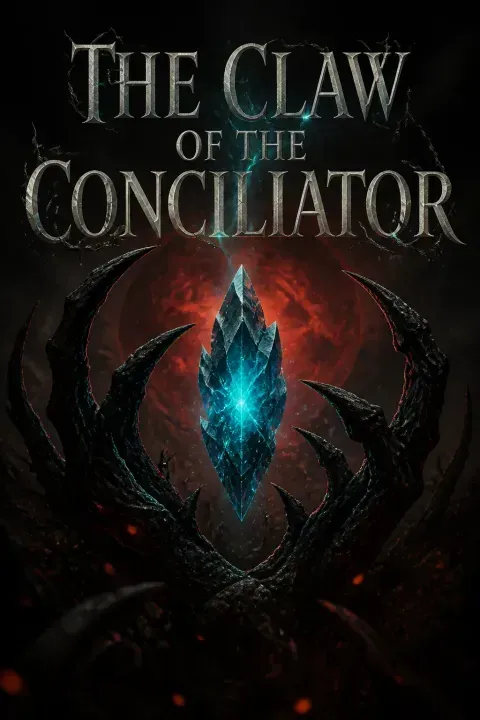
Healing and commanding talismanA sapphire-like gem said to be a claw from the Conciliator, a messianic figure who will return as the New Sun. It glows with azure light when active and has demonstrated the power to pacify hostile creatures, heal wounds, and even resurrect the recently dead. Severian1 carries it hidden in his boot, unsure of its true nature and afraid to reveal it. The Pelerines, a wandering order of priestesses, once housed it in their cathedral and seek its return. Vodalus4 fears its religious significance would alienate the common people from his cause. Its power seems inconsistent, sometimes blazing with blinding radiance and other times remaining dull and lifeless, suggesting its efficacy depends on circumstances Severian1 does not fully understand.
Terminus Est
Executioner's sword with female edgeA massive two-handed executioner's sword with a hollow channel in the blade containing mercury, which shifts during a stroke to add force. The guard features a female head on one side and a male on the other, designating the edges used for beheading women and men respectively. Master Palaemon gave it to Severian1 upon his elevation to journeyman. The blade is sharp enough to part a hair and has been crafted with such precision that Severian1 treats it with near-religious reverence. It serves both as his primary weapon and as a symbol of his guild identity. He searches desperately for it when separated from it, and the sword's presence or absence often signals his psychological state throughout his journey.
The Alzabo Drug
Memory-transfer through cannibalismA substance extracted from the gland of the alzabo, a carrion-eating beast that, after consuming human flesh, can temporarily speak with the dead person's voice and display their mannerisms. When refined and mixed with herbs, the drug allows living humans who consume a dead person's flesh to absorb that person's memories and personality. Vodalus4 uses it to bind his followers through shared ritual and to preserve the knowledge of the dead. Severian's1 consumption of Thecla's5 roasted body under the drug's influence permanently fused her consciousness with his. The hierodules can supposedly detect the drug's use through 'certain signs,' making it a secret that must be kept from the alien beings who visit the House Absolute.
The Book of Mirrors
Interdimensional portal and viewerA massive volume bound in mottled blue-green leather, kept by the Autarch10 in the Second House. Its pages are not mirrors but devices that reflect metaphysical reality rather than light. When opened, they create a portal or viewing window into other dimensions, through which beings of vast power can be perceived. The Autarch10 uses it to read the message encoded on Vodalus's4 steel. When Severian1 looks into it, he sees a winged entity whose mere perception of him causes blood to burst from his pores. Jonas3 earlier used a similar ring of mirror-panels to transport himself back to the stars. The book represents technology so advanced it has become indistinguishable from sorcery, a relic of the ancient star-faring civilization that Urth has lost.
The Notules
Heat-seeking shadow weaponsCreatures or constructs that appear as ragged scraps of absolute blackness, darker than fuligin cloth. They fly at great speed and seek out living warmth, entering through nostrils or mouths to suffocate their victims. When cut, each fragment becomes a separate entity, though they can recombine when sated. Jonas3 encountered them on a distant world where they were used in ritual murders and recognizes their behavior. They can be distracted by fire but prefer the heat of living cells. Their presence on Urth suggests someone with off-world knowledge is employing them as assassination tools. Jonas3 traps three of them in a brass vasculum and throws them into the Gyoll, declaring the world better without them.
Solar Cycle Series
About the Author
Other books by Gene Wolfe
Download PDF
Download EPUB
.epub digital book format is ideal for reading ebooks on phones, tablets, and e-readers.








































