
Plot Summary
Severian's Starbound Farewell
On the starship Tzadkiel, Severian, last Autarch of Urth, seals his memoirs in a leaden coffer and hurls it into the void, symbolically severing himself from his old life. He is both burdened and liberated by memory, aware that his journey is not just through space but through time and self. The ship, a forest of masts and sails, is a liminal place between worlds and destinies. Severian's longing for transcendence and his sense of isolation are palpable as he climbs the rigging, seeking the highest point, only to be flung into the abyss and returned by fate. This act of casting away the past is both a sacrifice and a hope, a gesture toward the unknown future and the possibility of renewal for Urth.
Ship of Infinite Sails
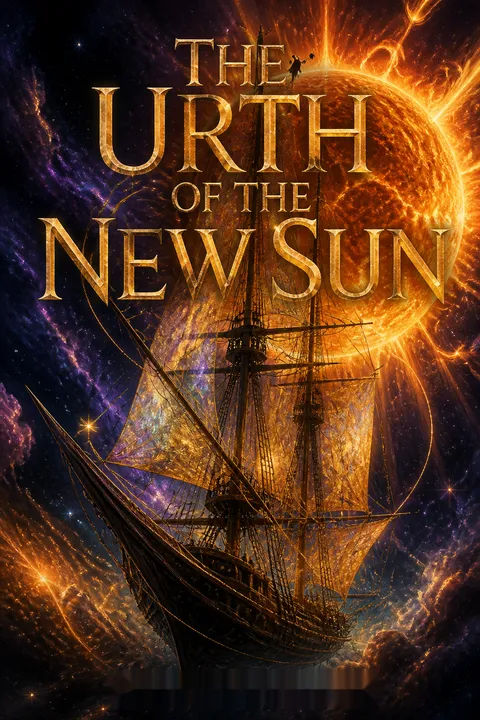
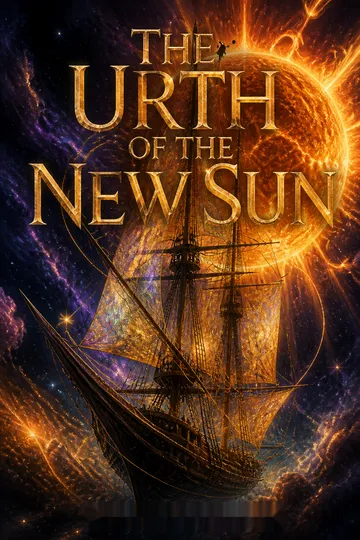
The ship is a marvel, with decks upon decks, masts like mountains, and sails that catch the light of distant suns. Severian, light as thistledown in the ship's weak gravity, explores its vastness and meets a diverse crew: Gunnie, Purn, Idas, and the enigmatic Sidero. The ship is a microcosm of the universe, filled with secrets, dangers, and the echoes of countless journeys. Severian's interactions with the crew reveal his longing for connection and his struggle with leadership and vulnerability. The ship's structure, both familiar and alien, mirrors Severian's own divided self—part torturer, part savior, always searching for meaning amid the stars.
Companions and Apports
Severian is drawn into the ship's labyrinthine holds, where he encounters apports—beings and objects drawn from other worlds by the ship's sails. He helps capture a shaggy, gentle creature, forging a bond that echoes his own sense of displacement. The crew's camaraderie is tinged with suspicion and hidden motives; Idas, the white-haired sailor, is not what she seems. Gunnie becomes a source of warmth and comfort, her practical wisdom grounding Severian amid cosmic uncertainty. The ship's menagerie of apports is a living testament to the randomness and wonder of the universe, and Severian's empathy for these lost beings reflects his own quest for belonging.
Shadows in the Hold
A series of violent events shakes the ship: the steward is murdered, Severian's stateroom is ransacked, and he is attacked by assassins. His attempts to use the Claw—a relic of miraculous healing—fail, leaving him weak and disoriented. The boundaries between life and death, self and other, blur as Severian confronts the reality of his own mortality and the persistence of violence. The ship's darkness becomes a metaphor for the unknown within and without, and Severian's journey through its depths is both a physical and spiritual trial. The presence of the Hierodules—Barbatus, Famulimus, and Ossipago—offers cryptic guidance, reminding Severian that his fate is entwined with the fate of Urth.
The Hierodules' Counsel
The Hierodules explain that Severian's journey is a test, a weighing of his soul and the worthiness of Urth to receive the New Sun. Tzadkiel, the ship's captain and a Hierogrammate, is both judge and guide. Severian learns that the salvation of his world depends not on power or lineage, but on his capacity for compassion, justice, and self-sacrifice. The Hierodules' time runs counter to his own, and their wisdom is both alien and deeply human. Severian's confession of identity—he is both himself and all his predecessors—underscores the theme of unity through multiplicity. The cosmic stakes are clear: the renewal or destruction of Urth hangs in the balance.
Assassins and Apparitions
Idas is unmasked as an agent of Abaia, sent to kill Severian and prevent the coming of the New Sun. Her suicide, and the subsequent violence among the crew, expose the ship as a crucible of conflicting loyalties and hidden dangers. Gunnie's own complicity is revealed, deepening Severian's sense of isolation and the complexity of trust. The ship's mutinous jibers—rebels and outcasts—threaten order, and Severian is forced to navigate shifting alliances. The boundaries between friend and foe, human and other, are porous; Severian's empathy and resolve are tested as he confronts the darkness within others and himself.
The Trial of Severian
The ship arrives at Yesod, a realm beyond Briah, where Severian and a company of Urth's representatives are brought before the Hierogrammates for judgment. The trial is both literal and symbolic: Severian must answer for the sins and hopes of his world. The process is surreal, blending memory, vision, and reality. Severian's ghosts—those he has loved, harmed, or failed—are summoned as witnesses and defenders. The trial's outcome is not determined by law or logic, but by the totality of Severian's life: his capacity for mercy, his acceptance of suffering, and his willingness to bear the burden of renewal. The verdict is both a blessing and a sentence: Severian will bring the New Sun, but at a terrible cost.
Jibers and Mutiny
As the ship nears the end of its journey, chaos erupts among the crew. The jibers, emboldened by the ship's passage through time and space, rebel against authority. Severian is drawn into the conflict, fighting alongside allies and former enemies. The violence is both physical and existential, a struggle for meaning and survival in a universe on the brink of change. Severian's own body is transformed—his wounds healed, his strength renewed—foreshadowing the metamorphosis of Urth itself. The ship's arrival at the edge of the universe is both an ending and a beginning, a passage from the old order to the new.
The End of Briah
The ship passes through the boundary of Briah, the material universe, into the higher reality of Yesod. Severian witnesses the birth of a new cosmos, a vision of suns and worlds emerging from the void. The experience is overwhelming, stripping away all certainty and selfhood. Severian's leap from the ship's rigging, his near-death and rebirth, symbolize the passage from mortality to transcendence. The ship's crew, the apports, and the cosmic judges are all revealed as facets of a greater pattern, in which Severian is both actor and acted upon. The old universe dies, and the possibility of renewal is born.
Yesod: The Higher World
Severian is brought to an island in Yesod, a place of beauty and strangeness where the laws of time and being are mutable. Here he meets Apheta, a woman of the Hierogrammates, and is offered both love and knowledge. The island is a place of testing and revelation, where Severian confronts the meaning of his journey and the nature of the divine. The trial is not over; Severian must still choose, must still accept the burden of the New Sun. The lessons of Yesod are both comforting and terrifying: all things are connected, all actions have consequences, and the highest good is found in selfless love.
The Isle and the Judge
Severian is brought before Tzadkiel, who reveals that the trial has already been decided: Severian is the New Sun, and his return to Urth will bring both destruction and rebirth. The cost is immense—continents will drown, most of humanity will perish, and the old order will be swept away. Yet this is the only path to renewal, the only hope for Urth and its future. Severian's acceptance of this fate is both heroic and tragic; he is both savior and executioner. The return journey is a descent from the heights of Yesod to the broken world of Briah, a passage from vision to reality.
The Return to Urth
Severian and his companions are returned to the ship, and from there to Urth. The world they find is transformed: the old sun is dying, the ice is advancing, and the seas are rising. Severian's power is both diminished and magnified; he is no longer the New Sun, but the vessel through which the New Sun will come. The journey home is a journey through loss and hope, as Severian witnesses the end of the world he knew and the birth of something new. The price of renewal is paid in suffering and sacrifice, but the promise of Ushas—the dawn of a new Urth—shines on the horizon.
The New Sun's Price
The coming of the New Sun is an apocalypse: cities drown, continents sink, and the survivors are scattered. Severian wanders the ruined world, haunted by guilt and longing. He becomes a god to the new peoples of Ushas, a figure of myth and memory. The cost of salvation is made clear: the old world is gone, and the new is both stranger and more beautiful than any could have imagined. Severian's journey is not just the story of a man, but the story of a world's death and rebirth, the eternal cycle of loss and renewal.
The Stone Town's God
Severian lives among the autochthons of Ushas, teaching, healing, and building. He is both revered and feared, a living link to the lost past and a harbinger of the future. The people's myths and rituals reflect the memory of Severian and his companions, transformed by time into gods and demons. Severian's own sense of self is fractured; he is both man and myth, both present and absent. The stone town becomes a microcosm of the new world, a place where the old and the new, the human and the divine, meet and mingle.
The Corridors of Time
Severian's power to move through time is both a gift and a curse. He is drawn into the Corridors of Time, seeking understanding and reunion with his lost self. Encounters with the Hierodules, with Apu-Punchau, and with his own past and future selves reveal the complexity of identity and the paradox of existence. Severian is both the New Sun and its witness, both the savior and the saved. The journey through time is a journey through self, a quest for meaning in a universe where all things are connected and all stories are one.
The House of Apu-Punchau
Severian returns to the ancient stone town, where he finds the tomb of Apu-Punchau—his own tomb, his own past. The mystery of his identity is revealed: he is both Severian and Apu-Punchau, both the man and the myth. The Hierodules explain the nature of eidolons, the anima, and the eternal recurrence of self. Severian's journey is both unique and universal, a pattern repeated across worlds and ages. The final miracle—the prolongation of night, the coming of the New Sun—is both a cosmic event and a personal transformation.
The Miracle and the Morning
Severian's final act is a miracle: he prolongs the night, brings the New Sun, and ushers in the age of Ushas. The world is remade, the dead are remembered, and the cycle of death and rebirth is complete. Severian's story ends where it began: on the threshold of a new world, with hope and sorrow mingled in his heart. The lesson of his journey is clear: all things pass, all things are renewed, and the highest good is found in love, memory, and the courage to begin again.
Analysis
Gene Wolfe's The Urth of the New Sun is a profound meditation on memory, identity, and the possibility of renewal in a universe governed by entropy and loss. Through Severian's journey—from the starship Tzadkiel, through cosmic trial and judgment, to the drowned world of Ushas—Wolfe explores the paradoxes of power, compassion, and selfhood. The novel's structure, blending linear narrative with cyclical recurrence and nonlinear time, reflects its central themes: the eternal return, the unity of opposites, and the transformative power of love and sacrifice. Severian's development—from torturer to redeemer, from isolated self to vessel of the New Sun—mirrors the journey of every soul seeking meaning in a world of suffering and change. The novel's lessons are both cosmic and intimate: that all things pass, all things are renewed; that the highest good is found in selfless love and the courage to begin again; and that the hope of the world rests not in power or knowledge, but in the willingness to bear the burden of others and to accept the cost of redemption. In a modern context, The Urth of the New Sun speaks to the anxieties and hopes of a world facing its own crises of meaning and survival, offering a vision of renewal that is both tragic and triumphant, rooted in the eternal cycle of death and rebirth.
Review Summary
The Urth of the New Sun receives mixed but largely positive reviews, with most praising Gene Wolfe's complex, layered narrative following Severian's journey through space and time to be judged for humanity's sins. Readers appreciate the challenging prose, Kabbalistic symbolism, and how the book serves as both sequel and prequel to the earlier tetralogy. Many note the confusing, hallucinogenic quality requires multiple readings to fully understand. The work is praised for its ambitious scope, myth-making aspects, and resolution of earlier mysteries, though some find it overly abstract and difficult to follow. Reviewers consistently recommend it as essential reading for fans of the series.
People Also Read
Characters
Severian
Severian is the last Autarch of Urth, a man marked by memory, compassion, and the burden of power. His journey is both physical and spiritual, a quest for redemption and renewal. Severian's relationships—with friends, lovers, enemies, and the dead—reveal his deep empathy and his struggle with guilt and responsibility. He is both torturer and healer, both destroyer and savior. Severian's psychological complexity is rooted in his capacity for self-reflection and his willingness to embrace suffering for the sake of others. His development is a movement from isolation to unity, from self to cosmos, as he becomes the vessel for the New Sun and the hope of a dying world.
Gunnie / Burgundofara
Gunnie, also known as Burgundofara, is a sailor of immense strength and practical wisdom. She is both lover and friend to Severian, offering comfort and grounding amid cosmic uncertainty. Gunnie's dual identity—her younger and older selves—reflects the novel's themes of time, memory, and transformation. Her loyalty is unwavering, even when tested by betrayal and violence. Gunnie's psychological depth is revealed in her longing for youth, her acceptance of suffering, and her capacity for forgiveness. She is a symbol of the enduring human spirit, able to adapt and survive in a universe of change.
Idas
Idas is a white-haired sailor who is revealed to be an agent of Abaia, sent to kill Severian and prevent the coming of the New Sun. Her outward innocence masks a deep cunning and a capacity for violence. Idas's psychological complexity lies in her divided loyalties and her ultimate despair; her suicide is both an act of defiance and a surrender to fate. Idas's relationship with Severian is marked by suspicion, manipulation, and a fleeting sense of kinship. Her death is a turning point, exposing the fragility of trust and the pervasive influence of cosmic powers.
Sidero
Sidero is a mechanical being, both protector and threat. His actions are governed by duty and logic, yet he is capable of cruelty and compassion. Sidero's relationship with Severian is ambivalent: he is both adversary and ally, both jailer and savior. His psychological depth is revealed in his struggle with autonomy and obedience, his reflections on the nature of service, and his ultimate willingness to sacrifice for the greater good. Sidero embodies the tension between machine and man, between fate and free will.
Barbatus, Famulimus, and Ossipago
These three beings serve the Hierogrammates, shaping the destiny of Urth and its people. They are both alien and familiar, their wisdom tempered by humility and empathy. Barbatus is the voice of reason, Famulimus the voice of compassion, and Ossipago the voice of memory. Their relationship with Severian is one of guidance and testing, offering cryptic counsel and challenging him to grow. Psychologically, they represent the higher aspects of self: intellect, feeling, and will. Their development is intertwined with Severian's, as they move from detachment to involvement, from judgment to solidarity.
Tzadkiel
Tzadkiel is the Hierogrammate who presides over Severian's trial and the fate of Urth. Tzadkiel is both male and female, both giant and child, embodying the paradoxes of power and mercy. As judge, Tzadkiel is both just and compassionate, weighing Severian's soul and the worthiness of his world. Psychologically, Tzadkiel represents the archetype of the Self, the union of opposites and the source of transformation. Tzadkiel's relationship with Severian is both adversarial and nurturing, guiding him through suffering to enlightenment.
Valeria
Valeria is Severian's wife, the last link to his life as Autarch and to the vanished world of Urth. Her presence is both a comfort and a reminder of loss; her aging and suffering mirror the decline of the old order. Valeria's psychological depth is revealed in her resilience, her capacity for love, and her acceptance of change. She is both muse and mourner, both hope and regret. Her relationship with Severian is marked by longing, misunderstanding, and a final, bittersweet reunion.
Juturna
Juturna is a water-being, both enemy and ally to Severian. She represents the primal forces of nature, the unconscious, and the unknown. Juturna's interventions are both destructive and redemptive, saving Severian at key moments and warning him of dangers to come. Psychologically, she embodies the anima, the feminine aspect of the psyche, and the power of transformation. Her relationship with Severian is marked by mystery, attraction, and a shared destiny.
Apu-Punchau
Apu-Punchau is both a historical figure and an aspect of Severian, the Head of Day and the god of the stone town. His resurrection and merging with Severian reveal the novel's central themes of identity, time, and the eternal return. Apu-Punchau's psychological significance lies in his role as the archetype of the dying and reborn god, the self that endures through death and transformation. His relationship with Severian is both literal and symbolic, a union of past and future, mortality and divinity.
The Hierogrammates
The Hierogrammates are the highest order of beings, shaping the destinies of worlds and souls. They are both distant and intimate, their motives inscrutable yet their actions deeply consequential. Psychologically, they represent the transcendent, the source of order and meaning in the universe. Their relationship with Severian is one of testing and initiation, challenging him to accept his role as both destroyer and creator. Their development is revealed in their willingness to risk themselves for the sake of the cosmos, embodying the highest ideals of sacrifice and love.
Plot Devices
The Ship as Microcosm
The starship Tzadkiel is both setting and symbol, a place where time, space, and identity are fluid. Its structure—endless decks, masts, and sails—mirrors the complexity of the universe and the multiplicity of self. The ship's crew, drawn from countless worlds and times, represents the diversity and interconnectedness of all beings. The ship's passage through the fabric of time, its encounters with apports and mutinous jibers, and its ultimate arrival at the edge of the universe are all metaphors for Severian's own journey from ignorance to wisdom, from isolation to unity.
The Trial and Judgment
Severian's trial in Yesod is the narrative's central plot device, blending literal judgment with psychological and spiritual testing. The trial is foreshadowed by Severian's encounters with the Hierodules, his struggles with violence and mercy, and his acceptance of suffering. The trial's outcome is determined not by law or logic, but by the totality of Severian's life: his capacity for compassion, his willingness to bear the burden of renewal, and his acceptance of the consequences of his actions. The trial's structure—witnesses, ghosts, and cosmic judges—reflects the novel's themes of memory, responsibility, and the eternal return.
The Corridors of Time
The ability to move through time, to revisit and reshape the past, is both a gift and a curse. Severian's journeys through the Corridors of Time reveal the complexity of identity, the paradox of existence, and the interconnectedness of all things. The narrative structure is cyclical rather than linear, with events echoing and repeating across ages and worlds. Foreshadowing is achieved through dreams, visions, and the recurrence of symbols and characters. The ultimate revelation—that Severian is both himself and Apu-Punchau, both man and myth—underscores the novel's exploration of selfhood and destiny.
The Claw and the Miracle
The Claw of the Conciliator, both relic and thorn, is a central symbol and plot device. Its power to heal and resurrect is both literal and metaphorical, representing the possibility of renewal and the cost of salvation. Severian's repeated failures and successes with the Claw mirror his own journey from impotence to agency, from despair to hope. The final miracle—the prolongation of night, the coming of the New Sun—is both a cosmic event and a personal transformation, the culmination of Severian's quest and the fulfillment of his destiny.
The Ship's Crew and Apports
The ship's crew, drawn from countless worlds and times, serves as a microcosm of the universe and a crucible for Severian's development. The apports—beings and objects drawn from other realities—embody the randomness and wonder of existence. The mutinous jibers, the assassins, and the hidden agents of cosmic powers all serve to test Severian's empathy, resolve, and capacity for leadership. The ship's internal conflicts mirror the larger struggles of the universe, and Severian's responses reveal his growth as both man and myth.
Solar Cycle Series
About the Author

Download PDF
Download EPUB
.epub digital book format is ideal for reading ebooks on phones, tablets, and e-readers.








































