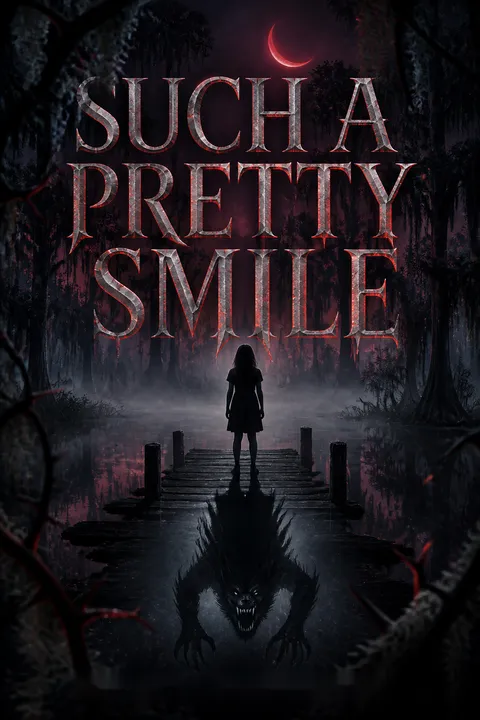

Plot Summary
Blood in the Water
Thirteen-year-old Lila Sawyer's world is upended when a classmate is found dead, her body mutilated in ways that suggest something more than animal attack. Lila, already struggling with her own sense of invisibility and longing for acceptance, is drawn into the fear and gossip swirling through her small Georgia town. Her mother, Caroline, is distant and secretive, haunted by her own past and determined to keep Lila safe, even as Lila yearns for freedom and connection—especially with her magnetic friend Macie. The murder stirs old anxieties in Caroline, who recognizes disturbing similarities to events from her own childhood. As mother and daughter navigate the tension between protection and independence, the threat outside their home begins to mirror the secrets festering within.
Mother's Secrets Unveiled
Caroline's carefully constructed life begins to unravel as the news of the murdered girl triggers memories she's tried to bury. Once a victim herself, Caroline survived a childhood abduction in New Orleans, returning with no memory of what happened. Now, the echoes of that trauma resurface, and she becomes obsessed with the possibility that the killer—known as The Cur—has returned. Her relationship with Lila is strained by her overprotectiveness and refusal to discuss her past. Caroline's art, once a source of solace, becomes a channel for her anxiety, as she creates sculptures that seem to manifest her nightmares. The boundaries between past and present blur, and Caroline's silence becomes both a shield and a prison for herself and her daughter.
The Missing Girls' Shadow
As more girls go missing, the community's anxiety intensifies. Lila's school becomes a crucible of rumor and paranoia, with students and parents alike desperate for answers. Lila's friendship with Macie is tested by jealousy, desire, and the pressure to conform. The girls' attempts to assert their independence—sneaking out, seeking attention from older boys—are shadowed by the ever-present threat of violence. Lila's sense of self fractures as she struggles to reconcile her longing for Macie with the expectations of those around her. Meanwhile, Caroline's vigilance grows more desperate, her warnings to Lila increasingly tinged with the terror of her own memories. The town's search for a monster outside blinds them to the monsters within.
Teeth in the Dark
Lila's internal turmoil intensifies as she experiences strange dissociative episodes—moments of lost time, vivid hallucinations, and a growing sense that something monstrous is awakening inside her. Her feelings for Macie, unspoken and fraught, become entangled with anger and shame. After a disastrous night out, Lila's rage erupts, and she lashes out at Macie with words as sharp as teeth. The violence of her emotions mirrors the violence stalking the town, and Lila begins to fear that she is not only a potential victim but also a vessel for something dark and hungry. The boundaries between predator and prey, love and violence, blur as Lila's sense of self slips further from her grasp.
The Kingdom's Whisper
Both Lila and Caroline are haunted by visions and voices that seem to emanate from a place beyond ordinary reality—a realm referred to as the Kingdom. This supernatural force preys on girls who are angry, different, or refuse to be silenced. Through dreams, hallucinations, and compulsions, the Kingdom seeks to break their spirits or consume them entirely. Caroline's memories of her own abduction begin to surface, revealing that her survival depended on her submission and silence. Lila, meanwhile, is tormented by the sense that something inside her is not her own, that her anger and pain are being twisted by an ancient, predatory presence. The Kingdom's whisper is seductive, promising safety through obedience, but demanding a terrible price.
Daughters and Beasts
The connection between Caroline and Lila deepens as the truth of their shared inheritance emerges. Caroline's mother, too, was marked by the Kingdom, and the cycle of silence and fear has passed from one generation to the next. Caroline's attempts to protect Lila by withholding the truth only serve to isolate them both, leaving Lila vulnerable to the same forces that once claimed her mother. The beasts—manifestations of patriarchal violence and societal control—feed on the silence and submission of girls and women. As Lila's behavior grows more erratic, Caroline is forced to confront the reality that the only way to save her daughter may be to break the silence that has defined their family for decades.
Jazzland's Haunted Ground
The abandoned amusement park Jazzland, built on land soaked in the blood of persecuted women, becomes the epicenter of the unfolding horror. Caroline's memories of her own abduction lead her back to Jazzland, where she uncovers the truth about the Kingdom and its appetite for girls who refuse to be tamed. Lila, driven by visions and a compulsion she cannot resist, also makes her way to Jazzland, seeking answers and escape. The park's decaying rides and overgrown grounds are haunted by the ghosts of the past, and the boundary between the real and the supernatural dissolves. Here, the final confrontation between mother, daughter, and the beasts is set in motion.
The Art of Survival
Caroline's art—her sculptures made from natural and unsettling materials—serves as both a means of survival and a channel for the darkness that haunts her. The act of creation becomes a battleground between self-expression and the forces that seek to silence her. For Lila, the struggle to articulate her desires and fears is mirrored in her mother's artistic process. The Kingdom twists creativity into something monstrous, using it to reinforce the cycle of trauma. Yet, it is also through art and storytelling that Caroline and Lila begin to reclaim their voices, challenging the narrative of victimhood and asserting their right to exist on their own terms.
Inheritance of Silence
Attempts to address Lila's and Caroline's suffering through therapy and medication are depicted as both necessary and insufficient. The medical establishment, represented by male psychiatrists and school counselors, is quick to pathologize and medicate, but slow to listen or believe. The true nature of the threat—the supernatural and societal forces that prey on girls—is dismissed as delusion or hysteria. The cycle of disbelief and silencing perpetuates the Kingdom's power, leaving survivors isolated and vulnerable. Caroline's and Lila's experiences highlight the limitations of systems that treat symptoms but ignore the deeper wounds inflicted by a culture that demands girls be quiet, pretty, and compliant.
The Cur Returns
The Cur, once thought to be a serial killer, is revealed as a supernatural entity—or entities—that have existed for generations, taking many forms but always targeting girls who resist. The Cur manipulates reality, appearing as trusted authority figures, and feeds on the fear, confusion, and silence of its victims. Caroline's realization that the Cur is not a single man but a manifestation of patriarchal violence is both liberating and terrifying. The monster's return is not just a recurrence of past crimes, but a continuation of an ancient cycle that can only be broken by confronting the truth and refusing to be silenced.
Monsters in the Mind
Lila's struggle becomes a fight not only for survival but for her own mind. The Kingdom's influence threatens to consume her, turning her anger and pain into weapons against herself and others. The line between mental illness and supernatural possession is deliberately blurred, raising questions about the nature of trauma and the ways society responds to girls who refuse to conform. Caroline, too, must confront the possibility that her own memories and perceptions have been shaped by forces beyond her control. The true horror lies not only in the external threat, but in the internalized voices that demand silence and submission.
The Price of Obedience
The Kingdom's ultimate demand is obedience. Girls who submit—who swallow their anger, hide their pain, and accept the roles assigned to them—are allowed to survive, but at the cost of their voices and agency. Those who resist are destroyed. Caroline's survival as a child came at the price of her silence, a bargain she unconsciously passes on to Lila. The realization that survival is not enough—that true freedom requires the courage to speak and fight—becomes the turning point for both mother and daughter. The price of obedience is too high, and the only hope lies in breaking the cycle, no matter the risk.
Breaking the Cycle
The final confrontation at Jazzland is both literal and symbolic. Caroline and Lila, united at last in understanding, face the Cur and the Kingdom together. Caroline sacrifices herself to save Lila, refusing to let her daughter be consumed by the same forces that once claimed her. In doing so, she breaks the generational cycle of silence and submission, empowering Lila to survive not as a victim, but as a fighter. The cost is devastating, but the act of resistance plants the seeds of change. The Kingdom is wounded, if not destroyed, and Lila emerges with the knowledge that she is not alone.
The Final Hunt
In the aftermath, Lila is taken in by a network of women who have also survived the Kingdom's predations. Led by Deborah, a social worker who understands the true nature of the threat, these women support each other and work to protect future generations. The fight is ongoing—the beasts are not vanquished, and the cycle threatens to repeat—but the survivors are no longer isolated or powerless. Lila learns that healing is possible, but vigilance and solidarity are essential. The story ends with the promise of continued resistance, and the hope that one day, the Kingdom's reign will end.
After the Kingdom
Years later, Lila has built a life for herself, carrying the scars of her past but refusing to be defined by them. She honors her mother's memory by helping other girls who have been marked by the Kingdom, working as a social worker alongside Deborah. The beasts still haunt the edges of her consciousness, but she is no longer afraid. Through love, community, and the refusal to be silenced, Lila and the other survivors forge a new path—one where their voices are heard, their anger is honored, and their stories are their own. The cycle is not yet broken, but the fight continues, and hope endures.
Analysis
Such a Pretty Smile is a fiercely original horror novel that uses supernatural terror as a lens to examine the real-world horrors of misogyny, generational trauma, and the silencing of girls and women. Through its dual timelines and deeply psychological character studies, the book explores how society's demand for female obedience and prettiness is enforced not only by individuals but by institutions—schools, families, medicine, and even art. The Cur and the Kingdom are chilling embodiments of the forces that prey on girls who are angry, different, or refuse to be quiet, turning their pain and resistance into both a source of power and a target for destruction. The novel's greatest strength lies in its refusal to offer easy answers: survival comes at a cost, and healing is a messy, ongoing process. By centering the voices and experiences of its female protagonists, the story insists that the only way to break the cycle is through honesty, solidarity, and the courage to speak—even when the world demands silence. In the end, Such a Pretty Smile is both a warning and a call to arms, urging readers to listen, believe, and fight for those whose voices have too long been dismissed as "hysteria."
Review Summary
Such a Pretty Smile received mixed reviews, with readers praising its atmospheric horror, feminist themes, and powerful writing. Many found it creepy, disturbing, and thought-provoking, particularly in its exploration of societal expectations for women. However, some felt the ending was disappointing or that the feminist message was too heavy-handed. The book's graphic violence and dark themes were challenging for some readers. Overall, it was seen as an ambitious and timely novel that sparked strong reactions, both positive and negative.
People Also Read






Characters
Lila Sawyer
Lila is a thirteen-year-old girl caught between childhood and adolescence, struggling with feelings of invisibility, longing, and forbidden desire. Her relationship with her mother is fraught with both love and resentment, as Caroline's overprotectiveness clashes with Lila's need for independence. Lila's friendship with Macie is charged with unspoken attraction and jealousy, fueling her internal conflict. As the story unfolds, Lila becomes the target of supernatural forces that prey on her anger and difference, leading to dissociative episodes and a growing sense of alienation. Lila's journey is one of self-discovery, as she confronts the monsters within and without, ultimately finding the strength to resist the cycle of silence and submission that has defined her family for generations.
Caroline Sawyer
Caroline is a woman marked by childhood trauma—abducted as a girl in New Orleans, she returned with no memory of her ordeal but deep psychological scars. Her life is defined by vigilance, secrecy, and a desperate need to protect her daughter from the dangers she cannot name. Caroline's art is both a refuge and a curse, channeling her nightmares into physical form. Her relationship with Lila is complicated by her inability to share the truth of her past, leading to misunderstandings and isolation. Caroline's journey is one of reckoning—with her own history, with the supernatural forces that haunt her, and with the societal expectations that demand her silence. Her ultimate sacrifice is an act of love and defiance, breaking the generational curse at great personal cost.
Macie Kemper
Macie is Lila's best friend and the object of her secret longing. She embodies the allure and peril of adolescent femininity—beautiful, popular, and seemingly fearless. Macie's friendship is both a lifeline and a source of pain for Lila, as Macie's attention is fickle and her loyalty conditional. Macie's own struggles with identity and power are masked by bravado, but she is also vulnerable to the same forces that threaten Lila. Their relationship is a microcosm of the larger themes of desire, betrayal, and the cost of conformity. Macie's fate is intertwined with Lila's, serving as both a catalyst for Lila's awakening and a mirror of her fears.
Daniel Sawyer
Daniel is Lila's father and Caroline's ex-husband, a man torn between his new family and the daughter he struggles to understand. His inability to listen or believe Caroline's fears contributes to the cycle of silence and isolation that endangers both mother and daughter. Daniel's guilt over his failures as a parent is compounded by his helplessness in the face of the supernatural threat. He represents the well-meaning but ultimately ineffectual authority figures who populate the story—quick to dismiss, slow to act, and unable to protect those they love from forces they refuse to acknowledge.
The Cur / The Kingdom
The Cur is both a literal and metaphorical monster—a shape-shifting entity (or entities) that preys on girls who are angry, different, or refuse to be silenced. It appears as trusted authority figures, manipulates reality, and feeds on fear, confusion, and submission. The Kingdom is its domain, a realm of nightmares that exists alongside the real world. The Cur's true power lies in its ability to convince its victims that their suffering is imaginary, that their voices are dangerous, and that obedience is the only path to survival. It is the personification of generational trauma, misogyny, and the societal demand for female silence.
Beth Kellum
Beth is a student of Caroline's during her time in New Orleans, a girl marked by anger and defiance. Her refusal to conform makes her a target for the Kingdom, and her fate serves as a warning to both Caroline and Lila. Beth's relationship with Caroline is one of mutual recognition—two girls (and later women) who sense the danger in refusing to be quiet. Beth's death is a pivotal moment, reinforcing the stakes of resistance and the cost of silence.
Deborah
Deborah is a social worker and survivor of the Kingdom, leading a network of women who have escaped its grasp. She provides support, understanding, and practical help to Lila in the aftermath of Caroline's death. Deborah represents the possibility of healing and resistance, offering a model of solidarity and hope. Her presence in Lila's life is transformative, helping her to process her trauma and find purpose in helping others.
Dr. Walters / Dr. Wilson
These male psychiatrists and counselors serve as both literal and symbolic agents of the Kingdom, pathologizing the experiences of girls and women, prescribing medication, and dismissing their fears as delusion or hysteria. Their refusal to listen or believe perpetuates the cycle of silence and vulnerability, making them as dangerous as the supernatural beasts they unwittingly serve. They embody the institutional forces that enforce obedience and punish resistance.
Rebecca
Rebecca is Daniel's new wife and Lila's stepmother, a woman struggling to balance her own anxieties with the demands of a blended family. Her inability to connect with Lila, and her focus on her own child's health, highlight the ways in which girls like Lila are left unsupported and misunderstood. Rebecca's presence exacerbates Lila's sense of alienation, but she is ultimately a minor player in the larger drama.
Wendy
In the novel's epilogue, Wendy is Lila's girlfriend, representing the possibility of love, connection, and healing after trauma. Their relationship is built on honesty, mutual support, and the refusal to be defined by the past. Wendy's presence signals that survival is possible, and that the cycle of silence can be broken through love and solidarity.
Plot Devices
Dual Timelines and Intergenerational Trauma
The novel employs a dual timeline structure, alternating between Lila's present-day coming-of-age and Caroline's traumatic past in 2004. This device allows the reader to see how trauma, silence, and societal expectations are passed from mother to daughter, shaping their identities and vulnerabilities. The interweaving of timelines creates suspense, deepens character development, and underscores the theme that the past is never truly past—it lives on in the bodies and minds of survivors.
Unreliable Perception and Dissociation
Both Lila and Caroline experience dissociative episodes, lost time, and hallucinations that blur the line between mental illness and supernatural influence. This device heightens the sense of unease and ambiguity, forcing the reader to question what is real and what is imagined. It also serves as a metaphor for the ways trauma distorts memory and perception, and for the gaslighting experienced by girls and women whose suffering is dismissed as hysteria.
The Monster as Metaphor
The supernatural antagonist, The Cur, is both a literal monster and a metaphor for the societal forces that demand female silence and submission. Its ability to shape-shift into authority figures, its hunger for obedience, and its targeting of girls who refuse to conform all serve to externalize the internalized oppression experienced by the protagonists. The monster's defeat is not total, reflecting the ongoing nature of the struggle against patriarchy.
Foreshadowing and Symbolism
Caroline's sculptures, the recurring setting of Jazzland, and the imagery of dogs and teeth all serve as symbols and foreshadowing devices. Art becomes a means of both survival and entrapment, Jazzland is a haunted ground where the past and present converge, and animal imagery evokes both the predatory nature of the Kingdom and the dehumanization of its victims. These symbols enrich the narrative and invite multiple layers of interpretation.
Network of Survivors
The introduction of Deborah and the network of women who have survived the Kingdom provides a counterpoint to the isolation and despair experienced by Lila and Caroline. This device emphasizes the importance of community, shared knowledge, and mutual support in breaking cycles of trauma. It also offers a vision of hope and ongoing resistance, even in the face of seemingly insurmountable evil.
Download PDF
Download EPUB
.epub digital book format is ideal for reading ebooks on phones, tablets, and e-readers.








































