
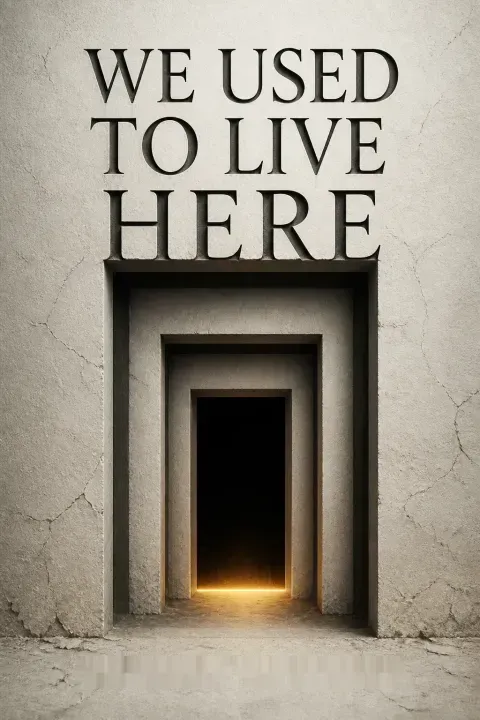


Plot Summary
Strangers at the Door
Eve Palmer1 peers through the blinds at the family on her porch: Thomas Faust,3 his wife Paige,4 and three children. They look like a churchgoing brood, harmless. Thomas3 claims he grew up in this house and asks for a quick tour to show his kids his roots.
Eve's1 people-pleasing anxiety wars with her instinct to refuse. She tries calling her partner Charlie2 to use as an excuse, but gets voicemail. The cold weather and her own discomfort with saying no tip the balance. She opens the door wider and lets the five strangers file into her foyer.
Thomas's3 familiarity with the coat closet confirms he once lived here, but Eve's1 internal alarm, which she personifies as a toy monkey named Mo, whispers that something is wrong. She notices there is no car in the driveway; the family claims they walked up the icy road.
This opening dramatizes the horror of social compliance overriding survival instinct. Eve's psychological landscape is mapped immediately: her broken spidey-sense, her personified anxiety, her compulsive need to avoid disappointing strangers. The Fausts appear at the threshold like a gothic trope made modern suburban, the family who must be invited in. The missing car is the first concrete anomaly, a detail Eve registers but rationalizes away. The scene establishes the novel's central tension: the gap between what Eve senses is wrong and what social niceties allow her to act upon.
The Basement's First Warning
Thomas3 leads his family through the house, reminiscing about his father's antler chandelier and his mother's carved crown molding. His youngest, Jenny,7 suddenly vanishes in a game of spontaneous hide-and-seek. Thomas3 and Eve1 descend into the basement to search.
The space is cramped, dark, and humid, with a metallic taste in the air. Eve1 rounds a corner and finds Thomas3 standing rigid, back turned, arms limp at his sides, flashlight pointed at the floor. She calls his name three times with no response. He finally snaps out of it, blaming bad hearing.
Later, using a secret knock pattern, Thomas3 locates Jenny7 in a narrow concrete nook but insists they must wait upstairs for her to emerge rather than retrieve her. The parenting choice strikes Eve1 as dangerously casual, but she doesn't challenge it.
The basement is the novel's first descent into the underworld, and Thomas's catatonic episode is the first breach in his performative normalcy. His frozen posture, the way he doesn't respond to his name, suggests something non-human or dissociative beneath the charming surface. The secret knock introduces a coded ritual within the family. Eve's reluctance to question Thomas's parenting mirrors her broader social paralysis: she senses danger but lacks the conviction to name it. The dots are connecting, but she doesn't yet have the framework to interpret them.
A Sister's Madness Recounted
A winter storm closes the only bridge down the mountain, trapping the Faust family overnight. At an awkward dinner, Paige4 interrogates Eve1 about her lapsed faith and her relationship with Charlie,2 while the boys bicker. After the meal, Thomas3 opens up about his sister Alison.5
She believed the house was changing: wallpaper shifting, rooms appearing and vanishing, people being replaced by imposters. Their parents called it demonic possession. Alison5 became convinced that killing Thomas3 was the only way to restore her original reality.
She stabbed him thirty-seven times with a fountain pen. Thomas3 shows Eve1 the pockmarked scars on his face and neck, then admits he came back seeking closure but found only an old house, nothing more. Eve1 listens, chilled by the story's resonance with her own growing unease.
Thomas's story functions as a nested gothic tale, a warning dressed as a confession. The detail of the fountain pen, not a knife, makes the violence intimate and desperate. His claim that he found 'only an old house' is the story's first explicit gaslight: the house is already demonstrating otherwise. Paige's dinner-table interrogation establishes her as the moral enforcer, yet her laser-removed neck tattoo hints at a past self she's tried to erase. The storm trapping them together externalizes the narrative's vice grip: no one can leave until the truth is confronted.
Sleepwalker in the Snow
That night, Eve1 discovers Thomas3 kneeling in the snowy yard, weeping and calling for Alison,5 dressed only in nightclothes. Charlie2 and Eve1 guide him inside; he's been sleepwalking, a childhood affliction he thought he'd outgrown. He begs them not to tell his family. Later, unable to sleep, Eve1 goes downstairs for water. The basement door is cracked open.
She peers down: a child-sized silhouette sits at the bottom of the stairs. As her eyes adjust, the figure rises to its full height, over six feet tall, gaunt and motionless. She slams the door and races upstairs. Charlie,2 half-asleep, dismisses it as a trick of the light and promises to investigate in the morning. Eve1 locks the bedroom door and sits vigil until exhaustion claims her.
The figure on the stairs is the first visual manifestation of the house's threat, and the detail that it initially appears child-sized before rising adult-tall distorts perception in real time. Eve's terror is met with Charlie's rational dismissal, a dynamic that will prove fatal later. Thomas's sleepwalking episode suggests his connection to the house is deeper than nostalgia; even unconscious, he's pulled toward something in the woods. The locked bedroom door is a futile gesture, a child's talisman against adult horrors.
The Neighbor's Contradiction
The next morning, with her phone missing and Charlie2 inexplicably gone to town, Eve1 walks to the nearest neighbor's house. Heather,6 an older woman who once babysat Thomas,3 welcomes her. Over tea, she dismantles Thomas's3 story: he was an only child. Alison5 was a drifter, a lost girl who wandered out of the woods and was taken in by the Fausts.
Heather6 reveals that Alison5 stabbed Thomas3 not out of madness but desperation, believing it was the only way to stop the reality changes he was causing. On the walk back, Eve1 follows mysterious footprints to a decrepit A-frame cabin. Inside, an old man with a facial scar warns her: those people in her house are not what they look like; she must get them to leave by any means necessary.
Heather's testimony is the first external corroboration that Thomas's narrative is fabricated. The contradiction is stark: Thomas claims Alison was his sister; Heather says he was an only child. This fractures the official story and gives Eve a foothold of doubt. The cabin hermit's warning, delivered with genuine terror, adds urgency. His words echo the supernatural paranoia Eve has been suppressing. The novel here shifts from psychological unease to active conspiracy: multiple witnesses, hidden evidence, a house with a documented pattern of swallowing identities.
The Attic's Pale Intruder
Eve1 climbs to the attic to retrieve tire chains, hoping to speed the family's departure. In the cluttered dark, she finds Charlie's2 old camera in a donation box and glimpses Thomas3 outside having a violent tantrum, slapping his own head. Then the flashlight dies.
In the pitch black, a figure emerges: a tall woman in a tattered hospital gown,5 scalp shaved, blue veins visible beneath translucent skin. She advances in jerky, stop-motion movements, playing a hideous peekaboo. Eve1 screams and falls through the attic hatch, hitting her head.
When she wakes on the couch, the family claims she hallucinated. Later, she spots Kai8 holding what she's certain is her cracked-screen phone, but after a physical struggle where Shylo10 bites Kai's8 leg, the phone turns out to be his own, unscathed. Eve's1 credibility crumbles.
The attic encounter is the novel's first unambiguous supernatural set piece, and it's immediately undermined by the family's insistence that Eve hallucinated. The head injury becomes a convenient tool for gaslighting: any strangeness Eve reports can be attributed to concussion. The phone incident is crueler still, making Eve doubt her own perception in a way that mirrors Alison's reported descent. The hospital gown connects the attic intruder to Alison, suggesting she never left the house or that the house has preserved some imprint of her trauma.
The Window That Wasn't
Reeling from the phone incident, Eve1 notices something impossible: the stained glass window in the upstairs study, which depicted a gnarled apple tree, is now an ordinary clear-glass window. But it looks original, weathered and seamlessly integrated into the wall, as if it had always been there. This matches exactly what Thomas3 said Alison5 used to claim about the house changing.
Eve1 and Charlie2 load into their pickup and drive away from 3709 Heritage Lane. Charlie2 briefly returns inside to grab belongings and confirms the window has changed. Even the relentlessly rational Charlie2 is spooked. They book a room at the Kettle Creek Motel, determined to figure things out in the morning. But Eve's1 grip on reality has already loosened.
The window is the first change that Charlie witnesses too, which makes it objective. This transforms the story from 'is Eve crazy?' to 'something is altering physical reality.' The stained glass apple tree, a religious symbol of knowledge and fall, is replaced by transparent glass. Knowing what the tree represented in the original window makes its erasure feel like an expulsion from Eden, or an invitation to see clearly what was previously obscured. The motel represents a temporary sanctuary, the last moment before the full collapse of Eve's known world.
Two Charlies, One Phone Call
At 3:06 a.m., a phone vibrates in Charlie's2 backpack. Eve1 answers. The voice on the other end is Charlie's,2 terrified, warning that the woman beside Eve1 is an imposter. The real Charlie2 is trapped in the house. The signal is weak; in the background Eve1 hears dragging footsteps and muffled, almost mechanical laughter before the call cuts.
Eve1 looks at the Charlie2 sleeping in the bed and notices the black triangle tattoo on Charlie's2 knuckle is missing. This person is not her partner. Eve1 grabs the keys and flees the motel in Charlie's2 truck, the imposter chasing after her, pleading. She stops for gas, evades a highway patrol officer, nearly hits a child wandering the mountain road, and finally reaches Heritage Lane. She is going back.
The phone call is the moment the novel's two realities collide. Charlie's tattoo, a permanent marker of identity established early in the book, becomes the definitive proof of the substitution. The imposter Charlie's pursuit, her desperate pleading, is unsettling because it mimics genuine concern; the house's creations are not merely hollow shells but seemingly autonomous beings who believe their own reality. The child on the road, behaving in unnatural, mechanical movements, suggests the house's influence extends beyond its walls, bleeding into the surrounding landscape.
Down the Endless Hallway
Eve1 re-enters the dark house. Alison's5 voice counts down from a ceiling vent, initiating hide-and-seek. Eve1 flees to the basement, squeezing through a narrow passage and through an olive-green door marked with the cryptic circle symbol.
Beyond it lies a room crammed with paintings of the house in various states, then a hospital-white hallway that shouldn't exist. On the floor sits Mo, her childhood toy monkey, clacking his cymbals. Further down, she finds Charlie2 standing motionless, pale as a corpse, as ants swarm into her eyes, nostrils, and mouth.
Charlie2 whispers that Eve1 isn't supposed to be here yet, then flees. Eve1 discovers a crate of photographs showing the real Faust family: metalhead parents, a joyful Alison,5 and no Thomas3 in any frame.
The basement transforms into a psychogeographic map of trauma. The paintings of the house in different states represent the multiplicity of realities the house contains. Mo's appearance, her lost childhood toy now physically present, suggests the house materializes psychological objects. The ant-swarmed Charlie is the novel's most viscerally disturbing image, a body horror of consumption and infiltration. The photographs are the crucial evidence: Thomas doesn't exist in the 'real' family's visual record. He's an insertion, a cuckoo in the nest.
Alison's Stolen Life
Tucked at the bottom of the photo crate, Eve1 finds Alison's handwritten letter. It explains that Thomas3 is not her brother; he appeared from the woods and inserted himself into her family, warping reality until her parents became religious zealots and she became the outsider.
The letter advises that the only escape is to make Thomas3 show his true face, then strike. As Eve1 processes this, Alison5 enters the room wielding a hammer. Eve1 hides in a shuttered wardrobe.
Alison5 seems to sense her but instead of attacking, she transmits a flood of memories directly into Eve's1 mind: her happy childhood obliterated by Thomas's3 arrival, the slow replacement of her identity, the desperate stabbing, and years of institutionalization where no one believed her. Alison5 leaves the hammer on the floor and departs, weeping.
The memory transfer is a radical act of bearing witness. Alison doesn't attack Eve; she downloads her truth into the only person who might believe it. The wardrobe, a liminal space of hiding and transformation, becomes a confessional. The letter's advice, 'make him show his true face,' is the strategic key: Thomas's power depends on maintaining his performed identity. The hammer, left behind, is an offering and a temptation. Alison's story is a tragedy of institutional failure: every system, from family to medicine, reinforced the false reality Thomas imposed.
Dinner as Emma Faust
Eve1 climbs out of the basement into a house transformed into a 1950s dream home. In the kitchen, the Faust family sits at a set table. Thomas3 calls her Emma and treats her as his mentally unstable sister who lives with them. He pulls her aside and warns that if she doesn't behave, he'll have her sent back to the psychiatric ward. Playing along, Eve1 joins the dinner.
Paige4 wears Charlie's locket around her neck, claiming she found it at an antique store. Thomas3 and the children make casual conversation about school and dogs, performing a grotesque pantomime of normalcy. Eve1 sits rigid, calculating. She remembers Alison's letter: the more you fight the charade, the worse it gets. She waits for her moment.
This is the novel's most chilling sequence: the complete overwriting of Eve's identity in real time. The 1950s aesthetic is a parody of domestic bliss, a hollow shell that Thomas has imposed over the house's true nature. Being called Emma, a name that is not hers, is a form of ontological violence. The locket on Paige's neck is the final provocation, a stolen symbol of Eve's relationship now worn as costume jewelry. Eve's decision to play along marks her psychological shift from reactive terror to strategic survival.
The Corkscrew and the Locket
Paige4 sips wine, Charlie's locket glinting at her throat. Eve1 can no longer contain herself. She demands to know where Paige4 got the necklace. Paige4 claims it's from an antique store, then asks why it matters. Eve1 lunges, wrapping an arm around Paige4 and pressing a corkscrew to her throat.
Thomas3 pleads, calling her Emma. Eve1 screams that her name is Eve.1 The children flee. In the chaotic struggle, Paige4 drives a steak knife into Eve's1 thigh. Eve1 recoils, and when she looks again, the corkscrew is embedded in Paige's4 throat.
Paige4 collapses, choking on blood as Thomas3 cradles her. He calls 911, giving the address as 3710 Heritage Lane, a house number that does not match reality. Eve,1 leg bleeding, grabs a hammer and limps upstairs as Thomas's3 grief turns to murderous rage.
The violence here is sudden, messy, and morally ambiguous. Eve didn't intend to kill Paige; the corkscrew's trajectory is accidental in the chaos. But the scene is also the culmination of Eve's suppressed rage, not just at Paige but at the entire system that has gaslit her. Thomas giving a wrong address to 911 is a crucial slip: the house's reality distortion extends even to its own street number. Paige's death shatters the domestic illusion permanently. There is no going back to dinner-table civility.
Hammer, Chains, and Arrest
Thomas3 corners Eve1 in Alison's5 old bedroom and slams her head against a barred window. She fights back, swinging the hammer's claw into his jaw, tearing open his cheek and ripping out teeth. He collapses, sobbing and begging her to stop.
She almost does, but then he taunts her by using her real name: he asks where she is going, Eve.1 She flees to the attic. He pursues, pins her down, and strangles her, ranting in an ancient, plural voice about sowing the forest and building the foundations of the world.
Eve1 wraps tire chains around his neck and pulls until police burst in with guns drawn. They tackle her, handcuff her, and drag her outside. In the flashing lights, Eve1 sees Alison5 standing at the tree line, looking healthy and whole. Then the police van doors slam shut.
Thomas's ancient rant confirms his inhuman nature: he speaks in the first-person plural, claiming to have existed since before the forest was planted. His slip into calling her Eve, when he has been forcing Emma upon her, is a moment of cruelty that reveals his true knowledge. The fight is brutal and physical, reducing cosmic horror to the raw struggle of two bodies. Alison at the tree line, transformed from gaunt specter to healthy woman, suggests Eve's actions have freed her. But Eve's arrest demonstrates the final cruelty: the 'real' world will punish her for crimes committed in a reality no one else experienced.
The Only Known Photo of Eve Palmer
Three years pass in Greenwood Asylum. Eve Palmer1 legally no longer exists; she is Emma Faust, found not guilty by reason of insanity for Paige's4 murder. The world has rewritten itself: her parents don't know her, Charlie2 now remembers her only as an ex who abandoned her years ago. Eve1 learns to play the model patient, taking pills, attending therapy, saying what doctors want to hear.
Then Thomas3 visits, his scars healed, his faith restored. He tells her he forgives her. He leaves an envelope. Inside is Charlie's locket. She opens it: the blurry photo of herself, turning away from the camera, hiding her face. The only proof that Eve Palmer1 was ever real. She clutches it in her cuffed hands, the asylum lights buzzing overhead.
The epilogue is devastating in its restraint. Eve has been swallowed by the system Thomas's reality created: the psychiatric institution confirms the false identity, and everyone she loved has been rewritten. Thomas's visit, with its performance of Christian forgiveness, is the abuser's final victory lap. Yet the locket is returned. The blurry photo inside, the one where Eve hid her face, becomes an accidental portrait of survival: proof that someone once tried to capture her, that she was worth photographing. It means nothing to anyone else, and everything to her. The buzzing lights suggest the house's influence extends even here, but the locket is hers.
Analysis
The novel operates as a psychological horror that weaponizes gaslighting on an ontological scale. Thomas3 does not merely manipulate Eve's1 perceptions; he rewrites the fundamental fabric of her reality, erasing her identity from the world's records and memories. This mirrors the lived experience of institutional betrayal: when every system (family, medicine, law enforcement) tells you your reality is a delusion, the line between sanity and truth becomes a weapon used against you. The interpolated documents, like the Andrew Melvin Interrogation Footage transcript and the various forum posts, suggest Eve's1 experience is not isolated but part of a larger, incomprehensible phenomenon called 'Old House,' a labyrinth that spreads across space and time and feeds on identity itself. The novel's structure, alternating between Eve's1 subjective horror and faux-objective documents, forces readers to experience the same destabilization: what is real, and who has the authority to decide? The locket is the perfect final symbol: a blurry, imperfect artifact that proves nothing to anyone but Eve,1 yet means everything. It is a story about the horror of being overwritten, and the desperate, possibly futile, act of holding onto one's own narrative when the entire world insists that narrative never happened. The real terror is not the monster in the attic but waking up to discover you are the only person who remembers you ever existed.
Review Summary
We Used to Live Here is a divisive horror debut that has garnered both praise and criticism. Many readers found it genuinely terrifying and atmospheric, with a creepy premise and unsettling tone. The story follows Eve, who lets a strange family into her new home, leading to increasingly bizarre and frightening events. While some readers appreciated the ambiguous ending and psychological elements, others felt frustrated by unanswered questions and plot holes. The book's cinematic quality and potential as a Netflix adaptation were frequently mentioned.
Characters
Eve Palmer
Anxious house renovator trapped in a shifting realityEve is a woman in her early thirties whose vigilance borders on pathology. She personifies her paranoia as a toy monkey named Mo, a remnant of childhood anxiety she never fully shed. Raised religious but now lapsed, she struggles with compulsive people-pleasing and often defers to her partner Charlie2 to set boundaries she cannot. Beneath the anxiety, Eve is perceptive: she notices details others miss, like a missing car or a scar that shouldn't be there. When her reality begins to unravel, her instinct to protect the people she loves overrides her fear. Her journey is from passive accommodation to desperate, violent self-assertion, though the world ultimately punishes her for it.
Charlie Bastion
Eve's pragmatic partner, replaced by an imposterCharlie is Eve's1 anchor: assertive, skeptical, and protective. She has heterochromatic eyes and a black triangle knuckle tattoo, a relic of her teenage years. A talented photographer who put down her camera after her father's death, she is the rational counterweight to Eve's1 anxiety. Charlie enjoys confrontation in a way Eve1 cannot, and she's quick to defend their relationship against Paige's4 judgment. Her love for Eve1 is steadfast, expressed through small gestures like the locket. The imposter who replaces her replicates her appearance and mannerisms perfectly, but lacks the knuckle tattoo, the one physical detail Eve1 seizes upon to confirm the substitution.
Thomas Faust
Charming patriarch hiding an ancient, predatory natureThomas presents as a warm, nostalgic father with a Cary Grant smile and a photo-lab business card. He claims he grew up at 3709 Heritage Lane and wants only to share his childhood with his family. But his story doesn't hold: scars on his face hint at the violence Alison5 inflicted on him, and his behavior grows increasingly unsettling, from frozen trances in the basement to violent tantrums in the yard. He takes mysterious pills, deflects questions about his past, and his version of events contradicts everyone else's. By the climax, he speaks in an ancient plural voice, claiming to have existed since before the forest was planted. He is not a man with a dark past but something that wears a man's shape.
Paige Faust
Devout, judgmental wife and strict motherPaige is Thomas's3 wife, a petite blonde with cold blue eyes and a silver cross necklace. She's the family's moral enforcer, quick to correct her husband's language and interrogate Eve1 about her faith and sexuality. But Paige is full of contradictions: a faded circle tattoo on her neck, laser-removed, hints at a wilder past she's tried to erase. She suppresses considerable anger, which surfaces in cutting remarks and tense silences. Her piety is both genuine belief and a structure she clings to. Her death at the dinner table, accidental yet catalysed by her theft of Charlie's locket, fractures the family's performative normalcy permanently.
Alison Faust
The house's original victim, trapped between worldsAlison was a drifter child who wandered out of the woods and was taken in by the real Faust family. When Thomas3 arrived, he overwrote her reality, replacing her in her own family until she was the outsider. Desperate, she stabbed him thirty-seven times with a fountain pen. Institutionalized and disbelieved, she now haunts the house as a gaunt figure in a hospital gown, her head shaved, her movements jerky and unnatural. She plays hide-and-seek with Eve1 not as a tormentor but as a traumatized guide, ultimately transmitting her memories to the only person who might understand. By the end, she appears healthy at the tree line, suggesting Eve's1 actions freed her.
Heather
Neighbor who reveals the Fausts' true historyAn elderly woman who lives at 3707 Heritage Lane, Heather once babysat Thomas3 and knows the house's history intimately. She fostered stray dogs and has a gentle, lonely manner that puts even the wary Shylo10 at ease. Over tea, she dismantles Thomas's3 narrative, revealing that he was an only child and Alison5 was a foundling. She knows about the stabbing and about the stolen town records. Her willingness to share the truth provides Eve1 with crucial corroboration, though her own memories are sometimes uncertain, a symptom of living so close to the house's influence for so long.
Jenny Faust
Inquisitive youngest daughter, devoted to her fatherJenny is around seven years old, with bright green eyes and a notebook she fills with observations. She adores her father and mimics his every move, acting as the family's eager historian. Her spontaneous hide-and-seek game triggers the basement search that first exposes Thomas's3 strange behavior. She carries a green pen that doubles as a flashlight. Her innocence makes her both endearing and unsettling; it's unclear whether she's a genuine child or another of the house's fabrications, performing her role with uncanny precision.
Kai Faust
Smug older son who steals and liesKai is the Fausts' preteen son, tall with cold blue eyes and platinum-blond hair. He radiates entitlement and contempt, rolling his eyes at adults and bullying his brother Newton9. When Eve1 accuses him of stealing her phone, the conflict results in Shylo10 biting his leg and Eve's1 credibility being shattered. His apparent phone theft is the final push that makes Eve1 doubt her own perception.
Newton Faust
Anxious, bullied middle childNewton is red-haired, bespectacled, and perpetually stressed. He slouches like a middle-aged office worker and is the family's odd one out. Kai8 slaps and mocks him openly, and his parents largely ignore his attempts to problem-solve. He tries to comfort Jenny7 after the phone incident with a plausible explanation, showing a protective instinct his family doesn't nurture.
Shylo
Eve's rescue dog, a barometer of dangerShylo is a border collie mix with heterochromatic eyes, one ear up and one flopped. Eve1 found her abandoned and nearly frozen behind a gas station; she trusts only Eve1 and Charlie2 and takes months to warm up to anyone else. Her immediate friendliness toward Heather6 is an early warning that something is off. Later, the imposter Shylo ignores Eve1 entirely and obeys Thomas3, a visceral betrayal that confirms the substitution. The real Shylo's fate remains unknown.
Plot Devices
Old House (3709 Heritage Lane)
Reality-bending labyrinth that consumes identitiesThe Victorian house at 3709 Heritage Lane is not merely haunted; it is an active, predatory entity that alters its own architecture, replaces people with duplicates, and overwrites the identities of those trapped within it. Connected via 'hatches' and 'shortcuts' to other locations (hospital hallways, 1950s domestic spaces), it seems to be part of a larger interdimensional network documented by a community of conspiracy theorists called Old House Archivists. The house chooses hosts and guests, warps memories, and can erase a person from existence so thoroughly that even their own parents no longer recognize them. Its influence extends into the surrounding woods and the town records. Thomas3 appears to be either the house's current master or its longest-residing parasite, claiming to have existed since before the forest was planted.
The Cryptic Symbol
Protective ward carved by AlisonA circle divided by intersecting lines of varying lengths, carved into the banister, the olive-green basement door, and other locations throughout the house. Thomas3 claims his sister Alison5 carved them for protection against bad luck. The symbol also appears as the logo for 'Ring of Eyes,' the heavy metal band Alison's5 real father, Elijah Faust, played in. Alison5 may have carved them as wards against Thomas's3 influence. The symbol recurs in the interpolated documents as a kind of marker of Old House phenomena, suggesting a larger network of resistance or documentation.
Mo the Toy Monkey
Eve's personified anxiety, physically manifestedMo is a white-furred monkey with plastic cymbals, a knockoff of the famous Jolly Chimp toy, dressed in blue overalls and a straw hat. Eve1 lost him as a child when he was stolen from the family car, and she later personified her paranoid inner voice as Mo. In the basement's impossible hospital hallway, the physical Mo appears, clacking his cymbals. His presence suggests the house can manifest psychological objects from those trapped within it, blurring the line between mental and material reality. A nearly identical toy appears at Heather's6 house.
Alison's Photographs and Letter
Hidden evidence of the real Faust familyA crate hidden in the basement contains glossy photographs of the real Faust family: Elijah and Vera Faust, metalhead parents who attended concerts and loved their daughter, and a joyful Alison5. Thomas3 is absent from every image. Tucked at the bottom is Alison's5 handwritten letter explaining that Thomas3 is not her brother, that he arrived from the woods and systematically replaced her reality, and that the only escape is to provoke him into showing his true face. This evidence disappears when the authorities search the house, mirroring the larger pattern of proof vanishing.
Charlie's Locket
The only remaining proof of Eve's identityA brass oval locket on a thin chain, a gift Charlie2 bought for herself in town on the day the Fausts arrived. It contains a blurry photograph of Eve1 hiding her face from the camera, taken early in their relationship. The locket appears hanging above the fireplace after Charlie2 leaves, is later worn by Paige4 at the fatal dinner, and is ultimately returned to Eve1 by Thomas3 during her incarceration. By the novel's end, it is the sole physical object that confirms Eve Palmer1 ever existed, her face preserved in a photograph she once tried to avoid. The image's blurriness makes it poetically fitting: ambiguous proof for an ambiguous reality.
FAQ
Synopsis & Basic Details
What is We Used to Live Here about?
- Unsettling family visit: A woman, Eve, is visited by a family claiming to have lived in her house, leading to a series of increasingly strange and disturbing events.
- Reality unraveling: As the family's visit extends, Eve's perception of reality begins to fracture, blurring the lines between what's real and what's not.
- Fight for sanity: Eve must navigate a labyrinth of shifting memories, unsettling encounters, and a growing sense of dread as she tries to protect herself and her partner.
Why should I read We Used to Live Here?
- Psychological horror: The story masterfully builds suspense and unease, delving into the protagonist's paranoia and the unsettling nature of the unknown.
- Mind-bending mystery: The narrative challenges the reader's perception of reality, leaving them questioning what is real and what is not, with a complex and layered plot.
- Exploration of identity: The story explores themes of identity, memory, and the fragility of the human mind, making it a thought-provoking and emotionally resonant read.
What is the background of We Used to Live Here?
- Isolated setting: The story is set in a remote, mountainous region of the Pacific Northwest, enhancing the sense of isolation and vulnerability.
- Historical ambiguity: The house's history is shrouded in mystery, with conflicting accounts and lost records, adding to the sense of unease and the unknown.
- Psychological themes: The story draws on psychological concepts like paranoia, delusion, and the unreliability of memory, creating a sense of unease and disorientation.
What are the most memorable quotes in We Used to Live Here?
- "Once you let them in, they'll never leave.": This quote, whispered by Mo, encapsulates Eve's growing paranoia and the sense of inescapable dread that permeates the story.
- "Funny… how memories can change like that.": This line, spoken by Thomas, highlights the theme of unreliable memory and the shifting nature of reality within the story.
- "Don't forget which house you're in.": This cryptic message, found carved into the house, serves as a constant reminder of the sinister forces at play and the danger Eve faces.
What writing style, narrative choices, and literary techniques does Marcus Kliewer use?
- First-person perspective: The story is told from Eve's point of view, allowing readers to experience her growing paranoia and confusion firsthand, creating a sense of intimacy and unease.
- Foreshadowing and ambiguity: Kliewer uses subtle hints and ambiguous details to build suspense and keep the reader guessing, blurring the lines between reality and illusion.
- Symbolism and motifs: Recurring objects, such as the monkey toy Mo, the house itself, and the color red, are used to symbolize Eve's inner turmoil and the sinister forces at play.
Hidden Details & Subtle Connections
What are some minor details that add significant meaning?
- The missing car: The absence of a car for the visiting family, initially explained away, becomes a subtle clue that something is amiss, hinting at their otherworldly nature.
- The dirt smudge: A seemingly irrelevant detail, the dirt smudge on Thomas's coat, highlights Eve's "broken spidey-sense" and her tendency to focus on minor details during stress.
- The faded tattoo: The faint circle tattoo on Paige's neck, later revealed to be a laser removal, hints at a hidden past and a connection to the house's mysteries.
What are some subtle foreshadowing and callbacks?
- The antler chandelier: Thomas's mention of the deer antler chandelier foreshadows the house's dark history and the violent nature of its past inhabitants.
- The dumbwaiter: The covered-up dumbwaiter, and Thomas's discomfort with it, foreshadows the hidden passages and the shifting nature of the house's layout.
- The "Have you ever noticed anything...": Thomas's interrupted question foreshadows the strange events to come and his own awareness of the house's unsettling nature.
What are some unexpected character connections?
- Heather and Thomas: The revelation that Heather used to babysit Thomas adds a layer of complexity to their relationship and hints at a shared history with the house.
- Charlie and Thomas: The shared interest in film photography between Charlie and Thomas creates a subtle connection, highlighting the way the house can manipulate relationships.
- Eve and Alison: The parallels between Eve's experiences and Alison's story, as revealed in the note, suggest a deeper connection and a shared fate within the house.
Who are the most significant supporting characters?
- Heather: As a neighbor with a history with the house and Thomas, she provides crucial information and a sense of unease, acting as a foil to the family's facade.
- Mo: As Eve's personified paranoia, Mo represents her inner turmoil and the growing sense of dread, influencing her actions and decisions.
- Alison: Though not physically present, Alison's story and her note serve as a warning and a guide for Eve, revealing the house's true nature and the danger it poses.
Psychological, Emotional, & Relational Analysis
What are some unspoken motivations of the characters?
- Thomas's return: Thomas's desire to revisit his childhood home is driven by a need for closure and a hidden fear of the house's influence, not just nostalgia.
- Paige's devoutness: Paige's strict religious beliefs and her disapproval of Eve's lifestyle stem from a deep-seated fear of the unknown and a need for control.
- Eve's people-pleasing: Eve's inability to say no and her reliance on the "Charlie Card" reveal a deep-seated fear of confrontation and a need for external validation.
What psychological complexities do the characters exhibit?
- Eve's paranoia: Eve's "broken spidey-sense" and her personified paranoia, Mo, highlight her anxiety and her struggle to discern reality from illusion.
- Thomas's repressed trauma: Thomas's sleepwalking, his reluctance to share his past, and his sudden outbursts reveal a deep-seated trauma and a struggle with his own identity.
- Paige's inner conflict: Paige's strict religious beliefs clash with her suppressed anger and resentment, creating a complex and contradictory character.
What are the major emotional turning points?
- The basement encounter: Eve's experience in the basement with Thomas marks a turning point, solidifying her unease and setting the stage for her unraveling.
- The discovery of Alison's note: The note confirms Eve's suspicions and intensifies her fear, pushing her to take drastic action.
- The confrontation with "Charlie": The phone call and the subsequent encounter with the doppelganger mark a complete breakdown of Eve's reality, leading to her desperate escape.
How do relationship dynamics evolve?
- Eve and Charlie: Their relationship, initially a source of stability, is tested by the events at the house, highlighting the fragility of trust and the impact of external forces.
- Eve and Thomas: Their dynamic shifts from polite unease to open hostility, revealing the sinister nature of Thomas and the house's influence.
- Thomas and Paige: Their relationship, seemingly a united front, is revealed to be fraught with tension and resentment, highlighting the destructive nature of the house's influence.
Interpretation & Debate
Which parts of the story remain ambiguous or open-ended?
- The nature of the house: The true nature of the house and its ability to manipulate reality remains ambiguous, leaving the reader to question whether it is a supernatural entity or a manifestation of psychological trauma.
- The identity of the woman: The identity of the woman in the hospital gown, whether she is Alison or some other entity, is never fully explained, adding to the story's mystery.
- The ending: The ending, with Eve institutionalized and still questioning her reality, leaves the reader to ponder the true nature of her experiences and the possibility of escape.
What are some debatable, controversial scenes or moments in We Used to Live Here?
- Eve's violence: Eve's actions, particularly her attack on Paige, raise questions about her sanity and the extent to which she is responsible for her actions.
- Thomas's motivations: Thomas's true motivations and his role in the house's manipulation remain open to interpretation, sparking debate about his culpability.
- The nature of reality: The story's blurring of reality and illusion challenges the reader's understanding of what is real and what is not, leading to different interpretations of the events.
We Used to Live Here Ending Explained: How It Ends & What It Means
- Eve's institutionalization: The ending sees Eve locked away in a psychiatric ward, her claims of a reality-altering house dismissed as delusions, highlighting the power of societal labels and the fragility of sanity.
- The cycle of trauma: The ending suggests a cyclical nature to the house's influence, with Eve potentially becoming another victim trapped in its labyrinth, mirroring Alison's fate.
- The power of perception: The ending emphasizes the subjective nature of reality, leaving the reader to question what is real and what is not, and the power of the mind to shape one's experiences.








































