

Plot Summary
Agitated Beginnings, Muted Powers
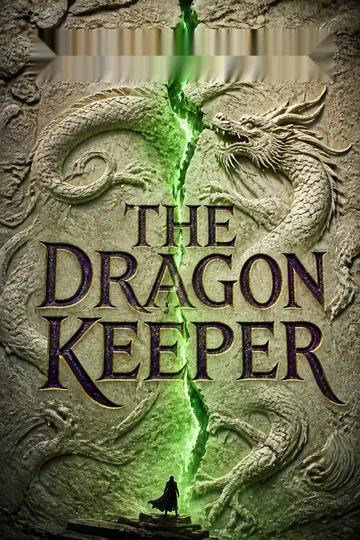
The battered dragons, deformed and weaker than legends promised, are forced to rely on disrespected, mutated adolescent keepers as their human caretakers. Thrust together on the desperate journey upriver in search of the fabled Kelsingra, both sides are haunted by lost memories and power. The humans, outcasts in their own communities and forbidden to breed, come face to face with dragons who remember being worshipped and fear being misused again. Psychic links—sometimes accidental, sometimes deliberate—pulsate between dragon and keeper, building intimacy but also misunderstanding and resentment. From the outset, the land, river, and social structures are hostile. Each step is a negotiation, where grudges and needs breed an unstable alliance as much as hope for a new beginning.
Rules Broken, Bonds Forged
The keepers, mostly forbidden outcasts, chafe under Rain Wild laws restricting their mating, while dragons demand constant attention. As hardship forges new relationships, some keepers—most visibly Jerd and Greft—defy prohibitions, shaking the group's moral foundation. Thymara's voyeuristic discovery of illicit intimacy leaves her uneasy, her friendship networks unsettled, and the group's cohesion tested. Meanwhile, the dragons scheme, learning to manipulate their keepers and leaking ancestral influence, even as bonds become less voluntary and ever more emotionally charged. This tension, layered with the daily challenges of survival, begins to blur the boundaries between serving, choosing, and possessing—setting characters on unpredictable paths.
Living With Consequences
The group is forced to confront physical and emotional consequences of both negligence and ambition. The copper dragon Relpda's failure to thrive exposes weaknesses in leadership and care, while the debate over butchering sick dragons for gain sows deeper discord. Minor jealousies and alliances bloom into outright competition between keepers—not just for dragons' attention, but also for new, self-determined futures. Decisions made in darkness—whether hunting for forbidden dragon parts or seeking companionship—reverberate through trust and threatening fractures, as group members test their ability to truly protect, forgive, or separate from one another.
Poison, Dream, and Desire
Sedric's theft and accidental ingestion of dragon blood unleashes transformative effects, linking his mind to Relpda's and igniting unseen powers and trauma. Dreams, often triggered by proximity to dragons, muddy the lines between reality, fantasy, and memory, as hidden desires surface—whether for forbidden lovers, new identities, or self-mastery. For Alise, emotional and romantic longing tangle her loyalty between her formal husband and the river captain, as she's drawn deeper into her own metamorphosis. Beneath the outward journey, the characters' hidden wounds and yearnings begin reshaping both their sense of self and their destinies.
The Wave's Aftermath
An earthquake and subsequent acid flood scatter and devastate both humans and dragons. The disaster exposes the expedition's fragility, killing some and reshuffling roles—friends vanish, alliances are remade, keepers and dragons scramble to rescue and regroup. In this high-stakes environment, old hierarchies fail; survival becomes the only rule, and codependent ties are both cemented and tested. Those who had clung to fantasy or denial now find themselves forced to act—revealing strength, resilience, or profound vulnerability in the face of collective calamity.
Morality and Betrayal
As the survivors piece themselves together, the full spectrum of ambition and betrayal surfaces: Sedric's smuggling plot is mirrored by Jess and, perhaps, even by astute leaders like Leftrin and Greft. Loyalty to group, dragon, or personal interest becomes ambiguous, with duplicity and half-spoken deals threatening the fragile society forming around Tarman. Desperation demands moral choices—some redeem, others betray. The journey thus is no longer just an external trek, but a crucible of character, forcing each member to finally own their shadowy intentions and their responsibilities to one another.
Night in the Rain Wilds
In the safety of new camps and nightly fires, intimacy flourishes, but so too do private doubts and pains. Some, like Alise and Leftrin, find the courage to embrace love and new beginnings, even as secrets about past affairs, dragon blood, and old betrayals lurk in the shadows. Amid sorrow and loss, other connections falter or become transactional—Greft's manipulations, Bellin's hard-won wisdom, and Thymara's fearful indecision all come to a head. The dark is not gentle, but it is honest, and only through exposure to one another's wounds can the group hope to cohere or survive.
Blood Promises, Gifts Taken
As knowledge of how dragons shape their keepers with blood becomes unavoidable, the community is haunted by the dangers of change—monstrosity, loss of identity, the risk of going too far. Dragons debate the very morality of bestowing their gifts, remembering the old dangers of Elderling transmutations. Some keepers—sidelined by accident or intent—fear being left behind, while others, especially Thymara, gain powers and physical changes they neither chose nor fully understand. With each exchange of blood or memory, agency shifts in unpredictable ways, challenging whether anyone can master the pace, purpose, or cost of becoming something new.
Hard Lessons in Survival
With each loss—of keepers, dragons, gear—the expedition must adapt, dividing labor, leadership, and hope. The journey through acid flood, endless sloughs, and depleting supplies grinds away self-deceptions. Bellin's blunt wisdom and collective suffering teach the young Rain Wilders that survival demands more than desire: it takes planning, self-regulation, and acceptance of difficult truths about reproduction, responsibility, and community. Leadership struggles are inevitable, but so too are new avenues for empathy, forgiveness, and interdependence to emerge.
River Splits, Paths Chosen
As the river divides, so too do ambitions. The expedition faces a pivotal choice when Tarman, asserting his own agency as a liveship part-dragon, physically redirects the group toward the correct branch to Kelsingra. The dragons and people both debate, but their growing wisdom—the ability to discern not just where, but how to live—makes moving forward possible. New roles are assigned, keepers are claimed by new dragons, and even the traumatized among them find places in the evolving hierarchy. The journey becomes less about following legend and more about active self-determination.
The Forest Gives Way
The endless forest and river yield at last to higher ground, rolling meadows, and tantalizing glimpses of the ruined city of Kelsingra. The physical changes mirror inner transformations, as sewn-up secrets begin to unravel and even the land seems to offer a promise of meaning. Awe, anxiety, and the specter of a fragile, incomplete future mingle: the keepers and dragons glimpse both recovery and the terrifying extent of change they have undergone. Ambition gives way to the simple desire to arrive—to find rest and recognition, if not full understanding or belonging.
Greft's Fall, Old Truths
Greft's reign as manipulator and would-be patriarch ends as his health fails, his betrayals become public, and his drive is revealed as a desperate last grasp for meaning and survival. Intervention, disappointment, and sorrow touch everyone, making clear the need to build new structures based on honesty, consent, and mutual care. The group's unwritten codes grow more complex as they sort through grief, the temptation to scapegoat, and the question of how, or if, to forgive what was broken in the old rules.
Gathered On Mud And Reed
The expedition is driven to the edge of human and animal resilience as they enter endless sloughs and muddy, shifting land. Survival requires improvisation: new food sources, shared labor, and rebalancing of roles after losses and betrayals. There is no room left for old class barriers—everyone must muddle in together. Thymara, unwillingly changed, must finally come to terms with her new body. Nature—stubborn, hostile, and yet to be tamed—becomes both the ultimate threat and the catalyst for community.
Spilled Secrets, Forgiveness Sought
In the privacy of exhausted trust, Sedric confesses all to Alise; both face their betrayals, grief, and the anxieties of choosing or leaving behind those they once loved. Rather than shattering their friendship, full honesty allows a radical, compassionate acceptance. Tensions between keepers and dragons are also aired, transforming possessiveness and rivalry into reluctant camaraderie. Decency is reclaimed, even if wounds remain visible and trust must be built anew. To move forward, both individual and group must unburden the weight of past secrets.
Changes Written in Flesh
The keepers' and dragons' changes are now undeniable—scaling, new strengths, even wings for Thymara. Physical transformation is both fear and hope: it offers flight, endurance, and a new sense of the self, but it also means giving up the safety of the old—sometimes forever. Gender, partnership, and agency are renegotiated; some embrace new bonds, others halt at the edge of intimacy. Everyone must reckon with what, precisely, they wish to become—and what they are willing to lose to earn it.
Reaching Kelsingra's Edge
At last, the dragons and their keepers arrive at Kelsingra's outskirts—lush hills, promising meadows, a river too deep to cross, and ruined, beckoning grandeur. The city stands as both prize and question mark, offering evidence of a thriving past and an uncertain future. Rapskal and Heeby, already transformed by their ordeal and flight, demonstrate what is possible; the rest of the group must now struggle with longing, apprehension, and the work of real settlement. Arrival is a precipice: what comes next is up to them.
New Rules, New Dreams
Here, amid the ruins and gathering hope, the group faces its most important challenge: how to craft laws, customs, and lives that transcend both the failures and limitations of their old world. Dragons take flight; keepers come into their own. Love becomes possible not because it is sanctioned but because it is chosen. Kelsingra's mysteries—abandoned, ruined, but full of latent potential—become a stage for testing the durability of new relationships, the possibility of healing, and the long, creative struggle to belong.
Flight Beyond the Past
The final breakthrough is not just bodily—a dragon flies, a winged Elderling moves her wings—it is symbolic of all the travelers' transitions: from fear and denial to audacity and agency, from being driven to taking the sky. The journey's hardship is written in every limb, but so too is the possibility of freedom—found not by returning home, but by inventing it, together, in a world remade by courage, candor, and the will to begin anew.
Analysis
Dragon Haven is a novel about the fundamental tension between the past's authority and the necessity for reinvention—a story of outcasts, misfits, and monsters forced by both fate and boldness to create a new way of being. In the ruined wilds, legacy and longing drive everyone: dragons seek lost glory and the revival of their kind, while keepers—marked as "unfit" by home societies—dream of new rules and lives unshadowed by fear and shame. But the journey does not offer easy transformation; rather, the struggle for survival strips away illusions, and each character confronts the trauma their old worlds left them: betrayals by lovers, parents, social rules, and even one's own body. The magic—psychic bonds, blood ties, the promise of Elderling change—is less a reward than a test. True transformation, Hobb suggests, is never passive or safe; consent, agency, and honesty must be fought for and continuously renegotiated, both with others and oneself. Ethical ambiguity is central: the dragons are both beautiful and dangerous; choices around rule-breaking, desire, and loyalty leave scars; and forgiveness—whether for oneself or for others—demands vulnerability, not forgetting. Ultimately, Dragon Haven is about the courage to claim possibility: to refuse inherited shame, to risk connection despite hurt, and, at the edge of the known world, to leap—uncertain if one will soar or fall, but knowing the old rules can no longer hold.
Review Summary
Reviews for Dragon Haven are mixed, averaging 4.1/5. Many praise Robin Hobb's character development, world-building, and dragon portrayals, noting the book feels like the satisfying second half of a duology with Dragon Keeper. Critics frequently cite slow pacing, excessive romantic/teenage angst subplots, and minimal plot progression as weaknesses. Positive reviewers argue the relationship-focused storytelling serves meaningful themes around female empowerment and identity. Most agree the final sections deliver exciting developments, and even disappointed readers typically commit to continuing the series.
People Also Read







Characters
Thymara
Born marked and forbidden to breed by Rain Wilds custom, Thymara is chosen as a keeper precisely because she is considered a misfit—her black claws, scaling, and isolation have primed her for both resentment and empathy. Linked psychically and physically to the dragon Sintara, she struggles constantly between submission and rebellion. Her relationships with other keepers, especially Tats and Rapskal, oscillate between comradeship, rivalry, and repressed affection. Thymara's journey is one of self-ownership: neither content to be anyone's mate nor a pet to powers older than herself, her forced physical changes (wings, scales) become both burden and opportunity. She is the voice of questions—about rules, identity, and the meaning of transformation—and her arc centers on evolving agency, the capacity to reject or accept new forms and futures.
Alise Kincarron Finbok
Trapped in a passionless, performative marriage, Alise embarks on the dragon journey as an escape—and a quest for meaning. Her love of Elderling lore and insatiable curiosity make her a bridge between old knowledge and new understanding. Her psycho-emotional struggle is with self-worth: never quite at home among Bingtown society, keepers, or dragons, she finds welcome only after risking emotional and physical intimacy with Captain Leftrin. Alise is tested repeatedly—by the revelation of Sedric and Hest's betrayal, by her own jealousy, and by the question of whether scholarly detachment can be reconciled with lived, embodied change. Ultimately, Alise claims authorship over her past and her happiness, learning to risk, forgive, and choose despite the messy limits of tradition or expectation.
Sedric Meldar
Sedric is entangled in secrecy and shame: pressured by Bingtown propriety, torn by unrequited love for the cruel Hest, and driven to criminal acts (the theft and sale of dragon parts) out of desperate hope for a better life. His accidental ingestion of dragon blood turns him into a case study for both the dangers and redemptive promise of transformation. Psychoanalysis reveals that Sedric's greatest battle is with internalized loathing—projected onto others as suspicion and accusation. The psychic and physical link to Relpda simultaneously punishes and redeems him, offering belonging and acceptance not for what he presents, but for what he is. Through suffering, confession, and ultimately reciprocated love with Carson, Sedric moves from self-destruction to the first fragile possibility of wholeness.
Captain Leftrin
Leftrin is both riverman and visionary—owner of the Tarman, a part-dragon liveship uniquely modified and thus doubly marked as a boundary-crosser. He is shrewd, loyal, and capable of both violence and tenderness. Though deeply invested in his crew and the group's safety, Leftrin's past is not without compromise: secrets around the wizardwood, shadowy dealings with Chalcedean merchants, and questionable alliances. His romance with Alise reveals latent insecurities about class, worth, and whether genuine love is possible for a man who has always made do. Throughout the journey, Leftrin's captaincy is tested: when to cede control to Tarman, the wisdom of listening to nonhuman voices, and the courage to build a new home when the old map ends. His arc is one of reluctant vulnerability and earned trust.
Sintara
Sintara embodies all the paradoxes of dragon nature: arrogant, deeply self-absorbed, yet dependent on her keepers for survival and transformation. She is both irritated by and invested in Thymara, her chosen keeper, unable to admit the depth of their interdependence. Psychoanalytically, Sintara reflects both narcissism and genuine anxiety about extinction; her relationship with Thymara is one of dominance punctuated by inadvertent compassion. Her path mirrors the novel's wider theme: the terror of losing power, the challenge of change, and the unexpected gifts unearthed when willing to risk mutuality. Sintara's transformations—especially her wings, her grudging acknowledgment of weakness, and her eventual flight—manifest the journey from wounded past to new possibility.
Greft
Greft aspires to reinvent rules and solidify power: he dreams of new societies, new orders, and a life beyond Rain Wild exile. Charismatic and often insightful, he is also malicious, controlling, and secretly desperate; his leadership is both comforting and coercive, as he orchestrates the group's structure and enforces new, self-serving customs. His psycho-dynamics are marked by a sense of doomed inadequacy: the changes wracking his body signal both imminent death and a futile bid to seize immortality or control. In the end, Greft's fall—rejected by dragon and kin, felled by betrayal and poison—is emblematic of the cost of rule by dominance and the pain wrought by power without empathy.
Carson
Carson is sharply contrasted with the insular, judgmental world of Bingtown. Raised in hardship but rich in practical skill and self-knowledge, he offers patience, care, and directness—qualities that seduce not merely Sedric, but the entire group into cohesion and healing. Carson's masculinity is defined not by conquest but by nurturing: his relationship with Sedric is a sanctuary for recovery and acceptance. He embodies an alternative model of partnership and community, marked by realism, generosity, and steadiness. In a story full of ambition and longing, Carson is the rare character to find contentment not in the city-to-come, but in the bonds forged on the muddy journey there.
Mercor
Mercor is the spiritual and practical anchor among the dragons, suffused with memory (perhaps more than any other) and guiding the group with patient purpose. His psychoanalysis is layered: empathy for both dragons and keepers, awareness of the dangers—and promises—posed by mutual transformation, and tactical savvy in moments of crisis. Mercor's interventions typically diffuse violence and keep the group on a path toward both physical and moral survival. In many ways, he is the repository of the lost Elderling alliance, blending draconic pride with a longing for connection. His arc is one of stewardship as much as self-fulfillment.
Rapskal
The most childlike of the keepers, Rapskal brings energy, hope, and a willingness to challenge any limitation. After disaster (his separation and survival with Heeby), his transformation is also the most spectacular: he becomes Elderling-like, irrepressible, and uniquely able to ride the dragon to new heights—literally and metaphorically. He is the link between the group's vulnerable past and its reinvention, both the idealist and the agent of the wild new world. Rapskal's dignity comes not from rule-following, but from audacious hope and the capacity to imagine—and enact—flight.
Jerd
Jerd's arc exposes the risks and costs of early rebellion: in pursuing sexual independence and breaking taboos, she invites both camaraderie and exile. Her relations with Greft and other males demonstrate the dangers of systems that value conquest over care; her eventual tragedy (pregnancy and miscarriage) is as much a communal as a personal warning. Jerd's personal psychology is a mixture of bravado, longing for approval, demand for intimacy, and an undertow of shame, illustrating the perilous freedom afforded to outsiders.
Plot Devices
Journey as Transformation
Dragon Haven employs the classic journey structure, where the trek up the Rain Wild River is at once a test of logistics, endurance, and will. Alongside the grueling physical hardships—acid rivers, floods, hunger—each character undergoes a parallel internal journey: from isolation to connection, from fantasy to admission of vulnerability, and from adherence to old rules to inventing new ethical possibilities. The journey isolates the group from old authorities and customs, exposing hidden strengths and weaknesses.
Polyvocal Narrative & Close Third-Person Shifts
Chapters and scenes shift swiftly among Thymara, Alise, Sedric, Leftrin, and others, each colored by its narrator's preoccupations and blind spots. This mosaic approach allows readers to experience doubt, longing, jealousy, resentment, and relief from inside the skin of each major figure—generating empathy and uncertainty. Secrets and revelations travel from character to character before reaching full sunlight. The technique deepens the psychological stakes of both trust and betrayal.
Psychic Bonding, Glamour, and Blood
Psychic connections between dragons and keepers—sometimes natural, sometimes blood-induced—manifest both as literal power and metaphor for emotional entanglement. Glamour is weaponized, consent blurred, desire and agency complicated. Blood-exchange (whether accidental or schemed) is the plot's most powerful device: it is at once dangerous, transformative, and a bearer of memory. The act of taking dragon blood binds characters to their fate, accelerates changes, and pushes the line between healing and monstrosity.
Catastrophic Nature as Catalyst
Earthquake, acid flood, and the endless, shifting Rain Wild landscape force the group to adapt, reevaluate priorities, and abandon certainty. Nature is not merely an adversary, but a crucible—removing that which cannot or should not persist, and compelling characters to claim (or relinquish) their agency. The unpredictable environment ensures that progress is never only forward, and that every ending is provisional.
Confession and Reckoning
The story utilizes confession—whether of love, betrayal, guilt, or longing—as the means by which relationships collapse or heal. Only by speaking truths aloud (Sedric to Alise, Bellin's warnings, Alise's embrace of Leftrin) can shame and suspicion give way to new alliances. The process is never tidy; forgiveness follows not from forgetting, but from honest acceptance of injury.
Scenes of Domesticity and Survival
Cooking, cleaning, grooming dragons, foraging, and fire-building ground the journey's magic in sweat and shared need. Physical labor democratizes character roles, exposing the limits of old hierarchies, and providing opportunities for kindness, cruelty, and competence to shape new leaders and bonds. These scenes function as both world-building and crucible for trust-building.
Rain Wild Chronicles Series Series

About the Author






Download PDF
Download EPUB
.epub digital book format is ideal for reading ebooks on phones, tablets, and e-readers.








































