
Plot Summary
Winter Peace at Withywoods
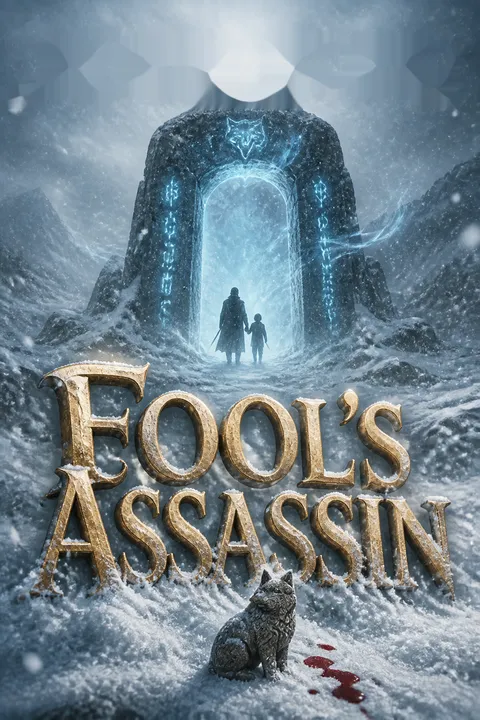
FitzChivalry Farseer, long retired from court intrigue, enjoys rare tranquility at Withywoods with his beloved Molly and their blended family. The manor is alive with feasts, laughter, and seasonal festivities—a hard-won happiness for Fitz after decades of violence under other names. Yet, layered beneath these domestic joys are Fitz's reflections on childhood pain, guilt, lost opportunities, and the cost of happiness. He strives to protect those he loves but remains haunted by memories of betrayal and loss. This hard-won peace feels fragile, his new identity as Holder Tom Badgerlock always threatened by the shadows of his royal blood and deadly training. A sense of foreboding builds, as though even paradise cannot last.
Messenger's Warning and Blood
The abrupt arrival of a mysterious, pale girl at Withywoods pierces its tranquility. She bears a warning meant for Fitz, though the true message is never spoken aloud. Pursued and wounded, the girl is murdered within Fitz's home, her blood desecrating his study. Everyone searches for her, but she seems to vanish, leaving only questions, guilt, and a mark of doom. Fitz is forced to revive his assassin instincts as he investigates the threat and conceals the crime from Molly and Nettle. This violent intrusion shatters the illusion that Fitz has left his bloody past behind and hints that old enemies, magic, and the dangers of his Farseer heritage have not forgotten him.
Unseen Threats Surface
As Fitz, Riddle, and the household search for answers, he confronts old traumas and renewed suspicion that nothing at Withywoods is truly safe. The mystery of the messenger—and her blood upon the Fool's carved stone—awakens screaming memories and possibly old magic, revealing pain at the heart of the world. Fitz's inability to decipher the messenger's warning or trace her killers deepens his sense of impotence and dread. Molly grows more ill, Nettle and Riddle become enmeshed in court politics, and Fitz, caught between worlds, warns his kin against ignoring threats that endanger them all. He fears, above all, that the message was from the Fool and that he has failed his dearest friend.
Time-Stolen and Family Lost
Fitz receives an urgent Skill-message summoning him through the standing stone portal to Buckkeep: his old mentor Chade is dying. Fitz takes the perilous magical journey, saving Chade in a harrowing healing that tests the limits of the royal magic and emotional bonds. His absence is keenly felt back home, as Molly's strange, hopeful madness deepens—she insists another child grows within her, despite her age and the impossibility. Fitz is torn between duty to his Farseer family and the heartbreak at Withywoods. The mounting losses and lessons learned too late fill him with regret as time, love, and joy seem always just beyond his grasp.
Molly's Madness, Fitz's Doubt
Molly's obsession with her imagined pregnancy intensifies; she readies a nursery and transforms the household, alienating servants and worrying Nettle and Fitz. Unable to convince Molly of her delusion, Fitz becomes both caretaker and doubter. His grief and self-doubt erode his ability to find joy even in love. When, against all possibility, Molly actually gives birth to a tiny but living girl, Bee, Fitz is left stunned, delighted, and terrified. Is Bee a miracle or an omen? Meanwhile, Fitz's paranoia grows as shadowy figures—maybe the messenger's killers—lurk at the edge of their world.
Bee's Impossible Birth
Bee Badgerlock's birth changes everything. Fitz and Molly, against grief, aging, and despair, unite in awe over this frail, pale, silent child. Yet Bee's difference is stark and isolating; servants whisper about her strangeness, and Fitz instinctively hides her from the world. As she grows—and fails to thrive or behave as other children—Molly and Fitz struggle with hope and fear, worried that the world, or prophecy, will one day come for her. The boundary between love and possession blurs as the couple's relationship to this uncanny daughter reshapes their own sense of parenthood and fate.
Secrets and Prophecies Unravelled
Withywoods lulls but never forgets Fitz's bloodlines: the Fool's carved stone, Skill-dreams, and Chade's warnings point to hidden prophecies, a troubled future, and mysteries about the White Prophets. Bee's otherworldliness grows more evident, and tales of dangerous seekers searching for a pale, magical child ripple through the Six Duchies, arriving finally at Fitz's door. Fitz resumes covert correspondence with Chade, desperate for knowledge and guidance, and ponders old letters, absurd prophecies, and the secret lives that have shaped his own.
A Child Apart, Isolated
Bee is as miraculous as she is unsettling: so small, so bright-eyed, and so silent. She does not develop like other children; for years, Fitz and Molly believe she may be simple. Bee becomes both the focus of their love and their sorrow, her uniqueness isolating her even as Fitz tries to teach her. When Molly dies suddenly, Fitz and Bee are both orphaned in grief, their tenuous family reduced to two. Bee, now a mute and observant girl, becomes more isolated than ever—overlooked and dismissed, except by those with the eyes to see the strange intelligence behind her blue gaze.
Shun and Lant Arrive
Into this delicate household come Shun (another troubled Farseer outcast) and Lant (FitzVigilant, Chade's failed apprentice, now Bee's tutor). Both bring fresh disturbance: Shun, self-infatuated and resentful of her fate, and Lant, haunted by beatings and exiled by his own kin, attempt to fill roles they dislike and cannot embody. Fitz and Bee alike find their lives thrown into upheaval by these outsiders. As Bee is forced into lessons and socialization she abhors, she finally reveals her voice and intelligence—a secret she has protected for her own safety. Tensions simmer, and the weaknesses of adult protectors are exposed.
Betrayal, Raid, and Bloodshed
Winterfest brings the illusion of comfort—a household full of music, dining, and gifts—until it is shattered by a sudden, brutal attack. Raiders of unknown, foreign origin storm the house, killing servants, minstrels, and Withywoods staff in their search for a pale, prophetic child. Though Fitz is away, Bee and Perseverance, a stable boy, struggle to hide themselves and the other children, while violence, panic, and betrayal explode within the only home Bee has ever known. Fitz's careful world unravels as Withywoods' walls are breached and blood stains its snow.
The Lost Messenger's Price
Unraveling the consequences of the messenger's visit proves costly—a tangle of guilt, magic, and prophecy pulls Fitz from a life he'd worked to build, destroying his illusions of safety. There are truths he cannot unlearn: the failed protections, the murdered girl, and the knowledge that his friend the Fool may be in dire peril and in need of Fitz's long-denied skills once again. Fitz's past actions, betrayals, and debts come due in the blood of innocent people, and the pain of decisions he cannot justify to his daughter or himself.
Bee's Abduction and Despair
In the chaos following the raid, Bee and Perseverance attempt a desperate escape on horseback. Despite their courage, Bee is ultimately captured by the raiders—her uniqueness, rumored magical heritage, and old prophecies making her the "unexpected son" they have been hunting. Perseverance is gravely wounded, left behind to die, while the last traces of childhood and safety are stripped from Bee. Helpless, she is taken from the only home she has ever known, comforted only by the dim presence of Wolf-Father in her dreams. For Fitz, her loss strikes a wound deeper than any before.
The Fool's Return and Wounds
At his lowest, Fitz is shocked by the return of the Fool—now a powerless, blinded, and broken beggar, tortured and pursued by the same forces that have destroyed Withywoods. Their reunion is both a desperate attempt at healing and a bitter confrontation: Fitz struggles to forgive, to save, and to choose between rescuing the Fool or Bee. For the first time, he recognizes the terrible price of loyalty, and the gulf between his ideals and reality. The distinctions between sacrifice, guilt, and love blur as two lifetimes of hurt and memory resurface.
Broken Friendships, Shattered Trust
Fitz, Riddle, Nettle, and Chade confront the cost of love, family, and secrets as the Fool's injuries and Bee's disappearance force them to relive old betrayals. The court is uneasy, the depths of Farseer responsibility loom larger, and the limits of magic and trust are tested. Fitz must call in all his debts—friends, family, and the Skill-magic itself—in a battle not only with the enemies from beyond, but the unresolved pain between people who have always failed to care for one another adequately.
Masks and True Faces
All the masks—political, magical, and personal—are finally laid aside. Fitz, Bee, and the Fool must each choose who they will trust and who they will become. The costs of misjudging people, the dangers of old wounds, and the peril of assuming evil always comes from outside are fully revealed. The Fool asks Fitz, once his Assassin, to wield death again—not just for their own sakes, but to stop enemies whose cruelty knows no bounds. What it means to be a Prophet, a Catalyst, or a father is called into question.
Withywoods Overrun, Loyalties Tested
The consequences of every choice—made and unmade—converge. Withywoods is lost, the household shattered by violence. Fitz is torn between the urge to rescue his daughter and fulfill the message and prophecy that have haunted his life. His loyalty to the Fool endures, even as it becomes clear that the old friendship will cost him everything. Fitz, Bee, and all who survive are set adrift—no home, no safety—in a world where destiny and violence are forever entangled.
The Past Consumes the Present
Stunned by loss, surrounded by ashes, and haunted by memories both joyful and crippling, Fitz faces the deepest questions: Did love ever matter? Can the future be mended, or does pain only beget pain? Bee's capture reignites old cycles of sacrifice and violence, as Fitz resolves—perhaps too late—to hunt her captors and rescue her. Blood debts, prophecy, love, and guilt spiral together, as Fitz learns at last that no life is spared the shadow of all that came before.
Analysis
Fool's Assassin is at once a coda to beloved tales and a sharp subversion of them—a book drowning in the ache of time, regret, and the dangers of hoping for peace in an unfinished world. Every page returns to the same lesson: that we are haunted by the debts history and love place upon us, and that there is no sanctuary that can keep the past at bay forever. The novel's greatest power is its unflinching examination of the costs of loyalty—not just to a king or family, but to ideals, to children, to friends, to one's former self. The characters are achingly flawed and human; no act of love is unbroken, no protection perfect. By filtering the story through Fitz's memory, Hobb examines how the will to survive, to find purpose beyond pain, becomes both salvation and curse. The first half of the book is almost a meditation on domesticity, but the latter half shatters every illusion of safety, demanding a reckoning with betrayal, mercy, and vengeance. In Bee Farseer, the book poses a question about difference and destiny: How must a child loved but never understood survive in a world that devours such souls? Through magic, metaphor, and brutally honest character work, Fool's Assassin is a reminder that forgiveness, hope, and courage are always hard-won—and, in this world, always unfinished.
Review Summary
Most reviewers celebrate Fool's Assassin as an exceptional return to Fitz's world, praising Robin Hobb's masterful character work, emotional depth, and the compelling introduction of new character Bee. Many note the deliberately slow pace as a strength rather than weakness, appreciating the introspective, slice-of-life storytelling. The dual POV structure received widespread approval. Critics highlight the late appearance of the Fool and occasionally frustrating obliviousness of Fitz as minor complaints. A small minority found the minimal plot and repetitive pacing disappointing, but the majority consider it among the series' finest entries.
People Also Read

Characters
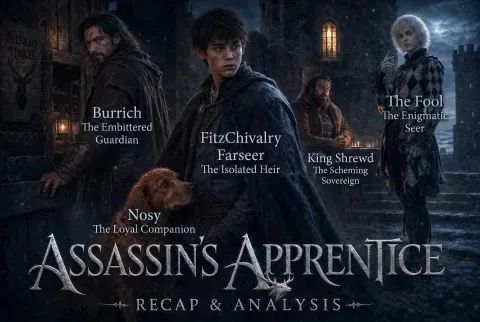
FitzChivalry Farseer
Once king's bastard, assassin, and Catalyst, Fitz seeks only peace as Holder Tom Badgerlock—yet fate denies him rest. Tormented by guilt, regret, and unresolved loss, Fitz's identity is an uneasy patchwork of loyal servant, lonely orphan, wounded lover, and ultimately, father. His attempts to protect his family and craft a simple life are continually sabotaged by prophecy, bloodline, and duty. Dogged, resourceful, and fiercely loving, Fitz is also deeply flawed: secretive, prone to self-pity and poor communication, quick to violence, yet incapable of abandoning those he loves. The tension between longing for peace and being compelled to reenter violence is the emotional axis of the book.
Molly Chandler (Molly Badgerlock)
Fitz's beloved wife—fierce, pragmatic, earthy, and nurturing—Molly represents the ordinary joys and heartbreaks of mortal life. She is the place Fitz calls "home," and much of his happiness is rooted in her. Molly's later descent into obsession and delusion over an impossible pregnancy marks Fitz's helplessness before aging, change, and death. Her literal and symbolic absence after her and Fitz's daughter Bee is born leaves both Fitz and Bee rootless and desperate for connection.
Bee Farseer (Bee Badgerlock)
Bee, pale, brilliant, and strange, is a "miracle" child—born against all odds, slow to develop, dismissed as simple by all but her parents. She is sensitive, intuitive, and observant, but lives in terror of being noticed and misunderstood. Her isolation is compounded by others' inability to recognize her potential, and her story is one of perpetual vulnerability to the violence, cruelty, and ignorance of others. When, at last, she discovers her voice and her agency, it is already too late: her abduction by those seeking the "unexpected son" marks her as a pawn in stranger, darker games.
The Fool (Beloved, Lord Golden)
Once the catalyst of Fitz's transformation and his dearest companion, the Fool is now a shattered relic—blind, broken by torture, hounded by those he once trusted, and hunting for a lost child (his or Fitz's?). Their reunion is agonizing, as love, bitterness, shame, and shared history crash together. The Fool's plea that Fitz become an assassin again for vengeance is both a call to arms and a terrible test of what remains between them.
Nettle (Skillmistress Nettle Farseer)
Nettle, Fitz's eldest living child and Molly's daughter, is Skillmistress at Buckkeep—a woman with her own wounds, torn between courtly duty and her longing for family. She is tasked with managing magic, politics, and a family that consistently disappoints her. Her care for Bee is both maternal and political, and her own loneliness mirrors Fitz's. She is often forced to adopt the role of adult and peacemaker, but rarely finds peace for herself.
Shun Fallstar
Shun is another Farseer bastard forced into obscurity—a woman defined by her bitterness, pride, and inability to adapt. Loathing the company of those lower than she, resisting lessons from hardship, she is both a source of frictions and, ultimately, one of those left adrift in the aftermath of violence. Her presence exposes the limits of Fitz's patience and challenges the sincerity of the book's themes of found family.
FitzVigilant (Lant)
Lant is Chade's former apprentice—well-educated, battered by betrayal, and never quite up to the ruthlessness expected of him. He is torn between the glamor of Buckkeep and the reality of exile at Withywoods. Bee's tutor, but also desperate for a place in the world, Lant's story is one of complicated self-worth, a mirror for the foundling children at the book's heart.
Chade Fallstar
Once castle assassin, Chade is the embodiment of pragmatism, manipulation, and the price of secrets. He is loyal to the Farseer line above all but must now reckon with the legacy of his teachings—both in Fitz and in those like Lant and Shun who are left half-made and half-wanted. Age and regret temper (but do not erase) his tendency to meddle and disrupt in the name of a greater good.
Riddle
Riddle is both Fitz's and Nettle's confidant and practical man-at-arms, often the one to bring kindness or clarity to situations that threaten to spiral into disaster. Loyal, patient, and perceptive, he is a model of friendship tested by impossible circumstances—his affection for Bee and Nettle and willingness to risk himself for others anchor the household.
Perseverance
Quietly heroic, Perseverance is the steadfast companion Bee most needs; his courage and devotion in aiding her during the raid exemplify the theme that heroism is not a matter of blood or birth but character. His pain, loss, and near-sacrifice echo the fate of children everywhere in this world—victims of adult ambition, cruelty, and violence.
Plot Devices
Consequences Haunt Every Act
The book's entire narrative structure revolves around Fitz's inability to escape his past: every attempt to build a peaceful life is undermined by old oaths, loyalties, and mistakes. The lost messenger murdered at Withywoods is both literal and symbolic—a warning that unfinished business and unheeded prophecies always have a cost. The return of the Fool is both joy and agony, and Bee's abduction is the sharpest illustration that no one's history is ever safely "over." Memory—good and ill—fuels both redemption and ruin.
Unreliable Perceptions and Withheld Truths
The book is crowded with misreadings: Fitz's blindness to Molly's pain, Bee's intelligence dismissed, the true nature of the threat disguised by those who claim to protect. Prophecy itself is cryptic, partial, and often as much curse as blessing. The narrative voice (always within Fitz's limited, self-questioning perspective) powerfully illustrates that even honest love is prone to misunderstanding and tragedy.
The Perils of Power and Magic
The Skill-magic and the Wit magic—along with the prophecies of the Whites—are woven throughout, offering hope, healing, and insight but also bringing exhaustion, addiction, and violence. Magical talent endangers Bee as much as it saved the Fool or Fitz in earlier lives. The book repeatedly shows that "power" comes at a terrible price.
Cycles of Violence and Sacrifice
The structure of the book, from its prologue to its last scene, shows that wounds—personal and political—are inherited. Fitz's own pain as a father mirrors that of Burrich and Chade; Bee's abduction echoes the violence Fitz once survived. Each character is forced to reckon with the realization that old wounds must be named and confronted, or the cycle continues. Violence, even in the name of protection, always returns to claim its own.
Surrogate Families and Found Bonds
Though bloodlines and prophecy drive the plot, the story's emotional force comes from the fraught, shifting bonds between found family: Fitz and Nettle, Bee and Perseverance, Riddle and Nettle, Fitz and the Fool. Loyalty, forgiveness, and failure are played out between characters not for the sake of destiny, but because love is the only shield against a world that never stops demanding more.
Fitz and the Fool Series Series
About the Author
Download PDF
Download EPUB
.epub digital book format is ideal for reading ebooks on phones, tablets, and e-readers.








































