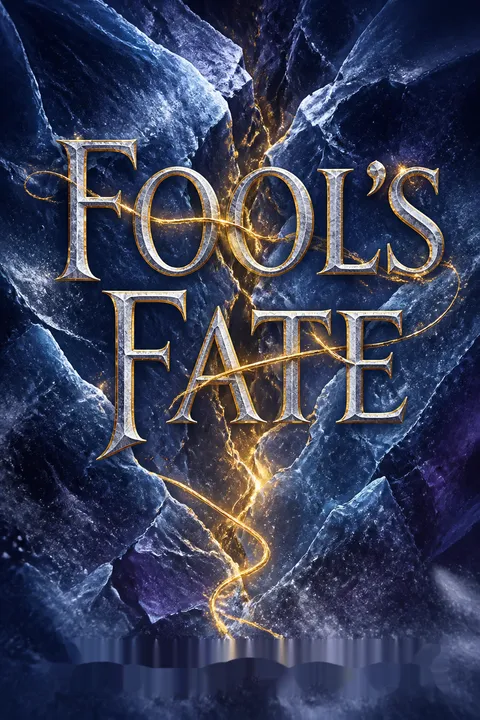

Plot Summary
Catalyst Chosen and Tested
In Buckkeep, Fitz is recruited by his old mentor Chade to once again entangle himself in the fate of prince and kingdom. The White Prophet—the Fool—designates Fitz as "Catalyst"—the one meant to turn the fate of the world with minor but meaningful acts. The Fool's visions require Fitz's presence and survival. Yet the cost of being the Catalyst is pain: Fitz must sacrifice his wishes, his identity, even his very sense of self. The question is posed: if one man's survival or death can change the course of all things, who gets to decide which outcome is "better"? At court, Fitz feels trapped by old obligations, haunted by unfinished debts to both kingdom and friends. In every step, Fitz is reminded: a pebble in the wheel of fate bruises deeply, but might set history askew.
Lies, Love, and Loyalty
As spring brightens Buckkeep, Fitz cannot escape the complicated web of relationships that define him. He is pressed to mentor Swift, Burrich and Molly's son, who challenges Fitz's own hidden identity. Fitz's old conflicting loves—Molly, now married to Burrich, and the Fool, who makes new demands on Fitz as both friend and prophet—leave him pulled in all directions. Loyalty to Prince Dutiful means betraying the Fool, while maintaining the Catalyst role requires lies and deceptions that wound everyone Fitz cares for. The Witted, still stigmatized, find a cause in the Fool's rival, the Pale Woman, who twists disaffection into revolution. Love, paternity, and magical identity are all troublingly tangled, and Fitz finds himself fearing that to remain loyal, he must betray.
Ship of Doubtful Purpose
A retinue, including Fitz, Prince Dutiful and the motley "coterie," sets sail for the Out Islands—ostensibly for peace, but truly on a quest demanded by the Narcheska: slay the legendary dragon Icefyre, buried in the ice of Aslevjal. The written quest is both political test and prophetic hinge, but no one knows the real purpose—Is it love, power, the Fool's vision, or a subtle trap? Secrets abound, from Fitz's identity to Prince Dutiful's Wittedness and the true dangers of the Skill. Fitz, still "Tom Badgerlock," struggles to maintain every disguise, even as the Fool is kept from the journey—and finds his own way. Unrest and dread mount as the journey by sea proves less an adventure than an ordeal, punctuated by Thick's relentless magic and the everchanging winds of fate.
The Dreaming of Dragons
Dreams swirl aboard the ship as dragons—Icefyre and the living Tintaglia—intrude on the coterie's sleep, their presence foreboding. The Skill proves unreliable; at the edges of sleep, prophetic voices clamour. Old fears surface: Forging, ancient magic gone wrong, the possibility that the Outislanders' test is not to save a prince, but to trap or destroy him. Dutiful's binding quest pulls Fitz in deeper, even as the Fool's absence leaves a void. The dragon's presence is seductive, but so is oblivion. History, magic, and inheritance tangle in every dream, warning all that legend and prophesy are never quite what they seem.
Bonds Forged and Broken
On land, the peace with Outislanders proves fragile. The Narcheska's test is both political and deeply personal, her own family fractured by Forging and tragedy. Fitz's relationships with his own "families"—friends, lovers, adopted son Hap, true daughter Nettle—begin to break and re-form in painful ways. Every act of loyalty carries with it a loss; every connection, a secret too many. The Fool's manipulations, Molly's distance, even parenting Swift or Nettle, are choices that demand sacrifice. Fitz must come to terms with the cost—not only to himself, but to everyone touched by his fate-bending role.
Exile's Lonely Return
The Fool vanishes into exile, seemingly abandoned by Fitz and Chade's cold calculations. Fitz, split by duty, guilt and grief, watches as one by one those closest to him depart or become inaccessible: Nettle's resentment, Molly's distance, Burrich's decline, Hap's recklessness. Haunted by old wounds and the sense that he betrays with every decision, Fitz is forced to look inward, measuring what—if anything—his sacrifices have truly accomplished. Wrapped in loss, he endures aching loneliness that neither magic nor love can resolve.
Wits and Skill
Dutiful's quest demands the Skill coterie function as one, but their strengths are mismatched. Skill and Wit both accentuate difference and division, and none of the coterie—including the simpleminded but powerful Thick and the erratic, grieving Chade—can truly bridge the gaps. The skill alone is a drug, tempting escape into oblivion. Soon, the quest becomes about their personal strengths and flaws, and the limits of what magic—and friendship—can mend, or break. Old secrets about the nature of Skill, Wit, and their costs come to light, and Fitz finds himself again in the impossible task of holding together what cannot be joined.
Truth and Betrayal
Arriving at Aslevjal, Fitz's attempt to do right by all finally breaks him: the Fool reappears, insisting on a truth Fitz cannot allow. Allies prove false; the Pale Woman, White Prophet like the Fool, emerges as both mirror and nemesis. Forged ones, Old Bloods and Outislanders, all prove treacherous or unreliable, and Fitz's terrors are confirmed: to save some, he must betray others. The price is agony—a cost the Pale Woman means for him and the Fool to pay in body and soul. The old balance—between secrecy and honesty, friendship and obedience—is finally destroyed.
Breaking the Ice
The desperate, dangerous digging for Icefyre reaches its climax. The coterie's unity collapses under the weight of divided goals: some seek peace and alliance through the dragon's death, others seek fulfillment of prophecy in his survival. The Pale Woman's plot is laid bare, revealing the test to be not loyalty, but destruction. Fitz is given an ultimate test of friendship, vision, and fate—forced to choose, he breaks the ice, unleashing forces he may not be able to control. The dragon is freed, but all that follows is unforeseen—consequence has become its own master.
The Pale Woman's Web
In the depths of Aslevjal, Fitz is captured. The Pale Woman reveals herself: a failed Prophet, false to her Catalyst, but frighteningly powerful. She torments Fitz and the Fool physically and psychically, exposing the costs of prophecy and the ruin of failed friendship. Torture and magic twist prophecy into vengeance, until Fitz is forced to confront the cycle and his role in it: the Catalyst's purpose, weighed against love and memory. In the crucible of pain, both he and the Fool—or what remains of them—are transformed forever.
Sacrifice and Survival
Amid battle, effort, sacrifice and the rise of the dragons, survivors and would-be casualties are forced to reckon with what they have chosen and lost. Burrich dies heroically; the coterie heals, but incomplete. Fitz faces despair over the Fool's torment, friends' deaths, and the broken promise of peace. Yet in the wake of disaster, Flickers of magic, kinship, and memory offer a means to go on. Even in tragedies—the aftershocks of prophecy, Forging, and sacrifice—endurance and survival become acts of defiance and ultimately love.
Dragons Take Flight
Tintaglia and Icefyre, at last unleashed, claim dominance over a world unready for their return. All human plans—peace treaties, marriages, alliances, betrayals—are rendered minor in the shadow of dragon flight. The meaning of the Fool's sacrifice, Fitz's role as Catalyst, and the costs of magic are revealed: change has come, but at a heavy price. As dragons reclaim the sky, Fitz witnesses what he has wrought—and wonders if, for the first time, the world stands on a new, better path.
King's Guilt, Queen's Grace
Peace returns, but its cost reverberates through Buckkeep's halls. Queens and kings, mothers and fathers, lovers and friends, all search for their place in the new order. Fitz carries guilt for losses, both public and deeply private—the Fool, Burrich, Nettle, Molly. Yet in the acts of mending, reconciliation, and honest accounting, there is grace. Some wounds may never heal, but hope—tenuous and hard-won—persists. Harvest Fest and a royal wedding mark new beginnings that do not erase the scars of the past, but soften them into memory.
Homecoming and Healing
In the quiet after calamity, Fitz seeks out the paths he abandoned—renewing ties with his adopted son Hap, reclaiming friendship with Nettle, and—slowly, painfully—paving the way for Molly's forgiveness. There is no neat solution or reward for his suffering, just daily acts of love and work: family ties patiently mended, Steady's knighthood, Molly's children's laughter. Friendship, absent and returned, is anchor and anchor stone. Fitz, survivor and Catalyst, discovers that loving family is not the deferment of destiny, but its true fulfillment.
At Last, Ever After
The story closes not on war or prophecy, but on a hard-won, ordinary happiness. Fitz, forever changed and marked by his burdens, claims the possibility of "ever after," letting love—not fate or obligation—govern his days. Reconciled with Molly, accepted as father, son, friend, Fitz at last chooses the present over prophecy. Magic, destiny, and loss do not vanish, but are softened by forgiveness and the daily acts of devotion. And in the end, there is peace not in having shaped the world, but in having kept faith with himself and those he loves.
Analysis
Fool's Fateis the hard-won resolution to Robin Hobb's epic of fate, magic, and deeply human yearning for connection. Rather than simple triumph, the book interrogates the cost of destiny—what it means to be chosen or "Catalyst." Through Fitz, we trace the limits of sacrifice and the irreducible pain of necessary choices. The book disrupts heroic fantasy's moral clarity: every act of loyalty is marked by betrayal, every victory by loss. Yet the grand arc is ultimately not about dragons or kingdoms, but the struggle to reclaim honesty, family, and one's own soul after a lifetime spent in service to power and prophecy. Love, here, is neither reward nor escape, but a choice—made in the face of past mistakes, isolation, and pain—persisted in through small, ordinary acts. "Ever after" is not given, but earned, one honest word, one mended fence, one learned dance at a time. In its gentle, autumnal conclusion, the book argues that fate is not a tyrant, nor is prophecy an excuse. Family, forgiveness, and friendship—in all their flawed messiness—are enough, and more than enough, for any Catalyst or king.
Review Summary
Fool's Fate receives overwhelming praise as a satisfying conclusion to the Tawny Man trilogy, with most readers rating it 4-5 stars. Reviewers consistently highlight the deeply emotional character development, particularly the complex bond between Fitz and the Fool, and Robin Hobb's exceptional prose. Common criticisms include slow pacing in early chapters, repetitive seasick scenes, and some dissatisfaction with the ending involving Molly. Many readers were moved to tears, calling it one of the best fantasy books they've ever read.
People Also Read


Characters
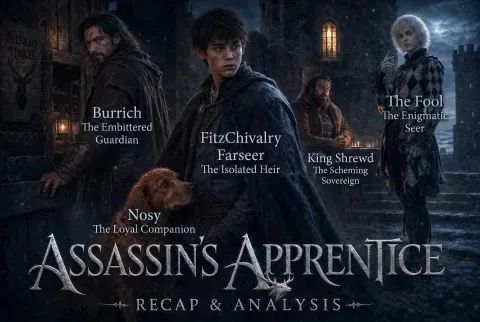
FitzChivalry Farseer
Fitz is the true heart of the tale: a bastard, spy, assassin, and inescapably a pawn of prophecy. From child to broken man, his journey is carved by loss, betrayal, and deep, inescapable love for friends and kin. Fitz's core wound is isolation—he is always outside of what he most cherishes. Yet his compulsive loyalty, at times brutally self-sacrificing, makes him the "Catalyst" both the Fool and prophecy require: he changes the course of fate, it seems, painfully and at much cost. Fitz's main relationships—with the Fool (spiritual soulmate and mirror self), with Molly (the once-lost, at-last-claimed love), and with his scattered children—demonstrate his longing for, and awkwardness within, family. Psychologically, Fitz is defined by trauma, guilt, and a yearning for a peace he cannot believe he deserves. By the end, he is permitted healing and wholeness, earned not through grand heroics but small, honest acts.
The Fool (Lord Golden/Beloved/White Prophet)
The Fool is Fitz's prophecy-tethered "other half"—a White Prophet who sees many futures and seeks a better path for the world. As Lord Golden, he shifts identities with ease, embodying both mentor and trickster, male and not, child and oracle. The Fool's defining trait is love without limits—for Fitz, for the world, for possibility itself. Psychologically, he is isolated by both knowledge and difference; his deepest anguish comes from knowing the cost of what he asks Fitz to endure. The Fool is brave in pursuit of his vision but haunted by what he loses—his innocence, his body, and finally, his intimacy with Fitz. His development traces hope becoming tragedy becoming—possibly—redemption, in the form of dragons and friendship.
Molly Chandler
Molly is not just the love interest, but the lodestone for Fitz's sense of belonging and self-worth. Once a candle maker's daughter and fierce, independent girl, her adult life is defined by the choices of men—Fitz's disappearance and Burrich's steadfastness. For years, she is the sacred "what if" of Fitz's heart—an absence both motivating and punishing. As a wife and mother, she is unyielding, proud, but tender. The possibility of Fitz finding peace with her is the book's emotional crux. Her forgiveness, hard-won and conditional, is what finally allows Fitz to become a whole human.
Nettle Farseer
Nettle, Fitz and Molly's daughter, enters as Fitz's mysterious dream counterpart and grows into her own as an adept of the Skill. She is direct, stubborn, and deeply loving—both a challenge and a second chance for Fitz in terms of honest parental connection. Her relationship with Fitz is marked by frustration at his secrecy, but in time it is mended through shared adversity and Fitz's hard-won truthfulness. Nettle is the hope of renewal and breaks the cycle of isolation and abandonment that marks Fitz's bloodline.
Burrich
Burrich is Fitz's foster-father, Molly's husband, and paragon of stalwart reliability. Scarred by loss and burdened by the necessity to suppress his Wit, Burrich's life is a model of sacrifice—giving away what he loves to ensure its survival. His complex ties to Fitz (both love and rivalry) and his devotion to duty are both tragic and inspiring. His ultimate act—dying to save his son—grants Fitz the strength to make his final choices. Burrich's death underlines the story's theme: love always costs, yet sometimes, love also saves.
Chade
Chade is Fitz's old mentor: former assassin, secret councilor, and architect of intrigue. Both loving and ruthlessly pragmatic, Chade regards people (even Fitz) as game pieces in the pursuit of peace and power. He cares deeply for Fitz but always as means; his "love" is utilitarian, but not absent. As he ages, Chade seeks control and legacy, competing with the Fool for Fitz's loyalty. His acceptance of Fitz's independence signals his own growth and the story's subtle shift toward grace.
Prince Dutiful
The Prince is at first a boy haunted by expectations and prophecy, unsure of his place. His struggle to balance his own desires with the requirements of magic, marriage, and peace is painfully human. Led (and misled) by both Fitz and the Fool, Dutiful matures into a king not by solemn vows, but by learning when to claim his own heart and when to let others lead. His bond to Elliania, forged in trial and not just policy, is the book's hope for a less tragic next generation.
Thick
Thick, slow-witted but of earthshaking skill (in both Skill and Wit), is at once innocent and indispensable. His emotional world is simple, but his needs and wounds run deep. The deep, patient love shown to Thick—by Fitz, Prince, and others—repays itself a hundredfold: it is his trust and magic that allow others to survive and win. Thick's song is the growing note of acceptance in a tale otherwise ruled by exclusion.
Elliania
Elliania, Outislander Narcheska, is both a symbol and a person: the "prize" for peace, but also a clever, haunted, resourceful young woman whose own motives and losses (her mother and sister's Forging) drive the central quest. Her relationship with Dutiful finds its footing in adversity and mutual respect; her journey from pawn to agent (demanding help for her mother and sister, not just for herself) is a small but crucial act of agency that breaks cycles of obedience.
The Pale Woman
The Pale Woman is the Fool's inverse: a Prophet whose visions sour into delusions, who turns to control and cruelty to make the future fit her. She is chilling not just as a supernatural villain, but as an example of what happens when power is used to punish the world for not listening. Her battle with Fitz and the Fool is as much psychological as magical, forcing Fitz to face the cost of his role and the consequences of failed love.
Plot Devices
Catalyst and Prophet Dynamic
The interplay between the Catalyst (Fitz) and the Prophet (the Fool) defines the trilogy and this book: together, they embody the push and pull of fate and free will. Their partnership is both supportive and fraught—Fool sees possible futures, Fitz makes things happen, often at great personal cost. Their mutual love, and eventual parting, is as much the heart of the book as any magic or political intrigue. This relationship is the axis on which fate is upturned.
Magic as Burden and Weapon
The two magics spanning the story—the hereditary Skill of the Farseers and the animalistic Wit—are both gifts and curses. They allow tremendous feats, but also mark the user for suspicion, manipulation, and loss. The Skill is tied to tradition, the Wit to forbidden instinct; their combination, especially in Fitz, signals a hope for wholeness—if one can survive both. The threat of Forging (magical stripping of selfhood) recurs as a warning about magic's misuse, and ultimately as metaphor for trauma.
Prophetic Dreaming and Foreshadowing
Throughout, dreams and prophetic visions foreshadow doom and opportunity. Fitz and those around him are harried by dreams of dragons, of doom, of their own deaths and those of loved ones. The tension is not just what might happen, but the inability of even those with foreknowledge to steer events without incurring pain. The multiplicity of possible futures—in the Fool's prophecy, the Pale Woman's, even Nettle's—makes every victory uncertain and every loss potentially non-final.
Repetition and the Cycle of History
A major motif is that the world is at risk of repeating its old patterns—especially if the Catalyst fails. Tensions between Farseers and Outislanders, between magic and prejudice, even between fathers and sons (or lovers and beloveds) echo across generations. The question is posed: can one generation's suffering break the cycle, or must each pay fate's price anew?
False Destinies and the Breaking of Prophecy
The Pale Woman and Fool both see themselves as shapers of history, but their visions (and actions) are fallible. The book deploys misdirection—challenges that seem true are revealed as traps; choices that seem catastrophic open new possibilities. The climax—the "wrong" sacrifice, the unexpected result—shows that the only real prophecy is change, and that love (not foreseen fate) is the truest agent.
Structure of Ordeal and Return
Narratively, the story adheres to an ordeal-and-return template: the journey to slay the dragon becomes a journey to free, then survive, dragon and consequence; the agonies of capture and betrayal become ultimately reunions and, finally, the return home. Unlike most fantasy quests, it is not easy victory, but the struggle to return, recover, and live that marks real heroism.
Healing, Mending, Wholeness
Wounds, both literal and psychological, are constant. The Skill is used not just for battle but for healing—sometimes impossibly, as with Fitz and the Fool. Such healing always comes at a cost, takes strength from one to give to another, and often raises questions about identity and loss of self. The puzzle of how to live after surviving is ultimately the real test.
Multiple Points of View and Indirection
Key revelations are hidden, delayed, or rendered uncertain. The inwardness of the narration—Fitz's limited, traumatized perspective—forces the reader to question the reliability of all perceptions and to trace the "truth" through secondary clues, magic, metaphor, and others' testimony. Allies and enemies blur, secrets abound, and the consequences of half-seen truths shape all outcomes.
The Tawny Man Series
About the Author
Download PDF
Download EPUB
.epub digital book format is ideal for reading ebooks on phones, tablets, and e-readers.








































