
Plot Summary
The Man in the Tan Jacket
Jackie Fierro, perpetually nineteen and Night Vale's lone pawnshop owner, is offered a slip of paper with "KING CITY" written on it by a normal-looking man in a tan jacket. As with all pawnshop items, hand-washing, chanting, and a ritualistic small death precede the exchange, but this time, the transaction disrupts more than business as usual. Jackie finds herself haunted by the paper; she cannot discard, destroy, or forget it. The stranger's identity slips from her mind the moment she looks away—he is unforgettable by design but leaves behind an inescapable object. Jackie's controlled world unravels, her immortal routine of youth suddenly infected with a sense of threat and larger purpose.
Pawnshop Routine Disrupted
The paper follows Jackie everywhere—burned, buried, eaten, it persists. Her comfort in routine is shattered, turning her insular life inside out. Jackie, previously untouched by fear and time, is overcome by a creeping horror. Friends who once mapped her place in Night Vale are unreachable, while peripheral connections unravel. The pawnshop, once Jackie's entire world, becomes a prison she cannot secure against reality's incursions. Night Vale's bizarre, circular days and nonlinear time buckle under the pressure of this external influence. Old Woman Josie, a neighbor attended by mysterious 'Erikas' (angels forbidden by law), is drawn in as Jackie searches for answers, encountering limits to what knowledge or comfort Night Vale can offer.
Disposable Realities
Night Vale is a place where bureaucracy, rituals, and daily life operate in a logic all their own. Diane Crayton, office worker and single mother, struggles with an unreliable memory, secretive co-workers (like Evan, who vanishes, erased from all but her memory), and a son, Josh, who changes physical form from day to day. Reality in Night Vale is unstable—official records contradict lived experience, the radio dispenses as much paranoia as information, and city hall is both omnipresent and unaccountable. Encounters with the man in the tan jacket and "KING CITY" slip start to affect Diane, her son, and everyone touched by the town's recursive, self-erasing history.
Diane & Josh: Forms of Love
Diane's relationship with Josh is strained and loving, full of miscommunication and longing. Josh, able to take on any shape, is a living metaphor for adolescence and identity flux. Diane's struggle as a parent is complicated by Night Vale's rules—change and uncertainty are literal. Questions about his absent father, Troy, unravel more ambiguity: Troy is everywhere, always familiar, but unreachable, and sometimes appears as multiple people—or perhaps the same person in many places. Diane's attempts to connect with Josh, guide him safely, and process her own complicated feelings mirror the town's struggle with memory and reality, exposing deep emotional truth in this surreal context.
Remembering Evan, Forgetting Self
Diane fixates on Evan, a co-worker who disappears so thoroughly that no one will admit he existed—except Diane, who clings to evidence slipping through her fingers. When she tries to investigate, not only do records fail her, but reality itself turns slippery. Conversations reset, reality doubles back, and nothing is stable—least of all her own sense of self. The effect spreads among other residents—many, especially those touched by the "KING CITY" paper, start losing time, memory, or even physical sensation. Jackie and Diane's separate searches collide, each woman driven by a need to restore order to their private universes.
Eleven Dollar Bill & Angels
Jackie's pawnshop becomes the unwitting hub for Night Vale's growing existential crisis. Josie's advice is oblique—angels cannot acknowledge what they know, and, like everyone else, forget the man in the tan jacket as soon as he leaves. The "KING CITY" paper, spreading person to person, multiplies confusion and loss. Night Vale's rituals—hand-washing, the eleven-dollar system of value, and chants—fail to keep chaos at bay. This mechanical "order" is a fragile illusion, even as Jackie desperately tries to write, catalog, and hold on to anything certain. The town's legal prohibitions (against angels, pens, or knowledge itself) only sharpen the sense of being trapped.
A Tear and a Ticket
Night Vale's currency is emotion and memory as much as dollars. Diane pawns a tear-stained handkerchief, Jackie gives out dreams, visions, or even nights of sleep. The act is cathartic—transferring an intangible burden for the certainty of a ticket, a price, and the promise of retrieval someday. But again, routine breaks; Diane and Jackie's tickets become talismans not of comfort, but of obsession—each marks a failed attempt to make pain transactional. The pawnshop ticket looms as a tragic artifact: what's lost is not easily reclaimed, and what's remembered is unreliable or forbidden to speak.
Flamingos and Time Loops
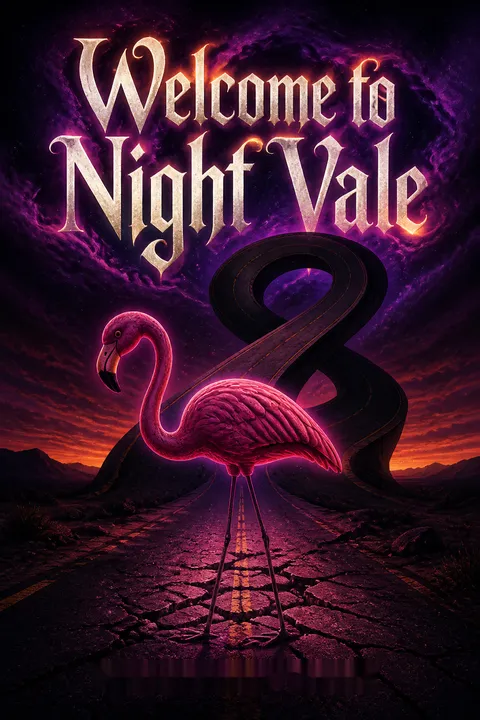
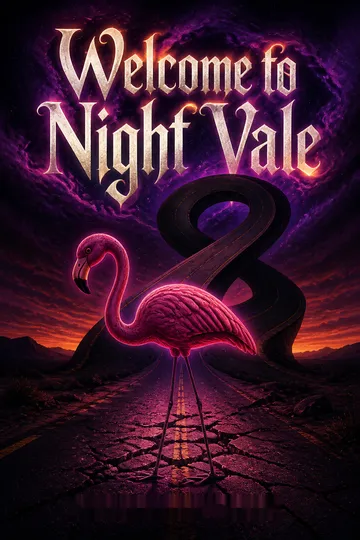
Plastic flamingos, acquired innocuously, prove disastrous; contact with them loops people in recursive, endless lives—never dying, never truly living, forced to repeat their existence until someone interrupts the cycle. As the flamingos multiply out of control, time and selfhood in Night Vale become even more unstable, mirroring the repeating, self-defeating struggles of Diane and Jackie. The flamingos serve as a metaphor (and trap) for Night Vale's infeasible longing for the return of the familiar: wanting comforting repetitions of the past, yet always being repelled by the consequences. Attempts to seize control backfire—solutions birth new crises.
Troy: Fathers Multiplied
Diane's ex, Troy, appears in manifold forms—banker, janitor, server—sometimes in the same room, sometimes all over town. Every encounter with him is ambiguous; is he the same person, duplicated, a shared hallucination, or a symptom of Night Vale's growing unreality? Jackie discovers Troy is also her biological father, complicating all previous relationships. The proliferation of Troys—each slightly different—makes closure impossible. In King City, Troy's "helpfulness" becomes epidemic, threatening to replace the very structure of that town. Both Diane and Jackie must confront their pain at abandonment, while the multiplying Troys epitomize Night Vale's refusal to let reality stabilize.
Those Who Wander, Return
Attempts to leave Night Vale—usually to find King City—always end in recursive routes: highways that curl back to town, bus rides that start and end at home, flights that circle to their origin. Diane, desperate to find Josh, finds herself always back at Night Vale's city lines, despite following every conceivable path outward. Even success brings instability: whatever you find or lose on the journey reconstructs itself once you return. Neither running away nor chasing after loss lets anyone escape the gravity of Night Vale, forcing characters to confront their relationships and failures—there is "no away," only another loop in the cycle.
Invasive Memories, Lost People
As the "KING CITY" paper spreads, those who touch it can remember things no one else can. People vanish—literally and from memory—like Evan; others, like Diane, fight to hold on to what is real as even the nature of language in Night Vale changes. City Hall loses touch with basic facts, even the existence of a mayor. Night Vale's authority figures suggest forgetting is survival, but Diane and Jackie refuse. In losing or regaining memories, each character faces the risk of nonexistence, but also the hope of healing: memory hurts, but forgetting is worse.
Civic Mysteries
Both towns—Night Vale and King City—are ruled by municipal authorities who cannot actually help or remember their constituents. Night Vale's mayor is overwhelmed, the city council monstrous; King City's mayor is utterly forgotten, invisible and desperate to be acknowledged. Both towns are avatars of denial, covering their wounds with bureaucracy, rituals, and pronouncements that only underline their helplessness. Attempts to interface with officialdom become mazes: hallways that don't lead anywhere, blank or locked doors, nonfunctioning computers, and empty office chairs. The monstrousness of indifferent authority is literalized in Night Vale—city government devours citizens, both figuratively and often literally.
The Library's Deadly Knowledge
Night Vale's library, infamously lethal, becomes the crucible for seeking truth. Jackie and Diane, allies now, risk their lives for a file on Troy and records of King City. What they find is both mundane and surreal: contradictory newspaper clippings, photos that seem too old, misplaced, or impossible. The price for forbidden knowledge is near-mortal danger—librarians are literal monsters. Their escape is hard-won and costs them dearly, but they also emerge changed: scars mingle with broken routine, and, for the first time, a partnership blooms out of mutual rescue and recognition of each other's pain.
Dogs, Crowds, and Escape
King City, finally located via magical flamingos, is a town unmoored from normalcy: silent streets, shops run by bleeding clerks, and incongruous animals. Jackie and Diane's arrival is met by disjointed memories, reality fractures, and people who cannot or will not help. Troy, found in a bar full of himself, is both origin and symptom of King City's malaise. Making sense of anything requires breaking the cycle—no amount of information, even after violence or dialogue, resolves the paradox. Only direct confrontation—refusing to choose who stays behind, insisting Troy must leave with them—brings any closure, and even then, it feels tentative.
Diane's Descent
While Diane searches for Josh in physical and psychic space, she must face her greatest anxieties: being unable to protect him, losing her own sense of worth, realizing her child is now beyond her understanding or rescue. Josh, meanwhile, asserts his adulthood—choosing his path, confronting his father, and making peace with his own shapeshifting uncertainty. Diane's pain is both archetypal—any parent's fear of letting go—and uniquely Night Vale's, where letting go might mean nonexistence. The crisis only resolves when Diane claims the right to refuse a sacrificial choice; her assertion of maternal love rewrites the story, and herself, into a new, chosen present.
Pawned Pain and Healing
Jackie and Diane, both wounded, limp home changed. The "KING CITY" paper is finally surrendered, pain transmuted but never reverted to the original normalcy. Unresolved pasts—abandonment, lost memories, and monstrous authority—become only part of their story, no longer its boundaries. Diane makes peace with her role as a mother; Jackie, by accepting and loving her own mother, at last begins to age—a sign of living, not just existing. Healing is slow, nonlinear, and never total, but in mutual support they find possibility: routine is not a cage, but a choice, especially when broken consciously.
Gaps, Loops, and Returns
Night Vale does not change, but the way its people live within it does. Jackie, now older, becomes less trapped by timeless youth, and Diane, healed and more self-aware, balances parenting with partnership and work at the pawnshop. Troy, freed from his destructive helpfulness, is finally absorbed by the community—not erased, but limited. The town goes on with its own rituals and uncanny rules, but Jackie and Diane's new friendship, Josh's tentative flight, and the intertwined destinies of Night Vale and King City offer hope. The story closes with them together—family not given but chosen—facing the weirdness, uncertainty, and endless cycles with courage and a laugh.
Family, Chosen and Otherwise
The long journey fractures, absolutely and repeatedly, the illusion that narrative, family, or identity can ever be "fixed." Instead, what endures is relationship: mothers and children, friends and lovers, new alliances. As Jackie finally ages, Diane and Lucinda share wisdom and warmth, and Josh finds both freedom and connection, Night Vale persists unchanged—but its characters are changed by their refusals and reconciliations. Family is not a given line, but a composition, as fragile and real as memory. The final chapter celebrates not survival but "verve and spunk," the willingness to try, forgive, and love, even in the most unwelcoming and mysterious worlds.
Analysis
Welcome to Night Vale is a surreal meditation on the porousness of reality, identity, and community, filtered through the lens of cosmic horror and absurdist comedy. Its core themes—memory, forgetting, the fragility of routine, and the terror and comfort of belonging—echo the existential anxieties of modern life. The town is both a literal and symbolic space: comfortingly familiar, yet full of lurking threats, where meaning is negotiated daily. Fink and Cranor argue that home—and self—is not fixed, but assembled patchwork from loss, love, and broken ritual. The narrative's refusal of linearity, happy endings, or clear explanations resonates with the anxiety and possibility of the postmodern world, but its lesson is optimistic: only by reaching toward others, accepting pain and absurdity, and refusing to let memory or fear circumscribe identity, can we transform stasis into growth. Night Vale's story is one of persistence—through disorientation, heartbreak, and cyclical mystery—toward connection, forgiveness, and the self-forged miracle of family, chosen every day anew.
Review Summary
Reviews of Welcome to Night Vale are sharply divided. Fans of the podcast tend to rate it highly, praising its quirky humor, lyrical writing, and faithful translation of the show's surreal atmosphere. Critics, however, find the relentless weirdness exhausting in novel form, citing weak plot structure, underdeveloped characters, and meandering narration. Several reviewers recommend the audiobook over print, and many suggest listening to the podcast first. A common concern is that the style works better in short doses than across four hundred pages.
People Also Read

Characters
Jackie Fierro
Jackie, the perpetual nineteen-year-old pawnshop owner, embodies stasis and the terror of routine ruptured. Psychologically, Jackie is a study in arrested development: her days are anchored in ritual and repetition, shielding her from the outside world and meaningful relationships. The arrival of the "KING CITY" paper forces her into a journey that is both external and existential, as she is compelled to face forgotten family (her mother, Lucinda, and an absentee father, Troy), the limitations of her own memory, and the pain of suspended identity. Jackie's eventual ability to age—her decision to move forward—signifies transformation through suffering, connection, and self-recognition. Her growth is catalyzed by her evolving relationship with Diane, and, by the story's end, she chooses to write her own narrative through acceptance, agency, and forgiveness.
Diane Crayton
Diane, a single mother and office worker, is defined by her relationship with her shape-shifting son, Josh, and her efforts to maintain order in a world (and mind) where reality is unreliable. Diane's internal life is marked by anxiety, guilt, and longing—for control, understanding, and a connection with her elusive son and ex, Troy. Her psychoanalysis reveals a potent mix of fear and resilience: she is determined to rescue and connect with her child even as she fears his estrangement, and is gripped by doubts about her capacity as a parent and person. Diane's journey is from helplessness to empowered love—a willingness to assert boundaries against both the supernatural (King City's mayor) and the interpersonal (Troy, Jackie), ultimately shaping her family by choice rather than accident. Her acceptance of complexity, ambiguity, and the impossibility of "saving" everyone marks her deepest change.
Josh Crayton
Josh, Diane's son, literalizes teenage mutability with his shifting appearance, whether human, animal, or otherwise. His transformations mirror his struggle for identity, independence, and belonging, complicated by an absent father and Night Vale's functionally unstable world. Josh is intelligent and sensitive, but naive about consequences—his journey to King City is a quest for closure with Troy, but also a test of agency. His development moves from resentment and confusion to tentative maturity—acknowledging his mother's sacrifices, grappling with family complexity, and, eventually, embracing both his own uncertainty and connections. Josh's relationship with both mother and father is less about answers and more about the bravery to admit not everything can, or should, be solved.
Troy (The Multiplying Father)
Troy's central trait is a pathological urge to help—a desire to be everything to everyone, which multiplies him both literally and figuratively, particularly in King City, where his unchecked helpfulness fractures the town's reality. He refuses to confront the consequences of his own actions, fleeing emotional responsibility (fatherhood, partnership) in favor of solving external problems, never the interior ones. Connected to both Diane (ex-lover, father of Josh) and Jackie (biological father), Troy symbolizes the eternal disappointment of absentee, well-intentioned, but fundamentally insufficient parenthood. His "multiplying" is a defense against reality: when forced to choose, he cannot; only when summoned home by others does any real integration happen. Psychologically, Troy embodies Night Vale's terror and temptation—helpful, chaotic, and dangerous when left unaddressed.
The Man in the Tan Jacket (King City's Mayor, 'Evan')
The man in the tan jacket is as much plot device as character—a functionally "forgotten" man. Psychologically, he is desperate for recognition, resorting to manipulating the boundaries of reality to be seen. His only memorable attribute is the "KING CITY" paper he circulates. He infects Night Vale with recursive, self-erasing crises in a desperate effort to restore his own town and relevance. He becomes a metaphor for all those who feel unseen, erased, or left behind, but his machinations only increase others' confusion and pain. His encounter with Diane and Jackie is about needing others' perspective to save himself—a problematic but profoundly human desire.
Lucinda (Jackie's Mother)
Lucinda anchors the story's emotional understanding of motherhood. She watches as Jackie forgets her raised, loved childhood, suffering silently as only mothers can when their children slip out of reach. Her psychoanalysis suggests a kind of tragic wisdom: time in Night Vale does not work, so she treasures what love and contact she can have. Lucinda's forgiveness and resilience provide the model for grace amid loss—her comfort to Diane and Jackie is the novel's core lesson about parental love as something that endures even past the boundaries of language, memory, or narrative.
Old Woman Josie & The Erikas (Angels)
Josie, surrounded by angels whose existence is literally illegal to acknowledge, represents the few sources of wisdom and unconditional support in Night Vale. The Erikas are cryptic, afraid, barely able to help, but still loving. Josie dispenses cryptic advice to Jackie, framing the journey as one of limitation and humility—knowledge is bounded, danger ubiquitous. Their existence, illegal and denied, underlines Night Vale's suppression of the inexplicable and creates the thematic backbone of the story: things unspoken remain the most powerful and dangerous. Josie's age, kindness, and sometimes sorrow provide a refuge from the mechanistic cruelty of the world.
Catharine
Catharine, Diane's distant but well-intentioned boss, is both an unwitting participant and a victim of Night Vale's instability. Her superficial control and efforts to keep order—juggling migraines, paperwork, and invisible terrors—show the limits of authority in Night Vale. Symbolically, she is destroyed by bureaucratic violence: her one trusted confidant, the office tarantula, falls to loss and disintegration. Catharine's trajectory underlines the bankruptcy of external structure without real intimacy or connection.
Steve Carlsberg
Steve lurks at the edge of Night Vale's weirdness—innocuous, eager, always gossipy, never quite in the main narrative. He stands for the ordinary person in the abnormal world: comforting, sometimes irritating, never decisive but always present. His enthusiasm and digression are a counterpoint to the protagonists' intensity, and his belief in mystery for mystery's sake is both his strength and his limitation. Steve is the friendly conspiracy theorist, a necessary narrative valve.
Carlos the Scientist
Carlos's primary function is to embody an optimistic, if often futile, rationality in the face of Night Vale's illogic. He investigates flamingos, helps Jackie with the "KING CITY" paper, and seeks to make sense of the world through equations and observation. His relationship with Cecil, the radio host, illustrates how love and hope can flourish even within absurdity. Carlos reassures by never quite losing faith that understanding is possible—and sometimes, in rare moments, he's almost right.
Plot Devices
Fragmented Narrative and Nonlinear Time
Welcome to Night Vale weaves its story through fragmented vignettes, unreliable narrators, and time loops. Clocks and calendars don't work; people can't remember what they've lost, and journeys to other towns or different realities rarely have tidy exits. The plot resists linearity, preferring a recursive, echoing approach—characters double back, disappear, or find themselves circling home. Foreshadowing operates in loops: objects or phrases (the "KING CITY" paper, the flamingos) recur at critical moments, confirming Night Vale's closed-circuit nature. The story is intercut with community radio segments—miniature stories and warnings—that frame the primary narrative with reminders of Night Vale's perennial weirdness, mortality, and community.
Bizarre Objects as Plot Catalysts
Items like the "KING CITY" paper, time-looping flamingos, and pawnshop tickets are more than MacGuffins: they infect, bind, or remake reality. The "KING CITY" paper is a literal curse; the flamingos loop consciousness; tickets grant or trap memory and emotion. These devices build the internal logic of Night Vale (and King City), pushing characters to the brink and insisting that the world's rules are mutable—but at a cost.
Absurdist Rituals and Bureaucracy
Rituals—hand-washing, tickets, meetings, and official "sacrifices"—clash with supernatural strangeness, highlighting the futility and comfort of procedure. Bureaucratic entities like the City Council, libraries, and police are sources of both terror and hilarity, underlining a recurring Night Vale motif: order is fragile, and safety, if it exists, comes only through human connection, not authority.
Dual and Unreliable Identity
Characters' shifting forms (especially Josh and Troy), amnesia, and multiple realities force both them and the reader to question what is real, who is family, and what it means to be "yourself." This motif is literalized (Josh's metamorphoses, Troy's ubiquity in King City) and metaphorical (lucid dreams, double memories, split experiences of the same moment). The towns themselves—Night Vale and King City—are both doubles: each influences, infects, and mirrors the other.
Choice, Refusal, and Found Family
Repeated offers to choose—sacrifice Josh or Jackie, pick an authority, abandon or reclaim the past—are refused, subverted, or negotiated into new forms. "Family" is made, not found; love is communal effort, not fate. The climactic refusal to leave anyone behind, and the conscious reintegration of Troy, marks the victory of agency over inertia.
Welcome to Night Vale Series Series
Download PDF
Download EPUB
.epub digital book format is ideal for reading ebooks on phones, tablets, and e-readers.








































