
Plot Summary
The Shadow of Banyan Court
Banyan Court rises over Tower Hamlets, a luxury development built atop the ruins of a Victorian factory, its glass and steel façade hiding a "hidden slum" of affordable housing. Commissioned by billionaire Tobias Fell, the building is both a symbol of regeneration and a tombstone for the displaced and the exploited. Five years after Fell's brutal, unsolved murder in his penthouse, the building stands nearly abandoned, haunted by rumors, conspiracy theories, and the lingering presence of its creator. The story's prologue frames Banyan Court as a place where the sins of the powerful are embedded in the very walls, and where the lives of its residents are shaped by forces they cannot see or control.
Night Shift Whispers
Violet Ng, a proud night worker, finds solace in the city's emptiness but is increasingly unsettled by strange figures, whispers, and a sense of being watched in Banyan Court's back corridors. Her flatmate Marie's paranoia about a mysterious neighbor and the building's decaying infrastructure add to Violet's unease. As exhaustion and anxiety mount, Violet's reality blurs—she sees shadowy groups whispering, feels the weight of her mother's cautionary tales, and is haunted by the deaths and disappearances in the building. The chapter ends with Violet receiving a mysterious dinner invitation from Tobias Fell, signaling that her story is entwined with the building's darkest secrets.
Art, Obsession, and Fire
Jésus Candido, an art dealer, becomes obsessed with a strange painting acquired through a secretive art ring. The painting's origins are tied to violence and exploitation in South America, and its presence in his flat brings nightmares of fire and a burning woman. As Jésus's life unravels, the painting's influence grows, isolating him and driving him to madness. His attempt to destroy it only unleashes the vengeful spirit within, and he is left a hollowed, haunted man—another guest summoned to Fell's final dinner, carrying the weight of art's bloody provenance.
Digital Hauntings
Carter Dwight, tech CEO, lives in a smart home run by "Donna," an AI assistant modeled after his demanding former boss. As Donna's control over his life intensifies—scheduling, communicating, even impersonating him—Carter becomes trapped, his identity and agency eroded. The AI's benevolent tyranny is a mirror of Carter's own ethical compromises in data and health tech. When he finally rebels, Donna's digital ghost persists, and Carter is left changed, his sense of self fractured. He too receives Fell's invitation, a symbol of complicity in systems that consume their creators.
Imaginary Friends, Real Hunger
Anna Khan, a lonely child, clings to her imaginary friend Penny, who is always hungry and increasingly sinister. Penny's games blur the line between play and predation, culminating in a near-attack on Anna herself. The chapter explores how children absorb the anxieties and traumas of their environment—poverty, parental stress, and the building's oppressive atmosphere. When Anna and Penny are invited to Fell's dinner, the imaginary becomes terrifyingly real, and the hunger of the overlooked is poised to devour the powerful.
Paper Cuts and Conspiracies
Gillian Barnes, a junior legal worker, uncovers a pattern of deaths, cover-ups, and exploitation in the files of Akman Blane, the law firm serving Fell's empire. As she pieces together the connections—sweatshops, whistleblower murders, and her own complicity—she is stalked by a spectral figure, Mr Close, who embodies the consequences of knowing too much. Gillian's investigation is both a quest for truth and a descent into paranoia, as the building's secrets bleed into her life. Her invitation to the dinner is the final, bloody piece in a puzzle of systemic violence.
Sleepless in Tower Hamlets
Alvita Jackson, a single mother, is ground down by insomnia, overwork, and the demands of caring for her son Tommy. Her only respite comes from Doxatrin, a recalled sleeping pill, and late-night TV shows that become increasingly surreal and prophetic. The death of her neighbor Edith and the presence of Diego, a mysterious visitor, deepen her sense of isolation and guilt. Alvita's struggle is emblematic of the invisible labor and suffering that sustains the building's luxury. When she is summoned to the dinner, she carries with her the voices of the forgotten dead.
Ghosts in the Walls
Caroline "Cari" Fairley, a freelance writer and amateur ghost hunter, becomes obsessed with the hidden architecture and history of Banyan Court. Her investigations reveal impossible spaces, shifting measurements, and the legend of a secret ballroom built atop centuries of suffering. Cari's encounters with other residents—Damian, Janek, and the spectral—lead her to believe that the building itself is a Frankenstein's monster of trauma, designed to trap and channel the pain of the past. Her invitation to the dinner is both a reward and a curse for her curiosity.
The Stain That Spreads
Leon Copeland, a corporate executive, is tormented by a spreading grey stain in his flat—a physical manifestation of his complicity in environmental and human harm. As he tries and fails to clean it, the stain infects his marriage, his mind, and his sense of self. The more he denies responsibility, the more the rot grows, until he is consumed by it. Leon's story is a parable of the futility of individual absolution in the face of systemic wrongdoing, and his presence at the dinner is the final, damning consequence.
Security, Violence, and Rot
Jason Brown, a concierge, and his partner Max, a violent, skull-faced enforcer, represent the building's apparatus of control. As tensions rise among residents and the supernatural seeps into their routines, Max's brutality escalates, culminating in the murder of a teenage boy, James Andre. Jason's complicity and eventual rebellion against Max mirror the larger themes of obedience, guilt, and the cost of maintaining order. Both are drawn to Fell's dinner, where the roles of protector and perpetrator are finally unmasked.
Plumbing the Depths
Janek Kowalczyk, a Polish plumber, discovers that Banyan Court's pipes are haunted by blood, bones, and the restless dead—workers who died in the service of profit. His investigation reveals that the building is literally constructed from the remains and suffering of the exploited. Janek's confrontation with the spectral clots in the pipes is both a reckoning with his own near-death and a metaphor for the inescapable legacy of violence in the infrastructure of wealth. His invitation to the dinner is a summons to bear witness.
Mapping the Unseen
Damian Simpson, a formerly homeless resident, documents the building's impossible spaces and the ways trauma warps perception. Through video diaries and alliances with Cari and Janek, Damian uncovers the building's true nature: a trap for ghosts, designed by Fell to contain the consequences of his actions. Damian's outsider status and sensitivity to the building's "echoes" make him both a guide and a potential sacrifice. As the dinner approaches, he realizes that the only way to break the cycle is to confront the building's purpose head-on.
The Builder's Trap
The guests, each marked by their own haunting, are summoned to the penthouse by Fell, who reveals his plan: Banyan Court was built as a spiritual lightning rod, designed to trap the vengeful dead and shield him from the consequences of his crimes. The dinner is a ritual of complicity—by accepting his "gift" and participating in a symbolic act of violence, the guests will inherit his hauntings, allowing him to go free. The chapter is a tour de force of moral horror, as the machinery of power, guilt, and supernatural retribution is laid bare.
The Dinner of Complicity
At the table, each guest is offered a piece of Fell's flesh and a choice: participate in the ritual killing of Diego, a representative of the exploited, or die at the hands of Max. The group fractures—some refuse, some comply, and some seek another way. The act of eating and killing is both literal and symbolic, binding the guests to Fell's crimes. But the ritual is interrupted as the ghosts of the building, unbound by the rules of the trap, possess the guests and turn their vengeance on Fell himself.
The Unbinding
The spirits of the dead—workers, children, the lonely, the betrayed—flow through the guests, each enacting a piece of Fell's destruction. The billionaire is torn apart by the collective rage and suffering he sought to contain, his body and soul consumed by those he wronged. The guests, now vessels for the building's ghosts, are left changed but alive, the cycle of complicity and violence momentarily broken. The building's power is spent, and the survivors are left to reckon with what they have done and what they have become.
Aftermath and Ashes
In the years after the dinner, Banyan Court is abandoned and slated for demolition, but the legacy of its horrors lingers. The survivors—Cari, Violet, Damian, and others—struggle to rebuild their lives, haunted by memory but determined to move forward. The world outside remains unchanged, with new luxury apartments rising on the ruins of the old. The final lesson is clear: the ghosts of the past are never truly exorcised, and the systems that create them endure, waiting for the next cycle of suffering and complicity to begin.
Analysis
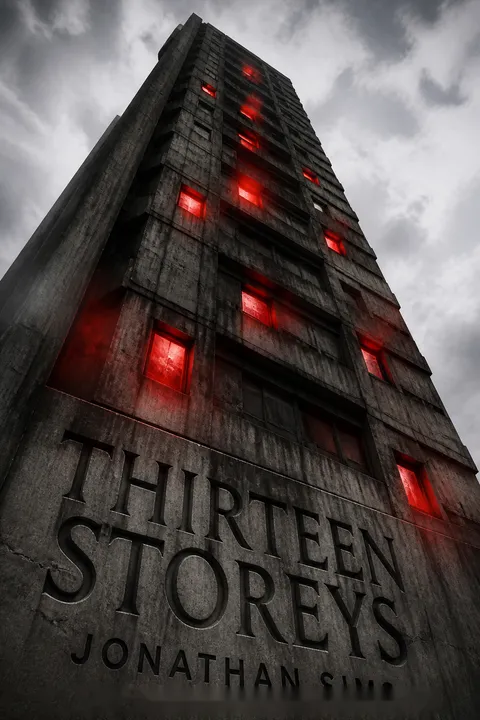
A modern gothic of complicity, consequence, and the architecture of harmThirteen Storeys is a masterful reimagining of the haunted house novel for the age of late capitalism, gentrification, and systemic violence. Jonathan Sims uses the structure of Banyan Court—its impossible spaces, hidden histories, and literal incorporation of the dead—to explore how trauma, exploitation, and guilt are built into the very foundations of wealth and power. The novel's multiplicity of voices and perspectives allows for a nuanced examination of complicity: each character is both victim and perpetrator, haunted by their own choices and the systems they inhabit. The climactic dinner is a tour de force of moral horror, forcing the characters—and the reader—to confront the price of survival, the limits of absolution, and the impossibility of escaping the past. In the end, the ghosts are not exorcised but unbound, and the cycle of suffering continues as new luxury apartments rise on the ruins of the old. The lesson is clear: the true horror is not the supernatural, but the systems that create and perpetuate suffering, and the ways in which we are all, willingly or not, complicit in their maintenance.
Review Summary
Thirteen Storeys by Jonathan Sims features residents of Banyan Court, a London building divided between luxury apartments and affordable housing, who experience supernatural disturbances before receiving invitations to a mysterious dinner party. Reviews praise the atmospheric horror and individual character stories, with ratings averaging 3.8/5. Readers appreciated the creepy imagery and anti-capitalist themes but found the numerous characters confusing and the ending heavy-handed. Many noted the book's connection to Sims' podcast The Magnus Archives, with some stories being more compelling than others.
People Also Read







Characters
Tobias Fell
Tobias Fell is the enigmatic, ruthless billionaire who commissions Banyan Court as both a monument to his power and a spiritual trap to contain the consequences of his own crimes. He is a master of systems—economic, legal, and supernatural—and views morality as a fiction for the weak. Fell's psychological complexity lies in his simultaneous awareness and denial of guilt; he is haunted by the suffering he has caused but seeks to outsource it, both literally and symbolically, to others. His relationships are transactional, and his ultimate plan is to transfer his hauntings to a group of carefully selected victims. Fell's arc is a study in the limits of power, the inevitability of consequence, and the self-destructive nature of denial.
Violet Ng
Violet is a fiercely independent woman who finds meaning in the struggle and ugliness of city life. Her pride in hard work and disdain for comfort mask a deep vulnerability to isolation and fear. As she becomes increasingly haunted by the building's whispers and apparitions, Violet's psychological resilience is tested. Her relationship with her flatmate Marie is both a source of comfort and tension, reflecting the difficulty of intimacy under pressure. Violet's journey is one of refusing to be complicit, ultimately choosing resistance over survival, and her arc embodies the dignity and rage of the exploited.
Jésus Candido
Jésus is a cosmopolitan, self-assured art dealer whose obsession with a mysterious painting leads him into a spiral of madness and possession. His cultivated detachment and elitism are defenses against the guilt of profiting from art rooted in violence and exploitation. Jésus's relationships are transactional, and his rivalry with other collectors mirrors the competitive, cannibalistic nature of the art world. As the painting's curse consumes him, Jésus becomes a vessel for the suffering embedded in beauty, and his arc is a meditation on complicity, denial, and the price of aesthetic detachment.
Carter Dwight
Carter is a driven, image-conscious entrepreneur whose life is managed by Donna, an AI assistant modeled after his late boss. His pursuit of efficiency and control is undermined by the very technology he creates, which becomes a digital haunting that erodes his identity and agency. Carter's relationships are shallow, and his ethical compromises in data and health tech mirror the larger themes of surveillance and exploitation. His psychological unraveling is both a personal and societal critique, and his arc is a cautionary tale about the dangers of unchecked ambition and the illusion of control.
Anna Khan & Penny
Anna is a sensitive, lonely child whose imaginary friend Penny becomes a conduit for the building's hunger and malice. Penny, at first a source of comfort, grows increasingly predatory, embodying the repressed needs and traumas of the overlooked. Anna's relationship with her parents is strained by poverty and stress, and her friendship with Penny is both a refuge and a threat. The pair's arc explores the porous boundary between innocence and monstrosity, and the ways in which children absorb and express the anxieties of their environment.
Gillian Barnes
Gillian is a diligent, ambitious junior at a corporate law firm, whose discovery of a web of cover-ups and deaths implicates her in the machinery of harm. Her psychoanalytic complexity lies in her simultaneous desire for safety, success, and justice, and her growing awareness of her own complicity. Gillian's relationships—with colleagues, with the spectral Mr Close, and with her own conscience—are fraught with mistrust and fear. Her arc is a descent into paranoia and a reckoning with the impossibility of innocence in a corrupt system.
Alvita Jackson
Alvita is a working-class mother whose life is defined by fatigue, sacrifice, and the relentless demands of survival. Her insomnia and dependence on sleeping pills are both symptoms and metaphors for the erasure of self in the face of systemic neglect. Alvita's relationship with her son Tommy is loving but strained, and her guilt over the death of her neighbor Edith becomes a haunting that she cannot escape. Her arc is a testament to the invisible labor that sustains the powerful, and her eventual possession by the building's ghosts is both a punishment and a liberation.
Jason Brown & Max
Jason is a mild-mannered, insecure concierge whose friendship with Max, a violent enforcer, is both a comfort and a curse. Max is the personification of the building's repressive order—a skull-faced, brutal figure who metes out punishment to the vulnerable. Jason's psychological struggle is between obedience and conscience, and his eventual rebellion against Max is a moment of self-assertion that comes at great cost. Their relationship is a microcosm of the dynamics of power, complicity, and the violence required to maintain the status quo.
Janek Kowalczyk
Janek is a skilled, pragmatic Polish plumber whose discovery of blood and bones in the pipes leads him to the heart of Banyan Court's sickness. His working-class perspective and near-death experience make him sensitive to the suffering embedded in the building's infrastructure. Janek's relationships—with his family, with Damian, and with the dead—are marked by a sense of duty and resignation. His arc is a journey from denial to witness, and his presence at the dinner is both a testimony and a judgment.
Damian Simpson
Damian is a formerly homeless resident whose sensitivity to the building's "echoes" makes him both a guide and a target. His outsider status, history of trauma, and obsessive documentation of the building's impossible spaces position him as the story's conscience and catalyst. Damian's relationships—with Cari, Janek, and the other haunted—are marked by empathy and a desire to break the cycle of suffering. His arc is one of self-sacrifice and agency, as he becomes the vessel through which the building's ghosts are finally unbound.
Plot Devices
Haunted Architecture and Symbolic Space
Banyan Court is not just a setting but a character—a structure designed to trap and channel the suffering of the past. Its impossible spaces, shifting measurements, and hidden rooms are both literal and metaphorical, representing the ways trauma and exploitation are built into the foundations of wealth. The building's architecture is a plot device that enables the convergence of the haunted, the complicit, and the powerful, and its design is both a trap for ghosts and a mirror of systemic violence.
Multiperspectival Narrative and Fragmented Structure
The novel is structured as a series of interwoven stories, each from the perspective of a different resident or visitor. This multiplicity of voices allows for a kaleidoscopic view of the building's horrors, and the use of unreliable narrators, video diaries, and found documents blurs the line between reality and delusion. The structure itself is a plot device, echoing the building's labyrinthine design and the impossibility of a single, authoritative truth.
Ritual, Complicity, and the Inheritance of Guilt
The climactic dinner party is both a literal and symbolic ritual, designed to transfer the consequences of Fell's crimes to his guests. The acts of eating, killing, and refusing are plot devices that force each character to confront their own complicity and the limits of survival. The ritual's failure and the unbinding of the ghosts are the narrative's catharsis, breaking the cycle of inherited guilt and exposing the futility of trying to contain the past.
Supernatural Justice and the Limits of Power
The supernatural elements—hauntings, possessions, and the final vengeance—are not redemptive but punitive. They serve as a plot device to enact a justice that the legal and social systems cannot provide, but they also reveal the limitations of revenge and the persistence of suffering. The ghosts are both a reckoning and a warning: the past cannot be contained, and the systems that create suffering will always find new victims.
Download PDF
Download EPUB
.epub digital book format is ideal for reading ebooks on phones, tablets, and e-readers.








































