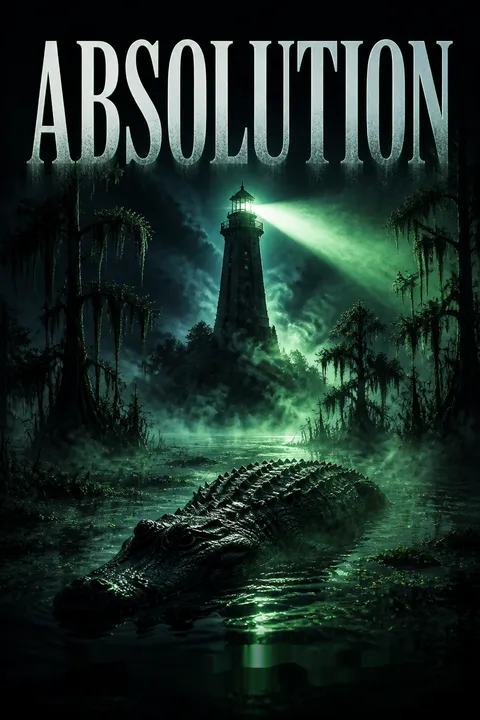

Plot Summary
Arrival of the Biologists
A team of government biologists descends on the remote Forgotten Coast, their arrival met with suspicion and mythmaking by the locals. The biologists, funded by shadowy sources, are seen as outsiders, their motives unclear. They set up camp, perform meticulous fieldwork, and begin to alter the landscape with their presence. The locals, fiercely independent and wary of authority, view the scientists as both a threat and a curiosity, their rituals and equipment transforming them into something uncanny. The biologists' isolation, both physical and social, sets the stage for a slow unraveling, as the wildness of the coast and the secrets they bring begin to seep into their work and their minds.
The Alligator Experiment
The biologists conduct a controversial experiment: releasing four alligators, the "Cavalry," into the local ecosystem, each fitted with tracking devices. The experiment is shrouded in secrecy and technical mishaps, with the alligators behaving unpredictably—some dying, some escaping, one, the Tyrant, becoming a legend. The locals are outraged, seeing the act as both pointless and dangerous. The experiment's failures are covered up, but the emotional and psychological impact lingers. The alligators become symbols of intrusion and unintended consequences, their fates intertwined with the biologists' own unraveling sense of control and objectivity.
Dead Town's Uneasy Occupation
The biologists establish their base in Dead Town, a decaying ghost town surrounded by marsh and wildflowers. The place is alive with insects and plants, yet the name "Dead Town" sticks, a joke that becomes a prophecy. The scientists' presence is both invasive and vulnerable; they set up yurts, create a perimeter, and try to impose order. Yet the environment resists, and the locals' resentment grows. The biologists' attempts to catalog and control the landscape are met with resistance from both nature and the supernatural, as strange events and a sense of foreboding begin to mount.
The Rogue Among Us
A mysterious pale man, dubbed the Rogue, appears in the local bar, his presence both magnetic and unsettling. He is an enigma—untouchable, silent, and possibly dangerous. The locals gossip and speculate, sensing he is not what he seems. The Rogue's true purpose is unclear, but his arrival coincides with a shift in the atmosphere, as if he is a harbinger of something larger. He becomes a symbol of the unknown, a wildcard who moves against the patterns of the coast, unbound by time or allegiance. His presence foreshadows the coming chaos and the collapse of boundaries between observer and observed.
Rabbit Visitation and Anomalies
Anomalies escalate: a white rabbit with carnivorous habits appears, witnessed by the "Mudder," a biologist with a knack for the marsh. The rabbit's unnatural behavior—eating crabs, wearing a camera—unsettles the team. The incident is dismissed as a fluke, but the sense of unreality grows. At night, the biologists play a piano found in Dead Town, only to hear their music echoed back from the marsh, a prank that blurs the line between human and environment. The boundaries of the expedition's reality begin to dissolve, as the landscape and its creatures seem to watch and respond.
Generator Failure and Fracture
The field generator, lifeline of the camp, fails mysteriously, plunging the biologists into darkness and fear. The breakdown exposes fractures within the team—rebellion, suspicion, and heightened stress. The Medic, a cold professional, works to restore order, but the group's cohesion is lost. One biologist disappears, presumed dead, his fate unspoken. The generator's failure is both literal and symbolic: the loss of control, the intrusion of the inexplicable, and the beginning of a psychological unraveling that will not be reversed.
The White Rabbit Horde
A horde of white rabbits appears overnight, their numbers and behavior impossible. They disrupt experiments, devour the landscape, and resist capture with uncanny intelligence. Some wear cameras, hinting at surveillance or manipulation. The biologists' attempts to contain or destroy the rabbits become increasingly desperate and violent, eroding their ethical boundaries. The rabbits' presence is both a biological crisis and a psychological assault, a manifestation of the expedition's loss of purpose and the invasion of the unknown.
The Night of Animal Flight
One night, a mass exodus of birds, bats, and mammals sweeps over Dead Town, fleeing north in panic. The biologists are left in a profound silence, abandoned by the very subjects of their study. The event is both awe-inspiring and terrifying, a sign that the natural order has been upended. The rabbits remain, glowing faintly in the dark, as if they are the new inheritors of the land. The sense of isolation and doom deepens, as the expedition realizes they are no longer observers but the observed, trapped in a landscape that has turned against them.
The Massacre and Aftermath
Driven to the brink, the biologists undertake a mass extermination of the rabbits, herding them into the meadow and incinerating them with flamethrowers. The act is both methodical and horrific, a final attempt to reassert control. Yet the next day, new rabbits appear, feasting on the charred remains of their kin. The biologists are shattered, some catatonic, others missing. The Tyrant alligator is seen as a shadowy presence, perhaps complicit. The camp's technology fails, the storm becomes a hurricane, and evacuation is impossible. The survivors are left in a state of trauma and guilt, their mission in ruins.
The Secret of the Cameras
The rabbit cameras, retrieved and examined, reveal footage that is anticipatory, personal, and impossible—showing the viewers themselves, as if the cameras are sentient or weaponized. The footage destabilizes the team leaders, who flee with the evidence, only to be captured and exiled by Central. The true nature of the experiment is revealed: a test of mind control, surveillance, and the limits of human agency. The boundaries between subject and object, predator and prey, are erased, leaving only uncertainty and paranoia.
Collapse and Evacuation
As the hurricane floods Dead Town, the remaining biologists descend into madness, violence, and hallucination. Dreams of armies, green light, and endless war haunt them. The camp is destroyed, the survivors die or disappear, and Central's rescue team finds only ruins and unreliable records. The official story is a lie; the truth is erased. The Rogue vanishes, the Mudder escapes, and the Tyrant becomes a legend. The coast is left haunted, its secrets buried but not forgotten.
Old Jim's Haunting
Old Jim, a former Central operative, is drawn back to the Forgotten Coast, haunted by the loss of his daughter Cass and the ghosts of Dead Town. His life is a cycle of grief, addiction, and failed attempts at redemption. Central manipulates him, sending a false daughter as a minder, and tasks him with unraveling the mysteries of the coast. Old Jim's memories, dreams, and reality blur, as he becomes both investigator and victim, searching for meaning in a landscape shaped by trauma and secrecy.
The False Daughter
The arrival of the false daughter, Cass, forces Old Jim to confront his failures as a father and as a man. Their relationship is fraught with suspicion, anger, and moments of genuine connection. Cass is both minder and partner, her own past as fractured as his. Together, they navigate the dangers of the coast, the legacy of Central's experiments, and the encroaching threat of the unknown. Their bond becomes a lifeline, even as it is tested by betrayal and the demands of the mission.
The House Centipede Incident
On Failure Island, a psychic operative suffers a breakdown after an encounter with a mysterious voice and a house centipede. The incident spreads like a contagion, disabling key members of the Séance and Science Brigade. The event is both psychological and supernatural, a manifestation of the foreign entity's ability to infiltrate and disrupt. The boundaries of self and other, mind and body, are breached, foreshadowing the larger collapse to come.
The Return to the Forgotten Coast
Old Jim, now embedded as a bar manager, investigates the legacy of Dead Town, the fate of the biologists, and the ongoing influence of Central. He uncovers evidence of mind control, surveillance, and the persistence of the Rogue. Encounters with locals, psychics, and the Medic reveal layers of complicity and denial. Old Jim's own conditioning is exposed, his memories manipulated by music and control words. The search for truth becomes a struggle for autonomy and absolution.
The Last Expedition
A new, heavily armed expedition crosses the Border into Area X, led by Sky and Lowry, with a cast of soldiers, scientists, and psychics. Their mission is to find survivors, locate the "off switch," and reclaim the land. The expedition is beset by paranoia, infighting, and the uncanny: malfunctioning suits, doppelgängers, and the collapse of technology. The landscape is mutable, time is unstable, and the team is whittled down by violence, madness, and the predations of Area X.
The Lighthouse and the Destroyer
The survivors reach the lighthouse, now a pillar of green light, and the beach, littered with bones and the wreck of a destroyer. The boundaries between self and other, real and unreal, dissolve. Doubles appear, memories are rewritten, and the expedition's purpose is lost. The final survivors, including Lowry, are transformed by their encounters—devoured, duplicated, or left in limbo. The lighthouse becomes both beacon and abyss, the center of a mystery that cannot be solved.
The Final Reckoning
In the aftermath, Old Jim, Lowry, and the remnants of the expeditions are left changed—haunted by visions of armies, green light, and endless recurrence. The true nature of Area X is revealed as a force that erases, mimics, and absorbs, colonizing both past and future. The cycle of invasion, resistance, and transformation is endless. The survivors' memories are unreliable, their identities fractured. The story ends with a sense of dissolution and ambiguous hope: the possibility of forgiveness, the persistence of love, and the inevitability of change.
Analysis
"Absolution" is a haunting, labyrinthine meditation on the limits of knowledge, the dangers of control, and the porous boundaries between self and other, human and nonhuman, past and future. VanderMeer's novel interrogates the hubris of scientific and institutional authority, exposing the ways in which attempts to catalog, contain, and master the wild inevitably lead to unintended consequences and moral collapse. The story's structure—fragmented, recursive, and polyphonic—mirrors the dissolution of order within the narrative, forcing the reader to confront the instability of memory, the unreliability of perception, and the impossibility of objective truth. The recurring motifs of surveillance, mimicry, and transformation underscore the novel's central concern: that the unknown is not merely out there, but within us, shaping and erasing us in ways we cannot fully comprehend. In the end, "Absolution" offers no easy answers—only the possibility of forgiveness, the persistence of love, and the necessity of embracing uncertainty in a world that resists explanation. The lesson is both cautionary and redemptive: to survive, we must accept our own limits, honor the agency of the nonhuman, and find meaning not in mastery, but in humility and connection.
Review Summary
Absolution, the fourth book in Jeff VanderMeer's Southern Reach series, receives mixed reviews averaging 3.59/5 stars. Readers appreciate the return to Area X's cosmic horror and mysterious atmosphere, particularly praising the first two sections featuring "Old Jim." The experimental writing style divides opinion—some find it brilliantly unsettling while others consider it nearly unreadable. The third section, narrated by drug-addled Lowry with excessive profanity, proves especially polarizing. Fans value the atmospheric weird fiction and connections to the original trilogy, though many note it answers few questions while raising new ones. Several reviewers recommend reading the original trilogy first.
Characters
Old Jim
Old Jim is a former Central operative, broken by loss and addiction, haunted by the disappearance of his daughter Cass and the ghosts of Dead Town. Tasked with unraveling the mysteries of the Forgotten Coast, he is both investigator and victim, his memories manipulated by trauma and Central's conditioning. Jim's relationships—with the false daughter, with Jack, with the locals—are fraught with suspicion, regret, and moments of grace. His journey is one of reluctant self-discovery, as he confronts the limits of agency, the weight of guilt, and the possibility of absolution. Jim's arc is a meditation on grief, memory, and the search for meaning in a world shaped by secrecy and loss.
Cass (False Daughter)
Cass is a Central operative assigned to pose as Old Jim's daughter, both to monitor and assist him. Her own past is fractured—marked by trauma, survival, and a need for connection. Cass is fiercely competent, emotionally guarded, and deeply empathetic beneath her armor. Her relationship with Old Jim is complex: part familial, part professional, part adversarial. She challenges his assumptions, supports his investigation, and ultimately becomes his partner in confronting the mysteries of the coast. Cass embodies the themes of identity, loyalty, and the possibility of forging new bonds from the wreckage of the old.
The Rogue
The Rogue is a mysterious figure who appears on the Forgotten Coast, his motives and origins unclear. He is both observer and disruptor, moving against the patterns of the land and the expectations of the locals and Central alike. The Rogue's actions—shucking cameras, sabotaging technology, confronting the biologists—are both protective and destructive. He is a symbol of the foreign entity's influence, a slant rhyme to espionage and infiltration. The Rogue's presence destabilizes reality, erases boundaries, and foreshadows the collapse of order. He is both victim and vector, haunted by a mission that transcends human understanding.
Jack Severance
Jack is Old Jim's former handler and the architect of Central's operations on the Forgotten Coast. Charismatic, ruthless, and obsessed with control, Jack orchestrates experiments in mind control, surveillance, and psychological warfare. His relationship with Old Jim is paternal and adversarial, marked by betrayal and a twisted sense of loyalty. Jack's schemes—deploying the false daughter, manipulating the expeditions, hiding the truth—drive much of the narrative's conflict. He represents the dangers of institutional power, the seductions of secrecy, and the costs of treating people as expendable assets.
The Medic (David Sheers)
The Medic is a recurring figure—present in both the biologists' expedition and the Séance and Science Brigade—whose loyalty is to Central above all. He is methodical, emotionally detached, and complicit in acts of violence and cover-up. The Medic's actions—eliminating threats, suppressing dissent, enabling experiments—embody the moral compromises of the institution. He is both a survivor and a tool, his sense of self subsumed by duty. The Medic's presence is a reminder of the costs of obedience and the ease with which individuals become instruments of harm.
The Mudder (Samantha)
The Mudder is a biologist with a unique affinity for the marsh, whose encounter with the predatory rabbit marks the beginning of the expedition's unraveling. She is both observer and participant, her perspective shaped by trauma and a refusal to accept easy explanations. The Mudder's escape from Dead Town, her ambiguous relationship with Man Boy Slim, and her cryptic communications with Old Jim position her as a liminal figure—caught between worlds, between knowledge and denial. She represents the costs of bearing witness and the difficulty of escaping the past.
Man Boy Slim
Man Boy Slim is a local fixture—part poet, part prankster, part spy—whose interactions with the biologists and the Mudder blur the lines between observer and participant. He is both complicit in and victim of the coast's mysteries, his actions driven by curiosity, fear, and a need for connection. Man Boy Slim's role as a go-between, his obsession with the biologists, and his guilt over Drunk Boat's death make him a symbol of the community's ambivalence toward outsiders and change.
The Tyrant (Alligator)
The Tyrant is the largest of the released alligators, a creature whose fate becomes entwined with the biologists, the Rogue, and the landscape itself. She is both victim and survivor, altered by experiments and by consuming the rabbit cameras. The Tyrant becomes a legend, a double agent, and ultimately a force of nature—her presence marking the boundary between the human and the inhuman, the known and the unknowable. She embodies the consequences of meddling with the wild and the persistence of the nonhuman in the face of human designs.
Henry Kage
Henry is a civilian psychic recruited into the Séance and Science Brigade, whose history of violence and obsession with the uncanny make him both asset and threat. He is charismatic, paranoid, and driven by a need to control and understand the forces at play. Henry's experiments with distance messaging, his rivalry with Old Jim and Cass, and his ultimate fate as a victim of Area X's mimicry position him as a cautionary figure—a reminder of the dangers of hubris and the limits of human comprehension.
Sky (Expedition Leader)
Sky leads the final, heavily armed expedition into Area X, her authority challenged by the landscape, her team, and the collapse of reality. She is competent, disciplined, and committed to her mission, yet vulnerable to doubt and the erosion of certainty. Sky's relationship with Lowry, her struggle to maintain order, and her ultimate disappearance into the unknown reflect the narrative's themes of leadership, loss, and the impossibility of mastery in the face of the inexplicable.
Lowry
Lowry is a brash, drug-fueled member of the final expedition, tasked with a secret mission by Jack. His voice is profane, self-mythologizing, and deeply unreliable. Lowry's journey—from bravado to trauma, from cannibalism to transformation—mirrors the collapse of the expedition and the dissolution of self. He is both a product and a victim of Central's manipulations, his fate entwined with the mysteries of Area X. Lowry's arc is a darkly comic, tragic exploration of agency, complicity, and the search for meaning in a world that resists explanation.
Plot Devices
Unreliable Narration and Fragmented Memory
The novel employs multiple unreliable narrators—Old Jim, Lowry, the Mudder, and others—whose memories are fragmented, manipulated, or erased. The use of diaries, transcripts, and surveillance footage creates a mosaic of perspectives, each incomplete and suspect. This narrative structure mirrors the collapse of order within the story, the erosion of boundaries between observer and observed, and the impossibility of objective truth. The reader is forced to question what is real, what is constructed, and what is erased.
Surveillance, Mimicry, and Psychological Warfare
Surveillance is both literal and metaphorical: rabbit cameras, tracking devices, and psychic monitoring blur the lines between subject and object. The foreign entity's ability to mimic, infiltrate, and weaponize perception is central—manifesting as doppelgängers, predatory rabbits, and the collapse of technology. Psychological warfare—through mind control, conditioning, and the manipulation of memory—undermines agency and identity. The story's horror lies in the loss of self, the impossibility of privacy, and the erasure of boundaries.
Foreshadowing and Recurrence
The narrative is structured around cycles and recurrences: the repetition of experiments, the return of the Rogue, the endless armies in dreams, the motif of the green light and the lighthouse. Foreshadowing is achieved through dreams, visions, and the uncanny doubling of events and characters. The past invades the present, the future colonizes the past, and the story's resolution is always provisional—suggesting that the cycle of invasion, resistance, and transformation is endless.
Symbolism of Animals and the Nonhuman
Animals—alligators, rabbits, birds, house centipedes—are both subjects and agents, their behavior altered by human intervention and by the foreign entity. The Tyrant alligator, the predatory rabbits, and the mass animal migrations symbolize the limits of control and the persistence of the nonhuman. The landscape itself becomes a character, resisting cataloging and containment, asserting its own agency. The novel interrogates the boundaries between human and animal, nature and culture, observer and observed.
Institutional Secrecy and Moral Compromise
Central, the shadowy government agency, is both protector and predator—conducting experiments, covering up failures, and treating people as expendable. The institution's secrecy breeds paranoia, complicity, and moral collapse. The official story is always a lie; the truth is erased or weaponized. The characters' struggles for autonomy and meaning are set against the backdrop of institutional indifference and the costs of obedience.
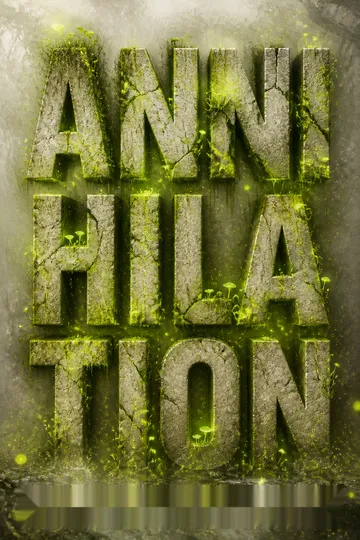
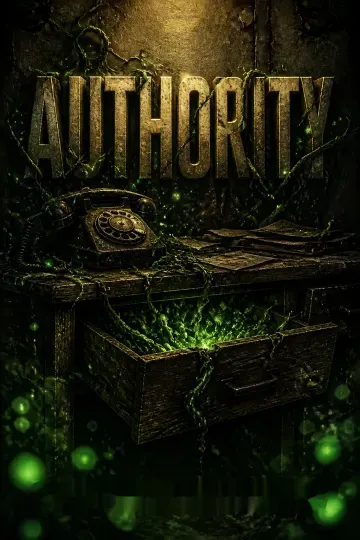
Southern Reach Series
About the Author
Other books by Jeff Vandermeer

Download PDF
Download EPUB
.epub digital book format is ideal for reading ebooks on phones, tablets, and e-readers.








































