

Key Takeaways
Reality is a delayed mirror — change your image, not the reflection
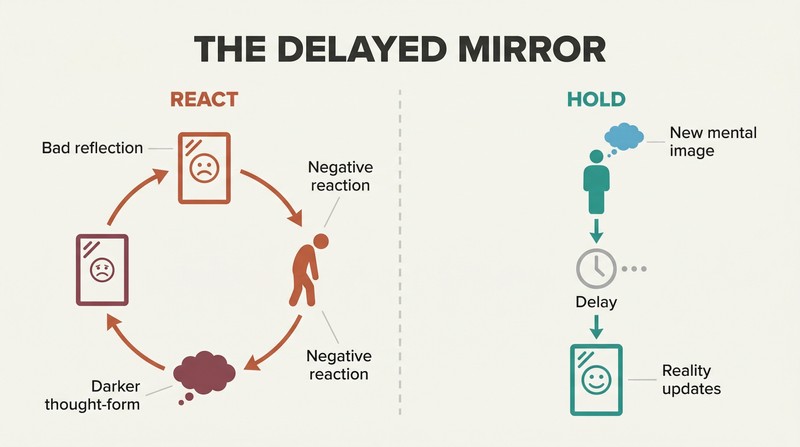
The world is a slow-developing mirror. Zeland's central thesis is that physical reality reflects your thought-forms — but with a substantial delay. You hold a new mental picture, and the mirror takes time to update. Most people see a grim reflection, react negatively, and project an even grimmer thought-form, locking themselves in what Zeland calls a "vicious mirror circle."
Behind the mirror lies the variants space, an infinite information structure containing scripts for every possible reality. Your thought energy selects which sector gets materialized. The delay is crucial: when you shift your thinking, nothing changes immediately — old problems may even intensify. Zeland compares this to a fairy-tale warning: don't look back. Hold the new mental image patiently. The material world is always the reflection, never the original.
Pendulums feed on your conflict energy and puppet your subconscious
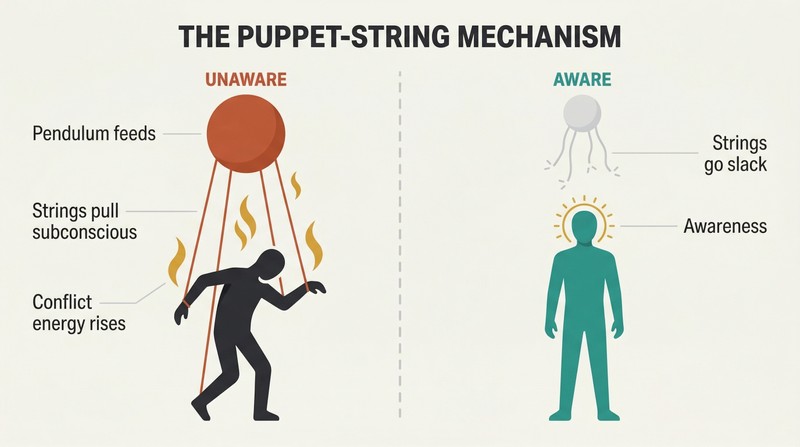
Pendulums are energy-informational entities created when groups of people think alike — organizations, ideologies, cultural trends. They aren't conscious plotters; they function like parasites, sensing emotional polarization and amplifying it to extract energy. When you're rushing anxiously, suddenly pedestrians block your path, elevators break, and traffic jams multiply. A pendulum is feeding.
The pedestrian example illustrates the mechanism. Someone ahead of you unconsciously veers to block your every attempt to pass. They can't see you and have no competitive motive — but the pendulum nudges their subconscious to escalate the friction. Wars, domestic arguments, and road rage follow the same law: once conflict begins, events develop to intensify it. The antidote isn't fighting — it's waking up. Maintain clear, conscious awareness of what you're doing and why, and the puppet strings go slack.
Your worst fears manifest because dread aligns heart and mind perfectly
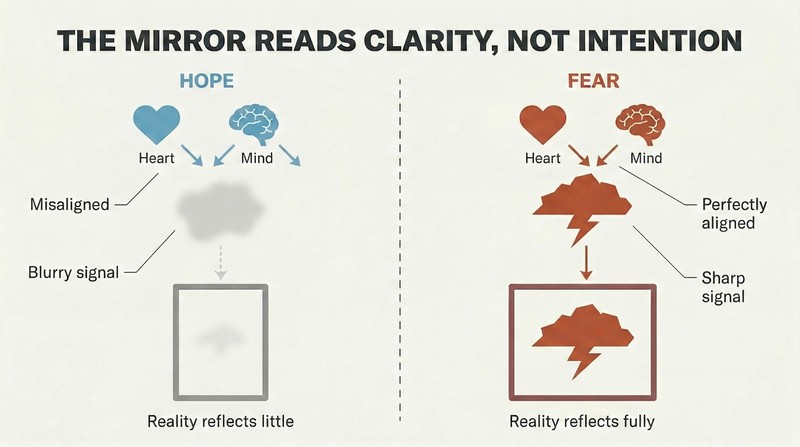
Hope is blurry; fear is high-definition. Zeland's concept of "unity of heart and mind" is the state where feelings and thoughts align completely, creating a sharp image the mirror reflects faithfully. The cruel paradox: this alignment rarely happens with positive goals because the mind doubts what the soul wants. But with fears, the soul trembles and the mind fixates — perfect unity, terrible image.
The mirror reads content, not intention. "I desperately don't want poverty" creates the same clear picture as "I clearly want wealth" — the mirror only registers the subject matter. The more intensely you push away what you despise, the stronger the magnetic pull drawing it toward you. The solution is withdrawing emotional charge from unwanted outcomes entirely, rather than fighting them with more intensity.
Dissolve obstacles by dropping importance, not by fighting harder
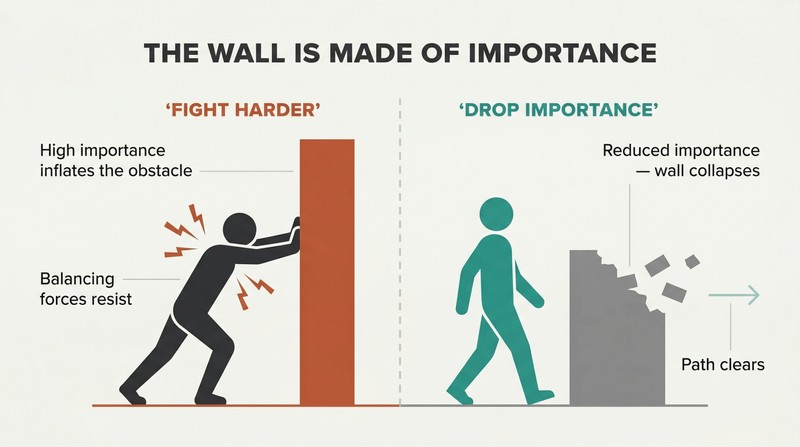
Excess potential is the real enemy. When you attribute inflated significance to any outcome — an interview, a relationship, your reputation — you create energetic distortion. Balancing forces rush in to neutralize it, typically delivering the opposite result. Zeland identifies two varieties:
1. Inner importance: overvaluing or undervaluing yourself
2. Outer importance: overvaluing external objects, events, or people
The fix isn't suppressing emotions. Change the underlying attitude. A family crisis matters to you — but you don't inflate it into an all-consuming drama. The wall of every obstacle is constructed from importance. Reduce the significance you attribute to it, and the wall collapses without a fight. This explains why trying harder often backfires: intense effort broadcasts importance, summoning the very balancing forces that knock you down.
Replace desire and hope with quiet resolve to have
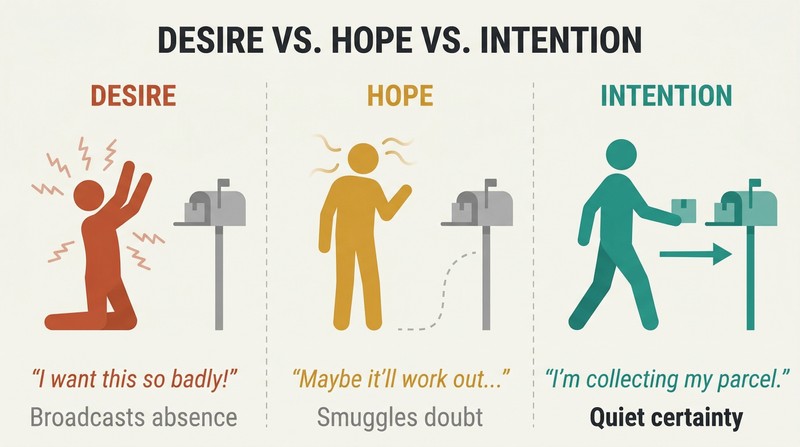
Wanting broadcasts absence. Zeland draws a sharp line between desire ("I want this so badly!"), hope ("Maybe it'll work out..."), and intention ("I'm walking to collect my parcel"). Desire fixates on what's missing. Hope smuggles in doubt. Only pure intention — calm, detached, resolved — activates what Zeland calls outer intention, the force that materializes sectors of the variants space without requiring direct physical action.
The mailbox test. Approach any goal the way you'd collect a package: without pleading with the postal service, without agonizing over whether it exists. Simply go get it. Let go of fear, longing, and anxiety until all that remains is quiet certainty. When soul and mind align without the static of doubt, the mirror image sharpens. The mantra becomes: "I don't wish, I don't believe, I don't hope — I intend."
Stop forcing your script — the variants flow has a better path
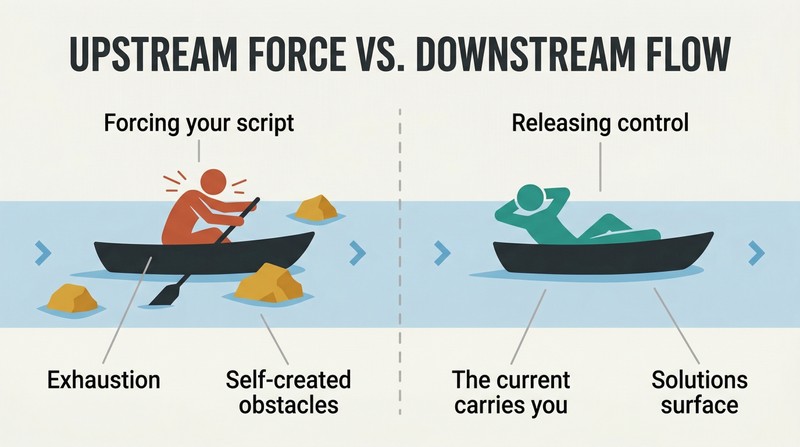
The mind rows upstream by default. It calculates, objects, insists on its own script — then exhausts itself solving problems it created. Zeland observes how people automatically reject offers, dismiss advice, argue with opinions, and fight to drag events onto their preferred track. All of this is paddling against the current.
The variants flow is the optimal path already encoded in the variants space, arranging events efficiently without the mind's interference. When someone offers something, don't reflexively refuse. When plans derail, accept the detour before resisting. Nature always follows the path of least energy — searching everywhere for an item you eventually find under your nose is the mind fighting the flow. Relax the grip, and solutions surface on their own.
Your true goal makes you happy now, not in some imaginary future
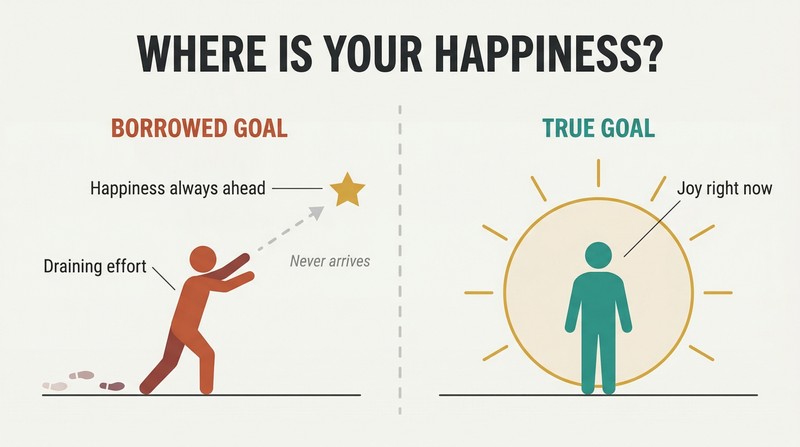
Borrowed goals drain; personal goals energize. Zeland warns that pendulums impose goals disguised in prestige, fashion, and obligation. The telltale sign: if you have to convince yourself a goal is worth pursuing, it's borrowed. Borrowed goals demand self-punishment, keep happiness shimmering in the future, and serve someone else's welfare.
Finding your goal requires exploration, not logic. The mind's job isn't to search for it but to recognize it when it appears. Visit unfamiliar places, absorb new information, break routines. Hold an open-ended intention: seek the thing that transforms life into celebration. When certain information lights up your soul and your mind can't stop exploring it from every angle, you've found your door. The confirmation: movement toward it produces joy in this moment, not at some imaginary finish line.
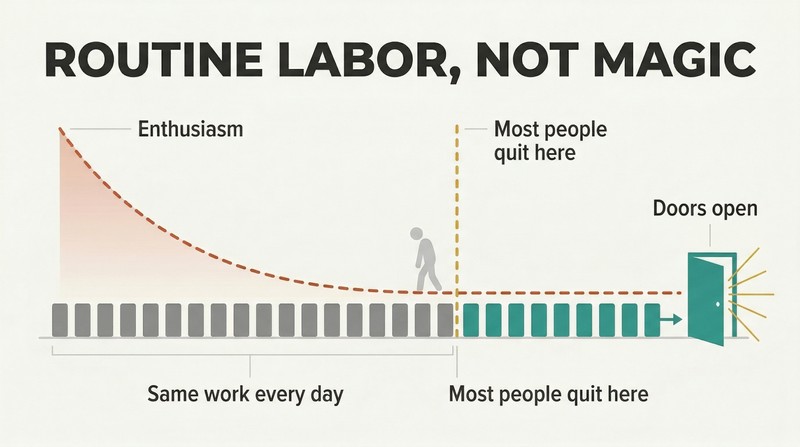
Run your goal slide daily — mundane repetition, not magic
Visualization is labor, not daydreaming. The goal slide technique requires you to mentally inhabit your life as if the goal is already achieved — not watching the scene like a movie, but living inside it. Add sensory details. Feel the emotions. Update the picture with new elements regularly. Crucially, do not include a specific script for how the goal gets achieved — that's the mind's sabotage.
Material realization is inert like resin. Most people flame out after initial enthusiasm fades. Zeland says a fortress can only be taken by long siege. Don't worry if the visualization isn't vivid — work with whatever comes naturally. Outer intention handles the route while you hold the destination image. Over time, doors open that you never could have predicted or engineered through willpower alone.
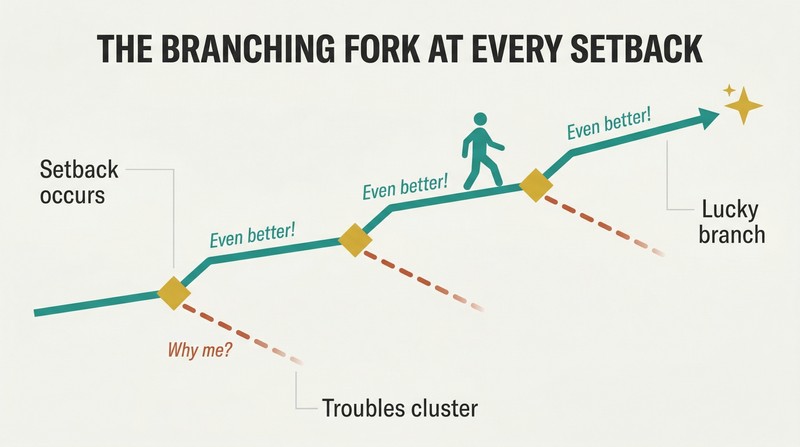
Declare every setback favorable to stay on the lucky branch
Every event sits at a branching fork. Zeland's coordinating intention principle says each moment offers two paths — favorable and unfavorable — and your emotional response selects which one you walk. React with anger to a misfortune, and you step onto the unfavorable branch, where more problems cluster nearby. That's why "troubles come in threes" — not from the original event, but from your negative reaction at each fork.
The practical rule: deliberately declare every outcome positive. Missed the bus? Your world is protecting you from something worse. Lost a deal? A better door is opening. In the variants space, nearby sectors share similar qualities. Choose the favorable interpretation at each junction, and your lifeline trends toward increasingly positive territory. The affirmation "My world takes care of me" isn't wishful thinking — it's strategic navigation through branching realities.
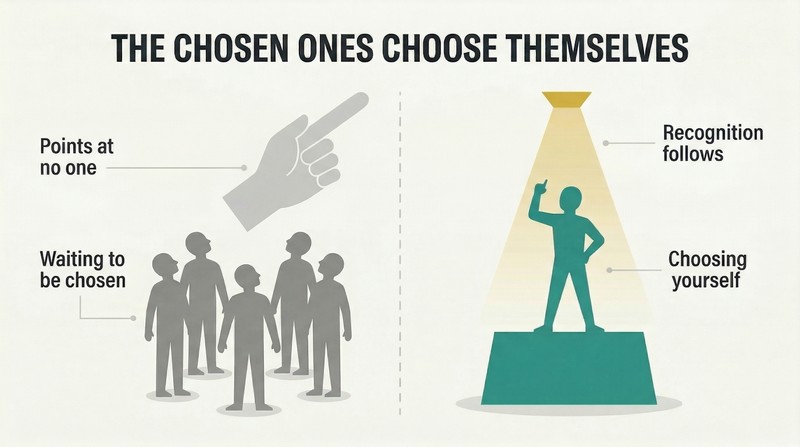
Claim the right to choose yourself — no one else will do it
One single step separates the extraordinary from the ordinary: the audacity to claim the right. Zeland argues that stars and leaders aren't selected by others for exceptional qualities — they select themselves first, and recognition follows. The timid believe a cosmic lottery determines success. The reality is more confronting: you must decide you're worthy before any evidence confirms it.
The Transurfing rule provides the foundation: give yourself permission to be yourself and allow others to be different. Stop measuring against pendulum-imposed standards. Stop copying existing templates — that produces parodies, not originals. Your soul's uniqueness is beyond competition. When you live by your own credo, with heart and mind unified, the dual mirror reflects without distortion. The pass through the "Gatekeeper to Eternity" isn't talent or luck — it's the simple verdict: "I choose myself."
Analysis
Transurfing occupies a peculiar position in the self-help landscape — part quantum metaphysics, part Eastern detachment philosophy, part cognitive behavioral therapy dressed in esoteric clothing. Zeland's framework emerged in Russia in the early 2000s and has since built a devoted global following, partly because it offers something most manifestation literature does not: a coherent model for why negative outcomes pursue us with more vigor than positive ones.
The pendulum concept, stripped of its metaphysical packaging, is perhaps the book's most durable contribution. It maps remarkably well onto what social psychologists call emotional contagion and what systems theorists recognize as positive feedback loops in conflict dynamics. The idea that invisible structures amplify discord and nudge subconscious behavior — whether you label them pendulums, memes, or social scripts — is not merely plausible but empirically observable in everything from social media pile-ons to office politics to geopolitical escalation.
Where Transurfing departs from cognitive behavioral orthodoxy is in its insistence that thought does not merely influence perception but literally materializes reality through the variants space. This is an unfalsifiable metaphysical claim, and empiricists will find it a bridge too far. Yet the practical advice it generates is surprisingly sound: reduce emotional reactivity, stop comparing yourself to external standards, replace rumination with deliberate visualization, and act with calm resolve rather than desperate wanting. These prescriptions translate neatly into evidence-based principles from acceptance and commitment therapy, implementation intentions research, and self-determination theory.
The book's greatest weakness is its repetitiveness — 78 principles that iterate on perhaps ten core ideas, many restated with minimal variation. Its greatest strength is the mirror metaphor itself, which provides an intuitive framework for understanding the feedback loop between internal states and external circumstances. Whether reality is literally a mirror or merely functions as one through confirmation bias and selective attention, the behavioral prescription is identical: change the image, not the reflection. That reframe alone justifies engagement with a system that will strike many as too mystical for mainstream consumption — and too practically useful to dismiss.
Review Summary
Transurfing in 78 Days receives mostly positive reviews, with readers praising its concise presentation of Reality Transurfing concepts. Many find it life-changing and inspiring, appreciating its unique approach to manifestation and consciousness. Some criticize repetitiveness and contradictions, while others recommend reading the full Reality Transurfing series first. The book's practical advice and daily readings are valued by many, though some find the language clumsy or overly edgy. Overall, it's seen as a thought-provoking guide to creating one's own reality.
People Also Read








Glossary
Variants space
infinite matrix of possible realitiesAn infinite information structure that stores scripts and set designs for all possible events. It exists as a metaphysical counterpart to physical reality, containing everything that ever was or could be. Every possible version of reality occupies a different sector. Human thought energy can materialize specific sectors, effectively selecting which potential reality becomes physical. Memory, dreams, and clairvoyance all access this same structure.
Pendulums
conflict-feeding energy structuresEnergy-informational entities created by groups of people thinking alike—organizations, ideologies, movements, trends. Not conscious beings but parasitic structures that sense emotional polarization and amplify it to extract energy. They pull people's subconscious behavior toward increased conflict, impose conformity through rules and stereotypes, and keep people asleep to their own power by replacing individual goals with borrowed ones.
Outer intention
manifests goals beyond direct actionA force external to the individual that materializes sectors of the variants space when heart and mind are unified. Unlike inner intention (direct physical effort), outer intention allows goals to manifest without the person knowing how. It activates when thought energy is pure—free from excess importance, doubt, and desire—and selects the desired reality from the variants space. Associated with the ancient mages' power.
Excess potential
energetic distortion from inflated importanceAn energetic disturbance created when disproportionate significance is attributed to any quality, object, event, or outcome. Divided into inner importance (distorted self-evaluation) and outer importance (inflated valuation of external things). Not problematic in isolation, but when combined with comparison or dependent relationships, it creates polarization that attracts balancing forces—typically producing the opposite of what was intended.
Goal slide
visualization of already-achieved goalA mental picture of what life looks like with the goal already achieved, practiced systematically on a daily basis. Unlike idle daydreaming, the practitioner lives inside the scene virtually, adding sensory details and feeling the emotions of success. The slide deliberately excludes any specific script for how the goal is achieved, leaving that to outer intention. Effectiveness depends on consistent, patient repetition rather than intensity.
Variants flow
path of least resistanceThe natural, optimal stream of events arranged by cause-and-effect relationships within the variants space. It represents the simplest, most energy-efficient path forward. When a person stops forcing their own script and allows events to unfold, the variants flow directs circumstances toward favorable outcomes without unnecessary struggle. The mind's habit of rowing against this current is identified as a primary source of problems.
Coordinating intention
choosing favorable interpretation at forksThe practice of deliberately interpreting every event—positive or negative—as favorable and working in one's interest. Based on the model that each event branches into favorable and unfavorable paths, with the person's emotional response selecting the branch. Consistently choosing positive interpretations navigates the lifeline toward increasingly positive territory, preventing the chain reactions that cause troubles to 'come in threes.'
Dropping importance
reducing inflated significance of thingsThe conscious practice of reducing exaggerated significance attributed to events, people, or oneself. Not the same as indifference or suppression—it means not amplifying situations into crises. Inner importance relates to over- or undervaluing oneself; outer importance to inflating external things. By reducing importance, excess potential dissipates, balancing forces no longer work against you, and pendulums find nothing to hook.
Transurfing rule
be yourself, let others differThe fundamental principle of Transurfing: 'Give yourself permission to be yourself and allow others to be different.' Accepting yourself means embracing strengths and weaknesses without conforming to external standards. Allowing others to be different means withdrawing projected expectations. This rule eliminates excess potential from relationships, dissolves dependent comparisons, and replaces the pendulum rule of forced conformity.
Unity of heart and mind
soul and reason aligned togetherThe state where a person's feelings (soul/heart) and thoughts (mind/reason) completely agree about a desire or intention, creating a clear, undistorted image the world mirror reflects faithfully. When heart and mind conflict—one wants something the other resists—the image blurs and fails to materialize. This alignment is the prerequisite for outer intention to activate and is what gives charismatic individuals their compelling energy.
FAQ
What's "Transurfing in 78 Days" about?
- Practical Course: "Transurfing in 78 Days" by Vadim Zeland is a practical course designed to help readers create their own reality by applying the principles of Transurfing.
- 78 Principles: The book breaks down the Transurfing principles into 78 bite-sized chunks, each meant to be practiced over a day.
- Reality Creation: It emphasizes the power of intention and awareness in shaping one's destiny and reality.
- Dual Nature of Reality: The book explores the dual nature of reality, combining both physical and metaphysical aspects.
Why should I read "Transurfing in 78 Days"?
- Empowerment: The book offers tools to empower readers to take control of their reality and destiny.
- Practical Guidance: It provides a structured, day-by-day approach to applying Transurfing principles in everyday life.
- Awareness and Intention: Readers learn to harness the power of awareness and intention to influence their life outcomes.
- Unique Perspective: It presents a unique perspective on reality, blending esoteric teachings with practical advice.
What are the key takeaways of "Transurfing in 78 Days"?
- Reality as a Mirror: The world reflects your thoughts and attitudes, so changing your mindset can change your reality.
- Importance of Intention: Intention is a powerful tool for manifesting desires and achieving goals.
- Balance and Harmony: Maintaining balance and harmony between the heart and mind is crucial for effective reality creation.
- Letting Go of Importance: Reducing the importance attributed to things can prevent unnecessary obstacles and conflicts.
How does Vadim Zeland define Transurfing?
- Reality Creation Tool: Transurfing is defined as a powerful tool for creating your own reality by aligning thoughts and actions.
- Dual Mirror Concept: It involves understanding the dual mirror of reality, where thoughts and actions reflect in the physical and metaphysical worlds.
- Intention and Awareness: The method emphasizes the importance of intention and awareness in shaping one's life path.
- Practical Application: Transurfing is presented as a practical approach to achieving personal goals and desires.
What is the "Variants Space" in "Transurfing in 78 Days"?
- Infinite Possibilities: The variants space is described as an information structure containing scripts for all possible events.
- Clairvoyance and Intuition: Access to the variants space allows for clairvoyance and intuitive knowledge, though not all seen events will manifest.
- Reality Selection: It is a matrix where thought energy can materialize potential realities based on the quality of thought waves.
- Beyond Perception: The variants space exists beyond the third dimension, accessible through dreams and intuition.
How does "Transurfing in 78 Days" suggest handling negative emotions?
- Awareness and Intention: The book advises using awareness and intention to transform negative emotions into positive outcomes.
- Dropping Importance: Reducing the importance attributed to negative situations can dissipate excess potential and restore balance.
- Abnormal Responses: Offering abnormal responses to negative situations can break the pendulum's influence and stop the cycle of negativity.
- Focus on Positivity: Shifting focus from negative reflections to positive thought forms can change the reality reflected back.
What role does the "World Mirror" play in Transurfing?
- Reflective Nature: The world mirror reflects your relationship with reality, confirming your thoughts and attitudes.
- Changing the Image: To change the reflection, one must change the image, which is the focus and quality of thoughts.
- Loop of Creation: Reality is created as a reflection of thought forms, and the loop can be turned by focusing on desired outcomes.
- Positive Thought Forms: By focusing on positive thought forms, the world mirror will eventually reflect a more favorable reality.
What is the significance of "Outer Intention" in Transurfing?
- Beyond Personal Will: Outer intention is a powerful force that exists beyond individual control but can be accessed in certain states.
- Unity of Heart and Mind: It is activated when the heart and mind are in harmony, allowing for the materialization of desired realities.
- Lucid Dreaming Analogy: The concept is likened to lucid dreaming, where awareness allows for control over dream events.
- Manifestation Power: Outer intention is key to manifesting goals and desires by aligning with the variants space.
How does "Transurfing in 78 Days" address the concept of "Importance"?
- Excess Potential: Attributing excessive importance to things creates excess potential, leading to obstacles and conflicts.
- Balancing Forces: Balancing forces work to neutralize excess potential, often in ways that counteract one's desires.
- Reducing Importance: The book advises reducing the importance of goals and desires to maintain balance and harmony.
- Focus on Action: Instead of battling excess potential, focus on taking action with purified intention to achieve goals.
What are the best quotes from "Transurfing in 78 Days" and what do they mean?
- "If you don’t control reality, reality will control you." This emphasizes the importance of taking charge of one's thoughts and actions to shape reality.
- "Give yourself permission to be yourself, and allow others to do the same." It highlights the importance of authenticity and acceptance in creating a harmonious reality.
- "The world is a mirror that reflects your relationship to it." This quote underscores the reflective nature of reality and the power of perception.
- "Everything truly great is unfathomably simple and has no need to show off or hide." It suggests that profound truths and effective methods are often simple and straightforward.
How does "Transurfing in 78 Days" suggest finding one's true path?
- Listen to the Heart: The book advises listening to the heart to find a path that brings joy and fulfillment.
- Personal Goal: Identifying a personal goal that resonates with the soul is key to finding true happiness.
- Avoid Borrowed Goals: It warns against pursuing borrowed goals imposed by others, which can lead to dissatisfaction.
- Harmony and Celebration: A true path is one where the heart and mind are in harmony, turning life into a constant celebration.
What is the "Master's Intention" in "Transurfing in 78 Days"?
- Creating Reality: The Master's intention involves using willpower to declare events and circumstances favorable.
- Witness and Allow: It emphasizes allowing rather than controlling, moving oneself instead of the reflection.
- Releasing Control: Letting go of demands and fears allows the world to process one's order and manifest desires.
- Confidence in Reality: The Master's intention is about having confidence in the world's ability to provide, aligning with the reflective nature of reality.
About the Author
Other books by Vadim Zeland







Download PDF
Download EPUB
.epub digital book format is ideal for reading ebooks on phones, tablets, and e-readers.








































