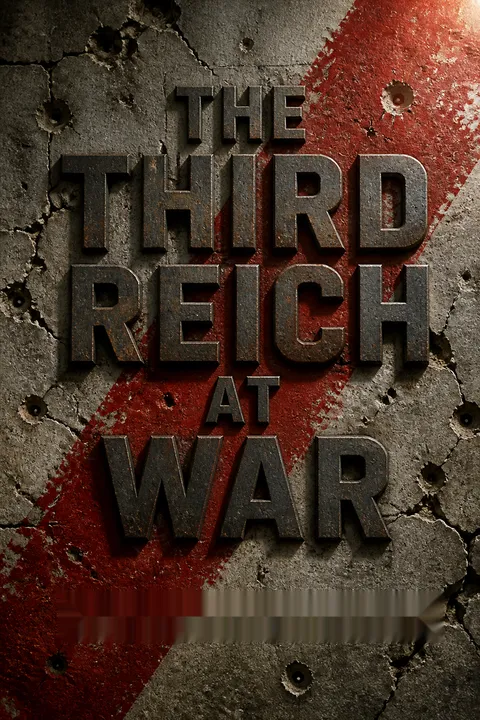

Key Takeaways
1. Blitzkrieg's Brutal Dawn: The Invasion of Poland
On 1 September 1939 the first of a grand total of sixty divisions of German troops crossed the Third Reich’s border with Poland.
Overwhelming force. Germany's invasion of Poland was a swift, devastating "lightning war" (Blitzkrieg), spearheaded by tanks and supported by modern air power. Polish forces, poorly prepared and outmatched in equipment and numbers (e.g., 15:1 tank disparity), quickly crumbled under the onslaught from three sides. Within weeks, the Polish air force was destroyed, cities bombed, and the government fled.
Racial terror. Beyond military conquest, the invasion immediately unleashed extreme racial violence. Hitler declared Poles "more animals than men," ordering the "physical annihilation of the enemy." SS Einsatzgruppen and ethnic German militias, often with Wehrmacht support, carried out mass shootings of Polish intellectuals, clergy, and Jews, framing these atrocities as retaliation for alleged Polish violence against ethnic Germans.
A blueprint for occupation. Poland became the proving ground for Nazi racial ideology and brutal occupation policies. Large territories were annexed, others formed the "General Government" – a stateless colony. Widespread looting, forced labor conscription (over a million Poles by 1941), and the systematic suppression of Polish culture and education were implemented, setting a grim precedent for future conquests.
2. Forging a Racial Empire: Deportation and Germanization
Poland will be depopulated and settled with Germans.
Ethnic cleansing. Hitler appointed Heinrich Himmler as Reich Commissioner for the Strengthening of the German Race, tasking him with the forced removal of Poles and Jews from annexed territories to make way for German settlers. This involved mass arrests, brutal deportations in unheated freight cars (leading to many deaths, especially children), and the confiscation of all property.
Racial reclassification. The SS established a "German Ethnic List" to identify Poles deemed "racially suitable" for Germanization, often forcibly removing children from their families to be raised as Germans. This led to a "black market in babies" and the closure of Polish orphanages, with thousands of children sent to the Reich for "re-education."
Colonial exploitation. The General Government, under Hans Frank, was treated as a German colony, its inhabitants reduced to cheap labor. Polish cultural institutions were systematically destroyed, and Poles faced draconian laws, lower rations, and constant humiliation. This policy, driven by racial ideology and economic greed, aimed to transform Eastern Europe into German "living-space."
3. The Genesis of Genocide: From "Euthanasia" to Mass Shootings
The annihilation of these subhumans would be in the interests of the whole world.
"Life unworthy of life." Parallel to the persecution of Poles and Jews, the Nazi regime expanded its "euthanasia" program, targeting mentally and physically handicapped Germans. Initially, this involved compulsory sterilization, but by 1939, Hitler authorized the killing of disabled children, then adults, in what became known as Action T-4.
Gassing pioneers. The T-4 program developed systematic methods of mass killing, including the use of carbon monoxide gas chambers disguised as showers. These facilities, staffed by medical professionals, were first used in Germany and later transferred to occupied Poland, where they were tested on mental patients and Gypsies, marking the first use of gas chambers for mass murder.
Escalation in the East. With the invasion of the Soviet Union in June 1941, SS Einsatzgruppen were explicitly ordered to execute Communist officials, partisans, and Jews. These mobile killing squads, often aided by local auxiliaries and regular Wehrmacht units, carried out mass shootings of Jewish men, then, from mid-August 1941, extended the killings to women and children, leading to hundreds of thousands of deaths.
4. Shifting Fortunes: Western Triumphs and Eastern Quagmire
The war in the east was in the main already won.
Western dominance. After the swift conquest of Poland, Germany achieved stunning victories in Western Europe in 1940, defeating France, Belgium, and the Netherlands, and occupying Denmark and Norway. These successes, achieved through Blitzkrieg tactics, cemented Hitler's popularity and convinced him of his military genius.
Battle of Britain's stalemate. The planned invasion of Britain ("Operation Sealion") was thwarted by the Royal Air Force's victory in the Battle of Britain (August-October 1940). Despite heavy bombing of British cities, German air superiority could not be achieved, marking Hitler's first major defeat and forcing him to reconsider his strategy.
Barbarossa's fatal gamble. In June 1941, Hitler launched "Operation Barbarossa," the invasion of the Soviet Union, driven by the ideological quest for "living-space" and the belief that the Red Army was weak. Initial German advances were rapid and devastating, inflicting massive casualties and capturing millions of Soviet prisoners. However, fierce Soviet resistance, logistical challenges, and the onset of winter halted the German advance before Moscow, proving Hitler's initial assessment catastrophically wrong.
5. The "Final Solution": Industrialized Mass Murder
The world war is here, the annihilation of Jewry must be the necessary consequence.
Wannsee's chilling logistics. By late 1941, Hitler's rhetoric explicitly called for the "annihilation of Jewry." The Wannsee Conference (January 1942) formalized the "total solution of the Jewish question in the German sphere of influence in Europe," outlining the systematic deportation of 11 million Jews for "extermination through labor" in the East.
Death camps emerge. The T-4 euthanasia experts were redeployed to construct specialized extermination camps in occupied Poland: Belzec, Sobibor, and Treblinka. These camps, designed for mass killing by gas (carbon monoxide from engine exhaust or Zyklon-B), processed hundreds of thousands of Jews, primarily from Polish ghettos, immediately upon arrival.
Auschwitz's scale. Auschwitz-Birkenau became the largest and most infamous extermination camp, combining slave labor with industrial-scale gassing. Here, Zyklon-B was used in purpose-built gas chambers disguised as showers. Over 1.1 million people, predominantly Jews from across Europe, were murdered at Auschwitz, with "selections" on the ramp determining immediate death or temporary slave labor.
6. Total War's Economic Engine: Exploitation and Rationalization
Total productivity in armaments increased by 59.6 per cent... to a summit of 322 in July 1944.
Speer's "miracle." Albert Speer, appointed Armaments Minister in 1942, rationalized Germany's war economy, streamlining production, reducing bureaucracy, and focusing on mass production of key weapons like tanks and aircraft. His efforts led to significant increases in armaments output, peaking in 1944.
Exploitation of Europe. Germany heavily exploited occupied territories, particularly in Eastern Europe, for raw materials, industrial output, and foodstuffs. "Occupation costs" and artificially fixed exchange rates drained wealth from countries like France. The SS also developed a vast economic empire, profiting from slave labor and confiscated Jewish assets.
Forced labor's human cost. Speer's production "miracle" relied heavily on foreign forced labor. Millions of Poles, Soviets, and Western Europeans were conscripted, often brutally, to work in German factories and farms under horrific conditions. Soviet prisoners of war faced particularly high mortality rates due to starvation and maltreatment, reflecting Nazi racial ideology.
7. The Tide Turns: Stalingrad and the Allied Offensive
Stalingrad signifies a turning-point in the war.
Stalingrad's catastrophe. After halting before Moscow, Hitler's 1942 summer offensive aimed for the Caucasus oilfields and Stalingrad. The brutal urban warfare in Stalingrad, coupled with a massive Soviet counter-offensive, encircled the German Sixth Army. Despite Hitler's "stand fast" orders, the army was annihilated, with over 200,000 killed and 91,000 captured, marking the decisive turning point of the Eastern Front.
North African defeat. Concurrently, Rommel's Africa Corps suffered a decisive defeat at El Alamein (October 1942) and was pushed back across North Africa. Allied landings in Morocco and Algeria sealed the fate of Axis forces, leading to the surrender of 250,000 German and Italian troops in May 1943.
Battle of the Atlantic won. The crucial Battle of the Atlantic, where German U-boats threatened Allied supply lines, turned decisively in favor of the Allies by May 1943. Improved convoy protection, air cover, and code-breaking capabilities led to unsustainable U-boat losses, securing Allied control of the seas.
8. Germany in Flames: The Home Front Under Siege
Vast flames rage over Dresden.
Strategic bombing. From 1942, Allied strategic bombing intensified, targeting German industrial centers and cities. The "Battle of Hamburg" (July-August 1943) saw firestorms devastate large areas, killing 40,000 people and making 900,000 homeless.
Morale's decline. The bombing, coupled with military defeats, severely eroded German civilian morale. Initial defiance gave way to despair, widespread criticism of the regime, and a growing distrust of official propaganda. Jokes about Hitler and the war's futility became common.
Crumbling infrastructure. The relentless bombing campaign, particularly in 1944-45, crippled Germany's industrial capacity and transportation networks. Factories, railways, and urban infrastructure were pulverized, exacerbating shortages of food, fuel, and housing, and forcing millions to become refugees.
9. Resistance and Retribution: Plots, Partisans, and Punishments
The assassination must be attempted at any cost.
Military opposition. A conservative military resistance, initially concerned by Hitler's recklessness, gained momentum after Stalingrad. Figures like Henning von Tresckow and Claus von Stauffenberg, appalled by Nazi atrocities, planned to assassinate Hitler and overthrow the regime.
The July 20th Plot. On July 20, 1944, Stauffenberg planted a bomb at Hitler's headquarters. The plot failed, as Hitler survived with minor injuries. The ensuing crackdown was brutal, with thousands arrested, tortured, and executed, including many high-ranking officers and civilian conspirators.
Escalating terror. As the war turned, the regime intensified its repression. Courts-martial handed down thousands of death sentences for "undermining military strength." In occupied territories, partisan movements grew, met by savage German reprisals, including mass executions of civilians and the deliberate reintroduction of malaria in Italy.
10. Hitler's Delusional End: Scorched Earth and Suicide
We’ll not capitulate. Never. We can go down. But we’ll take a world with us.
Final defiance. In the war's last months, Hitler retreated to his Berlin bunker, increasingly detached from reality. He blamed his generals for Germany's defeats, ordered a "scorched earth" policy (largely thwarted by Speer), and clung to the hope of "wonder-weapons" or a split in the Allied coalition.
Betrayal and suicide. As Soviet forces encircled Berlin, Hitler's closest associates, including G̈ring and Himmler, attempted to negotiate separate surrenders with the Allies, leading to Hitler's furious accusations of treason. On April 30, 1945, after marrying Eva Braun, Hitler committed suicide, followed by Goebbels and his family, and other loyalists.
Mass suicides. Hitler's death triggered a wave of suicides across Germany, particularly in areas occupied by the Red Army. Thousands of Germans, fearing retribution, shame, or a future without Nazism, took their own lives, often killing their families first.
11. The Lingering Shadow: Reckoning with a Devastated Legacy
The Third Reich raises in the most acute form the possibilities and consequences of the human hatred and destructiveness that exist, even if only in a small way, within all of us.
Unambiguous defeat. Germany's total defeat on May 8, 1945, was not widely seen as a liberation but as a catastrophic end. The country lay in ruins, its infrastructure shattered, and its population grappling with immense loss and the moral burden of Nazi crimes.
Denazification and justice. The Allies initiated denazification programs and war crimes trials, most notably at Nuremberg, to hold Nazi leaders accountable and purge German society of its ideology. While imperfect, these efforts laid the groundwork for a new political culture.
A transformed Germany. Post-war Germany, divided and occupied, gradually repudiated Nazi ideology, militarism, and extreme nationalism. The "economic miracle" and European integration fostered a new identity: peace-loving, democratic, and committed to confronting its past, ensuring that the lessons of the Third Reich's hatred and destructiveness would not be forgotten.
Review Summary
Reviews of The Third Reich at War are overwhelmingly positive, with most praising Evans' authoritative, morally engaged scholarship and his ability to weave ideology, policy, and personal testimony into an accessible narrative. Readers particularly commend his treatment of the Holocaust, the T4 euthanasia program, and the Allied bombing campaign. Some critics note the military history feels underdeveloped, and a few find the work overly broad or unfocused. Most consider it a fitting, powerful conclusion to an essential trilogy on Nazi Germany.
People Also Read

The History of the Third Reich Series Series
About the Author
Download PDF
Download EPUB
.epub digital book format is ideal for reading ebooks on phones, tablets, and e-readers.








































